Agriculture Science Recognition Awards, Part 1- Megen Morales

Agriculture Science Recognition Awards, Part 1 – Megen Morales

By Patrick Cavanaugh, Deputy Editor

Assemblyman Jim Patterson joined Dr. Sandra Witte, dean of the Jordan College of Agricultural Sciences and Technology at California State University, Fresno (Fresno State) and Lawrence Salinas, Fresno State’s executive director of Government Relations, at the 23rd Assembly District’s 2016 Agriculture Science Recognition Awards on March 17 at Fresno State.

California Ag Today will highlight each of four Fresno State students in the Fresno State Honoree series, Meghan Loper, Megen Morales, Elizabeth Mosqueda and Nick Wolfenden, who were selected from among several students nominated for their dedication to the future of agriculture in the Central Valley.

“These brilliant students represent the best of the best,” said Assemblyman Patterson. “Their devotion to making a difference in our agriculture science community is to be commended and I can’t wait to see what the future holds for them.”

______________________________________

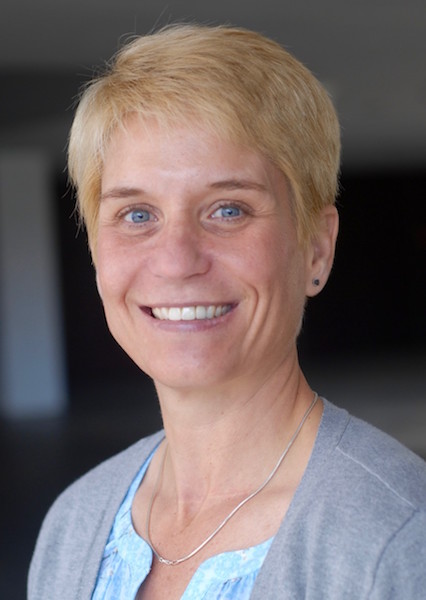
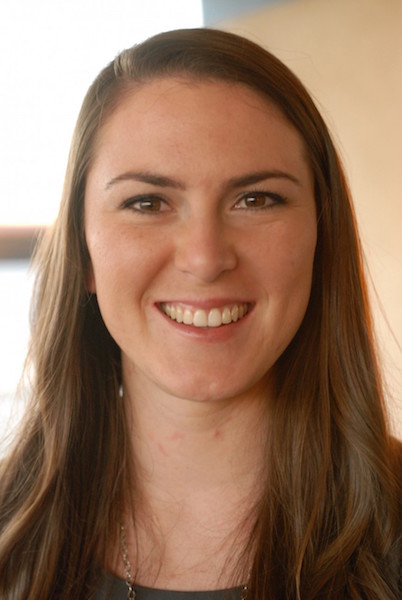
Megen Morales, a senior at Fresno State majoring in enology and chemistry, was honored recently for leading the way in the study of mold in winegrapes. “She’s also helping others in agriculture measure and quantify the amount of mold,” noted Patterson.

After a grapevine-judging contest in high school, Morales knew she wanted to work in the viticulture industry. So for the past three years, she has worked with her enology professors to create a new standard for wineries to follow for the amount of mold that is acceptable in harvested wine grapes. “The current maximum of moldy grapes acceptable in wineries is two percent,” noted Patterson, “but there is no process that accurately determines the level of mold content.” Morales explained, “Right now, you simply look at the grapes and usually determine that it looks like 1.5 to two percent mold.”

“So Megen harvested White Zinfandel Grapes from 15 farms throughout the Central Valley, and brought them back to the lab to study the levels of several types of mold,” noted Patterson. “Morales compiled the data, and her results are now used by large-scale wineries to determine how much mold is in their harvested grapes.”

A member of Central Valley Women for Agriculture (CWA) and a volunteer at the Fresno State Winery, Morales has also helped promote agriculture at Valley Children’s Hospital. As current manager of the laboratory, she trains other students on how to use it.

In fact, Morales has dedicated much of her time to teaching young people about the important role agriculture plays in everyday life. She says her experiences at Fresno State will help her excel in her future as an empowered, humble person, with the skills and mindset to accomplish great things. She hopes to work as an enologist at a major winery and eventually plans to become a senior wine maker. Morales’ ultimate goal is to serve as a role model, a mentor to women in agriculture, and to advocate for agricultural education to preserve the agricultural world of tomorrow.

“My passion started with crop production and it evolved towards viticulture,” noted Morales. “I really enjoyed chemistry in high school. Combining the two fields [agriculture and chemistry] was a challenge, but then I found enology. It has been really exciting learning how to make wine.”

“The winegrape scan spectrum we are developing will enable wineries to scan one sample of grapes coming in and better quantify the amount of mold,” Morales elaborated. “Since wine is filtered before it goes into a bottle, mold has not been a big problem. However, [mold] does affect the sensory impact of wine, so once you get above five percent mold you start to smell a funky, sweet, almost vinegary smell. It doesn’t affect the palate, but it does affect the nose,” she stated.

 ______________________________________

2021-05-12T11:05:57-07:00March 24th, 2016|

Innovation Marks National Nutrition Month!

Innovation Marks National Nutrition Month!

March is National Nutrition Month. Many innovative USDA programs are improving access to safe, healthy food for all Americans and supporting the health of our next generation.

Dietary Guidelines 2015-2020About half of all American adults—117 million individuals, according to USDA—have one or more preventable chronic diseases, many of which are related to poor quality eating patterns and physical inactivity. These include cardiovascular disease, high blood pressure, type 2 diabetes, some cancers, and poor bone health. More than two-thirds of adults and nearly one-third of children and youth are overweight or obese.  Trends in food intake show that Americans do not follow healthy eating patterns.

2015-2020 Dietary Guidelines for Americans

Earlier this year, the US Department of Health and Human Services’ Office of Disease Prevention and Health Promotion and the USDA’s Center for Nutrition Policy and Promotion released the 2015-2020 Dietary Guidelines for Americans. Written for use by health professionals and policy makers every 5 years, the Dietary Guidelines provide nutrition guidance for Americans ages 2 and older to prevent diet-related chronic disease and maintain health.

Healthy Eating Index

Healthy Eating IndexThe Healthy Eating Index (HEI) measures how the nation’s food choices align with the Dietary Guidelines. While the nation’s current HEI score—59 out of 100 (an improvement over previous years)—diet-related chronic disease rates over the last 25 years have risen and remain high. It follows that if we were to eat closer to the Dietary Guidelines and thereby increase our nation’s HEI scores closer to 100, we would see reductions in the prevalence of diet-related chronic disease.

The tool is being updated to reflect the 2015-2020 Dietary Guidelines released in January. In the meantime, the HEI has been used to monitor any defined set of foods including dietary intake data, menus at restaurants, and a market shopping basket of foods and can be applied to surveillance, policy, epidemiologic, clinical and behavioral research.

Over 200 scientific publications have featured the use of the HEI, a majority of which have examined the association between overall diet quality and health outcomes, including cancer, cardiovascular disease, type 2 diabetes, dental health, and ocular health.

National Nutrition Research Roadmap

Catherine Woteki, USDA chief scientist and under secretary for Research, Education & Economics, and co-chair of the Interagency Committee on Human Nutrition Research (ICHNR), described the first-ever National Nutrition Research Roadmap released the fourth of March, National Nutrition Month. 

The Roadmap will help guide government, academia, and the private sector to collaborate more effectively and productively on federally funded human nutrition research by identifying knowledge gaps and breakthrough opportunities. Accordingly, the Roadmap itself is the result of more than a year of collaboration among 10 different federal departments and agencies, more than 90 federal experts, and numerous public comments.

American consumers want to know which dietary choices will help them to be healthy and prevent chronic diseases, so research could have a profound impact on health and deliver large economic benefits to many societal, environmental, and economic challenges facing the U.S. and the world.

Nutritional needs differ according to a number of factors, including an individual’s age, health status, and their level of physical activity. Dietary guidance can be tailored to personal preferences so that individuals can make nutritional choices that are right for them. With this in mind, three overarching questions were identified in the Roadmap:

  1. How do we better understand and define eating patterns to improve and sustain health?
  2. What can be done to help people choose healthy eating patterns?
  3. How can we develop and engage innovative methods and systems to accelerate discoveries in human nutrition?

The Roadmap provides a subset of specific research areas for each question based on population impact, feasibility, and emerging scientific opportunity, with special consideration given to knowledge gaps (a) related to at-risk demographic groups such as pregnant women, children and older adults and (b) nutrition-related chronic diseases that contribute most to morbidity, mortality, and health disparities.

While the Roadmap focuses primarily on reducing nutrition related diseases in the US, it could also improve our understanding of nutrition’s role in optimal performance and military readiness, as well as guide other national governments, non-governmental organizations and collaborative global efforts to advance human nutrition research to improve and sustain health across the globe.

MyPlate, MyWins ChallengeUSDA MyPlate

On a personal note, if you need a little extra motivation to focus on building healthy eating habits, pledge to take the MyPlate, MyWins Challenge! It’s a fun and simple food and physical activity challenge available to SuperTracker groups.

All you have to do, according to Sarah Chang, nutritionist at USDA Center for Nutrition Policy and Promotion, is

2 + 2 + 2:

  1. Eat 2 foods from each MyPlate food group
  2. And do 2 physical activities
  3. For 2 days

SuperTracker Groups

You can run your own MyPlate, MyWins Challenge for your family, colleagues, or community in five easy steps:SuperTracker

  1. Create a SuperTracker group – Watch this video for a step-by-step tutorial
  2. Invite others to join via email or with your group code at usda.gov/join
  3. Create the MyPlate, MyWins Challenge for your group – Watch this video for a step-by-step tutorial
  4. Participants use the challenge Quick Tracker on your group page to record their foods and physical activities. They’ll earn points and get progress updates along the way.
  5. Check the challenge leaderboard to discover the winners!

Sarah’s MyPlate, MyWins Challenge Group!

Sarah's MyPlate, MyWinsIf you don’t want to create your own challenge group, join Chang at “Sarah’s MyPlate, MyWins Challenge Group!

Starting next Tuesday, March 22, eat two foods from each food group and do two physical activities each day. Log in to your SuperTracker account, and record them using the Quick Tracker on the group page to earn points and compete against others in the group.

The MyPlate, MyWins Challenge is one of several challenging consumer education initiatives, grounded in the most recent edition of the Dietary Guidelines for Americans and available through USDA’s new online MyPlate Challenges.

_______________________________________

Sources:

U. S. Department of Agriculture, Roadmap Sets the Table for Nutrition Research, by Dr. Catherine Woteki, featured on Science Tuesday series on the USDA blog.

U. S. Department of Agriculture, The Healthy Eating Index: How Is America Doing?, by  TusaRebecca E. Schap.

U. S. Department of Agriculture, Pledge to Take the MyPlate, MyWins Challenge this March,  by Sarah Chang, MPH, RD, CNPP.

“Savor the Flavor” image, from eatright.org. Academy of Nutrition and Dietetics.

All other images from U. S. Department of Agriculture.

2021-05-12T11:05:57-07:00March 22nd, 2016|

Pollinator Bee Nutrition

Collaborators on Pollinator Bee Nutrition: Bayer’s Bee Care Program and Project Apis m. 

By Patrick Cavanaugh, Deputy Editor


The North American Bayer Bee Care Program which, according to director Becky Langer, has invested more than $12 million to maintain pollinator health, has been working closely with Project Apis m. (PAm), which funds research to enhance the health and vitality of honeybee colonies while improving crop production.

Project Apis m. pollinator bee nutrition“We have enjoyed working with Apis m,” said Langer, “because foraging nutrition is one of the top factors affecting bee health today. Our ‘Feed a Bee’ program, launched in March 2015, has the goal to partner with 50 different organizations as ‘Feed a Bee’ partners, and PAm, dedicated to pollinator health, and is one of the “Feed a Bee” partners.”

Bayer Feed a Beed Program logoLanger explained that PAm really focuses on crops growers can plant around their orchards to provide for the bees when they arrive in California before the almond bloom, as well as after the almond pollination just before the bees move on to their next job. “Because PAm distributes free wildflower seeds and other to growers,” Langer said, “we see it as a great partnership that really helps pollinator health thrive and move forward.”

2021-05-12T11:05:57-07:00March 18th, 2016|

Citrus Growers Form ACP Management Areas

Commercial Citrus Growers Form Local ACP Management Areas

By Charmayne Hefley, Associate Editor


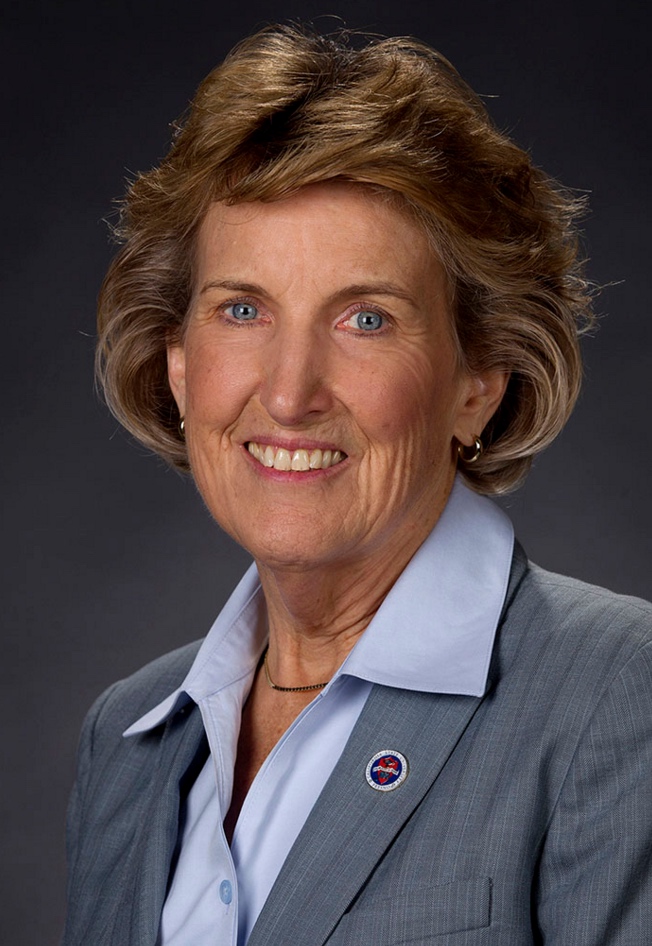
Commercial citrus growers are banding together to prevent the spread of the citrus-deadly Huanglongbing (HLB) disease and the pest that spreads it—the Asian Citrus Pysllid (ACP). Beth Grafton-Cardwell, an IPM specialist and research entomologist at UC Riverside and Director of UC ANR Lindcove Research & Extension Center, said growers are forming ACP management areas to prevent ACP from spreading HLB.

Elizabeth E. Grafton-Cardwell

Elizabeth E. Grafton-Cardwell

“ACP management areas are being formed by the citrus industry and community,” Grafton-Cardwell said. “They’re basically saying, ‘Let’s get together. Let’s form these groups of growers—25 to 35 growers in an area. Let’s work together as neighbors to treat across a large area and get more of the psyllids killed than if we each treated individually at different times.’”

HLB is a serious concern to growers, according to Grafton-Cardwell; the disease has already devastated the citrus industry in Florida. “We want to prevent that from happening here,” shel said.

According to the California Department of Food and Agriculture, ACP notices posted thus far in the first quarter of 2016 include the following areas:

            COUNTY                                                                 CITY

   Fresno County    Fresno
   Kern County    Bakersfield, Shafter, Wasco
   Imperial County    Bard, Brawley area, Calipatria, Niland, Winterhaven, Zone 7
   Los Angeles County    La Puente, San Gabriel
   Riverside County    Hemet, Riverside, San Jacinto
   San Bernardino County    Cadiz
   San Diego County    De Luz, Escondido, Fallbrook, Ramona, San Diego
   San Joaquin County    Stockton
   Santa Barbara County    Areawide, Buellton, Casmalia, Garey, Orcutt, Santa Maria, Sisquoc
   Santa Clara County    Milpitas, San Jose
   Stanislaus County    Oakdale
   Tulare County    Porterville, Strathmore
2021-05-12T11:03:03-07:00March 17th, 2016|

Sandra Witte, New Ag Dean at Fresno State

Dr. Sandra Witte Named Dean of Jordan College at Fresno State

(March 16, 2016) – Dr. Sandra Witte, who has been serving as interim dean of the Jordan College of Agricultural Sciences and Technology at Fresno State, has been appointed permanent dean, effectively immediately.

Dr. Lynnette Zelezny, provost and vice president for Academic Affairs, said Witte’s exceptional work as interim dean made her the best person for the position.

“We conducted a yearlong national search for a dean but did not find the right candidate for this important position,” said Zelezny. “In the meantime, it became clear to me, the faculty, staff and our strong partners in the agriculture community that Dr. Witte was the right candidate. I’m pleased she agreed to stay at Fresno State as permanent dean.”

Zelezny added: “This is a critical time for the Jordan College as we prepare for the opening of the Jordan Agricultural Research Center this spring and continue our laser-focus on crucial issues related to water and sustainability. I am confident Dr. Witte will lead the college to increasing national prominence.”real JCAST Logo

Witte has taken an unconventional route to the dean’s position, starting her career as a registered dietitian and serving as a professor and chair of the Department of Food Science and Nutrition, one of seven departments in the Jordan College.

“In the Jordan College, we often talk about offering programs from farm to fork and all the business in between,” said Witte. “While most people think of agriculture from the farm end, my connection is clearly on the fork end. I have always had an appreciation for traditional agriculture, and in my time at Fresno State, that has bloomed into a passion. After all, where is the food without the farmer?” she said.

Witte joins a growing number of women in agricultural leadership positions that traditionally have been held by males in universities, industry and commodity groups in the U.S.

The Jordan College maintains an enrollment of approximately 2,400 undergraduate and 100 graduate students from diverse backgrounds from throughout California, the U.S. and the world. Undergraduate, graduate and continuing education programs are offered in the major areas of agricultural business; animal sciences and agricultural education; child, family and consumer sciences; food science and nutrition; industrial technology; plant science; and viticulture and enology.

Faculty and students conduct applied research and public service in selected areas of agriculture, food sciences, industrial technology and family sciences. Students engage in learning science, technology and management in the classroom and by experience on the 1,000-acre on-campus University Agricultural Laboratory.

Witte has served as interim dean since October 2014. Previously, she jointly held the positions of associate dean of the Jordan College and dean of the Division of Graduate Studies. She joined the Fresno State faculty in 1992 and took her first administrative assignment in 2007.

She completed her bachelor’s degree in foods and nutrition at California State Polytechnic University, Pomona; master’s degree in home economics, nutrition and dietetics option at Fresno State; and her Ph.D. in food systems management at Oregon State University, Corvallis.

____________________________

Photo: Sandra Witte, dean of Agricultural Sciences and Technology at Fresno State (source: Fresno State

2016-05-31T19:24:10-07:00March 16th, 2016|

Ag Day at the Capitol

Ag Day Celebration at the Capitol

By Charmayne Hefley, Associate Editor


In honor of National Agriculture Week, the California Department of Food and Agriculture (CDFA) will partner with the California Women for Agriculture and the California Foundation for Agriculture in the Classroom to host the state’s annual celebration of agriculture, California Ag Day at the Capitol in Sacramento tomorrow, Wednesday, March 16, 2016. Karen Ross, secretary of the CDFA, said she is excited for the event, which highlights the diversity of California’s agriculture.

National ag day logo“Our theme for this year’s Annual Ag Day at the Capitol is ‘Golden State on Your Plate,'” said Ross, “to honor our farmers and ranchers and all they provide. Legislators, staffers and the public will have the opportunity to shake a farmer’s hand and advance our shared understanding of the importance of our food supply. In addition to approximately 40 agricultural booths and exhibits, Buttercup the electronic cow, a favorite of children, will return to the Capitol for robotic milking demonstrations.  
“We’ve been watching the weather,” Ross said, cautiously. “We would not mind being in the rain, but it looks like we’re going to have a day of sunshine and 70-degree weather.”

Sheila Bowen, president of the California CattleWomen (CCW), said CCW and California Women for Agriculture members will attend tomorrow’s Ag Day at the Capitol, alongside many other agriculture organizations. “In addition to giving out our brochures,” Bowen said, “we’ll be giving out tri-tip sliders to the guests who come to the Capitol.”

The celebration will be held on Wednesday, March 16, 2016, from 10:30 a.m. to 11:30 a.m. for legislators and staff, and from 11:30 a.m. to 1:30 p.m. for the public at the California State Capitol grounds, west steps.

2016-06-03T09:27:56-07:00March 15th, 2016|

CA Farm Bureau Awards Ag Students

CA Farm Bureau Awards Young Farmers and Ranchers Program Students

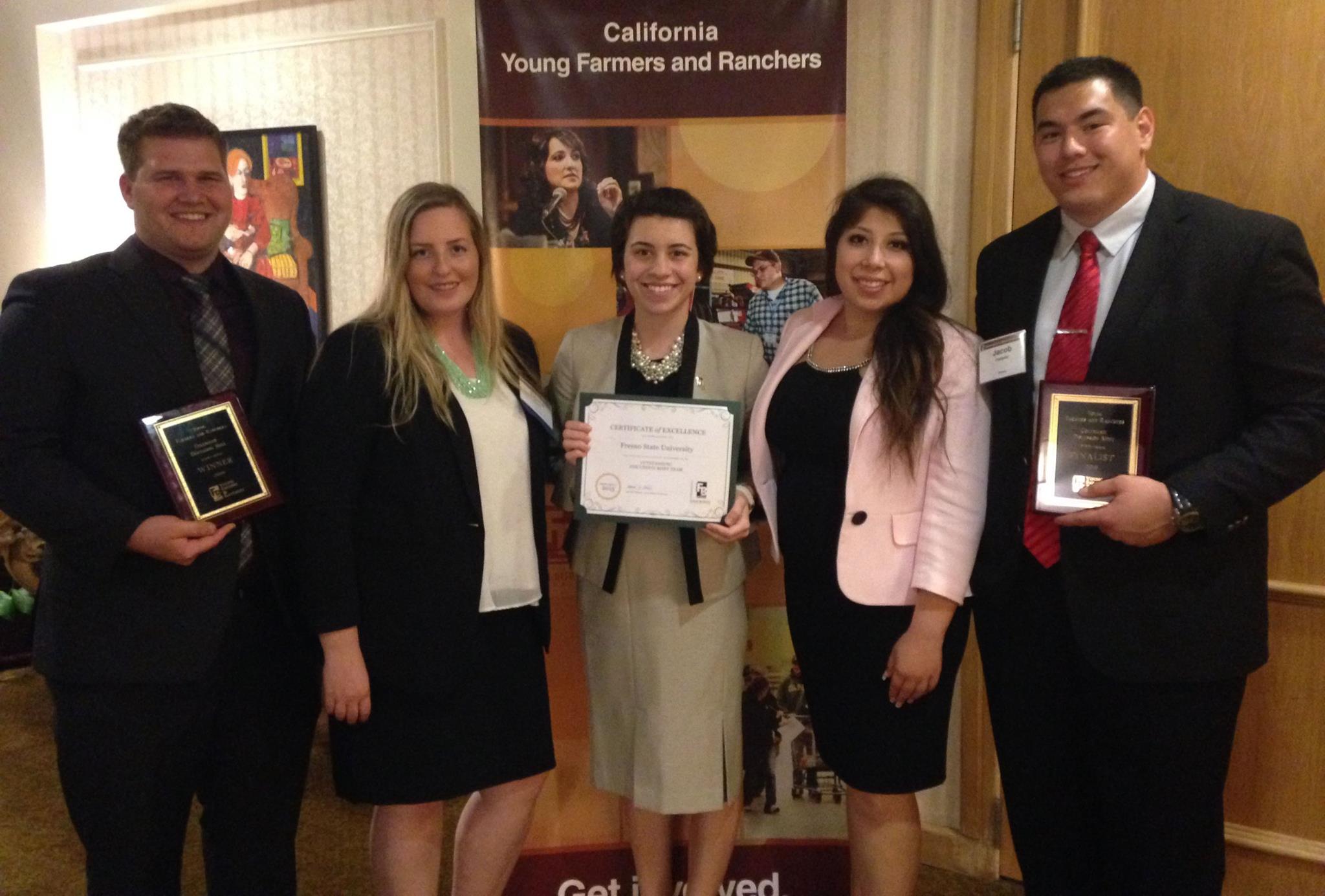
Service to community and Farm Bureau earned awards for participants in the California Young Farmers and Ranchers program, and a student from California State University, Fresno, won the state’s annual Collegiate Discussion Meet. The awards were presented at the Feb. 27 annual California Young Farmers and Ranchers Leadership Conference in San Luis Obispo.

For a second straight year, the San Joaquin Farm Bureau Young Farmers and Ranchers Committee earned the YF&R Committee of the Year Award, for its activities during 2015. The committee, composed of 45 active members, volunteered at numerous Farm Bureau and agricultural education events; donated food to local food banks and toys to children of military service members; presented three college scholarships; and raised money for the scholarship program and for the California Farm Bureau Federation Fund to Protect the Family Farm.

Napa County Farm Bureau member Johnnie White received the Star YF&R Award, which recognizes a young farmer or rancher for service to agriculture. White, a sixth-generation farmer, works as operations supervisor for a vineyard-management company and as a volunteer firefighter in St. Helena. He has been an active YF&R volunteer since 2006, serves as first vice chair of the State YF&R Committee and is a member of the 2016 Leadership Farm Bureau class.

California Farm Bureau Federation Young Farmers and Ranchers 2016 Conference logo

California Farm Bureau Federation Young Farmers and Ranchers 2016 Conference

Fresno State junior Hunter Berry (San Jacinto), an agricultural business major, won the Collegiate Discussion Meet, which simulates a committee meeting with active participation and positive group discussion. Berry began his agricultural training in high school classes and FFA activities. At Fresno State, he is pursuing an accounting concentration and hopes to obtain a master’s degree on his banking or financial analysis career path. Next February, Berry will become the sixth Fresno State student to represent California at the American Farm Bureau’s Collegiate Discussion Meet national competition.

Riley Nilsen (Nipomo), an agricultural science student at Cal Poly San Luis Obispo, was first runner-up in the competition. The other finalists were Fresno State senior agricultural business student Jacob Vazquez (Cottonwood) and Cal Poly student Haley Warner (Angels Camp). Berry earned a $1,250 prize sponsored by AgroLiquid; Nilsen earned $750 and the other finalists each earned $500.

Fresno State won the collegiate team competition, the fifth team and individual titles for the group under the direction of adviser Dr. Steven Rocca, Fresno State agricultural education professor. Other team titles came in 2014, 2013, 2008 and 2006. Berry said. “Dr. Rocca did a great job of mentoring us before and during the competition, as well as arranging for guest speakers beforehand such as Ryan Jacobsen from the Fresno County Farm Bureau. Having four of our team members make the semifinals was especially rewarding.

In addition to Berry and Vazquez, Fresno State’s team included agricultural education-communication senior Dominique Germann (Ceres), animal science-livestock business management junior Emma Briggs (Santa Rosa) and animal science-pre-veterinary senior Ana Lopez Campos (Tulare).

________________________________________________

American Farm Bureau’s Young Farmers and Ranchers program serves agriculturalists between the ages of 18 and 35 who are actively involved in production and affiliated professions.

The California Farm Bureau Federation works to protect family farms and ranches on behalf of more than 53,000 members statewide and as part of a nationwide network of more than 6.2 million Farm Bureau members.

________________________________________________

Sources: 

California Farm Bureau Federation

California State University, Fresno, Jordan College of Agricultural Sciences and Teçhnology (Geoffrey Thurner).

Photo: Collegiate Team Award Winners (2016); source: California State University, Fresno, Jordan College of Agricultural Sciences and Technology

2016-05-31T19:24:10-07:00March 14th, 2016|

David Gutierrez on Dams

David Gutierrez on Dams, Water Management and Economics

By Patrick Cavanaugh, Deputy Editor


David Gutierrez, chief of Division of Safety of Dams and program manager for the Groundwater Sustainability Program within the California Department of Water Resources (DWR), talked with Patrick Cavanaugh, California Ag Today’s farm news director, regarding dams and the DWR in Sacramento.

California Ag Today: Please explain the differences between the DWR and the State Water Resources Control Board (SWRCB).

Gutierrez: This is actually really important to understand. DWR and SWRCB have completely different functions, just generally. We have different functions with the Sustainable Groundwater Management Act (SGMA) passed last year. The responsibilities of DWR lie with developing the regulations—the rulesand assisting the locals to be successful. SWRCB is the backstop; they are the ones who are actually going to manage a basin that is not being managed successfully. They are completely different; SWRCB is a Board and DWR is not a board; it’s a department.

California Ag Today: Do you think SWRCB should have been thinking about the things we are doing today 20 years ago?

Gutierrez: On the record, the citizens of California, everybody, should have been thinking about this more than 20 years ago. You can’t really blame one group; all of us should have been thinking about this 20 years ago. We usually don’t solve problems until we get into a crisis, and that is where we are.

Save-waterCalifornia Ag Today: Wasn’t it 40 years ago when the dams were denied or no longer supported by the population?
Gutierrez: So the Central Valley Project and SWRCB were both supported in the 20’s and 30’s, all the way up through the 70’s. After the 70’s, things did change and dams stopped getting built, but also most of the resources were already tapped at that point. So now you are seeing reservoirs being built off stream as most of the resources on stream have already been tapped into. So, there is a little more to it than people being for or against dams.

California Ag Today: Do you think the Temperance Flat and Sites Reservoirs will ever be built?

Gutierrez: It is an economic question, so I bet if you did an economic analysis, during certain times it would be economically feasible, and at other times it would not be. You have got to tie in the value of the water; if water becomes valuable, it is worth doing the project. If water is not valuable, you can’t afford the project.

2016-05-31T19:24:10-07:00March 14th, 2016|

Duarte Farmland Under Siege

Duarte Farmland Under Seige By Army Corps of Engineers

By Brian German, Associate Editor

The Duarte family has been in a lengthy court battle with the federal government regarding the right to farm their own property.

John Duarte, a fourth generation California farmer and president of the family-owned nursery in Hughson, commented on how this dispute began, “My family owns a piece of property up in Tehama County that we purchased in 2012 and planted wheat that fall. The property is in some slightly rolling grasslands, and has some minor wetlands on it, vernal pools, vernal swales. Like most grasslands, wheat areas and wheat plantings, we had a local contractor go out and plow the field for us, 4-7 inches deep, and we flew on some wheat seed for a winter wheat crop in 2012.

“The U.S. Army Corp of Engineers called us and told us we were deep-ripping the property. I think they were under the misunderstanding that we were getting ready to plant orchards or vineyards there. They looked at it and assumed we were deep-ripping, three feet deep, which we were not,” Duarte said.

“They sent us a cease and desist notice in early 2013, then refused to tell us what their evidence was or how they had drawn their conclusion that we were deep-ripping. We sent two letters from an attorney, under the Freedom of Information Act, requesting evidence we had deep-ripped, the assumption that apparently warranting a cease and desist notice.”

“They refused to answer the first letter. They kicked the matter up to enforcement and then sustained the cease-and-desist notice without ever giving us a hearing and without ever giving us specific cause for their action. They obstructed our farming operations indefinitely,” Duarte noted.

As their request for the evidePacific Legal Foundationnce against them continued to be ignored, Duarte said, “We went to the Pacific Legal Foundation, where they filed a due process suit against the Army Corps of Engineers on behalf of a farmer’s right to farm their ground. The Army Corps of Engineers now claims that our 4-7 inch tillage through ground that has been tilled 18-24 inches in the past destroyed wetlands.”

“They are making extremely spurious claims that the small plowing furrows through some of the minor vernal pools are now mini mountain ranges and the valleys of those furrows are still wetlands. But the top of the furrow, maybe five inches higher than the bottom of the valley, is now a converted upland and therefore we have destroyed wetlands across the property and are subject to a destruction of wetlands lawsuit filed by the Army Corps of Engineers against Duarte Nursery.”

Nevertheless, Duarte doesn’t think this was strictly in the interest of habitat preservation, “We believe this lawsuit is completely vindictive and retaliatory because we are challenging the Army Corps of Engineers’ ability to simply drive by farms and send cease and desist notices to farmers for very little cause, and then refuse to give any information as to what their cause for the cease-and-desist notice was.”

Duarte believes the lawsuit filed by the Army Corp of Engineers is a somewhat arbitrary enforcement of wetland destruction laws, “Lately, under the new WOTUS Rule, federal administrations [designate that] everything we farm as a wetland. We’ve had experts on both sides out in the field. Everyone agrees that wetlands are still there; the wetlands are still the same size; the wetlands have the same hydrology; the wetlands still have the same pocket water when it rains; the wetlands still have wetland vegetation; the wetlands are all still there by all the parameters one would measure a wetland’s presence by.”

Duarte noted where they are in the process, and why they chose to standup for their rights, “We filed motions for summary judgement, had a motion for summary judgement hearing back in, I think it was early December, we are waiting for the judges rulings on those, so we can proceed to trial on any unsettled matters in the case. We see these types of things happening to our customers all over the state, and that is one reason we wanted to bring this suit. We’re willing to bring this suit and defend our customers, our growers’ ability to take our products and farm their land. Duarte Nursery cannot exist without our growers being able to farm.”

This situation has come at a heavy price for the Duarte family. “This has cost our company over $1 million just to stand up for everyone’s right to farm their property. In a number of important ways, there is a noose tightening around the neck of agriculture everyday, and unless we stand up and fight back, in the courts, where it is appropriate, we are going to lose our ability to farm without federal government permission to do so,” Duarte said.

________________________________

Links:

Duarte Nursery

Pacific Legal Foundation

U.S. Army Corp of Engineers

2016-07-23T17:25:28-07:00March 11th, 2016|

National Days Celebrations at Fresno State Farm Market

Fresno State Farm Market Hosts National Day Events

By Charmayne Hefley, Associate Editor


Fresno State’s Rue and Gwen Gibson Farm Market hosted its Annual Pistachio Day on February 26 in honor of World Pistachio Day. Miles Robinson, a student market lead, said, “We’ve been working with American Pistachio Growers (APG) to market this campaign and give away pistachio samples, all courtesy of APG. We are also raffling a gift basket with several of our products and APG items as well.”12821589_10153999748978330_676533612082576193_n

Robinson said the Fresno State farm market plans to host monthly events to feature the store and student products, including that very fowl day, Poultry Day, on March 18, and National Raisin Day on April 29. “For Poultry Day,” Robinson said, “we’ll be sampling Foster Farms chicken in a couple of different recipes. We look forward to having people actually taste our chicken. We will also have a chicken dance contest. For National Raisin Day we’re partnering with the California Raisin Board to bring information, samples and have a fun time.”

Robinson said the student-run farm market, which specializes in student-made products, is in the process of creating new recipes for its coated nuts and raisins. “Over the past year, we’ve been slowly rolling out new recipes for our milk chocolate raisins, milk chocolate almonds, milk chocolate cabernet raisins and dark chocolate raisins,” Robinson said. “All of our products will have brand-new recipes, 100 percent Fresno State-done.”

2016-08-10T11:56:30-07:00March 11th, 2016|
Go to Top