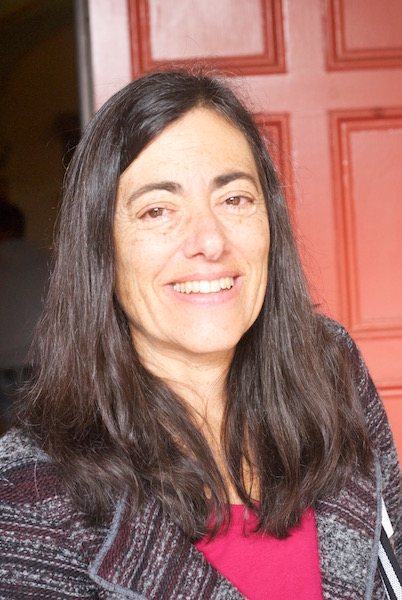
UC’s Karen Klonsky Retires

Karen Klonsky Retires, Gets Major Credit for CA Agricultural Cost and Return Studies

By Patrick Cavanaugh, Deputy Editor and Laurie Greene, Editor


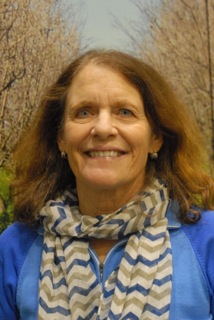
This is an exclusive interview with Karen Klonsky, UC Davis Cooperative Extension specialist emeritus, in the UC Davis Department of Agricultural and Resource Economics. Her expertise has been farm management and production, sustainable agriculture and organic agriculture.

CAT: Congratulations on your recent retirement!UCANR 100 years logo

Klonsky: Thanks Patrick. I retired on July 1, 2015, after 34 years. I started at UC Davis in ’81, straight from graduate school.

CAT: What has been your primary research interest?

Klonsky: My primary research areas are sustainable and organic agriculture. I have approached these subjects from several dimensions, including the economic feasibility of alternative farming practices, the size and growth of organic production in California, and factors influencing the adoption of alternative farming systems.

CAT: Wow, what a great career! I understand your interest in alternative farming systems began with your dissertation work comparing alfalfa systems with integrated pest management.

Klonsky: I studied agricultural economics in graduate school and started working with a professor in my department who had a joint appointment in agricultural economics and entomology. And I just became very interested in that research area.

I worked with entomologists and researchers on a computer model of plants and alfalfa weevils, and their interaction, plus a management component. I studied the plant and bug components, then did the management part and imposed it on top and asked, ‘If you did this, how many bugs would die?’ The plant model showed how much the alfalfa would grow, and at what point you could cut the alfalfa and achieve the desired yield. I never actually did any fieldwork.”

CAT: Since 1983, you not only directed ongoing Cost and Return Studies, but the development of an entire archived library of Cost and Return Studies for the UC Davis Department of Agricultural and Resource Economics. You recently completed studies on pistachios and walnuts, right?

Klonsky: Yes, both “Sample Costs to Establish and Produce English Walnuts In the Sacramento Valley, Micro sprinkler irrigated” and “Sample Costs to Establish and Produce Pistachios In the San Joaquin Valley-South, Low-Volume Irrigation.”

Our library contains studies about field, tree and vine crops and animal commodities. But since I retired, Dan Sumner, director, University of California Agricultural Issues Center and Frank H. Buck, Jr. Distinguished Professor for the Department of Agricultural and Resource Economics has taken that over and I continue to be peripherally involved.

CAT: These cost studies have been recognized worldwide.ARE Cost and Return Studies

Klonsky: Yes, and it has been very gratifying work. We decided to put them online routinely, and we have had a million downloads per year. Around 2005, Pete Livingston, my staff research associate, got the idea of scanning in the older studies. All of the newer studies were in electronic file format, so posting was easy. However, most of the older studies were paper copies, so we got a grant to scan and add them to our new online archive.

CAT: What was the most interesting thing about doing those cost studies?

Klonsky: I loved doing those studies. I really learned a lot because all cost studies are done directly with farmers we met through county farm advisors. I really got to know what farmers were thinking about and what their options were.

CAT: So those were real costs, not university costs?

Klonsky: Those were not university costs. The farmers tell us what equipment they will use, and then we calculate the cost of using their equipment—the fuel used to operate the equipment and the repair costs—with an agriculture-engineering program.

CAT: Do you have a math background?

Klonsky: Yes, I got my bachelor’s at the University of Michigan in mathematics. It was very helpful.

CAT: And you also earned your Ph.D. at the University of Michigan?

Klonsky: Yes.

CAT: So did you grow up in Michigan?

Klonsky: No, I grew up in New York.

CAT: And you just had an interest in going to Michigan State University?

Klonsky: Well, I had an interest in agriculture because I had an uncle who farmed corn and vegetables in upstate New York. We would go up there and I thought it was the most wonderful thing in the world.

CAT: What were some of the highlights of your career?

Klonsky: For many, many years, I was involved in the long-term on-campus sustainable agriculture research on land that is now on Russell Ranch, but it started as Sustainable Ag Farming Systems. We looked at four different farming systems, organic, low input, high-input, and we did a lot of analyses with cover crops and rotations. It was great to work on that project.

CAT: And you worked with USDA on the trends of organic farms?

Klonsky: And then I worked quite a bit with Department of Food and Agriculture on using the registration data for their organic farmers to compile statistics about how many farmers they had, what they grew, and the number of acres they planted with each crop. They had this database, which started in 1992 I believe, but they weren’t using it. Now the most recent registration analysis is available for 2012.

CAT: Just to try to get more data on the organic movement and organic growth?

Klonsky: Yes, because there was no data at all about it. Now NASS (National Agriculture Statistics Service) conducts a nationwide Organic Census, in addition to the regular Census of Agriculture.

CAT: I understand you served as an editor of the Journal of American Society of Farm Managers and Rural Appraisers (ASFMRA). What did that entail?ASFMRA

Klonsky: Yes. I did that for many years. ASFMRA is a national organization. The Journal of the ASFMRA comes out annually. As editor, I corresponded with the authors, assigned reviewers, and ultimately, accepted or rejected submissions, like any journal.

CAT: Did you travel a lot with your work and presentations?

Klonsky: You know, not so much, I went to Spain one time and France once for work. But I did travel around domestically to symposiums and conferences to speak on the economics of growing a lot of different crops, including many presentations at the EcoFarm Conference.

CAT: You worked and collaborated with some really interesting people.

Klonsky: Most of my important collaborations were conducting trials with people in other disciplines. For instance, at Russell Ranch, I was the only economist involved in the collaboration with plant pathologists and pomologists who ran trials to discover fumigation alternatives in the preplanting of trees.

Then I worked with people at UC Santa Cruz on alternatives for strawberry fumigation. Most of my work has been interdisciplinary.

CAT: California farming in general is huge, diverse industry. We produce 60% of the fruits and vegetables, and nearly 100 percent of the nut crops that people across the country consume. Any comments on that and on how valiant and resilient farmers are to get through year after year, particularly lately with the drought and the lack of water deliveries?

Klonsky: When I first started, there was a land price bubble, and there were a lot of bankruptcies because people had these land payments they just couldn’t pay.

It was kind of like the mortgage crisis that housing saw in 2008, agriculture saw in the early 80s.

CAT: So as you have been editor for the Journal of the American Society of Farm Managers and Rural Appraisers, you see land values going up and that keeps agriculture strong—the high land values, right?

Klonsky: Well, but it keeps it expensive. So now there is more and more leasing of land. As farmers retire from permanent crops, they have an orchard, but they don’t really want to sell it, so they lease it.

CAT: There you go. Keep it somehow in the family.

Klonsky: Yes, they try to keep ownership in the family. Or what we see also are these development leases where a young farmer can’t afford to buy the land, so they lease the land, but they pay for the trees to be planted.

CAT: So you are still coming to your office at UC Davis?

Klonsky: I am officially retired, but we have what we call a ‘partial recall’ where you can do things if you have funding. I have a project along with Rachel Goodhue, Professor, UC Davis Department of Agricultural and Resource Economics, with the California Department of Food and Agriculture, funded through the California Department of Pesticide Regulation. The Department of Pesticide Regulations is required by law to do an economic analysis of all proposed new regulations. So that is what I am working on.

CAT: Give me a couple of examples. VOC regulations?

Klonsky: Yeah, we do VOC.

CAT: Are you looking at sustainable groundwater legislation?

Klonsky: No, just pesticide regulation. It is funded by the Mill tax on pesticides.

CAT: Did you work with a lot of graduate students at UC Davis?UC Davis Graduate Studies

Klonsky: Oh yeah, I worked with a lot of graduate students coming through. One of them was on different ways of pesticide management on eucalyptus trees. I said I went to Spain. On that trip, I spoke about growing eucalyptus for firewood.

CAT: That was an economic study, wasn’t it?

Klonsky: Yes it was. They grow it not for firewood, but for paper. But that never really caught on here.

CAT: Are you bullish on agriculture? Do you think Ag is going to continue thriving in California?

Klonsky: Oh, sure. Oh, sure. But I think that the water situation is definitely real, and I think agriculture already has definitely made tremendous strides in irrigation systems, especially the subsurface irrigation in vegetables, in particular processing tomatoes, which I worked on.

CAT: That was a huge improvement in growing tomatoes. And people didn’t think it was going to work, but it turned out to be fantastic.

Klonsky: Yeah, a really win-win on that one. And orchards are getting more efficient. If you look at the water per pound of crop produced, you see major improvements with water efficiency.

CAT: Absolutely. Of course, most plants transpire most of the water they take up through the roots, up through the leaves and the stomata cells. By the way, do you have any interesting stories regarding your career?

Klonsky: It’s not the highlight, but the weirdest thing of my career is I got an email from somebody in Ministry of Agriculture and Fisheries from the United Arab Emirates. They wanted me to give a live presentation about Cooperative Extension in California and how it’s organized.

So I had to go to this office building in downtown Sacramento at 10:00 at night because of the time difference. I went into a conference room that had a special kind of projector so I could see them and they could see me. And on the monitor I see all these men walked in—they were all men—and half of them were in Western dress and half of them were wearing a Sheik-like headdress, with a band that sits on top and holds it on.

That was crazy, just being downtown after everybody is gone and the whole building was dark and quiet, except the one room that I was in.

CAT: How long was the presentation?

Klonsky: Gosh, maybe an hour.

CAT: You needed to do some research for that presentation?

Klonsky: Yeah, I had to do some research, I had to think about Cooperative Extension in a different way—the big picture. 

CAT: Keep up the good work, and I hope you are enjoying retirement.

Klonsky: Yeah, I come in two days a week, so it is nice to see everybody. I still get a lot of emails, which I need to answer.
2016-08-18T13:54:40-07:00January 26th, 2016|

Ag Collaboration with the Netherlands

Karen Ross: Ag Collaboration with the Netherlands

By Charmayne Hefley, Associate Editor


One of the best ways to overcome the challenges that arise in farming, is ag collaboration with countries that have already found solutions to the issues we face.

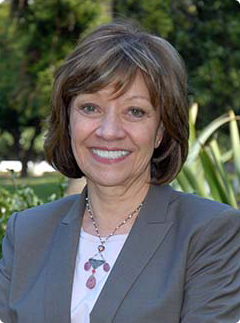
Karen Ross, secretary, California Department of Food and Agriculture, led a delegation of Californians to the Netherlands last month, “for shared discussion on all of the ways we can collaborate on climate-smart agriculture,” Ross said, “including water-use efficiency and improved fertilizer use.”

“In particular, the Netherlands has a shared issue with us—nitrates in groundwater—and what we can do to improve our water management and fertilizer management to avoid that. They’re doing some interesting things with greenhouse technologies and salt-tolerant crops, so we saw some real opportunities. We had university people with us to do some trials here.”

Ross’s group was able to visit Wageningen UR (University & Research centre), Netherlands’ prominent agriculture university. She said between the University of California, Davis and the Dutch university, “we found ways that we can collaborate together to find the solutions that are not just about here in California,” Ross said. “If we can solve these problems on water-use efficiency, desalinating brackish water, and salt-tolerant crop issues in California, we will make a contribution to solving these problems on a global basis.”

Ross’s team also visited many farmers, primarily of specialty crops. Ross commented, “We saw some of their digester technology, which we know is one of the solutions for our dairies. We really want to advance that technology, make it affordable and provide value to our dairies.”

2021-05-12T11:05:58-07:00January 22nd, 2016|

California Water Priorities Ballot Measure Review Completed

Legislative Analyst Completes Review of California Water Priorities Ballot Measure

California Water Alliance (CalWA) executive director Aubrey Bettencourt announced TODAY that California Legislative Analyst Mac Taylor and Director of Finance Michael Cohen reported their findings to Attorney General Kamala Harris regarding CalWA’s proposed constitutional and statutory amendment for November’s General Election ballot.

In its report to Attorney General Harris, the Legislative Analyst’s Office (LAO) found that the water priorities ballot measure “would not significantly increase or decrease the state’s anticipated debt payments.”

“We are pleased that the LAO agrees that our measure performs as we intended and has no undesirable fiscal effects,” said Bettencourt. “From the outset, we wrote it to avoid any new taxes, new debt, new user fees, or other costs to the state’s taxpayers.”

The measure would redirect up to $10.7 billion in previously-authorized High-Speed Rail Project and 2014 Water Bond general obligation bond authority to fund construction of specific water-storage related projects throughout the state and amend the state’s constitution to prioritize uses of water, putting people’s needs first.

By helping to solve California’s water storage infrastructure needs, the initiative would remove unspent bond funds from the High-Speed Rail Project approved by voters in 2008, now listed as the least important infrastructure priority according to the recent Stanford Golden State Poll. Dealing with the state’s water problems is the majority of voters’ top priority, according to the same poll.

CalWA sponsored the measure with State Senator Bob Huff and Board of Equalization Vice-Chair George Runner, its proponents.

The LAO also found the net effect of the measure on federal funds and its impact on state and local governments were unknown. The LAO also reported the measure could cause unknowable changes in other state capital projects.

 Bettencourt said that Attorney General Harris is expected to finish her review within a week and release an official title and summary for the measure, the first step in circulating petitions to qualify the measure for placement on November’s ballot.

“The people of California will be given the ability to reprioritize the state’s direction for the needs of today—from a high speed train to water storage,”  Bettencourt said. “They will soon be able to sign the measure’s petition and help us in our efforts to qualify this important initiative measure for a vote of the people,” she concluded.

_____________________________

About the California Water Alliance

The California Water Alliance is a statewide nonprofit organization dedicated to raising awareness about the nature of water and promoting long-term, sustainable solutions that meet the health and security needs of families, cities, businesses, farmers and the environment. To learn more, visit www.CaliforniaWaterAlliance.org.

About the California Water Alliance Initiative Fund Committee

The California Water Alliance Initiative Fund Committee (FPPC ID#1381113), sponsored by the California Water Alliance, a non-profit IRC §501(c)(4) organization, is a state primarily formed ballot measure recipient committee organized to qualify two or more state ballot measures for the November 2016 ballot. It is permitted to accept unlimited, non-tax-deductible donations from individuals, corporations, partnerships, nonprofit organizations, and any other lawfully permissible sources. For more information and restrictions, please visit http://cawater4all.com/

Paid for by the California Water Alliance Initiative Fund |  455 Capitol Mall Suite 600, Sacramento, CA 95814

2016-05-31T19:24:15-07:00January 20th, 2016|

Red Scale Challenges Citrus

Besides HLB, Red Scale Challenges Citrus

By Charmayne Hefley, Associate Editor

While much of the talk in the citrus industry is about how to fend off Huanglongbing (HLB) disease, one of the most devastating citrus diseases, Dr. Beth Grafton-Cardwell, director of the University of California Agriculture and Natural Resources Lindcove Research and Extension Center, reinforced that HLB isn’t the only pest that can overtake California’s citrus orchards.

Grafton-Cardwell explained how last year’s warm winter led to an increase in the California red scale, Aonidiella aurantii, population. “Normally we have cold conditions that kill off the younger instars of the scales and [basically] restarts the system. But we didn’t really have any low temperatures last year, so the scales didn’t go into their usual hibernating phase. They just kept cranking out crawlers and adding in an extra generation or two of production. So the higher number of scales on the trees made it much more difficult for the growers to control.”

Grafton-Cardwell explained while it is difficult to speculate whether this coming year will yield another large population of the CaSave Our Citruslifornia red scale, “We have already received more moisture as a result of seasonal rainfall, which should help hinder the pest. Hopefully we’ll get some cooler weather conditions too–not freezing because citrus groves don’t like freezing temperatures–but cold enough to knock out some of the scales and get the population back under a manageable level,” she said.
Nevertheless, despite the challenges that California red scale can cause, Grafton-Cardwell said, overall, citrus growers need to keep their focus on the fight against the Asian Citrus Pysllid (ACP), Diaphorina citri, and its ability to spread HLB. “Growers need to start thinking in terms of: California has the [HLB] disease and it’s going to start spreading in southern California soon,” Grafton-Cardwell said. “What do we do to prevent it from spreading up here into the San Joaquin Valley?”

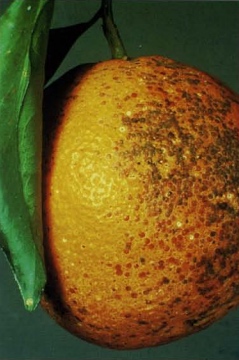
Photo source: “Life Stages of California Red Scale and Its Parasitoids,” UC ANR Publication #21529, by Forster, Lisa D.; Robert F. Luck; and Elizabeth E. Grafton-Cardwell; with photos by L. Forster and M. Badgley)

2021-05-12T11:03:04-07:00January 20th, 2016|

Cattle Industry Supports TPP

California Cattle Industry Supports TPP Trade Proposal

By Charmayne Hefley, Associate Editor

Justin Oldfield, California Cattlemen’s Association’s vice president of government relations and a cattleman in Sacramento County, expressed support for the Trans-Pacific Partnership (TPP) at the December roundtable in Sacramento at which U.S. Department of Agriculture (USDA) Under Secretary for Farm and Foreign Agricultural Services Michael Scuse presented.

Oldfield anticipates TPP would boost demand for U.S. farm and food products among nearly 500 million consumers in 11 countries. “TPP is largely supported not only by California’s beef industry, but across the country, largely because members of TPP represent some of the largest export markets for U.S. beef.”

“Consumers in those markets love U.S. beef,” said Oldfield, “Unfortunately, we do have some pretty high tariff rates in TPP-member countries.” Oldfield explained the U.S. has recently been at a competitive disadvantage with Australia in supplying beef to Japan. Australia, which also depends on its beef exports, has a lower tariff right now with the Japanese.

“A good percentage of that [Japanese] market has been taken away from us by the Australians,” Oldfield said. “With TPP in place, it will put us right back on a level playing field with the Australians and a reduction in tariffs in the long-term. We hope to recapture some of that market share back once TPP is done,” said Oldfield.

Oldfield hopes Congress moves quickly on TPP to make it eligible for a vote, “so that we can get back to sending high quality beef to the Pacific Rim. Every day that Congress sits on [TPP] will cost beef producers money here, and not just in California, but across the United States in terms of our market access to Japan,” he said.

2021-05-12T11:17:15-07:00January 18th, 2016|

Fresno State Helps Hungry Students

Fresno State Program Helps Hungry Students

By Brian German, Associate Editor


California State University, Fresno (Fresno State) recently began a multi-initiative program to support students who are struggling with food insecurity. Jessica Medina, coordinator of the “Food Security Project” at Fresno State, said, “The project has five initiatives: an on-campus food pantry, education and resources, an app titled, “Catered Cupboard,” that shows students where on campus they can receive free food, complimentary meals at the university dining hall and the Good Samaritan Fund,” she explained.

Medina said the on-campus food and hygiene pantry, named, “Student Cupboard,” provides students with access to free food and hygiene on a daily basis. We also provide them with education—how to cook those things, how to budget, how to make sure they can afford different things as a student, and connections to resources such as CalFresh, the WIC program and other agencies in the community they can benefit from. We offer emergency funding if they ever need things, as well as lots of other initiatives that access fresh nutritious food,” she noted.

Medina said Fresno State is also a member of the College and University Food Bank Alliance (CUFBA), a professional organization of campus-based programs focused on alleviating food insecurity, hunger, and poverty among college and university students in the United States. As of TODAY, there are 257 active member institutions of CUFBA.

Medina said such CUFBA members are growing in numbers. “We are starting to pop up on other campuses,” she stated, “and we are excited the chancellor of the CSU system, Chancellor White is going to be supporting a conference to have these conversations and create a model for other institutions for the future.”

Medina said students who go hungry are less likely to do well in their studies, “There are a lot of studies on what students are like in the elementary classrooms, but [food insecurity] continues on to college and beyond as well. When you don’t know where your next meal is coming from, when you don’t have that food access available to you, it is hard to concentrate. It is hard to focus. It is hard to be successful as a student. And that is what this program isa ‘student success’ program for our students.”

Hired as a fulltime employee by Fresno State to coordinate this, Medina commented, “I think we are one of the first campuses to create a full-time position to coordinate this effort. I graduated from Fresno State with both my undergraduate and master’s, and I am very fortunate to continue on here and be a part of this.”

________________________

Links


CalFresh

California State University, Fresno

Catered Cupboard

College and University Food Bank Alliance (CUFBA)

Food Security Project

Food Security Project Resources

Good Samaritan Fund

Students Covered

WIC program

2016-05-31T19:26:58-07:00January 15th, 2016|

Project Apis m. Helps Almond Growers Empower Bees

Project Apis m. Helps Almond Growers Empower Bees

With Free Flowering Forage

By Patrick Cavanaugh, Deputy Editor


Christi Heintz, executive director for Project Apis m. (PAm), elaborated on the message she presented at the annual Almond Conference last month in Sacramento, “Our purpose at the Almond Industry Conference was to meet growers and talk to them about planting additional forage before and after almond pollination. These are times of dearth when honey bees are not getting the nutrition they need and beekeepers have to feed tremendous amounts of sugar syrup or high-fructose corn syrup to keep the bees alive,” Heintz said.

Project Apis m.Established as a non-profit organization in 2006, PAm has the goal of funding and directing research to enhance the health and vitality of honey bee colonies while improving crop production. Heintz explained PAm.—named after Apis mellifera, the scientific name for the European honey bee—offers farmers free mustard mix for pre-almond bloom or clover mix for post-almond bloom to extend the season of nutrition availability for bees when they are most vulnerable. The increase in forage also benefits bees by providing additional natural and more diverse sources of nutrition resulting in better pollination and increased crop yields.
Heintz wants more growers to take part in the program. She reemphasized, “Honey bees love almonds, but we worry about those times just before and just after bloom. If you can get something going before bloom, you’ll get bee colonies that want to go out and forage for pollen, and they will be in great shape for almond pollination,”Heintz said.

Heintz enthusiastically urges growers to get involved by contacting PAm at ProjectApis@gmail.com and ask about forage seed mix to plant for honeybees. Growers can also go to the Project Apis m. website and to their web page For the Almond Grower.

Heintz has managed research, including pollination research since 1979, and has focused on honey bees since 2006. She also manages the Environmental Sustainability Program and production research for the Almond Board of California.

2021-05-12T11:05:58-07:00January 14th, 2016|

Protecting California Citrus from ACP

Protecting California Citrus from ACP

By Charmayne Hefley, Associate Editor

[embedvideo id=”ZWgOOjpxwE8″ website=”youtube”]


California’s $2.2 billion fresh citrus industry that supplies 85 percent of the nation’s fresh citrus is currently healthy and vibrant despite the background threat of the Asian Citrus Psyllid (ACP), according to Kevin Severns, a citrus grower in Sanger, CA; general manager of the Orange Cove-Sanger Citrus Association, a cooperative citrus packing house in eastern Fresno County; and  chairman of California Citrus Mutual.

“We’re quite concerned about it,” Severns said about the ACPa tiny bug that is a known carrier or vector of “huanglongbing” (HLB), a devastating, incurable disease of citrus trees  that has already demolished the citrus industry in Florida. “We’ve been able to keep the bug at bay to this point,” Severins continued, “at least here in the Central Valley, but we’re very concerned about it. There are a lot of issues to be concerned about with this bug.”

Save Our CitrusCalifornia has taken note of the devastation of Florida’s industry, Severns said, and is taking steps to ensure the safety of California’s citrus. “Having gone to Florida with many of our citrus growers,” Severns explained, “I heard Florida growers tell we must control the bug. So we’re trying to keep this bug at bay and not allow [the infestation] to expand. We’ve had varied success in different areas of California, but so far, we’ve been able to keep the bug’s expansion here in the Central Valley to a minimum. We continue to have finds from time to time, but we haven’t yet had an explosion of the population of the ACP.”

Severns said, “We have a very successful partnership with the California Department of Food and Agriculture (CDFA).” While trapping ACP is critical, he emphasized the importance of enlisting the help of residential folks with citrus in their backyards to get involved in the conversation, to look for this pest, and to join in the fight. “The trap is very limited in its ability to pick up ACP, so it’s very important that we have visual surveys in which growers and homeowners actually go out and look at their trees for the bug.”

Severns said current measures against the spread of the ACP is helping to buy time for researchers to find a cure for HLB. “We realize every place on earth where the ACP has gone, eventually has been followed by HLB,” Severns said, “so we’re trying very hard to buy time and give our researchers and scientists a chance to come up with a solution to this disease—whether it is a resistant type of citrus variety or a cure for the trees.”

Preventing the spread of ACP and HLB, from commercial citrus growers to residential citrus growers, will require that everyone works together. To learn more, go to CaliforniaCitrusThreat.org or contact your local Ag Commissioner.

_________________

Did you know, the historical time period establishing the California citrus industry is known as the “other” California Gold Rush? (Source: California Citrus Mutual)

_________________

2021-05-12T11:05:58-07:00January 12th, 2016|

Grower-PCA Communication is Critical

Grower-PCA Communication is Critical

By Laurie Greene, Editor

Emily Symmes, UC Cooperative Extension Integrated Pest Management Advisor, Butte County, is amazed at the professionalism of growers and Pest Control Advisors (PCAs). “I deal directly with growers and land managers, as well as crop advisors and pest control consultants” said Symmes, “and everyone has so much to do out there, so grower-PCA communication is critical. Sometimes it is amazing how they get it all done. I feel lucky, as I get to focus on the pest management and other production activities throughout the season,” she noted.

Symmes maintains there has to be a lot of communication back and forth between the growers and PCAs and herself. “And within each question there is a deeper conversation,” she elaborated, “but it can get lost in the shuffle of running from one thing to the next. Everything is very time sensitive in agriculture; we don’t have control over weather and things that tend to drive pest population cycles.”

“So within each of those key pest management questions, there is a subset of questions:

  • How do we know that it is time?
  • Are we doing the right thing at the right time?
  • Are we using the right materials?
  • Are we considering the big picture?’”

“The other big key ingredient is follow-up—evaluating:

  • How did we do?
  • Did the treatment work?
  • Did it cause any potentially negative impacts that we weren’t aware of?
  • Did we have to come back and do something additional (after-the-fact)?
  • More questions about the treatment, time, and material.”

    PCA Responsibilities (CA DPR)

    PCA Responsibilities (CA DPR)

And on any California Department of Pesticide Regulation (DPR) recommendation, there is a question before the last signature line, ‘Have you thought of any other alternatives before you make this application?’ IPM practitioners sometimes misunderstand this to mean, ‘Well they don’t want us to treat.’ But it is really an acknowledgement that we know how important all of our management tactics are,” Symmes noted.

“Cultural practices are important, pesticides are important, but knowledge is really the key ingredient. Growers and PCAs are knowledgeable, have explored the alternatives and know what is going on in this particular orchard block they are signing this legal document for. Honestly, I think we do a great job.”

“I think California has done a fantastic job with this,” said Symmes,”but is there room for improvement? I think there always is.”

2021-05-12T11:05:59-07:00January 7th, 2016|

Farmers are Asset Managers

Farmers are Asset Managers

By Brian German, Associate Editor

Richard Casias, principal scientist and managing member at RCC Group, LLC, an environmental management consulting company based in Davis, expressed his deep respect for the Valley’s local farmers’ positive outlook, “What I really appreciate about these individuals is farmers are true asset managers. Their goal is to work efficiently, effectively and bring a good investment off the land they are managing.”

RCC Group’s primary customer base of almond, walnut and pistachio growers approach Casias by introducing their asset, emphasizing ongoing preservation of that asset, and making certain that the inputs are positive, and losses are minimized, like any company. With over 30 years of experience in earth science and environmental management, Casias attributes his expertise to this ongoing learning process.

Casias has traveled nationwide, including Hawaii, Nevada, Utah, New Mexico and Texas, promoting environmental management systems and conducting environmental and water resource investigations. “I’ve been advocating for an environmental management system for farming operations. Australia and other countries have been doing it, and it is completely applicable here in Central Valley farming operations.”

Casias continued, “So many of the farming practices that are being done are not getting farmers the positive feedback and validation as good land and water stewards. That is part of my motivation—to make sure growers recognize and take credit for all the extra work that they do to make their farming operations successful.”

When it comes to increasing water regulations on farming, Casias commented, “I try to remind growers that public scrutiny is not solely focused on agriculture as the villain; there are a number of people [and industries] using these natural resources.”

2016-05-31T19:26:59-07:00January 7th, 2016|
Go to Top