Documentary Film “The Fight for Water” premieres May 16 On Demand and at the Film’s Website

The award-winning documentary film, The Fight for Water: A Farm Worker Struggle, which highlights the 2009 Water Crisis as a cautionary tale on the current California drought, is making its way to Video on Demand May 16.  It will also be available for viewing through the film’s website at www.thefightforwaterfilm.com.

The film follows two farmers (Joe Del Bosque and George Delgado) and their farmworkers around their drought-stricken lands in order to understand how an environmental decision that took away their water impacted their lands, their way of life and their community.

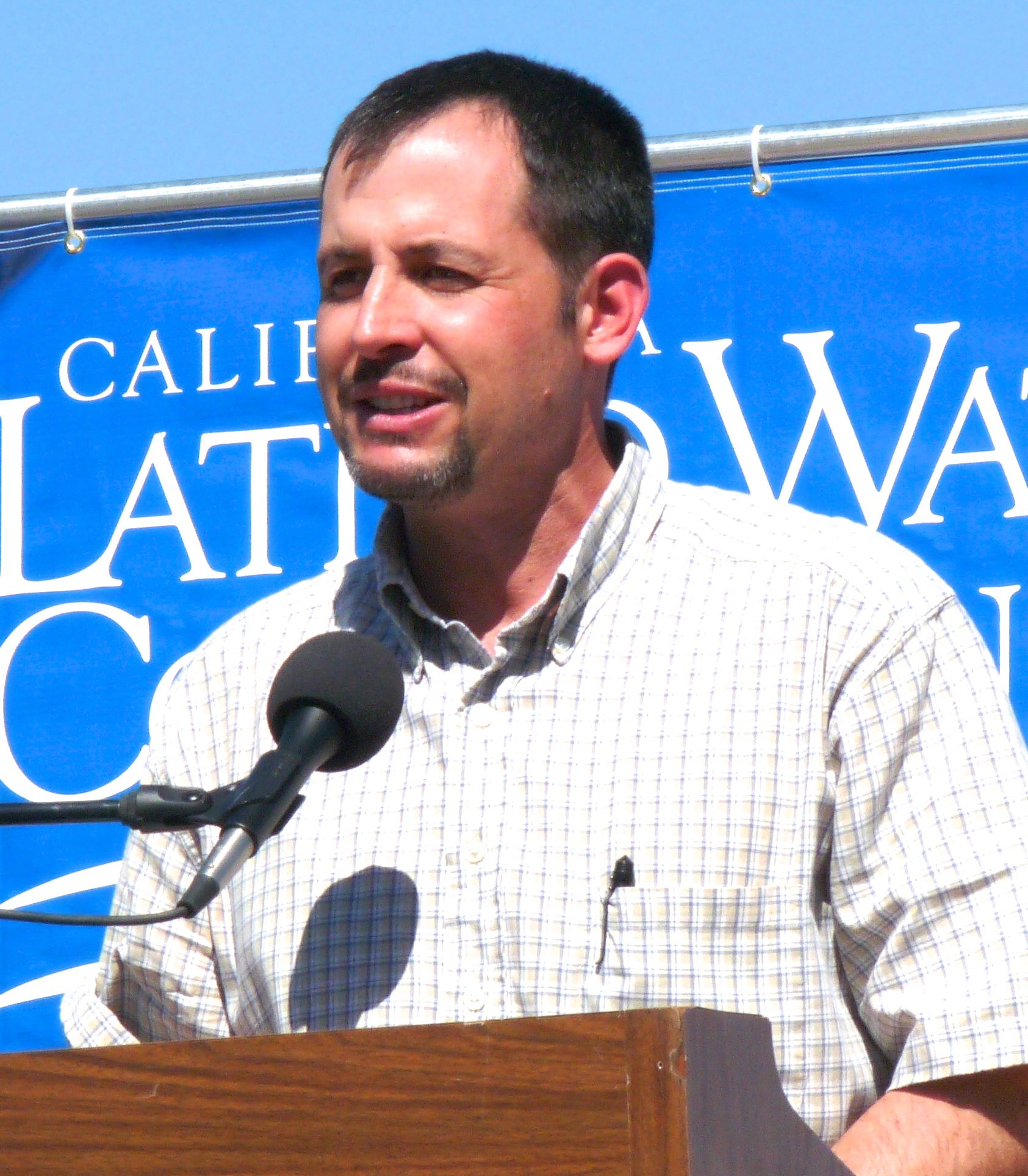
Recently, Del Bosque was thrown into the national spotlight when President Barack Obama visited his drought-stricken farm to address the current water crisis in California.

Hollywood actor Paul Rodriguez is also featured in the film for his activism.  He helped organize a four-day march, in the style of Cesar Chavez, to draw attention to the dire situation that saw over 200,000 people in food lines. Former Governor Arnold Schwarzenegger also makes an appearance on the film.

The film was produced by Juan Carlos Oseguera, 40, a San Francisco State University alumnus who has been a published film critic and an accomplished producer and editor of several award-winning short films.

This is his first feature-length film.

The historical documentary, has screened at over 10 film festivals; winning accolades and worldwide recognition.  It received the Best Documentary award at the 2013 International Monarch Film Festival and at the 2013 Viña de Oro Fresno International Film Festival

The film also received runner-up honors for Best Documentary in Cinematography and for Best Political Documentary Film at the 2013 Action on Film International Film Festivalwhere it also received a nomination for Excellence in Filmmaking.

“It’s important that we understand that perspective of what the ‘Water Wars’ mean on a really, really human scale,” stated Lois Henry, a newspaper columnist who reviewed the film for The Bakersfield Californian. “People should see this film.”

For more information about the film visit: www.thefightforwaterfilm.com or www.facebook.com/thefightforwaterfilm

For interviews, film review requests or questions about the film, contact Filmunition Productions at filmunition@yahoo.com

2016-05-31T19:35:32-07:00May 15th, 2014|

Heat Illness Prevention: Warning for Farmworkers This Week

Heat Illness Prevention

Extreme Heat Wave Expected to Continue Throughout this Week


With really high temperatures throughout the Central Coast, Cal/OSHA will probably focus enforcement in coming days in these areas. Please remember the key points of compliance with the Heat Illness Prevention Standard:Heat Illness Prevention


* Water — 1 quart per worker per hour, with a plan for replenishment throughout the work shift


* Shade — enough for 25% of the crew working at the location; use of natural shade is acceptable if no shadow is cast; air-conditioned vehicles are acceptable; provided at all times when temperature exceeds 85 degrees


* Rest — allow workers to rest in shade if they feel the need for no less than 5 minutes


* Training — workers & supervisors must be trained about heat illness and emergency response procedures before being exposed to heat


* High-Heat Procedures — ensure effective communications in case of emergency; observe employees carefully for signs of heat illness; remind employees to drink water throughout the shift; closely supervise un-acclimatized employees for first 14 days of exposure to high heat

2017-05-04T16:51:11-07:00May 14th, 2014|

Urgent: Protect Workers from Excessive Heat

Extreme Heat Wave Expected to Continue Throughout Week

With really high temperatures throughout the Central Coast, Cal/OSHA will probably focus enforcement in coming days in these areas; please remember the key points of compliance with the Heat Illness Prevention Standard:

* Water — 1 quart per worker per hour, with a plan for replenishment throughout the work shift

* Shade — enough for 25% of the crew working at the location; use of natural shade is acceptable if no shadow is cast; air-conditioned vehicles are acceptable; provided at all times when temperature exceeds 85 degrees

* Rest — allow workers to rest in shade if they feel the need for no less than 5 minutes

* Training — workers & supervisors must be trained about heat illness and emergency response procedures before being exposed to heat

* High-Heat Procedures — ensure effective communications in case of emergency; observe employees carefully for signs of heat illness; remind employees to drink water throughout the shift; closely supervise un-acclimatized employees for first 14 days of exposure to high heat

2016-05-31T19:35:32-07:00May 14th, 2014|

California Women for Agriculture – Heels Hit the Halls of Sacramento Capitol Building

Over 70 members of California Women for Agriculture (CWA) from all over the state attended legislative and lobbying efforts in Sacramento on May 6th and 7th, 2014.

Last Monday’s meeting provided an overview of legislation currently in front of elected officials in Sacramento.

Attendees gathered talking points and discussed the merits of each bill individually including:  SB 1381 (Evans), AB 2033 (Salas), SB 935 (Leno), SB 1410 (Wolk/Nielsen), AB 2362 (Dahle), AB 1961 (Eggman), AB 1871 (Dickenson), AB 2413 (Perez) as well as Williamson Act Subvention Payments and several proposed Bonds addressing water storage and conveyance in California.

With over 70 women committed to lobbying last Tuesday, CWA was able to attend 86 appointments with elected officials.  Many of the appointments were secured through CWA’s Adopt-a-Legislator Program.

This program unites urban legislators with CWA Chapters to help educate them about pending legislation and other issues facing agriculture by committing to continue communication with the Adoptee throughout the year.

CWA honored two elected officials with their annual Cornucopia Award.  Assemblyman Bill Quirk representing District 20 and Senator Ricardo Lara representing District 33, were honored on the floor in Senate Chambers.

Recipients of the Cornucopia award are from an urban area and have displayed a commitment to agriculture through their work as an elected official.

Assemblyman Quirk currently serves on the Agriculture Committee. As Chairman of the Latino Caucus, Senator Lara has crossed party lines to support Agriculture and unite elected officials.

CWA hosted a Legislative Reception at Downtown & Vine in Sacramento.  This well attended event was open to all elected officials, their staff as well as trade organizations and state commissions.

For more information about California Women for Agriculture including membership, donations and chapter activities in your area, please call 916-441-2910 or email info@cawomen4ag.com.

 California Women for Agriculture is a non-profit organization boasting 2,000 plus members across the state. CWA is the most active, all volunteer agricultural organization in the state and members are actively engaged in public relations, education and legislative advocacy on behalf of agriculture.

2016-05-31T19:35:32-07:00May 14th, 2014|

Federal Government announced that the production of food and fiber in California are no longer important.

Statement by CCM President Joel Nelsen

Today the Federal Government announced that the production of food and fiber in the nation’s number one agricultural state and the highest producing agricultural counties are no longer important.

Two agencies, the Bureau of Reclamation and the National Marine Fisheries Service have determined they can’t create a solution that allows an affordable food supply to be the strength of this nation.

They tie themselves up in knots relative to “what if” scenarios while trying to convey a desire to create a solution when in fact their solution has been and continues to be zero.

Over a million acre feet of water was added to storage since the Armageddon announcement earlier this year and yet not one drop can be made available to senior water right holders thereby forcing the Eastside of the San Joaquin Valley to go dry?

As managers they are woefully inadequate to be a positive influence inasmuch they have repeatedly allowed water to be released or not captured in the past several months that could have lessened the extensive nature of this drought.

They made the decisions to lose water; they made the decisions to keep water; and they made the decisions that negatively impact thousands of people all the while occupying an office hundreds or thousands of miles away from the impact center.

Ronald Reagan was right: “Government is the problem.” Now will the state and the Brown Administration allow the federal government to create a food, fiber, and economic disaster in this state and thus follow the leadership model perfected by two federal agencies?

Or will they and our elected officials not allow bureaucracies to do nothing and subsequently provide a solution path that undoes this unprecedented decision?

Former President Dwight Eisenhower was also correct when he stated it is real easy to farm when you are thousands of miles away from the property which for a bureaucrat is piece of paper and their plow is a pencil.

“This has to be one of the more ridiculous statements and decision ever made by any administration.”

2016-05-31T19:35:33-07:00May 14th, 2014|

California Certified Crop Adviser Exam Signup Open

Crop advisers in California and Arizona have the opportunity to register for the August 1, 2014 Certified Crop Adviser (CCA) Exam until June 20, 2104.  The exam will be given in Sacramento, Salinas, Tulare and Yuma.

Registration for the exam is available at  https://www.certifiedcropadviser.org/exams/registration.

There are over 850 active CCAs in California and Arizona that are playing an important role in helping growers with the efficient and environmentally sound use of fertilizer and crop management.

Many California CCAs recently completed the University of California/California Department of Food and Agriculture Nutrient Management Training Course which qualified them to complete nitrogen management plans for growers that are or will be required by the various California Regional Water Quality Boards.

“The California CCA program is the fastest growing CCA program in North America with more 200 individuals taking the January exam and we expect a large group to take the upcoming exam.

An exam preparation course has been scheduled in Sacramento on July 8 to help candidates prepare for the test”, said California CCA Chairman, Mike Huffman, The Lyman Group.   Registration for the exam prep course is available at https://capcaed.com/continuing-ed-seminars/july-8-2014-sacramento-ca-cca-exam-prep-workshop/.

More information on the California CCA program is at www.cacca.org.   You can contact Steve Beckley at (916)539-4107 or sbeckley@aol.com for more information.  The California CCA Program is also on Facebook.

2016-05-31T19:35:33-07:00May 13th, 2014|

Central SJV Growers Frustrated Re: 100% Water Allocations in Northern California

Cannon Michael: There is a Complete Lack of Common Sense

Water Allocations Unfairly Distribute Suffering in the Central Valley


Feather River growers in Northern California have 100 percent water allocations and it’s very frustrating to Central Valley Farmers.

“True, it’s a drought year but there have been opportunities to get water south of the Delta that have been completely blown by mismanagement, over-regulation, a complete lack of common sense, and lack of understanding what the real needs are,” said Cannon Michael, a 6th generation California farmer in Merced County.

“The California Water Resources Control Board, and the Bureau of Reclamation have sent more than 1.8 million acre feet of water out the Golden Gate only for a possible need for fish. When you have such a dramatic need for humans, it’s just insanity; and at a some point, it all has to catch up with a lot of people,” said Michael, who has had to set aside 15 percent of his farm due to no water.

“The people who are regulating and the people who are legislating have insulation from this for a little while, but it eventually is going to catch them,” Michael said. “The problem for me is that these regulations hurt the poorest of the people and the minority community, who are already having a tough time.”

“These regulations and low water allocations are taking away valuable fresh food and milk, and all the things people need for life. It’s taking away jobs and will displace thousands of workers who will have to get in food lines to survive. And this is completely unnecessary,” said Michael.

“There could have been way more water allocations exported safely this year. There were no fish at the pumps and we have the data to prove it,” said Michael.

“We had good storms in February, March and April, but the majority of that water went out the Bay; it wasn’t even close,” said Michael.

“There are too many left-leaning decisions from the California Water Resources Control Board to the 9th Circuit Court in San Francisco, which made a recent ruling that hurt agriculture, agreeing that the Bureau of Reclamation did not consider the safety of the Delta Smelt several years ago when it exporter water south. And then on top of everything, Governor Brown pulls the funding from ag education. It is a constant barrage against agriculture, and when will it ever be enough?” asked Michael.

“There is no respect for California agriculture. There are so many people spinning lies about our industry. Do they want all the specialty crops that they enjoy eating coming from other countries? Again, it’s insanity,” he said.

And Michael said the farmer is always, always held accountable while the environmental community is never held accountable. “There is no accounting for what they use the water allocation for when it’s released it to the ocean. There is no report on what good it’s doing. They are not at all held to the same standards as California Farmers.”

2016-05-31T19:35:33-07:00May 13th, 2014|

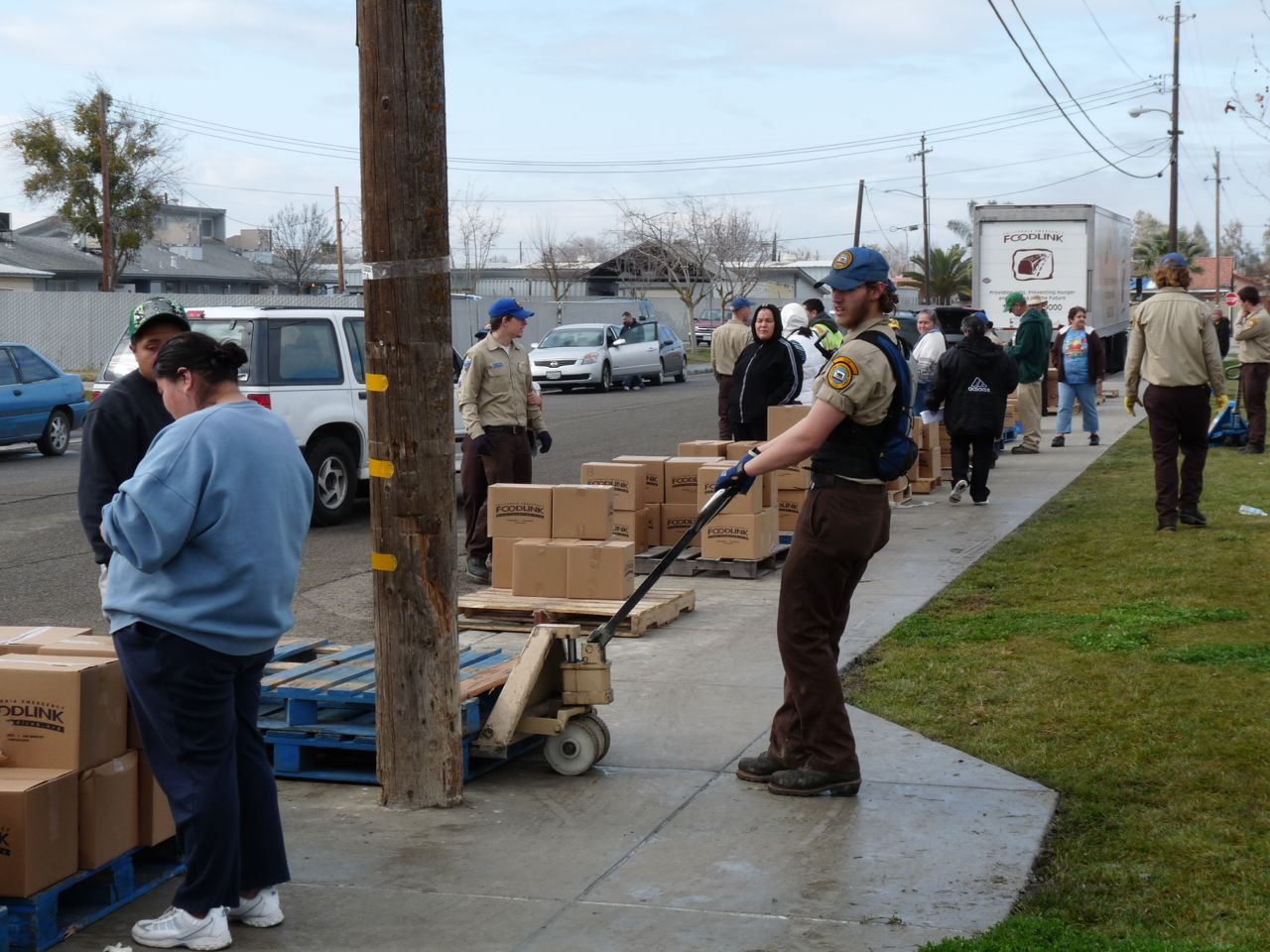
Upcoming Community Food Bank Distribution Sites

Emergency Food Bank Distribution Sites

For more information, contact: Communityfoodbank.net

Firebaugh:        Dunkle Park, 1526 Q Street — Tuesday, May 13, May 27, June 10 and June 24.

Mendota:          Westside Youth Center, 1709 Seventh Street — Wednesday, May 14, May 28, June 11 and 25.

San Joaquin:   Salvation Army San Joaquin, 21962 Railroad Avenue — May 19, June 2 and June 16.

Huron:              John Palacios Community Center, 16856 Fourth Street — May 21, June 4 and June 18.

Orange Cove:   Iglesia Buen Pastor, 863 11th Street — May 23, June 6 and June 20.

2016-05-31T19:35:33-07:00May 12th, 2014|

Great-Grandmother Wins Dixon May Fair Hogcalling Contest

Great-Grandmother Wins the Hogcalling Contest with Determined Voice

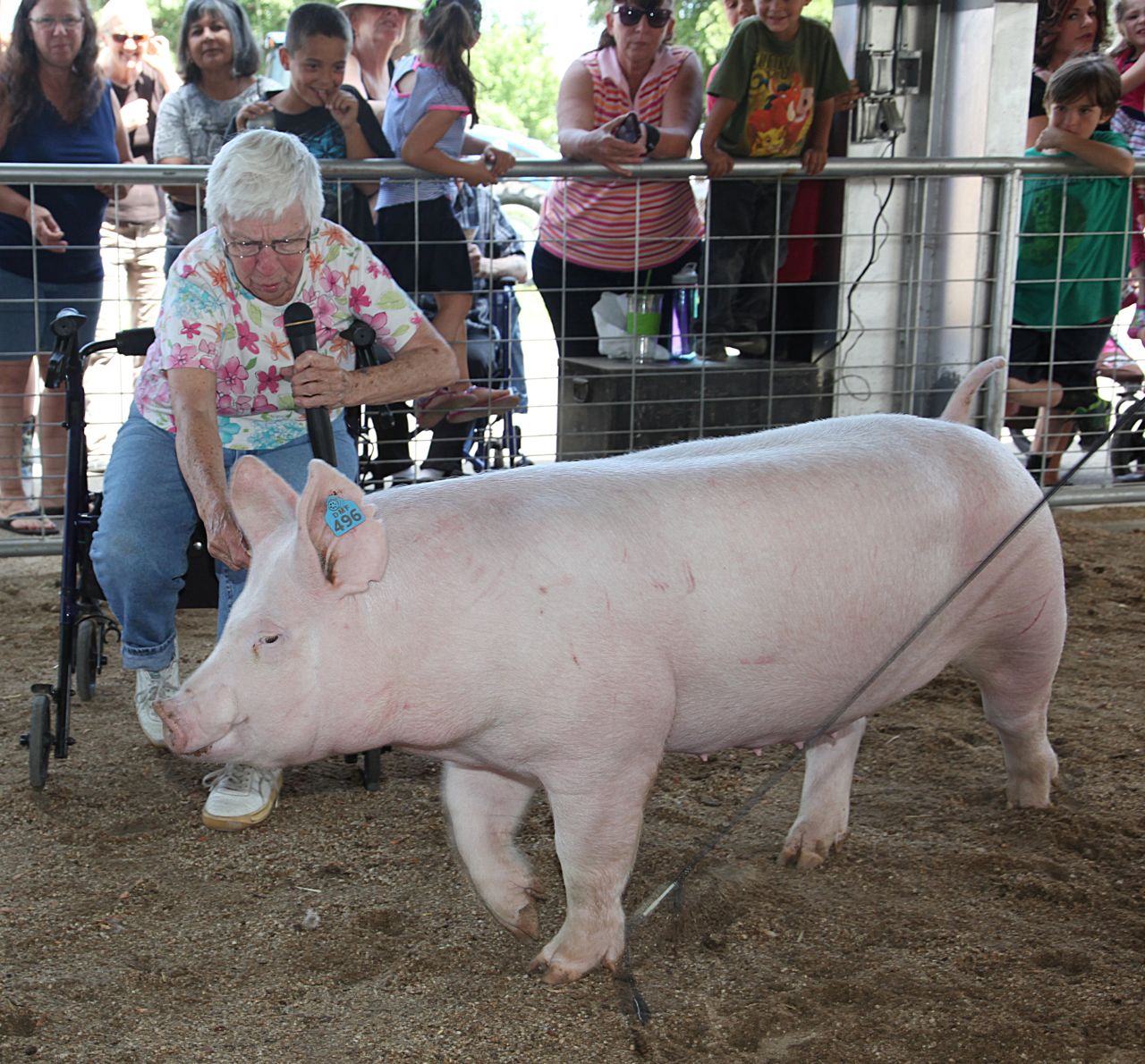
DIXON–Great-grandmother Helen Lang, 89, of Cordelia won the 2014 Dixon May Fair Hogcalling Contest “hams down.”

Lang coaxed a hog over to her wheelchair with a firm and determined voice. The hog readily obeyed.

“My dad used to raise Hampshire pigs,” she said. “And now my great-grandchildren do.”

Lang, who has been attending the Dixon May for more than 50 years, this year decided to enter the 12th annual hogcalling contest. Three of her great-grandchildren did, too: Christopher Lang, 9, his brother, Gabriel Lang, 3, and their cousin, Xavier Copeland, 11.  Christopher and Xavier, both members of the Suisun Valley 4-H Club, raised hogs for the fair. All three boys won awards in the hogcalling contest.

Emcee Donnie Huffman, president of the Friends of the Dixon May Fair and a former 4-H swine leader, urged the contestants to “bring home the bacon” and to get the hogs “hamward bound” and into “four-squeal drive.”

The judges scored the contestants on originality, creativity, audience appeal and hog response. The judges were Hendrick Crowell of Fairfield and Mary Harris of Vacaville, past presidents of the Dixon May Fair Board of Directors (Harris is also a current director); “Boss Hog” Nick Stacey of Dixon, the longest reigning hogcalling champion–eight years; and JoAnn Giannoni of Dixon, secretary of the Friends of the Dixon May Fair and one of the organizers.

Butler Amusements provided carnival tickets to the youth winners. The Dixon May Fair provided four tractor-pull tickets. Giannoni and co-coordinator Kathy Keatley Garvey provided pig-related prizes.

The contestants yelled everything from “Soo-eey” to “C’mon, piggy.” Contestant Mary Jane O’Neill, wearing a red rose in her hat, sang “The Days of Swine and Roses,” but the hog expressed no interest in trotting over to her.


The list of winners:

Adults, 18 and over:
 Helen Lang of Cordelia, first; Brianna Boyd of Dixon, second; Silvia Forcier of Dixon, third; and Mary Jane O’Neill of Davis, fourth.

Ages 6 through 13: 
Nathan Schittl, 7, of Vacaville, first; Xavier Copeland, 11, of Fairfield, second; Christopher Lang, 9, of Fairfield, third; and  Morgan Green, 9, of Vallejo, fourth.

Ages 5 and under:

Chloe Granillo, 3, of Dixon, first; Garrison Cruz, Dixon, second; Vinny Sicca of Vacaville, third; and Gabriel Lang, 3, of Fairfield.


Among the Dixon 4-H’ers providing the hogs were Cody and Morgan Meitrott, Amanda Phillips, Hannah Harvey, and Elizabeth and A. J. Granillo. Harvey’s hog was earlier named the 4-H Grand Champion.


In the age group, 14 through 17, all who initially signed up “chickened out.”


The Dixon May Fair ended a four-day run on Sunday, May 11.

2016-05-31T19:35:33-07:00May 12th, 2014|

Annual Nickels Field Day May 14

Report Title

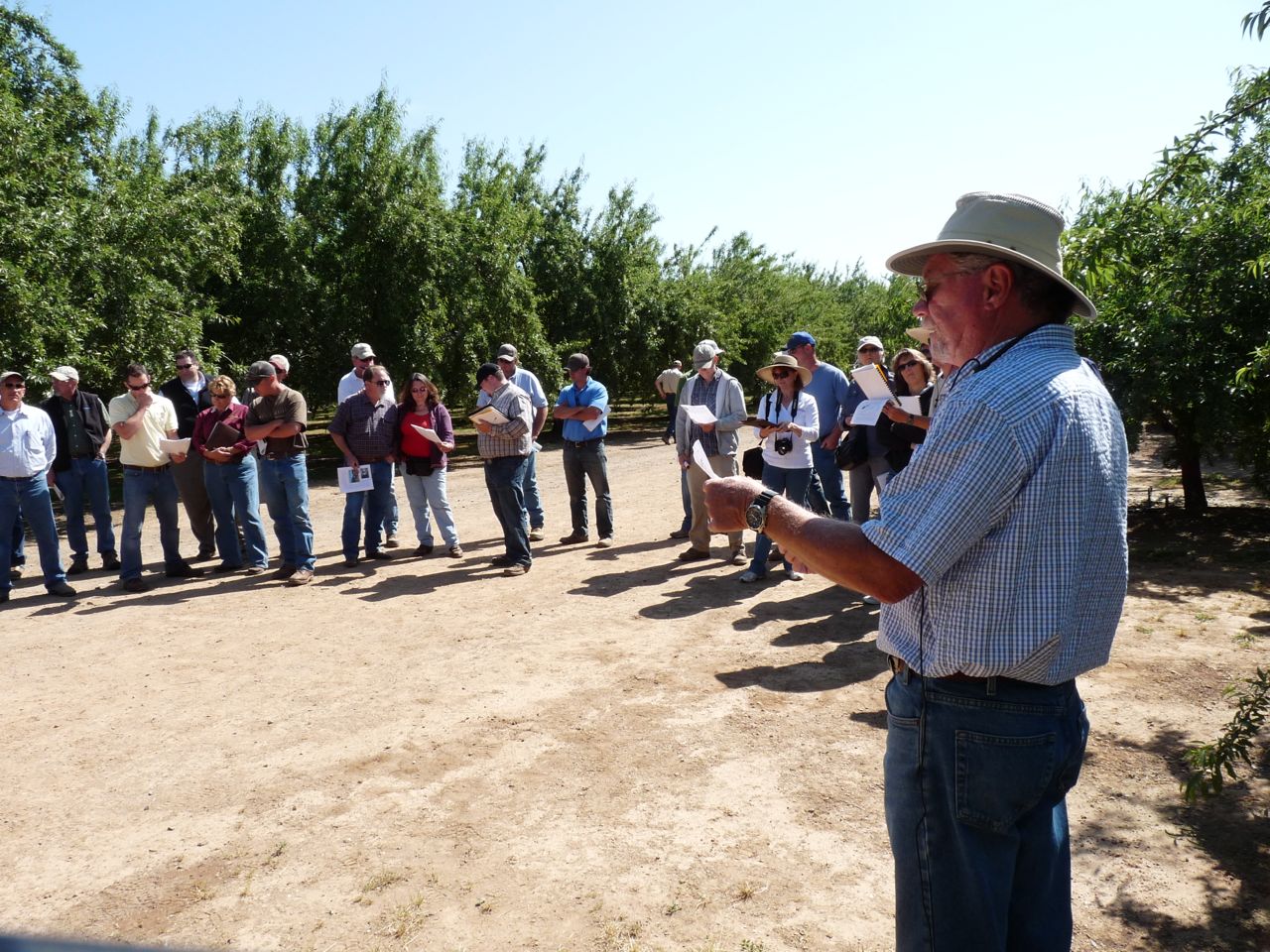
NICKELS SOIL LAB ANNUAL FIELD DAY

Wednesday, May 14, 2014 Marine Avenue, Arbuckle, CA

Popular Nickels Field Day will focus on research.


8:30 am — Registration
Coffee and Danish provided by Farm Credit Services of Colusa-Glenn, ACA

9:00 am — Field Topics:

Monitoring soil moisture to guide irrigation decisions

Larry Schwankl, Cooperative Extension Specialist, LAWR, UC Davis

How well is your irrigation system performing?

Kevin Greer, Tehama Co. Resource Conservation District Mobile Irrigation Lab Post-harvest canopy health and yield the next season

Ted DeJong, Professor, Plant Sciences Department, UC Davis

Applying crop evapotranspiration estimates in on-farm water management

Allan Fulton, UCCE Water Resources Advisor, Tehama, Glenn & Colusa Counties Measuring crop stress to make irrigation decisions

Rick Buchner, UCCE Farm Advisor, Tehama County

Almond orchard hedging

Bruce Lampinen, Cooperative Extension Specialist, Plant Sciences Dept., UC Davis

Rootstock trial review

Franz Niederholzer, UCCE Farm Advisor, Colusa/Sutter/Yuba Counties

Nitrogen cycle inhibitors

Martin Burger, Research Scientist, LAWR, UC Davis

12:15 pm – Lunch by reservation, proceeds to benefit the Pierce FFA Program RSVP to the UCCE Colusa Office at (530) 458-0570

$12 prepaid, $15 at the door

Luncheon talk:

Active Groundwater Management – An Assessment of the Sacramento Valley’s Groundwater Resources

David Guy, President, Northern California Water Association
Paul Gosselin, Director, Butte Co. Department of Water and Resource Conservation

Program organized by:
Franz Niederholzer, UC Cooperative Extension, Farm Advisor, Colusa/Sutter/Yuba Counties

UCCE Colusa County • 100 Sunrise Blvd., Suite E • Colusa, CA 95932
Office 530.458.0570 • Fax 530.458.4625 •
lcpingrey@ucanr.edu • Website:  cecolusa.ucanr.edu


2016-05-31T19:35:33-07:00May 11th, 2014|
Go to Top