California Ag Today: California Walnut Growers Support its Board

CALIFORNIA WALNUT GROWERS OVERWHELMINGLY SUPPORT CONTINUTATION OF MARKETING ORDER

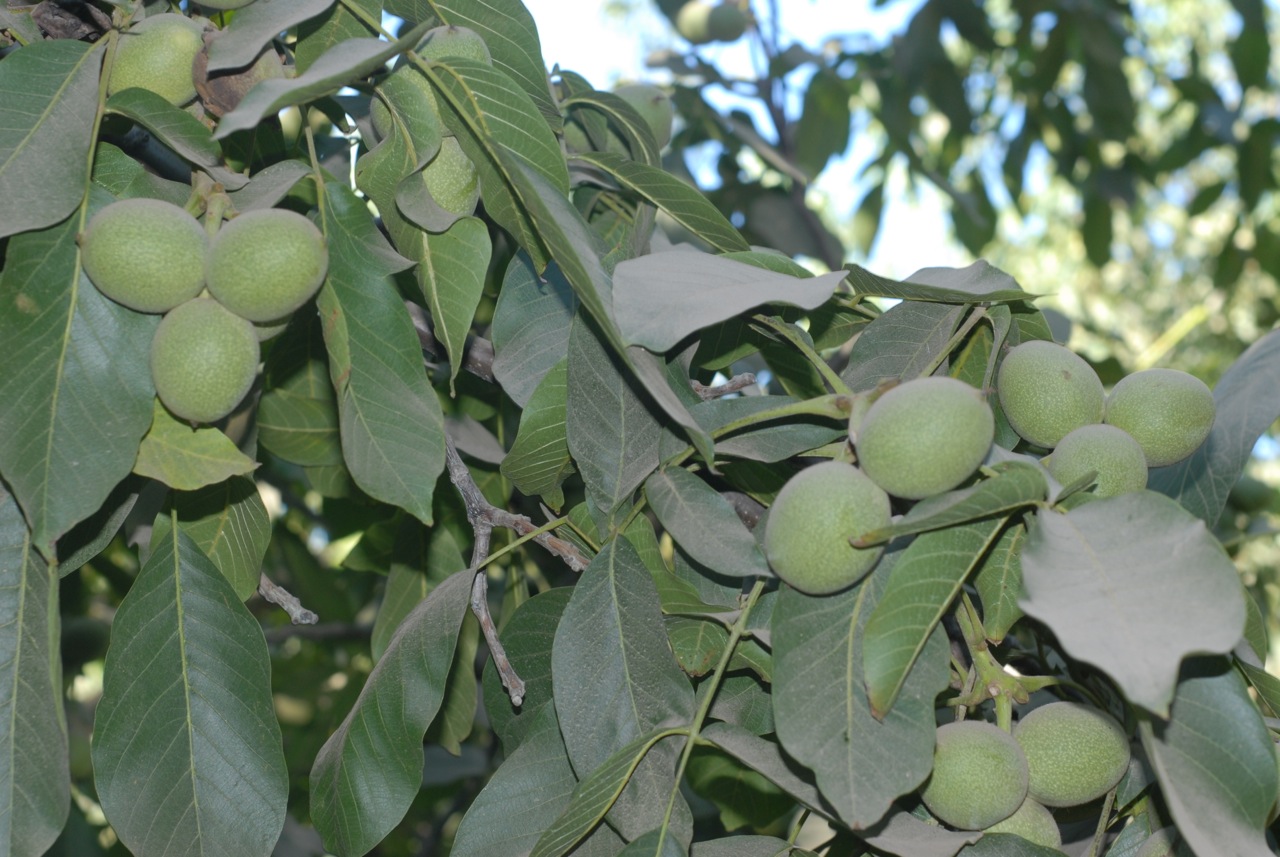
Ninety-five percent of eligible California walnut growers who voted and ninety-three percent of the volume represented in the referendum favored continuing the Federal Marketing Order and the efforts of the California Walnut Board.  This is the first continuation referendum vote ever held by the industry.

“It’s rewarding to know that the work of the California Walnut Board is recognized by the growers and handlers we strive to serve,” said Dr. Jerome Siebert, Chairman of the California Walnut Board.  “When we come together as an industry, we are powerful at addressing challenges and generating far-reaching results for all California walnut producers.”

Voting in the referendum took place from April 1 through April 19, 2014 and those eligible to vote were growers engaged in the production of walnuts within the state during the period September 1, 2012 through August 31, 2013.  In order for the referendum to pass, at least two-thirds of eligible producers must vote in favor of continuance.  Since the order was amended in 2008, a vote is now required every six years.

“We’re grateful for the continued support of our growers, who see the value of working together to benefit the entire industry,” said Dennis A. Balint, Executive Director of the California Walnut Board. “There is more work ahead, but we’re starting from a good place and will continue to build on several decades of experience, relationships, research and success.”

The California walnut industry is made up of more than 4,000 growers and 100 handlers. The growers and handlers are represented by two entities, the California Walnut Board and the California Walnut Commission.


California Ag Today
2016-05-31T19:35:31-07:00May 21st, 2014|

New Pilot Program Offers Coverage for Fruits and Vegetables, Organic and Diversified Farms

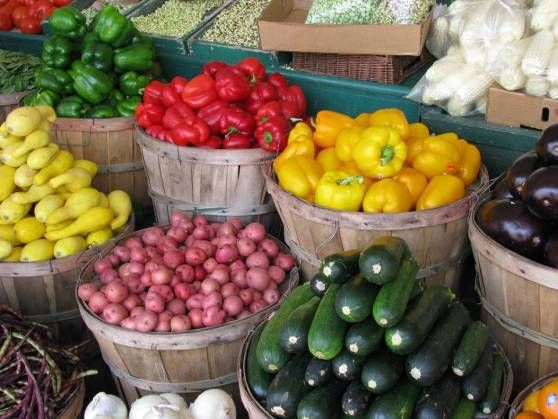
Agriculture Secretary Tom Vilsack today announced a new risk management option that will be available for fruit and vegetable growers and producers with diversified farms.

The policy, called Whole-Farm Revenue Protection, will provide flexible coverage options for specialty crop, organic and diversified crop producers. The program will be implemented in counties across the country and will expand in availability over the next several years.

Whole-Farm insurance allows farmers to insure all crops on their farm at once, rather than insuring commodity by commodity.

Traditionally, many fruit and vegetable crops have not had crop insurance programs designed for them—making it less attractive for a farmer that primarily planted a commodity crop like wheat or corn to use another part of his or her land for growing fruits and vegetables or other specialty crops.

This allows farmers greater flexibility to make planting decisions on their land.

“Crop insurance has been the linchpin of the farm safety net for years and continues to grow as the single most important factor in protecting producers of all sizes from the effects of unpredictable weather,” said Vilsack.

“Providing farmers the option to insure their whole farm at once gives farmers more flexibility, promotes crop diversity, and helps support the production of healthy fruits and vegetables. More flexibility also empowers farmers and ranchers to make a broader range of decisions with their land, helping them succeed and strengthening our agriculture economy.”

The 2014 Farm Bill requires a whole-farm crop insurance policy option, and paves the way for the Risk Management Agency (RMA) to make it broadly available to specialty crop, organic, and diversified growers.

The Federal Crop Insurance Corporation Board of Directors (FCIC Board) approved the Whole-Farm Revenue Protection pilot policy for RMA to offer it through the federal crop insurance program in 2015.

USDA has taken many steps to provide effective insurance coverage for diversified, organic and specialty crops. The whole-farm crop insurance policy provides flexibility to meet the needs of specialty crop growers, organic producers and those with diversified farms, and who have farm production and revenue history, including five years of historic farm tax records. This policy is also part of USDA’s commitment to small and mid-sized producers managing diversified operations.

USDA has been strengthening crop insurance by providing more risk management options for farmers and ranchers.

The policy offers coverage levels from 50 to 85 percent; recognizes farm diversification through qualification for the highest coverage levels along with premium rate discounts for multiple crop diversification.

The Market Readiness Feature, as outlined in the Farm Bill, simplifies insurance coverage for producers under the Whole-Farm Revenue Protection pilot policy by allowing the costs such as washing, trimming, and packaging to be left in the insured revenue instead of having to adjust those amounts out of the insured amount.

The new Whole-Farm Revenue Protection policy combines Adjusted Gross Revenue (AGR) and AGR-Lite along with several improvements to target diversified farms and farms selling two to five commodities, including specialty crops to wholesale markets.

The new policy is also designed to meet the risk management needs of diversified crop or livestock producers including those growing specialty crops and/or selling to local and regional markets, farm identity preserved markets, or direct markets.

As part of the pilot, Whole-Farm Revenue Protection will be available where AGR and AGR-Lite are currently offered, and will expand to other counties as data are available for underwriting and actuarial ratemaking.

RMA will release information on the policy later this summer when it becomes available. This information will be announced on the RMA website at www.rma.usda.gov.

According to the CDFA, California’s agricultural abundance includes more than 400 commodities. The state produces nearly half of US-grown fruits, nuts and vegetables. Across the nation, US consumers regularly purchase several crops produced solely in California.

2016-05-31T19:35:31-07:00May 21st, 2014|

Meat Price Trends Point to Increase in Poultry Sales

By: Ching Lee; Ag Alert

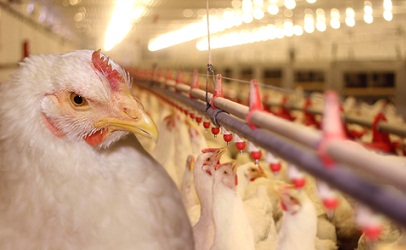
The Memorial Day weekend usually kicks off the summer grilling season, and Bill Mattos, president of the California Poultry Federation, said he expects shoppers will look more to chicken and other poultry products this year as less expensive protein alternatives to beef and pork.

“The barbecue season is a big time for chicken,” he said. “We think prices will probably go up for chicken, but not at all like we’re seeing in beef and pork.”

With the U.S. cattle herd at its lowest in more than 60 years—made worse in recent years by drought-related downsizing—and the porcine epidemic diarrhea virus lowering U.S. pork production, market analysts say poultry meats are poised to fill that market gap.

The bright outlook for poultry producers is expected to continue into 2015, as U.S. beef production is forecast to drop by nearly 6 percent this year, while pork production will also fall by as much as 7 percent, according to the Rabobank Food and Agribusiness Research and Advisory division.

William Sawyer, an analyst with Rabobank, said although overall U.S. meat consumption has declined in recent years—even before the recession—chicken consumption has stayed relatively stable and is now growing.

“That’s been largely driven by the fact that beef prices have risen significantly more than chicken has,” he said.

With the price of ground beef eclipsing that of chicken breast, Sawyer noted that fast-food restaurants such as McDonald’s are taking advantage of poultry’s lower price points by offering more new menu items featuring chicken.

Given how expensive it is to raise cattle compared to chicken in terms of feed cost, Sawyer said he expects chicken will continue to gain market share.

“Once consumers have the appetite for value, which is what we’ve seen in the growth in the chicken sector, it’s unlikely that beef is going to regain that per-capita consumption that it’s lost in the last seven or eight years,” he added.

Sawyer said consumers who buy specialty products such as organic, free-range or antibiotic-free are much less sensitive to price changes anyway, so producers who raise birds for these markets are not as impacted by current price trends in the conventional market.

Although USDA projects U.S. pork production will bounce back from the PED virus next year with a growth of 2.9 percent, beef production is expected to continue to decline, as ranchers retain their heifers in an effort to expand their herds.

That means meat prices will likely remain strong—and with lower corn prices, poultry producers will still have incentive to increase production, Sawyer said.

In addition, U.S. chicken exports, which take up 20 percent of total production, are expected to continue to grow, particularly to Mexico, and that will also help to support higher chicken prices, Sawyer said.

“So the outlook is very positive and very profitable,” he added.

2016-05-31T19:35:31-07:00May 21st, 2014|

USDA Announces $78 Million Available for Local Food Enterprises

Agriculture Secretary Tom Vilsack announced that USDA is making a historic $78 million investment in local and regional food systems, including food hubs, farmers markets, aggregation and processing facilities, distribution services, and other local food business enterprises.

“The 2014 Farm Bill has given USDA new tools, resources and authority to support the rural economy,” Vilsack said. “Consumer demand for locally-produced food is strong and growing, and farmers and ranchers are positioning their businesses to meet that demand. As this sector continues to mature, we see aggregation, processing, and distribution enterprises across the local food supply chain growing rapidly.

These historic USDA investments in support of local food give farmers and ranchers more market opportunities, provide consumers with more choices, and create jobs in both rural and urban communities.”

Vilsack said that $48 million in loan guarantees for local food projects is now available through USDA ‘s Rural Development’s Business and Industry Guaranteed Loan Program, and $30 million is available through competitive grants via the Agricultural Marketing Service’s (AMS) Farmers Market and Local Foods Promotion Program.

The 2014 Farm Bill requires USDA to set aside at least five percent of Business and Industry (B&I) program loan guarantees for projects that focus on local food business enterprises. Details on how to apply for local food funding through the B&I program are available on the Rural Development website. Applications are accepted on a rolling basis.

The B&I program has the authority to fund local food infrastructure in urban areas as long as the project supports farm and ranch income and expands healthy food access in underserved communities.

Rural Development’s B&I program provides financial backing for rural business development in partnership with private-sector lenders. It is one of several USDA programs that help finance local foods projects.

In 2013, Rural Development supported more than 170 local food infrastructure projects – from food hubs, to scale-appropriate processing facilities, to cold storage and distribution networks. Entities eligible for B&I loan guarantees include cooperatives, non-profit organizations, corporations, partnerships or other legal entities, Indian tribes, public bodies or individuals.

The 2014 Farm Bill tripled funding for marketing and promotion support for local food enterprises by creating the Farmers Market and Local Foods Promotion Program, administered by the Agricultural Marketing Service (AMS). This new program makes $30 million available annually to farmers markets, other direct producer-to-consumer venues, and other businesses in the local food supply chain.

Under this program, $15 million is now available for marketing and promotional support specifically for local food businesses, including food hubs, delivery and aggregation businesses, and processing and storage facilities along the local food supply chain, while $15 million is for marketing support for farmers markets and other direct to consumer outlets.

Since 2009, AMS, which administers this program, has funded nearly 450 projects totaling $27 million to support direct marketing efforts for local food. More information about how to apply is available on the AMS website. Applications are due June 20, 2014.

These funding opportunities are cornerstones of the USDA’s commitment to support local and regional food systems. USDA’s Know Your Farmer, Know Your Food Initiative coordinates the Department’s policy, resources, and outreach efforts related to local and regional food systems The Know Your Farmer, Know Your Food Compass maps nearly 3,000 local and regional food projects supported by USDA and eleven other federal agencies.

Secretary Vilsack has identified strengthening local food systems as one of the four pillars of USDA’s commitment to rural economic development, along with production agriculture (including expanding export markets and improving research), promoting conservation and outdoor recreation opportunities, and growing the biobased economy.

2016-05-31T19:35:31-07:00May 20th, 2014|

Secretary Ross Joins Elementary School Students to Experience Mobile Dairy Classroom

Source: Tammy Anderson-Wise, CEO Dairy Council of California

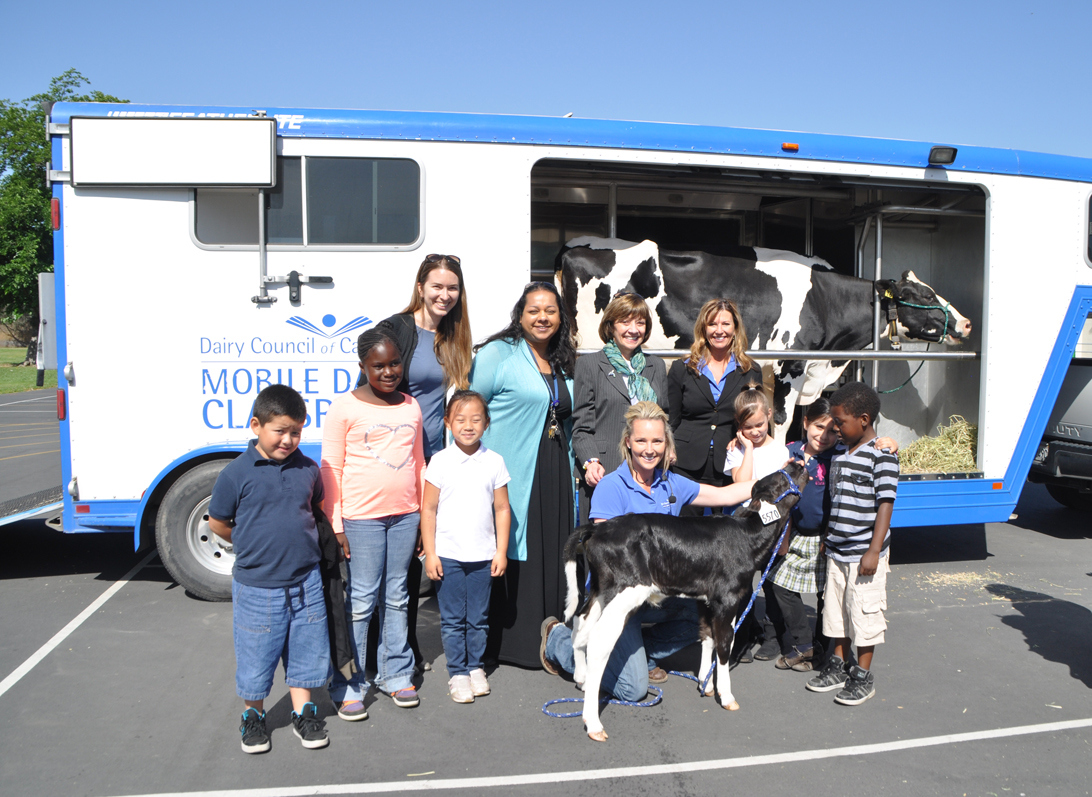
Earlier this month, CDFA Secretary Karen Ross joined students at Sacramento’s Pacific Elementary School for a visit from the Mobile Dairy Classroom, where an instructor shared fun facts like: cows have built-in fly swatters, and milk is warm when it comes out of the udder.

As the original farm to school program in California, Mobile Dairy Classroom has brought a bit of the dairy farm to schools across the state since the 1930s.

To help children better appreciate where their milk and milk products come from, the free assemblies provided by the Dairy Council of California teach children about agriculture and cows, healthy eating from all five food groups, and how to lead healthy, active lifestyles.

Mobile Dairy Classroom assemblies augment the Dairy Council of California’s classroom nutrition education lessons that are also free to schools as part of the dairy industry’s commitment to community health.

With six Mobile Dairy Classroom units across California, 400,000 students each year have the chance to make a personal connection with a cow and a calf, and better understand where their milk comes from.

Furthermore, the assemblies allow for a better appreciation for the role of the dairy farmer and milk processor in providing healthy food and why milk and milk products are an essential part of an overall balanced diet with foods from all five food groups.

2016-10-18T16:10:11-07:00May 20th, 2014|

Ventura County ACP Report Less Than Uplifting

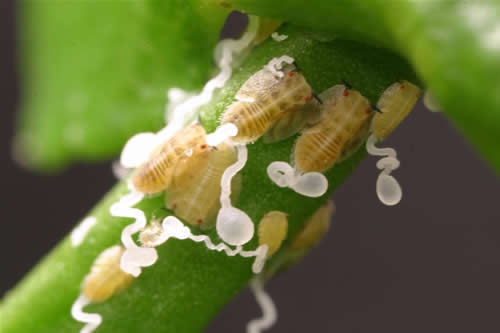
Joanne O’Sullivan, a licensed PCA and QAL (Qualified Applicator), and a Citrus Pest & Disease Prevention Program Grower Liaison in Ventura County, reported TODAY that four new urban settings with 25 or more citrus trees on the property have been discovered in Asian citrus psyllid treatment areas in recent weeks. These four finds are within the same area as the commercial Camarillo find in March.

CDFA deems these orchards also as commercial; therefore, the homeowners are financially responsible for the treatment.

O’Sullivan said, “The first two homeowners I contacted were more than willing to cooperate and take on the financial costs of spraying. They understand it is necessary for the benefit of both their trees and the health of Ventura County’s citrus industry. The third homeowner opted to remove 15 of his trees and CDFA then sprayed the remaining ten. The last and remaining homeowner will take a bit more convincing, but I am confident they will come to see the great benefits of working with us.”

“On a less uplifting note,” O’Sullivan continued, “it has been an unlucky month for Fillmore and Piru producers. Piru has been hit again in the Bardsdale area with two ACP confirmations in the same week. These same growers had completed the ACP psyllid spray protocol in November of last year. It goes without saying that the producers are less than delighted to be repeating treatment again so soon.”

She reiterated a very important element in the ACP/HLB program,
”The goal of the [Ventura County ACP-HLB] Task Force has been to delay as long as possible the introduction of HLB into Ventura County. As a result of the progressive and aggressive work from producers, packers, pest advisors, operators and the CDFA and county trapping programs, Ventura remains one of the most successful ACP/HLB programs in the state.

A critical element of ACP treatment protocol for organic growers is the importance of scouting post-treatment. All blocks must be aggressively monitored following applications, using the sampling protocol that is included in the ACP CONFIRMATION IN YOUR AREA packet.

Current protocol requires organic producers to sample every two weeks after the third treatment. Sampling every two weeks allows the grower to document control. Early detection and swift eradication is our best defensive against the introduction of HLB and its devastating effects on Ventura citrus producers.

Every producer – commercial and organic – should be familiar with the signs of Asian citrus psyllid. Literature on identifying ACP is available at the CRB, UCIPM, UC Cooperative Extension as well as from CDFA. Share it with your workers. If you have any doubts about your ability to identify adults, nymphs, and eggs, please contact me, I am always glad to meet with you on your ranch and help you scout.

In closing, I was forwarded an interesting short news article outlining the economic hit Florida has taken as the result of HLB, with annual production dropping from 1,000,000 boxes of fruit to 750,000. This news story is a not- so-gentle reminder of why it is vitally important that everyone working together in a cooperative spirit can keep Florida’s scenario from happening in California.

Take a look:

https://uk.news.yahoo.com/us-orange-production-hit-disease-041911170.html#rOCRoWr

And let’s all keep up the diligent efforts that help keep Ventura’s citrus industry strong.


CPDPP

The California Citrus Pest & Disease Prevention Program is a grower-funded program administered by the Citrus Pest & Disease Prevention Committee, which was established to advise the California Secretary of Agriculture and the agricultural industry about efforts to combat serious pests and diseases that could threaten our state’s citrus industry.

Key responsibilities are:

  • Develop informational programs to educate and train residential owners of citrus fruit, local communities, groups and individuals on the prevention/detection of pests, diseases and their vectors specific to citrus.
  • Develop programs for surveying, detecting, analyzing, and treating citrus pests and diseases.
  • Set box assessment to help pay for citrus pest and disease detection, treatment and educational outreach programs.

Photo Credit: UC ANR News Blog

2016-05-31T19:35:31-07:00May 20th, 2014|

UC Davis Report Shows Startling, Accurate Water Crisis Snapshot

The report issued today by the California Department of Food & Agriculture and the University of California, Davis presents an accurate water crisis picture of the reality resulting from federal decisions that will reduce the production of food and fiber, according to California Citrus Mutual.

Unfortunately, this picture is not complete. The report indicates the losses which have been incurred to-date, but does not and cannot begin to predict future impacts as permanent crops continue to be ripped out of production as we enter into the hottest months with zero access to surface water,” says CCM President Joel Nelsen.

“The report is a compilation of what the authors know is happening as a result of April calculations. Since then, the Bureau of Reclamation has challenged the Administration’s focus on obesity prevention, school lunch programs, and other campaigns focused on healthy eating by holding water that could otherwise be used for the production of food and fiber.

As such, growers are being forced to make difficult farming decisions that have and will continue to result in reduced plantings of annual crops and the removal of permanent crops.

“If there is a flaw in the report, it is the assumption that ground water supplies are available to offset surface water loss, which may be true in some production areas but certainly not all.

The authors do fairly acknowledge that the impacts to the Friant service area in particular are not yet calculated into this water crisis report.

“The report demonstrates the costs associated with the inability of the Central Valley to produce a viable crop due to zero or minimal water allocation.

As the actions of the shortsighted agencies manifest themselves into reality, the cost will be borne for years to come until permanent crop plantings are replaced and production is regained. Production, revenue, and jobs are in abeyance for several years to come.”

Image courtesy of TeddyBear[Picnic]/FreeDigitalPhotos.net


2016-05-31T19:35:32-07:00May 20th, 2014|

JUST IN: UC Davis’ Preliminary Findings on Drought Impact in Central Valley

Source Office of Public Affairs

Photo Source-Aquafornia

California’s drought impact will be a severe blow to Central Valley irrigated agriculture and farm communities this year and could cost the industry $1.7 billion and cause more than 14,500 workers to lose their jobs, according to preliminary results of a new study by the UC Davis Center for Watershed Sciences.

Researchers estimated that Central Valley irrigators would receive only two-thirds of their normal river water deliveries this year because of the drought.

The preliminary analysis represents the first socio-economic forecast of this year’s drought, said lead author Richard Howitt, a UC Davis professor emeritus of agricultural and resource economics.

“We wanted to provide a foundation for state agricultural and water policymakers to understand the drought impact on farmers and farm communities,” Howitt said.

The Central Valley is the richest food-producing region in the world. Much of the nation’s fresh fruits, nuts and vegetables are grown on the region’s 7 million acres of irrigated farmland.

The center plans to release a more comprehensive report of the drought’s economic impact on the state’s irrigated agriculture this summer.

The analysis was done at the request of the California Department of Food and Agriculture, which co-funded the research, along with the University of California.

“These estimates will help the state better understand the economic impacts of the drought, ” said CDFA Secretary Karen Ross. “The research confirms where emergency drought assistance will be needed most, and efforts are already underway.”

The UC Davis researchers used computer models and the latest estimates of State Water Project, the federal Central Valley Project and local water deliveries, plus groundwater pumping capacities to forecast the economic effects of this year’s drought.

The analysis predicted several severe impacts for the current growing season, including:

▪Reduced surface water deliveries of 6.5 million acre-feet of water, or 32.5 percent of normal water use by Central Valley growers. An acre-foot is enough water to cover an acre of land in a foot of water, or enough water for about two California households for a year.

▪ Fallowing of an additional 410,000 acres, representing 6 percent of irrigated cropland in the Central Valley.

▪ The loss of an estimated 14,500 seasonal and full-time jobs. About 6,400 of these jobs are directly involved in crop production.

▪ A total cost of $1.7 billion to the Central Valley’s irrigated farm industry this year, including about $450 million in additional costs of groundwater pumping.

▪ About 60 percent of the economic losses will occur in the San Joaquin Valley and Tulare Lake Basin.

Growers are expected to replace much of the loss in project water deliveries with groundwater, California’s largest source of water storage during drought years, said co-author Jay Lund, director of the Center for Watershed Sciences and a UC Davis professor of civil and environmental engineering.

“Without access to groundwater, this year’s drought would be truly devastating to farms and cities throughout California,” Lund said.

The additional pumping will cost an estimated $450 million and still leave a shortage of 1.5 million acre-feet of irrigation water, about 7.5 percent of normal irrigation water use in the Central Valley, according to the forecast.

While the current drought is expected to impose major hardships on many farmers, small communities and the environment, it should not threaten California’s overall economy, Lund said.

Agriculture today accounts for less than 3 percent of the state’s $1.9 trillion a year gross domestic product.Other authors on the report are UC Davis agricultural economist Josue Medellin-Azuara and Duncan MacEwan of the ERA Economic consulting firm in Davis.

2016-08-18T13:45:51-07:00May 19th, 2014|

Severe Drought Now Covers 100% of the State

Mark Svoboda, National Drought Mitigation Center, reports that all of California is now depicted as being in severe drought (D2) or worse this week, with the D3/D4 areas remaining unchanged. A heat wave is settling in that will only serve to exacerbate and accelerate drought impact concerns across the state. Increased water demand and risk of fire will ramp up as the heat does, and the state’s agricultural industry continues to suffer. The current drought map is included below.

A cursory review of drought impacts includes:

Groundwater: CDFA reports the state’s groundwater resources are at historically low levels. Fifty percent of the 5,400 wells assessed have dropped since 2008 to points lower than they in the previous century. San Joaquin Valley levels fell more than 100 feet below previous historic lows, while Sacramento Valley, Sonoma Valley and Los Angeles basin levels fell up to 50 feet. Note that the analysis was done in the spring when groundwater levels are usually at their highest.

Curtailments: CDFA reports curtailments in various watersheds, depending upon runoff conditions, water demand and the type of water rights. Water rights holders, including water agencies, farmers and other property owners, have been unable to receive their due water supplies. Junior water rights holders lose out first. Efforts are underway to save water for essential health and safety purposes, wildlife and habitat.

Food Assistance: The California Department of Social Services announced food assistance provisions to at least 24 counties with high unemployment rates and a high proportion of agricultural workers. Foodbanks struggle to supply provisions as the state grows less produce and sources provide lower produce donations.

Livestock Reductions: Many cattle and other livestock producers in California transported thousands of animals by truck to other states as they cannot wait out the stunted grass and depleted water sources. Reuters reported that up to 100,000 California cattle have left the state in just the past four months and producers are selling their cattle early.

Fruit and vegetable prices:  rose 2 and 3 percent in 2013, respectively, per USDA, as low water supplies affected production. A similar price increase in 2014 is likely as more than three million acres out of the nine million acres of irrigated land in California receive no surface water, aside from rain.

Reduced production:  USDA forecasts a 20 percent reduction in rice production and a 35 percent drop in cotton production in California this year as farmers leave fields fallow in response to very meager water allocations.

Photo credit: Robert Galbraith/ReutersUS Drought Monitor CA


Drought Monitor Key

2016-05-31T19:35:32-07:00May 17th, 2014|

Pollinator Survey Shows Better Results but Significant Losses, Plus USDA Fall Summit on Bee Nutrition and Forage

While an annual pollinator survey of beekeepers, released yesterday, shows fewer U.S. colony losses over the winter of 2013-2014 than in recent years, beekeepers say losses remain higher than a sustainable level. According to the survey, conducted by the U.S. Department of Agriculture and the University of Maryland Bee Informed Partnership, the total loss (death) of managed honey bee colonies from all causes was 23.2 percent nationwide, well above the 18.9 percent level of loss that beekeepers accept as economically sustainable. Nevertheless, the losses were an improvement over the national 30.5 percent loss, and the California 28.6 percent loss, both for the winter of 2012-2013, and over the eight-year average loss of 29.6 percent.

More than three-fourths of the world’s flowering plants rely on pollinators, such as bees, to reproduce, meaning pollinators help produce one out of every three bites of food Americans eat.

“Pollinators, such as bees, birds and other insects are essential partners for farmers and ranchers and help produce much of our food supply. Healthy pollinator populations are critical to the continued economic well-being of agricultural producers,” said Agriculture Secretary Tom Vilsack. “While we’re glad to see improvement this year, losses are still too high and there is still much more work to be done to stabilize bee populations.”

“Honeybees pollinate more than 130 California crops, including almonds, California’s largest agricultural export. More than 780,000 acres of almonds grow in California, and for pollination, they need an estimated 1.6 million hives, more than 60 percent of the nation’s total,” according to Debbie Arrington, Sacramento Bee.

There is no way to tell why the bees did better this year, according to both Dennis vanEngelsdorp, a University of Maryland assistant professor and director of the Bee Informed Partnership, and Jeff Pettis, research leader of the Agricultural Research Service (ARS) Bee Research Laboratory.

Although the pollinator survey shows improvement, losses remain above the level that beekeepers consider to be economically sustainable. This year, almost two-thirds of the beekeepers responding reported losses greater than the 18.9 percent threshold.

“Yearly fluctuations in the rate of losses like these only demonstrate how complicated the whole issue of honey bee heath has become, with factors such as viruses and other pathogens, parasites like varroa mites, problems of nutrition from lack of diversity in pollen sources, and even sublethal effects of pesticides combining to weaken and kill bee colonies,” said Jeff Pettis.

The winter losses survey covers the period from October 2013 through April 2014. About 7,200 beekeepers responded to the voluntary survey.

A complete analysis of the bee survey data will be published later this year. The summary of the analysis is at http://beeinformed.org/results-categories/winter-loss-2013-2014/.

***

The U.S. Department of Agriculture (USDA) also announced a summit in Washington D.C. on October 20-21, 2014 aimed at addressing the nutrition and forage needs of pollinators. Attendees will discuss the most recent research related to pollinator loss and work to identify solutions.

***

Additionally, in March of 2014, Secretary Vilsack created a Pollinator Working Group, under the leadership of Deputy Secretary Krysta Harden, to better coordinate efforts, leverage resources, and increase focus on pollinator issues across USDA agencies.

USDA personnel from ten Department agencies (Agricultural Research Service, National Institute of Food and Agriculture, Farm Services Agency, Natural Resources Conservation Service, Animal and Plant Health Inspection Service, Economic Research Service, Forest Service, Agricultural Marketing Service, Risk Management Agency and Rural Development) meet regularly to coordinate and evaluate efforts as USDA strives toward improving pollinator health and ensuring our pollinators continuing contributions to our nation’s environment and food security.

Photo credit: UC Davis Department of Entomology and Nematology

2016-05-31T19:35:32-07:00May 16th, 2014|
Go to Top