Sakata Seed America Awarded Title of ‘Water Saving Hero’

Sakata Seed America Awarded Title of ‘Water Saving Hero,’ Sets Example during Severe California Drought

Sakata Seed America is doing their part to ‘Go Green’ and conserve water during the severe California drought. The drought has taken a huge toll on the entire state; however, it has hit both the Agricultural and Horticultural industries particularly hard. According to a study by the UC Davis Center for Watershed Sciences, “the drought is expected to be worse for California’s agricultural economy this year because of reduced water availability…Farmers will have 2.7 million acre-feet less surface water than they would in a normal water year – about 33 percent loss of water supply. Individual farmers will face losses of zero to 100 percent.” In response, Sakata has made it a priority to focus on ways to reduce their water usage and boost long-term sustainability for the future.

In 2014, two main projects were completed to conserve water at the Morgan Hill office headquarters. First, 12,500 square feet of turf was removed and replaced with drought-tolerant plants and landscape coverage. In addition, the overhead sprinklers were removed and replaced with a low-volume drip system. The estimated water savings for the 2014 updates totals to 300,000 gallons of water annually. For the remaining turf, complete irrigation updates were implemented, and over 275 sprinkler nozzles were upgraded to a weather track system which reduces water when it’s not needed, resulting in an additional 50,000 gallons of water conserved annually.

This year, Sakata has already begun their next phase of water reduction. Thus far, 16,088 additional square footage of turf has been removed from the front of the company’s headquarters and replaced with a new, drought-resistance landscape and low-volume drip systems. And it doesn’t stop there, Sakata’s internal committee, ‘GreenUp,’ which is solely dedicated to creating a greener work environment has a lot more in store for the future – some immediate plans for facility upgrades include water-saving restroom updates such as touchless faucets. In addition, the committee is distributing free shower buckets to all interested employees.

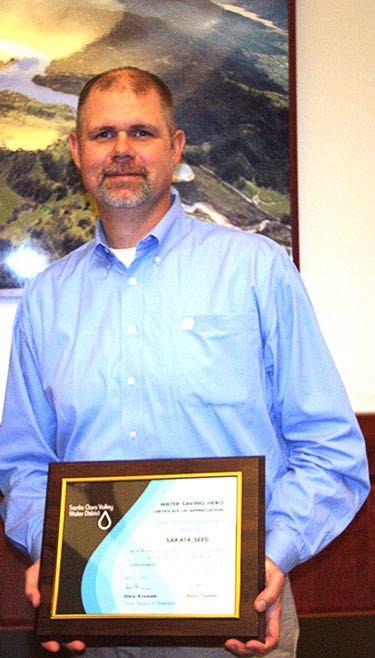
Sakata’s water conservation efforts have not gone unnoticed. In September 2014, Sakata was deemed the title of a ‘Water Saving Hero’ and presented a plaque by the Santa Clara Valley Water District, who have been encouraging water conservation all over Santa Clara County with their ‘Brown is the New Green’ campaign, which distributes free ‘Brown is the New Green’ lawn signs, shower buckets, moisture meters, shower timers, shower heads and hose nozzles for Santa Clara county residents.

“It’s part of our responsibility to the community and the industry to conserve water and lower our carbon footprint. We are proud of our efforts thus far, but are determined to take it further and become a role model for other companies,”states Tye Anderson, Senior Logistics & Operations Manager for Sakata.

Sakata’s GreenUp committee’s future plans stretch far beyond lessening water usage and focus on sustainability as a whole. Long-term goals include such workplace additions as bike racks and charging stations for electric cars.

For more information on how you can help conserve water during the California drought, please visit: www.saveourwater.com. For more on Sakata’s contribution, read the full article.

#

Headquartered in Morgan Hill, CA, Sakata Seed America is a major research, seed production and marketing-distribution subsidiary of Sakata Seed Corporation, established in 1913.   Sakata Seed America serves as the headquarters for the North American operations.  

Featured Photo: Sakata’s Tye Anderson accepts Water Saving Hero Award

2016-05-31T19:28:13-07:00June 25th, 2015|

Valadao Addresses Western Water Reliability

Valadao, California Republicans, Introduce Legislation to Improve Western Water Reliability

Today, Congressmen David G. Valadao (CA-21) introduced a bill to modernize water policies in California and throughout the entire Western United States with the support of the entire California Republican delegation, the Chairman of the House Natural Resources Committee, and Chairman of the Western Caucus.


H.R. 2898, the Western Water and American Food Security Act of 2015 aims to make more water available to families, farmers, and communities in California and bordering Western states. The dedication of vast quantities of water to protect certain species of fish listed under the Endangered Species Act (ESA) is a significant obstacle hindering water delivery in Central and Southern California. H.R. 2898, will require federal agencies to use current and reliable data when making regulatory decisions, which in turn will provide more water for communities in need.

Additionally, Rep. Valadao’s legislation will provide federal regulators with direction and flexibility to capture water during periods of greater precipitation, which can be used to increase California’s water supplies dramatically. Furthermore, the bill will cut red tape holding back major water storage projects that have been authorized for over a decade, which will aid the entire Western United States during dry years.

Congressman David Valadao (CA-21), the author of the legislation, said, “California’s drought has devastated communities throughout the Central Valley and now the consequences are extending throughout the country. Inaction will result in the collapse of our domestic food supply.” He continued, “Congress cannot make it rain but we can enact policies that expand our water infrastructure, allow for more water conveyance, and utilize legitimate science to ensure a reliable water supply for farmers and families.”

Majority Leader Kevin McCarthy (CA-23) stated, “The tragedy of the current drought is no longer isolated to California’s Central Valley, and its response must include tangible solutions that provide us the opportunity to pursue the California Dream. Today is an important step to helping restore the water our communities desperately need by more fully utilizing the most sophisticated water system in the world to quench the robust economic opportunity California families, farmers, workers, and businesses all need.”

“My western colleagues have worked hard to collaborate on a common sense bill that helps people,” stated Rep. Rob Bishop (R-UT), Chairman of the House Committee on Natural Resources. “Communities are suffering and we are putting forward a creative solution to address those needs. I look forward to working on a bipartisan basis in the House and Senate to move this legislation forward.”

“Having personally visited California’s Central Valley on this matter, I can attest to the dire situation facing California with the drought,” said Western Caucus Chairman and Natural Resources Vice-Chairman Cynthia Lummis (WY-at large). “This situation demands congressional action to tackle the man-made barriers that are needlessly choking off water supplies crucial not just for California jobs but for the food on American tables. I am pleased to work with my Californian colleagues to ensure we also seize this opportunity to address water issues west wide through water project permit streamlining, enhanced water storage, and protecting state-endowed water rights that are increasingly under attack at the federal level.”

“The water bill we are introducing today will help California families and businesses that are suffering in our ongoing drought,” said Rep. Ken Calvert (CA-42). “No legislation will magically end our drought, but by passing this bill, we can take a step in the right direction and work in a collaborative way to enact meaningful solutions. Our bill takes important steps that are the direct result of bipartisan and bicameral conversations, and I look forward to the continued engagement with my House colleagues as well as action from the Senate in the near future. Despite what opponents might say, our legislation does not gut – let alone modify – the Endangered Species Act. Rather, our bill ensures our critical water infrastructure is operated using sound science in order to prevent wasting precious water in ways that do not benefit listed species but come at a high cost to Californians.”

“California’s devastating drought is hurting our ag economy and food supply nationwide,” said Congressman Jeff Denham (CA-10). “This bill provides both the short- and long-term solutions that the Central Valley needs, beginning with more storage. It includes two pieces of legislation I’ve introduced to study and eliminate the threat of predator fish and to increase storage in New Melones Reservoir. We can’t keep waiting on the Senate or the President to get engaged and provide Californians with the solutions they need to survive.”

“This bill was designed to address the underlying causes of the drought in a pragmatic and bipartisan manner,” said Congressman Steve Knight (CA-25). “There is no simple answer to this problem. But California needs rational solutions, not more water rations.”

“This balanced legislation improves water access for Californians around the state by using improved science to time water deliveries, preserving water rights and moving forward on new surface storage facilities,”  said Congressman Doug LaMalfa (CA-01). It protects the most fundamental water rights of all, area of origin rights, ensuring that Northern Californians who live where our state’s water originates have access to it. Californians have spoken clearly in support of investment in new surface storage projects, and this measure fulfills the promise to voters by advancing projects that would generate over one million acre-feet of water, enough for eight million Californians. We’ll continue to refine this proposal as it moves through the process, but I am proud to cosponsor a bill that addresses both short- and long-term needs of all Californians and supports continued economic growth.”

“Droughts are nature’s fault; water shortages are our fault,” said Congressman Tom McClintock (CA-04). “For a generation, we have failed to build the facilities needed to store water from wet years to have it in dry ones and radical environmental laws have squandered the water we did store. Our water shortage is caused by a shortage of sensible water policy. This bill begins fixing that.”

Congressman Devin Nunes (CA-22) explained, “Facing an annual water deficit of 2.5 million acre-feet south of the Delta, the San Joaquin Valley urgently needs whatever relief it can get. And once again, the House of Representatives is taking action to assist our long-suffering communities. As this entirely preventable water crisis continues to ravage Valley farms and devastate our economy, I urge the Senate to finally begin supporting the House’s consistent efforts to roll back the disastrous government regulations that prioritize fish over families.”

Original cosponsors of Congressman Valadao’s legislation include Reps. Ken Calvert (CA-42), Paul Cook (CA-08), Jim Costa (CA-16), Jeff Denham (CA-10), Duncan Hunter (CA-50), Darrell E. Issa (CA-49), Stephen Knight (CA-25), Dough LaMalfa (CA-01), Kevin McCarthy (CA-23), Tom McClintock (CA-04), Devin Nunes (CA-22), Dana Rohrabacher (CA-48), Edward R. Royce (CA-39), Mimi Walters (CA-45), Mark E. Amodei (NV-02), Rodney Davis (IL-13), Mario Diaz-Balart (FL-25), Cresent Hardy (NV-04), David P. Joyce (OH-14), Cynthia M. Lummis (WY-AL), Dan Newhouse (WA-04), Michael K. Simpson (ID-02), Chris Stewart (UT-02), Scott Tipton (CO-03), and Ryan K. Zinke (MT-AL).

2016-05-31T19:28:13-07:00June 25th, 2015|

WAPA Annual Meeting in Monterey

WAPA Annual Meeting Nears! June 25-26

The 2015 Western Agricultural Processors Association (WAPA) Annual Meeting is right around the corner! Beginning on Thursday, June 25, the meeting will kick-off with a four-man scramble golf tournament at Black Horse Golf Club with the Associate Member and Annual Meeting reception to follow including special guest speakers.

The event will be held at the Monterey Plaza Hotel and Spa, 400 Cannery Row, Monterey CA.

The following day will include pertinent industry, regulatory and legislative updates including a FSMA Implementation Update provided by Kathy Gombas, Senior Advisor of the U.S. Food and Drug Administration, a California Water Update provided by Aubrey Bettencourt of the California Water Alliance and Gary Bardini of the Department of Water Resources and Curt Covington of the Federal Agriculture Mortgage Corporation will provide an economic outlook for the tree nut industry.

Associate members and sponsors will exhibit their services and products on:

Thursday, June 25, from 5:30-7 p.m., and

Friday, June 26, from 7:30-9 a.m. and 10:10-10:45 a.m.


Registration and payment for the WAPA Annual Meeting are due ASAP to:

Western Agricultural Processors Association

1785 N. Fine Avenue

Fresno, CA 93727

Tel: 559.455.9272

2016-05-31T19:28:13-07:00June 23rd, 2015|

Ag Leader Paul Martin Inducted into Sonoma County Farm Bureau Hall of Fame

Paul Martin, a Petaluma rancher and agricultural leader who has dedicated his life to building bridges between farmers and regulatory agencies, will be honored at Sonoma County Farm Bureau’s “Love of the Land” celebration on July 16 at Richard’s Grove and Saralee’s Vineyard in Windsor, Calif.

Paul_Martin

Paul Martin (Sonoma County Farm Bureau)

Martin’s remarkable agricultural legacy has earned him a prominent place in Sonoma County Farm Bureau’s Hall of Fame. The annual award recognizes agricultural leaders who are a guiding force in preserving, protecting and propelling Sonoma County’s $4 billion farming industry. Martin joins legendary leaders in the Hall of Fame, like the late Saralee McClelland Kunde, who was the Saralee of Richard’s Grove and Saralee’s Vineyard; Gene Benedetti, who was founder of Clover Stornetta Farms; and Larry Bertolini, who was founder and president of Western Farm Center.

Martin is a former dairy rancher who had a second career as a representative for the dairy and agriculture industries. After selling his cows in the late 1990’s, Martin started working as field representative for Western United Dairymen, utilizing his knowledge of the dairy industry and his excellent communication skills to represent milk producers. After retiring from Western United Dairymen in 2012, he served a two-year stint as Gov. Jerry Brown’s Deputy Director in the Office of Business and Economic Development. Martin and his wife Jill have retired to their ranch in Two Rock.

Sangiacomo Family Photo

Sangiacomo Family Photo (Sonoma County Farm Bureau)

The Sonoma County Farm Bureau will also honor the Sangiacomo Family, a multi-generational Sonoma Valley family respected for their land stewardship, agriculture leadership and dedication to growing world-class grapes, as “Farm Family of the Year”. In addition, the Bureau will present the “Luther Burbank Conservation Award” to Harmony Farm Supply & Nursery in Sebastopol. The Farm Bureau refers to Harmony as, “It could easily be called the Institution of Organic & Sustainable Farming & Gardening, a revered center of learning that upholds an environmental ethic while helping growers produce crops the natural way.”

Harmony Farm Supply & Nursery (Sonoma County Farm Bureau)

Harmony

Love of the Land honors the stewards of the land and Sonoma County’s agricultural bounty. The event starts at 5 p.m. with a tasting of Sonoma County wine and food. A dinner featuring an array of Sonoma County grown products is at 7 p.m. The dinner will be followed by the awards presentation and live auction. The event is open to the public and anyone who wants to join in recognizing the stewards of Sonoma County’s working landscape.

Individual tickets are $65. Corporate sponsor tables for eight people are $1,250. General seating tables of eight are $700.

To make reservations, visit Sonoma County Farm Bureau or call 707-544-5575. Tickets are available until July 2 or until sold out.


2016-05-31T19:28:13-07:00June 21st, 2015|

ASIAN CITRUS PSYLLID QUARANTINE EXPANSION IN KERN COUNTY

The California Asian Citrus Psyllid Quarantine includes, as of TODAY, two portions of Kern County following the detections of two ACP within the City of Bakersfield, one in the Westchester area and the other in the Panorama Drive area. The quarantine zone measures 63-square miles in the Westchester area and 65-square miles in the Panorama Drive area.  A link to the quarantine maps may be found here: www.cdfa.ca.gov/plant/go/acp-qmaps

The quarantine prohibits the movement of citrus and curry tree nursery stock out of the quarantine area and requires that all citrus fruit be cleaned of leaves and stems prior to moving out of the quarantine area.  An exception may be made for nursery stock and budwood grown in USDA-approved structures which are designed to keep ACP and other insects out.  Residents with backyard citrus trees in the quarantine area are asked not to transport citrus fruit or leaves, potted citrus trees, or curry leaves from the quarantine area.

County-wide Asian Citrus Psyllid Quarantines are now in place in Imperial, Los Angeles, Orange, Riverside, San Bernardino, San Diego, Santa Barbara, Tulare and Ventura Counties, with portions of Fresno, Kern, Madera, San Benito, San Joaquin, San Luis Obispo, and Santa Clara counties are also under quarantine.

The ACP is an invasive species of grave concern because it can carry the disease huanglongbing (HLB), also known as citrus greening.  All citrus and closely related species, such as curry trees, are susceptible hosts for both the insect and disease.  There is not cure once a tree becomes infected, the diseased tree will decline in health and produce bitter, misshaped fruit until it dies.  HLB has been detected just once in California – in 2012 on a single residential property in Hacienda Heights, Los Angeles County.  This plant disease does not affect human health.

Residents in the area who think they may have seen ACP or symptoms of HLB on their trees are urged to call CDFA’s Pest Hotline at 1-800-491-1899.

For more information on the ACP and HLB, please visit: www.cdfa.ca.gov/go/acp.

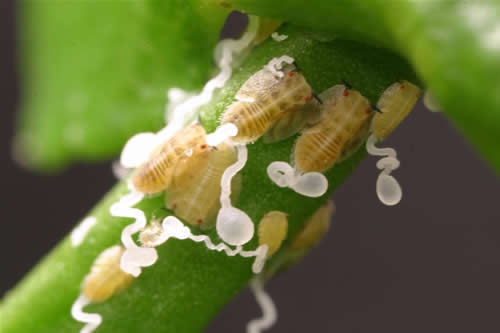
Featured Photo: Asian Citrus Psyllid, UC ANR

2016-05-31T19:28:14-07:00June 17th, 2015|

ADAMA Captan Gold ® 4L Now Registered in California

ADAMA Captan Gold ® 4L Fungicide Gets EPA “Go Ahead” for California Strawberries, Tree Fruits


Adama LogoADAMA has received EPA approval for Captan Gold 4L liquid fungicide for use on strawberries, tree fruits and other specialty crops. A multi-site contact fungicide, Captan Gold 4L penetrates fungal spores, protecting high-value crops against tough diseases like anthracnose, botrytis (gray mold), brown rot and scab.

“ADAMA Captan Gold 4L is the only liquid captan with a ‘Caution’ signal word,” states the company’s national marketing leader Sara Zinck. “Backed by more than 50 years of captan manufacturing experience, Captan Gold 4L delivers excellent efficacy through its multi-site mode of action, making it a trusted partner in fungicide resistance management.”

Gray Mold on Strawberry, UC IPM

Gray Mold on Strawberry, UC IPM


Captan Gold 4L on strawberries

For use on California strawberries, Captan Gold 4L is labeled for applications at 2 to 3 quarts per acre. Early applications at pre-bloom and bloom offer the best fruit protection from botrytis. Follow up applications can be applied at 7 to 14 day intervals up to harvest. Application rates are not to exceed 24 quarts per acre per crop cycle.

# # # # #

ADAMA Agricultural Solutions Ltd (formerly Makhteshim Agan Industries) is a leading global manufacturer of crop protection solutions. With a comprehensive range of high-quality, differentiated and effective products, ADAMA strives to provide accessible, easy-to-use solutions that simplify the user experience while improving crop yields.

For more information, call 866-406-6262 or visit Adama.com.

Always read and follow label directions. Captan Gold® is a registered trademark of an ADAMA Group Company. ©2015 Makhteshim Agan of North America, Inc. d/b/a ADAMA.

Featured photo: Strawberries, UC IPM

2016-05-31T19:28:14-07:00June 16th, 2015|

Westlands Water District Announces Westside Scholarship Recipients

Congratulations to the Westlands Water District Westside Scholarship Recipients!

Six outstanding high school seniors from communities on the Westside of the San Joaquin Valley have been selected to receive scholarships offered by the Westlands Water District. The 2015 scholarships are offered by Westlands under a program to recognize and reward exceptional academic achievement and leadership by graduate seniors at area high schools.

The recipients of the 2015 scholarships are:

Aneet Hundal, a senior at Coalinga High School. Ms. Hundal is an honors student who plans on attending the University of California, Irvine to pursue a degree in nursing. She was actively involved in the Academic Decathlon, Mock Trial, Link Crew, California Scholarship Federation and tennis and basketball. Additionally, she has received a number of awards including the Superintendent’s Honor Roll, Lab Biology II Star of the Month and Wendy’s High School Heisman.

Phillip Augusto, a senior at Lemoore High School. Mr. Augusto plans to attend Cal Poly, San Luis Obispo to pursue a degree in BioResource and Agricultural Engineering. He is an honors student who has received awards from the Future Farmers of America – Scholar Awards, State Degree, Chapter Degree and Greenhand Degree. Additionally, he has been a Robotics Team finalist at West Hills Collect Vex Robotics Competition and Student of the Month for the Lemoore High School Math Department.

Emily Parra, a senior at Tranquillity High School. Ms. Parra plans to attend Stanford University to pursue a degree in Economics/Education. She is an honors student who has been the president of the California Scholarship Federation, Associated Student Body Secretary and World Travel Club Vice President, Mathematician of the Year and Student of the Month.

Jackelyn Sanchez, a senior at Riverdale High School. Ms. Sanchez plans to attend University of California, San Diego to pursue a degree in Aerospace Engineering. She is an honors student who has competed in Academic Decathlon, is an AVID 8th Grade Tutor, Student of the Month, Science Olympiad Competitor, and won an End of the Year Award for maintaining a GPA above 4.0 throughout her high school career.

Gaston Ruben Aganza, a senior at Mendota High School. Mr. Aganza plans to attend Cal Poly, San Luis Obispo to pursue a degree in Engineering. He has held leadership positions in chess and Upward Bound and has participated in AVID, Young Legislators Program, Lend-A-Hand and MESA. Additionally, he was a cross-country runner.

Teddi Diedrich, a senior at Firebaugh High School. Ms. Diedrich plans to attend Menlo College to pursue a degree in agricultural business. She has received several awards in AVID (Student of the Year), Future Farmers of America Greenhand Degree, Honor Roll, Athlete Scholar, the Superintendent’s List and State Future Farmers of America and has also played softball and volleyball.

Each scholarship recipient will receive $1,000 to be used for community college or university expenses. Applicants were judged on their academic performance, school activities and community leadership. Each applicant submitted an essay on an agricultural-related topic.

“Westlands is honored to provide this assistance for these outstanding student leaders,” said Tom Birmingham, general manager of Westlands. “These scholarships represent a small gesture of thanks and support to the communities on the west side of the San Joaquin Valley that make our region such a productive and vibrant place.”

2016-05-31T19:28:14-07:00June 16th, 2015|

Protect Your Solar Panels from Thieves

Protect Your Solar

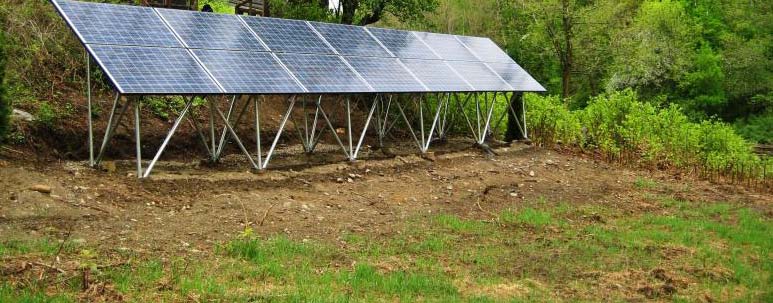
Thefts of solar panels have become an increasing problem in rural areas. Here are tips to protect your solar, offered by the Napa County Sheriff’s Office Problem Oriented Policing Program:

  • Map the panels with serial numbers. That way, solar panel owners can tell which panels have been stolen. This will also allow law enforcement officers to prove that recovered property is stolen.
  • Use locking bolts to secure solar panels, to make removal more difficult. Some owners have placed epoxy over the bolts so that the panels become even harder to remove. Other security methods include running aircraft wire through all the panels to secure them to the frame, or placing a weld that secures the panels to the frame or the bolts.
  • Place tamper-evident stickers with the owner’s name on all the panels. If the panels are stolen, the stickers will show the rightful owner.
  • Use alarms on solar panels. There are several companies that install alarms that are specifically set up for solar panels.
  • Use security cameras to cover your solar fields, so law enforcement officers can view suspects and possibly identify them. Some companies have systems with 24-hour monitoring, which can help to catch suspects in the act.
  • Place a fence around the panel systems to make getting to the panels and removal of the panels harder for thieves.
  • Contact law enforcement agencies immediately to report any suspicious people or vehicles. Provide descriptions of suspects and vehicles (including license plate numbers) to aid in the identification process.
  • If you recognize suspicious behavior or you have become the victim of a crime, do not disturb the crime scene; that will ensure the integrity of any potential evidence.
2016-05-31T19:28:15-07:00June 9th, 2015|

Biomass Bill Passes Assembly

Biomass Bill (AB 590, Salas / Dahle) Protects Renewable Energy and Air Quality

SACRAMENTO – AB 590 will incentivize biomass utilization of agriculture waste and forest waste. The legislation will save jobs, divert biomass from landfills, and create renewable energy.

“Biomass power generation is a clean and efficient way to produce renewable energy and help improve our air. In fact, the Delano biomass facility has helped reduce 96 percent of the pollutants released from open-field burning. This facility alone converts 300,000 tons of agricultural waste per year into clean, renewable energy.” said Assemblymember Salas. “AB 590 provides the necessary structure and resources to protect and incentivize biomass power in California.”

Farms in Kern and Tulare Counties generate over 580,000 tons of woody waste annually, mostly from almond, peach, and nectarine orchards. In the past, most of this material has been burned openly in the fields. Open burning of wood residues produces up to 100 times more greenhouse gas (GHG) emissions than biomass power plants, which convert wood into renewable energy. The Delano biomass facility reduces 96 percent of the pollutants released in open-field burning; leading local air quality management officials to call Covanta Delano “a stationary air pollution control device.”

In addition to air quality benefits, the biomass plants produce a steady flow of reliable, renewable, baseload electric power regardless of natural external conditions, like wind, sun and water flow. The plants also help ensure that the state meets its current renewable energy portfolio standard of 33 percent by the 2020 statutory deadline.

“In the past few years we have seen the catastrophic results of forests that are too loaded with forest fuels. The people of my district have lived in a cloud of smoke, as thousands of acres have burned destroying lives, property, critical animal habitat, ruining our watersheds and wasting valuable resources,” said Assemblyman Dahle. “I introduced AB 590 to address this crisis. The bill is now on to the Senate with bipartisan support from the Assembly, where I hope to see it receive the same support.”

Currently, California biomass plants use more than eight million tons of wood waste as fuel. About 3.7 million tons represent urban wood waste kept out of landfills, helping local governments meet disposal mandates.

Biomass plants across the state employ approximately 700 people directly, as well as 1,000 to 1,500 other workers in dedicated indirect jobs. Many are in economically hard-pressed rural communities where the plants are one of the largest private employers.

Unfortunately, the 25 plants that convert biomass waste into energy are at serious risk of closure without decisive action by the State Legislature and the Governor. In the past year, five plants closed. AB 590 would allocate part of the state’s Greenhouse Gas Reduction Fund (GGRF) revenue to defer the costs of operating these plants.

###

Assemblymember Salas represents part of the City of Bakersfield, the cities of Arvin, Avenal, Corcoran, Delano, Hanford, Lemoore, McFarland, Shafter, Wasco, and the communities of Armona, Buttonwillow, Home Garden, Kettleman City, Lamont, Lost Hills, Stratford and Weedpatch

Assemblymember Dahle represents Alturas, Anderson, Butte County (Portions), Colfax, Dunsmuir, Grass Valley, Lassen County, Modoc County, Montague, Mount Shasta, Nevada City, Nevada County, Placer County (Portions), Plumas County, Portola, Redding, Shasta County, Shasta Lake, Sierra County, Siskiyou County, Truckee, Weed, Yreka

(Photo: Covanta Biomass Plant, Delano, CA)

Contact: Jillian Rice. (661) 335-0302

2016-05-31T19:28:15-07:00June 4th, 2015|

Op-ed: California Agriculture Is Worth the Water

California agriculture is worth the water

Op-ed co-authored by Secretary Ross and Daniel Sumner in the LA Times

SalinasLettuce1000

By Karen Ross and Daniel Sumner

Pundits here in drought-stricken California have become fond of proclaiming that farms consume 80% of the state’s water and generate only about 2% of its gross domestic product. “Why devote so much of our water to an industry that contributes so little fuel to our economic engine?” they ask.

Both of those figures are deceptive. It’s only possible to arrive at 80% by not accounting for the amount of water dedicated to environmental uses. (For example, the water in rivers that flows into the sea.) And the 2% figure grossly undersells the importance of food grown in California.

California’s economy is incredibly diverse, much like its topography, its climate and its population. That’s a significant benefit when you’re the eighth-largest economy in the world. And agriculture is a key part of that diversity.

Of course, many aggregate sectors constitute a larger share of our economy than agriculture. Finance, insurance and real estate tops the list at 21%. Professional services and government follow at 13% and 12%, respectively.

Beyond those sectors, we have a broad, flat grouping of several categories, each representing just a few percent of the state’s GDP. That’s a remarkably balanced profile that lends resilience and dynamism to our economy.

Let’s look more closely at that data, though. Is agriculture really just 2.1%? As is so often the case with statistics, what’s not in that number is more significant than what is.

Take the “utilities” category, for instance. It includes power generated for farms and for processing and marketing crops once they’re harvested. The “real estate” piece includes sales and leasing of agricultural acreage and processing facilities. “Non-durable goods manufacturing” includes food and beverage processing. “Wholesale trade” and “retail trade” does not just mean the shopping mall; it includes the supermarket, the food court and the regional produce hub.

Categories such as “transportation and warehousing” and “finance and insurance” are linked into every one of our 78,000 farms, each of which needs trucks, banks and insurance coverage to bring in the harvest.

“Accommodation and food services” not only runs on food but also is fond of promoting the fact that many of the most healthful and desirable foods and beverages grow on California farms and ranches. California, after all, helped start the farm-to-plate movement, and it’s not an exaggeration to say that agriculture is tied to the state’s identity from harvest (Cesar Chavez) to table (Alice Waters).

Granted, all economic sectors have ripple effects and multipliers. But unlike most other segments, California’s agricultural productivity and diversity are not readily duplicated elsewhere. Our soils and climate are what have made it possible for us to supply so much of our nation’s and the world’s food.

Food is central to California in more than just the nutritional sense. It contributes to nearly every aspect of our economy and our lives, an important point to keep in mind as we weigh what our water is worth during this drought, and the next one.

Karen Ross is California agriculture secretary. Daniel Sumner is a professor of agricultural and resource economics at UC Davis.

2016-05-31T19:28:15-07:00June 3rd, 2015|
Go to Top