Prather Ranch Receives 2015 California Leopold Conservation Award

Prather Ranch Named 2015 California Leopold Conservation Award® Recipient


SACRAMENTO, Calif. – (November 18, 2015) Sand County Foundation, the California Farm Bureau Federation and Sustainable Conservation are proud to announce Prather Ranch as the recipient of the prestigious 2015 California Leopold Conservation Award®. The award honors private landowner achievement in the voluntary stewardship and management of natural resources.

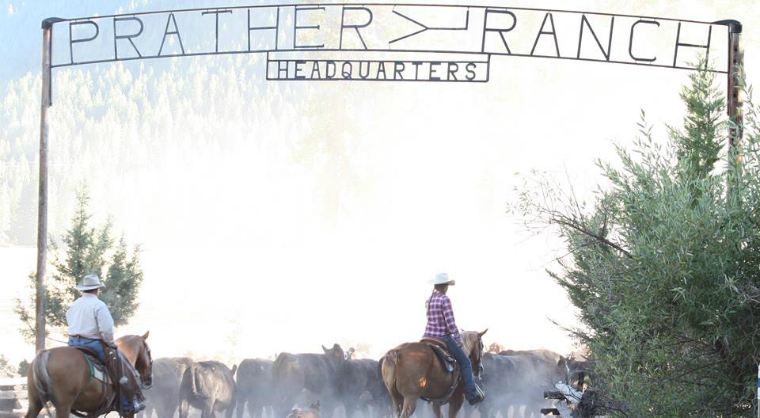
Prather Ranch, owned and managed by Jim and Mary Rickert, is a working cattle ranch headquartered in Macdoel, and stretches across five counties. Under the Rickerts’ management, Prather Ranch has grown in size, implemented conservation enhancements and established several permanent conservation easements. Over the last 35 years, Prather Ranch has continually collaborated with diverse partners to enhance the land and promote land stewardship in the community.

One of the ranch’s first efforts to promote biodiversity was taking an unusual approach to managing the wild rice fields on their land near Mt. Shasta. After rice harvest, they began tilling the stubble into the soil and keeping their fields covered in water year-round. The practice not only benefited common species of waterfowl such as Canada Geese and Snow Geese, but it also attracted shore birds like plovers and terns, previously found only on the coast.

Through conservation easements in cooperation with the Shasta Land Trust, the Rickerts have preserved some of the state’s most spectacular wildflowers and protected sensitive vernal pools and riparian areas. Prather Ranch has also planted several miles of riparian habitat along streams and irrigation canals to benefit a wide range of animals such as the California Quail and the endangered Shasta crayfish.

Jim and Mary Rickert provide community leadership, working with 4-H, Future Farmers of America, and local schools for ranch field trips and other activities.

Given in honor of renowned conservationist Aldo Leopold, the Leopold Conservation Award recognizes extraordinary achievement in voluntary conservation. In his influential 1949 book, A Sand County Almanac, Leopold called for an ethical relationship between people and the land they own and manage, which he called “an evolutionary possibility and an ecological necessity.”

“Because more than half of all land in California is privately owned, how landowners manage their properties has a dramatic and lasting effect on the environment and quality of life for all Californians,” said Ashley Boren, executive director of Sustainable Conservation. “Since the 70s, Jim and Mary have demonstrated an above-and-beyond commitment to enhancing the land, water and wildlife across a large swath of the state. And, they’ve done it in true Leopold fashion, regarding their land not simply as a commodity that belongs to them, but rather seeing their land as a community to which they belong.”

“The Leopold Conservation Award recognizes unique yet replicable strategies a farmer or rancher has developed in managing their land, to be the best steward of the natural resources,” said Paul Wenger, California Farm Bureau President. “We are honored to join Sand County Foundation and Sustainable Conservation to recognize the extraordinary efforts of California farmers and ranchers who go above and beyond in managing and enhancing our natural resources.”

The Leopold Conservation Award program inspires other landowners through these examples and provides a visible forum where farmers, ranchers and other private landowners are recognized as conservation leaders.

The 2015 California Leopold Conservation Award will be presented December 7 at the California Farm Bureau Federation’s Annual Meeting in Reno, NV. Each finalist will be recognized at the event, and Prather Ranch will be presented with a crystal depicting Aldo Leopold and $10,000.

The award sponsors also wish to congratulate the 2015 finalists for their outstanding contributions to agriculture and conservation: Bruce and Sylvia Hafenfeld, who own Hafenfeld Ranch and manage public lands in eastern Kern County, and Ken and Matt Altman, who own and manage Altman Specialty Plants in Riverside and San Diego Counties.

The California Leopold Conservation Award is made possible thanks to generous contributions from American Ag Credit, The Harvey L. & Maud S. Sorenson Foundation, The Nature Conservancy, Environmental Defense Fund, The Mosaic Company, DuPont Pioneer, and The Lynde and Harry Bradley Foundation.


ABOUT THE LEOPOLD CONSERVATION AWARD®
The Leopold Conservation Award is a competitive award that recognizes landowner achievement in voluntary conservation. The award consists of $10,000 and a crystal depicting Aldo Leopold. Sand County Foundation presents Leopold Conservation Awards in California, Colorado, Kansas, Kentucky, Nebraska, South Dakota, Texas, Utah, Wisconsin and Wyoming.

ABOUT SAND COUNTY FOUNDATION
Sand County Foundation is a non-profit conservation organization dedicated to working with private landowners across North America to advance ethical and scientifically sound land management practices that benefit the environment.

ABOUT SUSTAINABLE CONSERVATION

Sustainable Conservation helps California thrive by uniting people to solve the toughest challenges facing our land, air and water. Since 1993, it has brought together business, landowners and government to steward the resources that we all depend on in ways that make economic sense. Sustainable Conservation believes common ground is California’s most important resource. 


ABOUT CALIFORNIA FARM BUREAU FEDERATION

The California Farm Bureau Federation works to protect family farms and ranches on behalf of over 53,000 members statewide and as part of a nationwide network of more than 6.2 million Farm Bureau members. 
2016-05-31T19:27:03-07:00November 18th, 2015|

Van Groningen & Sons Adopts Solar

Van Groningen & Sons Becomes Early Adopter of Solar Meter Aggregation

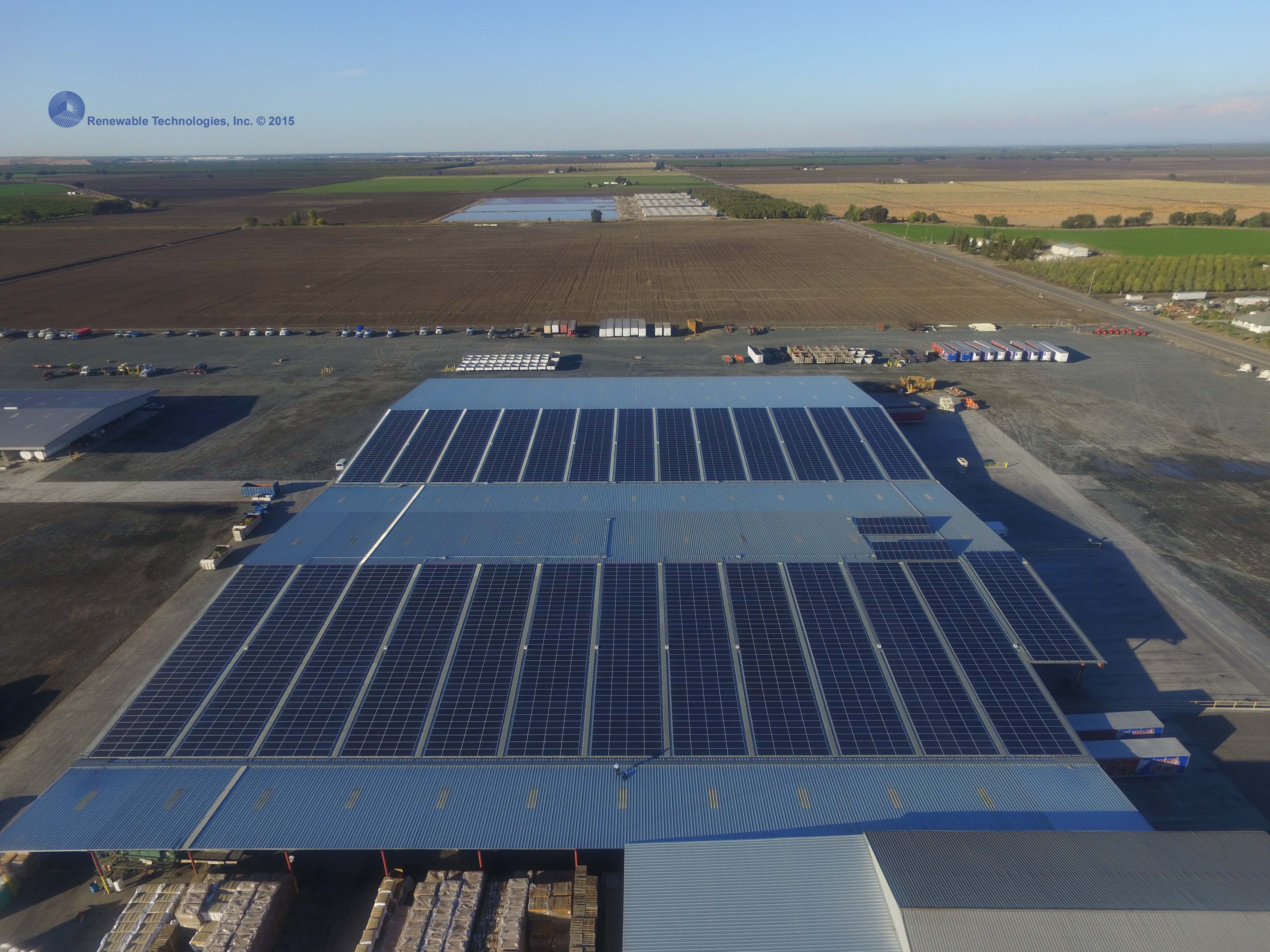
Family owned and operated since 1922, Van Groningen & Sons, Inc. has just completed construction of a 1 Megawatt PV Solar Energy System at their packing, cooling and processing facility located at their company headquarters in Manteca. Designed and installed by Renewable Technologies, Inc. (RTI) of Stockton, CA., the solar system is one of the first to take advantage of the Net Meter Aggregation Policy recently approved by the California Public Utility Commission, allowing for multiple meters to be offset by the production of a single PV solar production system.

RTI worked closely with Paul Hiemstra, warehouse manager at the facility to aggregate 26 electric meters, satisfying the electrical demand of the facility and numerous irrigation pumps across several hundreds of acres of farmland.

The system will generate over 1.4 million kilowatt hours of clean, reliable energy annually and sits atop two large processing buildings. The solar kilowatt hour production will offset approximately 1,034 metric tons of carbon dioxide, the equivalent greenhouse gas emissions produced by 218 passenger cars, the electricity usage of 142 homes or the carbon sequestered by 848 acres of U.S. forest in one year. This project marks yet another step forward in Van Groningen’s efforts toward sustainability, helping to ensure the continuance of the family farming tradition for many years to come.

Van Groningen & Sons, Inc. is closely linked to the growing, shipping and distribution of melons, sweet corn, nuts, pumpkins and fall décor. Their formula is to offer the highest quality products while conducting business with honesty, integrity and responsibility, a recipe that’s certain to last long into the future.

__________________

Links: Van Groningen & Sons

Photo Source:  Renewable Technologies, Inc., Ryan Van Groningen

2016-05-31T19:27:04-07:00November 9th, 2015|

Calif. Profs Win Irrigation E3 Leader Awards

Irrigation E3 Leader Awards Go to Two California Faculty

The Irrigation Foundation has named 15 outstanding students and faculty as winners of the 2015 Irrigation E3 Program. The Foundation selected two faculty 2015 Irrigation E3 Leaders, both in California, Florence Cassel, Fresno State and Tim Ellsworth, West Hills College Coalinga.

This year’s class of faculty and students will receive an all-expenses-paid trip next week to the Irrigation Show & Education Conference, Nov. 9 – 13, in Long Beach, Calif.

Founded in 2012, the E3 program provides students and faculty with exposure, experience and education in the irrigation industry. Academics nominate outstanding students for consideration as E3 Learners and/or apply to become E3 Leaders themselves.

To qualify to apply for Irrigation E3 Leader status, an instructor must be teaching, or will be teaching within the next six months, irrigation-related coursework at a North American community college, university or similar institution of higher learning. Prior winners may not reapply.

Chosen faculty will have the opportunity to participate in education classes, industry sessions and networking events. Working with academics is essential to the Foundation’s mission of attracting people to careers in irrigation by supplying the irrigation industry with educated professionals. Faculty members help shape the future career paths of their students and keeping instructors up-to-date on the latest and greatest in the irrigation industry is a must. 

“This is the fourth year of the program, and the Foundation is sending a record number of students to the show,” said senior foundation manager Janine Sparrowgrove. “We are excited to give the students and faculty the opportunity to attend classes and gain exposure to industry companies and technologies.”

Florence Cassel Sharma, Assistant Professor Irrigation/Water Management, Jordan College of Agricultural Sciences and Technology, Department of Plant Science, California State University, Fresno researches optimizing water use efficiency through low and deficit irrigation practices, improving irrigation scheduling, and utilizing remote sensing techniques for water resources management, crop water use, and soil salinity assessment. Assistant director of research of the Center for Irrigation Technology, Sharma is a recipient of the 2009 Outstanding Research and Scholarly Activity Award for the Jordan College of Agricultural Sciences and Technology.

Tim Ellsworthagriculture technology instructor at West Hills College Coalinga, researches primarily soil science with a focus on precision agriculture and nutrient management. He currently serves on the advisory board for the Canadian Biochar Consortium.

Prior to West Hills, Ellsworth was a professor and faculty director of the online master’s program for the Department of Natural Resources and Environmental Science at University of Illinois, Urbana-Champaign, a soil scientist with the USDA U.S. Salinity Laboratory, a visiting faculty member at the Centre for Water Research, Department of Civil Engineering, University of Western Australia in Perth and a senior scientist performing hazard assessments and hazard evaluations for the U.S. Army with regard to management of the U.S. Army Chemical Weapon Stockpile.

This year’s Irrigation E3 Learners are:

  • Samia Amiri, Oklahoma State University
  • Garrett Banks, Colorado State University
  • Colton Craig, Oklahoma State University
  • Spencer Davies, Brigham Young University
  • Daniel Greenwell, Auburn University
  • John Hawkins, Alamance Community College
  • Tsz Him Lo, University of Nebraska, Lincoln
  • Michelle Mbia, Prairie View A&M University
  • Ryan McBride, Brigham Young University, Idaho
  • Alan Rourke, Kansas State University
  • Daniel Selman, Brigham Young University
  • Amandeep Vashisht, Colorado State University
  • Christopher Weathers, Mira Costa College

Toro Company is the lead sponsor and the Carolina’s Irrigation Association is a supporting sponsor for this year’s program. 

Links:

Irrigation E3 Program 

Irrigation Foundation

2016-05-31T19:27:04-07:00November 5th, 2015|

CEO Council on Sustainability and Innovation Launched

Agribusiness CEOs and Bipartisan Policy Center Launch CEO Council on Sustainability and Innovation


Washington, D.C. – Leading agribusiness CEOs announced TODAY they are joining together with the Bipartisan Policy Center (BPC) to launch the CEO Council on Sustainability and Innovation to improve agriculture and food production sustainability.

Leaders of DuPont, Elanco, Kellogg Company and Land O’ Lakes joined the Council, which will research, collect and amplify innovative approaches in the agribusiness industry, over the next several months, to combat and adapt to the realities of increasing climate volatility, a growing population, and other threats to a stable food supply.

“In the next 35 years, experts anticipate demand for animal protein will climb by 60 percent as the population grows in size and affluence. Already demand for milk, eggs and poultry is outpacing anticipated expectations,” said Jeff Simmons, president, Elanco. “We can’t just rely on the public sector to address these challenges. The private sector must deliver innovative solutions that can help farmers sustainably meet our global food needs.” 

“Achieving a sustainable future food supply and responding to the challenges posed by climate change are dependent on our collective actions,” said John Bryant, chairman and ceo, Kellogg Company. “Kellogg and others in our industry have a role to play in sharing innovative solutions and inspiring others to progress along their own sustainability journey.”

“To feed a growing global population, the food and agriculture industry must continue to increase agricultural productivity while facing climate variability and resource constraints,” said Chris Policinski, president and ceo of Land O’Lakes, Inc. “By working together, we can be more effective and efficient partners to enable a sustainable and productive supply chain.”

“The cost and availability of food is an issue of critical importance to all Americans,” said Jason Grumet, president, BPC. “The council will help kickstart a more robust national conversation about what’s already being done to promote sustainable food production and what more needs to be done.”

Although there is extensive industry research into various sustainability practices, there is little collective understanding of the strategies being deployed, nor is there public appreciation of adaptation challenges, mitigation opportunities, and the importance of agriculture in what must be a global conversation. The council will highlight and promote these innovative efforts.

The council’s work will culminate in a public report to be released in 2016.

2016-05-31T19:27:05-07:00October 29th, 2015|

Americans Support Endangered Species Act Reform

Americans Support Endangered Species Act Reform, Survey Says

Nothing is more priceless and more worthy of preservation than the rich array of animal life with which our country has been blessed.”
-President Nixon, upon signing the Endangered Species Act

The Endangered Species Act of 1973 (ESA) was signed on December 28, 1973, according to the National Oceanic and Atmospheric Administration website and provides for the conservation of species that are endangered or threatened throughout all or a significant portion of their range, and the conservation of the ecosystems on which they depend. The ESA replaced the Endangered Species Conservation Act of 1969. Congress has amended the ESA several times.

The California Endangered Species Act (CESA), per the California Department of Fish and Wildlife, states that all native species of fishes, amphibians, reptiles, birds, mammals, invertebrates, and plants, and their habitats, threatened with extinction and those experiencing a significant decline which, if not halted, would lead to a threatened or endangered designation, will be protected or preserved. The California Department of Fish and Wildlife will work with all interested persons, agencies and organizations to protect and preserve such sensitive resources and their habitats.

American Farm Bureau issued the following press release:

Most Americans think the Endangered Species Act is outdated and needs to be revised, a survey by Morning Consult shows. The poll conducted in early August adds impetus to congressional efforts to overhaul the increasingly outdated 1970s-era statute.

The survey shows:
• 63 percent of Americans support modernizing the ESA;
• 62 percent of Americans believe the act should help with species recovery, as opposed to merely cataloguing changes in their populations;
• 69 percent of Americans want the federal government to offer resources to third parties to help species recovery; and
• 49 percent of Americans believe that state or local authorities, rather than the federal government, lead in recovery of endangered and threatened species. Only 31 percent of Americans favor the federal government taking the lead.

“The intent of the Endangered Species Act is inspiring, but results have been less so,” American Farm Bureau President Bob Stallman said. “Farmers, ranchers and environmentalists agree that we must save wildlife facing preventable extinction, but the current recovery rate of less than 2 percent shows the law is a failure.

“Today, many landowners hesitate to establish habitat that would help endangered species. That’s so because the law itself makes it impractical for them to use their land once they have made the effort to help in the first place. The ESA can and must be modernized to protect endangered species and respect private property rights. Neither agriculture nor the endangered species have time to wait.”

A statistical summary of the poll can be found here. Detailed questions and answers can be found here.

2016-07-23T16:04:51-07:00October 1st, 2015|

New UC IPM Program Director

Jim Farrar Named Director of UC Statewide IPM Management Program

By Pam Kan-Rice, UCANR Assistant Director, News and Information Outreach

Jim Farrar has been named director of the Statewide Integrated Pest Management Program for the University of California’s Division of Agriculture and Natural Resources. He will begin as new uc ipm program director on Oct. 1.

UC IPM works with growers and residents to protect human health and the environment by reducing risks caused by pests and pest management practices.

Farrar is currently director of the Western IPM Center, where he has served since 2013. He succeeds Kassim Al-Khatib, UC IPM director since 2009, who is transitioning to a UC Cooperative Extension specialist position located in the Department of Plant Sciences at UC Davis. There Al-Khatib will focus on his research in weed management.

“UC IPM is a widely recognized national leader in integrated pest management,” Farrar said. “I am excited to continue efforts to make IPM the standard practice for managing pests in agriculture, communities and natural areas in California.”

Prior to joining the Western IPM Center, Farrar was a professor of plant pathology in the Department of Plant Science at California State University, Fresno for 12 years.

At Fresno State, Farrar received three teaching awards. He taught courses in plant pathology, plant nematology, diagnosis and control of plant diseases, crop improvement, aspects of crop productivity, mycology, sustainable agriculture and advanced pest management. His research centered on fungal diseases of vegetable crops, including management strategies for cavity spot of carrot. During his Fresno State tenure, he served four years as chair of the Department of Plant Science and a year as interim chair of the Department of Food Science and Nutrition.

From 1995 to 1997, Farrar taught in the Botany Department at Weber State University in Ogden, Utah. At Weber State, he conducted research on rock cress plants infected with a rust fungus that causes false-flowers. This rust is closely related to a species that is a potential biological control agent for dyer’s woad (Isatis tinctoris), an invasive weed.

Farrar has published scientific papers, extension newsletter articles, and articles in agricultural industry magazines. He also wrote a chapter in the book Tomato Health Management and five disease descriptions in the book Compendium of Umbelliferous Crop Diseases. He recently completed a three-year term as senior editor for feature articles in the journal Plant Disease and was senior editor for the online journal Plant Health Progress for three years. Farrar is a member of the American Phytopathological Society and the Pacific Division of the American Phytopathological Society.

The Wisconsin native completed his Ph.D. in botany and B.S. in plant pathology at the University of Wisconsin, Madison, and his M.S. in plant pathology at UC Davis.


2016-05-31T19:28:05-07:00September 10th, 2015|

No-tillage Grows in California

The list of crops that have been successfully grown using no-tillage in California continues to increase with garbanzo beans being the latest addition, according to Jeffrey P. Mitchell, CE cropping systems specialist, University of California, Division of Agriculture and Natural Resources.

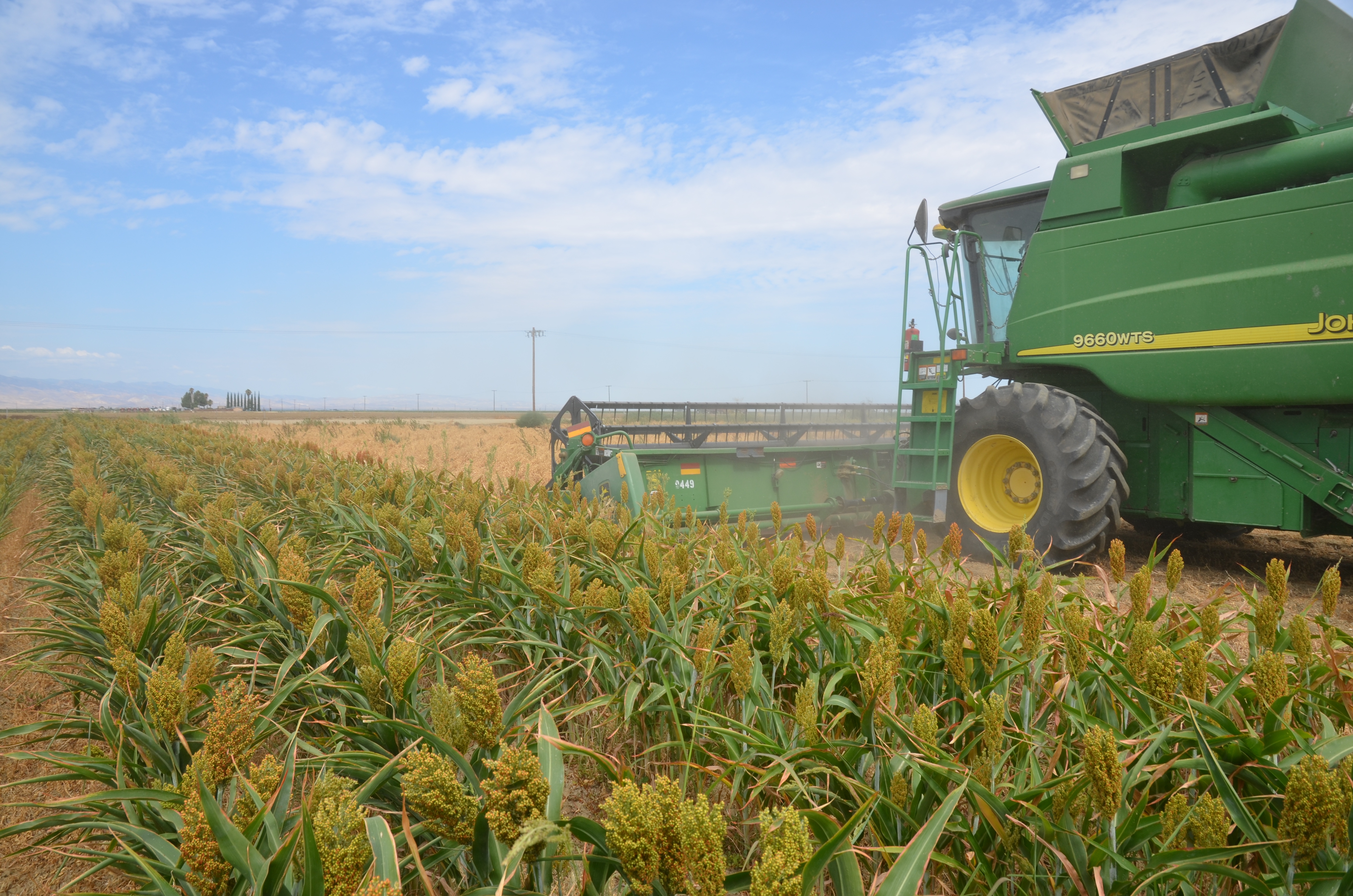
Harvest data from the Conservation Tillage Workgroup are now in for a 2015 garbanzo crop that was no-till seeded in January in the longstanding conservation agriculture systems study field in Five Points, CA, and these data indicate no difference in yield between the no-till with and without cover crop treatments and the standard till with and without cover crop systems. Garbanzo yields for the four systems averaged about 3,600 lbs / acre with no statistical differences seen between the four experimental treatments.

Other than an herbicide spraying in the fall of 2014 to knock down weeds, the no-tillage systems relied on zero tillage prior to seeding that was done with a John Deere 1730 6-row 30” planter. Conventional tillage consisting of several passes of a Wilcox Performer bed-shaping tillage implement was done to prepare planting beds in the standard tillage plots as would be commonly done in the region.

There is now a growing list of several crops, including processing tomatoes, cotton and dairy forage that have been successfully produced, both in research studies and on California farms, with economically viable yields using no-tillage seeding.

Additional information about this study is available at the Conservation Agriculture Systems Innovation Center (CASI) website and by contacting Jeff Mitchell at jpmitchell@ucdavis.edu.

Established in 1998, the Conservation Cropping Systems Workgroup is a diverse group of more than 1,500 farmer, University of California, California State University, USDA – NRCS, Resource Conservation District, public agency, private sector and environmental group members that have come together to promote conservation cropping systems in California.

Featured Photo Soure: Source: CASI (Conservation Agriculture Systems Innovation) Center, University of California, Division of Agriculture and Natural Resources

2016-05-31T19:28:05-07:00September 2nd, 2015|

2014 Fresno County Crop Report Sets Record Production

2014 Fresno County Crop Report Sets Record Production — $7 billion+

Les Wright, Agricultural Commissioner/Sealer submitted the following information to Karen Ross, California Department of Food and Agriculture Secretary, TODAY accompanied by the 2014 Fresno County Crop Report showing record production.

It is my pleasure to submit the 2014 Fresno County Agricultural Crop and Livestock Report. This report is produced in accordance with Sections 2272 and 2279 of the California Food and Agriculture Code, and summarizes the acreage, production, and value of Fresno County’s agricultural products. The figures contained herein represent gross returns to the producer, and do not reflect actual net profit.

Jacobson, Wright and Matoian

Photo, from left, Ryan Jacobson, Fresno County Farm Bureau CEO, Les Wright, Fresno County Ag Commissioner and Richard Matoian, American Pistachio Growers Executive Director

This report is a testament to the resiliency and determination of the Fresno County agricultural industry. For the first time ever, the gross value of Fresno County agriculture exceeds seven billion dollars. Almonds remain the number one crop at a value of 1.3 billion dollars with grapes a close second at $905 million.

The total gross production value of Fresno County agricultural commodities in 2014 was $ 7,039,861,000, a 9.26 percent increase from the 2013 production value of $6,443,236,500.

Increases were seen in:

  • vegetable crops (0.47% = $5,599,000)
  • fruit and nut crops (13.16%= $422,664,000)
  • nursery products (46.89%= $20,022,000)
  • livestock and poultry (31.48% = $301,144,000)
  • livestock and poultry products (22.09% = $116,299,000
  • apiary (17.39% = $10,738,000)
  • industrial crops (107.05% = $3,795,500).

Decreases in:

  • field crops (-36.20%= -$149,822,000)
  • seed crops (-14.67%= -$5,823,000).

I would like to express my appreciation to the many producers, processors, and agencies, both private and public, who supported our efforts in producing this report. I would also like to thank all my staff, especially Fred Rinder, Scotti Walker, Angel Gibson, Vera Scott-Slater, and Billy Hopper. Without their hard work and valuable input this report would not be possible.

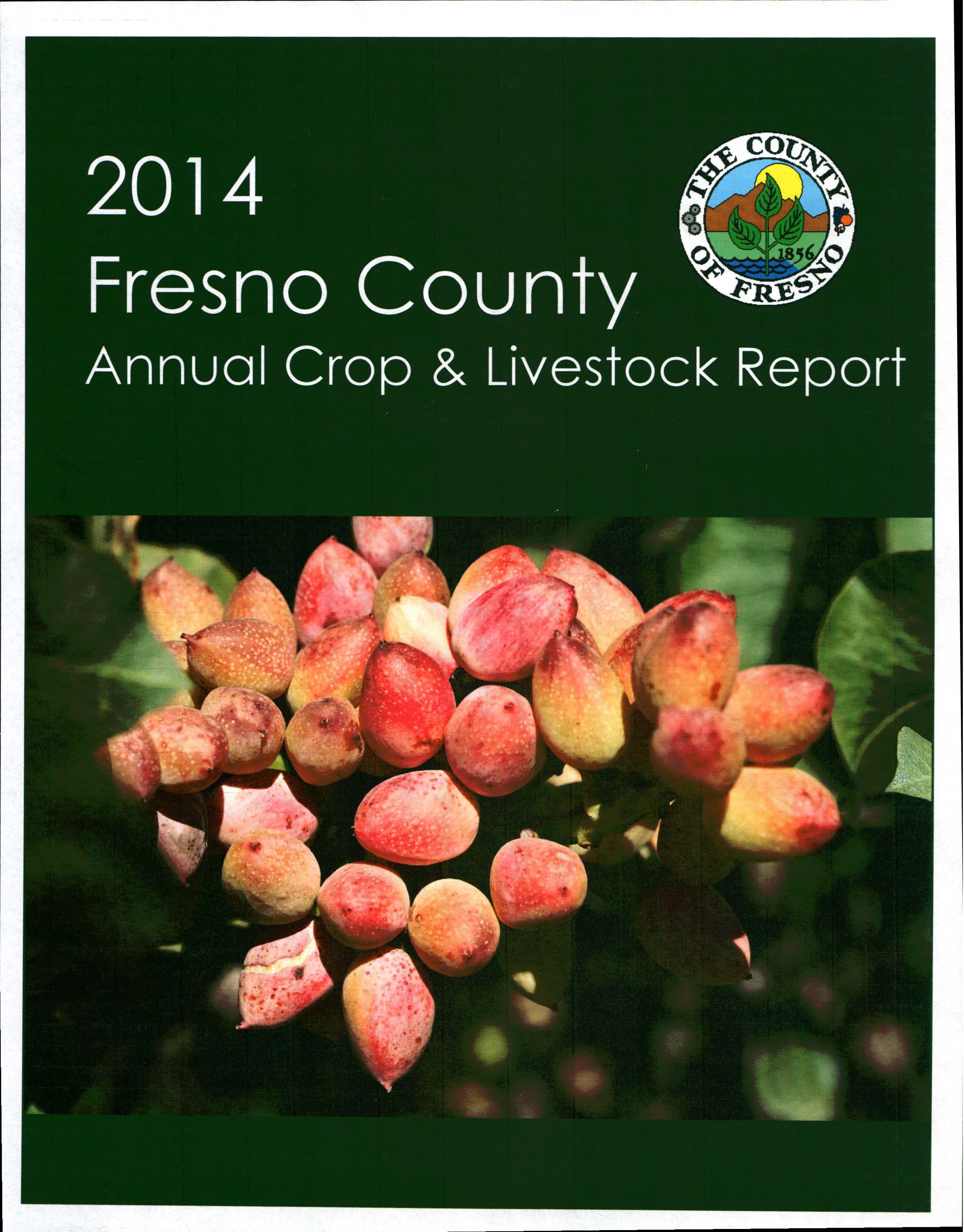
Pistachios, featured on the cover of the 2014 Fresno County Crop Report, were Fresno County’s seventh top crop last year, with a value of nearly $380 million dollars.

The top nut—and crop, for that matter—was almonds, followed by grapes, poultry, milk, cattle and calves, tomatoes, pistachios, garlic, peaches and cotton.

Also included in the report was this quote from President John F. Kennedy:

Our farmers deserve praise, not condemnation; and their efficiency should be cause for gratitude, not something for which they are penalized.

2016-05-31T19:28:06-07:00August 25th, 2015|

Trinity Reservoir Releases Water

U.S. Bureau of Reclamation Releases Shared Water From Trinity Reservoir Despite Making Claims Of “California’s Historic Drought”

The San Luis & Delta-Mendota Water Authority (Authority) along with Westlands Water District, according to their press release, has filed a lawsuit in federal court to stop the Bureau of Reclamation (Reclamation) from releasing Central Valley Project (CVP) water from the Trinity Division to the Klamath River.
The U.S. Bureau of Reclamation said releases started Friday from Lewiston Dam on the Trinity River, the Klamath’s primary tributary, and would continue into late September.SLDMWA logo
Yesterday, Reclamation announced the release of up to 88,000 acre-feet of CVP water from Trinity Reservoir in the hope of aiding returning non-listed Chinook salmon with the optimism of diminishing the effect of a naturally-occurring disease endemic known as “Ich” (pronounced “ick”) to the Klamath River system to which the Trinity River is connected. This action, which is outside of Reclamation’s authorized place of use, is a repeat of a similar action taken last year with the intention to help avoid an outbreak which has only been documented to have occurred once in 2002. Since 2000, a significant supply of water has been set aside each year from the Trinity Reservoir for fishery protection purposes. Specifically, over the past four years, this has equated to more than 200,000 acre-feet of water lost that was literally flushed down the Lower Klamath River.
“As our state is faced with a water supply crisis affecting every sector of people, businesses, and communities, an action like this is unthinkable. This will cause irreparable damage to drought-stricken communities already facing water restrictions,” said Dan Nelson, executive director of the San Luis & Delta-Mendota Water Authority.
The CVP and State Water Project (SWP) provide water for more than 25 million Californians who depend upon a reliable water supply. In the 50-year history of the Projects, water deliveries have never been lower–the CVP is experiencing its second year of a zero water allocation and the SWP sits at a mere 20 percent water allocation.
Reclamation is once again choosing to ignore the harms of its actions through the issuance of a “Finding of No Significant Environmental Impact” (FONSI) that hasn’t been properly analyzed. Further, Reclamation’s decision to release 88,000 acre-feet of CVP water for the Klamath River is a sad irony given that Reclamation is currently unable to meet its legally-mandated obligations within the CVP and SWP.
 Westlands Water District_logo
“The hardworking people of the State of California have been directed by state and federal agencies to conserve water in the form of dying lawns, fewer showers, unplanted fields, trees uprooted or turning brown, and community wells drying up. Yet Reclamation, which has been unable to deliver any water to farmers, has decided to release tens of thousands of acre feet in an arbitrary manner that the courts have previously held to be unlawful.” said Tom Birmingham, general manager of the Westlands Water District. “The fact that 88,000 acre-feet can be casually released without regard to the potential impacts on the environment, including at risk-species in the Sacramento River and the Delta, is a gross mismanagement of the state’s water supplies. The action filed today is intended to compel Reclamation to comply with its mandatory duties,” said Birmingham.
“During a time when we are experiencing the worst water management challenges in decades, when communities and agriculture throughout the state are suffering severe impacts that have negatively affected our economy, the labor force and the environment, the decision by the Bureau of Reclamation to repurpose precious Central Valley Project water resources to augment Klamath flows for non-endangered fish, an action that is of questionable benefit, is both irresponsible and incomprehensible. While the needs of cities, family farms, and endangered species that rely on CVP resources continue to go unmet, the reallocation of the Project’s limited supply of water defies all logic,” said Jeff Sutton, general manager of the Tehama-Colusa Canal Authority, an organization that represents seventeen Sacramento Valley water districts that hold CVP water service contracts, that are also highly critical of the action being undertaken by the Bureau of Reclamation.
The water planned for release is enough to farm 31,000 acres of food, or to serve the domestic needs of more than 175,000 families for an entire year. The devastating effects of the drought will be felt for decades to come especially if arbitrary decisions like these continue.
2016-05-31T19:28:06-07:00August 21st, 2015|

New Medfly Quarantine

A portion of San Diego County was placed under Medfly quarantine earlier this week following the detection of 4 adult Mediterranean fruit flies (Medflies) in the La Mesa area.  The United States Department of Agriculture (USDA), the San Diego County Agricultural Commissioner, and CDFA are working collaboratively on this project.

The quarantine area in San Diego County measures 93 square miles, bordered on the north by Prospect Avenue; on the south by Mount Miguel Road; on the west by Fairmount Avenue; and on the east by Vista Grande Road.  A link to the quarantine map may be found here: www.cdfa.ca.gov/plant/medfly/regulation.html.

To eradicate the infestation, the release of sterile male Medflies began on August 10, at a rate of 250,000 flies per square mile per week.  The new release area is approximately 59 square miles.  In addition, properties within 200 meters of detections are being treated with an organic formulation of Spinosad, which originates from naturally-occurring bacteria in soil, in order to eliminate any mated females and reduce the density of the population. Finally, fruit removal will occur within 100 meters of detection properties in order to remove any fruit infested with eggs and larvae.

The quarantine will affect any growers, wholesalers, and retailers of susceptible fruit in the area as well as local residents. Home gardeners are urged to consume homegrown produce on site and not move it from their property.  These actions protect against the artificial spread of the infestation to nearby regions where it could affect California’s food supply and our backyard gardens and landscapes.

In the eradication program,  sterile male Medflies are brought to San Diego County from the joint CDFA/USDA sterile insect rearing facility in Los Alamitos, which prepares sterile files for release everyday over the Los Angeles basin.  The sterile release program has a proven track record of eradication in southern California.  Sterile male flies mate with fertile female flies in the environment but produce no offspring.  The Medfly population decreases as the wild flies reach the end of their natural life span with no offspring to replace them, ultimately resulting in the eradication of the pest.

The Medfly can infest more than 250 types of fruits and vegetables, causing severe impacts on California agricultural exports and backyard gardens alike.  Residents who believe their fruits and vegetables are infested with fruit fly larvae are encouraged to call the state’s toll-free Pest Hotline at 1-800-491-1899.

2016-05-31T19:28:06-07:00August 21st, 2015|
Go to Top