Sakata Seed Helps American Heart Association Raises $44,000

Sakata Seed America Supports the AHA through its Sakata Gives Corporate Giving Program

New Release Edited by Patrick Cavanaugh

During the month of October, as part of its Sakata Gives Corporate Giving Program, Sakata Seed America, a world leader in breeding and producing vegetable and flower seed, participated in two walks, including a special Sakata-coordinated campus walk, to raise awareness and much-needed funds for the American Heart Association.

On the morning of October 20th, Sakata Seed America staff, friends and family joined the annual American Heart Association Central Coast Heart & Stroke Walk. The 5K walk commenced at the Depot Lot and continued along the scenic coastal pathway located in Monterey. More than 275 Central Coast residents and visitors gathered for the annual Heart Walk to raise life-saving funds and awareness for heart disease and stroke.

The event which included 19 teams, including Team Sakata, raised more than $44,000. Team Sakata raised $3,772 for the walk, earning the titles of Top Team, Top Company, and Top Walker (Jamie Kitz). Funds raised from the Heart Walk will benefit research, advocacy, outreach, and education.

In addition, on the morning of October 3rd the Sakata staff stepped out at their own regional offices for a companywide Heart Walk staged at seven of their campuses throughout the United States, including major locations in Yuma, AZ; Morgan Hill, CA; Salinas, CA; Woodland, CA; Ft. Myers, FL; Mt. Vernon, WA; and Burlington, WA.

A first for Sakata and the American Heart Association, Sakata’s coordinated campus walk was the “heartchild” of Jamie Kitz, Program Manager for Sakata Gives, the company’s Corporate Giving Program. Kitz said, “Partnering with strong community-minded organizations as the American Heart Association speaks to the essence of the Sakata Gives. We love engaging in our communities through activities that contribute to the betterment of both life and culture.”

To encourage and thank walkers, 400 colorful tulips were generously donated by Sun Valley Floral Farm. Participants were thrilled to walk away with gorgeous blooms that made for even happier hearts! Sakata was pleased to build awareness and camaraderie at their own facilities and blaze a new trail in fundraising for the American Heart Association.

From humble beginnings, the AHA has grown into the nation’s oldest and largest voluntary organization dedicated to fighting heart disease and stroke. A shared focus on cardiovascular health unites their more than 33 million volunteers and supporters as well as their more than 3,400 employees. According to the American Heart Association, heart disease is the No. 1 killer, and stroke ranks as the country’s No. 5 killer. For nearly 100 years, the AHA has been fighting heart disease and stroke, striving to save and improve lives.

Kelly LaPorta, Regional Director for the American Heart Association states, “It is evident that the mission of the American Heart Association is a mission that is near and dear to the hearts of the Sakata Family. Heart Walk is our premiere event for raising funds to save lives from heart disease and stroke and Sakata has fielded a team for the past six years. Happily, Sakata wanted to do more. They wanted to be sure they could participate at the highest level and raise the most funds and awareness—hence we decided to co-host our first coordinated campus walk for Sakata and it was a huge success!”

Overall, roughly 110 Sakata employees participated in the two walks and raised over $4,900 for the cause.

For more information on the Heart & Stroke Walk visit www.centralcoastheartwalk.org
2018-10-29T16:50:56-07:00October 29th, 2018|

President’s Order Restores Western Water Supplies

Farm Bureau, CA Farm Water Coalition, Family Farm Alliance and Western Growers Support Order

News Release Edited By Patrick Cavanaugh

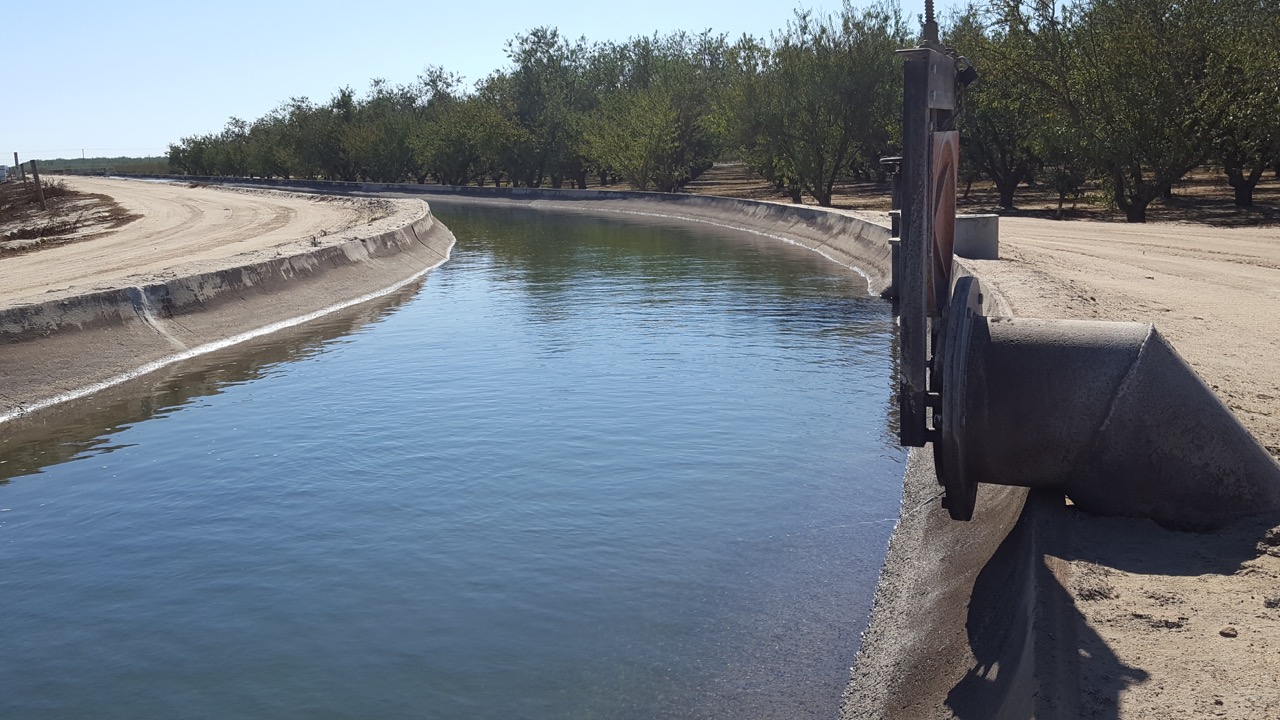
Last week, President Trump provided welcome relief to Western farmers, cities, rural communities and wildlife refuges that have struggled under water supply rules that are long overdue for an update. Prioritizing national interest and the value of California food production, the president’s order requires the re-consultation of the biological opinions to be completed and fully implemented by August 2019.

The deadline will bring to a close the review of rules governing the long-term operation of the federal Central Valley Project and California State Water Project. The review has been underway since August 2016, a process the order requires to be concluded by Aug. 31, 2019.

The president’s action fulfills his campaign commitment to help solve the state’s water supply shortages and will greatly benefit Central Valley communities and the environment. Since 1992, water supply restrictions have caused severe economic consequences for farms and the people who depend on them for work. Many of the state’s most disadvantaged communities have suffered due to scarce water supplies.temperance flat dam

Wildlife refuges that are a critical component of the Pacific Flyway have had insufficient water to meet the needs of millions of ducks, geese, shorebirds, songbirds and endangered animals in large parts of the Central Valley and the Klamath Basin. An ongoing review of the rules governing these critical water supplies only delays the ability of these important areas to recover.

This action will also help address water shortages that have occurred across the West as the result of federal regulations overseen by multiple agencies. It offers hope to farmers and ranchers served by federal water projects in the Pacific Northwest, including the Columbia Basin and the Klamath Basin. The president’s order places the responsibility of operating the federal water projects with the Department of the Interior, to be supported by the National Marine Fisheries Service and the U.S. Fish and Wildlife Service. The action prohibits any impacts to threatened or endangered species protected under the federal Endangered Species Act.

This issue has been scrutinized by the Executive Branch as far back as 2011. At that time, President Obama observed that the Interior Department is in charge of salmon while they’re in freshwater, but the Commerce Department handles them when they’re in saltwater. Those overlapping jurisdictions have only slowed efforts to help the fish.

A committee convened by the National Research Council also studied this matter a few years ago. The NRC found that the lack of a systematic, well-framed overall analysis between the two services is “a serious scientific deficiency, and it likely is related to the ESA’s practical limitations as to the scope of actions that can or must be considered in a single biological opinion.”

Improved coordination between federal agencies will promote more efficient, effective and coordinated management of all ESA responsibilities for anadromous and freshwater fish in Western watersheds, from the highest reaches of our headwaters to the Pacific Ocean.

“This action is an important and common-sense move that will benefit Western farmers and ranchers whose livelihoods depend on federal water projects,” said Dan Keppen, executive director of the Family Farm Alliance. “It’s a practical and assertive change to Western water management and species recovery that our membership strongly supports.”

California’s GOP congressional delegation from the Central Valley played an important role in identifying the problems in the state’s water system and worked closely with the Trump administration to produce a solution that is consistent with federal law and will improve the water delivery system.

“There’s no question that the Central Valley has lagged behind the economic recovery experienced in other parts of the state. We’re optimistic that these changes will not only help improve water supplies for farms, farm-related businesses, and disadvantaged rural communities, they will provide the incentive to put science-based solutions to work to help recover iconic native fish species that have suffered under the existing regulatory approach,” said Mike Wade, executive director of the California Farm Water Coalition.

“This is a common-sense improvement to a process that has been abused in the past by regulatory agencies seeking to impose a scientifically-unsound regime on water users that ultimately, by design, de-irrigates some of the highest quality farmland in the world. This move by the Administration simply ensures that the process of revising the rules governing Delta water operations will be less vulnerable to regulatory abuse,” said Tom Nassif, president of the Western Growers Association.

“Implementation of the Endangered Species Act can be better for both species and people, and the president’s action moves us in that direction,” California Farm Bureau Federation President Jamie Johansson said. “It’s time to grow beyond the culture of conflict that has governed California water for too long. We need streamlined solutions that benefit species and that benefit both the farmers who provide California-grown food and farm products and everyone who depends on those products.”

2021-05-12T11:05:09-07:00October 26th, 2018|

Livestock Owners Asked to Weigh in on Fire Impact

Livestock Owners Should Participate in Fire Survey

By Pam Kan-Rice, UC Agriculture & Natural Resources

Preparing a farm for wildfire is more complicated when it involves protecting live animals. To assess the impact of wildfire on livestock production, University of California researchers are asking livestock producers to participate in a survey. 

People raising cattle, sheep, goats, poultry, swine, horses, llamas, alpacas, aquaculture species or other production-oriented animals in California who have experienced at least one wildfire on their property within the last 10 years are asked to participate in the FIRE survey.

“We will aim to quantify the impact of wildfires in different livestock production systems,” said Beatriz Martinez Lopez, director of the Center for Animal Disease Modeling and Surveillance in the UC Davis School of Veterinary Medicine. “The idea is also to create a risk map showing areas more likely to experience wildfires with high economic impact in California.

“This economic and risk assessment, to the best of our knowledge, has not been done, and we hope to identify potential actions that ranchers can take to reduce or mitigate their losses if their property is hit by wildfire.”

Martínez López, who is also an associate professor in the Department of Medicine & Epidemiology at UC Davis, is teaming up with UC Cooperative Extension livestock and natural resources advisors and wildfire specialists around the state to conduct the study.

“Right now, we have no good estimate of the real cost of wildfire to livestock producers in California,” said Rebecca Ozeran, UC Cooperative Extension livestock and natural resources advisor for Fresno and Madera counties. “Existing UCCE forage loss worksheets cannot account for the many other ways that wildfire affects livestock farms and ranches. As such, we need producers’ input to help us calculate the range of immediate and long-term costs of wildfire.”

Stephanie Larson, UC Cooperative Extension livestock and range management advisor for Sonoma and Marin counties, agreed, saying, “The more producers who participate, the more accurate and useful our results will be.”

“We hope the survey results will be used by producers across the state to prepare for wildfire,” said Matthew Shapero, UC Cooperative Extension livestock and natural resources advisor for Ventura and Santa Barbara counties, “And by federal and private agencies to better allocate funds for postfire programs available to livestock producers.”

The survey is online at http://bit.ly/FIREsurvey. It takes 15 to 30 minutes, depending on the number of properties the participant has that have been affected by wildfire.

“Survey answers are completely confidential and the results will be released only as summaries in which no individual’s answers can be identified,” said Martínez López. “This survey will provide critical information to create the foundation for future fire economic assessments and management decisions.”

2021-05-12T11:17:09-07:00October 18th, 2018|

STK REGEV ‘Hybrid’ Fungicide Named Finalist for Best New Crop Protection Product

TIMOREX GOLD Finalist for Best Marketing Campaign

News Release Edited by Patrick Cavanaugh

STK bio-ag technologies, a global leader in the development and marketing of botanical based and hybrid solutions for food protection, was selected as a Finalist in two Agrow Award categories … REGEV ‘Hybrid’ Fungicide for Best New Crop Protection Product of the Year, and the TIMOREX GOLD Outreach for South American Growers as the Best Marketing Campaign of the Year.

Note that Regev is not registered in California while Timorex Gold is pending registration in California.

REGEV is the first product of its kind in the market. REGEV is a pre-mix hybrid solution that delivers effective and sustainable disease control in a very wide variety of high-value, row and even broad acre crops. This is a breakthrough formulation which creates a bridge to future biologics use, enabling growers in all sectors and geographies to reduce their ecological footprint and thrive economically to better meet the demand for sustainable food protection.

REGEV is a revolutionary and easy-to-use approach to sustainable crop protection. REGEV is a hybrid pre-mix, which is used in exactly the same way growers use their current chemical fungicides. No mixing. No Rotating.

REGEV enables growers who have never used any biological product to try a biologic, experience an effective new tool for combating resistance, increase crop yields, sharply reduce chemical residues and make crops more competitive with consumers and regulators globally,” said Arye Tenenbaum, CEO of STK bio-ag technologies.

The Agrow Awards were developed to recognize excellence in the crop protection and production industries. Entries are evaluated using a wide range of criteria by an independent judging panel consisting of a group of experts from around the world.

Winners of the 11th Annual Agrow Awards will be announced at the Awards Gala scheduled to take place on November 12th at 8 Northumberland in London.

2021-05-12T11:01:53-07:00October 2nd, 2018|

Farmers Launch New Health Advertising Campaign for Grapes

Ad Series Highlights Links Between Grapes and Healthy Heart, Brain, and Colon

News Release Edited By Patrick Cavanaugh

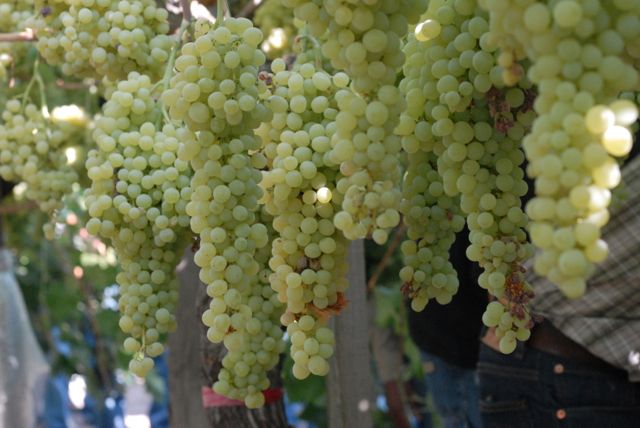
A new ad campaign from the farmers of fresh California grapes highlights how consuming normal amounts of grapes each day may contribute to long-term health by helping to maintain a healthy heart, brain, and colon.

Reaching consumers online and through print and broadcast, the campaign revolves around a series of ads focusing on the power of the whole fruit: grapes contain more than 1,600 documented natural plant compounds, including antioxidants and other polyphenols.

Each ad highlights key research from scientific study in the area of heart, brain, and colon health. Scientists believe it is the combination of natural plant compounds and daily consumption that provides benefit.

Kathleen Nave, California Table Grape Commission president

Kathleen Nave, California Table Grape Commission president

“Consumers have always loved grapes for their great taste, convenience, share-ability, and beauty. Through this campaign, consumers will learn that the health benefits grapes provide go beyond the basics of eating a favorite fruit as part of a healthy diet,” said Kathleen Nave, California Table Grape Commission president. “It is already established that grapes are a heart-healthy food, and now research in the areas of brain and colon health is emerging that suggests that grapes may have an even broader role to play in long-term health.”

Nave noted that research into these three areas of health, and numerous others, will continue.

The campaign will run in magazines and newspapers in both print and online, on health-related websites, on television and radio, and on social media.

2018-10-01T15:35:35-07:00October 1st, 2018|

$102.7 Million Available to Help Expand Specialty Crops

USDA Funding Program to Help Support Local Projects

News Release Edited By Patrick Cavanaugh

Specialty crop growers in California may be able to use part of the $102.7 million available to support local projects and to help expand markets for specialty crops.

“Every state has agricultural priorities that contribute to the well-being of farm families, consumers and the economic health of rural America,” said Under Secretary Greg Ibach in a recent press release. “These programs target resources to the state, local and regional level where the people who understand the issues best can find solutions that help everyone.”

Resources to be apportioned include:
  • $72.15 million is directed to state departments of agriculture in 50 states, the District of Columbia and five U.S. territories through the Specialty Crop Block Grant Program to support farmers growing specialty crops, including fruits, vegetables, tree nuts, and nursery crops. States use the grant to fund research, agricultural extension activities and programs to increase demand for agricultural goods of value to farmers in the state or territory.
  • $13.35 million is directed to 49 projects supporting direct producer-to-consumer marketing projects such as farmers markets, community-supported agriculture programs, roadside stands, and agri-tourism through the Farmers Market Promotion Program.
  • $13.45 million is directed to 44 projects to support the development and expansion of local and regional food businesses to increase domestic consumption of, and access to, locally and regionally produced agricultural products, and to develop new market opportunities for farm and ranch operations serving local markets through the Local Food Promotion Program.
  • $1.1 million is awarded for nine projects through the Federal-State Marketing Improvement Program to assist in exploring new market opportunities for U.S. food and agricultural products and to encourage research and innovation aimed at improving the efficiency and performance of the marketing system.

For more information about these programs, visit www.ams.usda.gov

2018-09-21T15:24:22-07:00September 21st, 2018|

Gerawan Worker Votes to Be Counted in Fresno

Historic Day Following Five Years of Vote Count Suppression

News Release Edited By Patrick Cavanaugh

Today, the Agricultural Labor Relations Board announced that it will count the votes of Gerawan Farms workers after five years of illegally refusing to tally the ballots.

Supreme Court

Silvia Lopez, Gerawan farm worker spokesperson

Determined to avoid having union dues taken from their wages by a union that had abandoned the workers for almost two decades, Silvia Lopez and the Gerawan Farms employees courageously organized themselves in opposition to forced union membership. In November of 2013, thousands of Gerawan Farms employees voted on whether or not they would be represented by the United Farm Workers (UFW) in the largest worker election in ALRB history.

For five long years, the ALRB has suppressed the vote by refusing to count the ballots while the workers fought to vindicate their civil rights.   The Fifth District Court of Appeal in Fresno ruled in May that the suppression of the vote violated the workers’ statutory and Constitutional rights, and ordered the votes counted. Only after a dismissal of all appeals by the California Supreme Court did the government finally agree to count the ballots.

At 8:30 am on September 18, 2018, the ballots will be removed from the ALRB safe for inspection by the parties, and transportation to Fresno.

The ballots will be counted at 2550 Mariposa Mall, Room 1036 in Fresno at approximately 10:00 am. This tally represents a victory for farmworker rights over a union and a government agency that has tried to silence them.

2018-09-17T17:56:17-07:00September 17th, 2018|

Halting the Sacramento Water Grab

Rep. Denham calls on Congress to halt Sacramento Water Grab by enacting Denham Amendment

News Release Edited By Patrick Cavanaugh, Editor

 Recently, U.S. Representative Jeff Denham (R-Calif.), along with thirteen of his California colleagues, sent a letter to Speaker of the House Paul Ryan (R-Wis.) to make sure Rep. Denham’s House-passed amendment to stop Sacramento’s water grab is included in the next spending bill that is signed into law.

“My amendment halts the disastrous Bay-Delta Plan that would see 40 percent of our water flushed out into the ocean,” Rep. Denham said. “Congress must act to protect the Valley.”

Rep. Jeff Denham, photo courtesy of his Facebook page

 Rep. Denham’s amendment to stop the state’s dangerous water grab passed the U.S. House of Representatives in July as part of a Department of the Interior appropriations bill and put a major spotlight on this issue. The amendment, currently awaiting a vote in the Senate, prohibits federal agencies from participating in the state’s plan to deplete the federally-owned New Melones reservoir, which provides water for the Central Valley Project and generates hydropower.

Sacramento’s plan would drain significantly more water from New Melones each year, potentially leaving it completely dry some years.

Sacramento’s planned water grab would do irreparable damage to Central Valley communities, directly interfering with the New Melones Project’s ability to store water and the Central Valley Project’s ability to deliver water.

The plan would subvert the will of Congress and jeopardize a significant portion of the nation’s agricultural productivity. Following a visit to New Melones at the request of Rep. Denham, Secretary of the Interior Ryan Zinke sent a letter to the State Water Resources Control Board highlighting serious concerns with the plan and directed his agencies to propose a new plan to maximize water storage and resolve issues with the state, among other directives. 

Rep. Denham will continue fighting to protect Central Valley water, support science-driven river management plans that revitalize our rivers without recklessly wasting water, and push major policies like the New WATER Act that will solve California’s water storage crisis and keep the Valley fertile and prosperous for generations to come.

2018-09-10T16:47:28-07:00September 10th, 2018|

Food Bloggers, Dietitians Learn More About Produce Safety in Salinas

“Facts Not Fear” Educates Participants on Vegetable Production

News Release Edited By Patrick Cavanaugh

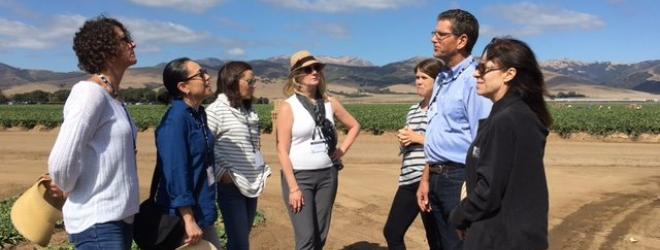
The Alliance for Food and Farming, in conjunction with Markon Cooperative, hosted its second “Facts Not Fear” Produce Safety Media tour last week in the Salinas Valley.

“Our goal is for … [registered dieticians], health and nutrition writers and bloggers to see firsthand the care and commitment farmers have for producing safe and wholesome foods.  We believe we met that goal.  But, what we learn from our tour guests continues to be just as valuable,” said Teresa Thorne, Executive Director of the Alliance for Food and Farming, based in Watsonville.

In addition to farm and facility tours, the AFF and Markon facilitated a round table meeting where tour guests were joined by farmers and farming companies, scientists, regulators and chefs for a free-flowing discussion that encompassed food safety, farming practices, food waste, pesticide use, food safety regulations, new technologies, health and nutrition, and consumer outreach.

The RDs, bloggers, and writers attending the tour reported they enjoyed the chance to tour the farms one day and then discuss what they saw with these experts.  They also appreciated the opportunity to share their information needs and concerns directly during the round table discussion.

And, what were some of our key takeaways from guests?  Consumers want transparent and honest communication regarding food safety and food production practices.  The RDs, bloggers, and writers share The Alliance for Food and Farming’s concerns about produce safety misinformation and appreciate and need access to scientists and experts that can assist them when addressing consumer questions and correcting misconceptions.

“And, they were very impressed with the technological advancements they saw in the harvesting and processing of produce,” said Thorne.

“While the importance of seeing the fields and harvest and touring processing facilities cannot be underscored enough, meeting and connecting with the people growing our food, directly sharing concerns with farmers and scientists in a group and one-on-one setting and the expansion of their produce industry network is of equal importance for our guests,” Thorne explained.

“Our sincere thanks to everyone who allowed us to visit their farms, watch the harvest, view their processing facilities as well as joined us for the round table discussion,” Thorne said.  “And, our thanks and appreciation to our tour partner, Markon Cooperative, for making this tour possible as well as our tour sponsors Cal-Giant Berry Farms, the California Strawberry Commission and the Produce Marketing Association.”

Thorne also praised the 2017 and 2018 tour alumni.

“We will keep the conversation going and look forward to learning more from the attendees as we all work toward our shared goal of increasing daily consumption of organic and conventional fruits and veggies,” she said.

The host, The Markon Cooperative, supplies the food service industry fresh fruits and vegetables.

2018-09-06T16:01:40-07:00September 6th, 2018|

Study Forecasts Cost of Regulations on California Citrus Industry

Citrus Research Board Explains Cost Impacts on Growers

News Release From California Citrus Mutual

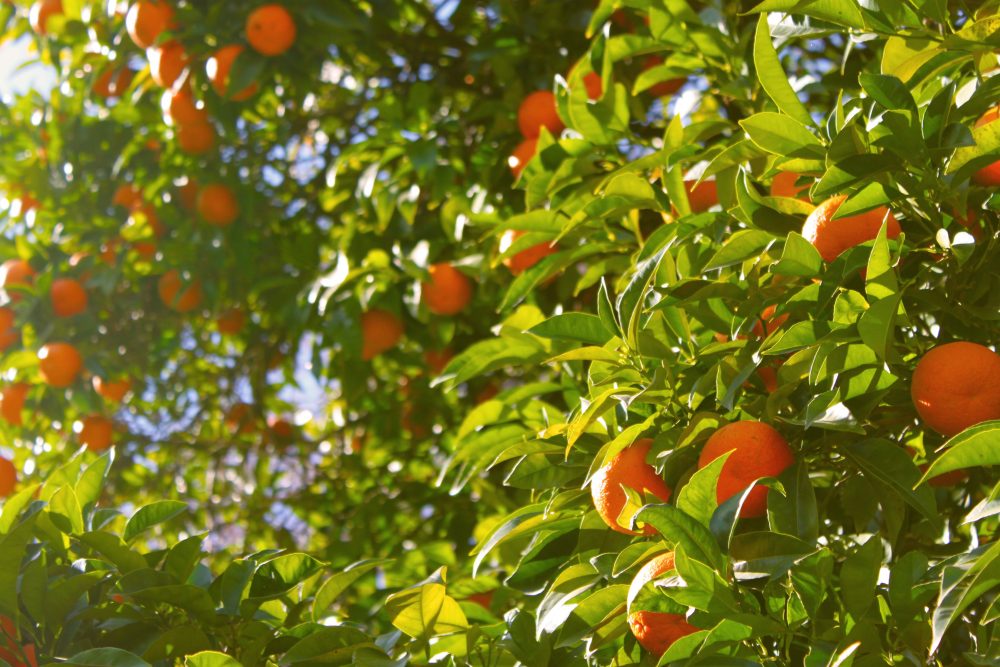
New regulations are expected to cost California citrus growers an average of $701 per acre per year, or $203 million annually statewide, according to a new study commissioned by the Citrus Research Board (CRB).

“Compliance with environmental regulations not associated with groundwater sustainability is estimated to increase costs by $17.7 million, or $67 per acre of citrus,” predicts Bruce A. Babcock, Ph.D., a professor in the School of Public Policy at UC Riverside who authored the study. “New labor requirements will increase costs by $112 million, or $357 per acre, once they are all phased in.”

“Babcock has presented a well-researched economic report that shows how new regulations will increasingly impact California’s citrus industry,” said CRB President Gary Schulz.

The report, Impact of Regulations on Production Costs and Competitiveness of the California Citrus Industry, also predicts that controlling the Asian citrus psyllid (ACP) “will increase costs by $65 million, or $248 per acre per year, if controls are extended to all citrus-growing regions.” Compliance training costs are estimated to increase costs by another $29 per acre, or $7.5 million for the state citrus industry.

“As I read and reread Dr. Babcock’s report, two things kept jumping off the page: one, ‘Cost increases borne by California’s citrus but not by … other citrus growing regions decrease the future competitiveness of California’s citrus industry’; and two, ‘… future compliance with these regulations is estimated to increase costs by $203 million, or $701 per acre per year,'” said California Citrus Mutual President Joel Nelsen. “When the cost of citrus at store level gets too expensive, consumers look for lower priced fruit. This UCR report paints a clear path for policy makers if their goal is to drive the citrus industry out of California and onto off-shore production areas.”

The 20-page report includes a breakdown of increases in labor costs, including California’s minimum hourly wage increases, which are scheduled to rise in annual increments to $15 over the next four years. The report also covers the projected cost increases of recent state legislation dealing with paid sick leave, payment rates for rest and recovery periods, overtime and workers compensation.

The section on insecticide treatment addresses grower cost of spraying for ACP, even though the severity of the problem currently differs greatly in various areas of the state. If ACP establishes itself in all citrus regions in the state, which the report says is “almost inevitable,” control efforts would amount to $39.5 million per year, according to Babcock. This would be in addition to the state-mandated tarping of fruit that is transported to packinghouses, at a cost of approximately $9 million per year.

According to the report, The Food Safety Modernization Act, which was passed in 2011 and is still being implemented, will not require major changes for growers who are already GFSI-certified (Global Food Safety Initiative compliant).

The impact of the Sustainable Groundwater Management Act (SGMA) is hard to predict, according to Babcock. “It will not be possible to calculate the impact of SGMA until each basin’s groundwater sustainability plans have been finalized,” he states. “Without new surface water supplies, it seems inevitable that some farmland that currently relies on groundwater will need to be fallowed to balance withdrawals with recharge rates.”

Babcock, a Fellow of the Agricultural and Applied Economics Association, has won numerous awards for his applied policy research. He received a Ph.D. in Agricultural and Resource Economics from UC Berkeley, and Master’s and Bachelor’s degrees from UC Davis.

The CRB administers the California Citrus Research Program, the grower-funded and grower-directed program established in 1968 under the California Marketing Act, as the mechanism enabling the state’s citrus producers to sponsor and support needed research. The full report on the Impact of Regulations on Production Costs and Competitiveness of the California Citrus Industry, as well as more information about the Citrus Research Board, may be read at www.citrusresearch.org.

2021-05-12T11:05:09-07:00August 22nd, 2018|
Go to Top