California Grape Growers Award Scholarships

Table Grape Growers Help Children of Field Workers

News Release

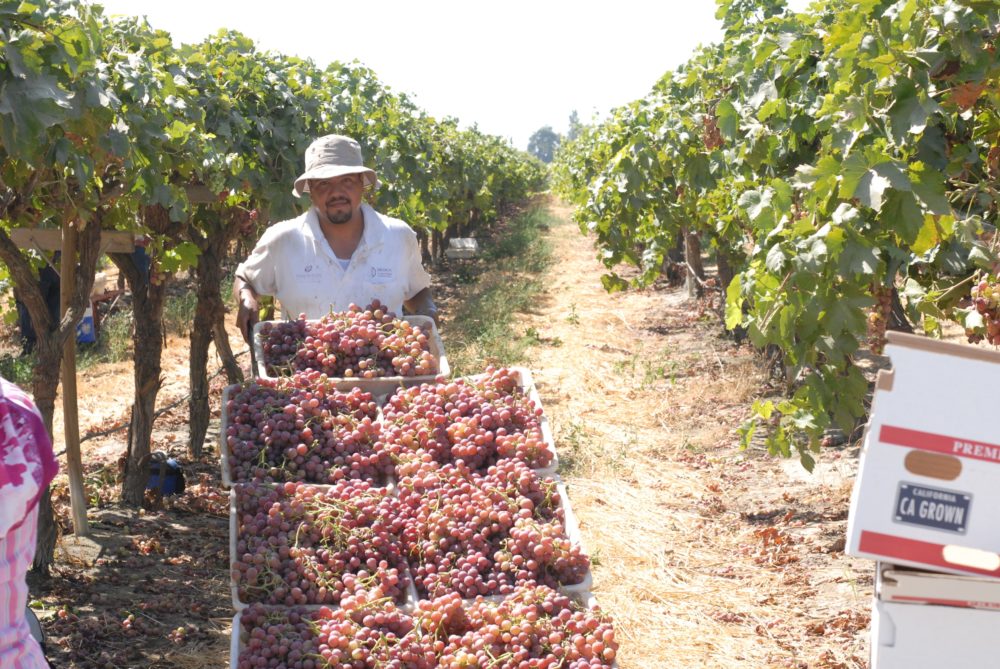
California’s table grape growers recently awarded scholarships to seven students in grape growing regions of the state. All recipients will be attending California universities or vocational schools.

Four field worker scholarships were awarded: one $3,500, two-year award for study at a vocational school and three $20,000, four-year awards for study at a California university. Three $20,000, four-year agricultural scholarships for study at a California university were also awarded.

 2019 scholarship recipients: $20,000 Four-year Field Worker Scholarships

Mr. Alex Aguilar is a graduate of Shafter High School. He graduated with a 4.3-grade point average and was the associated student body president as well as the all-state, small-school football player of the year. Alex plans to attend San Diego State University, where he will major in mechanical engineering with the goal of becoming an engineer.

Alex Aguilar

Ms. Julissa Elizondo is a graduate of Cesar E. Chavez High School in Delano, where she graduated with a grade point average of over 4.0. Julissa was a member of the superintendent’s honor roll and held an associated student body executive position. She plans to attend UC Davis to major in cell biology with the career goal of becoming an OB/GYN.

Julissa Ruby Elizondo

Mr. Diego Garcia is a graduate of Harmony Magnet Academy High School in Strathmore. He is a California Scholastic Federation member as well as an adult literacy volunteer. Diego graduated with a 4.17 grade point average, and his SAT score placed him in the 89th percentile nationally. He plans to attend UC Davis, where he will major in neurobiology, physiology, and behavior with the goal of becoming a surgeon.

Diego Garcia

$3,500 Two-year Field Worker Scholarship

Ms. Stephanie Torres is a graduate of Porterville High School. Stephanie plans to attend the Clovis Culinary Arts Academy and will pursue a career as a pastry chef. Stephanie graduated with a 3.3-grade point average.

Stephanie Alejandra Ramos Torres

$20,000 Four-year Agricultural Scholarships

Mr. Juan Espinoza is a graduate of Shafter High School, where he held a 4.3-grade point average. He is a four-year member of FFA, a member of the football team and the soccer team’s defensive player of the year. Juan plans to attend CSU Bakersfield, where he will major in agricultural engineering with a goal of mechanizing the table grape harvest.

Juan Nieto Espinoza

Mr. Nicholas Patton is a graduate of Golden West High School in Visalia, where he maintained a 4.0 grade point average. Nicholas was actively involved in FFA and the MVP of the varsity water polo team. He plans to attend UC Davis to major in biotechnology, followed by the pursuit of a master’s degree in biological engineering at Cornell University. Nicholas’ final goal is to develop new food technologies.

Nicholas Patton

Mr. Zachary Wilson is a graduate of Kingsburg High School with a 3.95 grade point average. He was a four-year honor roll student and associated student body vice president, as well as a member of Future Farmers of America (FFA), where he won numerous awards. Zachary plans to attend Cal Poly, San Luis Obispo, to major in both agricultural sciences and agricultural business with the career goal of owning an agricultural business.

Zachary Wilson

Since 1985, the California Table Grape Commission (commission) has awarded scholarships to children of table grape field workers.

More than 130 students have received scholarships to attend vocational schools, community colleges, and California universities. In 2012, the commission created a new scholarship program, one designed to encourage those who want to study and work in the agriculture industry with an emphasis in the table grape industry.

To date, the program has helped 27 students attend four-year California universities.
2019-07-09T15:04:16-07:00July 9th, 2019|

Rep. Josh Harder: Trade War With India Must End for Almond Industry

India is Top Export Destination for Almonds, Worth $650 Million Annually

News Release

Representative Josh Harder (CA-10) released the following statement after India imposed retaliatory tariffs up to 70 percent on American products, including almonds. Rep. Harder’s district is one of the largest producers of almonds in the country, and India is the top export destination for the product.

Josh Harder

Josh Harder

“This trade war has to end. The president is shooting from the hip on his trade policy and it’s Central Valley almond farmers that are left holding the bag. India is our top export partner and we just can’t afford to take this hit. I’m going to continue pushing the administration and the USDA to stop this devastating cycle of retaliatory tariffs. We need to be supporting our farmers, not cutting off our markets and depressing our economy.”

According to the United States Department of Agriculture (USDA), the United States exported over $650 million worth of almonds to India in 2018.


2019-06-18T20:59:02-07:00June 18th, 2019|

Valley Water Management Ordered To Improve Facility

Valley Water Management May Be Putting Groundwater at Risk

News Release

The Central Valley Water Regional Quality Control Board has issued a Cease and Desist Order requiring Valley Water Management Co. (VWMC), an oil field wastewater disposal center, to either bring its McKittrick 1 and 1-3 Facility into compliance with water quality regulations or stop discharging wastewater at the facility.

“Valley Water provides a valuable service to the oil industry in Kern County, but discharges from the McKittrick facility must not put groundwater beneficial uses at risk,” said Patrick Pulupa, Executive Officer of the Central Valley Water Board.  “With this Cease and Desist Order (CDO), the Board has said that if this facility cannot be brought into compliance with current regulations, discharges at the facility must cease.”

In California, water and oil are co-mingled in underground oil-bearing geologic formations, and both oil and water are brought to the surface during production. That water is called “produced water,” which is known to have naturally occurring contaminants like salinity, chloride, and boron that make the water unsuitable for human consumption or to irrigate agricultural crops.

VWMC disposes of poor-quality produced water from the South Belridge, Cymric, and McKittrick oil fields at the Facility. The Facility has 163 acres of unlined disposal ponds where, according to the company’s recent reporting, 2.8 million gallons of produced water are discharged each day.

In issuing the CDO, the Board found that the cumulative effect of disposing produced water at the facility over many decades has created a highly saline wastewater plume that is migrating to the northeast, where it threatens higher-quality groundwater designated as supporting municipal and agricultural uses.

The CDO requires VWMC to complete a full characterization of the nature and extent of wastewater impacts, an important step toward protecting the beneficial uses of groundwater. If VWMC cannot demonstrate that its discharges at the facility are not causing pollution, the CDO requires VWMC to either upgrade the facility or cease discharging produced water.

For more details, visit the Central Valley Water Board’s agenda item.

The Central Valley Water Board is a state agency responsible for the preservation and enhancement of the quality of California’s water resources. For more information, visit the Board’s website, https://www.waterboards.ca.gov/centralvalley.

2019-06-12T17:03:37-07:00June 12th, 2019|

American Agri-Women to Meet Today

Federal Land Policies Will Be Discussed

News Release

Today, the American Agri-Women (AAW) is hosting its 26th annual symposium in Washington, D.C., starting at 9 a.m. with the focus on private and public land use agreements.

“Federal Land Policies: The Good, the Bad and the Ugly” will be held at the Department of Interior’s Sidney Yates Auditorium, 1849 C Street NW, and is free and open to the public. Pre-registration is not required. The program may be viewed at https://americanagriwomen.org/wp-content/uploads/2019/06/2019-Symposium-Schedule.pdf.

The symposium is hosted each year by AAW’s Presidents’ Council, which is made up of the organization’s previous presidents. This year’s symposium will bring together prominent land use specialists and the Department of Interior’s directors for an open discussion.

The event’s keynote speaker is Myron Ebell, Director of the Center for Energy and Environment at the Competitive Enterprise Institute. Ebell also chairs the Cooler Heads Coalition, which comprises representatives from more than two dozen non-profit organizations based in the United States and abroad that challenge global warming alarmism and opposes energy rationing policies.

Other featured panelists include Brenda BurmanCommissioner of the Bureau of Reclamation; Harriet Hageman, Hageman Law P.C. in Cheyenne, Wyoming; and Dr. Andrea Travnicek, Principal Deputy Assistant Secretary of Wildlife and Parks. A Department of Interior “Welcome” will be given my Susan Combs, Senior Advisor to the Secretary of the Interior exercising the Authority of the Assistant Secretary for Fish and Wildlife and Parks and lead for DOI Reorganization.

2019-06-10T16:01:48-07:00June 10th, 2019|

Western Growers Statement on California DPR Ban on Chlorpyrifos

Tom Nassif: CA Farmers Face the Most Stringent Regulations in the World

By Cory Lunde, Western Growers

In response to the recent announcement that the California Department of Pesticide Residue (DPR) is acting to ban the use of the insecticide chlorpyrifos, Western Growers President and CEO Tom Nassif issued the following statement:

“California farmers are universally committed to the safety of their food, the health of their workers and communities, and the sustainability of their land. At every turn, they strive to achieve efficiencies in their use of resources like water, fertilizer, and pesticides and seek to minimize both the human and environmental impacts of these inputs.

immigration reform

Tom Nassif

“California farmers also face the most stringent regulatory environment in the world, one that often limits their access to many of the tools still available to farmers elsewhere in the U.S. and in foreign countries, including certain types of pesticides. Indeed, over the last 20 years, California regulatory actions have removed several of the most important crop protection tools farmers rely on to fight pests and diseases.

“With … [the] announcement that DPR will initiate the cancellation of chlorpyrifos, one of the most widely studied and globally approved insecticides, California farmers now stand to lose yet another arrow in their quiver—without effective and ready replacement tools—making their quest to grow the safest, healthiest and most abundant food supply in the world even more difficult.

“California farmers are resilient, but the long-term viability of our farms in California depends on proper support from the Administration and renewed cooperation of the state’s regulatory agencies, especially in light of the many other unique and expensive regulations that place California farmers at a growing competitive disadvantage.”

2021-05-12T11:05:03-07:00May 22nd, 2019|

Ian LeMay is New President of California Fresh Fruit Association

Former President George Radanovich Goes Back to Washington 

 News Release

This week, Randy Giumarra, the Chairman of the California Fresh Fruit Association (CFFA) Board of Directors, announced that Ian LeMay will serve as the new president of CFFA. LeMay will succeed George Radanovich, who has held the position since 2016 and will be leaving CFFA to promote sound ag labor policy in Washington, D.C.

Ian LeMay

Giumarra said, “Ian’s appointment is a reflection of our Board’s commitment to establishing long-term leadership for our industry.”

He continued, “Our board and I have worked closely with Ian over the past four years. We are confident in his abilities and look forward to his leadership. I’d also like to take this opportunity to thank George for his time, leadership, and impact that he has made over the last three years. George’s service is greatly appreciated by our entire membership.”

LeMay has dedicated his career to supporting and advocating for the continued success of California agriculture. Since 2015, LeMay has served as CFFA’s Director of Member Relations and Communications.

From 2011 to 2015, LeMay served as the District Director for Congressman Jim Costa, who represents California’s 16th Congressional District. As District Director, LeMay managed the Congressman’s district staff and advised the Congressman on a number of issues, including agriculture, water, and transportation. Prior to working for Congressman Costa, LeMay worked as a California Market Specialist for the Lindsay Corporation. LeMay is a recent graduate of the California Agricultural Leadership Program (Class 48).

California Fresh Fruit Assocation“I am humbled and appreciate the opportunity to continue to serve the members of the California Fresh Fruit Association in a new capacity,” LeMa said. “I came to the Association four years ago because I believe in its mission, deeply respect its history and see infinite potential in advocating for the permanent fresh fruit growers and shippers of California. I consider myself fortunate to have had the opportunity to observe two great Association leaders in Barry Bedwell and George Radanovich, and thank them for their commitment to bettering our industry. The challenges that face us are many. These have not been easy years for our industry, but I remain confident in the future of California agriculture and our opportunity to advocate for meaningful policy with a unified voice.”

LeMay will begin his tenure as CFFA President on June 1st. Ian and his wife, Molly, reside in Fresno with their two children, Emery Rose and Ellison James, and will welcome their third child this August.

ABOUT THE ASSOCIATION

For more than eighty (80) years the California Fresh Fruit Association has been the primary government relations organization serving the fresh fruit industry. It is a voluntary public policy organization that works on behalf of our members—growers, shippers, marketers, and associates—on issues that specifically affect member commodities: fresh grapes, kiwis, pomegranates, cherries, blueberries, peaches, pears, apricots, nectarines, interspecific varieties, plums, apples and persimmons. It is the Association’s responsibility to serve as a liaison between regulatory and legislative authorities by acting as the unified voice of our members. The challenges are countless for growers, shippers, and marketers as they strive to remain viable in an ever-changing market. Increasing regulatory requirements make it difficult to flourish, regardless of the size of the operation.

The Association’s dedicated staff advocates daily in the best interest of our members to ensure that regulators and legislators are using sound science and accurate information when considering laws or rules that will be imposed on industry members. However, aside from the variety of issues the Association works on, there is an important networking component. As each company has its own business interest, the membership as a whole shares a common, vested interest in the long-term health of tree fruit, fresh grape and berry communities in California.

2019-05-15T14:55:48-07:00May 15th, 2019|

New Location for Center for Land-Based Learning Breaks Ground

$1.5 Million Lead Gift Launches Campaign for Center for Land-Based Learning’s New State Headquarters

News Release

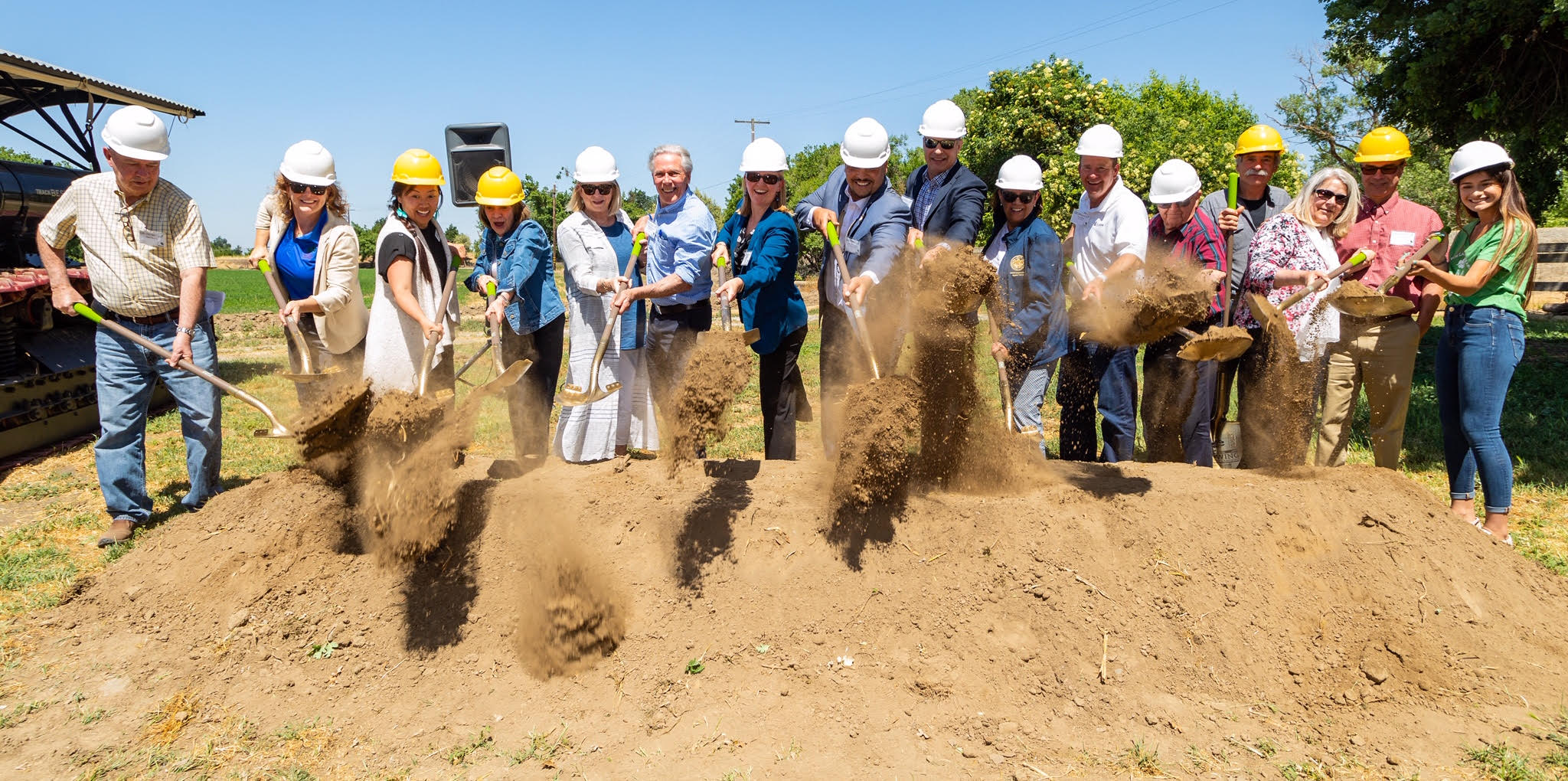
The Center for Land-Based Learning announced a lead gift of $1.5 million from the Yocha Dehe Wintun Nation at a groundbreaking celebration today for the Center’s new site in Woodland.

The gift officially launches the Center for Land-Based Learning’s $4 million Growing Our Future Campaign to build a new statewide headquarters and expand its programs and services. In recognition of this generous gift, the Center for Land-Based Learning will name its new administrative building the Yocha Dehe Wintun Nation Farm House.

The Center For Land-Based Learning Groundbreaking today.

The groundbreaking, which coincided with the Center for Land-Based Learning’s 25th anniversary, took place on part of the original Patwin Tribal Land. The site, a historic 50-acre farm in Woodland known as The Maples, is owned by Clark Pacific, which is providing the Center with substantial support, including a no-cost, 25-year+ lease for major portions of the property and buildings.

“We are extremely grateful to the Yocha Dehe Wintun Nation for their remarkable and inspiring gift,” said Center for Land-Based Learning Executive Director Mary Kimball. “Their donation, in conjunction with the generous support of Clark Pacific, gives us the capacity to train, support, and resource stewards as we look forward to the next 25 years.”

A rendering of the new Center For Land-Based Building.

The Center will include:

-Yocha Dehe Farm House — A 5,400 square-foot building to house new administrative offices, community services, and classrooms.
-New and existing barn buildings — For storing training equipment and supplies and housing a produce washing, packing, and cooling station.
-Three farm fields totaling 30 acres — This is six times more acreage than the current site in Winters.
-Cache Creek riparian habitat and restoration area — Nearly nine acres of creek-side habitat and floodplains for restoration education.
-Space for training in resource conservation and “beautification” — Landscaping and designated areas for farm and conservation training and education in aesthetically-designed spaces.

“The Yocha Dehe people have a deep connection with the land of the Capay Valley, where our ancestors lived for hundreds of years, and we are committed to protect and preserve it,” said Yocha Dehe Wintun Nation Tribal Chairman Anthony Roberts. “One of the best ways we can do that is to work together as a community to educate about the importance of and ways for caring for the beautiful valley, soil, and environment around us. For 25 years, the Center for Land-Based Learning has led the way in developing agricultural leaders and natural resources stewards among us, and we are proud to partner with the organization to support what we are confident will be an incredible success over its next quarter century.”

Established in 1993 by walnut farmers Craig and Julie McNamara, the nonprofit Center for Land-Based Learning inspires, educates, and cultivates future generations of farmers agricultural leaders, and natural resource stewards.

“Agriculture is our heritage and our future,” said Craig McNamara. “By training a new generation of farmers and decision makers, the Center is helping ensure the long-term prosperity of California. Their passion and their mission deserve our support.”

2019-05-11T07:57:48-07:00May 10th, 2019|

Leafy Green Marketing Agreement Issues New Food Safety Guideline

New, More Stringent Food Safety Practices Adopted to Prevent Outbreaks

By April Ward, LGMA Communications Director

The California Leafy Greens Marketing Agreement Board met April 19 and voted to strengthen mandatory food safety practices required on farms.

This means that every box of leafy greens placed into commerce by a certified LGMA member will soon be produced under new, more stringent requirements that are designed to reduce risk when it comes to water used in growing leafy greens. The updates include specific directives such as no longer allowing the use of untreated surface water for overhead irrigation of leafy greens prior to harvest.

The LGMA program has always required growers to test their water because it can be a carrier of pathogens. But the new requirements now include additional safeguards that ensure farmers categorize the source of the water; consider how and when water is applied to the crop; conduct testing to assure the water is safe for the intended use; sanitize water if necessary; and verify that all of the above precautions have been taken

The new standards approved by the LGMA Board are in direct response to investigations conducted by the U.S. Food and Drug Administration into last year’s e. Coli outbreak involving romaine lettuce. Clues pointed to irrigation water from sources such as canals and reservoirs as a possible cause of the both the November outbreak and the one associated with romaine from Yuma last spring.

Government and the produce industry, in general, looked to the LGMA as the way to improve the safety of leafy greens. The leafy greens industry group, facilitated by Western Growers, has been working with industry members, growers and members of the academic community to fashion new and more stringent requirements for agricultural water use. And, in fact, the actions taken by the LGMA Board have effectively changed the way 99 percent of the leafy greens in California are farmed.

The LGMA will begin immediately to make sure everyone in the leafy greens community understands how to comply with the new requirements. The updated LGMA Food Safety Practices document is available on our website here. Additional information on specific changes to the LGMA food safety practices will be provided in the coming weeks and dates for workshops and webinars for both leafy greens industry members and the buying trade will be scheduled soon.

The LGMA and its members have an obligation to produce safe leafy greens. We are very aware of the tragic impacts a foodborne illness can have on consumers, our customers, and our entire industry. We are all passionately committed to producing the safest leafy greens possible. The LGMA will continue to make changes to as needed to strengthen the food safety requirements for leafy greens.

For more on the new regulations, check out this YouTube video.

2021-05-12T11:01:48-07:00April 25th, 2019|

Alliance For Food and Farming Launches New Website!

New Safefruitsandveggies.com Website Will Improve Visitor Experience

News Release

The Alliance for Food and Farming (AFF) has launched an updated safefruitsandveggies.com website with new content and to improve visitors’ experiences on the increasingly popular site.

“The safefruitsandveggies.com website now receives tens of thousands of visitors each year,” said Teresa Thorne, AFF Executive Director.  “We want to continue to improve the site, retain our visitors, and attract new users.  The newly formatted site will help us to do that.”

New sections include “A Dozen Reasons to Eat Fruits and Veggies,” and “Five Facts About Produce,” which are based upon popular blog posts.  These sections provide quick and easily-retained information about the benefits of eating fruits and veggies as well as the safety of organic and conventional produce.

The Safety Standards section of the website, which provides comprehensive information about the stringent regulations governing the approval and use of organic and conventional pesticides, has also been updated.

“This has become among the most visited sections of safefruitsandveggies.com because all the pesticide regulation information from various government agencies can be found in one place,” Thorne said.  “Instead of going through multiple searches and websites to learn more about these regulations, people can just come to safefruitsandveggies.com.”

Still to come are web pages specifically designed for nutritionists and dietitians to help them answer produce safety questions from consumers, their customers, and clients.

“This new web page was actually requested by dietitians, and we are excited to have their input as we build the content,” Thorne said.

“Since research shows consumers find dietitians and nutritionists are among the most credible sources when it comes to pesticide residues and produce safety, it is important they have readily usable information,” Thorne added.

Among the most visited website section continues to be the residue calculator, which shows consumers they could literally eat hundreds to thousands of servings of a fruit or veggie in a day and still not have any health effects from residues.

“All of the website content is either based upon peer reviewed research or on analyses by experts in the areas of toxicology, risk analysis, nutrition and farming,” Thorne said.  “Consumers can also view 40 videos featuring farmers and scientists, as well as information about peer reviewed studies.”

The AFF works to provide credible, science-based information so consumers can make the right shopping choices for themselves and their families.

“The safefruitsandveggies.com website is the cornerstone of our efforts,” Thorne said. “By providing facts about produce safety and countering misinformation, we hope to remove fear as a barrier and encourage increased consumption of all forms of produce.”

2021-05-12T11:05:04-07:00April 24th, 2019|

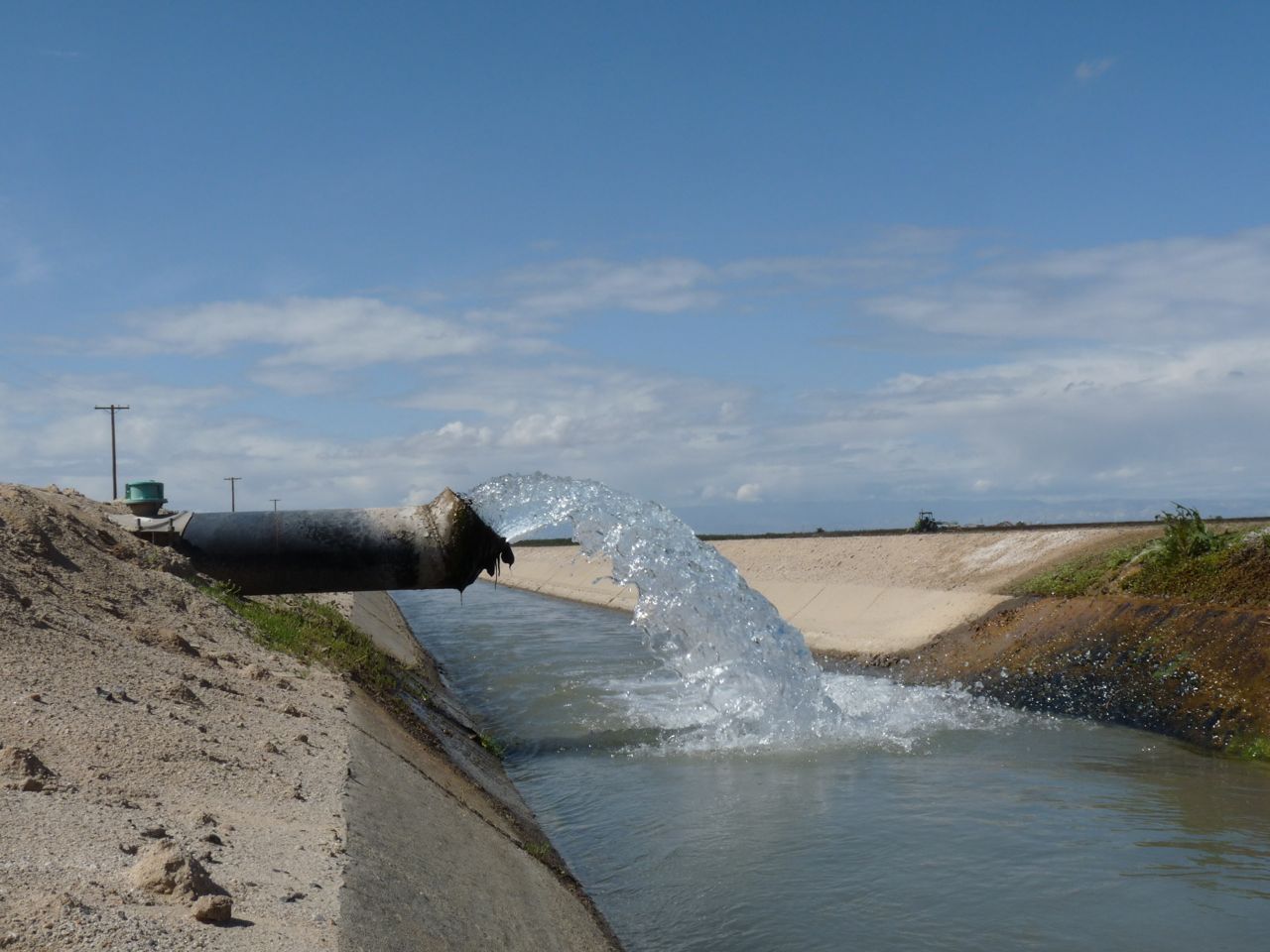
65% Percent Water Allocation for Westlands with 163 Percent Snow Pack

Statement on Bureau of Reclamation’s April Water Allocation Announcement

News Release from Westlands Water District

Today, the Bureau of Reclamation announced the water allocation for south-of-Delta Central Valley Project agricultural water service contractors is being increased to 65%. In light of current hydrologic and reservoir conditions, this minor increase is astonishing.

Thomas Birmingham, Westlands Water District’s general manager, stated: “This announcement begs the question, what has to happen before south-of-Delta farmers served by the Central Valley Project can get a full supply?”

With San Luis Reservoir full and flood flows coming, the 65 % allocation was more than disappointment.

Since October 1, the beginning of the current water year, California has been blessed with abundant precipitation; the 2018-19 water year is now classified as wet. As of April 8, the snow water content in the northern and central Sierra Nevada was 160% and 163% of the long-term average, respectively. Storage in every CVP reservoir used to supply south-of-Delta CVP agricultural water service contractors was more than 100% of average for that date. Indeed, these reservoirs were and remain in flood control operations.

Birmingham added, “I know that Reclamation staff understands the consequences of the decisions they make. Reclamation staff understands reduced allocations in a year like this needlessly increases overdraft in already overdrafted groundwater basins. Reclamation staff understands delayed allocation announcements make it nearly impossible for farmers to effectively plan their operations. If Reclamation’s leadership could, they would make a 100% allocation. But Reclamation’s hands are tied by restrictions imposed by biological opinions issued under the Endangered Species Act. These restrictions have crippled the CVP and have provided no demonstrative protection for listed fish species, all of which have continued to decline despite the draconian effect the biological opinions have had on water supply for people.”

Birmingham concluded, “Notwithstanding the restrictions imposed by the biological opinions, Westlands firmly believes that there is sufficient water to allocate to south-of-Delta agricultural water services contractors 100%. Today’s announcement by Reclamation is disappointing for every south-of Delta farmer served by the CVP, and we hope Reclamation will increase the allocation quickly to enable farmers to quit pumping groundwater.”

After 2019, no one will be able to argue that water supply reductions for south-of-Delta CVP agricultural water service contractors are a result of hydrologic conditions. This year demonstrates only too well the crippling consequences of ineffective and unchecked regulations. Because of restrictions imposed on operations of the CVP under the guise of protecting fish, the CVP cannot be operated to satisfy one of the primary purposes for which it was built, supplying water to farmers.

2019-04-18T16:42:08-07:00April 18th, 2019|
Go to Top