Regulations

New Citrus PSA Shows Homeowners HLB Threat

New Citrus PSA Shows Homeowners HLB Threat

By Charmayne Hefley, Associate Editor

Without the involvement and aid of backyard citrus growers to prevent the spread of the invasive Asian Citrus Psyllid (ACP) and the citrus-deadly Huanglongbing (HLB) disease vectored by the ACP, consumers would no longer have the opportunity to enjoy fresh citrus. Deadly Plant Disease Threatens California Citrus, the newest public service announcement (PSA) from California Citrus Pest Disease and Prevention Program (CCPDPP) conveys this message to residential citrus growers, according to Joel Nelsen, California Citrus Mutual (CCM) president, in order to keep all citrus safe from HLB.

Nelsen said the citrus PSA announcement “shows a family in the backyard barbequing and doing what families do on a weekend.”  They walk over to their row of three citrus trees in the backyard when an orange falls off the tree and disappears, followed by the disappearance of all three trees. Nelsen said the PSA zeros in on the family members’ confusion at the disappearance of the oranges and the trees, all associated with the HLB infection.

CCPDPP’s new PSA is a way for homeowners to understand the importance of keeping citrus safe from HLB, said Nelsen, ”because as much as they’re emotionally tied to their trees, so are the growers in our industry. We don’t want to see anyone’s tree get eliminated because of HLB.”

_________________________________

Prevent HLB; Check Your Citrus Trees for Asian Citrus Psyllid

In a new four-minute video, University of California, Division of Agriculture and Natural Resources (UC ANR) scientists encourage California farmers and home citrus growers to check new growth on their citrus trees for Asian citrus psyllid infestation. As ACPs spread Huanglongbing (HLB) disease, a serious, incurable threat to both the citrus industry and backyard citrus trees, scientists aim to minimize the ACP population until researchers find a cure.

A flush of new leaf growth on citrus trees announces spring in California. The emergence of feathery light green leaves is particularly attractive to Asian citrus psyllids (ACP), signaling a critical time to determine if the trees are infested with ACPs.

“We encourage home citrus growers and farmers to go out with a magnifying glass or hand lens and look closely at the new growth,” said Beth Grafton-Cardwell, UC Agriculture and Natural Resources (UC ANR) citrus entomologist. “Look for the various stages of the psyllid – small yellow eggs, sesame-seed sized yellow ACP young with curly white tubules, or aphid-like adults that perch with their hind quarters angled up.Save Our Citrus

Pictures of the ACP and its life stages are on the UC ANR website. Call the California Food and Agriculture (CDFA) Exotic Pest Hotline at (800) 491-1899 with any findings.

The UC ANR ACP website provides help in finding the pest and taking action.

(Source: UC ANR)

_________________________________

2021-05-12T11:03:03-07:00March 30th, 2016|

36th Annual UnitedAg Meeting & Conference Discusses Future of Agriculture 

36th Annual UnitedAg Meeting & Conference Discusses Future of Agriculture 


UnitedAg, California’s member-owned agricultural trade association, recently concluded its 36th Annual Meeting and Conference, held March 15-17 in Anaheim, California.

POLA6651 (1)

Pictured left to right, Karri Hammerstrom, Karen Caplan, Kirti Mutatkar, Ellen Way, Judy Lundberg, Abby Taylor-Silva and Fiona Ma. (Photo source: UnitedAg)

The three-day event, themed “Breaking Through,” featured speakers included, California State Assemblymember Fiona Ma, Tax Lobbyist Jon Coupal, Inspirational Speaker Lt. Col Kevin Sweeney, Agricultural Speaker/Comedian Jerry Carroll and Chapman University President Dr. James Doti who discussed issues and opportunities facing the California’s agriculture industry.

The conference also included a 5K Walkathon and member golf tournament benefitting UnitedAg’s scholarship foundation, as well as a member awards banquet.

“We believe the UnitedAg 36th Annual Meeting and Conference started a conversation for the future of the agriculture business here in California,” said Kirti Mutatkar, UnitedAg’s CEO and President.

Founded in 1980, UnitedAg is a member-owned agricultural trade association dedicated to providing innovative solutions for California’s strong and healthy agricultural industry.

UnitedAg works in close partnership with its 500 agriculture-affiliated member organizations to meet their employee benefits needs, promote their interests with lawmakers, and help them comply with legislation and regulation so members can focus on what they do best – run successful businesses and organizations.

_____________________________

For more information about UnitedAg and its activities, please visit www.unitedag.org.

2016-05-31T19:24:08-07:00March 29th, 2016|

Citrus Growers Form ACP Management Areas

Commercial Citrus Growers Form Local ACP Management Areas

By Charmayne Hefley, Associate Editor


Commercial citrus growers are banding together to prevent the spread of the citrus-deadly Huanglongbing (HLB) disease and the pest that spreads it—the Asian Citrus Pysllid (ACP). Beth Grafton-Cardwell, an IPM specialist and research entomologist at UC Riverside and Director of UC ANR Lindcove Research & Extension Center, said growers are forming ACP management areas to prevent ACP from spreading HLB.

Elizabeth E. Grafton-Cardwell

Elizabeth E. Grafton-Cardwell

“ACP management areas are being formed by the citrus industry and community,” Grafton-Cardwell said. “They’re basically saying, ‘Let’s get together. Let’s form these groups of growers—25 to 35 growers in an area. Let’s work together as neighbors to treat across a large area and get more of the psyllids killed than if we each treated individually at different times.’”

HLB is a serious concern to growers, according to Grafton-Cardwell; the disease has already devastated the citrus industry in Florida. “We want to prevent that from happening here,” shel said.

According to the California Department of Food and Agriculture, ACP notices posted thus far in the first quarter of 2016 include the following areas:

            COUNTY                                                                 CITY

   Fresno County    Fresno
   Kern County    Bakersfield, Shafter, Wasco
   Imperial County    Bard, Brawley area, Calipatria, Niland, Winterhaven, Zone 7
   Los Angeles County    La Puente, San Gabriel
   Riverside County    Hemet, Riverside, San Jacinto
   San Bernardino County    Cadiz
   San Diego County    De Luz, Escondido, Fallbrook, Ramona, San Diego
   San Joaquin County    Stockton
   Santa Barbara County    Areawide, Buellton, Casmalia, Garey, Orcutt, Santa Maria, Sisquoc
   Santa Clara County    Milpitas, San Jose
   Stanislaus County    Oakdale
   Tulare County    Porterville, Strathmore
2021-05-12T11:03:03-07:00March 17th, 2016|

David Gutierrez on Dams

David Gutierrez on Dams, Water Management and Economics

By Patrick Cavanaugh, Deputy Editor


David Gutierrez, chief of Division of Safety of Dams and program manager for the Groundwater Sustainability Program within the California Department of Water Resources (DWR), talked with Patrick Cavanaugh, California Ag Today’s farm news director, regarding dams and the DWR in Sacramento.

California Ag Today: Please explain the differences between the DWR and the State Water Resources Control Board (SWRCB).

Gutierrez: This is actually really important to understand. DWR and SWRCB have completely different functions, just generally. We have different functions with the Sustainable Groundwater Management Act (SGMA) passed last year. The responsibilities of DWR lie with developing the regulations—the rulesand assisting the locals to be successful. SWRCB is the backstop; they are the ones who are actually going to manage a basin that is not being managed successfully. They are completely different; SWRCB is a Board and DWR is not a board; it’s a department.

California Ag Today: Do you think SWRCB should have been thinking about the things we are doing today 20 years ago?

Gutierrez: On the record, the citizens of California, everybody, should have been thinking about this more than 20 years ago. You can’t really blame one group; all of us should have been thinking about this 20 years ago. We usually don’t solve problems until we get into a crisis, and that is where we are.

Save-waterCalifornia Ag Today: Wasn’t it 40 years ago when the dams were denied or no longer supported by the population?
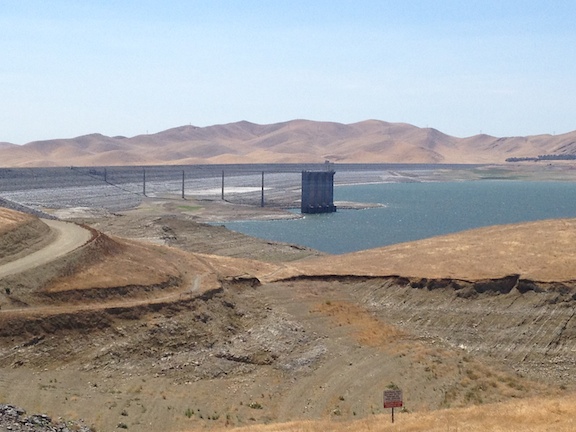
Gutierrez: So the Central Valley Project and SWRCB were both supported in the 20’s and 30’s, all the way up through the 70’s. After the 70’s, things did change and dams stopped getting built, but also most of the resources were already tapped at that point. So now you are seeing reservoirs being built off stream as most of the resources on stream have already been tapped into. So, there is a little more to it than people being for or against dams.

California Ag Today: Do you think the Temperance Flat and Sites Reservoirs will ever be built?

Gutierrez: It is an economic question, so I bet if you did an economic analysis, during certain times it would be economically feasible, and at other times it would not be. You have got to tie in the value of the water; if water becomes valuable, it is worth doing the project. If water is not valuable, you can’t afford the project.

2016-05-31T19:24:10-07:00March 14th, 2016|

Duarte Farmland Under Siege

Duarte Farmland Under Seige By Army Corps of Engineers

By Brian German, Associate Editor

The Duarte family has been in a lengthy court battle with the federal government regarding the right to farm their own property.

John Duarte, a fourth generation California farmer and president of the family-owned nursery in Hughson, commented on how this dispute began, “My family owns a piece of property up in Tehama County that we purchased in 2012 and planted wheat that fall. The property is in some slightly rolling grasslands, and has some minor wetlands on it, vernal pools, vernal swales. Like most grasslands, wheat areas and wheat plantings, we had a local contractor go out and plow the field for us, 4-7 inches deep, and we flew on some wheat seed for a winter wheat crop in 2012.

“The U.S. Army Corp of Engineers called us and told us we were deep-ripping the property. I think they were under the misunderstanding that we were getting ready to plant orchards or vineyards there. They looked at it and assumed we were deep-ripping, three feet deep, which we were not,” Duarte said.

“They sent us a cease and desist notice in early 2013, then refused to tell us what their evidence was or how they had drawn their conclusion that we were deep-ripping. We sent two letters from an attorney, under the Freedom of Information Act, requesting evidence we had deep-ripped, the assumption that apparently warranting a cease and desist notice.”

“They refused to answer the first letter. They kicked the matter up to enforcement and then sustained the cease-and-desist notice without ever giving us a hearing and without ever giving us specific cause for their action. They obstructed our farming operations indefinitely,” Duarte noted.

As their request for the evidePacific Legal Foundationnce against them continued to be ignored, Duarte said, “We went to the Pacific Legal Foundation, where they filed a due process suit against the Army Corps of Engineers on behalf of a farmer’s right to farm their ground. The Army Corps of Engineers now claims that our 4-7 inch tillage through ground that has been tilled 18-24 inches in the past destroyed wetlands.”

“They are making extremely spurious claims that the small plowing furrows through some of the minor vernal pools are now mini mountain ranges and the valleys of those furrows are still wetlands. But the top of the furrow, maybe five inches higher than the bottom of the valley, is now a converted upland and therefore we have destroyed wetlands across the property and are subject to a destruction of wetlands lawsuit filed by the Army Corps of Engineers against Duarte Nursery.”

Nevertheless, Duarte doesn’t think this was strictly in the interest of habitat preservation, “We believe this lawsuit is completely vindictive and retaliatory because we are challenging the Army Corps of Engineers’ ability to simply drive by farms and send cease and desist notices to farmers for very little cause, and then refuse to give any information as to what their cause for the cease-and-desist notice was.”

Duarte believes the lawsuit filed by the Army Corp of Engineers is a somewhat arbitrary enforcement of wetland destruction laws, “Lately, under the new WOTUS Rule, federal administrations [designate that] everything we farm as a wetland. We’ve had experts on both sides out in the field. Everyone agrees that wetlands are still there; the wetlands are still the same size; the wetlands have the same hydrology; the wetlands still have the same pocket water when it rains; the wetlands still have wetland vegetation; the wetlands are all still there by all the parameters one would measure a wetland’s presence by.”

Duarte noted where they are in the process, and why they chose to standup for their rights, “We filed motions for summary judgement, had a motion for summary judgement hearing back in, I think it was early December, we are waiting for the judges rulings on those, so we can proceed to trial on any unsettled matters in the case. We see these types of things happening to our customers all over the state, and that is one reason we wanted to bring this suit. We’re willing to bring this suit and defend our customers, our growers’ ability to take our products and farm their land. Duarte Nursery cannot exist without our growers being able to farm.”

This situation has come at a heavy price for the Duarte family. “This has cost our company over $1 million just to stand up for everyone’s right to farm their property. In a number of important ways, there is a noose tightening around the neck of agriculture everyday, and unless we stand up and fight back, in the courts, where it is appropriate, we are going to lose our ability to farm without federal government permission to do so,” Duarte said.

________________________________

Links:

Duarte Nursery

Pacific Legal Foundation

U.S. Army Corp of Engineers

2016-07-23T17:25:28-07:00March 11th, 2016|

Semios Approved for Navel Orangeworm Control

Semios Aerosol Pheromone Approved for Navel Orangeworm Control


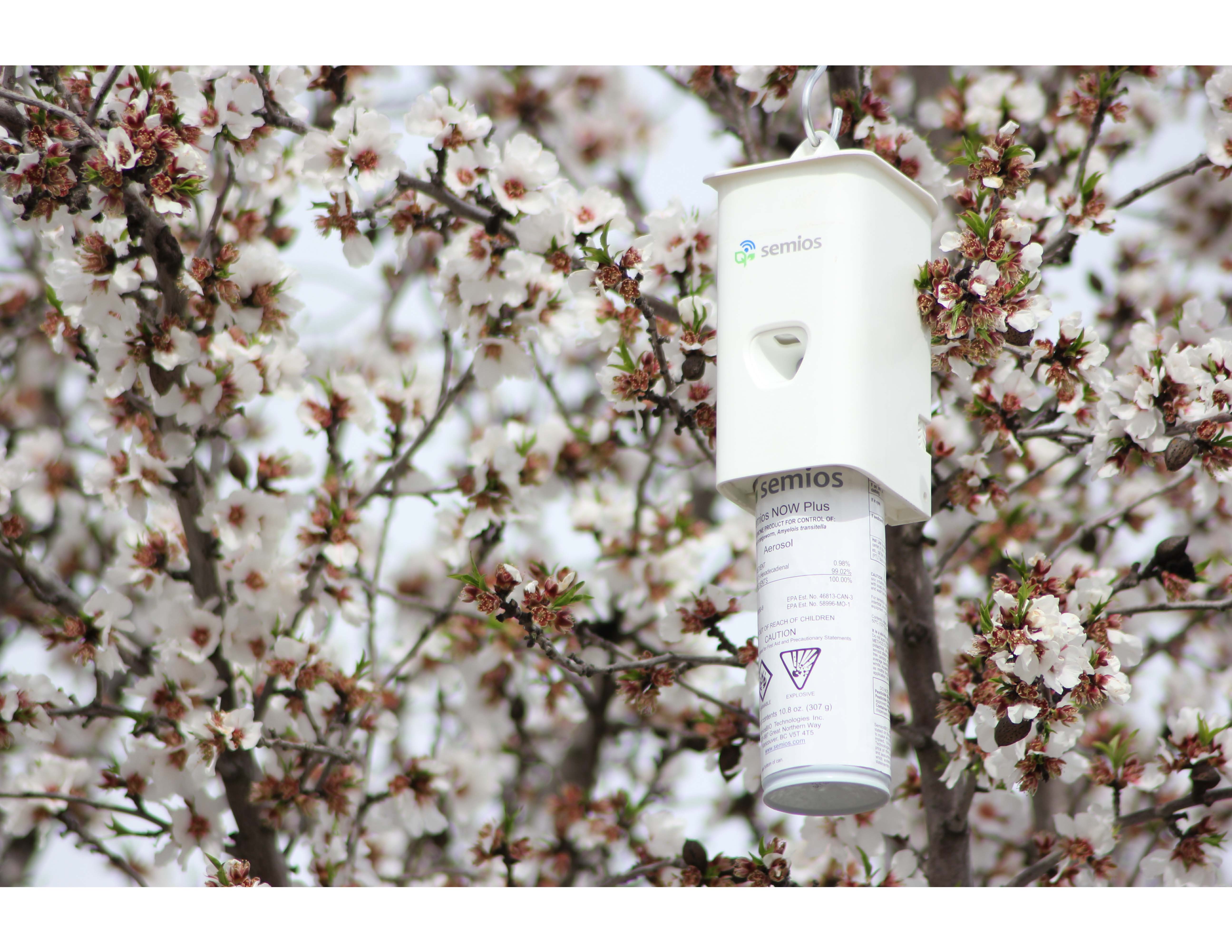
Announced TODAY, Semios, a leading provider of real-time agricultural information and precision pest management tools, has received US Environmental Protection Agency (EPA) approval and California Department of Pest Regulation (DPR) approval for aerosol pheromone biopesticide products that disrupt the mating of the Navel Orangeworm (NOW).  
Michael Gilbert, founder and CEO of Semios said, “The Navel Orangeworm pest causes significant loss of crop and revenue in the California almond and pistachio industries, and it’s getting worse every year.  The Semios NOW pheromone aerosol formulas give farmers the ability to reduce and control pest populations and, as a result, significantly reduce crop damage.  The Semios pheromone aerosol dispenser is part of a custom-designed controller and sensor network that gives farmers decision-making tools and remote access to the field conditions in real-time- all day, every day.”

Remote Control Makes it Highly Effective

The Semios platform includes in-field camera traps that monitor the number of pests and flight strength, which when combined with wind, temperature and other environmental conditions measured and reported by Semios, optimize pheromone deployment.  The combination of traps, pheromone dispensers and other sensors on the same network means farmers can deploy the right amount of pheromones where and when needed through a single interface.

A Destructive Pest for Many Crops

NOW is the most destructive pest of introduced nut crops. Semios NOW Plus and Semios NOW Standard (for organic growers) are available for control of NOW in orchards growing walnuts, pistachios, almonds, dates, figs, citrus, pome and stone fruits.


Sustainable Solution

Pheromones are a naturally occurring part of the communication systems used by insects.  Semios uses pheromones to disrupt the mating cycle of insects, thus diminishing pest populations and reducing crop damage.  Pheromones do not kill or damage the target insects and, as pheromones are species-specific and only target the specific pest, pollinators and other beneficial insect species are not affected.

_______________________________

About Semios

Semios is a leading precision farming platform that provides real-time information and pest management tools for the tree fruit, nut and grape growers.   Semios combines hardware with powerful secure online software that monitors field and weather conditions and allows remote pest monitoring and deployment of mating disruption pheromones. It’s easy to use, reduces labor and allows farmers to make decisions that preserve and increase crop value.
2021-05-12T11:03:03-07:00March 2nd, 2016|

Falcons Work in Agriculture, Too

Farmers’ Other Best FriendFalconsWork in Agriculture, Too

By Charmayne Hefley, Associate Editor

Charmayne Hefley, California Ag Today broadcaster and associate editor, and farmers’ other best friend – the falcon.

Agriculturalists have found ways to employ some animals to assist them in the fields. Karl Kerster, owner of Sacramento-based Kerster’s Falconry, employs farmers’ other best friend, falcons, to keep agricultural products safe before and during harvest. More specifically, Kerster’s five falcons perform bird abatement—removal of nuisance birdsto protect cherries, berries and grapes. Pest birds are defined as sparrows, swallows, finches, starlings, pigeons, blackbirds and more.

“We work to protect the farmer’s crop,” Kerster said, “and we really enjoy doing it—which is a plus when you’re having to do it for a hundred days straight to keep a crop safe. We start when the fruit starts to ripen enough that the birds are going to attack, until the crop has been substantially harvested. I work five birds, and I have several more in reserve, but the five that I work keep me very busy.”

Kerster, a master falconer, has been serving as a falconer since 1996, and his birds have a high success rate at keeping pest birds away from crops.“We are 99 percent successful in protecting a crop in most situations,” Kerster said. “We also take care of any other bird problems that may or may not be on the berries, cherries and grapes that we normally do. Any customer who wants us to dispose of a problem, we’re ready to help.”

______________________________________

Becoming a falconer is not an “overnight” achievement and is not for the meek. The first of the “up-front questions you need to be able to answer to yourself,” according to the California Hawking Club is, “Will you, can you, commit part of your waking hours to a creature who at the very best of times will merely tolerate your presence, is as affectionate as a stone, and at the worst of times will cause you heartache and puncture wounds? Can you commit to an average of a half-hour a day, every day, and two to four hours on a hunting day, regardless of school, family, or job – forever?

The eight steps required to become a falconer in the state of California are provided by the California Hawking Club.

Becoming a Master falconer, according to the North American Falconers Association, “takes at least seven years; finishing your apprenticeship alone will take at least two.”

______________________________________

Falconry is a heavily-regulated practice, governed by federal and state laws and regulations.  For more information, go to:

California Natural Resources Agency Department of Fish and Wildlife

California Hawking ClubCalifornia-Hawking-Club-logo

Kerster’s Falconry 

Electronic Code Of Federal Regulations

______________________________________

2021-05-12T11:03:03-07:00February 29th, 2016|

PCA Training At UC Davis

UC Davis Offers Pathway to PCA Training

By Laurie Greene, Editor


Frank Zalom, distinguished professor of entomology, agricultural experiment station entomologist, and extension specialist at UC Davis, teaches a class for students that forms a pathway to becoming a Pest Control Advisor (PCA). “It is the only class that a lot of them had ever taken in entomology,” said Zalom, “so we try to structure it to give them a good, solid background in entomology. Then we lead them through all the different pest management options. We even bring in someone from the California Association of Pest Control Advisors (CAPCA) Pathway to PCA program for the very last lecture.”

Zalom, whose research interests include integrated pest management (IPM), tree crops, small fruits and vegetable crop entomology, wants to provide a valuable education to his students. “Most of the kids taking my classes are interested in taking the PCA exams and there is a huge opportunity for those students out in the future.”

“We teach them about integrated pest management (IPM) and the pests,” Zalom noted. “Then we show them some of the many career opportunities for PCAs,”  he said, adding. “There will always be a big need for professional PCAs to help protect our crops from pests and diseases. They assist growers all over the state.”

________________________

Links:

California Association of Pest Control Advisors (CAPCA)

CAPCA Pathway to PCA

2021-05-12T11:03:03-07:00February 24th, 2016|

Water Regulators Operate in Silos

State Senator Cannella Says Water Regulators Operate in Silos

By Laurie Greene Editor

California State Senator Anthony Cannella, (R-Ceres), who represents District 12, the Westside of the Central San Joaquin Valley from Modesto to Coalinga, knows how growers must feel about so much fresh water from recent rain and early snowmelt flowing out to the ocean instead of being stored for future use. Cannella, who is currently serving as vice chairman of the Agriculture Committee said, “Obviously growers are out there; they have their life savings out there; they have been relying on water from the State Water Project or they have been relying on reservoirs; and the state has been taking more and more of their water due to ESA restrictions.”

“If farmers do not have surface water again this year,’ he continued, “they are going to pump from the groundwater. But state and federal officials do not see the connection that no surface water means more groundwater pumping. It would be much more sustainable if farmers could receive more surface water instead of having it flow out to the ocean.”

Cannella said, “Water regulators operate in silos. On one hand, they say groundwater has to be at an equilibrium; and, on the other hand, they say that they cannot pump much fresh water into reservoirs. They don’t combine the two; they don’t connect the two; and I think that is wrong.”

“If you are going to regulate or take away surface storage, there will be an impact on groundwater,” explained Cannella. “But the state does not operate that way, and that is why we are having the problem we are having,” he said.

2016-05-31T19:24:11-07:00February 22nd, 2016|

Interior Assesses California Water

U.S. Department of Interior’s Tom Iseman Assesses California Water

Tom Iseman, deputy assistant secretary for water and science at the U.S. Department of the Interior, in an exclusive interview with California Ag Today’s farm news director, Patrick Cavanaugh, assessed how California is faring given the drought.

Cavanaugh:  I see you as someone who focuses on not just solutions but also the issues and tragedies caused by the extended drought in California. From your perspective, how is California doing and how could things be better?

Iseman:         First of all, I think California is obviously on the leading edge for a lot of reasons, but the state is in the midst of an extended drought. So it is really forcing us to be smarter about how we address these water scarcity challenges. I have been very impressed with the way we have been able to really work together—the Bureau of Reclamation working with the state, the water users and the conservation groups—to think about how we can stretch our limited water supplies to meet these different purposes.

Tom Iseman, deputy assistant secretary, U.S. Department of the Interior

Tom Iseman, deputy assistant secretary, U.S. Department of the Interior (Source: https://www.linkedin.com/in/tom-iseman-3354aa7)

Cavanaugh:  Obviously the country is not able to build another Hoover Dam, but does the Interior understand that we need more storage in California for the rainy days?

Iseman:         Absolutely. There are different ways to do it, so we are looking at a number of projects. One is raising Shasta Dam; one is a new reservoir possibly on the upper San Joaquin River (Temperance Flats); and Sites Reservoir.

Cavanaugh:  But those projects are a long way off, and they may never be built. What can California do now to increase its water portfolio?

Iseman:         There are smarter ways we can build smaller-scale storage and new ways to operate our facilities to stretch water supplies to our advantage.

Cavanaugh:  Could you talk about how we can use water differently? Desal is more expensive water, but water needs to be more expensive. When water gets more expensive, people conserve more, right? Talk about your vision of desal in America, particularly in California.

Iseman:         Generally, clean water technology is a big part of what we need to be doing. It is not just building new storage; it’s being smarter with what we have. So, technology is a great way to do that. We have desalination, water recycling and water reuse. Having these options creates an opportunity for more partnerships. So now you can have cities recycling their water and sending their water supply to agricultural water users—a win-win situation. The city gets some revenue and deals with its wastewater, and agricultural water users get a new supply. That is the way we should be thinking—about the possible partnerships to take advantage of these options.

Cavanaugh:  People building desal plants in cities like Santa Barbara, mothballed the plants when the rains came. We need to make desal part of the culture of these cities located on the ocean. I mean, does the Department of the Interior see that as a rational thing to do?

Iseman:         It’s interesting. Obviously it has been done in other places, and they have invested quite a bit of money here in California. It comes down to economics; we don’t make the decision about whether a city builds or doesn’t build a desal plant, but it is part of the water supply list, potentially.

The challenges with desal is just the cost right now and how much energy and waste it can produce. And they are comparing that to the other options out there. Are there other technologies out there that we can use? Are there water markets or water rights I can acquire? Is there potential for new storage? I think the cost will help sort that out.

The part that cost doesn’t address in some ways—and it can be built in—is the uncertainty. One thing, I think, about a desal plant that people like is that you know there is going to be a water supply if you are on the ocean. And if you have the money and can generate the energy, you can get the water. As you see more uncertainty in our climate and in our existing water supplies, that would be one argument in favor of desal.

Cavanaugh:  It is stable.

Iseman:         Yes, and we need reliability.

Cavanaugh:  Well, you talked about the cost and the economics, but we all need to pay more for water, and I’d be the first one. It would make everyone conserve more, right?

Iseman:         Absolutely.

Cavanaugh:  Maybe, raise the cost of water $10 a bill?

Iseman:         Well, I’m not going to say we are going to raise people’s water rates, but if you talk to the industry and look at the future of the industry, a lot of people say, ‘People need to pay more for water.’ That is how you get the investments.

The federal budget is constrained; they are not going to be there when we are going out and building Hoover Dam in ten years. We just don’t have that kind of resources anymore. So the question is, how do you get more revenue stream in to help contribute to the cost of those investments? And that goes back to rates. And at some point, we will have to decide how much we pay for water and how much we value our water.

Cavanaugh:  Thanks for being aware of all this. Are you encouraged we will find solutions?

Iseman:         We talk about California everyday; we are all very aware of the things that are happening. But I really gained an appreciation of the innovation, the energy and the cooperation of people here—the commitment they have in dealing with these issues. I was glad to be a part of it.

_____________________________

Link:

U.S. Department of the Interior

2016-05-31T19:24:12-07:00February 19th, 2016|
Go to Top