New Dietary Guidelines for Healthy Eating

HHS and USDA Release New Dietary Guidelines to Encourage Healthy Eating Patterns to Prevent Chronic Diseases


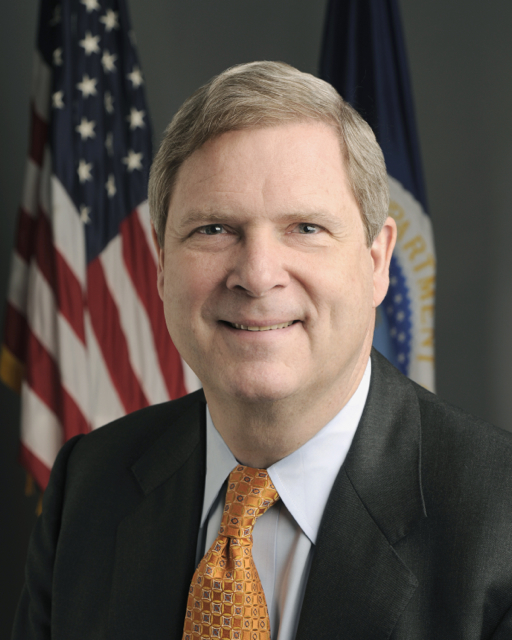
Secretary of Health and Human Services Sylvia M. Burwell and Secretary of Agriculture Tom Vilsack TODAY released updated nutritional guidelines that encourage Americans to adopt a series of science-based recommendations to improve how they eat to reduce obesity and prevent chronic diseases like Type 2 diabetes, hypertension, and heart disease. The 2015-2020 Dietary Guidelines for Americans is the nation’s trusted resource for evidence-based nutrition recommendations and serves to provide the general public, as well as policy makers and health professionals with the information they need to help the public make informed choices about their diets at home, school, work and in their communities.

The newly released 8th edition of the Dietary Guidelines reflects advancements in scientific understanding about healthy eating choices and health outcomes over a lifetime. This edition recognizes the importance of focusing not on individual nutrients or foods in isolation, but on the variety of what people eat and drink—healthy eating patterns as a whole—to bring about lasting improvements in individual and population health.

“The Dietary Guidelines for Americans is one of many important tools that help to support a healthier next generation of Americans,” said Secretary Vilsack. “The latest edition of the Dietary Guidelines provides individuals with the flexibility to make healthy food choices that are right for them and their families and take advantage of the diversity of products available, thanks to America’s farmers and ranchers.”

The specific recommendations fit into five overarching guidelines in the new edition:

1. Follow a healthy eating pattern across the lifespan. Eating patterns are the combination of foods and drinks that a person eats over time.

2. Focus on variety, nutrient-dense foods, and amount

3. Limit calories from added sugars and saturated fats, and reduce sodium intake

4. Shift to healthier food and beverage choices

5. Support healthy eating patterns for all

Healthy eating patterns include a variety of nutritious foods like vegetables, fruits, grains, low-fat and fat-free dairy, lean meats and other protein foods and oils, while limiting saturated fats, trans fats, added sugars and sodium. A healthy eating pattern is adaptable to a person’s taste preferences, traditions, culture and budget.

Importantly, the guidelines suggest Americans should consume:

1. A variety of vegetables, including dark green, red and orange, legumes (beans and peas), starchy and other vegetables

2. Fruits, especially whole fruits

3. Grains, at least half of which are whole grains

4. Fat-free or low-fat dairy, including milk, yogurt, cheese, and/or fortified soy beverages

5. A variety of protein foods, including seafood, lean meats and poultry, eggs, legumes (beans and peas), soy products, and nuts and seeds

6. Oils, including those from plants: canola, corn, olive, peanut, safflower, soybean, and sunflower. Oils also are naturally present in nuts, seeds, seafood, olives, and avocados.

Further, Americans should be encouraged to consume:

1. Less than 10 percent of calories per day from added sugars. ChooseMyPlate.gov provides more information about added sugars, which are sugars and syrups that are added to foods or beverages when they are processed or prepared. This does not include naturally occurring sugars such as those consumed as part of milk and fruits.

2. Less than 10 percent of calories per day from saturated fats. The Nutrition Facts label can be used to check for saturated fats. Foods that are high in saturated fat include butter, whole milk, meats that are not labeled as lean, and tropical oils such as coconut and palm oil.

3. Less than 2,300 milligrams (mg) per day of sodium for people over the age of 14 years and less for those younger. The Nutrition Facts label is a helpful tool to check for sodium, especially in processed foods like pizza, pasta dishes, sauces, and soups.

Based on a review of current scientific evidence on nutrition, the 2015 edition includes updated guidance on topics such as added sugars, sodium, and cholesterol and new information on caffeine. For example, the 2015-2020 Dietary Guidelines is the first edition to:

1. Recommend a quantitative limit to consume less than 10 percent of calories from added sugars.

2. Reaffirm guidance about the core building blocks of a healthy lifestyle that have remained consistent over the past several editions

3. Suggest there is still work to be done to encourage more Americans to follow the recommendations outlined in the Dietary Guidelines.

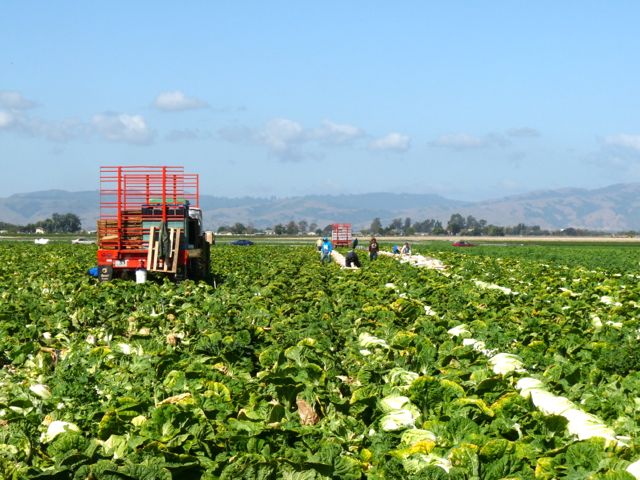
The 2015-2020 Dietary Guidelines continues the nation’s dependence on California agriculture, which includes more than 400 commodities. According to the California Department of Food and Agriculture (CDFA) in 2014, the state produced nearly half of US-grown fruits, nuts and vegetables. Across the nation, US consumers regularly purchase several crops produced solely in California.

California’s top-ten valued commodities (USDA/NASS Crop Year Report 2014):

* Milk — $9.4 billion

* Almonds — $5.9 billion

* Grapes — $5.2 billion

* Cattle, Calves — $3.7 billion

* Strawberries — $2.5 billion

* Lettuce — $2 billion

* Walnuts — $1.8 billion

* Tomatoes — $1.6 billion

* Pistachios — $1.6 billion

* Hay — $1.3 billion

The 2015-2020 Dietary Guidelines for Americans is available at dietaryguidelines.gov.USDA has also released updates for consumers on ChooseMyPlate.gov, and new resources will soon be available on Health.gov from HHS that will help health professionals support their clients and patients in making healthy choices.

The Dietary Guidelines is required under the 1990 National Nutrition Monitoring and Related Research Act, which states that every 5 years, the U.S. Departments of Health and Human Services (HHS) and of Agriculture (USDA) must jointly publish a report containing nutritional and dietary information and guidelines for the general public. The statute requires that the Dietary Guidelines be based on the preponderance of current scientific and medical knowledge.
2021-05-12T11:17:15-07:00January 7th, 2016|

USDA Official Talks TPP in CA

USDA Official Talks TPP in California

By Brian German, Associate Editor


United States Department of Agriculture (USDA) Under Secretary for Farm and Foreign Agricultural Services Michael Scuse held a roundtable at the California Farm Bureau Office in Sacramento with California ag leaders in December to discuss the proposed Trans-Pacific Partnership (TPP) trade agreement. “The reason we came out here now is the Trans-Pacific Partnership is finalized and the text has been released. We wanted to meet with the representatives of the different commodity groups to get their take on the agreement,” said Scuse. “It was a very good, interesting meeting,” he noted.

While not all industries are behind the TPP, Scuse said, “Agriculture, as a whole, is very supportive of the TPP. There were a couple of concerns about sanitary and phytosanitary issues and about how other countries may address those going forward.  California ag leaders asked us to put together a fact sheet on these phytosanitary issues, labor, and other topics, so they have some talking points to converse with their constituents as well as their representatives in Congress.”

To make this trade agreement law, Scuse explained, “We are hoping Congress will take this up as soon as they possibly can. Every day we delay getting approval on TPP from Congress puts our producers at a disadvantage. The sooner we get this approved, the better it will be for all our farmers and ranchers across the United States,” he noted.

For California, the leading agricultural state, shipping more than $23 billion worth of food and agricultural products in 2014, time is expensive.

______________________________

Links:

USDA Farm and Foreign Agricultural Services helps to keep America’s farmers and ranchers in business as they face the uncertainties of weather and markets. They deliver commodity, credit, conservation, disaster, and emergency assistance programs that help improve the stability and strength of the agricultural economy.

Trans-Pacific Partnership (TPP) trade agreement, “Economy, Water, Trade and Labor were Big Topics at 32nd Agribusiness Conference.”

California Farm Bureau Federation

2021-05-12T11:05:59-07:00January 4th, 2016|

Henry Gonzales, Ventura County Ag Commissioner

Ventura County Ag Commissioner Henry Gonzales Started as Fieldworker

By Patrick Cavanaugh, Deputy Editor

California Ag Today interviewed Henry Gonzales, Ventura County Ag Commissioner, who has served in that post for 7 years. His unique story begins with his birth in Fresno and his work in the California fields at an early age.

Gonzales: My parents were migrant farmworkers, and back in the day, there was no day care for us, so they took us to the fields with them. I like to think I my career started in agriculture when I was old enough to pick up a plum and put it in their basket. We worked a lot in the Fresno area, but also in the San Jose area and Imperial County, following the crops as most migrant farmers do.

CalAgToday: You started working as a child, and what happened next? Did you and your family continue as a farmworkers?

Gonzales: We continued farm working for many years. We used to live in farm labor camps, whenever they were available. Sometimes we stayed with relatives or anywhere we could find. There were times when the only places we could find were the trees in the orchard, so sometimes we stayed there.

CalAgToday: So, when you were 13, you went off on your own?

Gonzales: Yes, when I was 13, I did what I thought I should do—work under my own social security card. I started working in the fields around Salinas. I was actually in the same lettuce harvesting crew with my grandfather who was 69 at the time.

CalAgToday: Well, Henry, walk me through it. How many years did you work with your grandfather?

Gonzales: I worked every summer and weekends since I was 13 through high school in the fields around Salinas.

This painting was done by Henry Gonzales's mother depicting his early work in the fields

This painting was done by Henry Gonzales’s mother depicting his early work in the fields.


CalAgToday: Tell me about high school.

Gonzales: I felt very strongly about completing high school because I know my parents did not. But you may find it interesting that when I was working in the fields around Salinas, I was a card-carrying member of the United Farm Workers (UFW).

CalAgToday: So the UFW recruited you early, or were you a supporter?

Gonzales: Well, it was a closed-shop situation; if you worked in that company, you were a member. So I believe I am the only ag commissioner who was once a card-carrying member of the UFW.

CalAgToday: And why is that significant to you, Henry?

Gonzales: As you know, in agriculture, farmworkers are, almost literally, the backbone of the industry. They are the ones doing all the heavy lifting. So, having that background really provides me with a broader perspective because I can understand farming from the ground level up. Coupled with my Bachelor of Science degree in agricultural science, my field work experience has given me a well-rounded background for agriculture.

I started working for the Monterey County Ag Commissioner’s office over 30 years ago. All Ag Commissioners start at the bottom of the organization, so I began as an agricultural inspector-biologist and worked my way up to deputy, chief deputy, and then seven years ago, I became Ag Commissioner here in Ventura County.

CalAgToday: So suddenly a job became available in Ventura County?

Gonzales: That was kind of interesting. I was in Monterey County with a great job, a great boss, and I could do pretty much what I wanted. But I got a call from Ventura County inviting me to apply for their ag commissioner position. I checked with my wife, and she said ‘Sure, why not? Try it!’ I did, and as they say, the rest is history.

I applied and got the position. I was reappointed here three years ago, and I am hoping to do at least one more term after my current term is over. I think all my years working for the Monterey County Ag Commissioner’s office, my degree in Ag Science, and my master’s in public administration, coupled with my childhood years working in the field really gives me a broad background in agriculture, especially as it exists in Ventura County and in the state of California.

CalAgToday: How did you have time to get a masters degree in public administration?

Gonzales: Well, while I was working for Monterey County, I spent a lot of sleepless nights and weekends in order to earn that degree from Golden Gate University’s satellite office in Monterey.

CalAgToday: When you look back, you have come so far from your beginnings as a farmworker, and you have seen so much. How do you put all of that together?

Gonzales: My experience has provided me with the broadest perspective, so when I deal with a challenging issue, I can see it from all vantage points, and that is very helpful to me in doing my job.


2021-05-12T11:06:00-07:00December 30th, 2015|

California Water Ballot Initiative

California Water Ballot Initiative May Go to Voters in Nov. 2016

[embedvideo id=”O6sMsPaJPB4″ website=”youtube”]

Aubrey Bettencourt, executive director of the California Water Alliance (CalWA or “Alliance”), described the Alliance’s California water ballot initiative to California Ag Today’s farm news director, Patrick Cavanaugh. If passed by the voters, the measure, which rests in the hands of California Attorney General Kamala Harris to approve it for inclusion on the state’s November 2016 ballot, would strikingly change the water horizon for California. The initiative prioritizes all water to go to citizens of California and then to farms, before it reaches the environment. It combines $8 billion from the high-speed rail project funding with the $2.7 billon approved in November 2014 for water storage projects.

CalWA, a non-profit advocacy and education organization that is dedicated to raising awareness about the nature of water, advocates for the short- and long-term, sustainable policy and infrastructure positions that meet the need for safe, reliable and affordable water by the people, cities, businesses, farms and environment in California.

Aubrey Bettencourt, executive director of California Water Alliance

Aubrey Bettencourt, executive director of California Water Alliance

Cavanaugh: You have created a California water ballot initiative that, hopefully, will appear on the November 2016 ballot.

Bettencourt: Yes. It’s known as “California Water 4 All,” and it is really quite simple. After the Water Bond of 2014 passed, the California Water Commission—the fund administrators entrusted with the $2.7 billion allocated for water storage—placed other stipulations on that funding.

For instance, 50% of the water had to go to the environment and 50% had to directly benefit the Delta. Furthermore, the Commission would not release project funds prior to December 2016, so even though voters allocated funding and were promised water storage, construction was not to start for a long time. All these stipulations on the California Water Commission, through no fault of their own, actually challenged and limited the availability of regional water projects.

Then, when the Commission started to monitor both its funding and its responsibility over that funding—which we don’t blame them for, whatsoever—a lot of organizations that had opposed the Water Bond in 2014 for creating new water storage, suddenly started soliciting the Commission with letters saying, “You don’t have to define that water storage component as traditional water storage. You can open up that funding and grant it to anything else. You don’t have to use it for new water.”

We, as an organization, filed a number of letters in response and actually brought it to [the press], “Hey, they are trying to gut this tiny sliver of funding that was allocated in this program voted on by the people of California as a promise to create new water for us in this drought.” And also, “$2.7 billion would maybe build one and one half projects in California.”

We all know our water infrastructure is 60 years out-of-date, and it cannot keep it up with the needs of the environmental community, the government community, the agricultural community, and the urban community. You will hear everyone say that our infrastructure is so out-of-date that it can’t even keep up with the number of people we have or the amount of priorities we have set. Take a look at how various environmental projects end up competing against each other; a good example is when all of this came to light in the 2014 water bond fight.

Look at this year alone; there wasn’t enough water in storage and there wasn’t enough water available anywhere, so state policymakers had to decide between species. Which species were going to live? Which species were going to die? Why? ’Because there wasn’t enough water for all of them.

There are wetlands in Los Banos that never got water. The creatures and animals and species that are dependent on that habitat and viable property for their existence, did not get that opportunity. Why? ’Because an environmental project and species upstream took higher priority. There is not enough water to go around for all of the water users.

Cavanaugh: So what was the thought process behind combining the approved public funding of the high-speed rail project with the approved Water Bond funding?

Bettencourt: We are very connected to our community. We have always heard, “Well what if we could just change the priorities?” So we thought, “What if we could just take that money being used for high-speed rail and use it for water storage?”

Fallowed Field in Fresno County, California in 2014 due to zero water allocation.

Fallowed Field in Fresno County, California in 2014 due to zero water allocation.

Finally, our conversation with a number of our members and board transitioned to, “Well, what if? What would that look like?” Nobody had really looked into it. So our board decided to really invest into what that would look like. Could it be done? We were always told it couldn’t from a practical standpoint or even from a legal standpoint. We spent some time and resources looking into “What if” with some great legal minds in Sacramento.

We spoke with other organizations and people, especially those who had been involved in the rail and transportation side of this equation longer than we had—Citizens for High Speed Rail Accountability, most notably. We started pooling our resources into this inquiry, and sure enough, we found out it could be done.

Cavanaugh: And if the initiative were allowed on the ballot, it would be up to the voters to decide?

Bettencourt: Yes, it would. So, as we looked at it, we figured it was really quite remarkably elegant to reprioritize. And really, the theme of this ballot initiative is priorities. It is about getting our priorities in this state in the right order again and letting the public direct our elected officials with those decisions.

This ballot initiative takes the unissued bond funding from the high-speed rail project, which is about $8 billion, plus the $2.7 billion in water storage money from the 2014 Water Bond, and pools it in a new locked fund. The reason we did that is, quite frankly, “Why would we have two pots of money going toward the same thing?” It all needs to go into this new locked fund with the sole purpose of expanding the supply of new water for the state of California.

That fund can’t be borrowed against, pulled away from or pirated. The only way to change that funding would be to go back to the ballot and get the voters’ approval to move that funding around again.

An elected board would administer the locked fund.

Cavanaugh: ’Not the Water Commission?

Bettencourt: ’Not the Water Commission, nor appointed body at the state level, not even a legislative body. The board would be elected members from each of the water management districts. So, people from your community who have expertise and experience in water in their own region administer this fund that will benefit the entire state. Everybody gets a vote. You don’t have one region of the state having more of a vote than another region of the state; that is not what happens here. Everybody has a vote, and there is one at-large member that everyone in the state gets to vote on.

Cavanaugh: What about the Bay Area, and Los Angeles?

Bettencourt: ’Equal Players. Each of the regions has a representative on the board.

Cavanaugh: They only get one vote?

Central Valley Project (CVP) Water

Central Valley Project (CVP) Water

Bettencourt: That’s right. So, in that structure, the funding is used fairly for the whole state. That is the long-term infrastructure portion of the proposed initiative.

We always talk about how the water crisis in California has two problems. One is an infrastructure problem, and, two: we have a management crisis. We don’t have set rules and regulations for where our water goes and how.

Cavanaugh: Can you elaborate?

Bettencourt: A good example is our own governor is saying he doesn’t have a plan for getting us out of this, and we don’t know what will happen when it starts raining. We don’t know how the system is supposed to be operated. There are no guidelines on the books anywhere right now. And in this time of drought, where you have low supply, you are seeing regulators making ad-hoc decisions. Well, there are no rules and there are no first, second, and last priorities. They are making decisions on a case-by-case basis, and that is no way to solve this.

We address the long-term shortage by expanding our water supply with more storage. Expanding the water supply for everyone increases the flexibility of our system, overall, for the environment, for agriculture, and for the communities of our state.

Cavanaugh: Is a constitutional amendment part of the initiative?

Bettencourt: The theme of this ballot is to get our priorities straight. We are taking what is already in the California Water Code that was passed in 1928. The people of California said, “This is the way we want our water used and in this priority,” and it was put in the California Water Code. Since then it has been subjectively adhered to.

But we take what was in the California Water Code—the intention of the people of California—put it into the State Constitution. And we say, “Reasonable and beneficial use of water is for people, food security, irrigation; and then everything else.” And we define what that is.

It is very simple. It is nothing new. It is already out there; but what is so important is that it addresses the immediate, and it instantly hands down the guidelines:

So, this is how we operate the system.

This is how we make these decisions.

These are the rules and orders of operation.

This is how we get ourselves out of the drought.

This is how we get our system back up and running. This is how you address the short-term: by setting the priorities, making them clear, providing guidelines to the regulators so they can do their jobs on behalf of the people of California to get us out of this drought and protect us from future droughts. From an operational standpoint, this provides the certainty we need in our water supply that we just don’t have. Also, when you expand supply for everybody, you gain back flexibility in the system.

Cavanaugh: That’s great, because as we know, the proposed Temperance Flat Reservoir can move water North or South and really help out if a seismic event were to occur in the Delta. How do we get around the Environmental Species Act (ESA) rules that affect the Delta?

Water in Friant-Kern Canal

Water in Friant-Kern Canal

Bettencourt: That is all federal, and this initiative does not address federal law. This is purely California-only. However, I think, should this measure pass, it would bump against the federal statute from an infrastructure standpoint because California pays for half the cost of an infrastructure project and from an operations standpoint as well. How would the federal regulatory system affect this California measure, should it pass? A new dialogue with the federal government would have to ensue after state voters adjust the priorities for our water supply.

Cavanaugh: So “California Water 4 All” is going to address water infrastructure. Of course, you can leave the whole ESA out of the conversation. So are building dams beyond Temperance, plus the Cross-Valley Canal the top priorities?

Bettencourt: Yes, we outline four specific projects within the infrastructure component of this initiative: Temperance Flat and Sites are the two darlings of the recent new water projects. In addition, we outline raising both Shasta and San Luis, which would minimally impact the environment and maximally impact water supply. The cost is low because while you are building on existing infrastructure and having less impact on the space you are taking up, you end up capturing more water utilizing existing footprints, which is great.

So we outline those four specific projects, which leaves almost $5.5 billion for additional regional water projects with the stipulation of creating new water. One good example is our partners in the Southland have a mandate from both the state and federal governments to capture and use storm runoff, but they don’t have the mechanisms to do that.

This ballot initiative could help them capture and store rain runoff in Southern California, which would provide more local regional water and increase flexibility to move water around the state north of them. So it is all about capturing more water and expanding supply, so we have more supply to go around.

Cavanaugh: It appears the best part of this initiative is that it benefits everyone in the state.

Bettencourt: Absolutely, and that was important to us when we crafted this initiative, that it couldn’t be so tight. This proposal really does benefit the entire state, not only from the macro-economic standpoint, such as new reservoirs; we are talking about groundwater recharge, storm water runoff, water recycling, desal, all of these projects would have a nice pot of money with the explicit direction of creating new water supply. And the best part about this entire initiative is it doesn’t cost anybody anything.

Cavanaugh: That must ring very nicely up there in Sacramento.

Bettencourt: It does. There is no new burden on the taxpayers; these are dollars that already been approved of by the voters. The only thing we are doing is reprioritizing. It is no different than if you are at home considering, “Well, I’d really like that new pair of shoes, but I have a leaky toilet I must fix. I’m going to take that money and say, “The shoes are great. I love the shoes. They get me to where I want to go, but the toilet is kind of mandatory right now. It is the only one in the house and that’s that priority.”

We have only one water supply, and transportation is absolutely important…

Cavanaugh: You are talking about the health and safety of the state—not just drinking water—but health and safety.

Bettencourt: The health and safety of our state and its environment are absolutely important. We were talking about this as a team, and someone on the team said, “This is about survival. In order to survive, you need to know what your need and use priorities are.”

California voters have made priorities of water need and use very clear, and it is time that we put that first so we can afford everything else. This is a great state and our organization always advocates from the position of, “We should be able to BE the Golden State and grow and revolutionize going forward over the next century. And that will happen if we get up to speed and have our priorities straight to meet and provide the most basic needs of the innovators and doers of California.

Lettuce Harvest in Fresno County

Lettuce Harvest in Fresno County

So we have written the initiative; that was a heavy lift. Then we found two great proponents in California State Senator George Runner, Vice Chair of the Board of Equalization, and California State Senator Bob Huff to act as our submitting proponents. We, at CalWA, are the sponsoring organization, and we have submitted the package to Attorney General Harris.

Now the Attorney General has 50 days from November 13, 2015 to say, “Yes this can go on the ballot,” and to return it with a suggested title and ballot summary or how it will appear on the ballot to be read by the voter.

We have also held required meetings with the Legislative Analyst’s Office, which score the ballot measure’s costs to the taxpayer. The costs will be budget neutral because there are no new funds. So, after 50 days, we will know whether or not we will be permitted to qualify for the ballot. We are hoping we will be, at which point we would have until April 16 to get 900,000 signatures of California voters to qualify automatically.

Cavanaugh: April 16 is not a lot of time before the election.

Bettencourt: That’s right. So everyone with a ballot initiative has to follow these rules: 50 days then hit the streets and get the signatures. This is the campaign mode so voters can make this decision in November 2016.

Cavanaugh: Do you anticipate any lobbying from Attorney General Kamala Harris’s office?

Bettencourt: No, It’s strictly in Kamala Harris’s hands on this one. We are permitted to suggest our own title and summary, but the decision will come from her office. I think over 100 ballot initiatives have been submitted.

Our biggest concern is that someone will say there are too many initiatives. Secondly, how do we stand out among so many other ballot initiatives?

Cavanaugh: How do we ensure this initiative stands out? It is going to be competing for attention in a presidential election year, as well as a big election year in the state, so it is no easy undertaking.

Bettencourt: The feedback we are getting is voters want to make this decision. They want to say, “Yep, we are changing priorities, not that we think certain projects are not important. We believe certain projects are more important than others at a given point in time.”

Cavanaugh: Doesn’t it seem like the best time to do it? A poll of California citizens shows they are concerned. The top priority, behind jobs, is water availability.

Bettencourt: Yes, the Public Policy Institute of California’s polls over the last year support that. And I think the Hoover Institute conducted an independent survey of California voters at the beginning of last year, ranking the top 36 priorities of the state: number 36 was high-speed rail and number 2 was water. So the California public is stating, “This is our priority now.” We want to make sure we give the voters of California an official opportunity to say that.

Cavanaugh: While we wait for the Attorney General’s approval or disapproval, where can we get more information on California Water 4 All?

Bettencourt: Visit our website: CAWater4All.com. There you will find the language of the ballot initiative. You’ll be able to read the legalese, first-hand. It is about 25 pages—could be worse; could be better.

We worked really hard to make that tight. You’ll also find summaries of the initiative, how it benefits the environment, what the facts are on high-speed rail and why all of a sudden we think high-speed rail needs to be a different priority at this point. What are the facts on water supply and where are we on our storage? Where are we regarding the competing mandates on our existing supply? Why are changes in direction and priority needed? We must create certainty in our water supply so we can get out of this drought and we need to know how to handle the next one when it comes.

Cavanaugh: Comment on your outreach for people to connect with you on the website to increase voter awareness of what’s going on.

Bettencourt: We are setting up this campaign to be as interactive with constituents as possible. Right now during the 50-day period, there is not much to do besides staying connected with us. We’ll be communicating on a weekly basis, if not more often. We’ll share not only what are other people saying about the initiative, but also where we are in the process: when it is time to sign up, to volunteer and to help us gather these signatures and where to get them.

If you visit the website, CAWater4all.com, you’ll can register with your email, your cell phone if you choose, and your zip code so we know your location in the state. You’ll be able to stay connected with us on next steps in the process and be active with us as well. There is also a donation page. This ambitious endeavor is going to take time, treasure and talent, so we need all the help we can get.

Cavanaugh: Once on the ballot, what do you envision initiative cost will be?

Bettencourt: The rule of thumb for an average statewide campaign in California when we took this on was $10 million, and that is the operating budget we are thinking about here. So, this is going to take little donations and big donations. But more importantly, this is going to take spreading the word, so we really encourage people to get connected.

Cavanaugh: Other social media?

Bettencourt: All social media:  @cawater4all on on Twitter and cawater4all on Facebook as well.

 The Water Priorities Constitutional Amendment and Bond Act (Source: California Water 4 All, CalWA)

The Water Priorities Constitutional Amendment and Bond Act (Source: California Water 4 All, CalWA)

Links:

California Water Alliance

California Water Code

Citizens for High Speed Rail Accountability

2016-05-31T19:27:01-07:00December 18th, 2015|

CENSUS OF AGRICULTURE UNDER SCRUTINY

HOUSE PANEL EXAMINES USE OF CENSUS OF AGRICULTURE

The United States House of Representatives Agriculture Committee’s Subcommittee on Biotechnology, Horticulture and Research held a hearing on December 9, 2015, to discuss the U.S. Department of Agriculture’s (USDA) use of the Census of Agriculture authority to acquire farmer’s personal financial information. The Census of Agriculture is conducted every five years and is widely considered to be an important tool in developing strong agricultural policy. The Census is used by economists; state, local, and federal policy-makers; financial analysts; and farmers themselves.

However, in January 2015, the Agriculture Committee received correspondence from farmers and ranchers concerned that the USDA’s National Agricultural Statistics Service (NASS) improperly used the Census of Agriculture authority to conduct a mandatory survey entitled Tenure, Ownership, and Transition of Agricultural Land (TOTAL). The TOTAL survey is a combination of what was previously the Agricultural Economics and Land Ownership Survey (AELOS), which was traditionally conducted as a follow-on Census of Agriculture survey, and the Agricultural Resource Management Survey (ARMS III), which has been prior to this year conducted by the Economic Research Service as a voluntary, academic survey. Members of the committee primarily expressed concerns regarding the compulsory aspect of the expanded TOTAL survey, which inquired about all aspects of an operator’s personal financial portfolio as well as all aspects of farm related income and expenses.

“The most recent version of the TOTAL survey is extremely time-consuming, burdensome and over-broad in nature, and I’m concerned with the potentially negative effects this mandatory survey will have on farmers’ willingness to participate in the Census of Agriculture,” said subcommittee chair Rep. Rodney Davis, R-Ill., Chairman of the Subcommittee on Biotechnology, Horticulture, and Research.It cannot be overstated how important the information in the Ag Census is for developing strong agricultural policy, rural development, farmland assessment, and the practices of many other sectors that serve farmers and ranchers. It guides our decision-making process, helps us determine what, if any, changes must be made to better serve and provide for farmers and ranchers, and gives us the ability to run farm programs and implement the Farm Bill,” said Davis.

“Data and information gained from the Census of Agriculture is important to every sector of the agriculture industry,” said Agriculture Committee Chairman K. Michael Conaway, “especially for lawmakers as we write and oversee the Farm Bill. However, the most recent version of the mandatory TOTAL survey is unnecessarily complex, intrusive and requires valuable time that farmers would otherwise spend operating their businesses. I hope today’s hearing shed light on the importance of quickly resolving this matter.”

Source: United States House of Representatives Agriculture Committee’s Subcommittee on Biotechnology, Horticulture and Research

2016-05-31T19:27:01-07:00December 15th, 2015|

New Biodico BioFuel Facility In Fresno County

Biodico Biofuel Facility, World’s First, to Operate Entirely on Renewable Heat and Power

Biodico Inc., a sustainable biofuel and bioenergy company, announced the opening of its Biodico Westside Facility, the world’s first biofuel production facility to operate entirely on on-site power-generated renewable heat. Biodico’s ribbon-cutting ceremony from 11:30 a.m. to 1 p.m. tomorrow, Friday, December 4, 2015, at the at Red Rock Ranch in Five Points, Fresno County, California, is open to the public and will feature the “Sustainable Rhythm” of the Mendota High School Marching Band’s drumline.

Biodico is transforming biofuel production with sustainable solutions to convert diverse feedstocks into environmentally sound renewable sources of fuel and energy. The Westside Facility will produce up to 20 million gallons of biodiesel annually, utilize multi-feedstock functionality, incorporate advanced sensors for real-time and remote monitoring, leading to complete system automation, and provide 45 new jobs to the San Joaquin Valley.

“Our new facility in the Valley will produce economically and environmentally viable biobased* fuel and energy for local farmers and truckers, and create new jobs in the community,” said Biodico president and founder, Russ Teall, an internationally-acknowledged leader in biofuels with more than 20 years of experience in all aspects of the industry including legal and regulatory affairs. “This facility demonstrates Biodico’s commitment to an integrated value chain model that includes accelerated and inexpensive construction and deployment, enhanced throughput with reduced operating costs, and increased monetization of renewable fuel and energy,” said Teall.

Teall successfully evolved patented and proprietary biorefinery* technology in conjunction with the U.S. Navy and the California Energy Commission. The most recent generation of equipment, the MPU (Modular Production Unit) brings automation and remote real-time sensing to biorefineries as part of an integrated self-sustaining system, utilizing anaerobic digestion, gasification, solar, and advanced agricultural and algaculture* [a form of aquaculture involving the farming of species of algae, Wikipedia].

Teall is currently the California Biodiesel Alliance president, California Air Resources Board Panel on the Low Carbon Fuel Standard member, and CIA Afghan Energy Project panelist; and formerly National Biodiesel Board (NBB) vice chair and the NBB Legislative Committee chair. He has provided biorefinery consulting services to private companies, governments and trade associations throughout the world, including the US, Argentina, Australia, Bolivia, Canada, China, Dominican Republic, Ghana, Haiti, Hong Kong and the PRC, India, Israel, Malaysia, Mexico, the Philippines, Singapore, South Africa and Thailand.

_____________

Again, Biodico will host a ribbon-cutting ceremony at the facility on Friday, December 4, 2015, featuring the “Sustainable Rhythm” of the Mendota High School Marching Band’s drumline.  Details follow:

What: Ribbon-cutting ceremony to celebrate the world’s first fully sustainable biofuel facility.

When/Where:  Friday, December 4, 2015, 11:30 a.m. to 1 p.m. at Red Rock Ranch in Five Points, Fresno County, Calif.

Why:  Fossil fuels are finite and the world needs economical alternatives that reduce toxic air emissions and greenhouse gases.

About Biodico: Biodico is a privately held company headquartered in Ventura, Calif. that (1) builds, owns and operates sustainable biofuel and bioenergy facilities, (2) conducts research, development, and validation studies with the U.S. Navy, and (3) collaborates with strategic joint venture partners to commercialize new technology and initiatives.

The company and its management have been pioneers in the industry for the past 23 years, with an emphasis on using advanced, patented and proprietary technologies for the sustainable multi-feedstock modular production of next generation biofuels and bioenergy.

_____________

Lexicon

[Source: Wikipedia]

*algaculture – a form of aquaculture involving the farming of species of algae, Wikipedia].

*biobased = intentionally made from substances derived from living or once-living organisms

Biobased products, designated by the Secretary of Agriculture, are commercial or industrial products that are composed in whole, or in significant part, of biological products or renewable domestic agricultural materials or forestry materials.

*biorefinery is a facility that integrates biomass conversion processes and equipment to produce fuels, power, heat, and value-added chemicals from biomass. The biorefinery concept is analogous to today’s petroleum refinery, which produce multiple fuels and products from petroleum.

The International Energy Agency Bioenergy Task 42 on Biorefineries has defined biorefining as the sustainable processing of biomass into a spectrum of bio-based products (food, feed, chemicals, materials) and bioenergy (biofuels, power and/or heat).

_____________

What is biomass electricity?

[Source: California Energy Commission]

Biomass electricity is drawn from combusting or decomposing organic matter. There are about 132 waste-to-energy plants in California, with a total capacity of almost 1,000 megawatts. These plants power our homes and businesses with electricity from waste matter that would have been released into the atmosphere, added fuel to forest fires, and burdened our landfills.

2016-05-31T19:27:02-07:00December 3rd, 2015|

Trade Agreement Big for State

Trans-Pacific Partnership Trade Agreement Will be Boon for California

By Laurie Greene, Editor

On Friday, Nov. 6, Agriculture Secretary Tom Vilsack told California Ag Today the released full text of the Trans-Pacific Partnership Trade Agreement shows that it will be boon for California Exports. Vilsack said, “You’re close to the market, you have ports that access and serve those markets, and you have the products those markets want—whether they are fruits and vegetables or tree nuts,” Vilsack noted. “In fact, we just released a report on our exports as they exist today. Obviously tree nuts are a big export opportunity. We saw significant growth there as well; it is now an $8.8 billion market and California certainly plays to that,” he said.

Vilsack said the trade deal is all about better access, “The fact that tariffs are going to be eliminated in a number of these countries that we do business with will level the playing field for our fruits, vegetables and tree nuts. It is going to open up enormous opportunities for us.”

Vilsack also said these increased exports will definitely increase jobs in California, “This agreement will add and anticipated $120 to $130 billion in U.S. export opportunities, of which agriculture is roughly 9%, so you do the math; it is billions of dollars in additional trade. California is going to get their fair share. It will impact employment because every billion dollars in ag sales supports 6500 good paying jobs, and these are jobs that currently pay about 18% more in benefits than non-export-related jobs.”

President Obama intends to sign this legislation, but first, Congress is poring over the text to make their concerns or support known. Then they will have an up or down vote, but no amendments can be added to the bill.

Again, California specialty crop growers stand to benefit greatly from this trade bill. Ag leaders are urging Congress to pass it and all California commodity trade groups are solidly behind it as well.

2016-05-31T19:27:04-07:00November 10th, 2015|

CEO Council on Sustainability and Innovation Launched

Agribusiness CEOs and Bipartisan Policy Center Launch CEO Council on Sustainability and Innovation


Washington, D.C. – Leading agribusiness CEOs announced TODAY they are joining together with the Bipartisan Policy Center (BPC) to launch the CEO Council on Sustainability and Innovation to improve agriculture and food production sustainability.

Leaders of DuPont, Elanco, Kellogg Company and Land O’ Lakes joined the Council, which will research, collect and amplify innovative approaches in the agribusiness industry, over the next several months, to combat and adapt to the realities of increasing climate volatility, a growing population, and other threats to a stable food supply.

“In the next 35 years, experts anticipate demand for animal protein will climb by 60 percent as the population grows in size and affluence. Already demand for milk, eggs and poultry is outpacing anticipated expectations,” said Jeff Simmons, president, Elanco. “We can’t just rely on the public sector to address these challenges. The private sector must deliver innovative solutions that can help farmers sustainably meet our global food needs.” 

“Achieving a sustainable future food supply and responding to the challenges posed by climate change are dependent on our collective actions,” said John Bryant, chairman and ceo, Kellogg Company. “Kellogg and others in our industry have a role to play in sharing innovative solutions and inspiring others to progress along their own sustainability journey.”

“To feed a growing global population, the food and agriculture industry must continue to increase agricultural productivity while facing climate variability and resource constraints,” said Chris Policinski, president and ceo of Land O’Lakes, Inc. “By working together, we can be more effective and efficient partners to enable a sustainable and productive supply chain.”

“The cost and availability of food is an issue of critical importance to all Americans,” said Jason Grumet, president, BPC. “The council will help kickstart a more robust national conversation about what’s already being done to promote sustainable food production and what more needs to be done.”

Although there is extensive industry research into various sustainability practices, there is little collective understanding of the strategies being deployed, nor is there public appreciation of adaptation challenges, mitigation opportunities, and the importance of agriculture in what must be a global conversation. The council will highlight and promote these innovative efforts.

The council’s work will culminate in a public report to be released in 2016.

2016-05-31T19:27:05-07:00October 29th, 2015|

Rossi Tackles MRL Harmonization

Lois Rossi Tackles MRL Harmonization

By Patrick Cavanaugh, Deputy Editor

Lois Rossi, who signed off on nearly all crop protection products at the United States Environmental Protection Agency (EPA) for nearly 37 years, spoke to attendees at the recent Maximum Residue Levels (MRL) Harmonization Workshop in San Francisco. Rossi gave her thoughts on the need for MRL harmonization throughout the world.

Rossi was responsible not only for the registration of all conventional pesticides but also for the re-evaluation of approximately 400 active ingredients. Since 2004, she served on the Codex Committee on Pesticide Residues (CCPR) and was a member of the US delegation to the Organization for Economic Cooperation and Development (OECD) Working Group on Pesticides and the Registration Steering group.

“There are process challenges from Korea, Taiwan, the EU, and Japan,” said Rossi, adding some are so difficult that not much can be done because of policy and regulation challenges. “Of course,” she explained, “I will suggest some harmonization opportunities, of which there are a plethora, and there is even a new one now with the Crop Group MRL. Just as you think you nailed that MRL calculator, somebody comes up with a different way,” she noted.

Rossi said at some point the industry needs to figure out how to tackle more of its impediments. “We have tackled some, but I don’t think everyone is there yet.” Rossi suggests information is probably the hardest hurdle to manage because there are so many foreign journals and varieties of global websites. “Like I said,” she explained, “the global MRL database has certainly been a lifesaver for many of us. But to keep up with regulations and procedures from countries to which our growers export commodities is somewhat of a full-time job for many, let alone those whose livelihoods depend on exports or who are dealing with MRLs.”

Determining and understanding different data requirements are also challenging. Rossi noted registrants struggle to determine not only how many field trials a particular country requires, but whether they can be conducted within or outside of the country. Some countries require six, some four. Some regulations vary if it’s a minor crop or a major crop. Rossi said keeping up with these requirements, updated testing methods, NGOs doing their own testing, as well as improved technologies that measure smaller amounts of residues is difficult. So, going to one place to figure it all out would be great.

“And then there is the wonderful world of Codex*, particularly with its capacity limitations. Rossi believes the Codex process has improved, but not its capacity. “That’s pretty much as old as Codex is,” she said.

“Some countries have default MRLs that differ, and some have private standards, which will take hold if the public loses confidence in the public standards and the national processes,” Rossi said. “So countries are establishing their own MRLs because of public pressure; consumers want safe food and they want their government to guarantee them safe food. If that confidence is lost, you will probably still have standards, but you will probably have less control because you are going to have private standards.”

*”The Codex Alimentarius or “Food Code” was established by FAO and the World Health Organization in 1963 to develop harmonized international food standards, which protect consumer health and promote fair practices in food trade.”  Source: C O D E X  A L I M E N T A R I U S, http://www.codexalimentarius.org/)

2016-05-31T19:27:05-07:00October 27th, 2015|

Groundwater Recharge at Terranova Ranch

Major Groundwater Recharge Program at Terranova Ranch Progresses

By Patrick Cavanaugh, Deputy Editor

Don Cameron, manager of Fresno County-based Terranova Ranch has been working with the Kings River Conservation District (KRCD) on a groundwater recharge plan for nearly 20 years to convey floodwaters from the Kings River across Terranova Ranch and other properties in the area. “It has been a long, hard, committed struggle,” said Cameron, “but in 2011, we got Natural Resources Conservation Service (NRCS) involved.

“Once we submitted our grant application to the California Department of Water Resources (DWR), they reviewed it and awarded us a $5 million grant, which really got the project off the ground,” said Cameron.

“We are in the third year of work with the grant and we are currently doing the environmental studies with California Environmental Quality Act (CEQA). We are still very much involved in the engineering phase and we are putting a lot of agreements together with all the neighboring agencies that we have to work with,” Cameron said.

Logistically, Terranova Ranch is in an ideal location to capture potential floodwaters from the Kings River. Adjacent to the North Fork of the Kings River where floodwaters move though the James Bypass to the Mendota Pool, Terranova Ranch, provides the operation a unique opportunity in terms of groundwater recharge.

“We are taking farmland that is in production, and when the floods come, we will direct floodwaters across that land and neighboring land, to recharge the groundwater in our fields,” said Cameron. “We have proven that we can recharge in existing vineyards and tree-crop orchards, as well as in tomato, onion and carrot fields before we plant. We can use the floodwater across our farmland so that we do not need a dedicated basin dug out just for a recharge.”

“We know we can recharge anywhere on our land,” explained Cameron. “We can even turn off our pumps and use the water on the land to irrigate, through our drip systems. There are a lot of different ways to attack the problem. We think this is the best fit for our area, and we hope to be successful in rebuilding our groundwater supply,” said Cameron.

“The plan is to dedicate about 250 acres of ground for recharge,” said Cameron. Low levies will be built around the land when floodwaters are anticipated. We may have crops planted on the fields,” but Cameron hopes to be able to predict floods prior to planting a crop. Nevertheless, Cameron said, “We will flood crops if we need to.”

When the fields are flooded, the water may be as much as 2 to 3 feet deep, or as little as six inches deep. But the goal is to keep the water continuously on those fields to continue the recharge.

And since this is a large project involving state money, CEQA must be involved. Cameron emphasized, “We want to be sure that there is no environmental damage to any possible endangered species anywhere near our farm or near the project we are doing. There are state and federal laws that we have to abide by and so we need to jump through those hoops to get the project approved to completion,” said Cameron.

“We have been working with the project for a long time and we think its time has come,” said Cameron. “We are in the fourth year of a drought now and there is a lot of interest in putting water underground now, rather than building dams. We think dams are necessary as part of the overall water storage for irrigation, but we need both aboveground and below-ground storage.”

Cameron contends this groundwater recharge plan could improve groundwater quantity and quality fairly quickly, and be implemented faster than trying to build a large dam in the state. “We want to do our part here,” he said. “We would hate to see all the floodwater flow by during flood periods. It’s smarter to capture those stormwater flows on the land and into the ground water reservoir. We think it’s a real win for the whole state,” he said, adding there has been a lot of interest in duplicating this type of project throughout the state.

Cameron noted the project is perfect for the Sustainable Groundwater Management Act, which went into effect Jan. 1, 2015. “We are going to be ahead of the game on this, which is where we want to be,” he said.

Yet, not fast enough. Though a sizeable El Niño may pound California this fall and winter, bringing potential floodwaters to many rivers, the paperwork for the Terranova Ranch recharge program will not be completed in time. Cameron and the KRCD have been pushing to complete the project, but the agencies that need to sign off are numerous, including:

  • California Department of Transportation (Caltrans) – because floodwaters will be moving to additional landowners east of 145.
  • Pacific Gas and Electric Company (PG&E) – because water will need to flow under a natural gas pipeline.
  • U.S. Army Corps of Engineers – because a major cement structure with gate valves must be in place for the floodwater to be extracted from by-pass. “This will essentially mean that the levies will be breached,” said Cameron.

Again, the floodwaters will be flowing north and to the east, to several landowners in the region. Cameron and KRCD have been doing all the setup for everyone, not just themselves. “We hope, in long term, to expand the recharge project to 16,000 acres,” said Cameron.

2016-05-31T19:27:05-07:00October 26th, 2015|
Go to Top