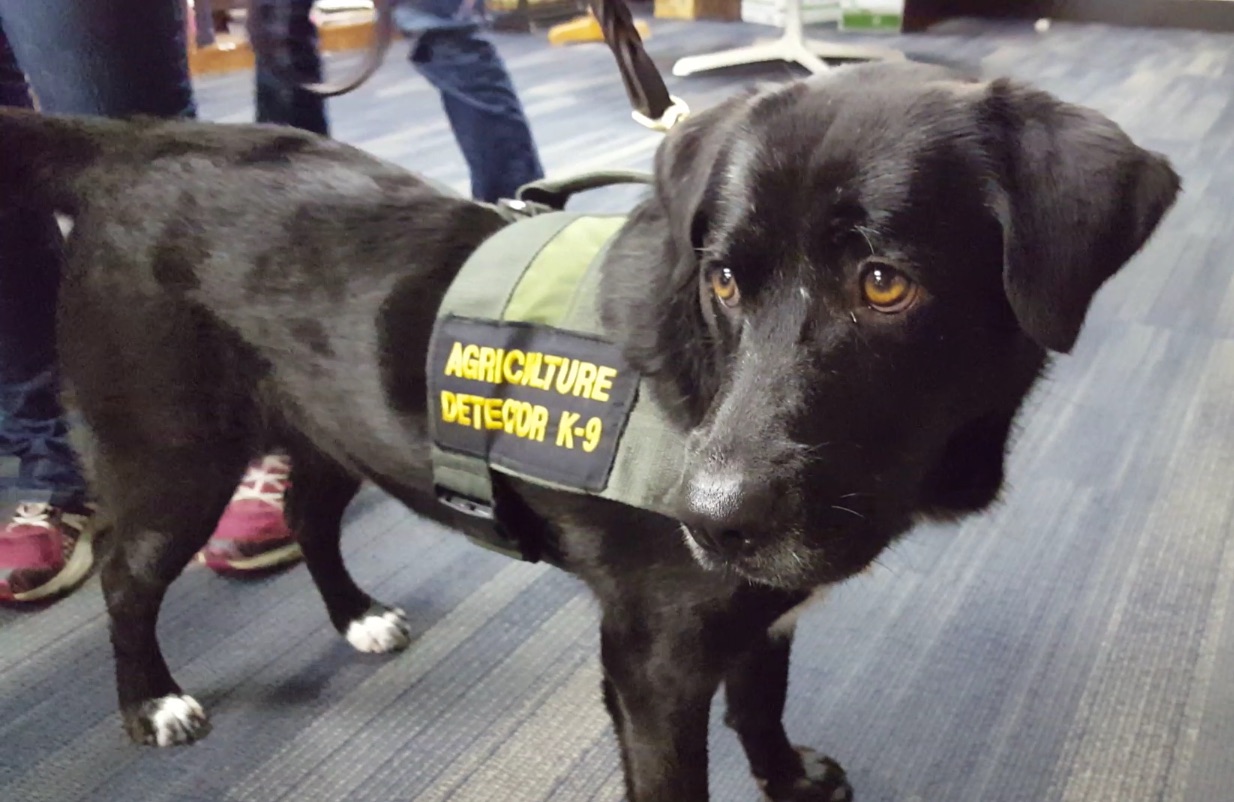
Agriculture Detector K-9 on Duty!

Agriculture Detector K-9 on Duty!

By Charmayne Hefley, Associate Editor

[embedvideo id=”Il2TOH1NvOM” website=”youtube”]

California Ag Today’s associate broadcaster Charmayne Hefley recently asked Soya, a mixed-breed agriculture detector K-9 (canine) with big responsibilities, and Samantha Tomlinson, Soya’s handler with the Fresno County Ag Commissioner’s office, what type of dog Soya is.

ST:      We don’t know exactly what she is for sure, but we’re thinking about getting her DNA-tested someday. We’re thinking she’s a lab-border-collie.

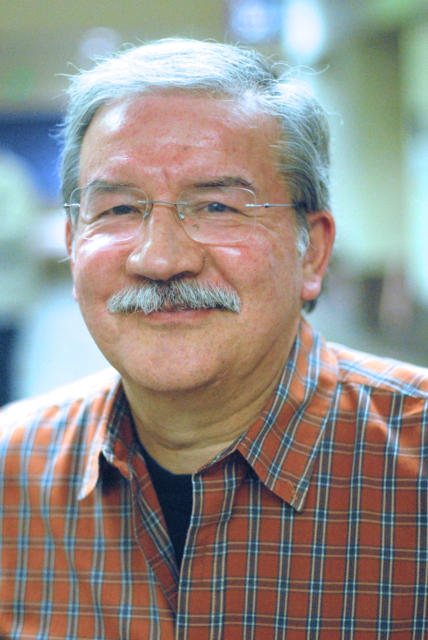
Samantha Tomlinson, Soya and Charmayne Hefley

Samantha Tomlinson, Soya and Charmayne Hefley

CAT:   How long have you and Soya been together?

ST:      We have been matched up since mid-July when we went through the training program in Georgia through the National Detector Dog Training Center.

CAT:   What is Soya able to do for the Ag Commissioner’s office?

ST:      Soya smells out parcels for potential plant material and she alerts us [to suspicious ones] by scratching. We check to see if [the material] has been properly certified and if it’s good to go.

CAT:   What are some of her recent detections?

ST:      She can detect a number of things. She was initially trained on five scents: mango, stone fruit, apple, guava, and citrus. From there, through scent association, she’s been able to find a number of additional agricultural materials, including avocados, blueberries, nuts, soil, cut flowers; anything that is plant material, Soya can find.

CAT:   What region does Soya cover?

ST:      Right now we’ve been covering only Fresno County because we still are in what we call the “acclimation phase,” as she’s still new. We’ve been working at FedEx and UPS, but we’ll broaden our horizons eventually and we’ll be in the post office, GSO, OnTrac, any service that ships parcels.”

CAT:   How important is it for the agricultural industry to have dogs like Soya working for it?

ST:      Well Soya and I are considered a “first line of defense” for California’s multi-billion dollar ag industry. She is in the facilities checking boxes sent from potentially quarantined areas from within the state and from outside the state for materials that may contain any pests or diseases that could prove detrimental to California agriculture.

CAT:   People may not know when they’re shipping certain items—certain plant materials—from one county to the next that the destination county may have a quarantine in place. How do people properly ship plant material?

ST:      Every county is actually different. If you are thinking of shipping some of your backyard fruits to your nephew or grandson, I would contact your local ag commissioner and make sure there are not any quarantines in place for both the county you’re shipping from and the county you’re shipping to. In these facilities, we look for boxes to be properly labeled with the growing origin and we inspect thye contents inside. Depending on what is inside, where it’s grown and where it’s going, we act accordingly.
2016-05-31T19:24:13-07:00February 5th, 2016|

REWARD for BEEHIVE THIEF CAPTURE

Reward for Beehive Thief Capture

California State Beekeepers Association, Inc. (CSBA) has reported two new beehive theft alerts and will provide a reward for beehive thief capture:

The CSBA offers up to $10,000 for information that leads to the arrest and conviction of persons responsible for stealing bees and/or beekeepers equipment. We take the issue of hive theft very seriously and are willing to generously reward those who help us stop this growing problem. Don’t hesitate to ask questions and check for brand numbers on frames, boxes, lids and pallets.

Additionally, the CSBA owners of stolen hives have given assurance that if a farmer reports he/she has stolen hives, they will allow the hives to stay for the remainder of the bloom. We do not want to punish farmers for doing the right thing by putting their crop at risk. We want all farmers to feel comfortable to report the hives without worrying about them being taken out from under them during a critical time.

Beehive Theft Alert 1Kern-County-Beehive Theft Alert 1

A beehive theft has occurred near Kern County within sight of I-5. The thieves are getting bolder and we all must be vigilant. The theft occurred around January 26-27th, 2016. The hives are branded with CA0330333H. This theft may or may not be related to the last major theft (see below).

Hive Description: All hives are 10 frames. The hives are made of a deep super with a 6 5/8 shallow on top. The hives are painted silver and have internal feeders and a mixture of wooden and plastic frames. The hives are on pallets with the entrances all facing the same direction. The lids, boxes and most of the frames are branded with CA0330333H. The bees are Italians with cordovan (light-colored and reddish) genetics. Pictures will soon follow.

If you are around any beehives you are unfamiliar with, don’t hesitate to look for brand numbers. Thieves often times switch the frames into different boxes to avoid being caught so be aware that the outside appearance of the hive may not match the description.

If you see any frames with the CA0330333H brand on them, they are from stolen hives and you should contact castatebeekeepers@hotmail.com immediately to report the information.

Beehive Theft Alert 2

stolen-beehives 2

240 hives were stolen near Colusa, CA around January 25-26th, 2016. All boxes, lids, frames and pallets are branded with 42-14. Please take a careful look at the picture and if you see hives that fit the description, don’t hesitate to check for brand numbers and call the Sheriff’s department. You can also email us at castatebeekeepers@hotmail.com and we can pass along the information for you.  These hives could easily be anywhere in California by now. It is very likely that the hives will be destroyed after pollination season to cover up the crime. In the interest of saving these bees, it is critical we all do our part to locate these hives.

Description: All the hives are 10-frame double deeps. The boxes are branded on the top cleats. The pallets have metal on the corners. Some of the feed cans and boxes were taken as well. The feed cans are painted green and slightly rusty. The feed can boxes are branded too and most of them hold 8 cans (some may hold 4). The bees are Italian and have Cordovan genetics (most will appear light colored and/or slightly reddish).

Location: The hives were taken from 2 yards, both located north of Colusa on the east side of the river. One yard was about 2 miles from the river and the other about 3 miles from the river.

Thief Description: Based on the tracks, it looks like a bee forklift was used to move the hives. The trucks appear to have dual tires. It is suspected that either 2 big trucks or 3 smaller trucks were used to move the hives.

Please share this information with your club, almond grower and in your community. Hive theft is a growing problem and we all need to keep an eye out for each other. Thank you for helping in this effort.

(Photo Source: California State Beekeepers Association)

2016-05-31T19:24:13-07:00February 4th, 2016|

Breaking News: New HLB Infected Tree in San Gabriel

Breaking News

Citrus Insider Reports New HLB Confirmed in San Gabriel

Today, two additional trees in have tested positive for Huanglongbing (HLB). The two trees, an orange and a kumquat, are on separate properties but are both within the core area in San Gabriel where 10 diseased trees were confirmed last summer. Given the close proximity, there will not be a quarantine expansion.

One of the HLB-positive trees has already been removed and California Department of Food and Agriculture (CDFA) officials are in the process of contacting the other homeowner to schedule tree removal. Agriculture officials are working quickly in the area.

Citrus trees in San Gabriel had already been treated for the Asian citrus psyllid (ACP) within the last few weeks as part of CDFA’s routine HLB response. ACP populations are closely monitored in areas where HLB has been detected and treatments occur if there is a noted increase in population size. Since trees have been recently protected, no additional treatments will take place at this time. Instead, CDFA will focus on sampling extensively in the area. Much of the area has already been sampled and CDFA’s lab has identified all samples from San Gabriel as high priority.

The Citrus Pest & Disease Prevention Program is working with the Los Angeles County Agricultural Commissioner’s office and CDFA to develop a multilingual informational flyer to notify residents of the significance of these finds and potential implications to other citrus trees in the area. CDFA staff will distribute this information as they go door-to-door sampling and surveying.

More information will be shared as it is available. In the meantime, the citrus industry is encouraged to keep a critical eye on all plant material moving into or out of your groves and recommends taking the following steps so collectively, as a team, we can all save our citrus trees.

-Remove all leaves and stems

-Shake out picking bags

-Inspect harvesting equipment

-Educate fieldworkers

-Get on board with area-wide treatments

__________________

Additional Links:

Citrus Insider

Save Our Citrus

California Citrus Mutual

2021-05-12T11:03:04-07:00February 3rd, 2016|

National Association of State Departments of Agriculture Celebrates 100th Anniversary

House Agriculture Committee Chairman Conaway recognizes the National Association of State Departments of Agriculture on its 100th Anniversary

House Agriculture Committee Chairman K. Michael Conaway submitted the following remarks for the Congressional Record recognizing the National Association of State Departments of Agriculture on its 100th Anniversary.

Remarks as prepared:

“Mr. Speaker, I rise today to honor the 100th anniversary of the National Association of State Departments of Agriculture (NASDA). NASDA is a non-profit, non-partisan organization which represents the commissioners, secretaries, and directors of agriculture from all fifty states and four U.S. territories. The State departments of agriculture have served not only the farmers and ranchers of America, but also American consumers for a significant portion of our nation’s history.CDFA LOGO

“NASDA is a highly effective association which serves to grow and enhance agriculture by forging partnerships and creating consensus to achieve sound policy outcomes between state departments of agriculture, the federal government, and stakeholders. These partnerships are apparent in the halls of almost every office building in the District of Columbia. I rely on the hard working men and woman in the Texas Department of Agriculture to provide me with perspectives on how federal policy is impacting boots on the ground agriculture. I’m sure my colleagues rely on their state department of agriculture in similar ways.

“NASDA is an active partner with the United States Department of Agriculture through a longstanding cooperative agreement to employ a nationwide network of enumerators in support of the mission of the National Agricultural Statistics Service (NASS). The data collected through this partnership informs a broad spectrum of legislative and regulatory initiatives, including farm programs under the jurisdiction of the Committee on Agriculture which I have the honor to chair.

“NASDA and its members likewise play a critical role informing Congress and the executive branch regarding the operation of federal and state programs covering everything from animal and plant health, food safety and marketing, nutrition, and literally hundreds of other consumer services.

“NASDA exists to amplify the unique voice of all state departments of agriculture. NASDA Members are able to amplify their national voice by achieving consensus on otherwise contentious issues such as threatened and endangered species, agriculture labor, and water quality.

“Mr. Speaker, I join the members and stakeholders of NASDA in celebrating their 100th year of advocating for American agriculture. I wish NASDA many more years of public service to American agriculture at the critical nexus of state and federal policy.”

2016-05-31T19:24:13-07:00February 2nd, 2016|

California Water Priorities Ballot Measure

Petitioning for California Water Priorities Ballot Measure Kicks off Friday in Fresno


California Water Alliance (CalWA) executive director Aubrey Bettencourt announced TODAY that a petition drive for the California Water Priorities Ballot Measure will take place Friday, January 29, 2016, at KMJ Studios, 1071 W. Shaw Avenue in Fresno, from 2-6 pm.

Earlier this week, the proposed ballot measure was approved by Attorney General Kamala Harris, opening the door to begin signature-gathering efforts with initiative supporters. Since the measure’s approval, CalWA has received an overwhelming amount of support and requests for petitions to circulate.

Electronic copies of the petition are not available, as use of them would disqualify the signatures gathered. Requests for petitions may be made online at www.CaWater4All.com. CalWA will begin mailing petitions on Friday, January 29.

A second signature drive is being scheduled February 9-11, 2016, at the World Ag Expo in Tulare. More information on this event will be available on the CaWater4All website.

lineclear

The California Water Alliance is a statewide nonprofit organization dedicated to raising awareness about the nature of water and promoting long-term, sustainable solutions that meet the health and security needs of families, cities, businesses, farmers and the environment. 

The California Water Alliance Initiative Fund Committee (FPPC ID#1381113), sponsored by the California Water Alliance, a non-profit IRC §501(c)(4) organization, is a state primarily formed ballot measure recipient committee organized to qualify two or more state ballot measures for the November 2016 ballot. It is permitted to accept unlimited, non-tax-deductible donations from individuals, corporations, partnerships, nonprofit organizations, and any other lawfully permissible sources. For more information and restrictions, please visit http://cawater4all.com/.

lineclear

Resources:


The Water Priorities Constitutional Amendment and Bond Act Fact Sheet

California Water Explained

California Water Use Facts

California Water Polling Infographic

2016-05-31T19:24:14-07:00January 28th, 2016|

Biocontrols Conference & Expo

Biocontrols Conference & Expo, March 3-4, 2016, Monterey, California 

Learn everything you need to know about agricultural biocontrols from the experts.  


Join your peers, leading organizations and industry experts at the Biocontrols Conference & Expo for two days of hands-on education devoted solely to the use of biocontrols in agriculture presented by Meister Media Worldwide, a media solutions provider for worldwide specialized agriculture, in cooperation with the Biopesticides Industry Alliance (BPIA), and the California Association of Pest Control Advisers (CAPCA). The Biocontrols Conference offers educational sessions, continuing education credits (CEUs) for pest control advisers (PCAs), certified crop advisers (CCAs) and other state certification programs, and an expansive Expo with top suppliers of biocontrol products and related services.

New for 2016!  

Two optional, concurrent add-ons on the last afternoon of the event (additional fees may apply):

1.Tour of two leading Monterey-area specialty-crop growing operations that use biocontrols as part of their integrated pest management programs:

-Biocontrols USA Tour

-Pacific Plug and Liner,  Watsonville, CA

2.Hands-on workshop on the use of beneficial insects in a greenhouse environment

lineclear

Agenda Sampling:

-8 Tips To Get The Most Out of Your Biocontrols Program

-A look at the most common active ingredients and how to handle them to get the best results, Lance Osborn, UF IFAS

-What’s Next In Biocontrol?

-Regulatory Update, Bob McNally, EPA

-Pipeline Update – what types of new products are coming?

-The Future Isn’t Biocontrol. It’s IPM

-Understand The Value of Biopesticides – Do they Pencil Out for You?

-How To Evaluate/Field Test a New Research Biopesticide

-Biopesticides and Beneficials: Make Them Work Together, Frank Sances, Pacific Ag

-Fruit and Tree Nuts: Hands-on, How-To Topics

-Using Green Lacewings in almond and pistachio, Brad Higbee, The Wonderful Co.

-Vegetables: Hands-on, How-To TopicsMycorrhizae: Why it Makes Sense in Strawberries, Johan Pienaar, Mycorrhizal Applications.

Monterey Bay, the conference location, is in close proximity to the heart of major California specialty-crop production: vegetables, fruits, and ornamentals in Monterey County and the Salinas Valley, and affords you the opportunity to tie-in a long weekend in the Monterey Bay area.

lineclear

Meister Media Worldwide and its leading family of brands including American Vegetable Grower®, Western Fruit Grower® / American Fruit Grower® and Greenhouse Grower®, CropLife®,

lineclear

Having celebrated its 15th anniversary in September 2015, BPIA is dedicated to fostering adoption of biopesticide technology through increased awareness about their effectiveness and full range of benefits to a progressive pest management program.

lineclear

Dedicated to the professional development and enhancement of its members’ education and stewardship, the California Association of Pest Control Advisers (CAPCA) represents more than 75% of the nearly 4,000 California EPA licensed pest control advisers (PCAs) that provide pest management consultation for the production of food, fiber and ornamental industries of this state.

2021-05-12T11:05:58-07:00January 28th, 2016|

Water Initiative Approved by AG

California Water Priorities Initiative Goes to Ballot

The Attorney General of California, Kamala Harris, has prepared the following title and summary of the chief purpose and points of the proposed water initiative:

WATER BOND. REALLOCATION OF BOND AUTHORITY TO WATER STORAGE PROJECTS. INITIATIVE CONSTITUTIONAL AMENDMENT AND STATUTE.

Prioritizes water uses in California, with domestic uses first and irrigation uses second, over environmental, recreational, and other beneficial uses. Reallocates up to $10.7 billion in unused bond authority from existing high-speed rail ($8.0 billion) and water storage ($2.7 billion) purposes, to fund water storage projects for domestic and irrigation uses.

Removes requirement that water storage projects funded by the $2.7 billion amount also benefit the environment. Creates new State Water and Groundwater Storage Facilities Authority to choose the projects to be funded by reallocated bond amounts. Summary of estimate by Legislative Analyst and Director of Finance of fiscal impact on state and local government:

No significant increase or decrease in the state’s anticipated debt payments from the redirection of up to $10.7 billion in bonds from previously approved measures, assuming these bonds would have been sold in the future absent this measure. Unknown net fiscal effects on state and local governments due to measure’s changes to how water is prioritized in the State Constitution, as well as potential changes to funding levels available for capital projects.

_____________________

“Measure is an opportunity for California’s people to influence the state’s priorities directly” said California Water Alliance, executive director Aubrey Bettencourt, executive director of the California Water Alliance, which is the sponsor of the water initiative.

“It’s a rare chance for the people of California to tell the state to get its priorities straight,” Bettencourt said. “High-speed rail is an unpopular boondoggle and a reliable water supply means more to the people and economy of this state in light of the current drought than ever before. Californians want to prepare the state for inevitable new droughts yet to come.”

Bettencourt emphasized that adding more storage to the state and federal water project systems will benefit more than just people and food producers, it will mean that wildlife refuges and habitats throughout the state will benefit from additional water when new droughts inevitably arrive. “The measure will give the system more operational flexibility and more options,” she said.

_____________________

About the California Water Alliance

The California Water Alliance is a statewide nonprofit organization dedicated to raising awareness about the nature of water and promoting long-term, sustainable solutions that meet the health and security needs of families, cities, businesses, farmers and the environment. 

About the California Water Alliance Initiative Fund Committee

The California Water Alliance Initiative Fund Committee (FPPC ID#1381113), sponsored by the California Water Alliance, a non-profit IRC §501(c)(4) organization, is a state primarily formed ballot measure recipient committee organized to qualify two or more state ballot measures for the November 2016 ballot. It is permitted to accept unlimited, non-tax-deductible donations from individuals, corporations, partnerships, nonprofit organizations, and any other lawfully permissible sources. 

2016-05-31T19:24:14-07:00January 26th, 2016|

California Water Priorities Ballot Measure Review Completed

Legislative Analyst Completes Review of California Water Priorities Ballot Measure

California Water Alliance (CalWA) executive director Aubrey Bettencourt announced TODAY that California Legislative Analyst Mac Taylor and Director of Finance Michael Cohen reported their findings to Attorney General Kamala Harris regarding CalWA’s proposed constitutional and statutory amendment for November’s General Election ballot.

In its report to Attorney General Harris, the Legislative Analyst’s Office (LAO) found that the water priorities ballot measure “would not significantly increase or decrease the state’s anticipated debt payments.”

“We are pleased that the LAO agrees that our measure performs as we intended and has no undesirable fiscal effects,” said Bettencourt. “From the outset, we wrote it to avoid any new taxes, new debt, new user fees, or other costs to the state’s taxpayers.”

The measure would redirect up to $10.7 billion in previously-authorized High-Speed Rail Project and 2014 Water Bond general obligation bond authority to fund construction of specific water-storage related projects throughout the state and amend the state’s constitution to prioritize uses of water, putting people’s needs first.

By helping to solve California’s water storage infrastructure needs, the initiative would remove unspent bond funds from the High-Speed Rail Project approved by voters in 2008, now listed as the least important infrastructure priority according to the recent Stanford Golden State Poll. Dealing with the state’s water problems is the majority of voters’ top priority, according to the same poll.

CalWA sponsored the measure with State Senator Bob Huff and Board of Equalization Vice-Chair George Runner, its proponents.

The LAO also found the net effect of the measure on federal funds and its impact on state and local governments were unknown. The LAO also reported the measure could cause unknowable changes in other state capital projects.

 Bettencourt said that Attorney General Harris is expected to finish her review within a week and release an official title and summary for the measure, the first step in circulating petitions to qualify the measure for placement on November’s ballot.

“The people of California will be given the ability to reprioritize the state’s direction for the needs of today—from a high speed train to water storage,”  Bettencourt said. “They will soon be able to sign the measure’s petition and help us in our efforts to qualify this important initiative measure for a vote of the people,” she concluded.

_____________________________

About the California Water Alliance

The California Water Alliance is a statewide nonprofit organization dedicated to raising awareness about the nature of water and promoting long-term, sustainable solutions that meet the health and security needs of families, cities, businesses, farmers and the environment. To learn more, visit www.CaliforniaWaterAlliance.org.

About the California Water Alliance Initiative Fund Committee

The California Water Alliance Initiative Fund Committee (FPPC ID#1381113), sponsored by the California Water Alliance, a non-profit IRC §501(c)(4) organization, is a state primarily formed ballot measure recipient committee organized to qualify two or more state ballot measures for the November 2016 ballot. It is permitted to accept unlimited, non-tax-deductible donations from individuals, corporations, partnerships, nonprofit organizations, and any other lawfully permissible sources. For more information and restrictions, please visit http://cawater4all.com/

Paid for by the California Water Alliance Initiative Fund |  455 Capitol Mall Suite 600, Sacramento, CA 95814

2016-05-31T19:24:15-07:00January 20th, 2016|

USDA Pesticide Data Program Report Confirms Food Safety

USDA Pesticide Data Program Report Confirms Food Safety:

More than 99 percent of sampled food tested below allowable pesticide residue levels!

The U.S. Department of Agriculture (USDA) has confirmed again in its annual report that American consumers can focus on the nutritional benefits of conventional and organic produce without concern for pesticide residues. Over 99 percent of fresh and processed food available to consumers tested below allowable pesticide residue levels, as detailed in the 24th Pesticide Data Program (PDP) Annual Report released on January 11, 2016 by the USDA Agricultural Marketing Service (AMS). Only .36 percent [0.36%] of the products sampled through the PDP had residues above the U.S. Environmental Protection Agency (EPA) established tolerances, giving consumers plentiful options to meet their daily nutritional needs.crop life america logo

“Today’s consumers can choose from food produced with a variety of farming methods and necessary crop protection strategies and be confident that it will sustain and enrich their families’ lives,” stated Jay Vroom, president and CEO of CropLife America (CLA). “Across the nation, our growers continue to use the most advanced crop protection technology available to target specific crop threats. From precision agriculture to integrated pest management, farmers in the heartland, the plains, coastal areas and everywhere in between are pushing forward with the best ways to produce food for their communities and for the country.”

PDP researchers tested a total of 10,619 samples of fresh and processed fruit and vegetables (8,582 samples), oats (314 samples), rice (314 samples), infant formula (1,055 samples), and salmon (354 samples). To ensure the samples were representative of the U.S., researchers collected data in a variety of states throughout different times of the year. The findings support the Dietary Guidelines for Americans 2015-2020, recently released by USDA and the U.S. Department of Health, which encourage consumers to eat more fruits and vegetables.ChooseMyPlate.gov

“With rapid advancements in computing technology, the space for developing new ways to fight agricultural threats is increasing exponentially,” stated Dr. Janet E. Collins, senior vice president of science and regulatory affairs at CLA. “Consumers have a number of options at the grocery store, thanks in large part to the work of the scientific community involved in research and development, the companies that are manufacturing products, and America’s farmers and ranchers. The 2014 PDP report demonstrates again that, with the sound science-based regulation of pesticides and commitment from the industry, farmers and other stakeholders, we can reach toward making sure that every American, no matter their wallet size or geographic location, can access healthy food.”

A 2012 report from CLA demonstrates that crop protection has made healthy food more financially accessible to the American consumer, providing a 47.92 percent savings in overall grocery bills for a family of four in the U.S.1 In addition, increased agricultural production, due to advanced pesticides, has created an additional 1,040,661 jobs generating more than $33 billion in wages—all while decreasing the need for tillage operations, thereby reducing fossil fuel use by 558 million gallons per year.

Recent reports from the United Nations also show that an increasing number of people worldwide have gained access to healthy food. Over the past 25 years, the number of people worldwide who are hungry has declined from one billion to about 795 million, or about one person out of nine—which means that 2 billion people have avoided a “likely state of hunger” given the global population increase of 1.9 billion people since 1990-92.2 Multiple factors have contributed to the decrease in global hunger, including the integration of family farmers and small holders in rural areas into well-functioning markets for food, inputs and labor.

The PDP was established in 1991 for the purpose of collecting data on pesticide residues found in food. Information collected by the PDP is sent to the EPA to help the agency conduct important dietary risk assessments. The USDA also uses this data in the development of integrated pest management objectives. Since the PDP program was initiated, 109 different commodities have undergone testing. A complete version of the 2014 Annual Summary is available at www.ams.usda.gov/pdp.


1 CropLife America. The Contributions of Crop Protection Products to the United States Economy.

2 Food and Agriculture Organization of the United Nations, the International Fund for Agricultural Development and the World Food Program. State of Food Insecurity in the World 2015.


Established in 1933, CropLife America (www.croplifeamerica.org) represents the developers, manufacturers, formulators and distributors of plant science solutions for agriculture and pest management in the United States. CropLife America’s member companies produce, sell and distribute virtually all the crop protection and biotechnology products used by American farmers. CLA can be found on Twitter at @CropLifeAmerica. CLA supports CropLife StewardshipFirst.

2021-05-12T11:03:05-07:00January 13th, 2016|

Farmers are Asset Managers

Farmers are Asset Managers

By Brian German, Associate Editor

Richard Casias, principal scientist and managing member at RCC Group, LLC, an environmental management consulting company based in Davis, expressed his deep respect for the Valley’s local farmers’ positive outlook, “What I really appreciate about these individuals is farmers are true asset managers. Their goal is to work efficiently, effectively and bring a good investment off the land they are managing.”

RCC Group’s primary customer base of almond, walnut and pistachio growers approach Casias by introducing their asset, emphasizing ongoing preservation of that asset, and making certain that the inputs are positive, and losses are minimized, like any company. With over 30 years of experience in earth science and environmental management, Casias attributes his expertise to this ongoing learning process.

Casias has traveled nationwide, including Hawaii, Nevada, Utah, New Mexico and Texas, promoting environmental management systems and conducting environmental and water resource investigations. “I’ve been advocating for an environmental management system for farming operations. Australia and other countries have been doing it, and it is completely applicable here in Central Valley farming operations.”

Casias continued, “So many of the farming practices that are being done are not getting farmers the positive feedback and validation as good land and water stewards. That is part of my motivation—to make sure growers recognize and take credit for all the extra work that they do to make their farming operations successful.”

When it comes to increasing water regulations on farming, Casias commented, “I try to remind growers that public scrutiny is not solely focused on agriculture as the villain; there are a number of people [and industries] using these natural resources.”

2016-05-31T19:26:59-07:00January 7th, 2016|
Go to Top