Food Safety Modernization Act

Bayer CropScience Horticulture Symposium Builds Relationships

Bayer CropScience Horticulture Symposium Builds Global Relationships for Collaborative Problem-Solving

By Patrick Cavanaugh, Deputy Editor


Nearly 200 professionals in the horticultural industry from across the food chain and the value chain, and from Europe and North, Central and South America, gathered this week at the Bayer CropScience Horticulture Symposium in Puerto Vallarta, Mexico. Attendees were treated to an inspirational mix of lectures, panel discussions, as well as an interactive poster session, all incorporating forward-thinking sustainable practices into contemporary agriculture. Among the crops discussed were tomatoes, citrus, grapes, potatoes, bananas.

Rob Schrick, strategic management lead, Bayer CropScience Horticulture, based in Research Triangle Park, North Carolina, said the event was the company’s second in a series of horticulture symposiums focused on international collaboration and problem-solving. “This is about bringing the best and brightest from across our industry,” said Schrick, “from influencers and universities to industry members like ourselves and the media. It’s about getting these creative minds together and discussing solutions. The solutions may not come from the symposium itself, but the connections that are made—you don’t know what will yield from those relationships.”

Jim Chambers, director of marketing, Bayer CropScience Food Production, said the Horticulture Symposium was all about sharing information on best management practices. “Bayer is a leader in the crop protection business within the horticultural space around the world, and this is a real opportunity to bring all of us within horticulture across the food chain and the value chain to talk, from the grower, to the processor, and to the consumer. It is a wonderful opportunity to work together to solve some very difficult challenges.”

“And, vivid to all attendees, was that members of the fruit and vegetable industry throughout the Americas have similar challenges to overcome,” noted Chambers. “It was very interesting; the issues that we talk and hear about in the specialty crop states such as California, Florida and Texas, are very much the same issues that people, for example in Mexico, Brazil, Argentina, or Central America, are facing. These issues do not go across just states or counties; they reach across the globe in solving these problems,” Chambers said.

Among the speakers were growers, commodity specialists from the industry and academia, and experts on sustainability practices, professionals on Maximum Residue Levels (MRLs), Bayer CropScience specialists and major agricultural association leaders such as Tom Nassif, ceo, Western Growers Association (WGA) and Dana Merrill, president, Mesa Vineyard Management Inc.

Bayer is a global enterprise with core competencies in the Life Science fields of health care and agriculture. Bayer CropScience, the subgroup of Bayer AG responsible for the agricultural business, is one of the world’s leading innovative crop science companies in the areas of seeds, crop protection and non-agricultural pest control. The company offers an outstanding range of products including high value seeds, innovative crop protection solutions based on chemical and biological modes of action as well as an extensive service backup for modern, sustainable agriculture. 

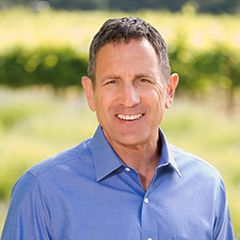
(Photo features Rob Schrick, Bayer CropScience – Horticulture strategic management lead)

2016-05-31T19:27:08-07:00October 2nd, 2015|

Import Food Safety, Part 1

Import Food Safety: Only 1 in 60 Containers Is Inspected

By Charmayne Hefley, Associate Editor


This is the first in a two-part series with Rachel Martin, the national chairman of Homeland Security for the National Federation of Republican Women, on import food safety in the United States.

Food safety is a crucial element in the production of food, and many government regulations exist to keep our food safe for people to eat. Yet, Martin explained, those regulations don’t necessarily reach imported food. Specifically, she said, “Due to budget cuts under the Obama administration, only 1 in 60 containers arriving in the U.S. is inspected by Homeland Security.”

Martin’s initial reaction to this statistic was to consider the possibility that terrorists could smuggle in weapons, chemicals and themselves into the United States.

“The second thing that came to mind was food safety,” Martin said because as we grow less food domestically, we import more food. “We’re already overregulated here in California—not only in the United States, but it’s worse here—with mandated inspections, regulations on our food and regulated chemicals, spraying, pesticides and so forth. Yet when food enters the United States, the majority of it isn’t even inspected.”

Martin said her own daughter has been affected by the risks of importing food that is not inspected by or grown under strict U.S. standards set for the United States.

“My daughter’s first job was at a local water park when she was 17-years-old, slicing limes to make juice for the kids there,” said Martin. “The limes were imported from Mexico. My daughter developed a rash on her arm from chemicals that were applied to the limes that looked like she had third-degree burns. It went away in a couple of months, but to this day—she’s now 23—it  returns on a random basis.”

2016-05-31T19:27:09-07:00October 1st, 2015|

Ag in the Classroom

Teaching Ag in the Classroom


By Charmayne Hefley, Associate Editor


As the disconnect between consumers and the source of their food grows, many students do not understand where their food comes from. California teachers are doing their part to bridge the educational gap by teaching ag in the classroom.

Agriculture in the ClassroomKathy Yager, a fifth grade teacher at Fowler Unified School District, as well as a farmer, brings agriculture education to her students in several ways. “We’ve been using programs through the California Foundation for Agriculture in the Classroom,” Yager said.

“I’ve participated in Taste Test grants,” Yager said. The grant allows teachers to bring in a new ag product, “and the students get the opportunity to try those things.” Yager said it also helps expose students to new products, and allows them to become better informDairy Council of CAed consumers in the future.

“We also have visits from the Dairy Council of California and students get to see a dairy cow and how the whole milking process works,” Yager said.

In addition Yager brings farmers, including her own brother, into the classroom to educate students, “and [they] show students how agriculture works and how a product gets from the field, to the stores, and to them.”

Healthy Eating

California Foundation for Agriculture in the Classroom (CFAIC)

More than 7 million California students are fed, clothed and housed with products grown right here on our farms, in our fields and within our forests. California Foundation for Agriculture in the Classroom is dedicated to helping students and teachers across our great state gain an understanding of how agriculture provides the daily essentials necessary to make our society and our world function.

From the cotton in our jeans and the food on our tables, to our landscaped yards and playing fields, we all depend on agriculture. The survival of this vital industry depends on educating and encouraging the next generation of decision-makers. We do this by engaging students and educators in meaningful ways: developing and sharing unique classroom curriculum, supporting school garden efforts, spreading our message at local Ag Days, honoring outstanding educators, rewarding students who learn and write stories about agriculture and so much more.

http://www.cfaitc.org/imaginethis/Featured Programs:

Imagine this… Story Writing Contest

Meet Academic Content Standards for California schools through this creative writing contest!

Create a positive learning experience that promotes reading, writing and the arts, and furthers the understanding of agriculture in our lives by using this award-winning contest in your classroom.

PUBLISHED AUTHOR

State-winning authors will have their stories published in an illustrated book and will be distributed to school libraries and classrooms across the state!

DEADLINE: NOV. 1

Entries must be postmarked by November 1, annually.
Download entry form (PDF, 331 KB)

California Fruits and Vegetables Seasonal Chart (PDF, 18 KB)

2016-05-31T19:27:09-07:00September 22nd, 2015|

Monterey County Rules Lettuce Market

Diversity Keeps Monterey County Going Strong

By Patrick Cavanaugh, Deputy Editor

Monterey County Ag Commissioner Eric Lauritzen talked about the success of local farmers in setting new crop production records, “Despite the water and labor shortages, crop values were up in 11 commodities that exceeded $100 million and 26 that surpassed $10 million. So, the diversity of the economic engine here in Monterey County remains strong despite adversity.”Monterey County Ag Comm Logo

The overall agricultural value of Monterey County is nearly $4.5 billion. Lauritzen noted, “Commodity by commodity, among our top crops, we saw leaf-lettuce surpass strawberries as the number one commodity again. Strawberries are still over $709 million, and the lettuces combined were about $1.4 billion. It is pretty amazing to see those kinds of numbers coming out of one county.

In addition to water and labor shortages, Lauritzen noted, “We have dealt with the impact of food safety issues with spinach. And though production levels continue to climb back, they have not reached levels achieved since the E. Coli outbreak back in 2010. Anyway, we are still thrilled to see the numbers so strong and this speaks to the economic engine of the County.”

Other achievements include:

-$8.1 billion generated for the local economy, including:

-$5.7 billion in direct economic output, nearly 20% of the county’s total direct economic output.

-$2.4 billion in additional economic output in the form of expenditures by agriculture companies and their employees

-76,054 jobs in Monterey County, including:

-55,702 direct employees, or nearly one quarter of all jobs in the county

-20,352 additional jobs made possible through expenditures by agricultural companies and their employees

-investments in ambitious new technology.

2016-05-31T19:28:04-07:00September 15th, 2015|

URGENT HLB Quarantine UPDATE

HLB Quarantine Update

A Huanglongbing (HLB) quarantine is now in effect in part of Los Angeles County following the detection of HLB in four citrus trees.

On July 10, a kumquat tree on a residential property was confirmed to be infected with the incurable HLB disease. After extensive surveying and testing in the area, three more diseased trees were found nearby. The four diseased trees were on four separate properties close to one another. The tree varieties include kumquat, lime, mandarin and calamondin.

California Department of Food and Agriculture (CDFA) has already removed two of the diseased trees and is currently working with the homeowners at the other two properties to remove those trees as soon as possible. See the CDFA press release below for more details on the resulting quarantine.

QUARANTINE FOR HUANGLONGBING DECLARED IN SAN GABRIEL, LOS ANGELES COUNTY

SaveOurCitrusSACRAMENTO, July 22, 2015 – An 87-square mile quarantine in the San Gabriel area of Los Angeles County has been added to the existing huanglongbing (HLB) quarantine in the Hacienda Heights-area following the detection of the citrus disease huanglongbing, or citrus greening.

Additional information, including a map of the quarantine zone, is available at the CDFA Save Our Citrus website The quarantine boundaries are: on the north, E. Orange Grove Boulevard; on the east, N. Lemon Avenue; on the west, Griffin Avenue; and on the south W. La Habra Boulevard.

This area is part of a much larger quarantine already in place for the Asian citrus psyllid (ACP), the pest that spreads bacteria causing huanglongbing (HLB). The new quarantine will prohibit the movement of all nursery stock out of the area, while maintaining existing provisions allowing the movement of only commercially cleaned and packed citrus fruit. Any fruit that is not commercially cleaned and packed, including residential citrus, must not be removed from the property on which it is grown, although it may be processed and/or consumed on the premises.

“The success of any quarantine depends on cooperation from those affected,” said CDFA Secretary Karen Ross. “The stakes couldn’t be higher for California citrus. We urge residents in the San Gabriel-area to do all they can to comply.”

CDFA, the USDA and the Los Angeles County Agricultural Commissioner’s continue their work to investigate the source of the disease, to survey and test for it throughout the Los Angeles Basin, and to continue with ground treatment of citrus trees within 800 meters of the find sites – which began earlier this week. In the long term, the strategy is to control the spread of ACPs while researchers work to find a cure for the disease.

Huanglongbing has been confirmed four times in San Gabriel, in a kumquat tree on a residential property, in a lime tree on an adjacent residential property, and in calamondin and mandarin trees on residential properties in close proximity to the original find. The disease is bacterial and attacks the vascular system of plants. It does not pose a threat to humans or animals. The Asian citrus psyllid can spread the bacteria as the pest feeds on citrus trees and other related plants. Once a tree is infected, there is no cure; it typically declines and dies within a few years.

Huanglongbing is known to be present in Mexico and in parts of the southern U.S. Florida first detected the disease in 2005, and the University of Florida estimates that the disease causes an average loss of 7,513 jobs per year, and has cost growers $2.994 billion in lost revenue since then. Huanglongbing has also been detected in Georgia, Louisiana, South Carolina and Texas as well as Puerto Rico and the U.S. Virgin Islands.

A total of 15 states or territories are under full or partial quarantine due to the presence of the ACP: Alabama, American Samoa, Arizona, California, Florida, Georgia, Guam, Hawaii, Louisiana, Mississippi, Northern Mariana Islands, Puerto Rico, South Carolina, Texas, and the U.S. Virgin Islands.

The Asian citrus psyllid was first detected in California in 2008 and quarantines for the pest are now in place in 17 California counties. If Californians believe they have seen evidence of huanglongbing in local citrus trees, they are asked to please call CDFA’s toll-free pest hotline at 1-800-491-1899 FREE. For more information on the Asian citrus psyllid and huanglongbing, please visit: http://www.cdfa.ca.gov/phpps/acp/.

2016-05-31T19:28:09-07:00July 23rd, 2015|

Wine Cork Debate: Synthetic vs. Natural Corks

St. Francis Winery Returns to Traditional Natural Corks


By Laurie Greene, California Ag Today Editor


Christopher Silva, President and CEO of St. Francis Winery in Sonoma County, spoke with California Ag Today on the cork debate: synthetic vs. natural corks.

“Our founder, Joe Martin, back in the 1990’s, was not satisfied when he was traveling around the country,” said Silva. “He discovered too many bottles of St. Francis wine were compromised by faulty corks. TCA (trichloroanisole) was creating bacteria issues and damaging the integrity of the wine.”

“So, starting in 1993, we moved to synthetic corks,” Silva explained. “However, internally, we tested and even bottled a case or two of our own wines in natural cork, and we’ve been satisfied that the technological advances in growing natural cork, culling the very best cork from cork forests, and significantly elevated sorting and testing techniques have contributed to eliminating much of the taint problem.”

“There is no perfect closure,” lamented Silva. “I hope that someone finds it! I promise you, I will call California Ag Today the day I find that perfect closure. But we are satisfied that the quality of natural cork has evolved so significantly that the issues we encountered twenty years ago have been largely eliminated,” said Silva.

“Our shift back to natural cork has been a logical choice because it’s been part of our certified sustainable practices,” Silva said. “Remember that natural cork is biodegradable, so it is certainly a certified, sustainable choice. We are trying to care for not only the grapes and the wines that we are so very proud of, but we are all neighbors and inhabitants of this planet, and we think that moving towards significantly consistent sustainable practices is the right thing to do—which makes it the right way to run a business,” Silva said.

“Our biggest issue in winemaking has been cork taint,” Silva explained. “We don’t want a wine that we made compromised by a cork that is contaminated, even slightly, by bacteria. But, we are satisfied that, over the years, there have been all kinds of improved techniques regarding examining the corks, cleaning the corks, and x-raying the corks. Significant advances in technology have eliminated the problem to such an extent that we don’t need to worry about cork taint, which was the biggest issue for us,” Silva said.

“We want the customer to know that when they buy a bottle of St. Francis wine, they are not just buying a product—as wonderful as that product is—and as proud as we are of it—they are buying an experience. Everything from looking at the bottle, studying the bottle, opening the cork, and enjoying the wine inside,” he said.

Featured Photo: Christopher Silva, St. Francis Winery

2016-05-31T19:28:12-07:00June 30th, 2015|

Ag Stories for Wegmans Customers

Dave Corsi with Wegmans Encourages More Ag Stories to Bridge Gap with Consumers


By Laurie Greene, Editor, California Ag Today

Customers love stories and Agriculture sure has them. What could be better for the bag of broccoli florets, carrots or even pistachios and almonds to have an image of the farmer who grew them?

Ag needs to have this connection with consumers; ag stories help bridge the gap between the growers and consumers.

California Ag Today caught up with Dave Corsi at a recent meeting. Corsi knows something about customers connecting with agriculture; he’s vice president of Produce and Floral at Wegmans, a higher end east coast grocery store chain, which purchases a lot of product from California growers. He said it’s way bigger than farm local and buying local.

“The customer wants to know the face behind the name. It is important for the customer to know who the growers are, and what do they do? What is their food safety philosophy and food safety best practices? What kind of varieties are they growing? What are the flavor profiles of crops they are developing to provide a better experience for our customers?”

“All that is very meaningful. And it doesn’t matter if the farm is ten miles away, three thousand miles away, or even around the world. The customer wants to understand who the person is behind the product being grown,” said Corsi. “That’s the story we love sharing with our customers.”

He noted that customers are really interested in the knowledge learned from ag stories, “so they can feel more comfortable about their purchase because they know how dedicated our growers are to food safety, traceability, and food quality.  They even want to know about the social side of business, such as the growers themselves.”


2016-05-31T19:28:16-07:00May 18th, 2015|

Salmonella Data Now at Your Fingertips

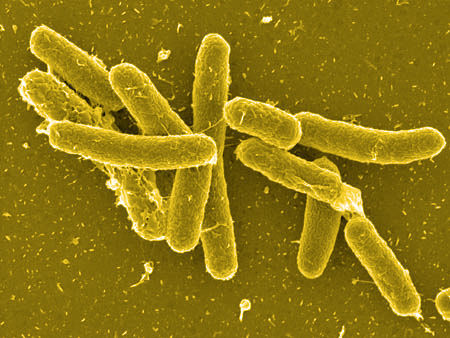
Forty years of Salmonella data, a major cause of food poisoning, is now available to the public, the food industry, and researchers in a new report from the Centers for Disease Control and Prevention (CDC).

The data, collected by state and federal health officials, provides a wealth of information on Salmonella, the top foodborne cause of hospitalizations and deaths in the United States.

Available for hands-on web access for the first time, the Atlas of Salmonella in the United States, 1968-2011 summarizes surveillance data on 32 types of Salmonella isolates from people, animals, and other sources. The information is organized by demographic, geographic and other categories.

“Salmonella causes a huge amount of illness and suffering each year in the United States. We hope these data allow researchers and others to assess what has happened and think more about how we can reduce Salmonella infections in the future,” said Robert Tauxe, M.D., deputy director of CDC’s Division of Foodborne, Waterborne and Environmental Diseases. “The more we understand Salmonella, the more we can make progress in fighting this threat all along the farm to table chain.”

CDC estimates that Salmonella bacteria cause more than 1.2 million illnesses each year in the United States, resulting in more than 23,000 hospitalizations and 450 deaths.

Salmonella infections most often cause vomiting or diarrhea, sometimes severe. In rare cases, Salmonella illness can lead to severe and life-threatening bloodstream infections.

By providing data by age, sex, geography, and season of the year in a downloadable format, the Atlas allows users to view national trends in reported cases of human Salmonella infection over time, problems in specific geographic areas, sources of Salmonella, and the connection between animal and human health.

Serotyping has been the core of public health monitoring of Salmonella infections for over 50 years. Now, scientists use DNA testing to further divide each serotype into more subtypes and to detect more outbreaks.

With the next generation of sequencing technology, advancements continue as the laboratory can find information about the bacteria in just one test.

The data presented likely represent just the tip of the iceberg since many cases of human salmonellosis are not diagnosed and reported to the health department. This underreporting may occur because the ill person does not seek medical care, the health care provider does not obtain a stool culture for testing, or the culture results are not reported to public health officials.

The Salmonella group of bacteria has more than 2,500 different serotypes, but fewer than 100 cause the vast majority of infections in people. Older adults, people with weakened immune systems, and children under five years old have a higher risk for Salmonella infection. Infections in these groups can be more severe, resulting in long-term health consequences or death.

To access the Atlas, please visit http://www.cdc.gov/salmonella/reportspubs/salmonella-atlas/index.html.

For more information on Salmonella, please visit: http://www.cdc.gov/salmonella/.

For more information on food safety, please visit: www.foodsafety.gov.

For more information about preventing Salmonella infections, please visit: http://www.cdc.gov/salmonella/general/prevention.html.

If you have any questions, please contact:  CDC Media Relations at (404) 639-3286.

2017-09-03T01:26:27-07:00March 26th, 2014|
Go to Top