National Men’s Health Week: What Foods Should Men Be Eating?

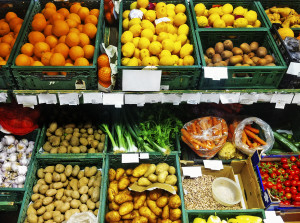
National Men’s Health Week falls on June 9 – 15 every year, and with Father’s Day right around the corner it’s important to note what foods are going to help keep the male gender healthy and strong.

Luckily, the editors of Men’s Health took the time to compose a list of the top 10 foods that are most beneficial to men; many of them are also noted as California’s top agricultural commodities.

1. Almonds: These energy-rich snacks lower bad cholesterol, thanks to plant sterols, and benefit diabetics by lowering blood sugar. They’re also rich in amino acids, which bolster testosterone levels and muscle growth. Almonds are also stuffed with vitamin E, which helps defend against sun damage.

In a study, volunteers who consumed 14 milligrams of the vitamin (about 20 almonds) per day and then were exposed to UV light burned less than those who took none. And because vitamin E is an antioxidant, it also works to keep your arteries free of dangerous free radicals. Low levels of vitamin E are also associated with poor memory performance and cognitive decline, says dietitian Sari Greaves of New York Presbyterian Hospital–Cornell.

2. Flaxseeds: Rich in protein and fiber, these little seeds offer a payload of omega-3 fatty acids, which erase spots and iron out fine lines in the skin. The British Journal of Nutrition reported that participants in one study who downed about half a teaspoon of omega-3s daily in 6 weeks experienced significantly less irritation and redness, along with better-hydrated skin.

A recent study of people with high cholesterol (greater than 240 mg/dL) compared statin treatment with eating 20 grams of flaxseed a day. After 60 days, those eating flaxseed did just as well as those on statins. Try sprinkling ground flaxseed on oatmeal, yogurt, and salads.

3. Tomatoes: There are two things you need to know about tomatoes: red are the best, because they’re packed with more of the antioxidant lycopene; and processed tomatoes are just as potent as fresh ones, because it’s easier for the body to absorb the lycopene.

Studies show that a diet rich in lycopene can decrease your risk of bladder, lung, prostate, skin, and stomach cancers, as well as reduce the risk of coronary artery disease, and help eliminate skin-aging free radicals caused by ultraviolet rays. “Cooked tomatoes and tomato paste work best,” says celebrity trainer Gunnar Petersen.

4. Sweet Potatoes: Often confused with yams, these tubers are one of the healthiest foods on the planet. In addition to countering the effects of secondhand smoke and preventing diabetes, sweet potatoes contain glutathione, an antioxidant that can enhance nutrient metabolism and immune-system health, as well as protect against Alzheimer’s, Parkinson’s, liver disease, cystic fibrosis, HIV, cancer, heart attack, and stroke.

What’s more, they’re also loaded with vitamin C, which smoothes out wrinkles by stimulating the production of collagen. A recent study in the American Journal of Clinical Nutrition found that volunteers who consumed 4 milligrams of C (about half a small sweet potato) daily for 3 years decreased the appearance of wrinkles by 11 percent.

5. Spinach: It may be green and leafy, but spinach—a renowned muscle builder—is also the ultimate man food. The heart-health equivalent of a first-ballot Hall of Famer, spinach is replete with the essential minerals potassium and magnesium, and it’s one of the top sources of lutein, an antioxidant that may help prevent clogged arteries.

Plus its vitamins and nutrients can bolster bone-mineral density, attack prostate cancer cells, reduce the risk of skin tumors, fight colon cancer, and, last but not least, increase blood flow to the penis. “Popeye was on to something,” says Susan Bowerman, assistant director of the Center for Human Nutrition at the University of California at Los Angeles.

6. Rosemary: The carnosic acid found in this spice has been shown to reduce stroke risk in mice by 40 percent, according to a study published in the Journal of Neurochemistry. Carnosic acid appears to set off a process that shields brain cells from free-radical damage, which can worsen the effects of a stroke.

It can also protect against degenerative diseases like Alzheimer’s and the general effects of aging.

7. Wild Salmon: A 4-ounce serving of salmon has approximately 2,000 milligrams of docosahexaenoic acid (DHA) and eicosapentaenoic acid (EPA), omega-3 fatty acids that serve as oil for the brain’s hardware by helping nerve cells communicate with one another.

Thirty-five percent of your brain consists of fatty acids like these, but they can decline as the years stack up. A 2008 University of Cincinnati study, for instance, found that the brain tissue of 65- to 80-year-olds contained 22 percent less DHA than the brain tissue of 29- to 35-year-olds.

“If you want to keep your wits about you as you age, start consuming omega-3s now,” says William Harris, Ph.D., a nutrition researcher at the University of South Dakota. Why is wild so important? Because farmed fish, which are fattened with soy, can be as high in inflammatory omega-6 fats as a cheeseburger.

If in doubt, opt for sockeye salmon, which can’t be farmed and is always wild. Aim for at least two servings a week, says dietitian Joan Salge Blake, author of Nutrition and You.

8. Blueberries: “This potent little fruit can help prevent a range of diseases from cancer to heart disease,” says Ryan Andrews, the director of research at Precision Nutrition, in Toronto, Canada.

Think of blueberries as anti-rust for your gray matter, too. Besides being rich in fiber and vitamins A and C, they’re also packed with antioxidants—only açai, an Amazonian berry, contains more—that neutralize the free radicals that cause neuronal misfires. Eat a cup a day, and opt for wild blueberries whenever possible, as they contain 26 percent more antioxidants than cultivated varieties.

9. Green Tea: Green tea releases catechin, an antioxidant with proven anti-inflammatory and anticancer properties. Research found that drinking 2 to 6 cups a day not only helps prevent skin cancer but might also reverse the effects of sun damage by neutralizing the changes that appear in sun-exposed skin.

Other studies show that green tea—infused with another antioxidant called epigallocatechin gallate (EGCG)—can boost your cardiovascular health and reduce the risk of most types of cancer.

10. Dark Chocolate: Flavonoids, a natural nutrient in cocoa, improve blood flow in the brain, which helps boost cognitive function. Plus dark chocolate contains a tannin called procyanidin, which is also found in red wine, that can keep your arteries flexible and your blood pressure low.

Indulge in 1 ounce a day to get all the benefits, says dietitian Sari Greaves of New York Presbyterian Hospital–Cornell.


2016-05-31T19:35:26-07:00June 13th, 2014|

Climate Change Funding for Ag Part of Budget Debate at State Capitol

Source: Nick Miller; Sacramento News and Review

If Sacramento is truly the nation’s farm-to-fork capital, then the state Capitol has an opportunity this week to prove so by putting millions of budget dollars where its mouth is.

Here’s what’s at stake: California’s cap-and-trade carbon tax is expected to generate a cool $850 million next fiscal year. This money needs to be spent on projects that reduce greenhouse-gas emissions.

Gov. Jerry Brown’s budget proposes that $25 million of this nut go toward agriculture. That’s not a ton of funding, but it is direly needed, and would be spent on fertilizer management, methane mitigation at dairy farms, biofuels, farmland preservation, plus other sustainability programs that combat climate change.

The catch is that some Democrats in the Senate and Assembly have the governor’s ag money in their crosshairs. They want to use the millions for their own pet projects: urban infill, mass transit, etc. To that end, both houses of the Legislature have proposed their own budget plans.

This concerns sustainable-agriculture advocates. Since most lawmakers represent urban areas, not rural districts, they fear that farmers might end up losing out on some of the state’s first ag-related funding in years. Lawmaker’s budget deadline is next Sunday, June 15.

“I can’t predict how this will go,” said Jeanne Merrill, a policy director with California Climate and Agriculture Network, or CalCAN. But what she does know is that “you can’t seek agriculture solutions to climate change without protecting land.”

When most Californians think of the fight against climate change, they picture doing so by switching out lightbulbs and not running the air conditioner, or by buying hybrid cars and driving less.

“But agriculture’s total emissions … are roughly about 7 percent of the state’s total emissions,” said Ryan Harden, a staff researcher at UC Davis who works on studies for the California Air Resources Board and the California Energy Commission.

He concedes that 7 percent is “not very much compared to electricity use and cars.” But it can make a dent. “Every little bit helps.”

For sure, agriculture has definitely been part of the mix when California’s leaders look at ways to reduce emissions and meet the celebrated Assembly Bill 32’s global-warming goals.

“Natural- and working-land strategies to reduce greenhouse gases aren’t at the top of the list in the building,” said Merrill, “but I think we’ve seen good progress.”

One of the main ways agriculture addresses climate change is with fertilizer. Almost all crops in California need it. But UCD’s Harden said, “One of the bigger sources of greenhouse-gas emissions from agriculture is nitrous-oxide emissions from soils,” which comes from chemicals in fertilizer. Some 50 percent of ag’s overall emissions derive from this, he explained.

Harden and others aren’t saying we should stop using fertilizers, however. Farming is too complex and vulnerable to advocate for that, he said. The state does encourage farmers to adopt greenhouse-gas-mitigation tactics on a voluntary basis.

Brown’s budget would allocate $5 million to research ways to improve fertilizers and manage their emissions. Again, that’s not a huge chunk of change. But it’s needed, experts say.

“There are a 400 different kinds of crops in California, with different soil and different watering systems,” said Karen Ross, head of the California Department of Food and Agriculture. She argues that there’s “a huge need to develop a research road map” for how to manage fertilizers, and this funding will help pave the way.

But the feud over farm-to-fork’s funding future is over more than just fertilizer.

Democrat leaders in the Assembly have a different plan. They want to split the $850 million in cap-and-trade money into two pots: Some of this would eventually go toward reducing agricultural waste and “carbon farming,” a method of reducing emissions that is popular with farmers. But there aren’t any guarantees, and critics of the Assembly plan remain uncertain that money will be set aside for priority projects.

The governor’s plan would be managed by Ross’ Department of Food and Agriculture, while the Assembly’s would be under the Strategic Growth Council’s purview (of which Ross is a member).

Over in the Senate, lawmakers recommend setting aside a specific amount of the cap-and-trade revenue, $30 million, but for nonspecific emissions-reduction and water-efficiency projects. This plan builds off the governor’s drought bill, and the California Wildlife Conservation Board would oversee it.

Sustainable-ag groups put up a good face and say they are happy to have any state monies. “We want to make sure some funding goes to agriculture,” Merrill said. “And we’re pleased all three proposals recognize the agriculture as a solution to climate change.”

In a perfect world, however, farmers and advocates would like to see more investment in farmland preservation. This means investing in ag land and ending sprawl policies.

“If you look at the rate of emissions for an urban area, they tend to have 70 times higher emissions than your typical plot of agriculture land,” said Harden. This means that the more farmland conservation takes place, the more Sacramento and the rest of the state can stabilize—and hopefully reduce—emissions.

But, no surprise, conservation often takes a backseat to industry. This is why a large piece of the governor’s budget, $12 million, will go to big-time dairy producers, who hope to install pricey digesters to reduce methane emissions.

That’s not a bad thing. And Ross says it’s a priority, “considering that we have almost 2 million dairy cows in the state and only a handful of dairy digesters.”

But she also advocates for strategic growth, conservation and sustainability: investment in modernization of water irrigation, renewable energy on farms (more than 5,700 state farms primarily use renewable energy, she said), alternative fuels and soil health.

“We can do all these things, and we know they’re the right things to do,” Ross said. But it comes down to money and time.

“When I think about the next generation, I think we’re really going to see tremendous change,” she said.

2016-05-31T19:35:26-07:00June 11th, 2014|

Westlands Water District Announces Recipients of the West Side Scholarships

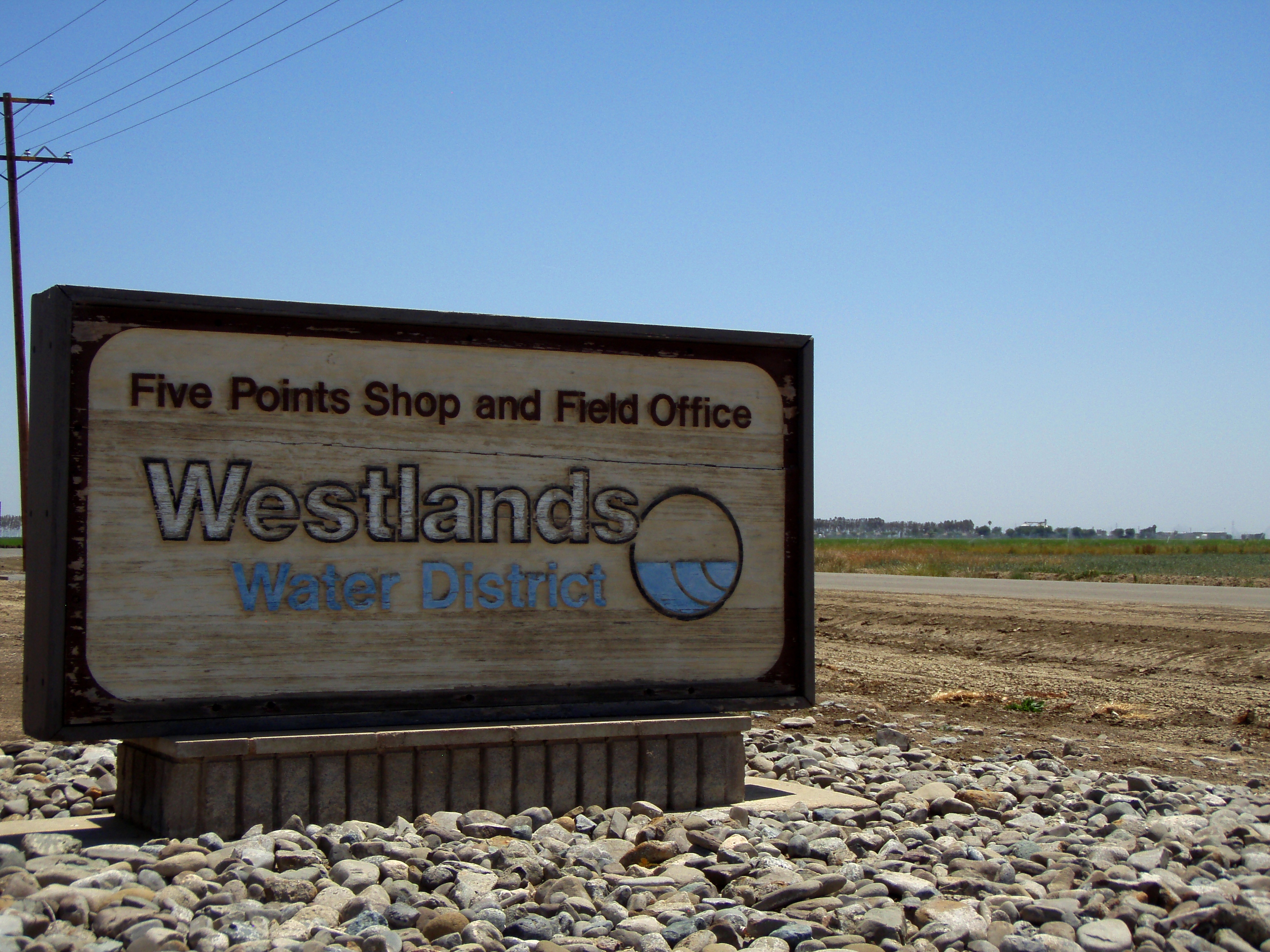
Six outstanding high school seniors from communities on the west side of the San Joaquin Valley have been selected to receive scholarships offered by the Westlands Water District.

The 2014 scholarships are offered by Westlands under a program to recognize and reward exceptional academic achievement and leadership by graduating seniors at area high schools.

The recipients of the 2014 scholarships are:

Jose Arias, a senior at Firebaugh High School. Mr. Arias is an honors student who plans on attending University of California, Davis to pursue a degree in biochemistry and molecular biology.

He was involved in soccer, track and field, and cross country. Additionally, he has received a number of awards including a Certificate of AP Scholar Award, Student of the Month and Certificate of Academic Excellence.

Jorge Santillan, a senior at Mendota High School. Mr. Santillan plans to attend University of California, Santa Barbara to pursue a degree in psychology. He is an honors student and has been an active member of MESA, AVID, Leadership, was President of Lend-A-Hand and an ASB Treasurer. As President of Lend-A-Hand, he helped organize blood drives, food drives and toy drives.

John Desfosses, a senior at Coalinga High School. Mr. Desfosses plans to attend University of California, Berkeley to pursue a degree in history. He is an honors student who was a President and former Vice-President of Fellowship of Christian Athletes and former Vice President and Treasurer of the California Scholarship Federation.

Emma Larson, a senior at Lemoore High School. Ms. Larson plans to attend University of California to pursue a career in agricultural communications. She is an honors student and a member of the California Scholastic Federation. Additionally, she has been an active member of Future Farmers of America holding several leadership positions.

Alexis Garcia, a senior at Tranquillity High School. Mr. Garcia plans to attend University of California, Berkeley to pursue a degree in integrative biology. He is an honors student involved in Future Farmers of America, ASB Leadership and basketball.

Rianne Banuelos, a senior at Riverdale High School. Ms. Banuelos plans to attend Westmont College to pursue a degree in art and English. She is an honors student who was actively involved in Link Crew, Physics Club, Student Government and Leadership Class. Additionally, she has participated in a considerable amount of volunteer work.

Each scholarship recipient will receive $1,000 to be used for community college or university expenses. Applicants were judged on their academic performance, school activities and community leadership. Each applicant submitted an essay on an agricultural-related topic.

“Westlands is honored to provide this assistance for these outstanding student leaders,” said Tom Birmingham, general manager of Westlands. “These scholarships represent a small gesture of thanks and support to the communities on the west side of the San Joaquin Valley that make our region such a productive and vibrant place.”

Cal Ag Today would like to congratulate each of these outstanding students on their achievements and wish them the best of luck on their future endeavors.

2016-05-31T19:35:27-07:00June 11th, 2014|

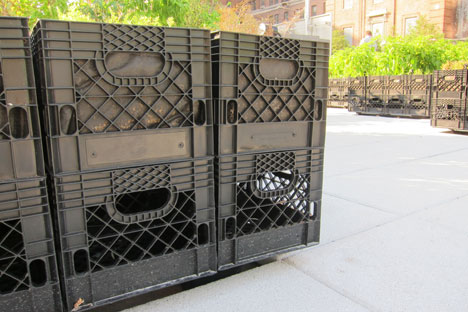
Crystal Creamery of Modesto Launches Campaign Against Theft of Milk Crates

Source: John Holland; Fresno Bee

A Modesto-based dairy company has had enough of milk crate theft, which costs the U.S. industry an estimated $80 million a year.

Crystal Creamery, formerly known as Foster Farms Dairy, is working with law enforcement, grocers and other partners to combat the problem.

They are focusing mainly on large-scale thieves who try to sell the ground-up plastic to recyclers, although it’s also illegal to take a single crate for use as a toolbox or storage container.

“Milk crates have always disappeared, but in the last two or three years, the rate of disappearance is greater,” said Elliot Begoun, vice president of sales and marketing at Crystal.

He said the thefts have increased with the rising value of scrap plastic, which is based in part on the price of the petroleum used to make virgin plastic.

Begoun talked about the problem during an interview Tuesday at the Kansas Avenue headquarters of the company, still owned by the Foster family, which also is in the poultry business.

On a typical day, Crystal trucks haul about 60,000 crates filled with milk, sour cream and cottage cheese to grocery stores and food service customers from Bakersfield to the Oregon border. The drivers are supposed to bring back crates from previous deliveries, but they can be stolen if not secured at the customers’ locations, Begoun said.

Each time that happens, Crystal loses about $4, which is hard to take in an industry with tight profit margins, he said. Nationwide each year about 20 million crates are stolen, according to the International Dairy Foods Association.

Crystal is working with grocers on improved security, as well as with food banks, which sometimes get donations of dairy products in the crates.

The company also approached Stanislaus County Sheriff Adam Christianson. He said Tuesday that the crime is driven mainly by addicts looking for recycling income they can spend on drugs, similar to metal theft.

Christianson said he was surprised that the scrap value of plastic has risen so much. He noted other such commodities that are being stolen, such as used grease from restaurants, which rendering companies buy.

“Milk crates are no different,” the sheriff said. “It’s a material that can be recycled.”

Christianson said he is asking detectives to look into where the stolen crates are being ground up and recycled. They’re molded to include a warning against unauthorized use, and their distinctive appearance makes it hard to sell them intact.

The Institute of Scrap Recycling Industries warns member companies against accepting materials “that are clearly marked as property belonging to an entity other than the seller, such as beer kegs, milk crates and other marked materials.”

Crystal also is asking the public to resist the temptation to take a small number of crates for personal use. Begoun and Larry Diggory, director of food operations at the plant, said they have seen them used in retail displays, on the back of motorcycles and on plumbers’ trucks.

“What we’re trying to do is to create an awareness with the public that it’s theft and it’s a cost of business,” Begoun said.


2016-05-31T19:35:27-07:00June 10th, 2014|

Housing Market Recovery Helps Timber Producers

Source: Steve Adler; Ag Alert

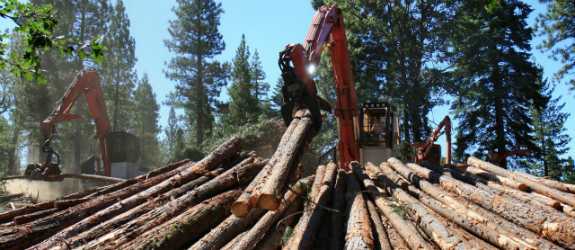
Home construction in California is on the upswing as the housing sector slowly recovers from the dramatic downturn of the recession that saw home prices and new construction plummet.

Going hand in hand with the increase in home building is the demand for lumber for framing, moldings, doors, fences and other uses. California timber producers say they welcome the increased demand for lumber, but are held back by the regulatory climate in the state that cuts into their bottom line.

As a result of added costs and restrictions on timber harvest, California forestry owners say they have difficulty competing with their counterparts in Washington, Oregon and British Columbia who work in a more business-friendly climate.

An estimated two-thirds of the building materials utilized in California comes from the Pacific Northwest and Canada’s westernmost province.

“Lumber production in California has dramatically fallen off from where we were a couple decades ago,” said Mark Pawlicki, director of corporate affairs for Sierra Pacific Industries in Anderson. “We are harvesting around 1.4 billion board-feet of timber now in California, and that is less than half of what it used to be. A lot of the fallout has been because of the reduction in sales of timber in national forests. It is a combination of regulations involved and a philosophical change within the U.S. Forest Service that occurred back the 1990s.”

Timber owner Peter Bradford of Booneville, who serves as board liaison to the California Farm Bureau Federation Forestry Advisory Committee, said the high cost of regulations “adds a substantial amount” to the price of California timber.

“We are very over-regulated when compared to Washington, Oregon or British Columbia,” Bradford said. “There is a lot of material that comes in from Oregon and Washington because the cost to get a harvest plan to log the trees is easier and much less costly than it is here. It is time, paperwork and cost here in California.”

Despite these challenges, timber owners in California say they are more optimistic than they were a few years ago, when the market for timber had decreased significantly.

“Prices right now aren’t the greatest, but they are better than they were five years ago. For some of the redwood that we are selling this summer, we’ve been given a price of around $900 for 1,000 board-feet. Back in the heyday of the late 1990s, we were receiving $1,500 for that same amount of lumber,” Bradford said.

Pawlicki noted that lumber is a cyclical market.

“As everyone knows, housing construction has been way off in recent years, but it has been gradually coming back. We have seen improvements in U.S. housing construction and along with it improvements in lumber pricing,” he said.

There are currently about 30 lumber mills in California, a decline of 80 mills since the 1990s.

“With the downturn that we experienced in lumber demand, a lot of sawmills closed in California and we are roughly in balance now with supply and demand,” Pawlicki said. “As demand goes up, we expect to see some pricing increases for lumber—not dramatic, but nevertheless steady. And that helps us to maintain our industry here in California.”

Producing more lumber in California to meet the state’s demand, he said, would require “some significant changes in the regulatory world.”

“Folks are not too inclined to build a new sawmill in this state with the regulatory environment that we have,” he said.

Another concern is the tight labor supply, particularly for employees who are experienced in timber harvest and millwork.

“Labor is a tremendous issue in the timber industry right now, trying to get people who are able to do the work,” Bradford said. “This is frequently something you are born into and you know how to do it.”

The labor shortage is felt most acutely in the mills, according to Pawlicki.

“We are experiencing some difficulty filling jobs, particularly millwrights and technical folks in our mills. These mills now are very technical and computerized systems for sawing lumber. It requires a different skill-set than what was required in the past,” he said.

The California drought creates concerns for foresters for several reasons, including increased fire danger and a slowdown in tree growth that corresponds to the lack of water for the trees’ root systems.

“The drought stresses the trees and we will see some tree die-off. We are concerned that we may lose a lot of trees to drought—and when that happens, insect infestations occur and that kills even more trees, and this creates an increased concern for catastrophic wildfires,” Pawlicki said.

Bradford said wildfire concerns also build because of the problems that small landowners face in trying to harvest their timber.

“The amount of environmental review that they have to go through to get a timber harvest permit and the cost to get that review done, with the market value of timber now, makes it economically undesirable. As a result, some of these properties are being sold for home sites. With this increased population comes an increase in the fire danger,” he said.

Bradford said he has seen a buildup in understory in the forests—shrubs, bushes and grasses—that has created dangerous fire conditions.

“That is the worst part of it. The other thing, of course, is that without the normal amount of rainfall, the trees won’t grow as fast as usual. But that is something that is pretty hard to measure,” he said.

Despite the ongoing challenges facing the timber business, Pawlicki noted some positive signs.

“We are optimistic that the market is going to improve domestically. We are seeing some improvements in operating conditions in California, and we are seeing some improvements in the legislative and regulatory front that have helped us,” he said.

2016-05-31T19:35:27-07:00June 9th, 2014|

Key Agriculture Component Added to Governor’s Environmental and Economic Leadership Awards

For the first time in the history of the Governor’s Economic and Leadership Awards (GEELA), the category of Agricultural Ecosystem Services has been added for statewide recognition by the California Environmental Protection Agency.

The new category will spotlight the multiple benefits gained from farming and ranching, including innovative and sustainable approaches to water and energy conservation, food crop production efficiency, and management of working lands.

GEELA honors individuals, organizations and businesses that have demonstrated exceptional leadership and achievements in conservation, environmental protection, public-private partnerships, and strengthening the state’s economy.

Applications are due Friday, July 11, 2014 and may be obtained at www.calepa.ca.gov/Awards/GEELA/.

“Ecosystem services are an essential element in farming and ranching,” said CDFA Secretary Karen Ross. “They include waterfowl habitat in rice fields, pollinator support on farms, and the resolute commitment to conservation demonstrated throughout agriculture. I urge our farmers and ranchers to strongly consider this new category.”

More information about ecosystem services may be found at http://www.cdfa.ca.gov/EnvironmentalStewardship/EcosystemServices.html

Established in 1993, GEELA is administered by the California Environmental Protection Agency in collaboration with the Natural Resources Agency; the Department of Food and Agriculture; the State Transportation Agency; the Business, Consumer Services, and Housing Agency; the Labor and Workforce Development Agency; the Health and Human Services Agency; and the Governor’s Office.


2016-05-31T19:35:27-07:00June 9th, 2014|

Merced Irrigation District Growers to Receive Increased Water Supply

Merced Irrigation District officials say growers in the district will receive additional surface water, after action taken Tuesday by MID’s board of directors.

The increased water supply is the direct result of regulatory relief MID received from the state after months of planning a multibenefit water management action for the Merced River, according to a press release from Mike Jensen, MID spokesman.

MID growers were most recently expecting 0.9 acre-feet of surface water supply this growing season. However, MID officials noted increased water supply would be available, and recommended increasing the allocation to 1.1 acre-feet of water per acre.

Class II growers will receive 0.55 acre-feet after Tuesday’s MID board action. Deliveries are expected to continue until Sept. 7, according to Jensen.

“This year still remains among the most challenging we have ever seen,” MID General Manager John Sweigard said in the release. “Nevertheless, we are extremely pleased there was some surface water supply relief for our growers.”

Additionally, the board voted to decrease the in-season agricultural water rate for growers from $100.67 per acre-foot to $75 per acre-foot. The new rate is retroactive and applicable to all surface-water use for the 2014 irrigation season.

The reduction in the 2014 water rates comes after MID growers recently approved a rate increase to $100 per acre-foot, ensuring the financial health of MID during the drought crisis. Since that time, MID implemented the multibenefit water management action for the Merced River after months of planning and receiving final approvals from the state.

It involved obtaining 25,000 additional acre-feet of water from Lake McClure for growers, and providing 5,000 acre-feet of water for a critical-year spring fish-flow in the Merced River. The spring fish-flow water was transferred to other water users after it served its environmental purpose in the river system. MID received $5 million in revenue to help the district recover lost revenue associated with the drought.

In addition to the surface water supply from Lake McClure, MID is again implementing its Supplemental Water Supply Pool Program. Growers have already elected to receive additional water that is made available from conjunctive groundwater pumping. The district expects to provide approximately 28,000 acre-feet of water through the program this year, the release said.

MID began deliveries April 21.

Facing a third dry year with unprecedented drought conditions, the board of directors earlier this year enacted penalties for any water theft this season. For a first offense, a grower will be fined $1,000 and be charged $500 for each acre-foot used. For a second offense, the grower would receive the same fines and penalties while losing access to MID water this year.


2016-05-31T19:35:28-07:00June 6th, 2014|

Turlock Irrigation District Will Rehab Reservoir

Source: John Holland

The board of the Turlock Irrigation District voted 5-0 Tuesday to fix up a small, abandoned reservoir near Hilmar to conserve canal water.

The $2.34 million project will catch water from the Highline Canal that now is released into the Merced River when flows are unexpectedly high. The water will go into Laterals 7 and 8, which serve farmland near the south end of TID’s territory.

A staff report said the project will save an average of 2,550 acre-feet of water per year, and a future expansion could boost that to about 9,000. TID delivers close to 360,000 acre-feet in a normal year throughout its service area, but the drought has cut 2014 supplies roughly in half.

The district, which gets its water from the Tuolumne River and wells, also faces a long-term reduction in the river supply because of state and federal efforts to protect fish.

The project is scheduled to be completed by the start of the 2015 irrigation season. The board also approved spending $960,000 on automated gates that will make flows on Lateral 8 more consistent.

The reservoir site is owned by the Hilmar County Water District, which provides water and sewer service to the town of Hilmar. The TID board appointed General Manager Casey Hashimoto to negotiate the purchase of the property.

Modesto Irrigation District, which also draws from the Tuolumne, also has been looking at building small reservoirs to catch canal water that now ends up in natural streams.


2016-05-31T19:35:28-07:00June 6th, 2014|

Borlaug CAST Communication Award — UC Davis College of Agricultural and Environmental Sciences

Source: Patricia Bailey

Photo Credit: John Stumbos

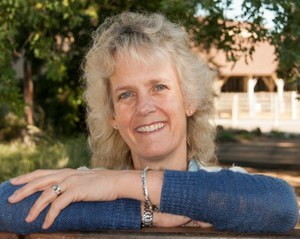
The Council for Agricultural Science and Technology (CAST) has announced that Alison Van Eenennaam, a geneticist and Cooperative Extension specialist in animal genomics and biotechnology at the University of California, Davis, is the recipient of its 2014 Borlaug CAST Communication Award.

Announcement of the award, which will be presented to Van Eenennaam on Oct. 15 along with the World Food Prize Symposium in Iowa, was made at the World Bank in Washington, D.C.

Established in 1986 and named after Nobel laureate Norman Borlaug, the award is presented to a food or agricultural scientist who is actively engaged in research; has made significant contributions to science; and communicates the importance of food and agricultural science to the public, policymakers and the news media.

Van Eenennaam’s research and extension program in UC Davis’ Department of Animal Science is focused on developing science-based educational materials about the uses of animal genomics and biotechnology in livestock production systems.

She has served on advisory committees in the U.S. Department of Agriculture and the U.S. Food and Drug Administration to provide expert counsel on animal biotechnology.

Van Eenennaam is a passionate advocate for science and frequently speaks about agricultural technology to the public and policymakers, both nationally and internationally. She frequently provides science-based commentary to the media on sometimes-controversial topics, including genetic engineering and cloning. She also works to increase public understanding of agricultural biotechnology, using a variety of media, including YouTube videos.

2016-05-31T19:35:28-07:00June 5th, 2014|

Water Finally Reaching Growers in Fresno Irrigation District

In a normal year, farmers would see water delivered for six months in the Fresno Irrigation District. This year, they’re getting a fraction of that but that still beats the zero allocation some growers are getting.

The almonds are developing nicely in Mitch Sangha‘s Fresno County orchard. He has been putting his old well to the test since winter — pumping groundwater because the drought has severely reduced water deliveries. But this past weekend, the water finally flowed as the Fresno Irrigation District began a six-week-long delivery.

“It’s going to help us a lot. Hopefully it will recharge the underground and hopefully we can shut our pumps off and let the water table build back up,” said Sangha.

“It’s a large district. Its 245,000 acres,” said Fresno Irrigation District General Manager Gary Serrato

He says 4,000 growers now have access to the much needed water.

“The thought is that by starting up in June because there are wells going dry and groundwater tables are dropping that it buys them time as well,” said Serrato.

Sangha says he’ll take whatever water he can get. The constant groundwater pumping impacts homes which rely on the same underground aquifer.

“Our domestic pump on this rental house is only 60 feet so when I turn this pump on that runs out of water,” said Sangha.

“There’s been a lot of pressure on our groundwater this year, and we’ve seen historical drops like we’ve never seen before,” said Serrato.

Sangha says the delivery will help bring his almonds into production and will help raisin growers get through a critical period. Still, some farmers rely solely on the water deliveries and don’t have underground wells to pump groundwater.

Serrato says this is the third driest year on record. Only the droughts of 1976-77 and 1932-33 were worse.

2016-05-31T19:35:28-07:00June 5th, 2014|
Go to Top