Legislation would help manage forests, prevent wildfire

By: Rayne Pegg and Erin Huston; Ag Alert

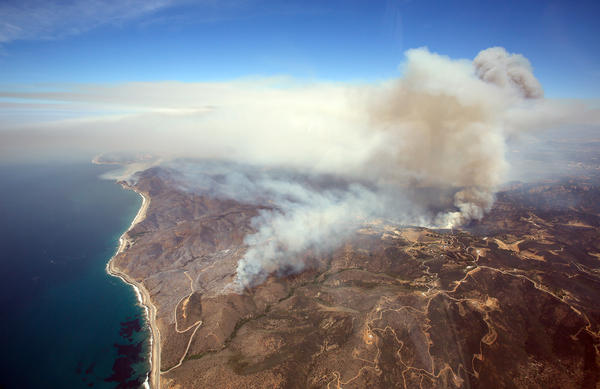
Last year’s Rim Fire, California’s third-largest fire, understandably garnered a lot of media attention. More than 250,000 acres burned, private property was lost and significant water resources were placed at risk of impairment.

As we enter the 2014 fire season after a winter of significant drought, it is timely to reflect on the series of events that place California at risk of extreme wildfire. It is also important to remember how costly the devastation from just one fire can be. Individually, the Rim Fire cost $130 million to suppress—and this does not include the damage to rural communities, the environment or economic activities that rely on the forest.

California has already experienced numerous fires this season and the outlook for 2014 shows significant wildland fire potential. Fires are historically common in California and can actually prompt a regrowth process for several species. However, we’ve reached a point where fires burn hotter and more frequently than ever. Fires of this intensity and size threaten our rural communities, environment, water supplies, and federal and state budgets.

Devastating wildfires represent a cost associated with not managing our forests. Fires that once burned every 10 to 15 years, naturally, allowed for new tree and vegetation growth and the release of regenerating seed. However, today’s fires are less frequent, cover larger acreage, burn hotter and pose a greater risk to life and property.

Forest management on federal lands to reduce dead trees, thin densely grown areas and remove brush is significantly backlogged and commonly subject to nonsensical litigation, resulting in overgrown tree canopies, increased presence of disease and diminished wildlife habitat. This backlog and inability to properly manage our forests results in a series of destructive wildfire seasons.

Just as homeowners maintain their private gardens to manage overgrowth, weeds and dead plants so healthy plants can thrive, our forests need to be managed. But timber harvesting and thinning of trees have become fraught with litigation, which has left forestland to become overgrown with trees and underbrush, making it perfect habitat for forest fires.

Timber harvesting is often depicted as clear cutting that results in our lush forests looking like vacant lots. But most forestry in California consists of selective harvest, limited to younger trees within a range of height and width. Older-growth trees are left to grow and stabilize the soil, while dry brush and dead trees are cleared from the forest floor. Thinning out only selected trees and clearing the forest floor of dead brush creates spacing for new, beneficial vegetation and reduces overgrown brush and dry vegetation.

We also need to recognize that rural towns rely on foresting jobs to survive. Though growing marijuana is becoming popular in these areas, the money generated from that activity does not stay in the community and support local schools, public services or roads.

Because not enough money has been set aside in the federal budget to fight wildfires, money for forest-management activities ends up being robbed. Here’s how: The U.S. Forest Service and the Department of the Interior are the two federal entities responsible for wildfire suppression. Suppression funding levels are based on the 10-year average of suppression costs; currently, that’s not enough to provide the necessary level for suppression activities nationwide. When suppression funding runs out, which happens regularly, both the USFS and DOI have the authority to transfer funds from within their budgets to make up for shortfalls. So money is usually taken away from non-suppression programs, including land management programs that decrease long-term wildfire risk and costs.

In the last two years, more than $1 billion was taken from 2013 and 2014 appropriations bills to repay the transfers from 2012 and 2013. It is estimated that the fiscal year 2014 wildfire season suppression is underfunded by $470 million, which will likely lead to another round of transfers that will again short-change forest management and other programs.

For this reason, the California Farm Bureau Federation is a member of the Partner Caucus on Fire Suppression Funding Solutions, a diverse coalition working to pass legislation known as the Wildfire Disaster Funding Act. The WDFA would change the approach to funding wildfire suppression by developing a wildfire emergency funding process for a portion of USFS and DOI suppression activities similar to funds for other natural disasters such as hurricanes, floods and tornadoes.

The legislation would treat catastrophic wildfires as the “predictable” emergencies that they are and provide a more reliable funding structure that does not harm land management and wildfire risk-reduction activities. In the rare case it should become necessary, USFS and DOI would retain their financial transfer authorities.

We must plan for catastrophic wildfires and manage our forests. Rather than relying on annual emergency appropriations to suppress fires we expect, this legislation provides a consistent, predictable funding stream that protects critical forest management activities that benefit the California economy and our forests.

2016-05-31T19:34:17-07:00July 14th, 2014|

Climate Change: Register now for the first California Adaptation Forum

The consensus is overwhelming: our climate is changing. According to NASA’s Global Climate Change website, “97% of climate scientists agree that climate-warming trends over the past century are very likely due to human activities, and most of the leading scientific organizations worldwide have issued public statements endorsing this position.”

Adapting to climate change is critical at all levels of our economy, including ensuring a secure food supply in the future.

For the first time, the Local Government Commission in partnership with the State of California will be holding the California Adaptation Forum. The two-day event is designed to engage a diverse mix of attendees to create a comprehensive network with a shared, strong commitment to addressing climate risks. It will be held in Sacramento on August 19-20, 2014.

Registration for the forum is now open with early registration rates ending on July 18th, 2014. This event is very timely and builds off last year’s successful National Adaptation Forum.

The event will include agriculture/food-focused sessions such as:

  • How Local Food System Planning Can Create More Resilient Communities
  • The Role of California Rangelands in Adapting to Climate Change
  • Reclaiming Energy: Farms, Forests and Waste Streams

CDFA has engaged growers on identifying potential adaptation measures, which are highlighted in the Climate Change Consortium Final Report. The California Adaptation Forum will continue this discussion in a highly useful way, for the benefit of our children and future generations that will call California home.

2016-05-31T19:34:17-07:00July 11th, 2014|

Governor Brown Signs Bill Allowing Wine Tasting at Farmers’ Markets

By David Siders; The Sacramento Bee

Californians can start sipping wine at farmers markets. Immediately.

Gov. Jerry Brown announced he has signed an urgency measure allowing winegrowers who bottle their own wine to conduct instructional tastings at California’s numerous farmers markets. Assembly Bill 2488, by Assemblyman Marc Levine, D-San Rafael, was approved by both houses of the Legislature without dissent.

The bill expands a provision of state law allowing the sale of estate-grown wine at farmers markets. Wine industry groups said the inability to offer samples hurt sales in an industry in which customers are accustomed to a taste.

Brown, a Democrat, signed the legislation without comment. It was one of 10 bills the governor announced signing Tuesday.

The measure requires wine tasting areas to be separated from the rest of the farmers market by a rope or other barrier, and it limits tastings to three ounces per patron per day.

Proponents of the bill said it would help small wineries build their brand. Opponents, including the California Council on Alcohol Problems, opposed the measure, according to a legislative analysis.

2016-05-31T19:34:18-07:00July 11th, 2014|

Several Key Industry Associations Urge Immigration Reform

The U.S. Chamber of Commerce yesterday urged Congress and the Administration to work together to enact immigration reform in order to drive job creation and economic growth.

The call came as part of the national ‘Day of Action’, which included events in Washington D.C. along with 25 other states.

Several key agricultural and economic industry groups also supported the proposal, including the Western Growers Association, Partnership for a New American Economy, American Farm Bureau Federation and AmericanHort.

The national press conference in the U.S. capital featured leading business association CEOs discussing the critical need for new legislation.

There was also a range of coordinated events throughout the country with state farm bureaus, local businesses and state representatives which aimed to show immigration laws in the business community needed to be modernized across industries, sectors and geographies.

In a release, U.S. Chamber of Commerce president and CEO Thomas J. Donohue said he strongly believed improvements were needed and he would continue to make the case for them.

“While our lawmakers are deadlocked on this issue, business leaders are more determined than ever to fix our immigration system,” Donohue said.

“We need meaningful immigration reform to revitalize our economy and to remain a nation ruled by law, guided by principle, and driven by compassion and common sense.

“We’re going to continue to make the case in the nation’s capital and in every corner of this country, and will use every tool and resource at our disposal. We’re not going to let up until the job gets done.”

Western Growers president and CEO Tom Nassif echoed Donohue’s remarks, adding many currently unauthorized immigrant workers were vital for the agricultural industry.

“The effect of inaction on immigration reform is devastating to the fresh produce industry and consumers. We rely on people to plant and harvest the nutritious and domestic supply of food for Americans and for export,” Nassif said.

“Many of these workers are unauthorized, but are willing and able to do the work. It’s been demonstrated many times that Americans won’t work in the fields, so why won’t our elected officials provide us the means to have a legal, reliable workforce?

If no solution is provided, production will continue to move overseas along with the jobs agriculture supports in rural communities across America.”

American Farm Bureau Federation president Bob Stallman also said the current laws were outdated and changes were needed for both farmers and the economy.

“As a nation, we can’t afford to continue with an immigration system we’ve long outgrown and is working more and more against our overall national interest,” he said.

“We urge Congress and the Administration to work together and with us to achieve real immigration reform that addresses the needs of farmers, the economy, as well as the country’s need for border security.”

2016-05-31T19:34:18-07:00July 10th, 2014|

USDA Reminds Producers of 2014 Acreage Reporting Requirement

U.S. Department of Agriculture (USDA) California Farm Service Agency (FSA) Executive Director Val Dolcini reminds agricultural producers that July 15, 2014, is the deadline to file an acreage report for spring seeded crops. Planted acres must be reported to FSA by July 15, 2014. The Agricultural Act of 2014 (2014 Farm Bill) requires producers on a farm to submit annual acreage reports on all cropland.

“Although some federal farm program enrollments have not yet started, timely acreage reports for all crops and land uses, including prevented and failed acreage that producers submit to their local FSA office, are important to ensure program eligibility,” said Dolcini.

Acreage reports to FSA are considered timely filed when completed by the applicable final crop reporting deadline, which may vary from state to state. Perennial forage crops intended for grazing or haying were required to be reported last fall, whereas perennial forage crops with an intended use of cover only, green manure, left standing, or seed, must be reported by July 15.

Although July 15 is the most common deadline to report acreage for spring seeded crops, this date may be different in locations with climates that are warmer or cooler than average. Producers should contact their county FSA office if they are uncertain about acreage reporting deadlines.

Dolcini said that failed acreage must be reported before the disposition of the crop and that prevented acreage must be reported within 15 calendar days after the final planting date for the applicable crop.

For questions on this or any FSA program, including specific crop reporting deadlines and planting dates, producers should contact their county FSA office or seek information online at www.fsa.usda.gov.

2016-05-31T19:34:18-07:00July 10th, 2014|

Yolo Food Bank Receives Grant from National Dairy Council

Source: Woodland Daily Democrat

Yolo Food Bank announced that it has been awarded a $10,000 grant from the National Dairy Council to increase dairy capacity for the Food Bank’s partners.

This grant was awarded to 20 food banks, nationally, with Yolo being the only California food bank to receive it, according to the Yolo Food Bank.

The Food Bank plans to use these funds to purchase refrigerators for some of its partner agencies.

“We would like to thank both the National Dairy Council and the Dairy Council of California for this generous grant,” said Karen Strach, director of programs at Yolo Food Bank. “A number of our partners have limited or no access to refrigeration and therefore are unable to distribute dairy products to their clients. This grant will allow us to increase the number of food pantries that will be able to provide dairy products to local residents.”

Between May 2013 and April 2014, Yolo Food Bank distributed 117,000 pounds of dairy products. It is anticipated that this grant will increase the amount of dairy products that the partner agencies are able to distribute by approximately 5,800 pounds each year.

The mission of Yolo Food Bank is to alleviate hunger and malnutrition in Yolo County. Through its programs and partnerships with 60 nonprofit partner agencies, approximately 23,000 residents are served each month.

Established in 1915, NDC comprises a staff of registered dietitians and nutrition research and communications experts across the country. NDC has taken a leadership role in promoting child health and wellness through programs such as Fuel Up to Play 60.

Developed by NDC and the National Football League (NFL), Fuel Up to Play 60 encourages youth to consume nutrient-rich foods and achieve at least 60 minutes of physical activity every day. – See more at: http://www.nationaldairycouncil.org/AboutNDC/Pages/AboutNDCLanding.aspx#sthash.628ntxdh.dpuf

2016-05-31T19:34:18-07:00July 10th, 2014|

The State Water Board to Consider Proposed Emergency Water Conservation Regulations

On January 17 Governor Edmund G. Brown Jr. issued a drought emergency proclamation following three dry or critically dry years in California. Extreme drought now covers nearly 80 percent of the state and these conditions will likely continue into the foreseeable future.

More than 400,000 acres of farmland are expected to be fallowed, thousands of people may be out of work, communities risk running out of drinking water and fish and wildlife species are in jeopardy. Many communities are down to 50 gallons a day or less per person for basic sanitation needs. With our inability to predict the effect of the next rainy season, water saved today can improve a region’s water security and add flexibility to systems that may need to withstand another year or more with precipitation below average.

In a survey conducted by the State Water Board in June, while many communities have significantly reduced their water demand over time, it is clear that more can  be done.

Conservation Actions Needed

Because of these dire conditions and the need to conserve more, the State Water Resources Control Board (State Water Board) is proposing that individuals and water agencies take necessary steps to conserve water supplies both for this year and into 2015, and is recommending that individuals and water agencies do even more voluntarily to manage our precious water resources.

Most Californians use more water outdoors than indoors. In some areas, 50 percent or more of our daily water use is for lawns and outdoor landscaping. Some urban communities have been investing in conservation, particularly indoors, for years, but reducing the amount of water used outdoors can make the biggest difference of all.

Temporary Water Restrictions

To promote water conservation statewide, the emergency regulations would prohibit each of the following, except in case of health or safety needs or to comply with a term or condition in a permit issued by a state or federal agency:

  • The direct application of water to any hard surface for washing
  • Watering of outdoor landscapes that cause runoff to adjacent property, non-irrigated areas, private and public walkways, roadways, parking lots or structures
  • Using a hose to wash an automobile, unless the hose is fitted with a sit-off nozzle
  • Using potable water in a fountain or decorative water feature, unless the water is recirculated

Action by Urban Water Suppliers Required

To reduce water demand, the regulations would require urban water suppliers to implement their Water Shortage Contingency Plans at a level that triggers mandatory restrictions on outdoor water use. Almost all urban water suppliers (those with more than 3,000 water connections) have these plans; about 40 of these larger agencies do not.

Water supplier serving fewer than 3,000 connections must also, within 30 days, require customers to limit outdoor irrigation to no more than two days per week or implement another mandatory conservation measure to achieve a comparable reduction in water consumption by the people it serves relative to the amount consumed in 2013.

2016-05-31T19:34:19-07:00July 9th, 2014|

Metropolitan Water District Brings California to Life to Deliver Water-Saving Message in Response to Drought

California comes to life in a series of television advertisements by the Metropolitan Water District that began airing today on stations throughout the Southland promoting the need to protect the state and its future by saving water during the historic, ongoing drought.

Scheduled to run over the next 12 weeks, the 30-second television spots personifying California are the latest additions to Metropolitan’s multi-pronged public outreach and advertising campaign created in cooperation with the district’s 26 member public agencies.

The comprehensive campaign includes the 30-second television spots, 60-second radio advertisements and traffic report sponsorship, as well as online and mobile ads throughout the district’s six-county service area through Oct. 30.

“We’re building a broad outreach campaign that reinforces to Southern Californians just how serious the drought is,” said Metropolitan General Manager Jeffrey Kightlinger.

“Southland consumers and businesses have certainly made significant improvements in using water more efficiently over the past 20 years, for which we thank them. This drought, however, compels all of us to take water conservation to the next level by incorporating permanent changes to ensure we use water—particularly outdoors, where up to 70 percent of water is used,” Kightlinger said.

Dubbed the “Don’t Waste Another Minute Wasting Water” campaign, the television ads will air on Los Angeles and San Diego area stations through Sept. 28. The spots join radio advertisements and traffic report sponsorships on English, Spanish, Mandarin, Cantonese, Vietnamese and Korean stations.

The two new television spots present California as a golden-colored, full-bodied mascot in the shape of the state. In one spot, she’s dismayed and discouraged as people waste water in and around their homes before easy and practical water-saving practices are embraced, showing love for California. The second ad features a man proclaiming all he’s prepared to do to save water and save his relationship with California.

“This campaign taps into people’s love for California and our lifestyle,” said Renee Fraser, chief executive officer of Fraser Communications, which created the campaign for Metropolitan.

“Knowing that people are already conserving, we found a way to move people into a higher level of conserving, like replacing a section of their lawn with California Friendly® plants,” Fraser added. “This campaign promotes the idea of being California Friendly as a way of life.”

The ad buy is part of $5.5 million authorized by Metropolitan’s Board of Directors in March for a regional communications, outreach and advertising campaign aimed at promoting greater water awareness and encouraging additional conservation.

Along with the television and radio spots, Metropolitan’s water-saving message will be the focus of specialized “Water Wise Wednesdays” segments offering conservation tips on television and radio stations as well as on-line advertising. The campaign also will feature focused billboard and movie theater advertising.

In addition, in a parallel education effort, Metropolitan will use the tagline “Water is Serious Business” to deliver more complex messages, using long-form formats to delve into related water reliability issues.

More information on water-saving tips and rebates for conservation devices is available at www.bewaterwise.com

2016-09-13T14:14:58-07:00July 8th, 2014|

Modesto Strives to Get Water Customers to Conserve

By Kevin Valine; The Modesto Bee

Modesto is asking everyone to conserve water as the state bakes under a third straight year of drought.

And in case folks have not gotten the message, the city is helping them. Since May, three city employees have been making sure the city’s roughly 77,000 water customers follow water restrictions, such as not watering lawns or washing cars from noon to 7 p.m.

The employees drive throughout the city, and surrounding communities served by Modesto, responding to complaints about water wasters, canvassing neighborhoods to check for compliance and investigating when they spot something suspicious, such as water from a broken sprinkler flooding a gutter.

The three issued 536 notices of violation June 1 to 24. The number of violations issued in May was not available.

City officials emphasized that the effort is not punitive, but focused on education and getting customers to comply. There is no fine for the first violation. A second violation can result in a $50 fine; a third violation is $200; a fourth violation is $250. City officials say they have not issued any fines, but may issue a $50 fine to an apartment complex.

“We want to make sure people adhere to the rules and hopefully reduce their water use,” Water Systems Manager Dave Savidge said.

On a recent weekday, Water Conservation Specialist Juan Tejeda checked in with a woman who had complained that her neighbors had partially flooded her backyard because they had left their sprinklers on overnight.

Karen Brown said this was not the first time her west Modesto neighbors had flooded her yard. She said she has tried to talk with them, but to no avail. Tejeda spoke with Brown and took pictures of the standing water in her backyard before knocking on the neighbors’ door. The woman who answered said it was a mistake and would not happen again.

Tejeda issued her a notice of violation and gave her information about Modesto’s water restrictions.

In some cases, Tejeda will turn off the water to the irrigation system of the home or business if he can’t make contact with the offender. He also will leave a notice for the home or business to call the city to resolve the violation and get the water restored.

His other stops that day included checking with the residents of two homes to see if they had corrected problems that had resulted in violating the city’s water restrictions. One problem was a broken sprinkler, and the other a sprinkler system set to water on the wrong day.

Tejeda said his job often involves letting homeowners, shopping centers and apartment complexes know their sprinkler systems have been set to water on the wrong day or are malfunctioning. “We know there are a lot of people in Modesto who care about conservation and we want to thank them for that,” he said.

Modesto is feeling the effects of the drought. It gets a significant amount of its water from the Modesto Irrigation District, with the rest coming from its roughly 100 wells. In early May, MID cut its annual water allocation to the city by 43 percent, which is the same reduction MID imposed on its other customers. MID gets its water from the Tuolumne River.

Modesto had been getting on average 30 million gallons of water per day from MID. It’s now getting on average 17 million gallons per day. Modesto used about 59 million gallons of water per day on average for 2013. Daily water use for the first six months of this year averaged 48 million gallons. But Modesto is heading into its peak season for water use.

Savidge said he believes the city can go until May, when MID sets its next annual water allocation, without imposing further water restrictions. But he expects the city to impose more restrictions if the drought continues into a fourth year.

The city has been under stage 1 water restrictions from its drought contingency plan since 2003. They call for reducing water use 10 percent to 20 percent and include such measures as limiting the days and times when residents can water their lawns. City officials have said water use has dropped 20 percent since 2003.

Savidge said the reduction has come about through conservation efforts; replacing older, leaking water mains with new ones; and getting more residential customers on water meters. He said about three-quarters of the city’s residential users are on meters and the city expects to be at 100 percent by 2022. Commercial water users are on meters.

The city’s stage 2 water restrictions call for reducing water use by as much as 15 percent more.

More about the stage 1 restrictions, water conservation tips, information about rebates for the purchase of high-efficiency toilets and clothes washers, and other resources is available at www.ci.modesto.ca.us/pwd/water/conservation. Customers can call (209) 342-2246 to report water restriction violations.

2016-05-31T19:34:19-07:00July 8th, 2014|

California water bond: The burning questions

Source: Jeremy B. White; The Sacramento Bee

Having passed an on-time budget and concluded their committee hearings, California lawmakers have escaped Sacramento for a few weeks and retired to their districts for a July recess. When they return, much of the remaining legislative session will be devoted to trying to get a new water bond on the November ballot.

Water policy remains one of the most complex and potent topics to engulf the state Capitol. Here are some answers to the key questions in the water bond debate:

What happened to the other water bond they passed?

In the dwindling days of the 2009 legislative session, lawmakers and then-Gov. Arnold Schwarzenegger compromised on an $11.1 billion bond offering. That bond has been delayed twice and is now scheduled for the November 2014 ballot.

But the general Sacramento consensus now holds that the $11.1 billion bond is a goner: too large and too full of specific allocations redolent of pork. Gov. Jerry Brown has told lawmakers he is concerned about the 2009 proposal passing muster, and lawmakers argue it would be dead on arrival.

So what are they doing instead?

Even if they don’t like the existing bond proposal, many lawmakers still want something on the ballot. A historically intense drought can be a big motivator.

Several lawmakers have floated proposals for a new bond. Only one has made it as far as a floor vote. That measure, a $10.5 billion proposal by Sen. Lois Wolk, D-Davis, could not garner enough votes to get out of the Senate. On the day lawmakers adjourned for recess, senators announced a diminished $7.5 billion proposal.

Assembly members are hammering out their own compromise measure. They were close to introducing one earlier last week but had to go back to the drawing board. It now looks more likely they will unveil a pact once legislators return from summer recess.

What does the governor think?

For much of this year Brown declined to weigh in on a water bond. But he finally broke that silence recently and has begun meeting with lawmakers. Since the governor would need to sign any new bond, his opinion matters.

In keeping with his image as California’s responsible fiscal steward – a reputation he would like to burnish in an election year – Brown has advocated a bond that is smaller than both the $11.1 billion measure and the alternative bonds lawmakers are floating. These numbers are more starting points for negotiations than hard ceilings, but Brown suggested a bond worth $6 billion overall, with $2 billion for storage.

Surface Storage? What does that mean?

The term “surface storage” generally refers to big projects like dams and reservoirs. If California has more places to stash water in wet years, the thinking goes, it will be better equipped to survive the dry stretches. But storage could also encompass money to replenish or clean up supplies of groundwater, which California relies on more heavily in dry years.

Determining where storage dollars might go spurs fierce disputes over what types of projects could be eligible. Since all taxpayers are subsidizing them, bond-funded storage projects must carry broad public benefits.

Defining those benefits can be a problem. Bonds that list recreation as a benefit, for example, are a red flag for dam-averse environmentalists. As they note, you can’t take a boat out on groundwater.

Will a bond help with the drought?

One thing lawmakers can’t do is create more water. If rain is scarce and the Sierra snowpack is diminished, that means there’s less to go around. If big storage projects are advanced, it would still take years for construction to finish and yield results.

Other money could bolster access to drinking water. Proposals would offer grants to treat drinking water contaminated with nitrates or other chemicals, money for recycling and reusing wastewater, funding to repair water infrastructure in disadvantaged communities and support for capturing more stormwater.

What about the Delta tunnels? Will a bond pay for those?

This is a tricky one. Understanding the answer requires a brief explanation of the so-called “co-equal goals” of Brown’s Bay Delta Conservation Plan.

The centerpiece of Brown’s legacy water project would be a pair of massive water tunnels capable of funneling water to southern parts of the state without needing it to flow through the Delta. It’s very controversial. But the project isn’t just tunnels. It would also need to pay for sweeping environmental restoration to help the Delta’s teeming habitat, what’s known as “mitigation.”

That imperative of spending money on Delta habitat is affecting the water bond debate. None of the bonds would allocate money to build the tunnels. But they all offer money for the Delta. Senate President Pro Darrell Steinberg, D-Sacramento, and others point to polling suggesting that any bond that is not “BDCP-neutral” will rally the opposition and falter before voters. Brown also believes a bond must be divorced from the tunnels.

Would a bond with money for the Delta ecosystem help Brown build the tunnels? Depends who you ask. For now, Delta advocates and environmentalists believe Wolk’s bond is the most tunnel-neutral option. But some observers believe that Delta plan skeptics could frame any bond with Delta money as a boon to Brown’s tunnel dreams and hurt its chances for passage.

Are special interests involved?

Assuredly. With billions of dollars at stake, various interest groups have been making their priorities known to lawmakers. That includes environmentalists, agricultural interests, organizations like the Alliance of California Water Agencies, major urban water agencies like the Metropolitan Water District and prominent agricultural water providers like the Westlands Water District.

For the environmentalists, a key point of contention is what sort of projects a bond could fund. They don’t want to see preference given to new large-scale reservoirs, expressing skepticism that the new dams would be cost-effective and warning about environmental degradation.

Most pressing for many water districts and agencies is more money for storage. Their customers are thirsty, something they hope a bond can address. Since Brown’s tunnels have become bound up with the bond conversation, it’s worth noting that significant support for the Delta tunnels comes from exporters that would like to see a steadier flow of water.

When is the deadline?

The statutory deadline to get a new water bond on the ballot has come and gone (it was June 26). The Legislature can still waive various laws to put something before voters in November.

But elections are complex undertakings, and the civic machinery has already started whirring. The secretary of state’s office has begun assembling the voter guides that must go on public display by July 22 before being printed and mailed to voters. County election officials typically start ordering ballots to be printed in August. Those ballots have to be translated into nine other languages.

Lawmakers have options. Administrators are already allotting space for the $11.1 billion bond, so swapping out that language for a new bond would be simpler. If lawmakers take too long striking a new bond deal, they could end up having to print a second, separate voter guide. That would cost more money, potentially millions of dollars.

So the short answer is: there is no immutable deadline. But the longer lawmakers take, the more complicated and expensive it gets.

2016-05-31T19:34:19-07:00July 7th, 2014|
Go to Top