Inspections Underway in Central Valley for Huanglongbing, Asian Citrus Psyllid

On Alert for the Asian Citrus Psyllid


Source: Robert Rodriguez; The Fresno Bee


Armed with magnifying glasses and bug-sucking aspirators, state agriculture technicians are in Fresno, checking residential citrus trees for any signs of the Asian citrus psyllid and the tree-killing disease it can carry.

The psyllid poses one of the greatest threats to California’s nearly $2 billion citrus industry and officials want to keep it from gaining a foothold in the central San Joaquin Valley.

Inspectors will spend several weeks in the Fresno area and then move into Tulare County — the largest citrus producer in the state.

“We don’t want this disease here,” said Cora Barrera, a state technician. “It would be a disaster.”

Barrera recently checked several trees at a home near Fresno Pacific University in southeast Fresno. Using her magnifying glass, she looked for tell-tale signs on the tree’s leaves: dull orange-yellow nymphs and the waxy tubules that push honeydew away from their body. She also looked for adult psyllids that are about 1/8 of an inch and brownish.

When Barrera finds a psyllid, she catches the insect using an aspirator and drops it into a glass tube. Any bugs caught will be tested for the disease.

A team of about six state technicians, including Barrera, will visit thousands of homes in the city.

Jennifer Romero, an environmental scientist with the California Department of Food and Agriculture, said that so far no psyllids have been found nor any sign of the disease they carry, huanglongbing, also known as citrus greening.

Citrus farmers fear the disease because there is no known cure. Infected trees produce bitter-tasting fruit and eventually die. In Florida, the nation’s orange juice capital, the disease has caused $1.3 billion in lost revenue over the past several years.

So far, the disease has only been found in one residential tree in the Hacienda Heights area of Southern California. But the psyllids have spread throughout the region, and a massive quarantine prohibits the movement of citrus fruit and trees out of the area.

Despite the regulatory net, the bug has hitchhiked its way to the Valley, having been caught in insect traps in Fresno and Tulare counties. To keep the psyllid in check, farmers have sprayed their groves and the state has treated residential trees where the psyllids have been caught.

A quarantine also has been put in place that covers 870 square miles of the Valley’s citrus belt.

But all that still isn’t enough, experts say. One key lesson learned from Florida’s losing battle with the disease is early detection and prevention.

Door-to-door residential inspections have been used in Southern California since the discovery of the disease in 2012.

Using a method developed by U.S. Department of Agriculture scientist Tim Gottwald, the survey targets specific areas with potential risk factors. The factors are many, but include proximity to commercial citrus groves, roads used by trucks transporting citrus and flea markets.

Experts say citrus trees at flea markets and swap meets are sold without the benefit of government inspection and should be avoided.

So far, the state’s inspectors have surveyed more than 1,000 homes in Fresno and hundreds more remain.

Romero said fortunately for the inspectors most residents don’t mind the visits.

“We really have not had any problems and it helps that people are aware of the disease,” she said. “They also don’t want to lose their own trees.”

If the resident isn’t home, the state will leave an information sheet about the bug and disease and information for setting up a future home visit.

Gene Hannon, entomologist with the Fresno County Department of Agriculture, urged owners of citrus trees to be vigilant about checking their own trees. He also said that people should avoid bringing home any citrus from the Southern California area; buying citrus trees at flea markets; or grafting trees from Southern California or any other region with the disease.

“The more people are aware, the better able we are to keep this disease out of our area,” Hannon said. “We don’t want to have this problem.”

2016-10-16T19:40:18-07:00August 11th, 2014|

Mexico trade mission and Ag labor issues – Looking Forward

Source: Karen Ross, California Agriculture Secretary

While in Mexico City last week, Governor Brown met with Secretary Navarrete Prida of the Mexican Ministry of Labor and Social Welfare and signed a letter of intent to address labor rights issues for temporary Mexican workers in California – a matter of high importance, of course, for California’s farmers and ranchers.

Moving forward from that promising development, we are working to create a pilot program than connects at least one California agricultural employer with Mexican officials to establish a set of protocols. Our objective is to help curb migrant worker abuse on a national and international basis, and provide stronger assurances to California agricultural employers that migrant labor employed within a H-2A program are not subject to illegal fees, misrepresentation of employment terms, fraud and other issues.

California, the U.S. Department of Labor, and a network of cross border nongovernmental organizations would work with Mexico to establish a bi-nationally available register of certified labor recruitment agencies. In addition, Mexico would develop a system for monitoring, verifying and supervising the activities carried out by recruitment agencies.

In California, the state would identify agricultural employers that voluntarily commit to using certified recruiters.

In the absence of a national immigration solution, this pilot program can be a great benefit to California’s agricultural community and strengthen our bilateral ties with Mexico.

2016-05-31T19:33:33-07:00August 8th, 2014|

China re-opens market to California citrus

Source: FreshFruitPortal.com

Industry sources have told www.freshfruitportal.com that China has officially granted access to California citrus after a 15-month absence.

California Citrus Mutual vice president Bob Blakely said he received official notification from the U.S. Animal and Plant Health Inspection Service (APHIS) Friday, and was very pleased the sector could regain what was its third-largest market until April, 2013.

“There was a delegation that came over and visited the California industry in the first week of July, to see what our industry was doing to satisfy their concerns, and in those meetings the language [of a protocol] was discussed and further refined, and agreements were made in principle,” Blakely said, adding the main concern was phytophthora root rot.

“Originally they were looking to have additional sampling or something done that wasn’t practical, because it would not have mitigated the problem.

“Once they came here and saw how our fruit was produced and the conditions in the field, they realized that some of those things they put in there weren’t clear in their understanding, and that wasn’t necessary.”

He said clearer language was then put in place about how growers wishing to export ought to manage trees and the harvest to make sure the disease was not present in China-bound fruit.

After these agreements were agreed, he highlighted “the way was clear” for a market re-opening and official documents were signed in the last week of July.

The executive added the first fruit would likely be sent in December, following the Navel harvest which kicks off in November.

California Citrus Quality Council president Jim Cranney also mentioned the main export season would start in the fall or winter, but there would be some volumes of Valencia oranges and lemons ready to go now if shippers wished to exploit the newfound option.

“The market has been re-opened effective yesterday, and we’re very pleased to see this after such a long time out of the market, and that we’ll be able to send citrus again,” Cranney said.

“We’re looking forward to getting back a normal pace of trade with China.”

He said it was necessary to recognize the positive efforts from APHIS and China’s General Administration of Quality Supervision, Inspection and Quarantine (AQSIQ).

“It’s important to emphasize the job APHIS did by being proactive and how they worked together with the authorities from China, their partners at AQSIQ.

“It’s also important to recognize that AQSIQ did a good job in assessing the technical package we sent and we’re very happy that we meet their expectations.”

2016-05-31T19:34:10-07:00August 7th, 2014|

For Groundwater, Local Management Proves Effective

Effective Local Groundwater Management

By Christine Souza; Ag Alert

As the state Legislature considers statewide groundwater legislation in the midst of a severe drought, water agencies and water users say local groundwater management has yielded sustainable and positive results.

“Recent discussions may have left people with the impression that California has no groundwater management, but dozens of local and regional plans are in place and work well,” said Danny Merkley, California Farm Bureau Federation director of water resources.

Current law enables local entities or agencies to implement their own groundwater basin management solutions and strategies. Local management falls into three main categories: special act districts, created through an act of legislation; county groundwater ordinances adopted by local agencies; and court adjudications, where groundwater rights are determined by a court.

Tim O’Halloran, general manager for the district, said its data collection efforts give well owners “a snapshot twice a year of how their groundwater is doing, a trend over time,” which allows development of sophisticated, conjunctive water programs that assure sustainable groundwater use.

Effective groundwater management comes from working through the issues collaboratively and locally, he said.

“If an outsider comes in and takes the data, by the time it is processed, it may or may not make sense and they won’t have the context to evaluate the data,” O’Halloran said.

Another special act district, the Sierra Valley Groundwater Management District, was established in 1980 after irrigators became concerned about increased drilling of new wells.

Jim Roberti, a director of the Sierraville-based district, said the district was established to prevent export of water.

“The major goal of the forming of the district has been achieved and the water has been allowed to stay in the valley for the people that live here,” he said.

Roberti said landowners are required to purchase a meter for any wells with a flow rate of more than 100 gallons per minute. The district owns and maintains the meters, with data collected monthly.

Management of aquifers is also achieved through the use of local groundwater ordinances adopted by local agencies.

The Butte County Department of Water and Resource Conservation was formed in 1999.

“Butte County started this county water and natural resource department because there were transfers taking place and the residents felt there should be a little more oversight, so the county passed an initiative that restricts transferring surface water and pumping groundwater,” said Les Heringer, farm manager at M&T Ranch in Chico. “Since the county started this, it has functioned very well.”

Paul Gosselin, the director of the county department, said Butte County has more than one ordinance that guides groundwater, such as a groundwater management plan and a well-spacing ordinance to ensure that agricultural wells do not interfere with each other.

“It is pretty complex with groundwater flows, surface water flows and the interaction with surface and groundwater, and then how much land use affects either surface-water use or groundwater use,” Gosselin said.

Butte County has a network of wells that are monitored quarterly, plus additional wells dedicated for groundwater monitoring, with data reported publicly. Landowner volunteers are asked to assist with groundwater monitoring.

“We’ve had extraordinary involvement and public participation and willingness by landowners to do monitoring and help study the basin,” Gosselin said. “The people at the local level did this from the grassroots up because of their understanding and appreciation of the importance of groundwater and what that means for the community, agriculture and the environment.”

A third form of groundwater management is through court adjudication, in which groundwater rights are determined by a court, including how much groundwater well owners can extract and who serves as watermaster to ensure the basin is managed.

John Martin, general manager of the Tehachapi-Cummings County Water District in Tehachapi, said the district has three adjudicated basins.

“Because of the fact that the groundwater is limited and the safe yield is very small, we have an informal arrangement with the farmers that they don’t take more than half of their total water needs from the ground and that they get at least half from our (surface) water supply,” Martin said. “They have been complying with that for quite a number of years and by doing that, the basin is staying well below the court-determined safe yield.”

The Tehachapi-Cummings district, which acts as the court-appointed watermaster, meters agricultural wells that take monthly readings and groundwater elevations, and people are notified when the supply is getting out of balance.

Merkley said Farm Bureau and other agricultural organizations have been urging the Legislature to move deliberately in considering statewide groundwater legislation. He noted that some groundwater basins face supply-demand challenges, but that examples of successful local programs could “provide a path for others to follow” in coming years.

“The complexities of groundwater, groundwater management and interactions with surface water are simply too great to rush to complete an isolated solution,” he said. “We recommend a carefully thought-through process to develop appropriate protections of our groundwater resources for future generations.”

Butte County farmer Heringer put it this way: “One size does not fit all in this state regarding groundwater. Every groundwater basin is different in the state, so local oversight is much better than having somebody from the state come in and tell us how to manage it.”

2016-12-07T16:15:38-08:00August 7th, 2014|

U.S. Chicken Farmers Brace for Russia’s Retaliation to Sanctions

Source: Reuters; The Moscow Times

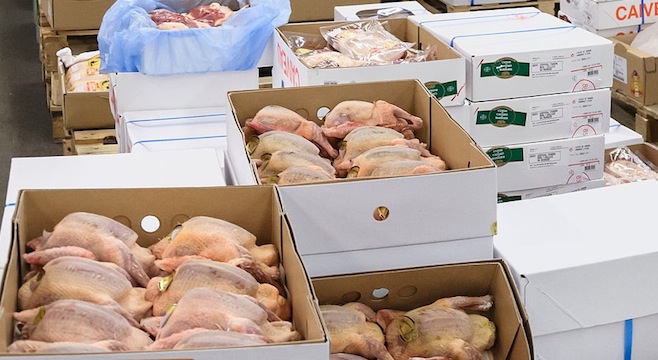
Russia’s threatened ban on U.S. poultry imports, the latest move in a sanctions skirmish over Moscow’s support of rebels in Ukraine, has agriculture companies alert to the risks of a conflict that’s already roiled trading of crops ranging from soy, beef and fruit to California pistachios.

Moscow has struck back against trade sanctions following the downing of a Malaysian jetliner last month by imposing food restrictions, and would add U.S. chickens to Ukrainian soy and other products Russia has blocked since it seized Crimea earlier this year: Australian beef, Latvian and Lithuanian pork, Moldovan fruit and Ukrainian juice.

Russia’s move to limit agricultural trade is seen as a sign the conflict with Washington is heating up. Russia imported about $1.3 billion in U.S. food and agricultural products last year, or about 11 percent of all U.S. exports to the country, according to U.S. Census data.

U.S. pistachio farmers have seen sales to Russia, the seventh largest export market, cut nearly in half this year because political tensions have made Russian importers hesitant to make purchases, said Peter Vlazakis, export market coordinator for the American Pistachio Growers.

Pistachio exporters have “a legitimate fear” about the potential for trade disruptions, Vlazakis said.

Russians may turn for pistachios to Iran, the world’s second largest producer after the United States.

An armed group last month occupied a Cargill sunflower-seed crushing plant in eastern Ukraine, a region supportive of the Putin government, and commodity trader Glencore is expected to have a hard time selling grain silos in the country.

Last week, the farm sector’s attention turned to poultry after Russia’s Federal Veterinary and Phytosanitary Inspection Service said it found signs of the antibiotic tracycline in four shipments of U.S. poultry. The service could not be reached for comment.

The food safety watchdog’s threat to ban U.S. poultry imports, reported in government-controlled Russian media, came days after fresh U.S. and EU sanctions over Russia’s support of rebels in Ukraine.

Russia is the second largest importer of U.S. broiler meat behind Mexico, buying 276,100 tons last year, or 8 percent of U.S. exports, according to the U.S. Department of Agriculture. Russia’s purchases from January through May 2014 represented 7 percent of U.S. exports.

U.S. poultry exporters and producers said there were no problems with the meat. For some, the situation was hardly their first time dealing with trade troubles with Russia.

Russia has repeatedly been accused by the West of using food safety concerns and its veterinary service as instruments to ban supplies from countries with which it has strained relations or to protect its own industry. Explicitly banning a country’s products for political reasons would violate World Trade Organization rules.

Trade restrictions in prior years have caused some companies to back away from deals with Russian importers, said Jim Sumner, president of the USA Poultry & Egg Export Council.

The council has advised poultry companies to keep in contact with Russian importers so they will get early warnings should Moscow impose a ban.

For Russian President Vladimir Putin, targeting agricultural imports could be a low-cost way to retaliate against U.S. sanctions over Ukraine.

Other threats, especially any involving Russia’s export of oil and gas shipments, likely would bring additional sanctions on Moscow, said Robert Kahn, a senior fellow for international economics at the Council on Foreign Relations.

Russian sanctions on farm products would be “quite painful” for the companies affected, although the macroeconomic effects on the U.S. economy would be small, he added.

“These are fully political decisions,” Kahn said.

2016-05-31T19:34:11-07:00August 7th, 2014|

CA Table Grape Growers Award Nine Scholarships to Local Students

Nine high school graduates from the table grape growing regions in the San Joaquin and Coachella Valleys of California were recently awarded scholarships on behalf of California’s table grape growers, the California Table Grape Commission announced TODAY.

Five of the scholarships were awarded to children of table grape field workers: three $20,000 scholarships to four-year universities and two $3,500 scholarships to two-year colleges. Four $20,000 scholarships to four-year universities were awarded to students majoring in agriculture-related fields.

For 30 years, California’s table grape growers have funded the nation’s first worker- focused scholarship program. The program has awarded over 100 scholarships to field workers and their children from the table grape growing regions in California. A few years ago scholarships were added for students living in the table grape growing regions who plan to pursue careers in agriculture.

“The 2014 scholarship recipients are all very talented and motivated individuals, with a variety of career interests,” said Kathleen Nave, commission president. “These scholarships are one of the ways that California’s table grape growers encourage and support education in their local communities.”


The California Table Grape Commission is pleased to announce the 2014 scholarship winners:


Vanessa Serrato Meza

Vanessa Serrato Meza

$20,000 Four-year Field Worker Scholarship Recipients

Ms. Vanessa Serrato Meza is a graduate of Desert Mirage High School in Coachella Valley, and will be attending University of California, San Diego in the fall to study human biology. Vanessa, having immigrated to the U.S. at eight years old, was interactive with others in her community by tutoring and assisting in their studies while taking numerous Advanced Placement and honor courses at her high school. She plans to use the scholarship to continue her education and someday return to her community to help those in need.


Ms. Diana Valenzuela, graduate of McFarland HS

Ms. Diana Valenzuela, graduate of McFarland HS

Ms. Diana Valenzuela is a graduate of McFarland High School, where she ranked at the top of her graduating class with a weighted GPA of 4.39. Diana was a team co-captain on varsity softball, the senior class secretary and a recreation leader in an after school program where she led activities for hundreds of elementary school students. Crediting her parents who came to the U.S. from Mexico and their diligence as her main motivation, Diana plans to study civil engineering at University of Southern California with the goal of giving back to her community by building safe public utilities, such as roads, buildings and bridges. Diana will be a first-generation college student from her family.


Lissette Garcia

Lissette Garcia

Ms. Lissette Garcia is a graduate of McFarland High School, and plans to attend University of California, Los Angeles to study biochemistry. As a member of Advancement Via Individual Determination (AVID), Movimiento Estudiantil Chicano de Aztlán (MEChA), Associated Student Body (ASB) and the Roaring Leos, Lissete has participated in canned food drives, served as a math tutor, volunteered at the migrant program and elementary school function, and completed various fundraising activities. Lissette, whose parents she says embedded hard work into her, will be a first-generation college student.


$3,500 Two-year Field Worker Scholarship Recipients

Estefani Hernandez Dominguez

Estefani Hernandez Dominguez

Ms. Estefani Hernandez Dominguez is a graduate of Highland High School, and plans to attend Bakersfield College to study culinary arts. Estefani, who says her parents are the biggest influence in her life, is a deaf student who has not allowed her deafness to prevent her from succeeding. In high school she was the vice president of the deaf club and was an honor student her sophomore year. Estefani’s goal is to become a chef. She loves cooking food for family and friends, and dreams of some day owning a restaurant in Fresno and being the first deaf person with a Food Network television show.

Maria Lozano

Maria Lozano


Ms. Maria Lozano is a graduate from Reedley High School, and plans to study for an Associate of Applied Science (AAS) degree in medical assisting at Heald College. Maria was very involved in high school, being active with the Spanish Club, Advancement Via Individual Determination (AVID), California Scholarship Federation, Generation Green and was secretary of the Migrant Club, while volunteering in school and community activities. Maria came from Mexico to the U.S. when she was a baby, and refers to her parents as her heroes. She has dreamed of becoming a registered nurse for years. Maria will be a first- generation college student in her family.


John Taylor Ball

John Taylor Ball

$20,000 Four-year Agriculture Scholarship Recipients

Mr. John Taylor Ball is a graduate from Clovis West High School, and plans to attend California State University, Fresno to study agricultural business. During high school, Taylor was recognized as a Scholar of Academic Distinction, a high academic honor, while being involved in volleyball and basketball and serving the community through organizations such as Assisteens. Taylor’s family has a history in agriculture. His grandfather was a farmer in the San Joaquin Valley for many years. The combination of life experience and his family’s strong ties to agriculture have solidified his career direction and passion for agriculture, specifically the produce industry. Taylor has the goal of some day owning a thriving produce sales and marketing company in the Central Valley.


Adilene Gonzalez

Adilene Gonzalez

Ms. Adilene Gonzalez is a graduate from Hanford High School, and plans to double major in business administration and dairy science at California State University, Fresno. Adilene is known as a student who excels in academics and someone who demonstrates a concern for others through community service activities. Graduating with a 4.09 weighted GPA, Adilene was involved in the California Scholarship Federation and HHS Drama Club, and she devoted volunteer time to the local public library and a farm care program taking care of neglected animals. Her life-long goal is to some day administer her own dairy, continuing to keep the roots of agriculture in her family.


Julia Reese

Julia Reese

Ms. Julia Reese is a graduate from Clovis North High School, and plans to attend University of California, Davis to study plant science. Julia’s interest in agriculture comes from living in a farming region, her parents’ close ties to agriculture, and projects with 4-H and science fair during high school. Julia was a scholar athlete, graduating as a valedictorian while undertaking a number of co-curricular activities such as water polo, track and field and participating in youth court and key club, co-founding the French club and serving the community through a number of different organizations. Julia envisions her future working in a rural setting in a role that will help improve the production and efficiency of farming. She would like to work with grapes at the production level some day as a pest control advisor or fertility consultant.


Cristiano Alves

Cristiano Alves

Mr. Cristiano Alves is a graduate from Kingsburg High School, and plans to study agricultural and environmental plant sciences at California Polytechnic State University, San Luis Obispo. Cristiano balanced a rigorous course schedule with many activities such as water polo, involvement with Future Farmers of America (FFA), being his senior class president and a youth group leader and altar server for his church, and volunteering with Kingsburg Choir Crab Feed and Fresno Rescue Mission. His interest in agriculture comes from growing up on a farm and a unique opportunity he had through a vineyard maintenance project with FFA in which he was responsible for harvesting grapes, assessing crop fertility, weed management and pest control. Cristiano says some day he would like to become an agricultural pest control advisor.


Scholarships will be offered again next year, with applications for 2015 available in the fall of 2014 at www.grapesfromcalifornia.com.

2016-05-31T19:34:11-07:00August 6th, 2014|

Earthworms Help Cleanse Dairy Wastewater

Source: ; ABC 30

Fresno State has turned to a group of very efficient workers to help clean up wastewater on the campus dairy.

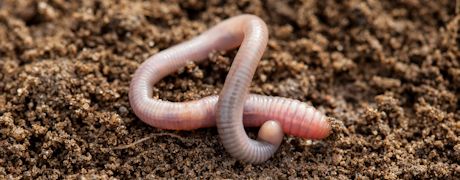
Red earthworms now play a big role in the effort to solve water quality challenges. They squirm when you interrupt their meal. 

The worms dig in and feast on wood shavings soaked in wastewater from cow manure.

Sanjar Taromi is the chief marketing officer for BioFiltro. He explained, “The wood shavings absorb a lot of the organic contaminants within the wastewater. The worms then eat that material depositing their castings.”

The Chilean-based company relies on worms to do their dirty work for the pilot project at Fresno State. 

Taromi said, “We’re also taking analysis of wastewater to show to reductions in key indicators like nitrates and nitrogen, phosphates.”

Taromi added the campus dairy uses over 25,000 gallons of water each day. This system filters about 15 percent of the wastewater. “Water is turned on and it comes and flushes the lanes down and carries the manure down to the solid separation basins.”

The water which came out of the cow stalls was a murky dark brown. After the bio-filtration process the water was a lighter brown color but Taroma says that was due to the wood shavings. As the worms turn they produce a cleaner, recycled product.

Taroma said, “You have irrigation water that now you can use with drip irrigation, with center pivots.”

Dairy wastewater is normally only used for flood irrigation on crops used for feed.

2016-05-31T19:34:11-07:00August 5th, 2014|

National Farmers Market Week highlights connections between consumers, farmers

Source: Rick Jensen, Director of Inspection Services; CDFA 

The annual National Farmers Market Week is being observed this week (August 3-9).  It’s a time worth celebrating because of the key role farmers markets play in connecting consumers to the people who produce their fresh fruits and vegetables.

At a time when there is more interest than ever about the origins of food, these markets have the answers, thanks to producers with plenty of information for their customers. Additionally, many of the markets do outreach on nutrition, provide help with food access, where needed, and offer a great way for people to buy California Grown!

California leads the nation with more than 800 certified farmers markets, serving as venues for an estimated 2,200 certified agricultural producers selling high-quality produce directly to consumers. CDFA created the Certified Farmers Market Program in 1977—the first in the nation—to provide consumers with the assurance that they are buying directly from producers.

In California, many of the markets operate year-round due to the availability of local produce.

Please join us in celebrating National Farmers Market Week by visiting a certified farmers market near you.

2016-05-31T19:34:12-07:00August 4th, 2014|

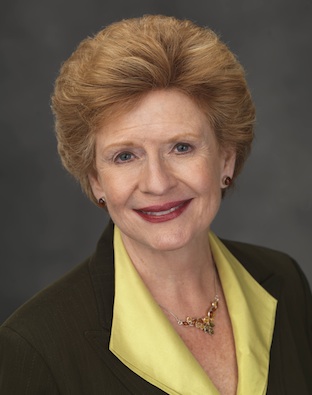
Chairwoman Stabenow Applauds Appointment of Members to New Ag Research Foundation Board

Source: United States Senate Committee on Agriculture Nutrition & Forestry

Senator Debbie Stabenow, Chairwoman of the U.S. Senate Committee on Agriculture, Nutrition and Forestry, today issued the below statement regarding the appointment of board members to the Foundation for Food and Agricultural Research – a new non-profit foundation created by the 2014 Farm Bill, which will leverage private and public funding to advance agricultural research.

The 15-member board of directors was officially announced today and is meant to represent the many diverse agricultural perspectives and voices and areas of expertise.

“This new Research Foundation is one of the most important victories in the Farm Bill,” Stabenow said. “We designed this foundation to leverage public-private dollars to continue making America the most productive and efficient agricultural producer in the world. America sets the gold standard for safe, abundant food production across the globe, and that’s largely because of a commitment to research and decades of investment in agricultural innovation and cutting edge practices. The appointment of board members is the first step in getting the new Foundation for Food and Agricultural Research up and running.”

Debby-Delmer1

Dr. Deborah Delmer

“Agricultural research today is a critical component in American–and global–health and security,” said Michigan State University President Lou Anna K. Simon. “Senator Stabenow deserves great credit for her leadership in establishing the foundation in the Farm Bill, and the USDA’s choice of MSU’s Dr. Douglas Buhler for the foundation board adds a highly knowledgeable and experienced scientist and administrator.”

“We’re delighted to see the foundation up and running and proud that NCGA Chairwoman Pam Johnson will serve on the board of directors,” said National Corn Growers Association President Martin Barbre. “The new Foundation for Food and Ag Research promises to be an important tool for greater innovation in agriculture, especially as we face the challenge of feeding a growing population, and we are grateful for the leadership of Sens. Stabenow and Cochran for making this a priority in the 2014 Farm Bill.”

Under the leadership of Chairwoman Stabenow and Ranking Member Cochran, Section 7601 of the Farm Bill created the Foundation for Food and Agriculture Research, a non-profit foundation that will raise private funds to match $200 million in public funds that will be  directed toward agricultural research.

The Farm Bill directed the Department of Agriculture to appoint board members who will guide the foundation’s research activities. The foundation will fund research collaborations between agricultural researchers from the federal government, institutions of higher education, land-grant universities and non-profit organizations.


The 15 members appointed to the Foundation board include:

  • Dr. Kathryn Boor – the Ronald P. Lynch Dean of the College of Agriculture and Life Sciences, Cornell University
  •  Dr. Douglas Buhler – Director of AgBioResearch and Senior Associate Dean for Research for the College of Agriculture and Natural Resources, Michigan State University
  •  Dr. Nancy Creamer – Distinguished Professor of Sustainable Agriculture and Community Based Food Systems, North Carolina State University
  •  Dr. Deborah Delmer – Professor Emeritus of Biology, University of California-Davis
  • The Honorable Dan Glickman – former U.S. Secretary of Agriculture, current Executive Director of the Aspen  Institute’s Congressional Program
  • Dr. Robert Horsch – Deputy Director, Bill & Melinda Gates Foundation
  • Pamela Johnson – Chairwoman, National Corn Growers Association
  • Dr. Mark E. Keenum – President, Mississippi State University
  • Dr. Michael Ladisch – Director of the Laboratory of Renewable Resources Engineering and Distinguished Professor of Agricultural and Biological Engineering, Purdue University
  • Dr. Christopher Mallett – Vice President of Research & Development, Cargill, Inc.
  • Dr. Pamela Matson – Chester Naramore Dean of the School of Earth Sciences, the Richard
    and Rhoda Goldman Professor of Environmental Studies and Senior Fellow at the Woods Institute for
    the Environment, Stanford University
  • Dr. Terry McElwain – Associate Director and Professor, Paul G. Allen School for Global Animal Health, and Executive Director, Washington Animal Disease Diagnostic Laboratory, Washington State University
  • Dr. Stanley Prusiner – Director of the Institute for Neurodegenerative Diseases and Professor of Neurology, University of California-San Francisco and 1997 Nobel laureate in physiology or medicine
  • Dr. Yehia “Mo” Saif – Professor Emeritus, The Ohio State University
  • Dr. Barbara Schaal – Professor of Biology at the College of Arts and Sciences, and Professor of Genetics at  the Medical School, Washington University at St. Louis

The five ex-officio board members, all of whom were designated by Congress, are USDA Secretary Tom Vilsack; Dr. Catherine Woteki, USDA’s Under Secretary for Research, Education, and Economics and
Chief Scientist; Dr. Chavonda Jacobs-Young, Administrator of the USDA’s Agricultural Research Service; Dr. Sonny Ramaswamy, Director of the USDA’s National Institute of Food and Agriculture; and Dr. France A. Córdova, Director of the National Science Foundation.

More information about the 2014 Farm Bill can be found here.

2016-05-31T19:34:12-07:00August 4th, 2014|

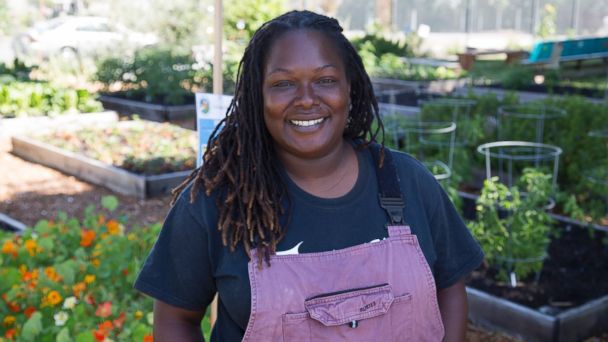
Navy Vet Shows Children the Value of Work and Education Through Farming

Surrounded by crime, inequality and a lack of opportunity is a quarter-acre farm in East Oakland, California. U.S. Navy veteran and Oakland native Kelly Carlisle is trying to change all that by inspiring a young group of local children through farming.

Growing up in East Oakland, Carlisle said she remembers feeling hopeless at a young age.

“At 9 years old there’s nothing to do, there’s nowhere to go, no program that my family can afford, or for me to engage in,” Carlisle said. “It was hard, you couldn’t go outside, we had a one-block radius that we can play in and I remember feeling and asking, what I am going to be and where I’m going to go?”

The former Navy Operation Specialist said she wants to be able to give “her kids” a chance at working towards a better future. Back in early 2010, Carlisle remembers hearing news reports about Oakland’s high crime rate, childhood obesity, school dropout rates and teen prostitution.

“My initial reaction was, thank God I don’t live there. Then the more I thought about it and the fact that I have a young child, it occurred to me that there’s one population that has no choice to decide where they live or what their community looks and feels like and that’s young people,” she said.

As a result, Carlisle founded Acta Non Verba: Youth Urban Farm Project, a nonprofit urban farm that focuses on serving at-risk youth from kindergarten to 8th grade, and their families. She launched Acta Non Verba to teach children how to invest in themselves and ultimately invest in their communities.

Children plant, harvest and sell produce and 100 percent of those proceeds go to savings accounts to pay for their education.

At first it was a lot of raised eyebrows and challenging to get others on board with the idea, she said. “They weren’t use to talk about farming in Oakland. But eventually people were really happy with the idea to have an urban farm in their neighborhood,” she said.

One of the ongoing challenges is to get people engaged, she said. “This is our third year of camp, fourth of growing and it’s still a challenge,” she said.

Last week, President Obama honored the work Carlisle is doing in Oakland at an Iftar dinner celebrating Ramadan in the State Dining Room at the White House. “Thanks to Kelly these boys and girls are not only learning the value of hard work at an early age, they’re changing how they think about themselves and opening their minds to what’s possible in their lives,” the president said.

Carlisle doesn’t come from a family of farmers but from a military family. Her father and grandfather both served in the military. She joined the Navy in 2001 shortly before 9/11 and was stationed aboard the USS Essex. She left active duty in 2005 and her transition was difficult, she said. She landed a corporate job and got married. But in 2009, she had to join the U.S. Navy Reserve after she ended up unemployed during the economic downturn. She left the Reserve in 2013.

Her first farming or growing experience was with a lemon tree she planted at home and that’s when she felt in love with growing, she said. Carlisle took a master gardeners course and it was there that she ran into the Farmer Veteran Coalition, a veteran outreach organization offering veteran employment and farm education programs. Carlisle is a recipient of the organization’s fellowship fund was instrumental in giving resources to Carlisle to become not only a farmer but a person with a mission to change her community.

“Most of the children here think that food comes from the grocery store. We’re giving the kids the whole experience, from seed to table, from raw to sandwich,” she said.

East Oakland is considered by the U.S. Department of Agriculture a food desert, where liquor stores and fast food restaurants outnumber supermarkets.

The City of Oakland Parks and Recreation leases the land to Acta Non Verba. The farm has cultivated beds of fruits and vegetables, including strawberries, green beans, cabbage, fava beans, sun flowers and tomatoes. It has also built a beehive.

“We like to work with kids because the excitement of seeing these seeds turn into actual fruit is magical for them and they don’t see it coming. The kids go wild,” she said.

For Carlisle, farming and providing a better future for these kids has become her life’s work. Carlisle said her dream for the farm is that children learn how to nurture the earth and themselves.

“As Oaklanders, I want them to be forward thinking about their future. I want them to remember this experience as something that at least gave them a window into something better and a different way to live,” she said.

2016-05-31T19:34:12-07:00August 1st, 2014|
Go to Top