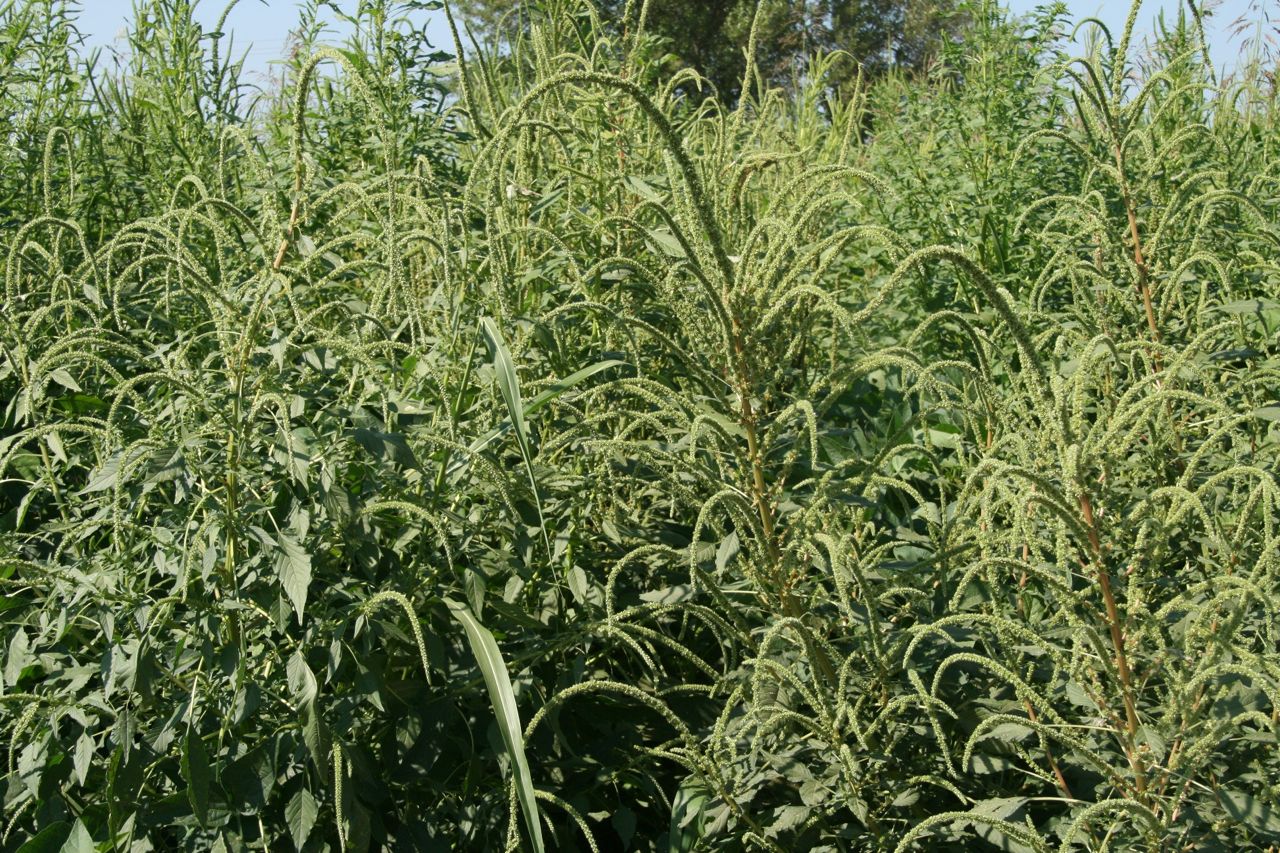
Plant Scientist Urges Proactive Palmer Amaranth Prevention

By Colby Tibbet, Cal Ag Today reporter

Palmer amaranth, aka Amaranthus palmeri S. watson or carelessweed, is an annual herb of the pigweed species that is native to California where it thrives and poses a serious threat to farming.

Amaranth

Amaranthus palmeri S. Watson – carelessweed (Source on USDA Website: Britton, N.L., and A. Brown. 1913. An illustrated flora of the northern United States, Canada and the British Possessions.


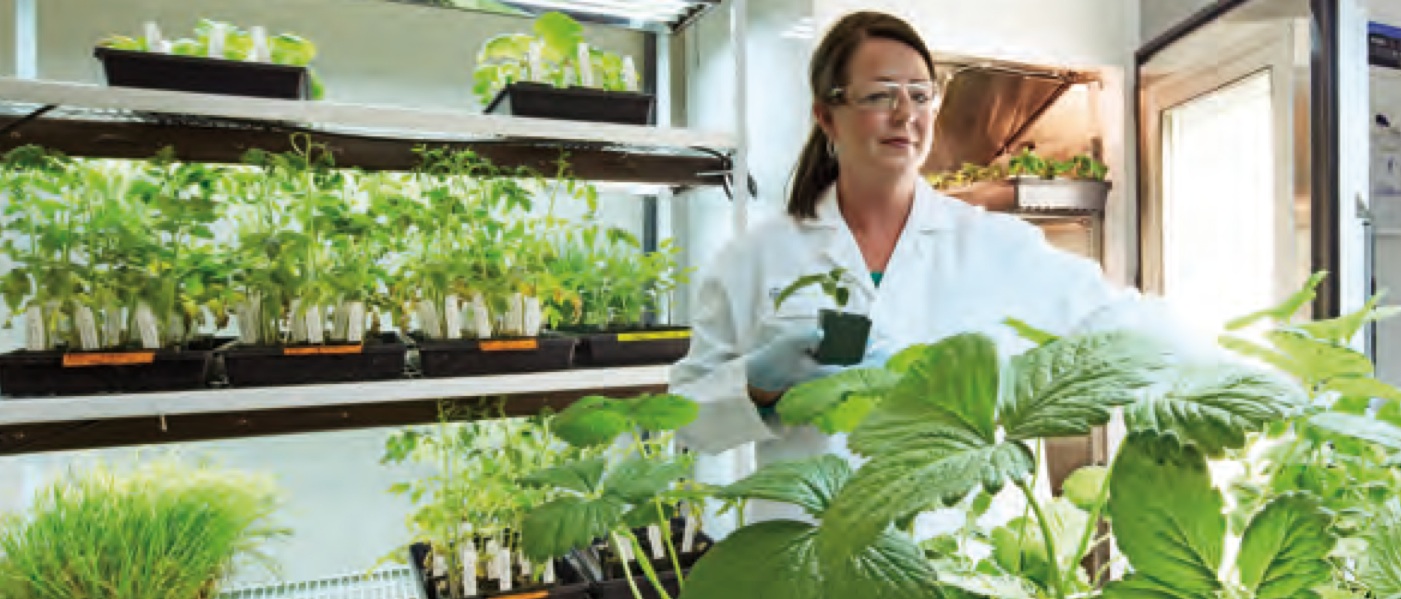
Lynn Sosnoskie, a project scientist in the UC Davis Department of Plant Sciences who focuses on weed ecology and biology, says Palmer amaranth, spotted on the edge of fields in California, is remarkably aggressive both in growth rate and spread amidst field crops. It develops a lot of wind-blown seeds that spread rapidly.”

“I would suggest that growers in the state of California be particularly diligent about this plant,” said Sosnoskie. “It is a desert annual and is particularly well-adapted to dry environments where it can out-compete, create root growth and achieve stability well. And the recent drought has only escalated the problem.”

“Preventive measures are absolutely essential before this plant becomes established,” continued Sosnoskie. “We found out the hard way in the Southeastern U.S. that Palmer amaranth produces an exceptional number of seeds; if even one plant is missed by applications or escapes regular herbicide applications, that plant can essentially repopulate an entire field.”

“So its absolutely essential that growers here and everywhere become familiar with the weed and remove all plants quickly from a field before it hits reproductive maturity and forms seed,” she said.

Sosnoskie added that some cotton fields in the south have suffered up to 50 percent yield losses and worse. “Some growers have actually abandoned their fields and haven’t harvested their cotton for those years,” said Sosnoskie.

Sources and Resources:

Illustration Source: Amaranthus palmeri S. Watson – carelessweed (Source on USDA Website: Britton, N.L., and A. Brown. 1913. An illustrated flora of the northern United States, Canada and the British Possessions. 3 vols. Charles Scribner’s Sons, New York. Vol. 2: 2. Courtesy of Kentucky Native Plant Society. Scanned by Omnitek Inc. Usage Requirements.

USDA Natural Resources Conservation Service

Palmer Amaranth

Compensatory growth and seed production: A tale of two weeds

2016-05-31T19:33:23-07:00September 27th, 2014|

CDFA Secretary Karen Ross Celebrates Banned Books Week

According to the American Library Association, more than 11,300 books have been “challenged” by schools, bookstores and libraries. Banned Books Week was created to celebrate the freedom to read, and celebrates open access to information.

To draw attention to the harms of censorship and celebrate the importance of free speech, the California State Library is hosting an online video “Read-Out” during Banned Book Week, September 21-27.

Many books that have been removed from library shelves and classrooms over the years are now considered classics of modern literature and taught in schools throughout the country.

John Steinbeck’s The Grapes of Wrath is included in that list, and is the same book from which CDFA Secretary Karen Ross was invited to read. In 1939, it was banned due to its harsh portrayal of Dust Bowl refugees and the hardships they faced coming west. It was banned in at least one California county, and Joseph Stalin banned it in the Soviet Union.

California State Librarian Greg Lucas started the week by reading a passage from One Flew Over the Cuckoo’s Nest, and Secretary Ross has joined other Brown Administration cabinet members in reading from banned books throughout the week.

Banned Books Week ends on September 27; make sure to celebrate your right to read and your freedom of speech.

2016-05-31T19:33:24-07:00September 26th, 2014|

Bayer CropScience Offers Biologic ‘Serenade’ to Fight Pests

Serenade Offers Big Dividends to Growers Fighting Pests

By Kyle Buchoff, CaliforniaAgToday Reporter


In this new frontier of pest and disease controls with biological fungicides and insecticides, Dr. Jonathan Margolis, the Vice President of Biologics Research for Bayer CropScience at the company’s new West Sacramento Research Facility, recently commented on Serenade, a major biologics product used by many growers. “When I joined Bayer in 2005, I would never have expected that we would still be spending this much effort on fundamental basic research on understanding Serenade and its mode of action, and ultimately on improving it.”

“We’ve invested a tremendous amount of resources on characterization of the chemistry that’s produced by the microbe,” Margolis explains, “on understanding how it interacts with plants—the signals it exchanges with plants to stimulate their growth and turn on host defense responses. Even more importantly, we want to understand the fundamental genetics of the organism so, in the future, we can use physiological cues, nutrients and growth conditions to change the way it produces these biologic chemicals in terms of increased efficiently.”

The company states that Serenade is a fungicide and bactericide that stops harmful spores from germinating, disrupts cell membrane growth, and inhibits attachment of the pathogen to the leaf. Biologic applications target Botrytis, Sclerotinia, Xanthomonas, and Erwina on grapes, strawberries, leafy vegetables, potatoes, pome fruit and tree nuts.

(Featured photo source: “Enhancing Global Food Security, Facts and Figures 2012-2013 Bayer CropScience”)


2016-05-31T19:33:24-07:00September 23rd, 2014|

Fresno State Alumni and Friends to Gather at Concannon Vineyard for Collaborative Event Oct. 4

The Jordan College of Agricultural Sciences and Technology and Craig School of Business at Fresno State are welcoming alumni and friends in the Livermore area to a gathering hosted at Concannon Vineyard on Saturday, Oct. 4 from 2 – 4 p.m.

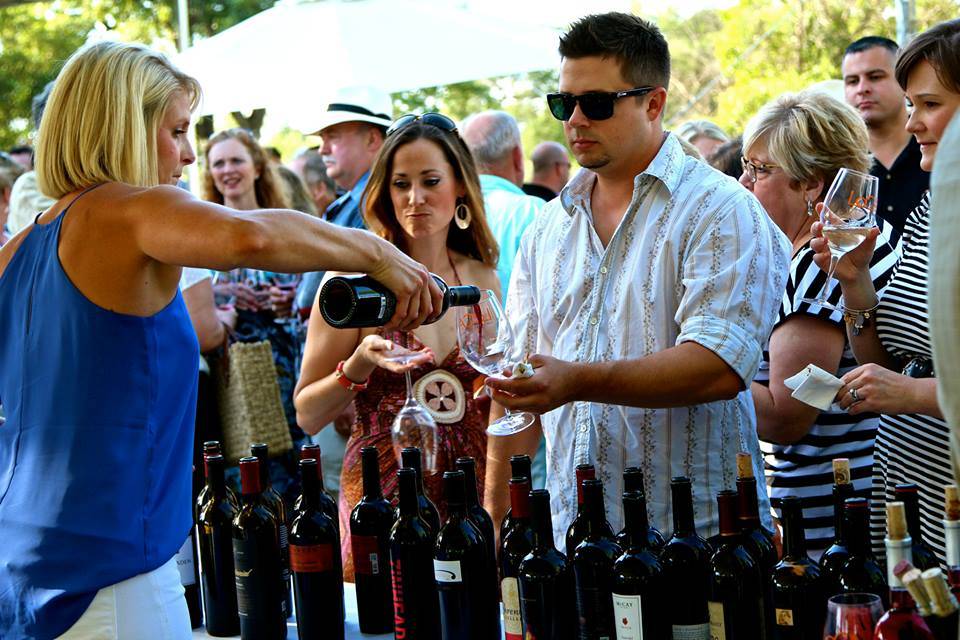
Guests will enjoy wine tasting with Concannon wine maker James Foster, a Fresno State alumnus, as well as Jordan College enology students who will be pouring Fresno State’s award-winning wine. Hors d’ oeuvres will feature Fresno State farm products.

Jordan College Dean Dr. Charles Boyer and Craig School Dean Dr. Bob Harper will share updates on their respective colleges. Following the program, attendees have the opportunity to enjoy a tour of the winery, with advance registration.

“Dean Boyer and I have a strong interest in fostering alumni relations in and around the Bay area,” Harper states. “We know there are many alumni in the area with fond memories of their time spent at Fresno State and strongly believe that their education prepared them well for professional careers. There is a strong synergy between agriculture and business, and the Craig School of Business is proud to partner with the Jordan College to sponsor this event.”

As a collaborative effort to engage alumni and friends outside of the Fresno area, this event was proposed by members of The Wine Group (TWG), the worlds third-largest wine producer by volume, which supports both the Jordan College and the Craig School. An independent, management-owned company, headquartered in Livermore, TWG’s portolio includes such leading brands as Cupcake, Franzia, flipflop and Almaden.

Dave Johnson, Executive Vice President of Finance with The Wine Group and member of the Craig School’s Business Advisory Council, proposed the idea at Concannon Vineyard, which is one of The Wine Group’s locations.

Concannon Vineyard is celebrating its 130th year of wine making at their beautiful estate located at 4590 Tesla Road, Livermore 94550. Cost to attend is $35 per person, $40 per person after Sept. 27. Advance purchase and tour sign-up required.

For more information, visit www.agonefoundation.org or contact Ag One/Jordan College at 559.278.4266 or by email at sfast@csufresno.edu.

Established in 1979, the Ag One Foundation benefits, promotes and supports the Jordan College of Agricultural Sciences and Technology at Fresno State. It has raised more than $16 million in endowed funds, with more than 3,350 students receiving more than $2.4 million in scholarships and grants.


2016-05-31T19:33:24-07:00September 23rd, 2014|

The California Avocado Festival – A Green Event

The idea of the California Avocado Festival began in 1986 at a meeting between community leaders Rob Godfrey, Connie Korbel, Debbie Murphy, Fran Puccinelli, Bob Ealee and John Franklin. A brainstorming meeting was called to create an ongoing weekend event that would benefit the fundraising efforts of the local non-profit groups. It seemed the plan would also help promote Carpinteria as a Southern California weekend getaway destination and boost our local economy.

In 2013, the Festival reached its goal of Zero Waste with the exceptional help of E.J. Harrison. This is the 2nd year in a row that the California Avocado Festival can boast Zero Waste – a strong testament to E.J. Harrison’s commitment to their company motto, “Service is Everything.”

Here are some of the high standards that the California Avocado Festival holds to, allowing them to create a Green environment.

  • The Festival is a No Styrofoam Zone 
Biodiesel is used for Festival Generators 
Boast a 100% Overall Diversion Rate! (2012)
  • The Festival will be using LED lighting at their Commercial Venue to reduce power usage.
  • The Festival Honors the City’s Ordinance on Outdoor Smoking

We are one of the largest free music festivals in California with over 75 acts on four stages. Check out the Stages Page for line-up updates.

2014 FESTIVAL HOURS:

  • Friday, October 3 • 11am – 10pm
  • Saturday, October 4 • 10am – 10pm
  • Sunday, October 5 • 10am – 6pm

For Sponsorship Opportunities, please email info@avofest.com.

2016-05-31T19:33:24-07:00September 23rd, 2014|

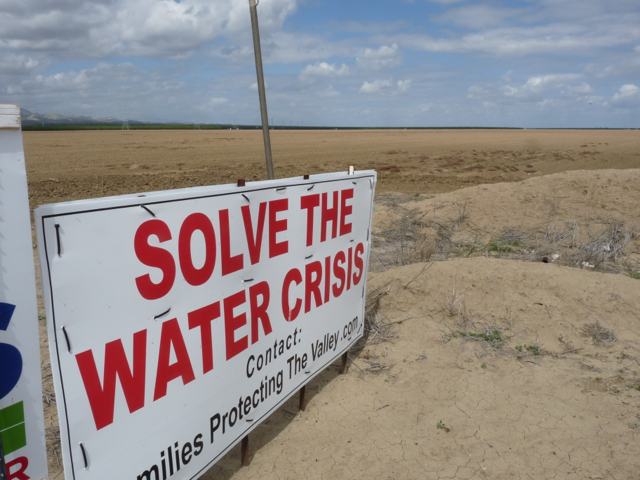
Commentary: Groundwater Legislation: “One Size Fits All” Just Doesn’t Fit

By Sen. Tom Berryhill; Ag Alert

In the waning hours of the legislative session, three bills that will drastically alter California’s groundwater management were passed with little vetting by the public or stakeholders impacted by the proposed changes. Senate Bill 1168 and Assembly Bill 1739 had been making their way through the legislative process, but in a completely different form than what was presented in the final days of the legislative session. Senate Bill 1319 was added to the package with just hours to go and voila, the legislative leadership declares a negotiated groundwater management package that works for all of California.

Far from it. “Negotiated” implies people of opposing viewpoints had input, something that did not happen.

Almost universally, agriculture was opposed, and I would imagine had it not been “negotiated” behind closed doors, there would have been an outcry from other regions and stakeholders throughout the state as well. Make no mistake, these groundwater bills will radically change decades of California water policy and give unprecedented authority to the state’s water bureaucracy to declare winners and losers. All without an appeals process. This is no way to craft policy.

Legislators of both political parties immediately sent a joint letter to Gov. Jerry Brown requesting that he veto the bills and call a special session of the Legislature to develop a reasonable groundwater management plan.

Earlier this summer, the Legislature put together groundbreaking water bond legislation. We did it in the light of day with months of negotiations and years of work behind the policy changes. These negotiations were a true victory for the people of California and a shining example of how well we can do something when we work together.

As a farmer and a Californian, I am absolutely concerned about increasing conditions of overdraft in many groundwater basins and the long-term effects on access to groundwater and land. But I believe California is playing a dangerous game if it pursues the one-size-fits-all approach of these bills.

Add into the mix a devastating drought that has severely tested our ability to prioritize where dwindling supplies of water should go—agriculture, environment or homes—and any solution becomes murkier.

Some basins have been critically overdrafted for decades, and in those instances state oversight may be an appropriate option as a way to spur local-management improvements. However, other basins have little or no overdraft problems or already have effective management systems in place. These bills treat all scenarios the same, a de facto punishment of the basins doing it right.

What started earlier this year as a legislative effort to remedy overdraft of aquifers in specific areas of the state morphed into a policy package that addresses issues well beyond mitigation of overdraft, all done at the last minute, without policy hearings, in the final weeks of the legislative session.

The regulatory regime for groundwater extraction enacted in these bills will not only invite lawsuits, it turns a blind eye to the differences between the 500-plus water basins in California and ignores ongoing local overdraft mitigation efforts. This is a bureaucratic power grab by the state’s water agencies, not an honest solution to a problem.

It took us more than 10 years to craft a good water bond that addresses the needs of a variety of communities, interest groups and industries. Was three weeks enough time to fully consider and seek consensus on the numerous, substantial policy changes made to groundwater management? I think not.

In the coming years and decades, the authorities granted in this bill will radically change the landscape of groundwater management. That will have a de-stabilizing impact on those who depend on groundwater supplies, particularly in Northern and Central California, thus the virtually unanimous opposition of the agriculture community to these proposals.

Yes, it is time to craft groundwater regulation that meets today’s needs, but these bills won’t get us there. Let’s go back to the drawing board and craft a narrower, more effective measure focused on basins where real problems exist, encouraging them to implement management measures modeled by other regions and providing a mechanism for the state to partner with areas when local management fails. We came together and passed the water bond; we can, and should, do the same for groundwater management.

2016-05-31T19:33:24-07:00September 21st, 2014|

What’s Plantable? It’s the new gardening app from the California Association of Nurseries and Garden Centers

Source: CDFA

We farmers love our tractors, but if you had to pick an official “tool of the 21st century,” you’d probably put the “app” at the top of that list. Apps (mobile device software applications) are a great way to reach the Millennial audience on its own technological wavelength. Our friends over at the California Association of Nurseries and Garden Centers (CANGC) have joined in the fun, launching the new Plantable app for the iPhone, iPad and iPod.

Available online at http://plantable.org, this resource gives consumers a swipable menu of DIY projects like “The Incredible, Edible Patio Garden” and “House Plants that Clean the Air,” complete with materials lists and simple, straightforward instructions. It’s the kind of tool that can transform a young, urban audience into new urban farmers and home gardeners, giving them a chance to share a little bit of the thrill that farmers get every time they bring a crop to harvest.

CANGC developed the Plantable app with the help of a $237,000 grant from CDFA’s Specialty Crop Block Grant Program. The app will help drive young consumers to nurseries and garden centers, which is great for the industry – but it also accomplishes the goal of raising consumers’ “ag IQ” and that’s good news for all of us.

2016-05-31T19:33:25-07:00September 19th, 2014|

Three UC Davis students named Switzer environmental fellows

Source: John Stumbos University of California, Davis

Three UC Davis graduate students—Angela Doerr, Sarah Moffitt, and Meredith Niles—have been awarded prestigious fellowships for outstanding environmental scholarship from the Robert and Patricia Switzer Foundation. Twenty-two such awards were made this year to students from New England and California.

“We are very grateful to the Switzer Foundation for again choosing UC Davis students for its highly regarded fellowship program,” said Jan W. Hopmans, associate dean in the UC Davis College of Agricultural and Environmental Sciences. “It is worth noting that all three awardees are conducting research on sustainable management practices for natural or agricultural ecosystems. These students recognize that informed policymaking demands a working knowledge of interdisciplinary science and that our top-ranked graduate groups are the best place in the world to get that education.”

“Today’s environmental issues are increasingly complex and require an ability to translate scientific, ecological, and social knowledge across disciplines and apply it in real-world settings,” said Lissa Widoff, the Switzer Foundation’s executive director. “The 2013 Switzer Environmental Fellows are at the cutting edge of science and policy and will be supported with funding, professional coaching, and a network of leaders to help them achieve results. Their problem-solving abilities and innovation will make a difference.”

The program began in 1986 and now has a network of more than 530 fellows. Each student will receive $15,000 to help them complete their degrees and advance skills and expertise needed to address critical environmental challenges. Their work covers a broad range of studies, including environmental policy, economics, conservation, public health, journalism, architecture, environmental justice, and business law, as well as traditional environmental science such as biology, chemistry and engineering. This year’s fellowship recipients from UC Davis are:

Marine scientist Angee Doerr studies lobster fishery in Bahamas

Angela “Angee” Doerr, a doctoral student in the Ecology Graduate Group, focuses on the sustainable use of natural resources. Her thesis work examines the intersection of policy, resource economics, and marine ecology in the Bahamian spiny lobster fishery. She is one of the first scientists working to develop a baseline of the use of small artificial habitats—locally known as “lobster condos—in the fishery there. She also serves as a subject matter expert for the U.S. Navy Civil Affairs Command, travelling internationally to both teach and present on aquaculture and sustainable fishing practices. Doerr earned her MBA while in the Navy through American Military University and holds a Bachelor of Science in Environmental Science from Duke University.

“Angee was a rising star in the Navy before coming to UC Davis to study natural resource policy and I know her commanding officer was not happy to lose her to graduate school,” said Doerr’s faculty adviser, environmental science and policy professor James Sanchirico. “Since coming to UC Davis, Angee has continued her trajectory. She is a natural leader and I have no doubt that Angee will make important contributions to the management of natural resources during her career.”

Coral reef studies lead Sarah Moffitt to climate science

Sarah Moffitt, a doctoral student in the Ecology Graduate Group, is working at the interface between oceanography, earth science, and ecology. Her dissertation research is focused on rapid environmental change in upper ocean ecosystems, specifically the western continental margin of North America. Her goal as an ocean and climate scientist is to improve communication among climate scientists, policymakers, and citizens. She graduated from Western Washington University with a Bachelor of Science in Biology, during which time she worked on coral reefs in the Caribbean region of Costa Rica and in Bermuda. She then spent two years working for NOAA’s Coral Reef Ecosystem Division in Hawaii as a coral reef specialist and scientific diver.

“Sarah truly embodies the word ‘interdisciplinary’ when she approaches a scientific problem,” said Moffitt’s faculty adviser, UC Davis geology professor Tessa Hill. “She sees things from the perspective of an ecologist, an oceanographer, and a climate scientist. With her dissertation work, she is trying to accomplish an admirable task—trying to extract lessons from the recent ‘paleoclimate’ record to understand what future, anthropogenic climate change holds for marine ecosystems.”

Farmer perceptions on climate drive Meredith Niles’ research

Meredith Niles, a doctoral student in the Ecology Graduate Group, examines the variables that cause farmers to adopt climate mitigation and adaptation techniques, and farmer perceptions of climate change and environmental policy. Her research is centered on New Zealand and Yolo County, Calif. She worked with a New Zealand research institute, participated in the Climate Action Reserve workgroup, and served as a board member of the UC Davis Agricultural Sustainability Institute. Her ambition is to work in public service at the interface of science and environmental policy. Niles is a summa cum laude and Phi Beta Kappa graduate in political science and environmental studies from the Catholic University of America.

“Meredith’s research focuses on public policy and decision-making in the context of agriculture and food systems,” said Niles’ faculty adviser, environmental science and policy professor Mark Lubell. “She has completed important empirical research on how farmers perceive and respond to climate change in New Zealand and California. As a Switzer fellow, Meredith is a proven leader with a deep commitment to doing research at the interface between science and policy.”

This is the 27th year of the Switzer Environmental Fellowship Program of the Robert and Patricia Switzer Foundation.

Fellowships are merit-based and rigorously competitive. Candidates must be recognized for their leadership capacity by their academic institution or by environmental experts. Applications are evaluated based on demonstration of environmental problem-solving, critical analysis and communication skills, relevant work and volunteer experience, necessary scientific or technical background for their field of study, the applicant’s career goals, and the potential of the candidate to initiate and effect positive environmental change.


2016-05-31T19:33:25-07:00September 18th, 2014|

California expects more competition for wine market

Source: Steve Adler; Ag Alert

A new report showing that the United States continues to lead the world in wine consumption is viewed as good news for the California wine sector—but it shouldn’t lead to complacency, according to three experts.

This country’s No. 1 ranking in total consumption in 2013 marked the third consecutive year of that achievement. U.S. wine consumption topped 3.3 billion liters, an increase of 5.4 percent compared to the previous year. France retained its hold on second place, with 2.8 billion liters—but that represented a 6.9 percent decrease in consumption.

California’s share of U.S. wine production is about 90 percent, although there are wineries in every state.

“Our consumption is growing in this country, but everyone realizes that the U.S. is the largest wine market in the world because we have such a large population base. Everybody in the world wants to sell their wines here, so there is a lot of foreign competition,” said Gladys Horiuchi of the Wine Institute in San Francisco.

Mendocino County grape grower and winery owner Bill Pauli said last week’s report on wine consumption underscores the importance of the U.S. market not only to California producers, but to producers around the world.

“With America’s expanding growth and improved economic times, consumption has improved and people are drinking better wines. But we still have to compete, not only amongst ourselves, but with all of the foreign competition. And that foreign competition is really the challenge in not only flavors, but price,” Pauli said.

The challenge comes not only in finished products, but from the foreign producers who sell bulk wines into California to be blended or bottled here, competing directly with California grape growers, he said.

Horiuchi said lighter crops produced in California prior to 2012 allowed foreign producers of bulk wines to make inroads. But because of the large crops in 2012 and 2013, the availability of California grapes has eased that threat, she said.

“The good news now is that the wineries are brimming with California wine of excellent vintages, so naturally the wineries have gone back to their local sources. But in order to maintain their shelf space, when the production in California is down, they will import wine from other countries,” Horiuchi said.

Competition from foreign producers was also noted by Glenn Proctor of the Ciatti Co. in San Rafael, who cautioned the state’s growers and wineries not to become complacent.

“When you are No. 1 in the world, it is not just California wines and U.S. wines that consumers are buying, but other countries are trying to get their wines into the U.S. market too,” he said. “So I think we will continue to see a very competitive environment.”

Proctor said it is important for California wineries to continue producing wines that U.S. consumers want, at prices that allow them to purchase more.

“We have to be on our game and remain competitive. The opportunities continue to grow, but we have to be ahead; we cannot be behind,” he said. “We’ve seen countries like Australia, Chile, Argentina and South Africa do a pretty good job of bringing bottled product into this country.”

While this year’s winegrape crop in California is projected to be normal in size, it follows two years of record production, resulting in large inventories in most of the state’s wineries. Proctor said that will allow California wineries to hold onto highly competitive shelf space.

“We have had two bumper crops in a row and this year looks to be a healthy crop, but not large per se. But we do have some excess of wine, especially in the Central Valley. I think we will work through the excess, and it is helpful that we don’t have a big crop this year. But we do need to increase our sales and grow. Any kind of stagnation in case-good sales would not be a good thing for the industry,” he said.

Proctor predicted that in the near term, there could be some “corrections” in prices that wineries pay to growers.

“Prices received by growers are healthy right now and some wineries may think they are too high,” he said. “We may see some correction in the marketplace in the Central Valley in the next year or two, to get inventory costs back in line.”

In the long term, he said, wineries will need a steady supply of grapes coming from California, “and you want to have new and efficient vineyards so growers and wineries can continue to be profitable.”

Proctor said some older and less-productive vineyards in the Central Valley will probably be removed and replanted, either with better-producing grape varieties or other commodities such as almonds or pistachios.

On the marketing side, Horiuchi said wineries continue to target baby boomers, people ages 50 to 68.

“The baby boomers are the ones who have the income and the ones who are dining in restaurants. But at the same time, there is a transition taking place as wineries are starting to market to the next generation, where the consumers are more involved with social media, taking pictures of wine labels and so on. They are willing to try a lot of different things,” she said.


2016-05-31T19:33:25-07:00September 18th, 2014|

Climate change’s impact on restaurants

By Patrick Mulvaney, chef and restaurateur; The Sacramento Bee

When I read about climate change, I learn about rising sea levels and shrinking polar ice caps – problems for 100 years in the future. But when I talk to my friends and customers about climate change, the focus is on what is happening today. It seems little things are already adding up.

As a chef, I have always believed that the completed dish will only be as good as the ingredients used. The bounty of the 12-month growing season is the main reason we decided to open our restaurant here in Sacramento. Because of our close relationships with local farmers, our “supply chain” is basically a truck and the farmer’s market. We can see how the drought has affected their crops.

Three years of drought have taken a toll on the ranchers and farmers we depend on. Lack of rain to refill the state’s reservoirs has reduced water levels to historic lows. Some water allocations have been cut entirely, and most farmers have been forced to scale back on planting. Forty-five percent of rice land went unplanted this year; farmers were forced to sell off cattle this spring. Researchers at UC Davis estimate that drought will prevent farmers from planting nearly 430,000 acres and cost the state $2.2 billion.

This isn’t just a Sacramento problem; it will affect the whole country. California grows nearly half of the nation’s fruits and vegetables, including 70 percent of the lettuce, 76 percent of the avocados, 90 percent of the grapes and virtually all of the almonds. Unfavorable conditions in California mean higher prices for restaurants across the country.

The U.S. Department of Agriculture said produce prices could increase 5 to 6 percent this year. Even though beef prices are at historically high levels, the drought has raised the prices of feed even higher, forcing ranchers to sell the majority of their herds. A few years ago, the U.S. had 102 million head of cattle. That number is now under 88 million and dropping. It’s the smallest herd since 1951, so prices keep rising.

In addition to drought, climate change is causing other kinds of severe weather swings. Last winter was unusually brutal in the Midwest, causing an almost complete failure of the cherry crop and raising doubts about harvests for the rest of the tree fruits this summer.

In some ways, we are lucky at my restaurant; our daily-changing menus have allowed us to respond to climate disruptions. And while we continue to serve the best of what’s coming out of the nearby land, some items have become harder to find at a reasonable price. During the past year, restaurants have changed their menus to reflect higher meat prices, sudden collapses in citrus yields and the lack of products as farmers are forced to let their land lie fallow.

I worry that extreme weather, like California’s drought, may become the new normal. Our agricultural partners face the greatest risks. Many businesses will experience climate change through limited supply and poor supply-chain quality.

There’s something we can do about this. California has long been a national leader on clean-energy policies. Gov. Jerry Brown is supportive of the Environmental Protection Agency’s new regulations that will reduce carbon pollution. He said, “Clean-energy policies are already working in California, generating billions of dollars in energy savings and more than a million jobs. Bold, sustained action will be required at every level, and this is a major step forward.”

Now is the time to continue California’s clean-energy leadership tradition by implementing changes that encourage business leaders to use resources more efficiently. This will help prevent more extreme weather events and make our economy more resilient.


2016-05-31T19:33:25-07:00September 16th, 2014|
Go to Top