Yolo Food Bank Receives Grant from National Dairy Council

Source: Woodland Daily Democrat

Yolo Food Bank announced that it has been awarded a $10,000 grant from the National Dairy Council to increase dairy capacity for the Food Bank’s partners.

This grant was awarded to 20 food banks, nationally, with Yolo being the only California food bank to receive it, according to the Yolo Food Bank.

The Food Bank plans to use these funds to purchase refrigerators for some of its partner agencies.

“We would like to thank both the National Dairy Council and the Dairy Council of California for this generous grant,” said Karen Strach, director of programs at Yolo Food Bank. “A number of our partners have limited or no access to refrigeration and therefore are unable to distribute dairy products to their clients. This grant will allow us to increase the number of food pantries that will be able to provide dairy products to local residents.”

Between May 2013 and April 2014, Yolo Food Bank distributed 117,000 pounds of dairy products. It is anticipated that this grant will increase the amount of dairy products that the partner agencies are able to distribute by approximately 5,800 pounds each year.

The mission of Yolo Food Bank is to alleviate hunger and malnutrition in Yolo County. Through its programs and partnerships with 60 nonprofit partner agencies, approximately 23,000 residents are served each month.

Established in 1915, NDC comprises a staff of registered dietitians and nutrition research and communications experts across the country. NDC has taken a leadership role in promoting child health and wellness through programs such as Fuel Up to Play 60.

Developed by NDC and the National Football League (NFL), Fuel Up to Play 60 encourages youth to consume nutrient-rich foods and achieve at least 60 minutes of physical activity every day. – See more at: http://www.nationaldairycouncil.org/AboutNDC/Pages/AboutNDCLanding.aspx#sthash.628ntxdh.dpuf

2016-05-31T19:34:18-07:00July 10th, 2014|

CAWG Annual Meeting July 23-25

The Sacramento-based California Association of Winegrape Growers (CAWG) Annual Meeting is July 23-25, in Carmel Valley, Monterey County. “It’s even more exciting because this is our 40th anniversary!” said Ron Lopp, communications manager for CAWG. “Forty years ago, CAWG was founded by a small number of winegrape growers,”

The event kicks off with a golf event on the 23rd, followed by a speaker program on the 24th and the CAWG Board of Directors meeting on the 25th.

“An important part of the event is recognizing the winegrower and the wine leader of the year,” noted Lopp. “This year, the grower of the year recipient is the Ledbetter Family, owners and operators of Vino Farms in Lodi. The Grower of the Year Award—an individual, family or company—represents an outstanding example of excellence in viticulture management, recognized by others for innovation and leadership in the industry. We are recognizing the main family members of the Ledbetters,” said Lopp.

The CAWG Leadership Award recipient,” Lopp stated, “is actually one of the founding members of CAWG, Richard Keene, a Mendocino winegrape grower and winemaker. He is the third recipient of the award,” said Lopp.

2016-07-28T07:48:13-07:00July 9th, 2014|

The International Food Information Council Conducts Consumer Survey

The International Food Information Council took a look at what U.S. consumers think about food safety and food technology, and offered some insights on the results in a webinar in late June. The topics included some that are of interest to the produce industry, including sustainability and biotechnology.

IFIC staff noted that consumers are farther removed from the sources of their food than ever before, and that food is a personal and emotional topic. They also noted that labeling initiatives around the United States put biotech in the spotlight, and social media and speedy communications spread information more quickly than ever.

These are a few takeaways from the webinar:

Confidence in the U.S. food supply, at 67% (19% neutral, 14% not confident) remains about the same as it has for the past six years. Consumers’ top concerns remain disease/contamination (18%) and handling/preparation (18%), but those concerns have declined since 2008.

When asked whether they avoid certain foods, 53% said they did—primarily for health reasons. The types of foods they avoid (in order) were: sugar/carbs, fats/oils/cholesterol, animal products, snack foods/fast foods/soda, salt/sodium, artificial/additives, processed/refined foods, biotech (1%). These attitudes certainly bode well for fresh produce.

Fewer than one in 10 know a lot about sustainability in food production, and more than four in 10 know nothing at all. Yet two-thirds say it is important that foods are produced sustainably. However, in general, consumers won’t pay more for sustainable foods.

Consumers believe modern agriculture produces nutritious, safe, high-quality foods that can be sustainable. Just over half believe farms are still primarily family-run.

Overall, U.S. consumers have heard a little about food biotechnology, but only 11% have heard a lot. Compared to prior years, consumers’ impressions of food biotech has changed—favorable 28% (37% in 2012) and 29% unfavorable (20% in 2012).

Interestingly, nearly two-thirds of consumers believe vegetables and fruits are biotech products. When given rationales for using biotechnology (e.g. reducing carcinogens, protecting produce from insect damage which reduces pesticide applications), two-thirds or more of consumers say they are likely to buy them. One-quarter of consumers want additional labeling information, and of those 4% want biotech information (up from 1% and 0% in prior surveys).

Studies like this continue to show that consumers need and want information. It’s up to us to tell them.

2016-05-31T19:34:18-07:00July 9th, 2014|

Netafim Rolls Out Portable Drip Irrigation Technology 

New PolyNet Flexible Piping System Provides Cost-Effective, 

Water-Saving Solution For Today’s Farms


Addressing the diverse operational and environmental needs of today’s modern growers, Netafim, the pioneers of drip irrigation, have unveiled PolyNet, a high-performance, flexible, lightweight, cost-effective, piping solution for above and below-ground agricultural drip irrigation systems.

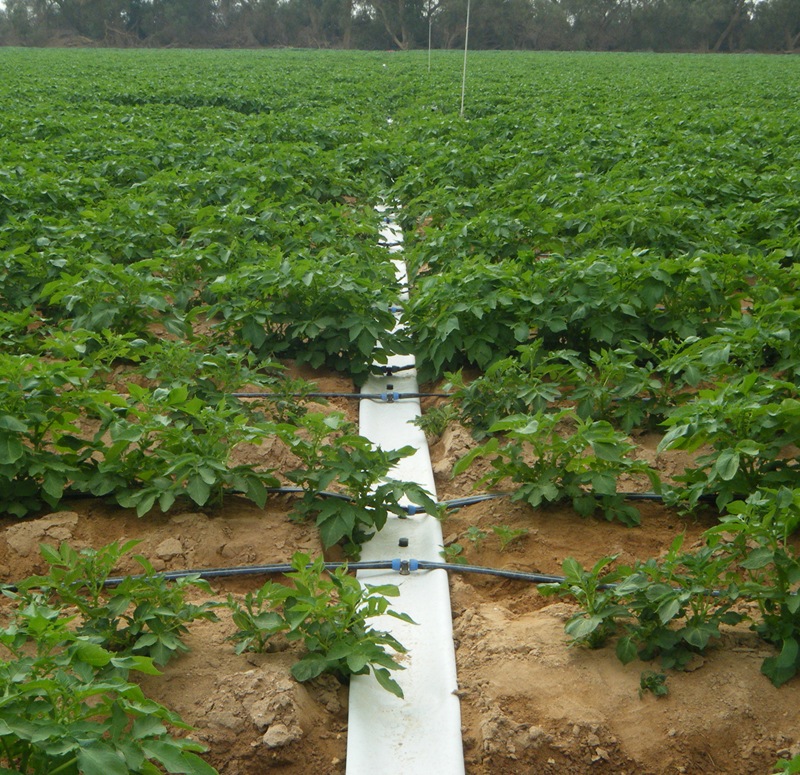
Utilizing an advanced, collapsible design, PolyNet is an innovative mainline and sub-mainline portable drip irrigation piping solution from Netafim that enables growers to easily install, recoil and relocate a drip irrigation system for use in an alternate field or different configuration.Netafim-PolyNet-Outlet

Featuring leakage-free lateral connectors and integrated welded outlets, spaced according to customer requirements, PolyNet’s advanced design provides growers with an easy-to-assemble, precise water delivery solution that lowers labor and maintenance costs, increases water savings and improves crop performance potential through enhanced system performance.

Additionally, the cost (per acre) of a PolyNet portable drip irrigation system is substantially less than a below-ground PVC system, giving producers more options when deciding on a system that is the right fit for their operation.

Netafim-PolyNet in field 2“A perfect complement to Netafim’s singular focus of providing reliable, simple and affordable irrigation solutions to help today’s farmers address the challenges of an increasingly complex industry, PolyNet enables farmers to reap the benefits of a drip irrigation system in areas where flexibility is essential,” said Ze’ev Barylka, Director of Marketing for Netafim USA. “Since first pioneering drip irrigation technology nearly 5 decades ago, the debut of PolyNet is a result of Netafim’s continued commitment to providing growers wit leading tools and technology needed to improve yield potential and productivity, while reducing costs, labor and water use.”

Available in a wide range of diameters, PolyNet’s thermostatic collapsible irigation pipe is constructed from rugged premium polyethylene materials that are designed to be versatile and durable enough to withstand the weight of heavy field machinery as well as the most stringent environmental conditions. Requiring no specialized installation tools, PolyNet is equipped with a connector kit and an array of branching and lateral fittings, making it compatible with any Netafim on-surface or subsurface (SDI) irrigation system.

For more information on PolyNet or the company’s industry leading drip irrigation products please visit www.NetafimUSA.com.

2016-05-31T19:34:18-07:00July 9th, 2014|

Proposed New Light Brown Apple Moth Quarantine Boundary – Mendocino County

Effective July 8, 2014, the Department is adding the Mendocino County Quarantine Boundary.  A map of the proposed boundary can be found at www.cdfa.ca.gov/plant/lbam/regulation.html.  The quarantine boundary is being added because a second adult Light Brown Apple Moth (LBAM) was found within three miles and one life cycle of a previous find. The new quarantine will add 14 square miles.

Regulated articles and conditions for intrastate movement under the quarantine can be found at Title 3 California Code of Regulations (CCR) section 3434.  Pursuant to Title 3 CCR section 3434 any interested party or local entity may appeal a quarantine area designation.

Process to Appeal the Proposed New Boundary

The appeal must be submitted to the Department in writing and supported by clear and convincing evidence. The appeal must be filed no later than ten (10) working days from the date of this notification.  During the pending of the appeal, the designated Quarantine Boundary under appeal shall remain in effect.

Mail Appeals to:

CDFA – Pest Exclusion
1220 N Street, Room 325
Sacramento, CA 95814

Electronic Notification of Boundary Changes

California Code of Regulation allows interested parties to be notified of quarantine area boundary changes, as well as the opportunity to submit quarantine boundary appeals.  If interested in receiving notifications, please sign up for regulatory updates through the email notification ListServ at: www.cdfa.ca.gov/subscriptions/index.html#planthealth.

For questions regarding the regulations or map, please email Dayna Napolillo (dayna.napolillo@cdfa.ca.gov) or Keith Okasaki (keith.okasaki@cdfa.ca.gov) or call (916) 654-0312.

Thank you for your attention to this timely matter.

2016-05-31T19:34:18-07:00July 9th, 2014|

The State Water Board to Consider Proposed Emergency Water Conservation Regulations

On January 17 Governor Edmund G. Brown Jr. issued a drought emergency proclamation following three dry or critically dry years in California. Extreme drought now covers nearly 80 percent of the state and these conditions will likely continue into the foreseeable future.

More than 400,000 acres of farmland are expected to be fallowed, thousands of people may be out of work, communities risk running out of drinking water and fish and wildlife species are in jeopardy. Many communities are down to 50 gallons a day or less per person for basic sanitation needs. With our inability to predict the effect of the next rainy season, water saved today can improve a region’s water security and add flexibility to systems that may need to withstand another year or more with precipitation below average.

In a survey conducted by the State Water Board in June, while many communities have significantly reduced their water demand over time, it is clear that more can  be done.

Conservation Actions Needed

Because of these dire conditions and the need to conserve more, the State Water Resources Control Board (State Water Board) is proposing that individuals and water agencies take necessary steps to conserve water supplies both for this year and into 2015, and is recommending that individuals and water agencies do even more voluntarily to manage our precious water resources.

Most Californians use more water outdoors than indoors. In some areas, 50 percent or more of our daily water use is for lawns and outdoor landscaping. Some urban communities have been investing in conservation, particularly indoors, for years, but reducing the amount of water used outdoors can make the biggest difference of all.

Temporary Water Restrictions

To promote water conservation statewide, the emergency regulations would prohibit each of the following, except in case of health or safety needs or to comply with a term or condition in a permit issued by a state or federal agency:

  • The direct application of water to any hard surface for washing
  • Watering of outdoor landscapes that cause runoff to adjacent property, non-irrigated areas, private and public walkways, roadways, parking lots or structures
  • Using a hose to wash an automobile, unless the hose is fitted with a sit-off nozzle
  • Using potable water in a fountain or decorative water feature, unless the water is recirculated

Action by Urban Water Suppliers Required

To reduce water demand, the regulations would require urban water suppliers to implement their Water Shortage Contingency Plans at a level that triggers mandatory restrictions on outdoor water use. Almost all urban water suppliers (those with more than 3,000 water connections) have these plans; about 40 of these larger agencies do not.

Water supplier serving fewer than 3,000 connections must also, within 30 days, require customers to limit outdoor irrigation to no more than two days per week or implement another mandatory conservation measure to achieve a comparable reduction in water consumption by the people it serves relative to the amount consumed in 2013.

2016-05-31T19:34:19-07:00July 9th, 2014|

Metropolitan Water District Brings California to Life to Deliver Water-Saving Message in Response to Drought

California comes to life in a series of television advertisements by the Metropolitan Water District that began airing today on stations throughout the Southland promoting the need to protect the state and its future by saving water during the historic, ongoing drought.

Scheduled to run over the next 12 weeks, the 30-second television spots personifying California are the latest additions to Metropolitan’s multi-pronged public outreach and advertising campaign created in cooperation with the district’s 26 member public agencies.

The comprehensive campaign includes the 30-second television spots, 60-second radio advertisements and traffic report sponsorship, as well as online and mobile ads throughout the district’s six-county service area through Oct. 30.

“We’re building a broad outreach campaign that reinforces to Southern Californians just how serious the drought is,” said Metropolitan General Manager Jeffrey Kightlinger.

“Southland consumers and businesses have certainly made significant improvements in using water more efficiently over the past 20 years, for which we thank them. This drought, however, compels all of us to take water conservation to the next level by incorporating permanent changes to ensure we use water—particularly outdoors, where up to 70 percent of water is used,” Kightlinger said.

Dubbed the “Don’t Waste Another Minute Wasting Water” campaign, the television ads will air on Los Angeles and San Diego area stations through Sept. 28. The spots join radio advertisements and traffic report sponsorships on English, Spanish, Mandarin, Cantonese, Vietnamese and Korean stations.

The two new television spots present California as a golden-colored, full-bodied mascot in the shape of the state. In one spot, she’s dismayed and discouraged as people waste water in and around their homes before easy and practical water-saving practices are embraced, showing love for California. The second ad features a man proclaiming all he’s prepared to do to save water and save his relationship with California.

“This campaign taps into people’s love for California and our lifestyle,” said Renee Fraser, chief executive officer of Fraser Communications, which created the campaign for Metropolitan.

“Knowing that people are already conserving, we found a way to move people into a higher level of conserving, like replacing a section of their lawn with California Friendly® plants,” Fraser added. “This campaign promotes the idea of being California Friendly as a way of life.”

The ad buy is part of $5.5 million authorized by Metropolitan’s Board of Directors in March for a regional communications, outreach and advertising campaign aimed at promoting greater water awareness and encouraging additional conservation.

Along with the television and radio spots, Metropolitan’s water-saving message will be the focus of specialized “Water Wise Wednesdays” segments offering conservation tips on television and radio stations as well as on-line advertising. The campaign also will feature focused billboard and movie theater advertising.

In addition, in a parallel education effort, Metropolitan will use the tagline “Water is Serious Business” to deliver more complex messages, using long-form formats to delve into related water reliability issues.

More information on water-saving tips and rebates for conservation devices is available at www.bewaterwise.com

2016-09-13T14:14:58-07:00July 8th, 2014|

Modesto Strives to Get Water Customers to Conserve

By Kevin Valine; The Modesto Bee

Modesto is asking everyone to conserve water as the state bakes under a third straight year of drought.

And in case folks have not gotten the message, the city is helping them. Since May, three city employees have been making sure the city’s roughly 77,000 water customers follow water restrictions, such as not watering lawns or washing cars from noon to 7 p.m.

The employees drive throughout the city, and surrounding communities served by Modesto, responding to complaints about water wasters, canvassing neighborhoods to check for compliance and investigating when they spot something suspicious, such as water from a broken sprinkler flooding a gutter.

The three issued 536 notices of violation June 1 to 24. The number of violations issued in May was not available.

City officials emphasized that the effort is not punitive, but focused on education and getting customers to comply. There is no fine for the first violation. A second violation can result in a $50 fine; a third violation is $200; a fourth violation is $250. City officials say they have not issued any fines, but may issue a $50 fine to an apartment complex.

“We want to make sure people adhere to the rules and hopefully reduce their water use,” Water Systems Manager Dave Savidge said.

On a recent weekday, Water Conservation Specialist Juan Tejeda checked in with a woman who had complained that her neighbors had partially flooded her backyard because they had left their sprinklers on overnight.

Karen Brown said this was not the first time her west Modesto neighbors had flooded her yard. She said she has tried to talk with them, but to no avail. Tejeda spoke with Brown and took pictures of the standing water in her backyard before knocking on the neighbors’ door. The woman who answered said it was a mistake and would not happen again.

Tejeda issued her a notice of violation and gave her information about Modesto’s water restrictions.

In some cases, Tejeda will turn off the water to the irrigation system of the home or business if he can’t make contact with the offender. He also will leave a notice for the home or business to call the city to resolve the violation and get the water restored.

His other stops that day included checking with the residents of two homes to see if they had corrected problems that had resulted in violating the city’s water restrictions. One problem was a broken sprinkler, and the other a sprinkler system set to water on the wrong day.

Tejeda said his job often involves letting homeowners, shopping centers and apartment complexes know their sprinkler systems have been set to water on the wrong day or are malfunctioning. “We know there are a lot of people in Modesto who care about conservation and we want to thank them for that,” he said.

Modesto is feeling the effects of the drought. It gets a significant amount of its water from the Modesto Irrigation District, with the rest coming from its roughly 100 wells. In early May, MID cut its annual water allocation to the city by 43 percent, which is the same reduction MID imposed on its other customers. MID gets its water from the Tuolumne River.

Modesto had been getting on average 30 million gallons of water per day from MID. It’s now getting on average 17 million gallons per day. Modesto used about 59 million gallons of water per day on average for 2013. Daily water use for the first six months of this year averaged 48 million gallons. But Modesto is heading into its peak season for water use.

Savidge said he believes the city can go until May, when MID sets its next annual water allocation, without imposing further water restrictions. But he expects the city to impose more restrictions if the drought continues into a fourth year.

The city has been under stage 1 water restrictions from its drought contingency plan since 2003. They call for reducing water use 10 percent to 20 percent and include such measures as limiting the days and times when residents can water their lawns. City officials have said water use has dropped 20 percent since 2003.

Savidge said the reduction has come about through conservation efforts; replacing older, leaking water mains with new ones; and getting more residential customers on water meters. He said about three-quarters of the city’s residential users are on meters and the city expects to be at 100 percent by 2022. Commercial water users are on meters.

The city’s stage 2 water restrictions call for reducing water use by as much as 15 percent more.

More about the stage 1 restrictions, water conservation tips, information about rebates for the purchase of high-efficiency toilets and clothes washers, and other resources is available at www.ci.modesto.ca.us/pwd/water/conservation. Customers can call (209) 342-2246 to report water restriction violations.

2016-05-31T19:34:19-07:00July 8th, 2014|

The Truth About Kale

Kale is a Nutritional Powerhouse!

By WebMD Expert Column


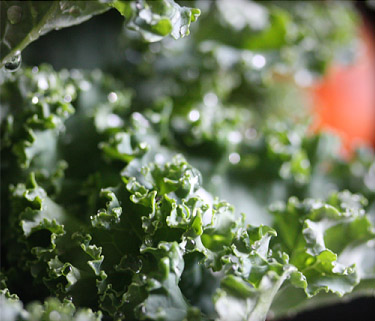
Eating a variety of natural, unprocessed vegetables can do wonders for your health, but choosing super-nutritious kale on a regular basis may provide significant health benefits, including cancer protection and lowered cholesterol.

Kale, also known as borecole, is one of the healthiest vegetables on the planet. A leafy green, kale is available in curly, ornamental, or dinosaur varieties. It belongs to the Brassica family that includes cruciferous vegetables such as cabbage, collards, broccoli, and Brussels sprouts.

Kale is a Nutritional Powerhouse

One cup of chopped kale contains 33 calories and 9% of the daily value of calcium, 206% of vitamin A, 134% of vitamin C, and a whopping 684% of vitamin K. It is also a good source of minerals copper, potassium, iron, manganese, and phosphorus.

Kale’s health benefits are primarily linked to the high concentration and excellent source of antioxidant vitamins A, C, and K — and sulphur-containing phytonutrients.

truth kaleCarotenoids and flavonoids are the specific types of antioxidants associated with many of the anti-cancer health benefits. Kale is also rich in the eye-health promoting lutein and zeaxanthin compounds.

Beyond antioxidants, the fiber content of cruciferous kale binds bile acids and helps lower blood cholesterol levels and reduce the risk of heart disease, especially when kale is cooked instead of raw.

Super-Rich in Vitamin K

Eating a diet rich in the powerful antioxidant vitamin K can reduce the overall risk of developing or dying from cancer, according to a study in the American Journal of Clinical Nutrition. Vitamin K is abundant in kale but also found in parsley, spinach, collard greens, and animal products such as cheese.

Vitamin K is necessary for a wide variety of bodily functions, including normal blood clotting, antioxidant activity, and bone health.

But too much vitamin K can pose problems for some people. Anyone taking anticoagulants such as warfarin should avoid kale because the high level of vitamin K may interfere with the drugs. Consult your doctor before adding kale to your diet.

Kale might be a powerhouse of nutrients but is also contains oxalates, naturally occurring substances that can interfere with the absorption of calcium. Avoid eating calcium-rich foods like dairy at the same time as kale to prevent any problems.

Eat More Kale

In summer, vegetable choices abound. But during the cooler months, there are fewer in-season choices — with the exception of kale and other dark, leafy greens that thrive in cooler weather.

To find the freshest kale, look for firm, deeply colored leaves with hardy stems. Smaller leaves will be more tender and milder in flavor. Leaves range from dark green to purple to deep red in color.

Store kale, unwashed, in an airtight zipped plastic bag for up to five days in the refrigerator.

2016-10-16T20:03:52-07:00July 7th, 2014|
Go to Top