Commentary: American Dream flourishes in state’s strawberry fields

Source: Lorena Chavez; Ag Alert

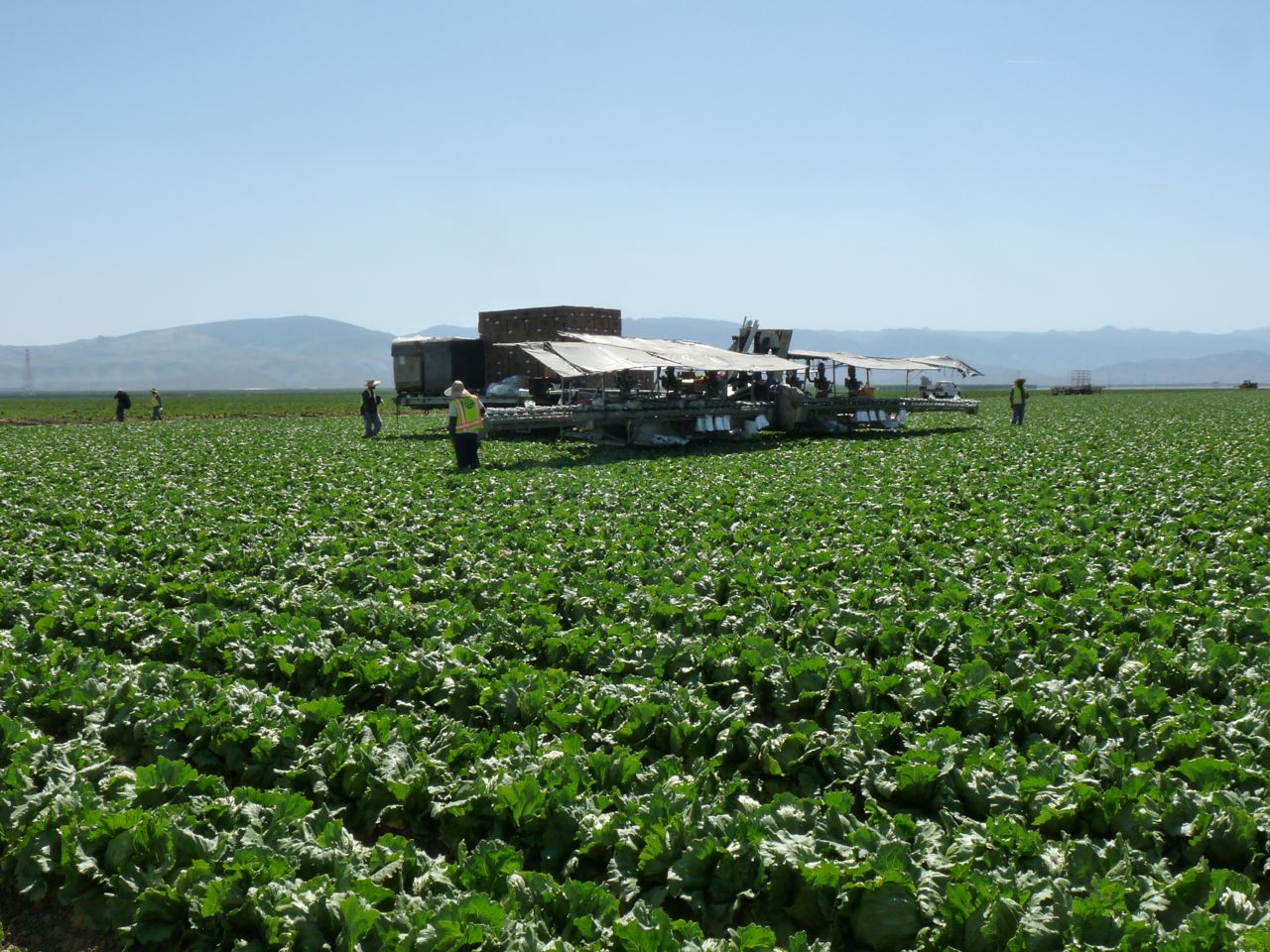
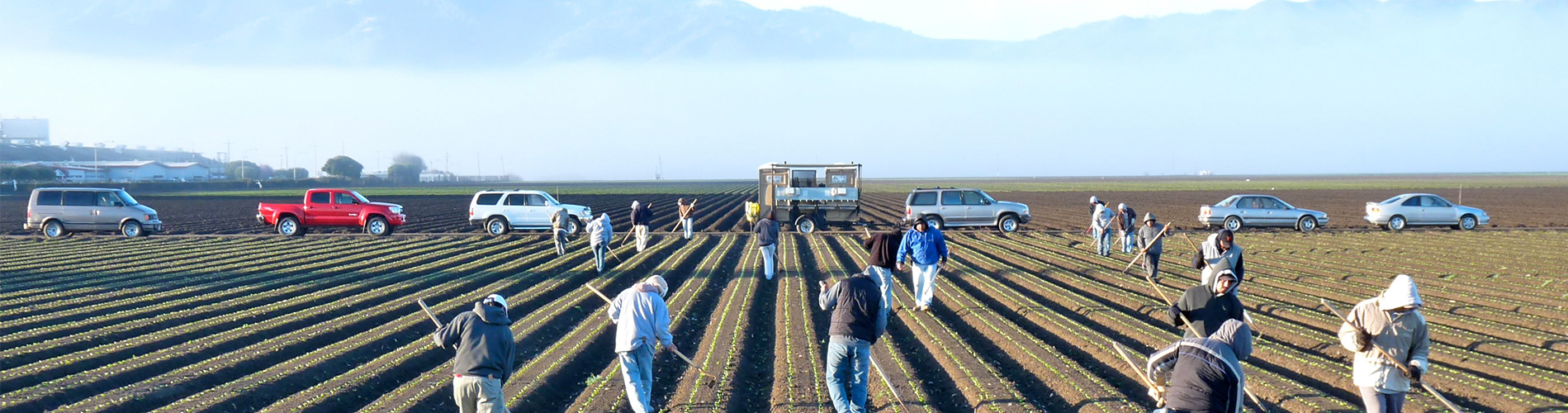
For thousands of immigrants to California, the path to the American Dream literally winds its way through the state’s strawberry fields. Perhaps more than any other crop, strawberries are defined by decades of immigrants from Europe, Asia and Mexico.

A report issued earlier this month by the California Strawberry Commission, titled “Growing the American Dream: California Strawberry Farming’s Rich History of Immigrants & Opportunity,” illustrates how many new Americans find that strawberries are a viable ladder to success.

According to the report—which can be found on the Strawberry Commission website at www.californiastrawberries.com—a diverse community of 400 family farmers dominates the state’s strawberry production, which accounts for nearly 90 percent of all the strawberries grown in the United States.

Sixty-five percent of these farmers are Latinos, a quarter of whom worked their way up from field workers to supervisors and eventually owners of their own farms. Another 20 percent are Asian Americans, primarily Japanese and, most recently, Laotians. The remaining 15 percent are comprised of European Americans, with some tracing their ancestry to Gold Rush pioneers.

The story of my father, Luis Chavez, illustrates this immigrant experience. He came to the United States from a small, rural town in Jalisco, Mexico. Born in 1934, he was raised in a home with no electricity or running water. He hasn’t attended a single day of school in his entire life. His family grew corn and beans to survive.

With no money in his pockets, he arrived in California in search of a better life in 1955, as part of the Bracero program. Like generations of immigrants, my father realized that the key to success was hard work. He first worked in a dairy, covering double shifts for 16 years until the family could scrape up enough money to lease an acre to plant strawberries.

While still working their regular jobs, my parents would get up at 4 a.m. every day to tend their plot, slowly building their business. Gradually, they expanded to become L&G Farms. My siblings and I now work side by side with my father to farm 300 acres in Santa Maria, where we employ several hundred people.

This story is not uncommon. But why are so many immigrants drawn to strawberry farming?

Due to their high yield, year-round harvesting and strong consumer demand, strawberries are able to sustain a family on a relatively small parcel of land. The barriers to entry are also favorable to immigrant farmers, because they can afford to lease and not buy their farmland.

With our deep and longstanding immigrant tradition, California strawberry farmers have been highly vocal in advocating for immigration reform. Certainly, we are concerned about the need for a pool of workers to harvest our crops. But more importantly, we share a desire to make sure that future generations of immigrants have the opportunity for the upward mobility that strawberries have provided for our family.

Along with other California strawberry farmers, and even Silicon Valley executives, I have made several trips to Capitol Hill to tell Congress about the critical need for meaningful immigration reform.

While recent election results have stalled efforts, immigration reform should not be postponed indefinitely. And it definitely should not be a partisan matter.

On one of our trips to Capitol Hill, one of my colleagues, a first-generation Mexican-American farmer from Salinas, eagerly sought out a statue of President Ronald Reagan, his hero, who granted amnesty to millions of immigrants. This simple act paved the way for my colleague to become an American citizen, gradually working his way to become a strawberry farmer employing nearly 100 workers. Another American Dream realized.

The commission’s report provides a strong reminder about the sacrifice, pride and contributions made by this nation’s immigrants throughout our history.

It also underscores the fact that immigration reform is as American as, well, strawberries.

2016-07-26T11:07:00-07:00July 17th, 2014|

The Benefits of Eating Almonds

Source: Alissa Fleck; SF Gate

Natural, unsalted almonds are a tasty and nutritious snack with plenty of health benefits. Loaded with minerals, they are also among the healthiest of tree nuts. Just a handful of nutrient-rich almonds a day helps promote heart health and prevent weight gain, and it may even help fight diseases like diabetes and Alzheimer’s.

Nutrition

Eating about 23 almonds a day is an easy way to incorporate many crucial nutrients into your diet. Almonds are rich in vitamin E, calcium, magnesium and potassium. Additionally, almonds are a significant source of protein and fiber, while being naturally low in sugar. One 23-almond serving packs 13 grams of healthy unsaturated fats, 1 gram of saturated fat and no cholesterol or salt. Of all tree nuts, almonds rank highest in protein, fiber, calcium, vitamin E, riboflavin and niacin content by weight. There are 160 calories in 23 almonds. While many of these calories come from fat, it is primarily the healthy unsaturated fats and not the unhealthy saturated kind.

Heart Health

According to the FDA, eating 1.5 ounces a day of most nuts, like almonds, may reduce the risk of heart disease. Many of the nutrients in almonds help contribute to increased heart health. For one, almonds are rich in magnesium, which is critical in preventing heart attacks and hypertension. Several clinical studies have also shown almonds can be effective in reducing bad cholesterol and preserving healthy cholesterol, which plays a major role in heart health.

Weight Maintenance

Nuts, like almonds, are also beneficial for maintaining a healthy weight. The fiber, protein and fat content of almonds means it only takes a handful to keep you feeling full and satisfied so you won’t have the urge to overeat. According to “Fitness” magazine, the magnesium in almonds helps regulate blood sugar, which is key in reducing food cravings. Almonds may even be able to block the body’s absorption of calories, making them the ultimate weight-loss-friendly snack. Because almonds are naturally high in calories, it’s important to limit your serving size to the recommended 1 ounce, or 23 nuts.

Other Health Benefits

Almonds may also promote gastrointestinal health and even combat diabetes. The high fiber content of almonds gives them prebiotic properties, which contributes to health in the gastrointestinal tract. Prebiotics are non-digestible food substances, which serve as food for the good bacteria in the intestinal tract and help maintain a healthy balance. According to a study by the American Diabetes Association, a Mediterranean diet incorporating nuts, such as almonds, helps fight diabetes even without significant changes to weight, physical activity or caloric intake.

Raw vs. Roasted

Almonds are available in a variety of preparations and it can be tough to know which is healthiest. Raw, unsalted almonds are a safe bet, but some people prefer the roasted taste. Both raw and roasted almonds pack a high dose of nutrients and minerals. Raw almonds have more naturally occurring beneficial fats, as some are lost in the roasting process. Dry roasted almonds have the same amount of calories as raw almonds, while almonds roasted in oil contain slightly more calories.

The Fresno County Department of Agriculture reported that almonds have become the county’s newest billion dollar crop; producing a total gross value of over $1.1 billion.


2016-05-31T19:34:16-07:00July 17th, 2014|

Water Quantity, Quality Affect Melon Crops

Source: Steve Adler; Ag Alert

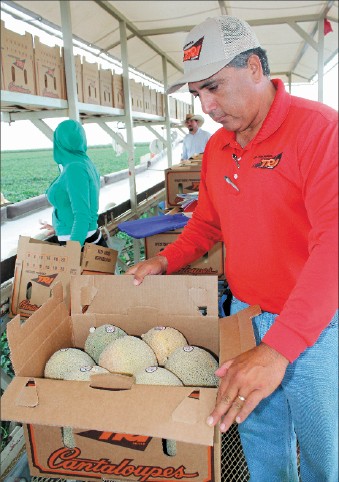
With severe shortages of surface water affecting key Central Valley production regions, melon growers say both water supply and quality will affect their final crop yields this year. As they ship cantaloupes, watermelons and other melons to supermarkets around the country, every grower in the Central Valley is talking about the water shortage.

There have been some acreage reductions because of lack of surface water, particularly on the west side of the San Joaquin Valley, but most melon growers have wells on their farms to irrigate their fields. Because of the salinity of much of that groundwater, however, melon growers report lower yields in many fields.

In addition, growers said they have found it necessary to sink their wells deeper as underground aquifers decline, and farmers report that some wells have run dry.

The annual melon harvest begins in the Imperial Valley and the neighboring Yuma Valley in Arizona in early to mid-May, then progresses north through the San Joaquin Valley.

Melon yields in Imperial and Yuma were lower than normal this year, growers said, because many of the fields were hit with mosaic viruses.

“We fought mosaic in the melons this year that was aggravated by the strong winds that came in later than normal throughout April and much of May,” Imperial County farmer Joe Colace Jr. said. “The size early on was about a half to full size smaller than what we are accustomed to getting from our early crop, but after about the second week, our sizes improved and we were fine for the balance of the season.”

Due to the lack of water in the Bakersfield area, Colace said his farm decided not to plant melons there as it typically does, choosing instead to extend the season in the Imperial Valley, where water was more available.

Sal Alaniz, director of harvest and quality control for Westside Produce in Firebaugh, said they have about 2,500 acres of melons that will be harvested through October. Their plantings are down about 300 acres this year due to water shortages and quality, he said. The farm is using only groundwater this year and its quality has affected some fields.

“We’re using groundwater that is lower in quality and higher in salts, and that affects the quantity,” Alaniz said, adding that melon quality is good, but yields are expected to be only average.

Westside Produce started its melon harvest on June 27, about eight to 10 days earlier than normal due to warm spring weather, Alaniz said. Harvest crews will go through the fields several times, choosing the ripe melons and leaving the immature ones to be harvested later.

Alaniz said the farm uses drip irrigation, which allows for water to be applied when the plants need it while still providing the ability to move harvest equipment through the field. He noted that drip irrigation does bring extra expenses, “due to the labor and need for filters.”

So far, Alaniz said he has had no problem filling harvest crews. About 80 percent of the workers return each year for the melon harvest, he said, while noting that labor could get tighter as other melon growers begin their harvests. Each machine moving through the field employs a crew of 21 plus a foreman.

For cantaloupes, newly adopted mandatory food safety and trace-back requirements took effect last year, following a vote by melon growers.

“The new food safety and trace-back rules are working fine,” Colace said. “Anytime there is something new or a new application, there is always that learning curve. We are through that learning curve, and we are very consistent and satisfied with all of the food safety requirements. The rules are specific to the cantaloupes, but if we have customers who request this on other melons, we are in a position to do that as well.”

The program operates with oversight from the California Department of Food and Agriculture and utilizes auditors trained by the U.S. Department of Agriculture.

“We are very pleased that all handlers achieved certification last year,” said Garrett Patricio, vice president of operations at Westside Produce and chairman of the California Cantaloupe Advisory Board marketing committee. He said this season’s audits are currently ongoing and that any new handlers will be added to the certified list as soon as their audits are complete.

In 2013, California growers produced cantaloupes on about 36,000 acres. Farmers also grew 10,500 acres of honeydew melons and 10,000 acres of watermelons last year, along with smaller plantings of a variety of other melons.

2016-05-31T19:34:16-07:00July 16th, 2014|

California Water Feeds Our Communities Tackles Rural Hunger

California Water Feeds Our Communities, a grassroots effort consisting of local businesses, service organizations and farmers, has partnered to help our communities who are suffering from the lack of water. As the summer progresses and less water is available, the need for resources will increase.
Community Food Bank CEO Andy Souza explained, “Our rural communities are suffering, and as we are challenged to keep up with the food lines at distribution sites, the generosity of our community can help us bridge the gap with financial and food donations.”

Local grower Sarah Woolf said, “This event is an ideal opportunity for our community to participate in helping those who are hardest hit by the drought. These are people whose livelihood depends upon a vibrant agricultural industry.”

The current zero water allocation for most of the Central Valley and the severe statewide drought is the inspiration for this event. The success of our state is tied to water which produces not only food but jobs and spurs the economy.

Promoting the need for food donations brings necessary focus on water and demonstrates how our state’s future depends upon a reliable water supply. Those wishing to donate can do so by phoning the Community Food Bank at 559-237-3663 ext. 113 or online at their website at:  http://communityfoodbank.net/HowToHelp.aspx.

California Water Feeds Our Communities is a grassroots effort to raise the awareness of the important role that water plays in California agriculture and everyday life. The drought has directly impacted our communities, farm workers and farmers. Many are devastated by the lack of water. 

2016-05-31T19:34:16-07:00July 16th, 2014|

United Fresh Foundation Offers Produce Solutions to Schools at 2014 School Nutrition Conference

The United Fresh Foundation is providing expert assistance to schools seeking to serve more fresh produce with the first-ever Fresh Produce Pavilion at the School Nutrition Association Annual National Conference in Boston, July 13-16.

The 1600 sq. ft. pavilion features an “Ask the Experts: Produce Solutions Center” and produce exhibits that establish a destination area on the trade show floor focused exclusively on promoting fresh fruits and vegetables.

The “Ask the Experts: Produce Solutions Center,” sponsored by PRO*ACT, features produce distributors from around the country including, Costa Fruit & Produce, Inc.  (Charlestown, MA), Hardie’s Fruit & Vegetable Co. (Houston, TX), Muir Copper Canyon Farms (Salt Lake City, UT), Royal Food Service (Atlanta, GA) and Van Eerden Co. (Grand Rapids, MI).

The produce experts serve as consultants for schools to answer all their produce-related questions, share guidance and tips for writing produce RFPs, discuss how to establish collaborative business relationships between schools and produce distributors and showcase the wide variety of fresh and fresh-cut fruits and vegetables that are ideal for school foodservice.

The Pavilion also has a fresh vending machine stocked with single-serve fresh cut fruits and vegetable and salads that illustrates products ideal for meeting the new “Smart Snacks in Schools” nutrition standards.  United partnered with the National Automatic Merchandising Association to have the Fit Pick vending machine on display.

“Having a strong, face-to-face presence at the SNA conference allows United and the fresh produce industry to demonstrate their commitment to helping  school nutrition operators find the most efficient ways to provide a variety of fruits and vegetables that their students will enjoy,” said Dr. Lorelei DiSogra, vice president of nutrition & health at United Fresh.

“We are pleased with the industry support given to this first-ever pavilion designed to help schools maximize their success in serving a variety of fresh fruits and vegetables,” said United Fresh CEO Tom Stenzel. “This strategy connects us with hundreds of school foodservice directors from across the country, helping them understand the unique aspects of the fresh produce marketplace, as well as making sure they’re aware of the many fresh and fresh-cut produce items that that can appeal to the next generation of produce consumers.”

“We appreciate PRO*ACT’s assistance in staffing the ‘Ask the Experts’ area, where school foodservice directors will be able to consult with experts outside of their own procurement process. This affords a consultative environment in which buyers are not negotiating with their own vendors, but instead are learning from distributors who are not trying to win their business,” Stenzel added.

Exhibitors at United’s Fresh Produce Pavilion include:

  • Chiquita Brands International
  • Duda Farm Fresh Foods
  • Grimmway Farms
  • HMC Farms
  • Mushroom Council
  • National Watermelon Promotion Board
  • NatureSeal
  • Pear Bureau Northwest
  • PRO*ACT
  • Ready Pac Foods
  • San Miguel Produce

The Pavilion also features a salad bar to promote Let’s Move Salad Bars to Schools. School foodservice directors attending the SNA conference are invited to enter their names to win the salad bar.  United Fresh is a founding partner of Let’s Move Salad Bars to Schools, which has to-date donated salad bars to more than 3,400 schools nationwide.

Additionally, United has organized educational sessions at the SNA show. The programs, titled “Your Produce RFP: Achieving Variety, Quality and a Collaborative Relationship,” will include panel and roundtable discussions among school foodservice directors and produce distributors.

For more information about United’s Fresh Produce Pavilion and how you can participate in the 2015 SNA conference, contact Andrew Marshall at 202-303-3400.

2016-05-31T19:34:16-07:00July 15th, 2014|

Deadline Extended by Two Weeks for State Water Efficiency & Enhancement Program

The California Department of Food and Agriculture (CDFA) has extended its deadline for applications for the State Water Efficiency and Enhancement Program (SWEEP) by two weeks, until July 29, 2014.

An estimated $10 million in competitive grant funding, authorized by emergency drought legislation (Senate Bill 103), will be awarded to provide financial assistance to agricultural operations for implementation of water conservation measures that result in increased water efficiency and reduced greenhouse gas emissions.

Applications must be submitted electronically using FAAST by Tuesday, July 29, 2014 at 5:00 p.m. PST.

Applicants must access the Application Guidelines for detailed information and program requirements. To streamline and expedite the application process, CDFA is partnering with the State Water Resources Control Board, which hosts an online application using the Financial Assistance Application Submittal Tool (FAAST).

All applicants must register for a FAAST account at https://faast.waterboards.ca.gov.

Prospective applicants may contact CDFA’s Grants Office at grants@cdfa.ca.gov with general program questions.

Governor Brown has called on all Californians to reduce their water use by 20 percent and prevent water waste – visit  SaveOurH2O.org to find out how everyone can do their part, and visit  Drought.CA.Gov to learn more about how California is dealing with the effects of the drought.


2016-05-31T19:34:16-07:00July 15th, 2014|

Fresno County Crop Value Drops to $6.43 Billion

For the first time in history, Fresno County has two $1 billion crops, and for the first time in 11 years, grapes are not the #1 crop. Now almonds are the top crop produced in Fresno County with a value of $1.1 billion, with grapes coming in second at $1.03 billion. However, despite these highlights, Fresno County crop value in 2013  was $6.436 billion in gross production—a decrease of 2.28 percent of 2012.

Fresno Ag Commissioner Les Wright

Fresno Ag Commissioner Les Wright

As it stands now, Fresno County loses it’s #1 position as top agricultural county in the nation, dropping behind Tulare County, which recently announced a $7.8 billion 2013 crop year. It could get worse when Kern County releases their report in August.

“Much of the decrease can be attributed to the shortage of water,” said Les Wright, Fresno County Ag Commissioner. “The impacts of drought began to show on our 2012 crop report with decrease of 2.29 percent from 2011. Producers are feeling the affects of the water shortage more in 2014 than in the previous two yeas.”

Water shortages in Fresno County with a large part of the West Side dependent on both state and federal surface water deliveries have meant the annual crop report’s gross value of production has dropped three years in a row.

Details of the 2013 report include an increase of fresh vegetable production in 2013 by 3.8 percent in value led by garlic and fresh market tomatoes, while livestock and poultry decreased in value by more than 16 percent.

Field crops, representing barley, wheat, corn silage, cotton an alfalfa declined nearly 42 percent, while fruit and nut crops increased more than 8 percent.

Wright noted that Fresno County growers exported nearly 26,000 shipments to 99 different countries. “This tells us that we are still feeding the world,” said Wright.

“Once we get water back, we are going to see our ag economy rebound,” said Wright. “Just give the farmers water and they will do the rest.”


2016-05-31T19:34:16-07:00July 15th, 2014|

President/CEO Westside Produce on Food Safety

Stephen Patricio, President and CEO of Westside Produce, a grower, packer and shipper of cantaloupe for California and Arizona, talks about food safety of our locally grown foods.

“The Center for Produce Safety is a 7 year-old organization that facilitates science-based actionable research to improve the quality as well as the safety of the healthy fruits, vegetables and tree nuts we are so proud of,” said Patricio.

Patricio commented that in general, growers have a great understanding of food safety. “There’s been a tremendous awareness over the years I’ve been actively involved, and we’re maturing everyday. Realistically, the industry matures, the workers mature, because the elements of food safety don’t exist in an ivory tower or in an office, or in a tractor or in a shop; they exist everywhere on the farm,” said Patricio.

“From the absolute beginnings on the dirt all the way through the packing houses to the shipping docks to the sales offices; it’s a culture. Food Safety is a culture, not just an action,” he added.

And for those consumers worried about the nutrition and safety of their produce, Patricio reassures that everyone involved in produce cares just as much as they do. “What I continue to tell people is that there is not a farmer, producer, or grower anywhere who doesn’t eat the product that they produced themselves. And, they feed it to their family, their children, their grandchildren. And they’re proud of it, they’re happy with it.”

Patricio continued, “If that’s the approach that people simply take to their daily actions and activities, well, I don’t have to worry about the safety of food. We just have to use our heads and manage temperature and everything from spoilage to cross-contamination that can happen anywhere. But you do a good job of creating a safe product,” said Patricio.

The beauty of California produce, according to Patricio is that it is “not a sterile environment. Everything isn’t produced in a factory, taken off a shelf, or torn out of a plastic container. It’s all healthy and from nature. It’s in God’s container and we just have to do our job of not contaminating it.”

2016-05-31T19:34:17-07:00July 14th, 2014|

Ag Official on Asian Citrus Psyllid in Tulare County

Marilyn Kinoshita, Tulare County Ag Commissioner, talks about the Asian Citrus Psyllid and how its affecting growers in the area.

“Our growers have the heavy commercial production as opposed to the ranchettes in San Diego Count, so we got more emphasis on spray treatments immediately after a find. We’ve had really good success rate, and so our trapping program is top-notch, so if psyllids are found, we have the ability to eradicate immediately and keep it under control that way,” said Kinoshita.

The Asian Citrus Psyllid, or ACP, is a tiny insect that acts as a carrier of the citrus disease Huanglongbing, also known as citrus greening disease. this bacterial disease is transmitted by the ACP, after it feeds on affected plant tissue.

Without proactive measures such as quarantine and eradication treatments, ACP could have dire consequences for the entire California citrus industry.

“We always knew that we were going to be ground zero. Because we’ve got the most packing sheds in the state, and the most juice facilities, and we’re receiving products from Mexico, Texas, Arizona, and Southern California and our growers need to stay diligent. We got all but 13,000 acres of citrus within the quarantine area, and so that can cause some problems with not having the entire county included,” said Kinoshita.

Citrus Greening Disease has only recently become a problem for California. The first infected plant was discovered in March 2012. It has still caused a concern in that short period of time, as the California Department of Food and Agriculture has found that here is no physical, cultural, or biological methods to completely eradicate ACP.

“So far we are dealing with it, and I have heard that this fall would kind of be the ‘trigger point’ that the Southern California counties saw at the two and a half year point of having Psyllids in their county. So we will see,” said Kinoshita.

2016-05-31T19:34:17-07:00July 14th, 2014|

UC Research on Effects of Herbicide Milestone

Milestone, a herbicide from Dow AgroSciences, was registered about 9 years ago in California for mainly cattle ranged applications, targeting problem weeds.

Guy Kyser with the Department of Plant Sciences at UC Davis looked at how the herbicide was affecting good perennial grasses.

“Its used mostly for broadleaf weeds, its been a real help with the Yellow Starthistle. There was some concern about whether it might affect seedling grasses, especially the perennial native plants that we want to replant after controlling yellow star thistle, because it got a little bit of soil residual, which is good for thistles but we wanna make sure it wasn’t hurting our grasses, and that’s what this trial is. We treated several rates of Milestone, and replanted with several species of native California perennial grasses, to see if there was any impact on the seedlings.

Kyser found out that the important grass species are more tolerant to Milestone applied at the time of planting, then when milestone is applied to young seedlings. He noted that California Brome is the most tolerant grass to Milestone.

Kyser’s research was featured at the recent 58th annual UC Davis Weed Day.

2016-05-31T19:34:17-07:00July 14th, 2014|
Go to Top