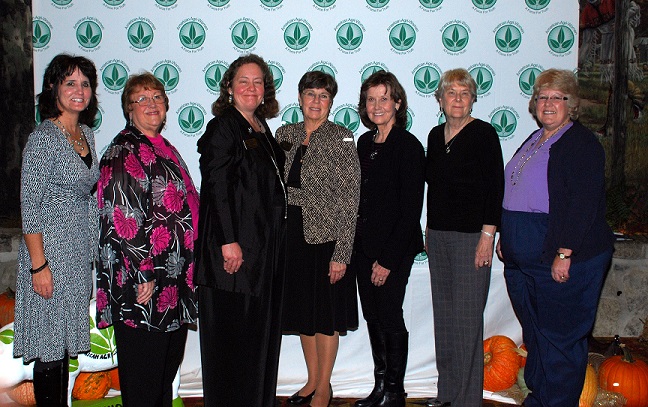
American Agri-Women Welcomes New Officers

American Agri-Women (AAW) kicked off its year-long celebration of its 40th anniversary at its annual convention held recently in College Corner, Ohio. The organization also elected its national officers and recognized outstanding advocates for agriculture.

AAW is the nation’s largest coalition of farm, ranch and agribusiness women representing more than 50 state, commodity and agribusiness affiliates. The 39th annual convention’s theme was “Bridging the Path From Farm to Fork” and was hosted by Ohio Agri-Women.

National officers for 2015 are:

• President Sue McCrum, Mars Hill, Maine
• First Vice President of Resolutions & Vital Issues Doris Mold, St. Paul, Minn., and Cumberland, Wis.
• Vice President of Communications Lynn Woolf, Milton, Kan.
• Vice President of Education Donnell Scott, Manhattan, Kan.
• Secretary Arlene Kovash, Monmouth, Ore.
• Treasurer Peggy Clark, Dayton, Ohio
• Past-President Karen Yost, Billings, Montana

Outgoing officers were Vice President of Education Kris Zilliox of Omaha, Neb., and Secretary Lisa Condon of Horicon, Wis.

Since 1974, AAW members have worked together to educate consumers; advocate for agriculture; and offer networking and professional development opportunities. Go to the AAW web site for more information and to join, www.americanagriwomen.org.
2016-05-31T19:32:11-07:00December 16th, 2014|

The CVCWA Proves that there is Strength in Numbers

By: Monique Bienvenue; Cal Ag Today Communications Manager

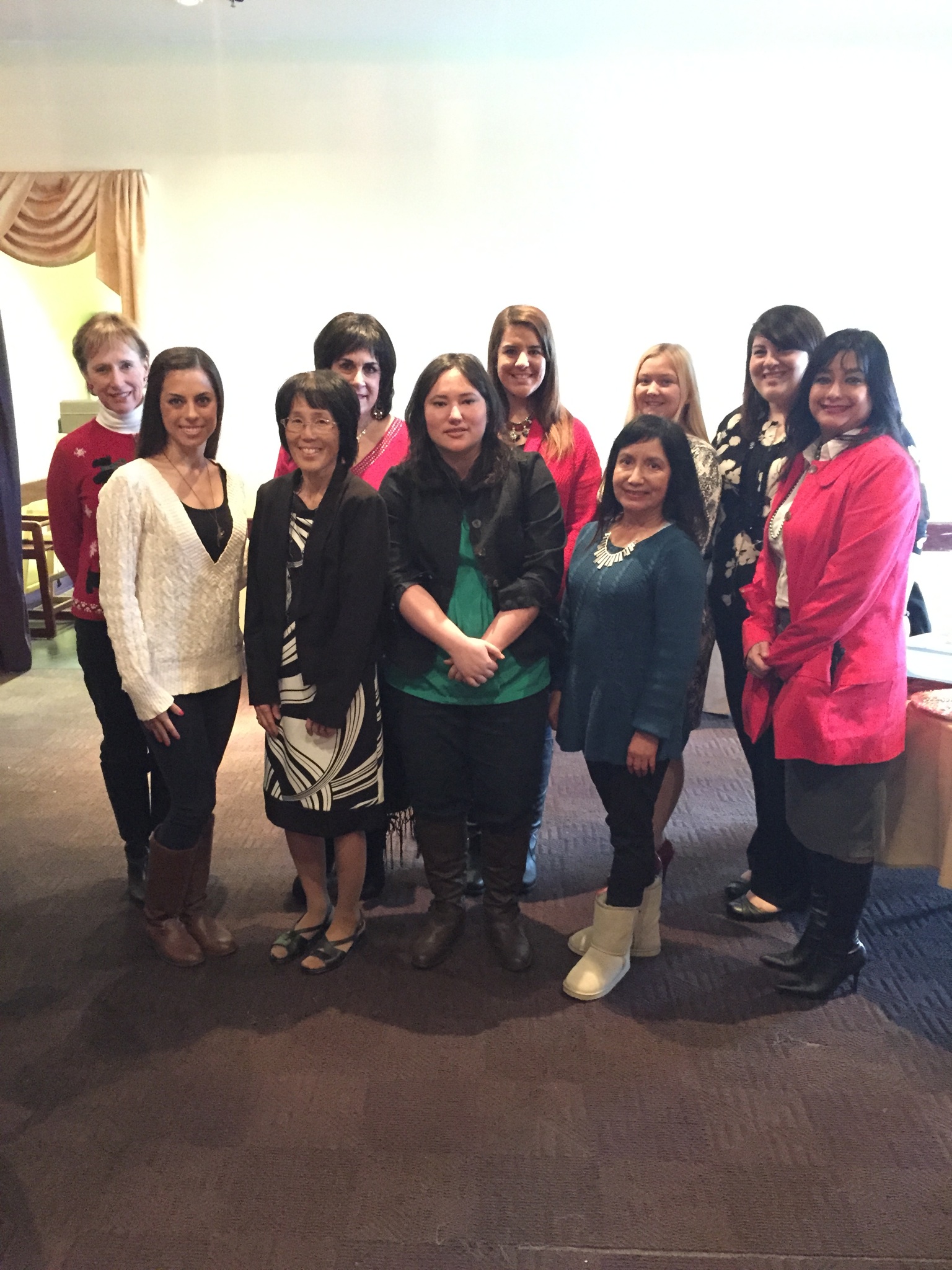
Last Friday, a group of dignified women met up for a holiday luncheon at Joy Luck Cuisine in Fresno. After working hard throughout the year to promote California’s agriculture industry, it was time to eat a delicious meal, honor a few scholarship recipients and induct the new 2014-2015 officer team.

“The CVCWA is very important to me,” said California Women for Agriculture, Central Valley Co-President Marlene Miyasaki. “Not only does the work we do help to promote various aspects of the ag industry, I’ve also met some of my closest friends through this organization.”

For years, members of the CVCWA have worked hard to celebrate esteemed agriculturalists in the Central Valley and do their best to provide scholarship money for high school and college students studying agriculture. They play a big role in planning events such as the Common Threads Luncheon, The Ag Boosters BBQ and they also dedicate their time to various community service projects throughout the Fresno County.

“I love being a member of the CVCWA,” said Agriculture Communications student Sarena Silva. “Their dedication and love for the ag industry keeps me motivated to be a voice for farmers in the Central Valley.”

With a new officer team, the CVCWA has many plans for the new year. If you’d like to become a part of this instrumental organization, go to http://www.centralvalleycwa.org or call Marlene Miysaki at (559) 278-2861.

2016-05-31T19:32:11-07:00December 15th, 2014|

Bayer CropScience and National FFA Organization Announce Grants to Encourage Students to Seek Careers in Agriculture and Apiculture

Partnership will provide $50,000 in grants that promote career paths in science and challenge students to make advancements in improving honey bee health

Next year, Bayer CropScience, in partnership with the National FFA Organization, will provide grants to inspire interest in agriculture and apiculture professions among America’s youth. The grant program will help FFA members develop their unique talents and explore science, technology, engineering and mathematics (STEM) careers with a focus on finding solutions that will help honey bees thrive. The program is a demonstration of Bayer’s continued commitment to engage with partners who focus on developing future STEM leaders, improving science literacy and driving bee health awareness.

“Bayer CropScience has been a long-standing advocate of FFA and supports its mission of building the next generation of farming leaders across America,” said Dr. Becky Langer, manager of Bayer‘s Bee Care Program. “Through this new initiative, we can help inspire young people to learn more about agriculture, create innovative solutions to some of our greatest industry challenges and pave the way for the future of farming.”

“We are excited about the opportunities that this partnership will give to our members,” said Molly Ball, president of National FFA Foundation. “Thanks to supporters like Bayer CropScience, FFA continues to grow future leaders in the agricultural industry.”

As a special project of the National FFA Foundation, Bayer’s investment of $50,000 will go toward three types of grants: Supervised Agricultural Experience (SAE) grants, Environmental Chapter grants and State grants.


FFASAE Grants

Ten SAE grants worth $1,000 each will be awarded to students proposing projects focused on bee health. These grants feature hands-on learning opportunities as students work with their agricultural teachers to plan and execute their projects.


Environmental Chapter Grants

Bayer will give $20,000 in Environmental Chapter grants to support selected FFA chapters in implementing year-long, service-learning projects that address local environmental needs. Service-learning is a method of teaching and learning that challenges students to research, develop and implement solutions to identified needs in their school or community. Projects will be encouraged to focus on increasing forage by planting pollinator-friendly gardens and other pollinator-focused health initiatives.


State Grants

Bayer will give $20,000 for state-specific grants focusing on improving bee health through habitat and forage.


How to Apply

Environmental and state grants will be awarded in the spring of 2015 and work can begin immediately after notification. SAE grants will be awarded in fall of 2015 for activities to be conducted in 2016.

For more information about the Bayer and FFA grant program, please visit the FFA website.

The National FFA Organization provides leadership, personal growth and career success training through agricultural education to 610,240 student members who belong to one of 7,665 local FFA chapters throughout the U.S., Puerto Rico and the Virgin Islands.

2016-05-31T19:32:11-07:00December 15th, 2014|

AgroThermal Announces Impressive 2014 Winegrape Trial Results

11 California Winegrape Trial Blocks Average Over 30% Yield Increases


By Laurie Greene, CalAgToday editor and reporter


AgroThermal Systems produced a third year of impressive winegrape fruit set results in 2014 patented Thermal Heat Treatment process trials, averaging 23% more berries per bunch and 27% more bunch weight at mid season. Yield per vine at the end of the season showed a 31% gain in treated blocks vs. control blocks.

The data, developed under the direction of the Dawson Company, which creates sales opportunities for new agricultural post harvest, produce ripening and crop production technologies and novel agrichemicals, came from 15 trial and control blocks in the Southern Salinas Valley, Livermore and the Central Valley. According to the company’s founder and president, Art Dawson, “ We have been sampling fruit set and bunch weights in conjunction with AgroThermal since 2012 and this represents the 3rd year of a consistent average increase of over 20% in fruit set at mid season vs. corresponding trial blocks. There is no doubt the technique produces more fruit, even in great fruit set years as evidenced from over 30 blocks tracked since 2012.” The increase in fruit set varied by varietal; it appears the response to instantaneous heat treatment is varietal-specific.

In 2014, the two companies collaborated on sampling harvest weights and berries per bunch counts a few days in advance of harvest, in 11 of the 15 winegrape trial blocks. According to Dawson, “We stripped six vines in each control and trial block to get a projection of weight per vine. The average increase was 31% more weight per vine. This indicated that the technique not only created more berries per bunch, but this advantage was carried forward to harvest yields.”

According to Marty Fischer, CEO of AgroThermal, “When we saw these sampling yield projections, we asked our growers to confirm their actual harvest data. Getting grower data on harvest yields has always been challenging due to the frenetic activity at harvest, the very reason why we decided to do the sampling prior to harvest. We have confirmation of substantial yield increases for 7 of the 11 blocks at Scheid Vineyards located in the Salinas Valley,” Fischer said, “and are awaiting grower harvest data from the other four blocks.”Scheid Vineyards

Shawn Veysey, Head of Viticulture at Scheid in Greenfield, California stated, “We were very excited by what we have seen with the AgroThermal technique. We have blocks with up to a 40% increase in berries per bunch and weight per bunch. This translates to a 1 to 2 ton increase per acre.”

Fischer credited the increases in 2014 to a treatment shift; “Different protocols produce significantly different results after experimenting with treatment start dates, frequency of treatments and time of day applications. Growers who don’t want yield increases but want to change wine character need to use a protocol that provides more berries per bunch leading to higher skin to pulp ratios. Growers who want a yield increase need to adhere to a different protocol of treatments.”

AgroThermal expects some 15-20 wines to be barrel-tasted from the 2014 trials in California and Oregon, with wine quality results announced sometime in early 2015.


Agrothermal Systems Introduces North America Sales Manager

Kim Boyarsky was recently appointed North America Sales Manager, bringing wine industry marketing experience to AgroThermal Systems. She has spent ten years in customer development representing packaging and cooperage companies in the wine industry. For the last three years, she was Territory Manager with Barrel Builders, Inc. in St. Helena, California, where she was responsible for consulting with winemakers on barrel selections for current wine vintages in California, Oregon and Washington.

AgroThermal Systems (www.agrothermalsystems.com) is based in Walnut Creek California and is a dba of Lazo TPC Global, Inc. a California Corporation. AgroThermal has pioneered the use of in-field heat treatment as a means to increase yields, reduce pesticide needs and improve crop qualities. The company holds patents on Thermal Pest Control and has patents pending on Thermal Plant Treatment for agricultural crops . The AgroThermal Systems technology has shown consistent results for improving fruit set, harvest yields, pest control and improving certain wine sensory characteristics in various trials conducted in the US from 2012-2014.

2016-05-31T19:32:11-07:00December 15th, 2014|

SUTTER COUNTY FARMER HONORED FOR DISTINQUISHED SERVICE


Walnut Grower Russell Young is Honored for 60 Years of Volunteer Service

Honoring more than 60 years of volunteer service, the California Farm Bureau Federation has presented its Distinguished Service Award to Sutter County farmer Russell Young. He received the award recently during the CFBF Annual Meeting in Garden Grove.

Young, who grows walnuts in Meridian, has dedicated decades of service to Farm Bureau, beginning at age 21, when he became vice chair of the Robbins Farm Bureau Center. When the center merged into the Yuba-Sutter Farm Bureau, Young became a director of the county organization. This year marked his 62nd year of service to the organization.

In nominating Young for the award, the Yuba-Sutter Farm Bureau described him as “the ultimate model of steadfast commitment.” Young has served on numerous local and statewide Farm Bureau committees and represented Yuba, Sutter, Butte and Nevada counties for two terms on the CFBF Board of Directors.

In addition to his Farm Bureau service, Young has been active in community affairs, serving as a trustee of the Winship School District, on the Farm Service Agency loan committee and as a director of the Sacramento River Conservation Area Forum.

“I was struck by something that Russell’s wife, Marilyn, pointed out: that Russell has been dedicated to Farm Bureau because it serves both agriculture and the community,” CFBF President Paul Wenger said. “Russell Young personifies the spirit of volunteer service that makes Farm Bureau effective in serving farmers, ranchers and rural communities. It’s an honor to present him with this award.”

The Distinguished Service Award has been presented annually since 1953 to dedicated Farm Bureau volunteers from California.

The California Farm Bureau Federation works to protect family farms and ranches on behalf of more than 57,000 members statewide and as part of a nationwide network of more than 6.2 million Farm Bureau members.


2016-05-31T19:32:11-07:00December 15th, 2014|

Secretary Ross Signs Landmark Trade Agreement

CDFA Secretary Karen Ross signed a cooperative trade agreement with officials from the Secretariat of Agriculture, Livestock, Rural Development, Fisheries and Food (SAGARPA) in Mexico City. This agreement is a follow-up to the Governor’s Trade Mission that occurred earlier this year.

The trade agreement includes a number of trade priorities that address such diverse issues as cross-border trade delays, technical dialogue related to beef and organic trade, agricultural cooperative extension outreach, and climate change collaboration.

SAGARPA Mexico

“Mexico is a vital partner for California agriculture,” said Secretary Ross. “Further collaboration between our countries will enhance the opportunities within the agricultural sector for farmers and ranchers in both of our nations.”

The agreement follows months of dialogue between CDFA and SAGARPA that culminated in a meeting between Secretary Ross and Secretary Enrique Martinez at the Produce Marketing Association trade show in Anaheim at the end of October.

California is the largest agricultural producer and exporter in the nation, with more than $18 billion in food and agricultural exports. Mexico is California’s fifth largest export destination valued at $888 million. Over the last ten years, agricultural exports to Mexico have increased three-fold.

2016-05-31T19:32:11-07:00December 12th, 2014|

BASF Helps Fight Hunger With $75,000 Donation To Feeding America

Contribution will help provide nearly 340 tons of fresh fruits and vegetables to U.S. food banks


By Laurie Greene, CalAgToday Editor, Reporter


BASF is donating $75,000 to Feeding America, the nation’s largest hunger-relief organization, to help feed struggling families and individuals throughout the U.S.

“Hunger is a very real problem for tens of millions of people in America, including low-income families and seniors,” said Scott Kay, Vice President, U.S. Crop Protection for BASF. “Through our contribution to Feeding America, we can help provide healthy fruits and vegetables to people and communities who may not have regular access to them. In many ways, this partnership is an extension of the work we do every day with growers to help them feed our hungry world population.”

The donation will support Feeding America’s National Produce Program, an initiative that helps with planning, transportation and logistics to ensure fresh produce deliveries to the 200 member food banks around the country.

The commitment from BASF will help Feeding America provide 675,000 pounds of produce to families and individuals in need. The donation includes $5,000 in contributions from BASF grower customers who chose to be part of this donation.

“BASF was a natural fit to partner with Feeding America as we continue to focus on providing more nutritious fruits and vegetables for the clients we serve,” said Nancy Curby, vice president of corporate partnerships for Feeding America. “Their support will help extend the reach of our National Produce Program and help more Americans in need.”

Employees at the Research Triangle Park, North Carolina, BASF headquarters also raised more than $18,000 for the Food Bank of Central & Eastern North Carolina through a virtual food drive and a special showing of the movie “Farmland.” The BASF Crop Protection division is also sponsoring the local ABC network affiliate WTVD’s “Heart of Carolina” food drive during the holiday season to collect food and raise money for the Food Bank of Central & Eastern North Carolina and the Second Harvest Food Bank.

“Our business and our employees are very pleased to partner with the many dedicated food bank volunteers who share our commitment to feeding those facing hunger, not only during the holidays, but all year long,” Kay said.


BASF’s Crop Protection division provides innovative solutions in crop protection, seed treatment and biological control as well as solutions to manage water, nutrients, plant stress, pest control and public health. The Crop Protection division supports growers to optimize agricultural production, improve their business efficiency and enhance the quality of life for a growing world population. Further information can be found on the web at www.agro.basf.com or through our social media channels.

2016-05-31T19:32:11-07:00December 11th, 2014|

California Farm Bureau’s Paul Wenger Addresses 96th Annual Meeting

California Farm Bureau President reflects on membership triumphs & challenges in 2014 and his hopes for 2015

By Kyle Buchoff, CalAgToday Reporter

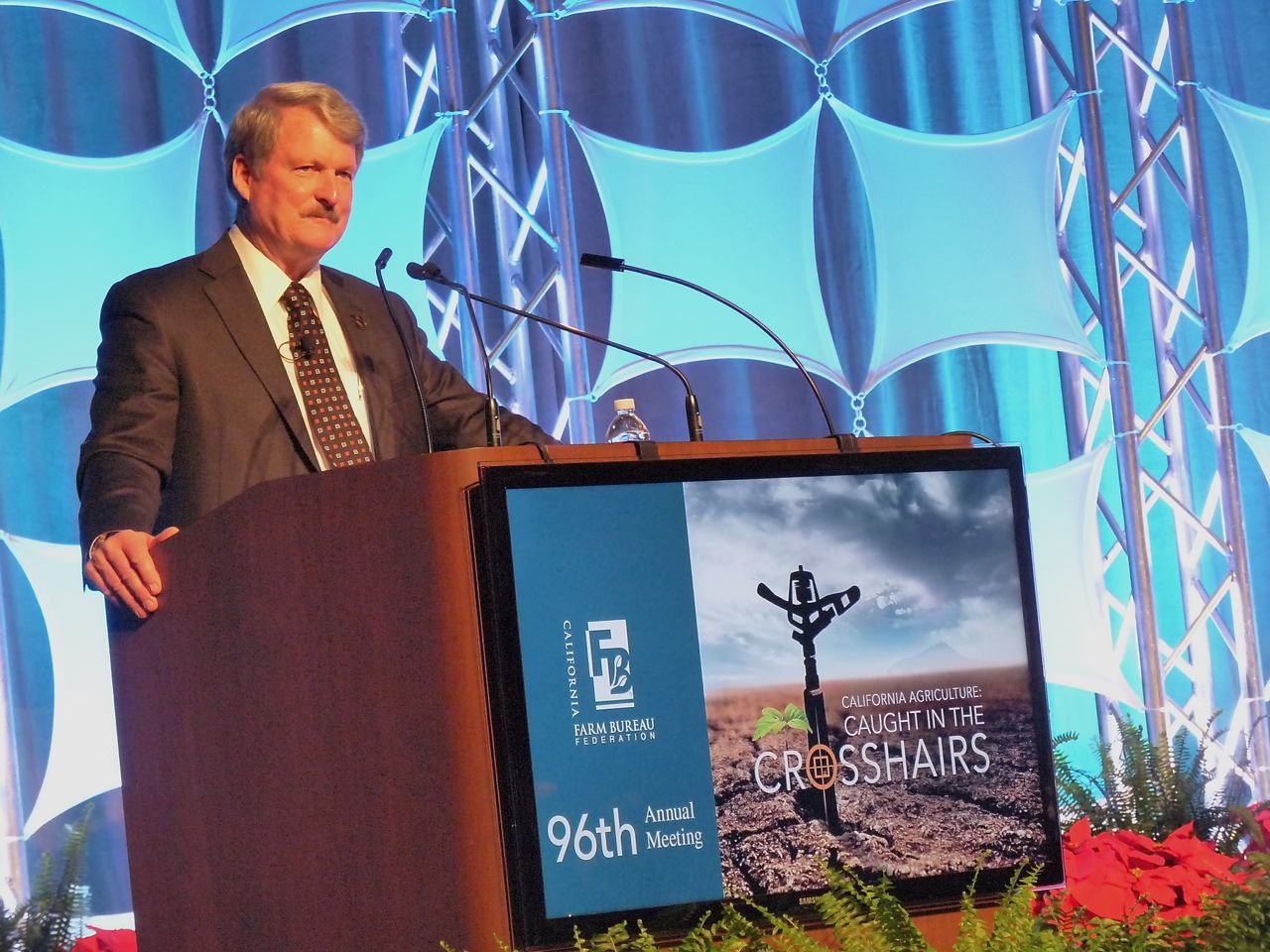
Paul Wenger, president of the California Farm Bureau Federation (CFBF) welcomed attendees to the 96th Annual CFBF Meeting by introducing the conference’s theme, ‘California Agriculture Caught in the Crosshairs.’

“The only way to be a target is to be standing still. I can guarantee we are not going to stay standing still, but from time to time, I think we have stood still. It is interesting; people say this is provocative, but it is also spot-on, California agriculture has adapted and improved, and continued to adapt and improve, and continues to provide food and fiber. We have become a victim of our own success, and because many times we would just as soon as sit back and hope the world would pass us by while we do nothing short of miracles by producing more and more food and fiber with basically the same resources we have had for years, all of a sudden, we’ve become victims of our own success.”Farm Bureaus Meeting Theme

“After two wet years when our reservoirs were brimming to capacity, our farmgate value in 2011 rose to a record of $43.5 billion. Now that’s farmgate, and you will hear other states say how they have a $100 billion farm economy, but this is just the farmgate, and we are not even talking about what our multiplier effect is.”

Wenger explained that California agriculture slipped by $1 billion in 2012, and “we have yet to see what the final report for 2013 will be. But, if it is any indication by what we have been witnessing  through the county ag commissioners in their reports for food and fiber production, it will likely set a new level.”

“And ladies and gentlemen, as bad as 2014 was for water, the fact that we had 4, 5 or 6 hundred thousand acres out of production, the fact that we had 17,000 jobs lost, what the University of California said was a $2.2 billion dollar farmgate loss due to lost production; I would estimate (and we won’t know until 2015), that 2014 will probably set a record year for farmgate value and income.”

“And we will have our detractors and others who say, ‘what is wrong on the farm?’ Agriculture continues to increase and produce even though we have challenges. The underlying number 1 challenge of the statistical health of California agriculture is water. Today’s presentation though is going to be forward-looking.”

Wenger’s presentation included a “Working for You” document handed out to each member that detailed the organization’s policies, and the duties of its staff, officers, and board of directors. Wenger recognized the efforts of Rich Matteis, CFBF administrator and staff to prepare the document and solve issues for the California Ag industry. Wenger explained, given the challenges over the last few years, and especially with the Affordable Care Act, “Rich Matteis has been doing nothing short of miracles, orchestrating our staff to be able to do more with less.” Wenger urged Farm Bureau members to carefully review the document to understand how the organization is endeavoring to work on their behalf.

Though the document did not include contributions from the 53 county farm bureaus, Wenger recognized the farm commissioners and the work product from their bureaus, led by volunteer staff who have to transition around new leadership every few years. “They have to keep air in the tires, and the bearings greased so everything works in our county farm bureaus. As a grassroots organization, it’s those folks and the folks we have at CFBF and the American Farm Bureau Federation (AFBF) that really help those of us who are farmers and ranchers to accomplish what we do.”

Wenger considers 2014 a very interesting year and expects the same in 2015. “It’s all about water, folks. Think back not too long ago to August when we had all the mechanizations around the water bond: ‘is it going to be a $6.5 billion bond? Is it going to be $6 billion bond?” There were questions about water storage and how much funding would be allocated for water storage.

“We finally got it done with a near unanimous vote to get the water bond on the ballot for $7.5 billion with $2.7 billion continuously appropriated for water storage. We don’t know what will happen, but we are glad it got on the ballot.”

Continuing, Wenger said that shortly afterwards, all the attention turned to groundwater. “The two groundwater bills working their way through the legislature were signed by the governor in September.” Later, one of the authors, former Democratic California State Assemblymember Roger Dickinson, wrote, “The Governor signs historic groundwater legislation. California’s water future is secure.”

“Nothing could be further from the truth,” said Wenger, attributing Dickinson’s recent defeat at the polls to the funding and efforts of the California Farm Bureau Fund to Protect the Family Farm (FARM PAC).

“Let’s not lose focus on what happened in November. For the first time in four decades, the electorate decided to do something about our water infrastructure.” Their message to Sacramento, well beyond the water bond, was, “We need to do something about our water infrastructure, not only for our environment, not only for municipal and industrial, but most of all for agriculture because we are feeding the world.”

“And so what happened is nothing short of phenomenal,” he continued, congratulating the board for stepping up and spending the funds to be able to get over the threshold and have a win.”

Returning to the theme of the conference and its positive outlook in his closing, Wenger stated, “A lot of folks will say that ‘Caught in the Crosshairs’ is a picture of despair. I actually say, ‘no, it’s hope.’”

Wenger said there’s hope for what the industry can do if given a little bit of water. “Some folks will say that with the clouds, it is doom and gloom; but remember, we need to have rain clouds to have water in our reservoirs and streams. Really this is a picture of opportunity and of what can be and will be if we work together and really take an aim on advocacy.”

“As we take an aim at advocacy, everybody gives the example of a three-legged stool: one leg is not any good without the others. “That’s absolutely true; I couldn’t do what I do without Kenny Watkins (First Vice President) and Jamie Johansson (Second Vice President). As we look to the future, we have to educate; we have to engage; and, we have to be advocates.”

2016-05-31T19:32:11-07:00December 11th, 2014|

Why the Amazing Avocado will Help Curb Cravings

Source: Midge Munro; Avocado Industry Council  

Research shows adding a few slices of avocado to your lunch will slash your desire to eat over the next three hours by 40 per cent compared to eating the same meal without it.

A study, published in Nutrition Journal, focused on overweight adults to see if avocado consumption helped them feel more satisfied and reduced their desire to eat in the following few hours.

Researchers at Loma Linda University in the United States conducted randomized single-blind crossover trials where participants ate a standard breakfast followed by one of three test lunches – one without avocado, one that included avocado and one where extra avocado was added.

The volunteers’ glucose and insulin responses were measured, along with their feelings of satisfaction and desire to eat over the next five hours.

The study found those who added half a fresh avocado to their lunch reported a 40 per cent decrease in desire to eat again over the next three hours, and a 28 per cent decrease in the following five hours.

Participants also reported feeling more satisfied (26 per cent) during the course of the afternoon following their avocado lunch.

Satiety is an important factor in weight management, because people who feel satisfied are less likely to snack between meals, said Dr. Joan Sabaté, Chair of the Department of Nutrition who led the research team at Loma Linda University.

It was also noted that though adding avocados increased participants’ calorie and carbohydrate intake at lunch, there was no increase in blood sugar levels beyond what was observed after eating the standard lunch. This leads them to believe that avocado’s potential role in blood sugar management is worth further investigation.

The study was funded by the American-based Hass Avocado Board.

New Zealand Avocado CEO Jen Scoular says there are many international studies underway to uncover the health benefits of avocados.

“Other research published in Nutrition Journal found people who regularly eat avocados weigh 3.4kg less on average, and have waistlines around 4cm smaller, than those who don’t,” Scoular says.

“Avocados are rich in monounsaturated (‘good’) fats and are a low GI (glycemic index) food, so they will help you to feel fuller for longer.”

Another reason avocado will help fill you up is they are packed with fibre. Half an avocado will provide more than 25 per cent of your daily recommended fibre intake.


“They’re an absolute powerhouse when it comes to providing your body with the nutrients it needs each day. They also help your body absorb more nutrients from other fruit and vegetables you eat with avocado,” Scoular explains.

Boosting your avocado intake is easy as this home-grown fruit is extremely versatile. You can add a few slices to your favourite omelette, sandwich or salad, or eat them on toast at any time of day.

“You can also blend them into smoothies or use them as a butter and oil substitute when baking or making desserts,” she says. “Their creamy texture makes them perfect for mousses, ice cream and cheesecakes. Delicious and healthy!”

2016-05-31T19:32:11-07:00December 10th, 2014|

The Holiday Guide to Staying Healthy

By: Monique Bienvenue; Cal Ag Today Communications Manager 

With cookies, pastries and elaborate meals surrounding you this holiday season, it’s extremely easy to indulge in unhealthy meals. Thanks the American Heart Association, however, there are few ways to indulge in your favorite holiday dishes while staying on track. Here’s how:

Keep an eye out for sodium:

  • Look at the labels! Believe it or not, your favorite breads and canned soup may contain high levels of sodium, so make sure to look at the food labels before making a purchase.
  • Find substitutes: Instead of adding salt to your meal, try using spices and herbs such as rosemary and cloves.
  • Add veggies: Fresh vegetables are sure to add flavor to your meal without having to add salt!

Defeat the turkey:

  • Choose the white meat: White meat has less fat and less calories than dark meat!
  • Remove the skin: Although tasty, the skin contains a large amount of fat
  • Limit the gravy: Gravy can be the culprit when watching your calories, be sure to limit the amount you put on your meal.

Desserts, desserts, desserts:

  • Share the goodness: Instead of indulging in one full serving of cake or pie, split it with a friend or family member. You’ll thank yourself at the end of the day.
  • Sample: Take a bite of a cookie, and eat the corner of piece of cake. The small bites you take will have less fat and calories than one full serving of something else.

For information on how to stay healthy this holiday season, click on the link below.

http://www.heart.org/idc/groups/heart-public/@wcm/@fc/documents/downloadable/ucm_455757.pdf

2016-05-31T19:32:12-07:00December 9th, 2014|
Go to Top