Dairy Prices Still Low

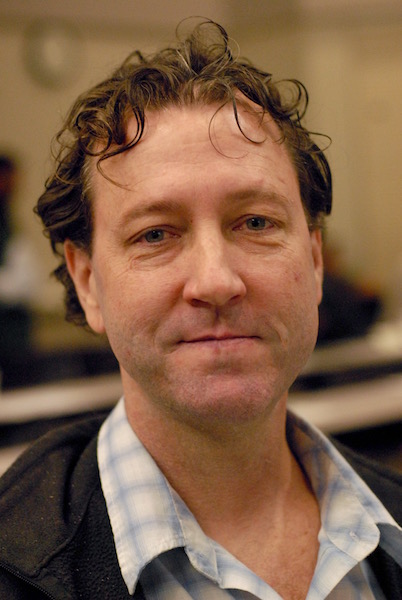
UC Davis’ Bees Butler on Low Dairy Prices


By Laurie Greene, Editor


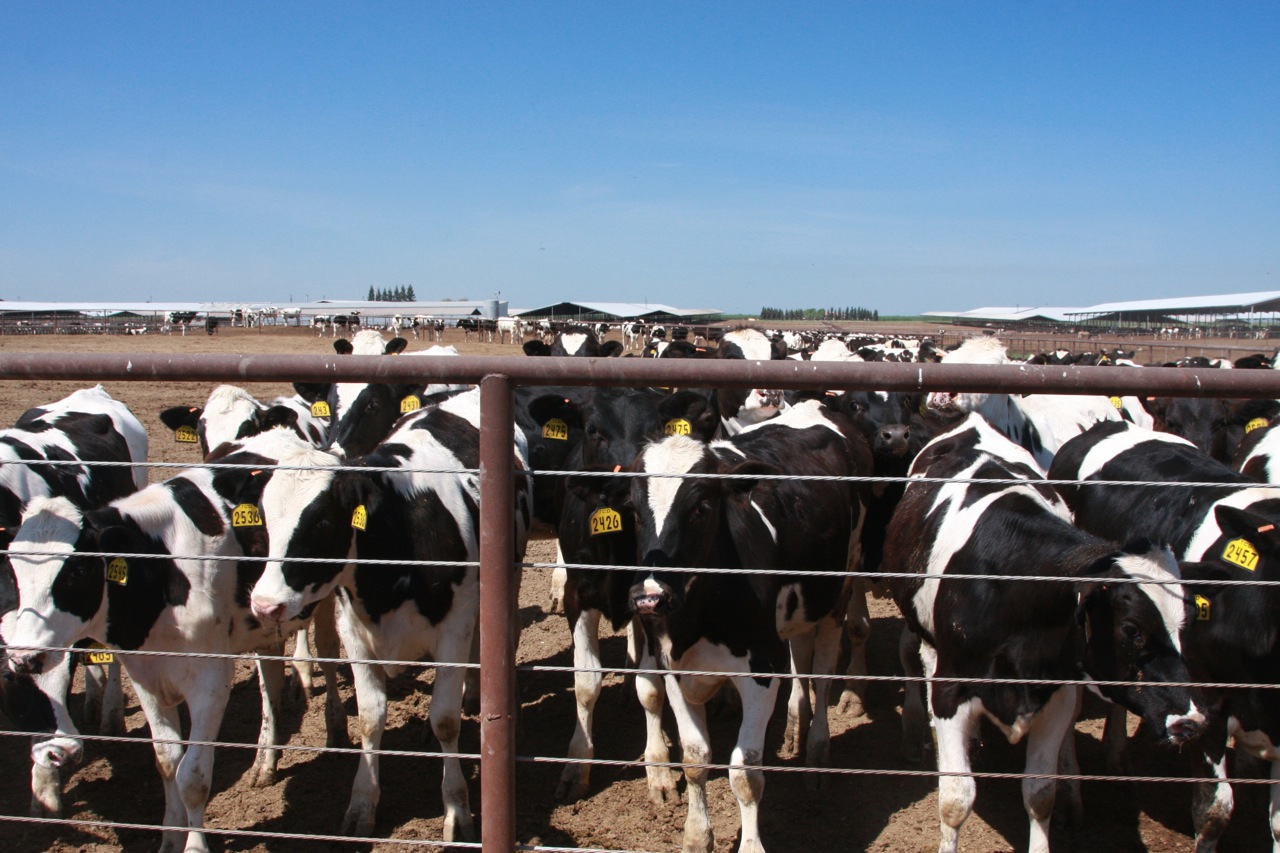
As previously reported, the dismal below-production-costs dairy prices in California—the #1 dairy state—as well as in the rest of the nation, emanate from excessive inventory and slumping sales, particularly in the export market.

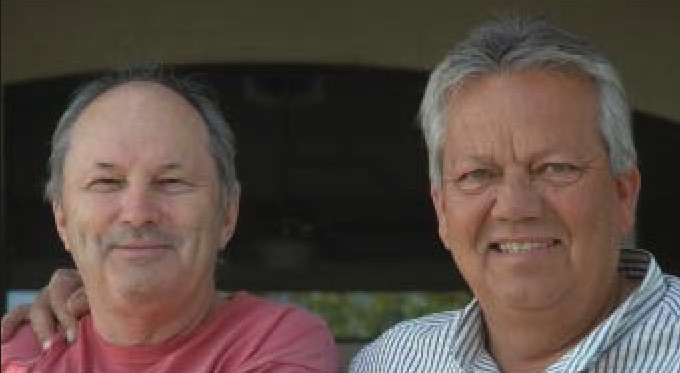
Leslie (Bees) Butler, a UC Davis Cooperative Extension specialist and lecturer in the Department of Agricultural and Resource Economics, explained why dairy producers don’t cut back on milk production. “It is easier said than done,” he said, “and for many producers, it comes down to an income problem. Most production units are set up on a certain sort of ‘scale,’ if you like. So if I am all set up ready to milk, let’s say, 800 cows, or 1000 cows, and then you come along and tell me, ‘Well, you ought to reduce it a bit.’”

“Quickly, I, the dairyman, have to think of what I can do,” said Butler. “There may be a couple of things I can do. First, I can get rid of some cows, my lowest producing cows. You can do that, but it would be a temporary solution to the problem. The second is don’t add those high-producing heifers back into the herd, but they are the most efficient cows. So as you do add them in, you have to cull more lower-producing cows. Many heifers are much better producers than their mothers, so it just reduces the lifecycle of the poor mom.”

“And of course, cash flow in the dairy business is so important,” emphasized Butler. “You know there is a limit to how much a dairy farmer can reduce his income without impacting too seriously his ability to pay off loans, etc.”
2021-05-12T11:17:14-07:00February 17th, 2016|

Lorsban Under Scrutiny

Chlorpyriphos (Lorsban) Must be Used More Carefully

By Patrick Cavanaugh, Deputy Editor

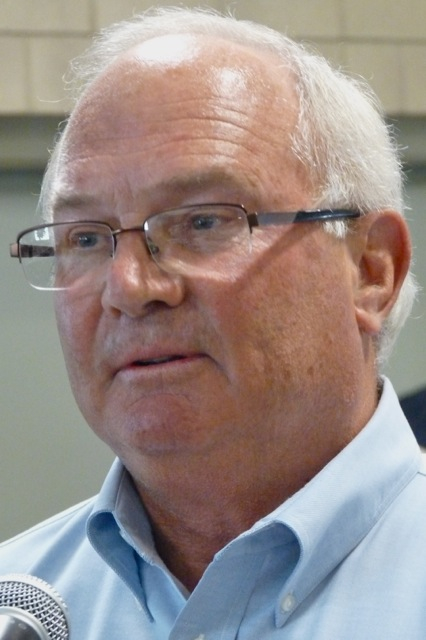
California Department of Pesticide Regulation (DPR) reports an important, broad-spectrum organophosphate insecticide known as Chlorpyriphos, or Lorsban, may be further restricted due to evidence of potential human health and environmental risks, presence (parts per billion) in some California waterways, and pressure from the EPA. Brian Leahy, director of the California Department of Pesticide Regulation, said, “Chlorpyriphos is an important tool and we know there are important times when you have to use it.”

Registered and widely used in agriculture across the nation for more than 40 years, DPR has made it a restricted-use material. Leahy said, “We are trying to work with the grower community to improve how they use it. We are also working with UC IPM to look at essential needs, but we know that as we look at Chlorpyriphos, we are going to have to put additional restrictions on it.”

“We simply need for it to stay on target, and not be getting into the human body. We are seeing that it is, and we are going to continue to make sure that people use it thoughtfully and wisely,” he said.

And Leahy is very confident that growers can use this material and keep it on target, “I have seen farms that use it only when they really need it, and that is what we want. We can’t lose this tool and we are going to keep it only by showing we can greatly reduce off-site movement to the human body and watersheds,” he noted.

___________________________

Resources:

According to the University of California Agriculture and Natural Resources 2014 Chlorpyrifos Report entitled, “Identifying and Managing Critical Uses of Chlorpyrifos Against Key Pests of Alfalfa, Almonds, Citrus and Cotton“:

Chlorpyrifos plays a critical role in many IPM programs for controlling pests that threaten the productivity and economic well-being of California producers and in maintaining the high quality standards required by consumers and international export markets. This active ingredient also allows production of animal feed to support the important dairy industry in California. For some pests, chlorpyrifos is one of the last effective organophosphate insecticides available and may provide an important alternative mode of action for insecticide rotations to prevent the development of resistance to newer insecticide products. For others, this product is one of very few products with international registrations with established maximum residue limits (MRLs) that allow unhampered trade. Chlorpyrifos may also be a key tool for controlling invasive pests as well as endemic pests occasionally found in extremely high population densities. 

The California Department of Pesticide Regulation reports that the combined use of chlorpyrifos in alfalfa, almonds, citrus, and cotton has decreased since 2006. 

Although newer insecticides are also available to manage some pests in these four crops, there is a continued need to preserve the availability of chlorpyrifos for specific situations.

Assessing the Health Risk of Pesticides,” California Department of Pesticide Regulation

2021-05-12T11:03:04-07:00February 16th, 2016|

Youth in California Cattle

Youth in California Cattle

By Charmayne Hefley, Associate Editor

Statistically, it appears millennials aren’t considering agriculture as a career path. The USDA’s “2007 Census of Agriculture: Farmers by Age,” reports the average age of cattle ranchers was 57.8 years old. Malorie Bankhead, director of communications for the California Cattlemen’s Association (CCA) and a millennial herself, said, “Young people in the beef industry have a really unique opportunity to get involved in something called the Young Cattlemen’s Committee (YCC), the young affiliate of our California Cattlemen’s Association.

Young Cattlemen’s Committee (YCC)

Young Cattlemen’s Committee (YCC)

Bankhead explained, “There are four college chapters: Fresno State, Chico State, Cal Poly and UC Davis. We don’t discourage membership from high school students or even folks younger than that who are interested in getting involved. The membership is $25 per year, and with that, you’re afforded a wealth of opportunity to become involved. We have a fairly robust scholarship program available to YCC members where we interview up-and-coming leaders in the beef industry who are focusing academically and extracurricularly on the beef industry, with the career goal to reenter the beef industry.”

Bankhead said the Young Cattlemen on the Capitol event, set for April 5, “is another opportunity for young people in the industry—specifically YCC members—to come to the CCA office in Sacramento to to learn from our staff about the current hot topics in the beef industry affecting ranchers. We turn to discussions with those folks and each other and build your network in the beef industry. We also tour the Capitol, visit some legislators and network with them on issues impacting the beef industry.” Registration information is forthcoming on the CCA website under the YCC tab.

2021-05-12T11:17:14-07:00February 15th, 2016|

Valley’s Gold Prepares for Fourth Season

Valley’s Gold Prepares for Fourth Season


By Charmayne Hefley, Associate Editor

Valley's Gold

Currently in the midst of season three, Valley’s Gold, a weekly television series focusing on agriculture in the Central Valley, is scheduled to continue for a fourth season.

Ryan Jacobsen, the series’ host and Fresno County Farm Bureau CEO, is surprised but pleased by the show’s success. “I guess, just by the blessings of being able to do what we do and show this incredible industry, it’s resonating with folks,” Jacobsen said. “They love the show and the opportunities this show has given us to be able to show how our food is produced—not the romanticized viewbut the view of truly how it’s done and the people who come together to make this industry drive. It’s just been a phenomenal opportunity to share Ag’s story.”

Jacobsen said California’s diversity has allowed the show, brought to viewers by Fresno County Farm Bureau and ValleyPBS, to continue with consistent, original content. “You would think after that many seasons we would run out of crops,” Jacobsen said, “but because of this phenomenal Valley and this phenomenal state, we’re finding more and more stories. The more we dig, the more we find and the more we’re able to share the wealth of what we produce here.”

Sponsored by GAR Tootelian, BRANDT and Meyers Water Bank, the show airs on Wednesdays at 7pm PST and is re-broadcasted on the weekends, Saturday at 6:30pm and Sunday at 10:30am.

2016-06-03T09:39:03-07:00February 11th, 2016|

Vertical Integration and Grape Flavors

Vertical Integration and Grape Flavors

By Charmayne Hefley, Associate Editor

Vertical integration, the combination in one company of two or more stages of production normally operated by separate companies, has helped lead to success in many facets of the agriculture industry. Harold McClarty, who founded HMC Farms with Mike Jensen, said without vertical integration, his farm would not be able to survive or have nearly the same level of success.  “We would not be in stone fruit if we were not vertically integrated,” McClarty explained. “There are three profit centers: the growing of it, the packing of it and the selling of it. We have all three of those profit centers. Without them we would not be able to survive the tough years.”

Cotton Candy grape clamshell

Cotton Candy grape clamshell (Photo source: Grapery)

McClarty also said the grape industry has made significant strides in flavor profiles in the marketplace. One popular flavor is Cotton Candy, which is grown and sold by Grapery, a company founded by Jack Pandol in 1996. Grapery also grows and sells Gum Drop grapes, Moon Drop grapes, Flavor Pops grapes and more.

The increase in unique flavors, according to McClarty, has helped grapes become a popular snack. “There’s been a revolution in the varieties of grapes grown just over the last five to seven years,” McClarty said. “These new varieties have revolutionized grapes and enabled us to produce more on less. 

To evaluate a grape, McClarty suggests you “look at a berry’s color, crispness and sweetness; these are the things that make a grape taste delicious. It really is a revolution, and we haven’t seen it in the California marketplace as much as we have in the rest of the United States. The retail chains in California just haven’t embraced it as well as some of the really good supermarkets on the East Coast and in the Southeast,” noted McClarty.

2016-05-31T19:24:13-07:00February 9th, 2016|

Joel Nelsen on New Cases of HLB in San Gabriel

Joel Nelsen on New Cases of HLB in San Gabriel

By Charmayne Hefley, Associate EditorSave Our Citrus

On Wednesday of last week, two more trees, an orange and a kumquat, were found infected with the citrus-deadly Huanglongbing (HLB) disease in the core of San Gabriel. The trees are located on separate properties. One has been removed, and the other is awaiting the owner’s permission for removal. Last summer, 10 diseased trees were confirmed in the San Gabriel area, and a quarantine, already in place since then, will not need to be expanded.

Joel Nelsen, president of California Citrus Mutual, commented on the HLB discovery, “The two trees were found in the core area, pretty adjacent to the others that were found in San Gabriel,” Nelsen said. The finding “is a result of the program and its intensity in continuing to look for positive HLB finds. Unfortunately, these two trees were positive. The Asian Citrus Psyllids (ACP) in the area have been treated. One tree has already been pulled. The other homeowner wasn’t home so we’re hoping for cooperation there. It’s not positive, but again it shows that the program is trying to find HLB before it finds the commercial citrus industry.”

2021-05-12T11:03:04-07:00February 8th, 2016|

California Weed Science Society Meeting

California Weed Science Society Meeting

By Charmayne Hefley, Associate Editor

The California Weed Science Society (CWSS) held their annual meeting in Sacramento from January 13-15, 2016. The meeting fostered collaboration between Pest Control Advisors (PCAs) and farmers as they gathered to learn the newest innovations in weed science.

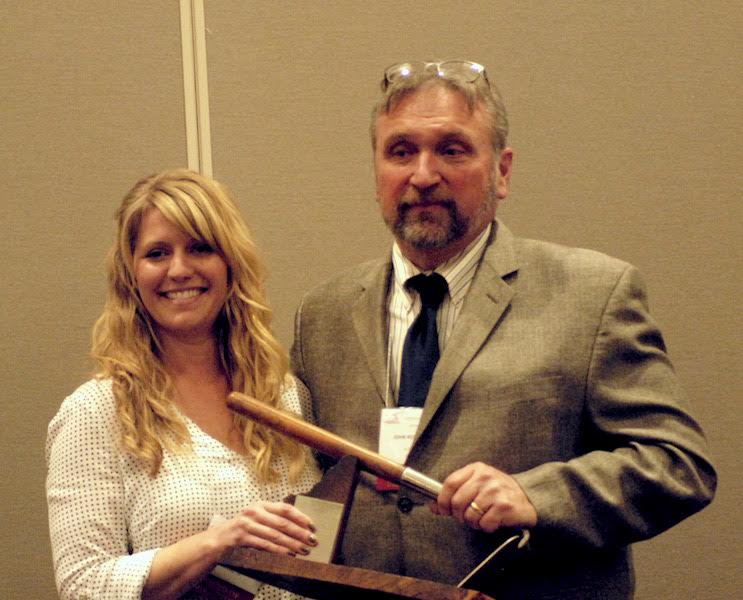
John Roncoroni, weed science farm advisor for the UC Cooperative Extension in Napa County, as well as the outgoing CWSS president, said four Fresno State students gave presentations at the meeting on their research. “We’ve had really great student participation—the amount of student scholarships we’ve given is up this year, the posters, the students and our attendance this year is up,” Roncoroni said. Pre-registration was about 530 people.

CWSS LogoRoncoroni suspects that rain pushed people to attend, “becausewith that rainwe’re looking at more weeds this year. So people are looking for the newest information on weeds. This year’s conference really has done a really good job of putting that information together. Kate Walker, our program chair, has really done a fine job of putting together a great program.”
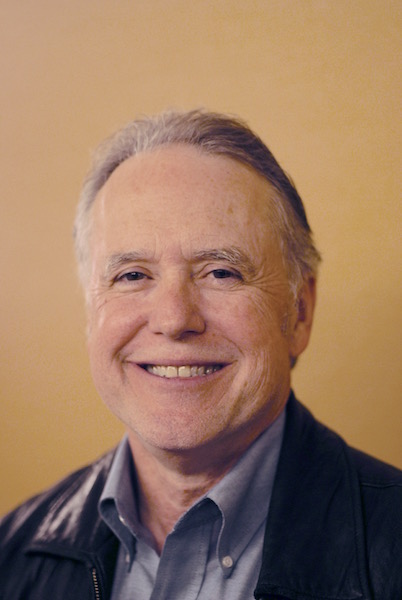
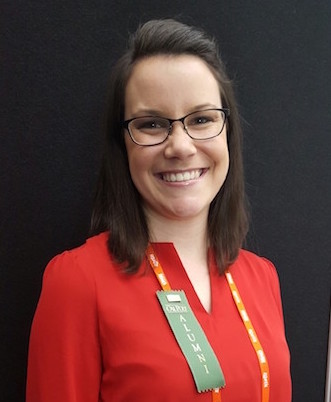
Kate Walker, technical service representative for BASF Corporation, is also the new, incoming CWSS president.

________________________

Links:

California Weed Science Society (CWSS)

The CWSS recently updated its published textbook, Principles of Weed Control, 4th Edition, that focuses on the applied aspects of weed control.  The purpose of this textbook is to provide access to the fundamental principles and concepts of weed management in California. The book is designed for use at the college level by students who have an interest in pursuing a plant science or associated background of course work. It is also a useful resource for individuals studying to become PCAs and applicators or for consultants who work in weed science. For more information, go to the CWSS website Publications page.

2021-05-12T11:03:04-07:00February 5th, 2016|

EPA on Farming

EPA: Domestic Farming is Critical

Importing All Food from Other Countries is Risky, Part 1


By Laurie Greene, Editor


Editor’s note: California Ag Today was granted an exclusive interview with Ron Carleton, counselor to the U.S. Environmental Protection Agency (EPA) Administrator Gina McCarthy for agricultural policy. While we know that air and water quality are top priorities for the EPA, we asked Carleton to describe the outlook of the EPA on farming.

“The importance of our agricultural sector to our country, to our consumers, to our economy, to our job creation, to our rural communities: Absolutely, we have to preserve that,” said Carleton.

“We used to have discussions in the ’70’s, and the 80’s and the 90’s about energy independence,” he said, “because of the problems caused by importing so much of our energy from abroad, particularly in instances from countries that weren’t necessarily friendly to us.”

Carleton noted the same can be said with food imports. “Imagine we have that same situation for most of our food. I think that poses a serious risk to food safely. I think that poses a serious risk to affordability. I think that poses a serious risk to quality and quantify, and we can’t do that,” Carleton said. “It is incredibly important that we preserve our agricultural productive capability in this country.”

“I believe our country can preserve our agricultural base, and I think we can do that in a way that is also environmentally friendly,” noted Carleton. “So, interesting times; interesting challenges. But I firmly believe the men and women who farm in our country are up to the challenge.”

2016-05-31T19:24:13-07:00February 3rd, 2016|

Greg Douhan is New Citrus Farm Advisor

UCCE Tulare Welcomes New Citrus Farm Advisor

By Brian German, Associate Director

The UC Cooperative Extension Program has served Tulare County since 1918 and continues to meet the ever-changing needs of the community. UC Cooperative Extension, Tulare County is preparing to welcome their new citrus farm advisor, Greg Douhan, on March 1, 2016. Douhan, who noted his excitement for the opportunity, will be taking the reins from the recently retired Neil O’Connell who gave over 34 years of faithful service advising Tulare County citrus growers.

Douhan shared that his relatives inspired him to focus his career in agriculture. “I had an uncle who was an almond grower when I was a kid. And my grandfather was an avid horticulturalist; he used to graft different trees and I always found that fascinating.”

“As I got older, I decided I was interested in plants, so I went to Humboldt State University. I also got interested in fungi, so I decided to fuse my interests in fungi and in plants and go into plant pathology,” Douhan said.

“I earned my Master’s and Ph.D. at Washington State University, and then completed a post-doc assignment at UC Davis for 3-4 years. I moved to UC Riverside for about 6 years. Now I am here in Tulare County!” 

Cooperative Extension advisors serve as conduits of information from various UC campuses. Subject matter specialists, along with local research centers, collaborate with local advisors to identify and solve local problems through research and educational programs. The mission of the program is to serve California through the creation, development and application of knowledge, in agriculture, natural and human resources. Farm advisors then apply this knowledge to improve our agriculture and food systems along with our natural resources and environment.

“I’ve been working for the UC system basically since I was a post-doc,” Douhan said, “so it has been for many years. I think Cooperative Extension was the best system for working with both the growers and everybody else to better California agriculture,” Douhan said. “This was just an incredible opportunity. I was doing science and looking for another career move, and this was a perfect opportunity to have a next chapter in doing something different.”

_______________________

Link:

Tulare County Cooperative Extension

2016-05-31T19:24:14-07:00February 1st, 2016|

National Dairy Crisis—A Way Forward, Part 1

A Way Forward Out of National Dairy Crisis

First in a Series

By Patrick Cavanaugh, Deputy Editor

The national dairy industry is in crisis right now. Milk Prices are at an all-time low due to oversupply and drastically lowered exports. The seesaw scenario has inventories up and prices down below production costs.

Tom Van Nortwick, owner and publisher of Agribusiness Publications based in Fresno, has published a dairy magazine for 35 years. He was closely involved with hundreds of dairy producers from 2009 through June 2014 in the organization and establishment of the National Dairy Producers Organization nationwide. The organization focuses on keeping dairies profitable especially when market conditions force down dairy pricing.

Tom Van Nortwick

Tom Van Nortwick

Van Nortwick told California Ag Today, “The biggest problem our dairymen are facing today in California and across the country is that the price of milk, as set by the market and by supply and demand, is actually below the cost of production. So they are making a hundredweight of milk; it is on the market for sale; but the price that they are receiving for every hundredweight of milk is actually lower than what it costs them to make it. And that has been going on for most of 2015 and now we are heading into ’16 towards ’17, and there doesn’t seem to be a solution in play from anyone, anywhere.”

“The big question is how can this be sustainable for dairies, which, over the last 10 years, on average, have had milk prices below production costs?” Van Nortwick asked. “We are not sure,” he explained. “In fact, what we have seen is huge attrition in the dairy industry.”

“In September 2011, there were 110,00 dairy producers in America,” said Van Nortwick. “Today, there are 45,000-60,000 milk producers at some level in the country. We have had huge attrition as we have gone through nearly a decade of really high volatility and low prices. For the majority of the time, especially the last 7 years, it has been extremely difficult.”

“We had a wonderful 2014 when supply and demand were more in balance and there were no excesses,” Van Nortwick stated. “Our global milk sales were high, and yet that has now changed, driving the price of milk throughout 2015 to unsustainable [low] levels.”

Van Nortwick observed that survivors in the dairy industry, particularly in California, have been able to diversify into other crops for positive cash flow. “Whether it is nuts or almonds, of course we are going pillar to post with almonds in California anyways,” he remarked. “Someone the other day said, ‘Hey Tom, you might have to get used to the fact that California is more suited to produce these specialty crops than it is to produce feed for cows to turn into milk.’”

Van Nortwick contends there is a way for the dairy industry, not only in California, but nationally, to do something about these low prices. “The proposal we make is all about a way forward. Dairy producers in this country who have been in their barns over many years and have seen these conditions, have asked, ‘What if we did it this way?’”

090“So when we formed the National Dairy Producer’s Organization nearly five years ago,” he elaborated, “incorporated in the contract with producers was a long list of recommendations that needed to be implemented. We have not yet been able to implement very many of these and there are good men who are continuing that effort,” he noted.
“But one of the things we wanted to talk about most,” Van Nortwick said, “was the Dairy Pricing Organization originating from Robin Berg, a dairy producer in Wisconsin, that gave specific ideas to what dairy producers could do. We proposed that price volatility could be removed from the marketplace by dairy producers being market-responsive with their milk production on the farm, relative to profitable demand in the marketplace. If you make too much milk, and it cannot be sold, the price for—not just that excess milk—but all milk, goes down.”

Nortwick further explained, “So picture a great big tank that we fill up every day, and everyday it goes down. But if we [over pour and] push milk out of the top of that tank and any of it spills over the side and onto the ground, then every bit of milk in the whole tank becomes less valuable.”

“So, we have to be market responsive,” he continued, “How much milk can we use at any given time? The big dilemma that has come about today, is that the high global demand we were enjoying in 2011, 2012, 2013, and even as far back as 2010, was double digit growth in every one of those four years. When the producers finally mitigated their excess milk production in 2013, dramatic price increases in 2014 resulted. Milk was at record levels during that nearly twelve month period of time.”

Van Nortwick cautioned, “Unfortunately what was ignored were warnings—ample signs available to us in the first quarter of 2014, even in the fourth quarter of 2013—that should have warned dairy producers, ‘We are losing; demand is falling. Don’t keep increasing the amount of milk you make every month.’”

Van Nortwick clarified this loss in demand was mostly due to global exports. “We have sustained, for the most part, all of our domestic demand,” he stated, “Those numbers have not changed at all.”

“But here is that tank of milk overflowing,” he illuminated, “and because our tank overflowed, the price of all of that domestic milk went down too! So even though we did not lose domestic consumption, we lost price because of excess milk production on the farm. The global market didn’t take it.”

“At the height of that boom, 17.5% of our total production was going global,” said Van Nortwick. “How much did global fall? It plummeted at least 50% when that bubble burst.”milk

“Since then, about half as much of our milk production in the United States is going global. What were the consequences? We had a 31-35% reduction in milk price nationwide for all milk—not just the excess milk that was going global—but all milk in America,” Van Nortwick noted.

Van Nortwick explained the dairy industry needs a sure approach to manage increased prices at a viable profit level. There must be a dramatic decrease of milk in the tank.

Van Nortwick offered several ways to tackle it, including a buyback program that donates milk products to churches and food banks across America. “Robin Berg, a dairy producer, came forward and said, ‘There are two ways to attack this: We can be market-responsive with milk production on the farm or we can go to the other end after it has been manufactured and sitting in storage, and the inventory is rising to the point where it is beginning to depress the price of milk paid to me (the producer). We could go in with dollars that we have set aside and saved, and we can remove that inventory, to help maintain a viable, profitable price for producers.”

Further describing the scenario, Van Nortwick said, “We have prevented milk from spilling on the floor because dumping is not a solution, it is a lose-lose plan. Get it manufactured and be ready on the other end.”

“Food insecurity is kind of the new insecurity,” he declared. “There are 49 million people in America who are underserved and have food deficiencies in their lives all the time.”

“What are we doing about it?” asked Van Nortwick. Feeding America, food banks and churches across this country have the infrastructure not only to take it in and house it, but also to immediately distribute it. Feeding America, a network of food banks, is leading the fight against hunger in communities nationwide and serves 46.5 million Americans in need.

Van Nortwick went on, “There is a sign on a little church in our neck of the woods, ‘Free Food-Saturday.’ So apparently, they are going to have a free distribution of food. That infrastructure is already in place! Give them the commodities they need to feed the 49 million people. Have it removed [from the market supply]. We will pay for it and donate it to them. They pick it up. They’ll even transport it. They will pay to move the products where they need to be distributed to the people who need the food.”

Feeding America is onboard and wants to do it, according to Van Nortwick. “Our people have met with their people who said they can take all that we can provide.”

Readers can learn more about Dairy Pricing and the goal of becoming more Market Responsive with their milk production on the farm by visiting www.dairypricing.org or www.my-dairyman.com.

2021-05-12T11:17:14-07:00February 1st, 2016|
Go to Top