USDA To Help Many Affected by Wildfires

Disaster Supplemental Nutrition Assistance Program Available for Those In Need Due Fires

U.S. Secretary of Agriculture Sonny Perdue announced today that low-income California residents dealing with the ongoing wildfires could be eligible for a helping hand from the U.S. Department of Agriculture’s Disaster Supplemental Nutrition Assistance Program (D-SNAP).
Secretary Perdue said that households who may not normally be eligible under regular Supplemental Nutrition Assistance Program (SNAP) rules may qualify for D-SNAP – if they meet the disaster income limits and have qualifying disaster-related expenses.
forests“USDA is committed to ensuring Californians affected by these wildfires have enough to eat and will be here to help throughout their entire recovery. D-SNAP will be a vital part of our ongoing, on-the-ground food assistance,” Secretary Perdue said.
To be eligible for D-SNAP, a household must either live or work in an identified disaster area, have been affected by the disaster, and meet certain D-SNAP eligibility criteria. Eligible households will receive one month of benefits – equal to the maximum amount for a SNAP household of their size – to meet their temporary food needs as they settle back home following the disaster. California will share information about D-SNAP application dates and locations through local media.
The timing of D-SNAP varies with the unique circumstances of each disaster, Secretary Perdue said, but always begins after commercial channels of food distribution have been restored and families are able to purchase and prepare food at home. Before operating a D-SNAP, a state must ensure that the proper public information, staffing and resources are in place.
Although current SNAP (known as CalFresh in the state of California) households are not eligible for D-SNAP, under the Families First Coronavirus Response Act of 2020, USDA previously approved emergency allotments for California in response to the ongoing COVID-19 pandemic. Therefore, ongoing SNAP households have already received the maximum allotment for their household size for the month of September. California will continue to issue replacement benefits to current SNAP households who lost food as a result of the wildfires.
The D-SNAP announcement today is the latest in a battery of USDA actions taken to help California residents cope with the wildfires. These include:
  • Allowing participants to buy hot foods with their SNAP benefits at authorized SNAP retailers in certain counties.
  • Automatic mass replacement of a portion of SNAP benefits for residents of specific counties who may have lost food due to the wildfires and associated power outages.
  • Extending the deadline for school meal program operators in certain counties to submit reimbursement claims for meals served;
  • Providing households in certain counties with more time to request replacement SNAP benefits for food lost; and
  • Retroactively distributing Commodity Supplemental Food Program food packages that The Redwood Empire Food Bank was unable to deliver in August due to wildfire-related road closures and evacuations.
Individuals seeking more information about this and other available aid should dial 2-1-1. For more information about California’s SNAP program, CalFresh, visit www.cdss.ca.gov/food-nutrition/calfresh.
Further, USDA’s Food and Nutrition Service (FNS) continues to provide significant support to California residents as part of its ongoing response to COVID-19. For more information on flexibilities provided to California, visit the FNS California COVID-19 Response webpage.
USDA’s Food and Nutrition Service administers 15 nutrition assistance programs that leverage American’s agricultural abundance to ensure children and low-income individuals and families have nutritious food to eat. FNS also co-develops the Dietary Guidelines for Americans, which provide science-based nutrition recommendations and serve as the cornerstone of federal nutrition policy. Follow us on Twitter at @USDANutrition.
2020-10-01T10:31:12-07:00October 1st, 2020|

Growing Strawberries Without Fumigants

UC Explores Alternatives to Fumigants for Strawberries

By Pam Kan-Rice, UCANR Assistant Director, News and Information Outreach

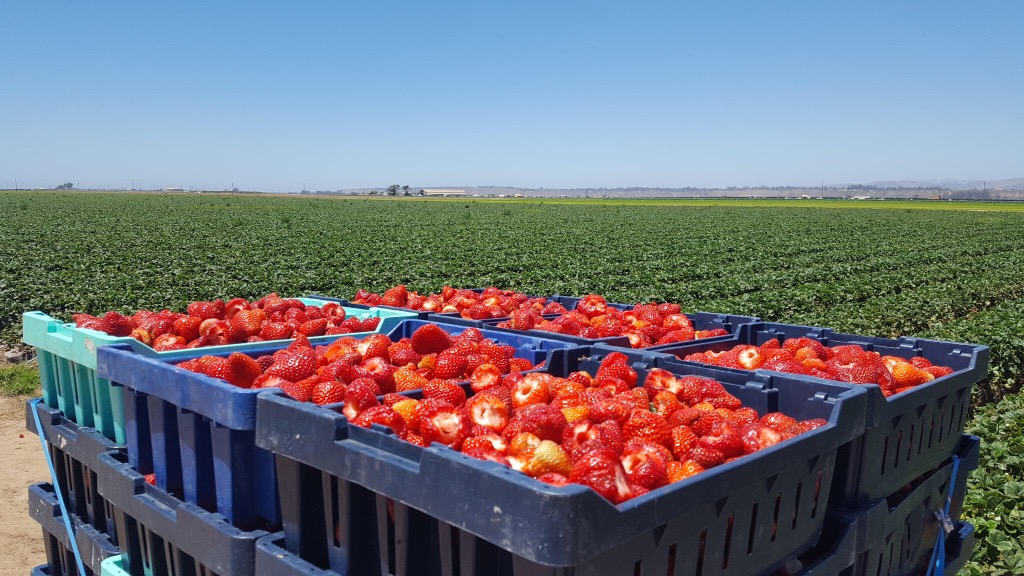
Strawberries, which generated $2.2 billion for California growers mainly on the coast in 2019, are sensitive to soilborne diseases. Strawberry plant roots infected by fungi are unable to take in nutrients and water, causing the leaves and stems to wilt. The diseases reduce fruit yields and eventually kill infected plants.

To protect the delicate plants from pathogens, strawberry growers fumigate the soil with pesticides such as chloropicrin and 1,3-dichloropropene before planting transplants. Due to the potential negative effects on the environment and human health, however, use of fumigants are highly regulated and developing non-fumigant alternatives has been a priority of the strawberry industry.

For a biological alternative to manage soilborne diseases in strawberries, Joji Muramoto, UC Cooperative Extension organic production specialist based at UC Santa Cruz, has received a $411,395 grant from USDA National Institute of Food and Agriculture to study the ability of other crops to suppress strawberry pathogens in the soil.

Verticillium wilt, caused by Verticillium dahliae, is a common soilborne disease that can be controlled with anaerobic soil disinfestation (ASD), a fermentation-based biological treatment using carbon sources such as rice bran under plastic mulch in moist soils for 3 to 5 weeks in autumn. About 2,000 acres of berry fields, mostly organic, were treated with ASD in California and Baja California, Mexico, in 2019.

In 2008-09, the diseases fusarium wilt, caused by Fusarium oxysporum f. sp. fragariae, and charcoal rot, caused by Macrophomina phaseolina, emerged in Southern California and now threaten strawberry plants throughout the state.

ASD isn’t as effective against F. oxysporum and M. phaseolina unless it is applied in summer on the coast. As saprophytes, they feed not only on living plants, but also can colonize crop residues and rice bran especially at lower coastal temperatures in autumn. Treating fields on California’s coast with ASD during summer is difficult because it competes with the vegetable production period.

Based on promising studies in Asia and other areas, Muramoto plans to test alliums – such as onion, bunch onion and leek – and a certain variety of wheat (Summit 515) to see if they will suppress F. oxysporum and M. phaseolina. His team will conduct a series of greenhouse and field trials and test these crops with and without ASD to compare the effects on soilborne pathogens.

“Studies have shown the potential of using allium crops to control Fusarium wilt, and Summit 515 wheat for charcoal rot,” Muramoto said. “Our goal is to examine the effectiveness of suppressive crops, optimize them for California strawberry production systems, and evaluate their economic feasibility for commercial use.”

“No single tactic is likely to replace fumigants,” he said. “Integration of multiple biological approaches such as crop rotation, ASD, and use of resistant strawberry varieties is a key to develop a successful non-fumigant-based soilborne disease management strategy for strawberries. This project is a part of such broader efforts.”

At the end of the three-year study, he plans to share the results at workshops, field days and webinars.

Rachael Goodhue, UC Davis professor of agricultural economics; Carol Shennan, UC Santa Cruz professor of environmental studies; and Peter Henry, USDA Agricultural Research Service plant pathologist, are collaborating on the study with Muramoto.

UC Agriculture and Natural Resources brings the power of UC to all 58 California counties. Through research and Cooperative Extension in agriculture, natural resources, nutrition, economic and youth development, our mission is to improve the lives of all Californians. Learn more at ucanr.edu.

2020-09-30T11:10:49-07:00September 30th, 2020|

Prop 15 Would Devastate Agriculture

Property Tax “Split Roll” a Grave Threat to California Agriculture

Source: Fresno County Farm Bureau
By Ted Gaines

California property owners have benefitted from Proposition 13 for so long, it’s hard to remember the time before it when property taxes shot up unpredictably year after year, forcing seniors from their homes, blowing up family budgets and crushing businesses. That ugly past could be in California’s future if the Proposition 15 “split roll” initiative passes this November. Defeating it must be the highest priority for the agriculture industry and everyone who cares about farming and ranching in California.

Ted Gaines

Prop. 13 put the brakes on those wild increases and for the past 42 years, it has guaranteed stable and predictable annual property taxes. It mandates that property tax assessments are based on a property’s sales price, which gives a concrete data point to establish value. Both commercial and residential properties are taxed at 1-percent of that sales price and annual increases are capped at 2-percent. Properties are only reassessed when sold or substantially improved. It’s the most consequential and successful tax reform in California history.

But the billions of dollars Prop. 13 has saved families and businesses is precisely why it’s become a target for ravenous special interests who want to wring every possible penny from taxpayers.

Prop. 15 would undo Prop. 13’s protections and require an annual reassessment of some commercial properties, leading to the same property tax wild west that inspired Prop. 13. It would extract up to $12 billion in new, additional taxes from Californians. Commercial landowners will see their taxes skyrocket. Small business owners who pay “triple net” leases, where they are required to pay their portion of the property tax for the space they rent, will see those costs filter down to them and their already challenged bottom lines.

But, as bad as that would be for the economy overall, split roll takes special aim at agriculture and would sweep across our farms and ranches like a wildfire.

Prop. 15 exempts agricultural land from these annual reassessments, but it makes a devious change to the definition of “land.” Currently agricultural “land” includes the land itself, improvements, and fixtures. Prop. 15 eliminates fixtures and improvements and exposes them to annual reassessment.

What does that mean? It means that irrigation systems will be subject to annual tax increases. It means that barns, dairies, fences, processing plants, silos, refrigeration units, storage sheds, and much, much more will be subject to annual reassessment.

Incredibly, it will also expose mature fruit and nut trees and vineyards – by the millions -to annual reassessment. Prop. 15 will turn farms into a tax collector’s playground.

Agriculture is a $50-billion industry in California that supports hundreds of thousands of jobs. Around 90-percent of California farms are still family owned. The industry, as with so many others, is straining from the shocking and unforeseen effects of coronavirus. This massive jolt in tax costs could be the blow that leads to mass sales and closures of family farms and destroy legacies that stretch back more than a century.

California is blessed with some of the world’s best farmland but it’s cursed by some of the worst public policy. Prop. 15 would only make it harder and more expensive for agriculture to flourish in our state.

Protect farming and ranching by voting “No” on Prop. 15 this November.

Ted Gaines represents the Board of Equalization’s First District. He is a leading taxpayer advocate and is committed to providing trustworthy and transparent representation for the nearly ten million constituents in 30 counties of northern and eastern California.

2020-09-29T19:38:19-07:00September 29th, 2020|

Treatment for HLB Infected Citrus May Soon Be Here

BioFlora Gets Stunning Results in Field Trials of HLB Infected Trees

By Patrick Cavanaugh, Editor

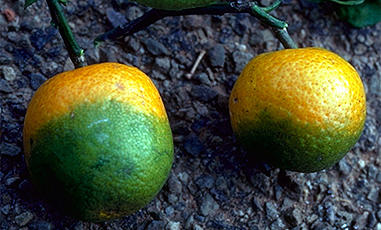
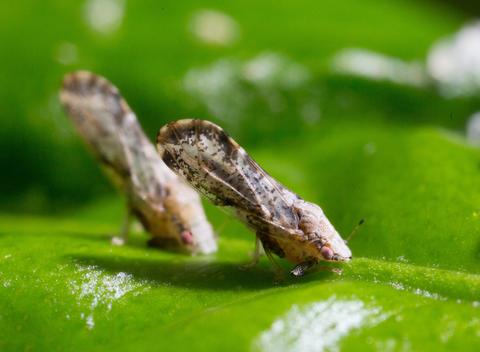
The Asian Citrus Psyllid vectors huanglongbing or HLB. The psyllid feeds on the leaves of the citrus tree, and the HLB bacteria is inoculated into the tree’s phloem. As the bacteria multiples, it clogs the phloem, and the tree slowly dies.

Asian Citrus Psyllids Feeding on Citrus Leaves

BioFlora, a company based in Goodyear, Ariz., has developed a unique citrus program that is getting stunning results from field trials conducted on HLB infected trees. In collaboration with two prominent universities, Bioflora conducted a three-year study on grapefruit trees, the most susceptible citrus species. Initial greenhouse trials were conducted at a government research facility in Florida, and field trials and analysis were performed at two prominent universities with current on going trials with growers in Florida.

A Lake County, FL lemon grower, whose grove experienced the turnaround, noted that he could see trees with significant growth within two initial applications. “Leaf drop stopped after the program was initiated, and the trees had good color and are growing vigorously. I can see an improvement from month to month,” the grower said.

“Over a three-year study on HLB in grapefruits, we were amazed at the results from the four programs (consisting beneficial bacteria isolates, biostimulants, and nutrition, including macro and micro-elements) that we initiated. While we continue our analysis, these diverse programs appeared to have a multirole synergistic effect on HLB trees which also seems to show beneficial yield and fruit quality, but one program (program #2) seems to have the most dramatic effect (Manuscript in Progress)”. said Srinivas Makam, Ph.D., Molecular and Microbiologist for BioFlora’s Integrated Life Science Research Center.

“Studying HLB at the genetic level is providing us with a tremendous amount of information which we are combing through on how HLB functions in the plant phloem and plant’s defense mechanisms. Those plant defense mechanism (systemic resistance, induced or acquired to be determined) we hypothesize, seems to be activated to help the tree cope with HLB .” In addition to advanced molecular assays, leaf samples were analyzed using electron microscopy and a marked reduction in cLas population was observed in trees treated with program #2, with some initially infested leaves showing no bacterial presence. The key reason for this response appears to be the continued timely application of the citrus program”, Makam explained.

“Currently, BioFlora has a lemon orchard trial in Lake County, Florida, infected with HLB. Within five or six months, HLB infected trees are responding to the citrus program very positively,” noted Makam.

BioFlora believes in the partnership between plants and soils, transforming plant health with cutting-edge bio-stimulants that enhance plant defenses, address nutrient deficiencies, and unproductive soils.

Citrus tree health and nutrition has been the focus of the HLB trial. BioFlora programs bring organic and sustainable solutions that growers can implement immediately in the fight against HLB infections.


2020-10-05T14:07:41-07:00September 25th, 2020|

Tuff Times in California–But It Stands Strong

Through Wildfires and Pandemic, California Agriculture Persists

By Tim Hammerich with the Ag Information Network

Mother nature has not been kind to California this year. And nobody is more acutely aware of this fact than farmers. Here are a few ways in which agriculture is coping under these challenging conditions courtesy of the California Farm Bureau.

As winegrape harvest accelerates around California, farmers navigate forces that include high temperatures, wildfire smoke and the marketing impacts of the pandemic–on top of large supplies that left some grapes unharvested a year ago. Analysts expect this year’s harvest to be about the same size as last year’s. Marketers say the pandemic has shifted wine demand to retail outlets, with less being sold at restaurants or tasting rooms.

Agricultural and forestry research and teaching projects have suffered damage from California wildfires. A representative for Cal Poly San Luis Obispo says it could take months for a full assessment of damage to its Swanton Pacific Ranch in Santa Cruz County, where structures including classrooms burned. Fires also hit six reserves managed by the University of California, with researchers still working to determine the impact on their projects.

Impacts of the pandemic continue to reverberate through the meat business. An American Farm Bureau Federation analysis shows the gap between the retail price and farm price of beef is the largest in 50 years of recordkeeping. A similar gap exists in pork prices. While pandemic-related demand boosted retail prices, slowdowns at meat processing plants led to a backup of animals in the marketing chain that drove farmers’ prices down.

2020-09-24T11:25:46-07:00September 24th, 2020|

UC Riverside Awarded Big Grant

UC Riverside Wins Grant to Bring Artificial Intelligence to the Colorado River Basin

By Tim Hammerich with the Ag Information Network

The University of California, Riverside recently won a $10 million grant to develop artificial intelligence to improve environmental and economic stability throughout the western U.S.

Elia Scudiero is a Research Agronomist at the UC Riverside

“So this will bring together university personnel and ag-tech companies that will provide training that will serve the farming communities in California, Arizona, Colorado, and the native American communities in the Colorado River Basin,” said Scudiero. “So we really hope that this is well -received by the growers and it can be useful to improve their current practices so that we can then continue this program beyond the duration of the project.”

Partnering with UC Riverside on this are Colorado State, Duke, University of Georgia, and the University of Arizona. Included in the program is an undergraduate Digital Agricultural Fellowship.

“So we are going to pair these undergraduate students with a faculty advisor for over a year, creating a very tight relationship there,” said Scudiero. “And these students will carry out independent research in the university lab. But at the same time, we will complement this type of experience for the students by sending them to have industry internships at our partners in the ag-tech industry.”

Stay tuned for more information on this exciting project to bring more artificial intelligence to agriculture. The researchers plan to release a website in the coming year.

2020-09-21T11:01:37-07:00September 21st, 2020|

Roma Tomato with ToBRFV Resistance?

Bayer Launches Large-scale Pre-launch Trial of New Tomato Varieties with Resistance to Tomato Brown Rugose Fruit Virus (ToBRFV)


Bayer announced today the final large-scale pre-launch trials of Roma-type tomatoes to help growers address Tomato brown rugose fruit virus (ToBRFV). The trials, which begin later this month in Mexico, will include two varieties of Roma-type tomato that claim Intermediate Resistance (IR) to ToBRFV.

The type of IR Bayer has seen in these varieties is commonly referred to as the “symptomless carrier,” where, despite the presence of virus particles, the crop can show little or no symptoms of the virus in the leaf and/or fruit should the crop become infected by the virus. Adding ToBRFV in the pathogen list for tomato was discussed during last week’s September meeting of the International Seed Federation.

ToBRFV was first observed in 2014 and spread rapidly to different world areas. This viral disease impacting tomato plants represents a challenge for the industry as it can be transmitted very easily through many vectors including farming tools and equipment, workers’ hands, plants, water, soil, and people.

“ToBRFV can quickly devastate tomato crops, so Bayer worked to develop a product to help growers combat it,” said JD Rossouw, Head of Bayer’s Vegetable Seeds R&D. “Bayer leveraged our global cross-functional teams and extensive research and development pipeline to offer a solution designed to ease the day-to-day challenges faced by growers. Our research continues across several tomato species with the goal of bringing further innovative resistance to growers as quickly as possible.”

Following the trials, Bayer anticipates the products will be available for commercial sale in Mexico in 2021, to later be followed by offerings in other important markets around the world.

The ToBRFV resistance program is part of Bayer’s corporate commitment to Health for All, Hunger for None. It complements the company’s SHIELD program, a comprehensive approach to deliver clean seeds season after season to growers around the world. For more than 10 years, the focus of SHIELD has been on the prevention, detection and elimination of pathogens at our own Bayer production and processing sites, as well as third-party production and processing sites for Seminis and De Ruiter brands.

The SHIELD program continues to incorporate market-leading best practices into seed production and supply. In addition to its strict production protocols that are applicable whatever the growing environment (open field, greenhouse or glasshouse), Bayer has always, and will continue to have, stringent testing measures in place aligned with the International Seed Health Initiative (ISHI) guidelines and any applicable laws, which includes testing our seed for the presence of ToBRFV before it is shipped to customers.


2020-09-15T13:40:21-07:00September 15th, 2020|

Farm and Tractor Safety

Important to Maintain All Safety Equipment


By Rick Worthington, with Ag Information Network

Rollovers or overturns are involved in about half of the fatal tractor accidents and are responsible for many disabling injuries and much property damage.

With the use of protective frames and crush-resistant cabs with seat belts, the number of serious and fatal injuries from such accidents should decrease. Rollovers are generally due to driving too fast for conditions; striking surface hazards such as rocks, stumps and holes; running into ditches; hitching high for extra traction; driving on steep slopes; and operating front-end loaders improperly. Tractor upsets also occur when handling large round hay bales and other heavy loads with front-end loaders.

Falls from moving tractors often result in serious and sometimes fatal injuries. Many times the victim is a child, but operators and adult riders can also fall. Falls often occur from smaller and/or older tractors used around the farmstead, where extra riders and overhead hazards are more common than in fields.

Another cause of tractor-related death and serious injury is being caught by, or entangled in, rotating power takeoff (PTO) shafts. In most cases, the PTO shields were inadequate or had been removed.

Other tractor-connected injuries and damage involve:

  • Colliding with motor vehicles or roadside objects;
  • Slipping and falling while mounting and dismounting;
  • Running over bystanders;
  • Striking overhead hazards;
  • Being struck by flying objects, broken parts, or hydraulic fluid;
  • Being crushed by a poorly supported tractor during repair work;
  • Sustaining cuts, bruises, burns and other nuisance, but painful injuries, connected with maintenance and routine operation;
  • Being overcome by exhaust gases inside closed buildings;
  • Being burned by fires that erupt during refueling or as a result of a collision or upset.
2020-09-15T11:12:30-07:00September 15th, 2020|

World Ag Expo 2021 Canceled!

COVID-19 Cancels World Ag Expo and Causes Big Economic Hit to Agri-Center, hotels, restaurants Etc.

For more than 52 years, World Ag Expo® has served agriculture by bringing buyers and sellers together to innovate, collaborate, and advance agriculture. In 2021, the show will not be held live for the first time in World Ag Expo® history.

“After working with the Tulare County Health Department and other officials, it has become evident that given health and safety restrictions from the State of California, holding a live, international event is not responsible in February,” said Jerry Sinift, International Agri-Center® CEO.

The International Agri-Center® Board of Director’s decision to cancel the 2021 World Ag Expo® was not taken lightly, and comes after months of research and evaluation of future trends and known constraints. The decision was finalized earlier than the initial November deadline to provide exhibitors, attendees, volunteers, concessionaires, contractors, and local businesses time to adjust their Tulare farm show plans.

The cancellation of World Ag Expo® comes as another negative effect of COVID-19 for the International Agri-Center®, exhibitors, non-profit food vendors, attendees, area hotels, restaurants, and other associated businesses.

Attendees are encouraged to follow World Ag Expo® social media channels and watch their email inboxes for more information on World Ag Expo® projects throughout 2020 and 2021. They can join the World Ag Expo® email list to stay up-to-date at http://bit.ly/WAEupdates.

World Ag Expo® staff will reach out to exhibitors concerning fees and more options for 2021 starting Wednesday, September 16.

The 2022 World Ag Expo® is scheduled for February 8-10 at the International Agri-Center® in Tulare, CA.

2020-09-14T11:38:14-07:00September 14th, 2020|

Low Priced Imports Hurt CA Growers

CCM Commends Actions Regarding Seasonal and Perishable Products


California Citrus Mutual commends the Office of the U.S. Trade Representative (USTR), U.S. Department of Agriculture (USDA), and U.S. Department of Commerce (DOC) for the actions they recently announced to address the injury caused by increased imports of seasonal and perishable products.

Low-priced imports have previously caused a substantial market disruption for the California citrus industry during its marketing season. We are encouraged by both the Administration’s plan and its determination to bring relief to fruit and vegetable growers who are suffering from similar import issues.

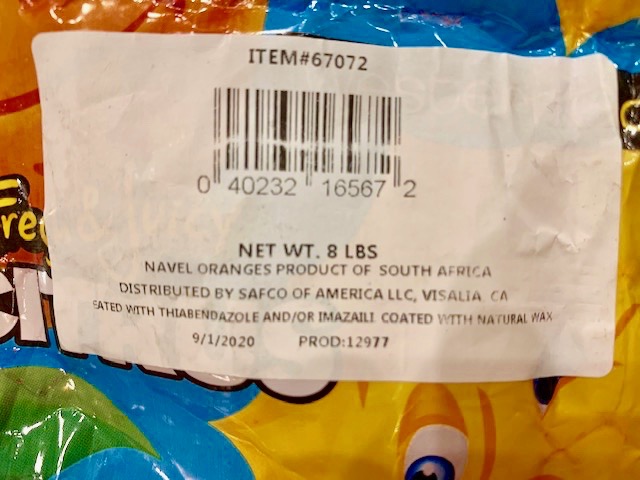
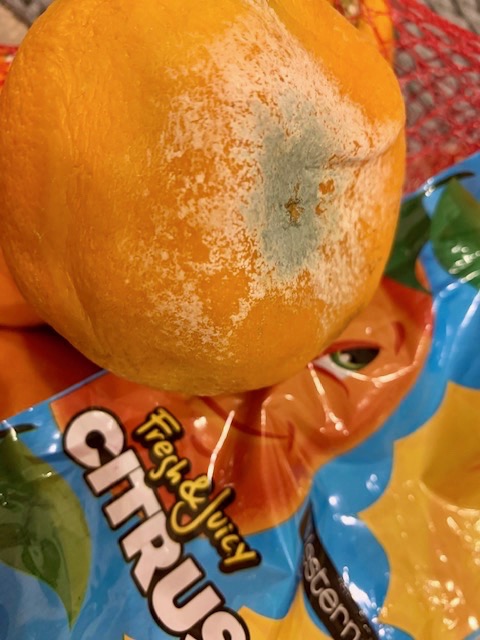
Imported Citrus Often Lacks Quality

The trade remedy steps announced include the self-initiation of Section 201 global safeguard action on certain imports, USTR’s coordination with specific sectors to monitor and investigate imports under the Section 201 provisions covering perishable agricultural products and citrus products, DOC’s coordination with effected sectors on possible self-initiated antidumping and countervailing duty actions, and the Administration’s indication that still other actions and investigations may be taken. These steps are essential safeguarding and supporting all U.S. fruit and vegetable growers harmed by this problem.

In 2017, low-priced citrus imports from the Southern Hemisphere increased 40% over the prior year’s shipments, causing significant price declines and harm to California growers. Consistent with last week’s announcement, California Citrus Mutual will closely monitor imports in the coming California season and continue to coordinate with the U.S. Government regarding any import surges, unfair import practices, and injury to our citrus growers.

2020-09-10T18:06:02-07:00September 10th, 2020|
Go to Top