TODAY’S MEETING IN FRESNO ADDRESSES ACP

Fresno County on Alert for ACP

 
Assemblyman Jim Patterson

Assemblyman Jim Patterson hosted the Citrus Industry Town Hall this morning at the Fresno County Farm Bureau office to discuss the current state of the Asian Citrus Psyllid presence in California, the quarantine situation, how Fresno County is preparing for the possible migration of ACP into the county, and how agencies, growers, and the state and federal governments are cooperating to control its spread in California.

Over forty people attended the meeting, including growers, PCAs, local government and industry leaders, researchers, and media.

Fresno County is the fourth largest citrus-producing county in California, having dropped in status due to freeze-damaged mandarin acreage last year, according to Les Wright, Fresno County Ag Commissioner.
Les Wright
“ACP spread is one of the most serious problems facing valley citrus growers especially those in the south valley,” said Wright.
 
To date, all contiguous counties in southern California are under CDFA Quarantine, as well the Porterville area of Tulare County, to prevent movement of ACP-ridden leaves and plant debris and unsanitary ag equipment into non-infested regions of the state and to bide time for agency mobilization and industry research to catch up. The effort also aims to prevent ACP from finding HLB-infected trees and spreading the incurable disease.
 
Though presently under quarantine, the effort in southern California to stop the spread of ACP, it was emphasized, was NOT a failure; rather, it bought precious time for other regions to prepare, and while many treatments did not work, other regions are learning from their attempts.
 
Creative Solutions
 
Dr. Beth Grafton-Cardwell

Dr. Beth Grafton-Cardwell, UC IPM Specialist and Research Entomologist, recently studied ACP found in Texas and Florida and reported that local agencies here are following Florida’s lead in organizing grower groups and local neighbors to treat their trees simultaneously.

She said that researchers are looking for natural processes, among others, to control ACP populations.
 
Victoria Hornbaker, CDFA, Program Coordinator, gave the example of Dr. Mark Hoddle, Extension Specialist and Director of the Center for Invasive Species Research at UC Riverside, who is working towards the massive release of Tamarixia radiata wasps, a natural predator of ACP, found in Pakistan. In studies of small releases of T. radiata, the wasps were found outside the areas where they were released—a good indication of their hardiness and potential effectiveness against ACP.

Victoria Hornbaker

While there is no cure for HLB thus far, researchers are looking at altering the ACP so it cannot pick up HLB disease, inserting a gene so it cannot carry HLB, and creating disease-resistant plants.

Organic insecticides against ACP are short-lived, so they must be applied more frequently than their conventional counterparts. Thus, organic farmers must be more aggressive in their treatments.
 
UC Davis is studying new efficacious organic products.
 
If an organic farm were in an eradication zone, the grower would be required to use conventional products, losing organic status for one year. Without compliance, the property would be abated.
 
It is recommended that when a grower sprays for a different pest, they should choose a product that also works on ACP.
 
Eradication and management strategies differ according to season.
 
Product spraying frequency and product choice are delicate decisions so as not to cause resistance in ACP.
 
Expert dog sniffers can detect the presence of ACP, and have detected infested shipments that were subsequently destroyed. California is vigilant at all points of entry including airports, border traffic, and ports. Not all counties have expert canines; however, Fresno has one such specialist. The USDA also provides dogs, one of which works in Fresno.
 
Take Action Now
 
Start sampling now.
 
Do not rely on (color-saturated) yellow-sticky traps for detection. Remember that psyllids are attracted to citrus trees, which have both color and scent.
ACP likes an orchard’s edges, so test for their presence around a field’s perimeter, as well as down the center for good measure.
 
Go to the following websites for information, quarantine maps, crop protection cost-effectiveness:
·       CDFAWebsite
In the event a homeowner or grower suspects ACP on their property, take the bug, if possible, put it in alcohol, and contact the Fresno County Farm Bureau; Sylvie Robillard, Fresno County Grower Liaison; the CDFA Hotline, 1-800-481-1899 or your local Ag commissioner (if outside Fresno County).
 
Joel Nelson
Joel Nelson, California Citrus Mutual, President, commented, “If it weren’t serious, it would be exciting” due to the talent of the people involved in the fight to suppress the ACP and thereby avoid HLB disaster in the state. With southern California producing $750,000 and the Central Valley producing $1.5 billion in citrus, California is the largest citrus-producing state in the country, providing 85% of the country’s fresh citrus.
 
Stopping the spread of ACP and eradicating Huanglongbing (HLB) is among the top five priorities of the USDA. The federal government has contributed $10 million to the California program toward that end.
 
A coalition of groups is conducting a public relations campaign starting in southern California that includes distribution of bookmarks and brochures (in several languages) that have a little magnifying glass inside to detect ACP; enlisting legislators and box stores, among others, to help spread information; and launching a PSA next week featuring Citrus Grower Kevin Severns speaking about this crucial situation.There are 6 versions of the PSA on CCM’s YouTube Channel.
 
Nelson emphasized that every step this coalition in California takes is globally unprecedented. And the government is flexible and ready to adopt new strategies; using this effort in California as a model for other programs planned to eradicate foreign invading pests.
 
Assemblyman Jim Patterson concluded by acknowledging, “Agriculture is more than a livelihood; it‘s a life.”
2021-05-12T11:06:03-07:00August 24th, 2013|

ENDANGERED SPECIES ACT OVERREACHES HUMAN RIGHTS

The Endangered Species Act Turns 40

A Statement by Rob Rivett, President, Pacific Legal Foundation

This year the Endangered Species Act turns 40. President Richard Nixon, on December 28, 1973, signed into law one of the nation’s most powerful environmental laws.  The law vested authority in the U.S. Fish and Wildlife Service and the National Oceanic and Atmospheric Administration to enforce a wave of new regulations, and create a new relationship between homo sapiens and other species.
Soon after its passage, the U.S. Supreme Court declared it the most comprehensive law ever passed for the protection of species and that ESA enforcement must occur “whatever the cost.”  Federal officials have used their power under the Act to regulate private property as if it were public land.
The degree to which the ESA has been successful is a matter of debate.  Of the estimated $3 billion of taxpayer funds necessary to fund the annual operation of the ESA, less than 1 percent of the species in North America have been recovered out of more than 1,400 that have been listed.  One undebatable fact is the law has created a flood of lawsuits, those filed to seek government acts, and those filed to limit them.
Since its founding in 1973 — the same year the Endangered Species Act (ESA) was enacted — Pacific Legal Foundation has been America’s watchdog in the courts to check and reverse government abuse of this and other environmental laws.
PLF has enough experience with the ESA to know that a well-intentioned law can completely turn the tables on common sense, sound science, and the fundamental freedoms of people.  PLF believes in responsible stewardship of our land, water, and air for the benefit of people, the environment, and the species that inhabit it.  The trouble comes when a law designed to help species harms the people who care for the environment — including farmers, ranchers, and foresters — those living and working in America’s “environment.”
The protection of the environment is only one of many competing and important social values in America.  In an orderly society, no single value can be exalted “whatever the cost.”  Environmental laws can and must be administered so as to safeguard, and not thwart, fundamental human needs and rights.  Therefore, Pacific Legal Foundation has assumed a leading role in protecting constitutionally established limits on governmental power and ensuring individual freedom.
Nearly 40 years after its enactment, the Federal Endangered Species Act remains one of the nation’s most potent threats to our constitutionally protected property rights.  Crafted by the Congress with the noble goal of saving species from extinction, and helping them to return to health, the law today has led to controversy and regulatory creep across our nation’s landscape.
Because Pacific Legal Foundation supports a balanced approach to environmental regulations — like the ESA, we’re taking the opportunity in 2013 to examine aspects of the law, with particular emphasis on past and current cases we’ve litigated.
During the course of the year, this landing page will feature PLF opinion articles, videos, podcasts, and news and information about current PLF cases.

Whether you are part of the “regulated community” or just a concerned citizen who values liberty and a thriving environment, I invite you to check in regularly on this page to see our latest postings and to give us your feedback.
Of course, as a nonprofit legal charity, Pacific Legal Foundation welcomes your charitable donations.
If you believe, as we do, that in protecting our nation’s environment, our constitutional rights should not be threatened or endangered by government agencies and activist groups, I invite you to become a supporter of PLF’s legal program.

2021-05-12T11:06:03-07:00August 22nd, 2013|

ANOTHER BIOLOGICAL OPINION CHALLENGE

New Biological Opinion for Yuba River Dams!

According to the Association of California Water Agencies, a federal court ordered a new biological opinion (BiOp) for Daguerre Point and Englebright Dams this week.
U.S. District Court Judge Morrison C. England set a May 12, 2014 due date for the National Marine Fisheries Service (NMFS) to issue a new biological opinion, and told the federal government to not utilize the existing 2012 BiOp in the preparation of the new opinion or in any Federal Energy Regulatory Commission relicensing processes for the two dams.
Yuba County Water Agency, Nevada Irrigation District, Pacific Gas & Electric and other plaintiffs challenged the 2012 BiOp, which identified dam removal and other fish passage improvements as the preferred approaches to improve conditions for spring run Chinook salmon, steelhead and green sturgeon.


The local water agencies argued that fish passage improvements or dam removal would negatively impact water deliveries and hydropower generation, and imperil the award-winning Lower Yuba River Accord, a regional agreement benefitting agriculture and fisheries. Furthermore, the plaintiffs said the 2012 BiOp was flawed and violated key elements of the Federal Endangered Species Act and the Administrative Procedures Act.


England issued a stay of proceedings until the new biological opinion is done, and he denied a related lawsuit from a local environmental group seeking enforcement of the 2012 BiOp. He also ordered the Army Corps of Engineers, which maintains the two dams, to continue taking steps to improve fish habitat on the river.
2021-05-12T11:06:03-07:00August 17th, 2013|

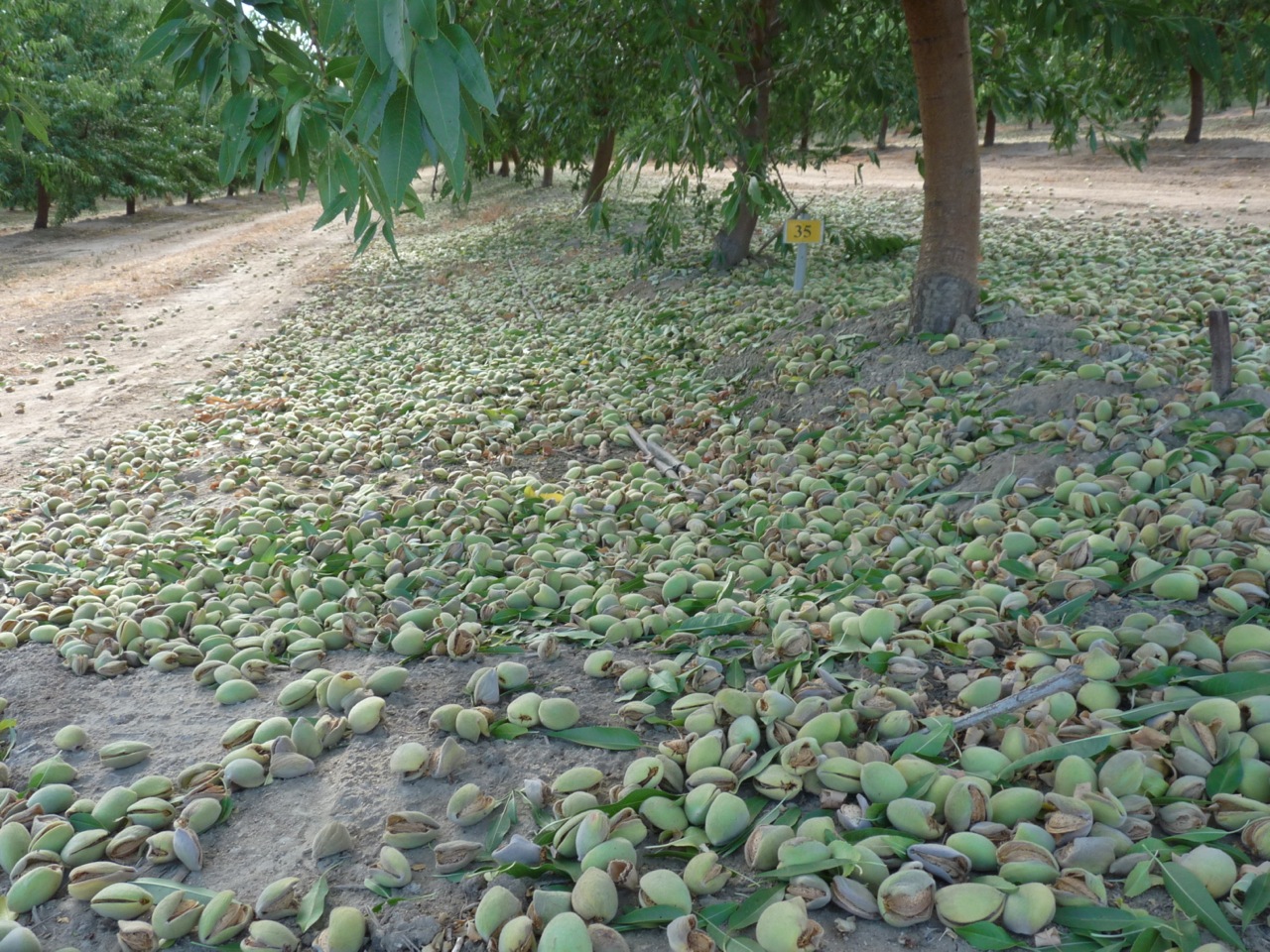
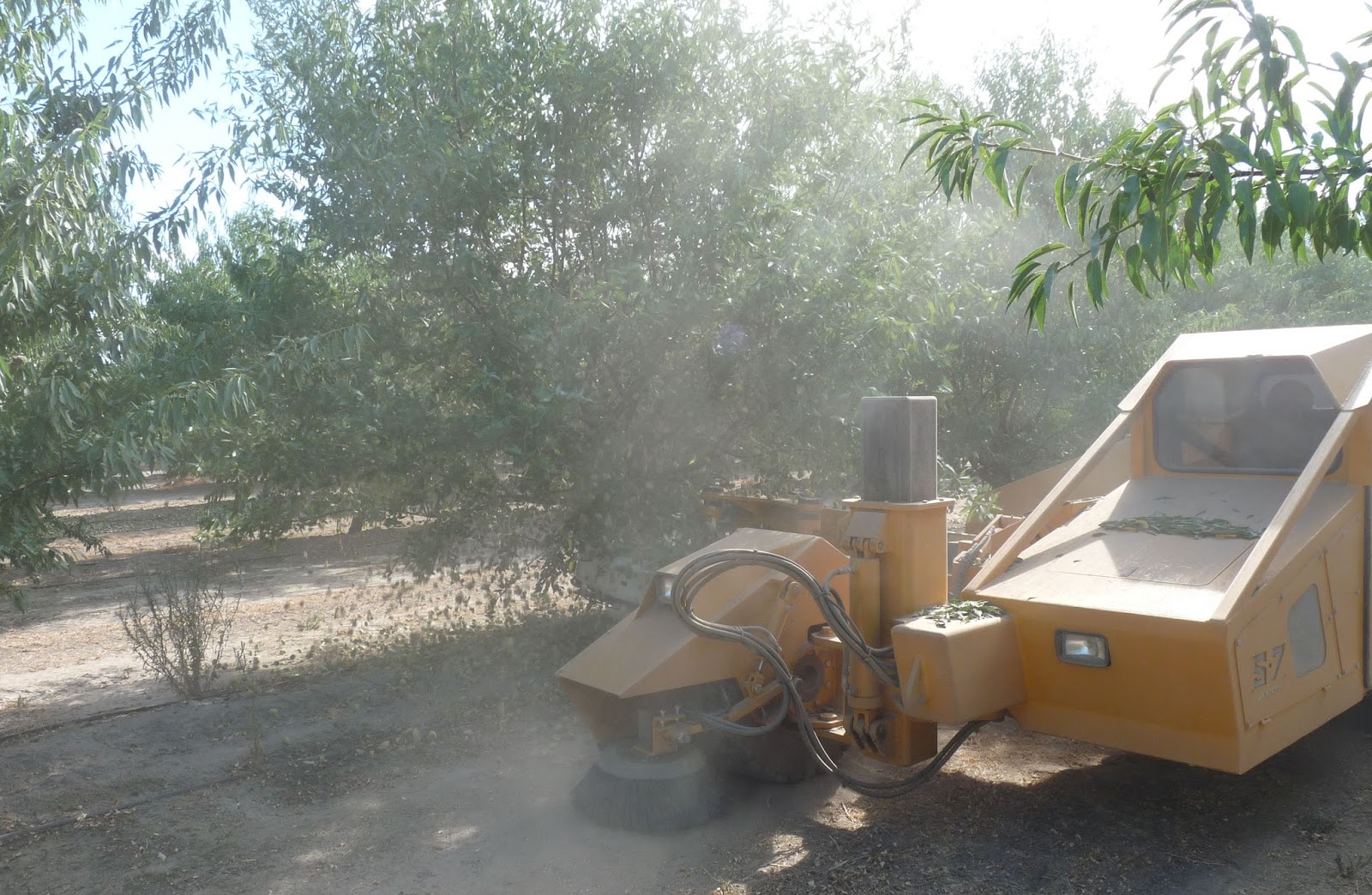
Early Harvest Season for Almonds

2013 Almond Harvest To Start

Almond harvest should start in earnest in Kern County, most likely next week, given the 100-degree temperatures everywhere. This is very early for this year’s crop size.
“The Nonpareils are going like crazy,” said Vern Crawford, a long-time PCA for Wilbur-Ellis Co., Shafter Branch. “With the crop estimate down, prices are up, and that’s good since growers had to spend so much on mite sprays this year.”
“This is the worst mite year that we’ve ever had–across the whole county,” Crawford noted. “The reason for the high pressure is not exactly clear,” he said.
“But the biggest problem all growers are having is the lack of water,” Crawford said. “We need more dams and we need the cities along the coast to put up desalinization plants to cut their demand on the water we need for agriculture.”
“Many Kern County farmers are now extracting water at the bottom of their wells and will need to spend $250,000 each to go deeper. Those big deep wells on the West Side with 200 HP pumps are sucking the water from the East Side,” he said.
Crawford warned that the groundwater will not last long. “We are going to barely make it through this season with 30 percent allocations. And next season, if we do not get enough water for the vast orchards on the west side of Kern County, on beautiful ground and with every irrigation economy available, particularly drip, growers will go into survival mode,” said Crawford.
Growers will shake their trees at bloom to eliminate the crop and then give the tree a few sips of water so that that it doesn’t die. Hopefully that will get them to another good winter of rain. But still, it will take the trees two full years to recover.
“And it’s amazing that nearly all of these water problems are due to the Delta Smelt,” Crawford said.

2016-12-07T15:53:34-08:00July 24th, 2013|
Go to Top