PLF On 9th Circuit Biological Opinion

PLF statement on 9th Circuit Upholding Delta Smelt Biological Opinion

Last Week, a panel of the Ninth Circuit largely upheld the federal government’s 2008 “biological opinion” for the delta smelt, a regulation under the Endangered Species Act has that triggered draconian restrictions on water deliveries from the federal and state water projects to the San Joaquin Valley and Southern California.

Pacific Legal Foundation (PLF) attorneys represent some of the farmers in the case who are challenging the biological opinion as an abuse of federal power based on questionable science and shoddy regulatory procedures.

Damien Schiff, a principal attorney with PLF who represents farmers in the case, issued this statement today, in response to the Ninth Circuit’s ruling:

“The Ninth Circuit has done a reverse rain dance for California, practically guaranteeing that the impacts of our current drought will be more devastating,” said PLF Principal Attorney Damien Schiff.   

“The ruling gives judicial blessing to regulations that impose real punishment on people with only speculative benefits for a declining fish species.   Under these draconian regulations, water is withheld from farms, businesses and communities from the Central Valley to San Diego based on sloppy science and ideological agendas.    

“There’s a drought of common sense in the bureaucracies that impose these regulations – and in the perverse legal precedents that lead courts to uphold them.  In one notorious precedent, TVA v. Hill, the U.S. Supreme Court said the Endangered Species Act gives absolute priority to species over everything else, including the general welfare of the human community.    

We must all hope that California’s water crisis – made worse today by the Ninth Circuit – can prod the U.S. Supreme Court to reconsider its past decisions that are leaving us so parched.    

Indeed, the one hopeful aspect of today’s ruling is there’s a possibility the smelt case could get to the Supreme Court.  There, it might result in a decision that turns the tide of environmental law away from imbalance and zealotry, and back toward sanity.”

2021-05-12T11:06:02-07:00March 17th, 2014|

California Milk Production in 2013

Sources: CDFA Dairy Marketing and Milk Pooling Branches

In 2013, 33 California counties recorded milk production, indicating that a total of 41.2 billion pounds were produced.

IMG_2709

This statistic represents a 1.3 percent decrease in overall milk production compared to that of 2012.

The top 10 milk producing counties were responsible for 94.9 percent of total California milk production; among the top three counties were Tulare, Merced and Stanislaus counties.

They alone were responsible for 52.9 percent of all the milk produced in California.

Fresno County showed the largest increase in milk production with a 2.02 percent increase, whereas, Southern California counties San Bernardino and Riverside showed the largest decrease.

Compared to 2012, milk production in San Bernardino went down 21.36 percent and decreased by 9.28 percent in Riverside, respectively.

2017-09-03T00:40:07-07:00March 5th, 2014|

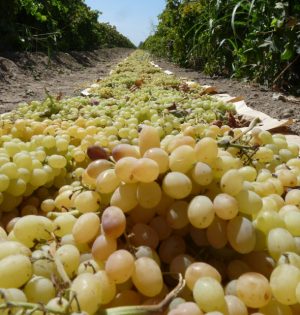
After Tough Negotiation, Raisin Price Decided

Raisin Price Set At $1650  Per Ton


More Thompson Seedless Vineyards To Be Pushed


The Raisin Bargaining Association (RBA) announced that it has reached agreement with its signatory packers on the 2013-14 Natural Seedless raisin harvest announced field price.  The price will be one thousand six hundred fifty dollars ($1,650.00) per ton or eighty-two and one half cents ($0.825) per pound.  The price is calculated using the following formula:

         Base price                                $1,457.00                      $0.7285

         Moisture @ 10%                             80.00                          .04

         Maturity @ 75%                              50.00                          .025

         Container rental                              21.00                          .0105

         Transportation (minimum)              15.00                           .0075

         RAC assessment                            14.00                          .007

         USDA inspection                            13.00                          .0065

         2013 Announced RBA field price     $1,650.00 per ton  $0.825 per lb.

Raisin growers have sent a strong message to the industry that they prefer selling raisins on a 100% basis now and into the future.  With that in mind, the Board of Directors of the Association worked diligently toward a compromise with their signatory packers to establish a fair price that reflects the additional California raisin production for this season. 

The Raisin Administrative Committee (RAC) recently estimated the 2013 Natural Seedless raisin crop at 348,437 tons in comparison to deliveries of 311,090 tons last year.  The $1,650 per ton price for the 2013 Natural Seedless raisin crop is a 13% reduction to last year but takes into account the additional crop that is estimated for production as well as the challenging market conditions that the industry will be facing.

The agreement calls for growers to be paid in three installments this year as opposed to four installments last season.  65% of the payment will be due fifteen (15) days after completion of delivery, 20% will be due to growers on or before February 28, 2014, and the final 15% will be payable on or before April 30, 2014.

raisin character

In the past, grower reserve raisins generated funds to assist the industry in marketing additional production into world markets.  The effort to sell this year’s additional production without reserve programs and the temporary elimination of state marketing and promotion funding are two reasons why the RAC assessment of fourteen dollars ($14) per ton has been included in the pricing formula.  This will provide an opportunity for the industry to work together through the RAC in support of efforts to market 100% of each year’s crop without reserves.

As reported from the International Dried Grape Producing Countries Conference in October, there continue to be strong indicators that Turkey has a significantly smaller dried grape crop to market this coming season.  California and Turkey are the two largest producers of dried grapes in the world.  It was also reported that South Africa, Chile, and Argentina have suffered tremendous frost damage in their vineyards, which will severely limit their harvest, which begins in January. The ability to take full advantage of what appears to be a tremendous sales opportunity requires an announced field price.

The Raisin Bargaining Association Board of Directors understood the importance of establishing this important benchmark in a timely manner to sell the maximum amount of raisins this year.  However, they are also well aware of the impact it has on the grower community.  Labor, water, and energy costs have significantly increased for growers over the past twelve months further squeezing their bottom line margins.  As agricultural resources in California are depleted, vineyard owners will continue to seek the best utilization of their land. 

California Ag Today editors spoke with Steven Spate, an RBA Grower representative, and a raisin grower. He said: “We are witnessing a large amount of raisin grape vineyards being removed (between 8,000 and 15,000 acres) from production this year in favor of more mechanized and profitable crops such as almonds, walnuts, and citrus.” 

“Time will tell what impact this acreage reduction will have on the future of the California raisin industry but taking the necessary steps to market this year’s crop was extremely important for the Raisin Bargaining Association to accomplish.  We are now counting on the California raisin packers to sell this crop to provide a better future for the remaining growers in our industry,” Spate said.

Spate added that processors thought the price should have been lower, but growers generally thought that shortages in Turkey and other areas should have boosted the price. “But still, there are excess raisins on the market and it has created a downswing in price.

Growers who are pushing out vineyards say that the lower price is only one factor that is in play. Chronic labor shortages are also encouraging growers to plant a less labor-intensive crop.

2016-08-25T21:49:44-07:00November 26th, 2013|

Cotton ELS Prices Good, While Upland Cotton is Bleak

Upland Cotton Prices Down; Extra Long Staple Types Are Up

By Patrick Cavanaugh, Editor


Upland cotton prices are still bleak, falling 10 cents per pound over the last month, and are now in the .85 to .95 cents a pound range. However, there is a glimmer of good prices ahead for extra long staple (ELS) cottons on the open market.
Many growers forward contracted the just-harvested crop that might have returned a decent price, but the Pima and other ELS types are still holding a good price,” said Cannon Michael, V.P. Bowles Farming Co., in Los Banos Calif., who farms more than 11,000 acres of row and field crops, including cotton throughout Merced County.
“I know some guys that have booked some pricing of ELS for 2014 at $1.60 to $1.70, but that’s a market that operates in a different world,” said Michael. “There has been good demand, the world crop is down, and California does not have that much Pima this year due to an overall decline in cotton acreage.”
In 2013 California growers planted 90,000 acres of Upland cotton, down 37 percent from last year. ELS plantings in the West declined nearly 14 percent to 206,000 acres with largest decline -35,000 acres in California.
“There is more optimism on the ELS side due to higher prices,” said Michael. “But there is so much pressure on Upland cotton as far as what China and other areas of world can grow, so the prices are on the depressed side.”
Michael noted that farmers in his area grow the Hazera type of ELS, an Israeli hybrid type which is not as strong as Pima, but has the staple length and other properties. “It performs like an Upland type in terms of yield in the north end of the Valley, but pays about 10 cents less than Pima.

“While the Hazera seed is more expensive and does not have any Roundup Ready traits,” Michael commented, “it has a better quality fiber that the mills are looking for right now.”

2016-10-05T13:35:38-07:00November 16th, 2013|

Record Crowd of Tree Nut Growers in Turlock

Big Crowd in Turlock for Tree Nut and Vine Expo

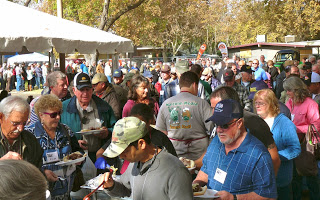
More than 800 growers and PCAs were at the Stanislaus County Fairgrounds TODAY, to hear from many speakers, visit with hundreds of exhibitors, talk about tree nuts and grape vines, and enjoy breakfast and a barbeque Tri-Tip lunch.

“It was the 18th annual event and with a record crowd. All growers were upbeat following a good harvest and good nut prices. Also, both domestic and export sales are increasing,” said Patrick Cavanaugh, editor of Pacific Nut Producer magazine and co-host of the event.
tree nut growers
Exhibitors speak with tree nut growers about products and services
“We are pleased that both the nut and grape industry are doing well in California. All we really need is a lot of rainfall this winter,” said Dan Malcolm, publisher of Pacific Nut Producer as well as American Vineyard magazine, and co-host of the show.
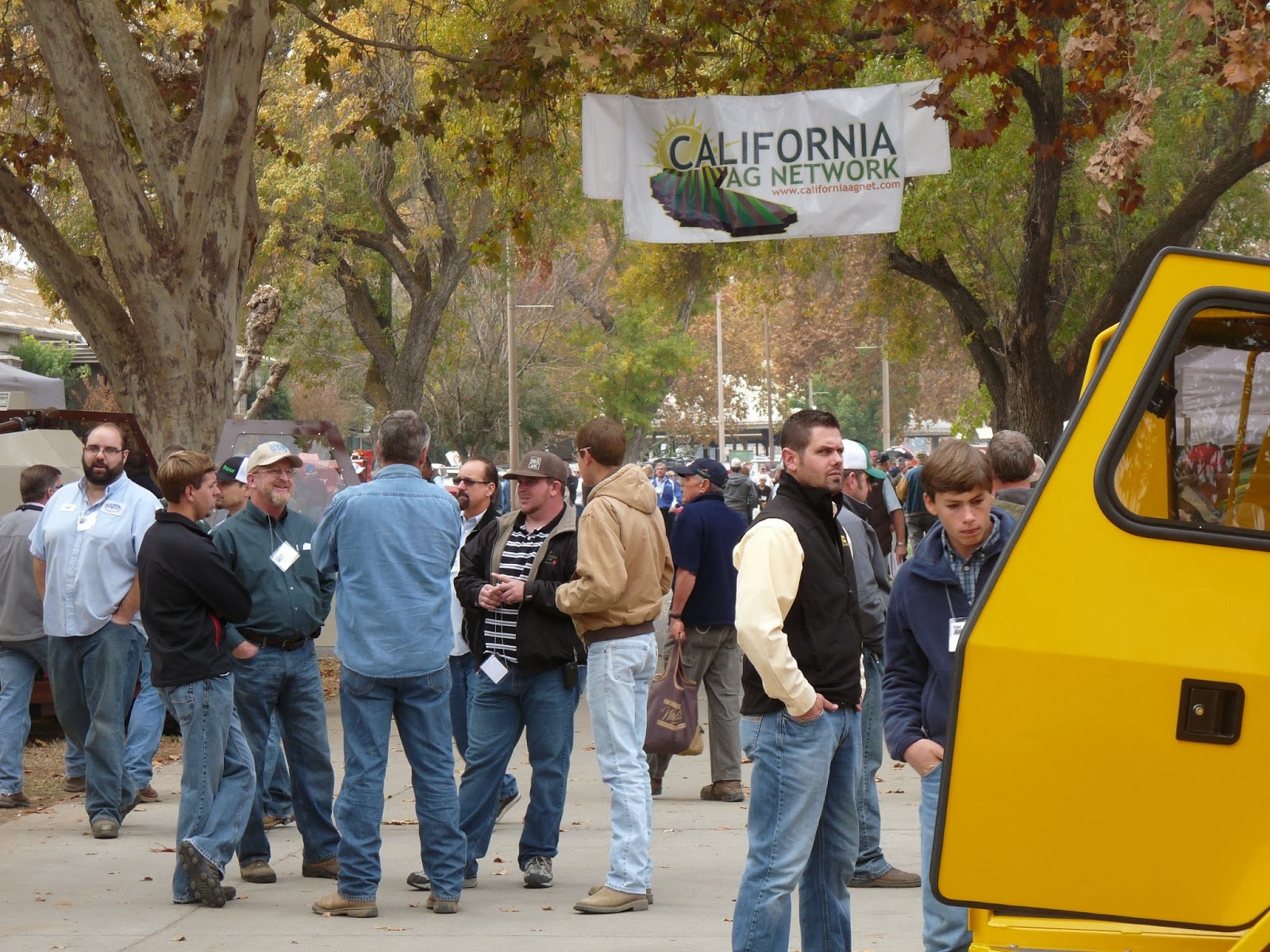
Crowd gathers outside to look over equipment.

Speakers came from UC Davis, Stanislaus County Ag Commissioner’s office, UC Cooperative Extension, Almond Board of California, California Walnut Board, Stanislaus County Farm Bureau, and CalAgSafety.

“We appreciate the support of the event sponsors and the record number exhibitors,” said Cavanaugh.
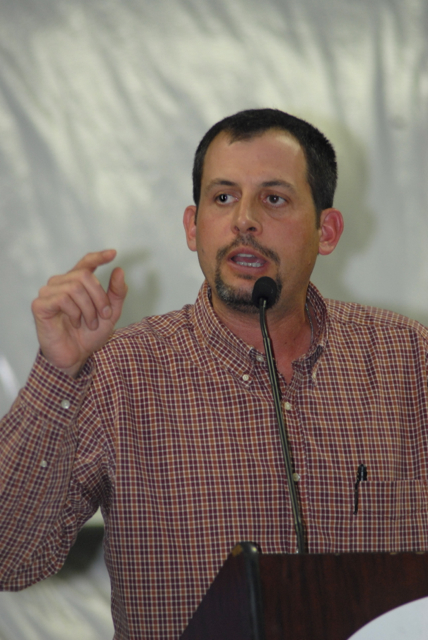
Ryan Genzoli with Cal Ag Safety speaks. tree nut growers

Ryan Genzoli with Cal Ag Safety speaks.

Sponsors Included:
    • Agromillora
    • American Ag Credit
    • Big Tree Organics
    • California Walnut Board
    • Compass Minerals
    • Dave Wilson Nursery
    • Diamond Foods
    • Fresno State Viticulture and Enology Dept.
    • JKB Energy
    • Novozymes
    • Principal Financial Group
    • Yosemite Farm Credit
2021-05-12T11:06:02-07:00November 13th, 2013|

ALRB ORDERS ELECTION AT GERAWAN FARMS

Statement by Ray, Mike, Dan and Norma Gerawan Farming on new ALRB Decision

Fresno, CA – Gerawan Farming congratulates our many workers who, this morning, prevailed in their fight for the most basic right in a democratic society – the right to vote. The Board’s November 1, 2013 Order Vacating the Regional Director’s dismissal of the Petition for Decertification is a victory for workers across this State. An election shall be held at Gerawan Farming on Tuesday, November 1, 2013 Order. For the first time in over 23 years, the UFW will face the will of the workers.
 

Today’s decision is an historic event. The victory belongs to those workers who never gave up hope that the Board would listen to their pleas.
 

We are humbled by the perseverance of so many workers who refused to give up in their quest to hold a secret ballot election.
 

For the second time this week, the Board overturned a decision by the Regional Director that would have snuffed out that right. In this latest decision, The Board makes it clear that the Regional Director’s “last minute,” “eleventh-hour charges” in a “late filed complaint” left the Board “with serious doubts as to the propriety of using that complaint to block the election.” The Board rebukes the Regional Director for failing to mention statements he made in Fresno Superior Court, where he told Judge Jeffrey Hamilton that Gerawan and the Board remedied some of the alleged unfair labor practice charges he now claims justify blocking the election.


On Tuesday, November 4, millions of Americans will go the polls to choose their elected officials. It is fitting that Gerawan workers will be given the chance on that same day to exercise that same sacred right to decide their own economic destiny.


The Board made the obvious, just, and long overdue decision to let an election go forward.


We congratulate every one of our workers.
2018-05-06T20:57:54-07:00November 4th, 2013|

Fresno County Could Slip from #1 Ag County in Nation

Fresno County Could Spiral Downward

400,000 Acres or More May Remain Fallow


By Patrick Cavanaugh, Editor

Top in the News for farmers:
·               Affordable Care Act—it doesn’t matter now.
·               High Speed Rail, no worries.

·               Farm Bill, same.

Water Flows, but Ag May Get Zero in 2014

Water—the only thing that farmers care about right now.  Without water, nothing else matters.
And nowhere is the worry greater than in the Federal Water Districts, such as Westlands, San Luis, and Panoche; all Westside water allocations throughout Fresno County and other counties of the Central Valley will be severely cut.
In 2009, with a 10 percent water allocation, more than 300,000 acres of land in Fresno County were fallowed causing tens of thousands of farm workers to lose their jobs, thrusting many Westside farm communities into catastrophic 40 percent unemployment, and requiring weekly food lines to be established to feed those affected.
Then came 2013 with a 25 percent allocation—moving many farm operations towards an exit strategy because their last resort is to use poor quality well water, high in salt and boron.
But 2014, with a possible zero percent allocation, Westside farmers in federal water districts may not plant an estimated 400,000 acres of row crops and use whatever water they have for their permanent crops such almonds pistachios and wine grapes. Land destined for annual row crops such as fall lettuce, tomatoes, melons, garlic, onions, and peppers most likely will lay idle. Cotton, even with a good market price, would not be planted on thousands of acres.
While not as bad as the Westside prospects, Eastside farms from Fresno County to Kern County, served by the Federal Friant-Kern Canal, are also hurting with dramatically reduced allocations this year that would be worse next year, without significant rain
Fresno County has been #1 in the nation in agricultural gross production ever since it was statistically measured. In fact, the value in 2012 was $6.6 billion. However, in 2014, Fresno County could very well lose its top-of-the-mound status due to fallowed land.

This coming year, Tulare County, which rang up $6.2 billion last year, could eclipse Fresno County for the first time.

Mark Borba
And the numbers for Fresno County could get exponentially worse when it comes to agriculture’s multiplier effect on the economy.
Mark Borba, co-owner of Borba Farms, a diversified family operation in Riverdale, southwest of Fresno, farms row crops. “The average per acre gross revenue on row crops such as cotton, tomatoes, garlic, onions, melons and lettuce is around $3,500 per acre. The minimum multiplier for the economy for gross agricultural production dollars is 3.5, or $12,250 per acre,” Borba said. “When that number is multiplied by what I think will be 250,000 acres, the loss revenue becomes $3 billion. If the idled acreage reaches 400,000, the resulting $4.9 billion in losses would be due to lost gross revenue of crops on that acreage.
William Bourdeau

William Bourdeau, Executive Vice President of Harris Farms, said that with a possible zero allocation, the company would have to idle 9,000 acres of row crop ground from their 14,000 acres of farmland. “We’re not planting at all,” said Bourdeau. “We will only use what water we have for our permanent crops, which include almonds, pistachios, wine grapes and asparagus.

The use of well water on permanent crops in 2014 will be higher than ever before in 2014. The high salts and boron in that water damage almonds in particular. Recent damage has led to reduced yields in many areas on the Westside. Further use cause long-term damage to trees, which reflect in lost revenue for growers and Fresno County.
“If there is any available water, it could cost the extraordinary price of $1200 per acre foot,” noted Borba.  “Growers would have to pump more well water, which is already being severely over-drafted.”
“If there are no surface water deliveries, the water prices would be too high to make any economic sense,” said Bourdeau.
“Well water quality is very bad and the only thing we can put it on are pistachios and asparagus. None of the specialty crops such as tomatoes or lettuce can handle it,”
said Bourdeau.
“One unplanted crop, lettuce for example, would constitute a significant economic hit in Fresno County. The loss impact would be huge,” he said. “We have a fall and a spring crop, about 1500 acres each. To plant and harvest those 3,000 acres, it takes about 700,000 man-hours,” Bourdeau said.
“Typically if we get a good yield, we produce about 1,000 cartons of lettuce per acre.  Three thousand acres equates to 3 million cartons. Each carton has 24 heads of lettuce, and that equals 72 million heads of lettuce that we would not harvest and put into the market,” said Bourdeau. “And that’s just lettuce; we grow lots of different crops. No doubt this would be multiplied hundreds of times over in the event of a sure and stark zero water allocation.”
“The impact would be devastating and would take a human toll. We have really good people, they are hard working and they want to work. And we are not going to be able to provide them with jobs because of misguided government regulations,” said Bourdeau. “The foundation of the government’s ambition is flawed in that it would not be saving the fish species, but it would be damaging people. And it’s not just the farmer; it’s the farm worker, it’s the economy, it’s the local government, and it would be colossal.”
“Since the San Joaquin Valley economy is based on agriculture, this lost revenue would have an enormous ripple effect—a big and wild swing,” noted Borba.
Just to name a few of the direct services and suppliers that would see a major dip in revenue:
·               Equipment Dealers
·               Truck Dealers
·               Fuel suppliers
·               Custom Spray Services
·               Seed Dealers
·               Auto Parts Suppliers
·               Irrigation Suppliers
·               Fertilizer Suppliers
·               Custom Applicators

·               Harvesting crews

·             Processors of tomatoes, garlic, onion and cotton

·               Crop protection suppliers

·               PCA’s

·               All taxes, fuel, state and federal

Borba said he placed an order with Fresno Equipment earlier this year for four John Deere Tractors, for a total value of about $800,000. “The Carl Moyer program was going to kick in $368,000 because I was upgrading to cleaner emission tractors. When I heard of the possible zero allocation for next year at a May meeting at the Huron office of Westlands Water District, I had to turn the whole deal off,” Borba said.  “I also had five Ford pickups on order at a Fresno Dealership to replace aging trucks on the ranch. I had to cancel that order too. That’s a tremendous ripple effect just from our farming operation,” Borba noted.

This Coming Year Is Different

By Patrick Cavanaugh, Editor

It would be radically different in 2014.  In 2009, many row crop fields did get planted and were irrigated with ground water supplies. But today, ground water supplies and quality are far worse than 2009, which will limit its use for irrigation in 2014.
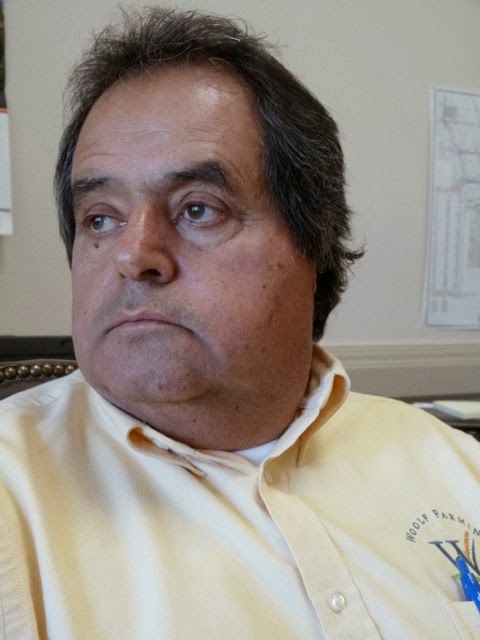
Stuart Woolf
“We are just going to have to pump more, and this drives me crazy because we all put buried drip irrigation in the ground, and we pump salty water through it,” said Stuart Woolf, president and CEO of Woolf Farming with operations in Huron. “We’re not spreading the salt, we are concentrating it through our drip lines poisoning the drip lines.
“Our investments in conservation are biting us in the tail. It’s hard to be hopeful knowing we will have to rely on even more well water this coming year,” said Woolf.
And the valiant farm workers and other farm employees would be impacted worse than they were in 2009. “They grow our food and fiber every day, and they would suffer terribly by the water restrictions,” noted Mark Borba of Borba Farms, headquartered in the Fresno County area west of Riverdale.
“They live, eat, drink, breathe and sleep the American Dream, and because of Washington Bureaucrats, many would lose it all. Farm workers would lose their homes and the healthcare that I provide. It would be devastating,” Borba said.
Manuel Cunha
According to Manuel Cunha, President of the Nisei Farmers League, “the combination of the two most powerful controlling factors for the agricultural industry in California is water allocation, no matter if it’s State or Federal Projects, and Immigration Reform because our industry would be shattered without farm workers.”
“Let’s say for the next six months we get 28 inches of rain, but if we don’t pass the Immigration bill, and therefore have no available workers, farmers could plant all the tomatoes and onions and other crops they want, but there wouldn’t be anyone to harvest,” said Cunha.
Cunha noted that shutting off the water supply would drive thousands of farm employees out of the area when they lose their jobs. They would leave the farm and not come back,” said Cunha.
“We have to make farming decisions without knowing how much water we will get. Therefore, our annual business model is based upon worst-case scenarios. It’s a terrible way to do business,” said Woolf.
Jesus Cuevas
How can I ask tomato production manager, Jesus Cuevas, to go plant three thousand acres when we may not have water? That could be a huge mistake,” Woolf said. “Instead, we have to figure out a plan on what we can grow with zero surface water, and reduce the tomato acreage. We are already planning to reduce onions and garlic and to fallow a lot of ground.”
“What water we have, we will prioritize to our permanent crops,” Woolf remarked. “We go through all these decisions, only to find out several months later whether or not they were good or not. It’s very difficult to manage your resources very well when you don’t know what your resources are.”
Woolf continued, “We live in a state that has a mountain range which collects snowfall every year. On average, we get something like 200 million acre-feet of annual precipitation in California. The Central Valley represents about 9 million acres that we irrigate—or about 9  percent of the total land in the State. We’ve spent hundreds spent hundreds of millions of taxpayer dollars to build the projects… and the choose not to use them? The opportunity cost is horrendous. Think of the lost jobs, income, tax base, etc. It’s criminal to hammer the Valley this way… while having little if any impact to the wellbeing of the Delta. 
Todd Allen farms 600 acres of row crops in Westlands Water District, near Firebaugh. He has no wells, so he must rely strictly on Westlands deliveries of 2.6 acre-feet per acre. In 2009, Allen harvested 40 acres out of 600 due to the regulatory drought.

In 2011, he farmed everything. But in 2012, he idled 150 acres, and in 2013, he idled 225. “If I am able to get water from Westlands that I did not use last year, I may be able to pre-irrigate 150 acres of cotton or tomatoes next spring, and then hopefully the Bureau will announce an allocation so that I can finish the crop.”

Allen noted, “The situation now is more dire than ever. I have been really thinking about finding someone to buy me out so that I can get out. When we started out with 25 percent this year, and they reduced it to 20 percent a few weeks later, it really kicked me when I was down,” Allen said.
His brother, Joel Allen, farms 1,000 acres; also in Westlands’ all row crops. “I’m not in any position to put in permanent crops simply because I have not had the means, and I cannot get the support of any banks that are willing to step forward and help someone out in our district.”
Joel Allen
“This year with only 20 percent water allocated, there were many nights that I lay awake wondering how I was going to make it,” Joel Allen said. “As for 2014, we all want to think that it’s going to rain and that things will work themselves out, but if I have to make a decision on my workforce, I probably will not bring anyone back. We’ve already shaved our workforce from 10 people down to two. It’s a struggle finding work for those two, keeping them busy, and that really hurts because I know my employees have rent to pay and mouths to feed, and everyday expenses like I do.”
“If growers have to make plans for a low water delivery, you are talking about very expensive water to buy,” said Vernon Crowder, Rabobank Senior Vice President and Senior Analyst, Food and Agribusiness Research Advisor Group.
“If growers are dependent upon pump water, they are worried about its quality and what that means to certain crops, especially almonds. The big issue is what can be taken out of the Delta to fill the San Luis Reservoir.”

“Even if we invest in all the water project improvements that the original Water Bond addressed, regarding Delta Conservation, new storage, and even the twin tunnel idea fully backed by the Governor, none of these would happen for 20 years,” said Crowder. “So we need to improve the process of getting through reduced water allocations right now. I believe farmers are going to press the state for help in making water conveyance better and faster.”

2016-08-10T12:40:43-07:00October 29th, 2013|

CENTER FOR LAND-BASED LEARNING CELEBRATES 20TH ANNIVERSARY

Happy 20th Anniversary!

CDFA Secretary Karen Ross reported TODAY, “I had the honor and pleasure to help celebrate the 20th anniversary of the Center for Land-Based Learning, a non-profit organization in Winters started by California State Board of Food and Agriculture president, Craig McNamara, and his wife, Julie, to help connect young people with nature and agriculture.”


“In the last two decades, the Center has become a force in this state for its extremely effective youth development and beginning farmer education,” Ross continued.  “I want to commend Craig for his vision, passion and commitment of resources to make the Center an entity that touches so many people in such positive ways and is absolutely contributing to a better future for California agriculture.”
 

“Happy 20th Anniversary, Center for Land-Based Learning!”

_______________________________________


The Center for Land-Based Learning strives to inspire and motivate people of all ages, especially youth, to promote a healthy interplay between agriculture, nature and society through their own actions and as leaders in their communities.


The Center for Land-Based Learning envisions a world where there is meaningful appreciation and respect for our natural environment and for the land that produces our food and sustains our quality of life.
2021-05-12T11:06:02-07:00October 26th, 2013|

INTERVIEW WITH DAN GERAWAN

UFW and ALRB Want to Impose Contract on Gerawan Employees

“The UFW won an election to represent Gerawan workers 23 years ago; but then, after only one bargaining session, the union disappeared and hasn’t been heard from in 20 years,” Gerawan Farming said in a recent statement. “Last October, the union reappeared and is using decade-old legislation to now impose a contract on the employer and the employees without a vote.”
California Ag Today associate editor Laurie Greene interviewed Dan Gerawan this week on what he is going through regarding the UFW and ALRB. 
Greene: Please introduce your company’s products, # employees, etc.
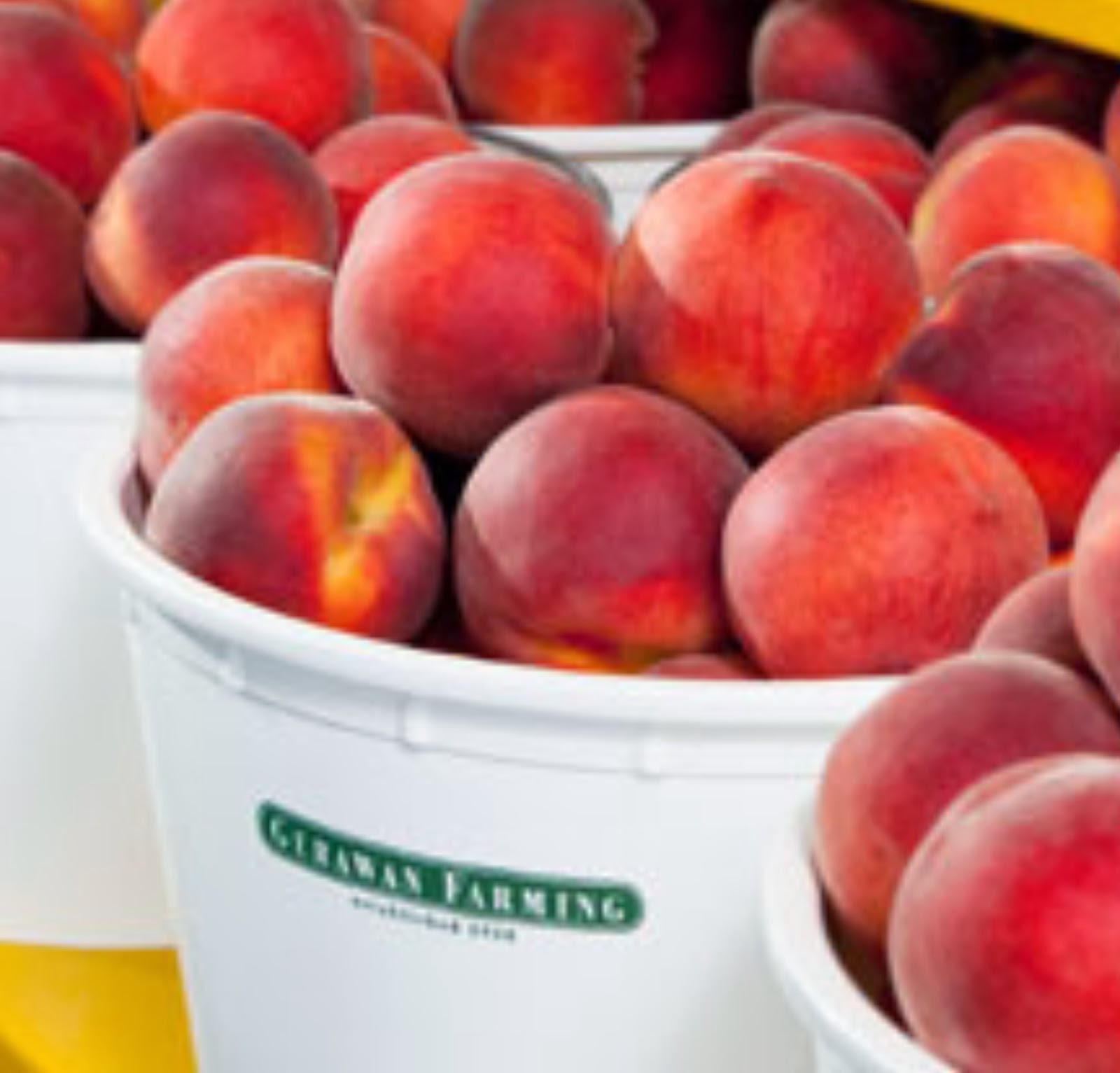
Dan Gerawan: Gerawan Farming Inc., which grows and ships under the Prima label, is the world’s largest peach grower and employs about 3,000 workers. The company also farms table grapes, nectarines, and plums. We are a family-owned and operated company. Despite our size, I farm with my father, Ray, my brother, Mike, and my wife, Norma. We are very hands-on; this is what we do.
Greene: There are press reports that Gerawan is having a dispute with the UFW. What is that dispute?
Gerawan: We are not having a dispute with the UFW. Our employees are having a dispute. As a company, our dispute is with the state government that is trying to force a contract on us without giving the workers an opportunity to vote. People need to understand that this is not a normal union situation; it has to do with a law being used for something it was never meant for.
Greene: What is your stance on employees having a vote?
Gerawan: We believe the employees should have a vote, and they have made it known they want a vote. They are not saying how they will vote; they just want a vote. When they often express their opinions to us, we stop them and say, “Don’t tell us your preference; we support your right to vote, that’s enough. Everything else is your choice.”
Greene: Can you describe the chronology of your circumstances with the UFW and ALRB?
Gerawan: We lost an election with the UFW in 1990. We had our only bargaining session in 1995. There was never a contract, and the union failed to continue bargaining. The union disappeared; they abandoned our workers.
To this day, we don’t know why. They have told us, “We have no legal obligation to tell you.” We responded, “But you do have a moral obligation. How can you come back after 20 years and tell our workers that you want 3% of their money or you are going to fire them?”
The UFW wrote us a letter in October 2012 saying, “We’re ready to negotiate.” At the time, we couldn’t believe it since the employees didn’t even know they were represented by the union and had been working quite happily earning the industry’s highest wages. But then attorneys explained to us that the UFW would force us into a mandatory process where the state would actually impose the contract on us and our employees, and we would have no right to opt out.
So, the UFW pretended to negotiate for a while. After just eight brief bargaining sessions over a three-month period, during which the UFW never made an economic proposal, the UFW suddenly asked the government to step in to write and impose a contract us.
Greene: Can you explain the Mandatory Mediation Law?
Gerawan: In 2002, the state legislature passed an amendment to 1975’s Agricultural Labor Relations Act. That amendment allowed for mandatory mediation to be imposed in ag labor situations. However, ‘mediation’ is a misnomer; it is really mandatory arbitration. The legislature passed the law in response to a few employers, including one employer (not us) who supposedly dragged out negotiations for many years, 20 years in that particular case.
When the legislature passed that 2002 law, their thought was that that if an employee votes for a union, they are voting for a contract. However, in most industries, employees vote for representation and negotiation for a contract. This is not a normal situation where the union comes in to negotiate, with power, backing up the workers, and then the two parties negotiate a mutual agreement. This is the union invoking a law that allows the state to literally force a contract on the employer and employees.
Keep in mind that the law was meant to remedy dragged-out negotiations. There were no negotiations here to drag out; the union had disappeared. There is nothing in the legislative history that shows the law was to be used in these situations. The UFW’s and ALRB’s stance is basically, “The letter of the law… says if you failed to reach an ‘agreement,’ we can invoke this.” We responded, “That implies that you tried to reach an agreement. You guys never tried. You went away.” Their response, “Well the law doesn’t say we had to try, so we are using that law now to impose a contract.”
Greene: How do you respond to ALRB’s accusations of coercion and forgeries?
Gerawan:  The Company has done nothing to coerce any signatures. We do not know anything about forgeries. We don’t know how many there supposedly are. We don’t know who caused those forgeries, and by that I mean I don’t know if they are saying we caused them or the union caused them.
It doesn’t take any coercion for the highest paid employees in the industry to realize that it is wrong for a union to come back after a twenty-year absence and tell them they will take 3% of their pay or fire them—without a vote. Not even a vote to ratify any contract that might happen.
After hearing this for a few months and being harassed at their homes multiple times by UFW people, the employees, on their own, began a decertification effort. They started a petition and turned it in to the ALRB. Immediately, the UFW started filing unfair labor practice charges against us saying that we were coercing our employees. That is silly.
We did not coerce, and in fact we invited ALRB to go out to our fields to make sure the workers understood they have the right to vote however they want. The ALRB did that.
We also did that. My wife, Norma, and I met with all the employees and told them, “Do whatever you want, choose however you want to choose. But congratulations on having achieved that right through your petition. We are not asking how you will vote.”
Greene: Could the signatures have been forged after you submitted them?
Gerawan: I really don’t know. All I know is thousands of signatures apparently were delivered.
Keep in mind, the union does not want the employees to have a choice, and they are fighting hard to stop the employees from having a choice, especially when the adjudicating agency has shown overwhelming bias against the employer and the employees.
The ALRB’s role, under the Agriculture Labor Relations Act, is to protect employees’ rights as a whole and to cause peace in the fields (which we had before the UFW and ALRB came into the situation). So why is the ALRB stopping the employees from having their vote just because of a relatively few questionable signatures from an unknown source?
After all, this is merely a vote.
We need to keep in mind that this is a declining union that has been gone for twenty years, has done nothing for these workers, and has returned only to pick the pockets of the industry’s highest paid workers and not even allow them to have a vote. I think it is unconscionable that the ALRB has done nothing to stop it, but in fact has taken every opportunity to accommodate this travesty.
Greene: Gerawan Farming has claimed that the ruling by Silas Shawver, regional director of ALRB, failed to provide a count of signatures filed, the number needed for a vote, and the number judged invalid.
Gerawan: This is correct. The ALRB blocked the election citing forgeries and coercion. Mr. Shawver is refusing to give out any information.
My wife and I informed our employees that the ALRB regional director in Visalia canceled their vote because supposedly we and the management of our company coerced our workers’ signatures. Our employees told me flat out that the only coercion has come from UFW and ALRB themselves.”
To continue this interview, please press “more” below!  


Greene: What is behind the ALRB’s finding that Gerawan directly assisted the petitioner and others in the decertification effort?
Gerawan: We have not directly assisted the petitioner. So, what the ALRB is saying is not true. It is simply did not happen.  
When the employees turned in their petition, the ALRB did not announce an election. The employees got very upset and demonstrated at the ALRB office in Visalia to demand their right to vote.
ALRB did not respond, but subsequently cancelled the vote, citing forgeries and coercion. The regional director is refusing to give out any information.
So, on September 30,over 1,500 of our employees reacted by going on strike to protest the ALRB’s and UFW’s cancellation of the vote. We thought we’d be harvesting peaches and grapes that day, but we didn’t.
Greene: Did Gerawan support the stoppage?
Gerawan: Oh no, we did not support the stoppage. We support the workers’ right to choose. But we did not want to see work stopped because we had fruit to harvest that day. But because the workers did stop, the cost for us was significant.
Greene: In a statement you said, “It is unfortunate that our employees felt they needed to take such a drastic action to have their voices heard. We are still hopeful that [the board] will protect the workers’ right to choose.” Are employees grateful for your company’s advocacy or opposed?
Gerawan: The employees have told us that they are grateful that we support their right to choose. At no time have we ever expressed a preference to them one way or the other. We want them to choose.
Greene: What rights do the UFW and ALRB have?
Gerawan: The UFW itself doesn’t have much power because they have such a small membership and are declining, but they have been handed an inordinate amount of power by the legislature. With such power, the UFW no longer needs workers’ support. They no longer need to organize the way a normal union organizes. Their members are created by legislation, not a vote.
We are about to have a contract literally written for us by a state agency and imposed on us. No one signs anything. Neither we nor our employees can opt out.
This type of ag labor unrest hasn’t happened since the 60’s and 70’s, and back then it was completely the opposite of what’s happening now. Back then, the workers wanted union and government protections. Now, the workers are fighting to be free from union coercion and government imposition. It’s hard to believe that the very law that was created to protect farm worker rights is now being used to rob those workers of their rights.
Greene: Why do you think the UFW is targeting Gerawan Farms?
Gerawan: I think they are going after the old abandoned elections.
We have the highest paid employees in the table grapes and tree fruit industry. No one disputes that, not even the union.
By the way, the union has no contracts with table grapes or stone fruit farm employees, and they have not been able to secure any. The last contract they had was with a Hanford farmer, and after a few years, those workers voted to throw the union out.
Clearly we are the biggest target, especially for a union that now is barely 3,000 members. If they prevail against our employees, this would double their size. Overnight, the majority of UFW members will be co-opted members created by legislative fiat, not by worker choice. The UFW needs this badly because their expenses exceed their income, and this is all public knowledge.
Greene:  What is the employer mandated to do?
Gerawan: To live within the terms of the contract. There will be no other option. As an example of what the imposed contract will do, it will throw out our meritocracy, which has been an important part of our success, and replace it with seniority. That’s something we specifically told the ALRB arbitrator would harm us.
We made it clear to the ALRB, “Do not mess with that. We have been a shining example of success in creating high wages in an industry that has had a lot of failures. Don’t mess with our formula for success, please.” They completely ignored our plea.
Imagine any business having a contract written by the state and imposed on them–wages, working conditions and everything else. It’s hard to believe that it is actually happening, especially when we’re already paying the highest wages and benefits.
Greene:  Did they have to prove any wrongdoing to do this?
Gerawan: To invoke mandatory mediation there has to be an unfair labor practice. We were found guilty of an unfair labor practice in the 1990s after the election. I think it was for laying off a crew at the end of the season.
Now that the union has come back, we have more unfair labor practice allegations. For example, for the buses to Sacramento, that we had nothing to do with, we have an unfair labor practice charge against us. For the employee walk out, that we had nothing to do with and which cost us a huge amount of money, we have an unfair labor charge against us.
Who adjudicates them? The ALRB. A charge does not mean you are truly guilty of doing something; it only means that the union has accused you of something.
Greene: What are your other unfair labor practice charges?
Gerawan: There have been many. It seems to be part of the game. For example, last October, when the union came in, we felt compelled to let our employees know about this. With our lawyers’ review, we sent our employees a letter with the facts only, but we received an unfair labor practice charge just for that.
So, because the UFW suddenly decides to reappear after being gone twenty years, we can no longer communicate with our employees?
Once the union files an unfair labor practice charge, the ALRB investigates, which takes months. Then, they will often side with the union against the employer and file official changes, which will eventually be heard by an administrative law judge. It could be a year or more before the facts come out. Meanwhile, the ALRB and UFW use those charges to damage your reputation, even though there has been no proper discovery or hearing.
Plus, if the unfair labor charge is used to block an election, and the investigation takes months, then the available time window for the election will probably lapse, and the employees’ right to a vote will be taken away from them. The system actually seems designed for that to happen.
Greene: Is there a pattern of unfair labor practices against you?
Gerawan: They come in batches. We got seven a few days ago for the bus trip, the strike, for whatever they conjure up. The unfair labor practice charges are just one or two sentences. From the union standpoint, they fill out a form, and then ALRB does the rest. ALRB sends their team of investigators out to “prove or disprove the unfair labor practice,” but I do not think they want to disprove anything. The ALRB has shown a clear pattern of wanting to rob our employees of their right to choose.
Greene: Gerawan is well known in taking good care of their employees. With this in mind, what could the UFW offer that is missing?
Gerawan: First of all, wage-wise, we are far above the rest of the industry. In fact, many in the industry have told me that they cannot believe that this is happening to the company that pays the highest wages and offers the best working conditions.
So what could the UFW possibly offer? Whatever it is that the state feels it can force the grower to pay whether or not it makes sense or is viable for the business. Again, this is not a normal situation where union organizers represent workers at the bargaining table.
Greene: What is it like for your employees?
Gerawan: The employees have told me that they cannot believe this is happening to them. They say they left Mexico because of things like this. They said, “You wait Dan, we’re going to have a vote.” I said, guys, I hope you do, but you may not have the chance. The employees said, “What do you mean? This is America! When the state hears that all we want is to vote, then they will understand.”
I had to tell them that I was sorry that this it is such a tragedy. We all assume that we will have the simple basic right to vote, but apparently that’s not how it is anymore.
Greene: You have met with Sylvia Torres-Guillén, the general counsel with the California ALRB. How did your conversation go with her?
Gerawan: Yes, my wife and I met her during one of our hearings. She was very cordial. We both had just heard my attorney tell the Judge that ALRB was so biased that it would never let our workers have a vote. We told her that we hoped that she would prove my attorney wrong because our employees need her help to protect their right to vote.
She said she would let them vote if… at which point I politely interrupted and pleaded to her that it was her responsibility to get rid of the “if,” and to make sure the rights of the workers were protected so that peace would be restored to our fields.
2016-10-25T21:53:22-07:00October 14th, 2013|

UPDATED MITE SAMPLING FOR AVOCADO ORCHARDS

Center for Invasive Species Researches the Mighty Mite

[dropcap size=big]E[/dropcap]very 60 days, California gains a new and potentially damaging invasive species. (UC Riverside)

This rate of invasion, on average, results in six new species establishing in California each year. Economic loses to California from invasive species are estimated at $3 billion per year.
The unique climate and geography of California provides diverse ecosytems that are perfect for the establishment of a diverse variety of new pests. UC Riverside’s Center for Invasive Species Research (CISR) researchers lead the way to determine how pests enter California, where invading populations came from and why these pests are successful in establishing California as their home.
Ricky Lara
Ricky Lara, a UC Riverside graduate student researcher with Mark Hoddle, Ph.D., Biological Control Specialist and Principal Investigator, is focusing on updating and reinforcing the integrated pest control program against the non-native persea mite that infests Southern California avocado orchards.
“High persea mite populations cause premature leaf drop and defoliation. Defoliation leads to sunburned bark and fruit, aborted or dropped fruit, and severely stressed trees, which ultimately reduces yields,” said Lara.
My first objective,” began Lara, “is to further develop a presence/absence sampling plan for growers so they can make keep track of pest densities throughout the growing season to guide spray application decisions. This sampling method will prevent misuse of pesticides and for PCAs to be able to provide growers with better information.”
“Because counting mites on avocado leaves is so difficult, we use a presence/absence method, or binomial sampling, by choosing 30 random leaves per tree, on orchard trees located where the mites prefer.” The sampling simply requires the numbers of avocado leaves infested with the persea mite and the numbers of clean leaves with no persea mites. This ratio of infested leaves to clean leaves is used to estimate the average number of persea mites per avocado leaf. Thus, binomial (presence vs. absence) sampling is fast and simple, and allows large areas of orchards to be surveyed quickly.

Persea Mite (UC Riverside)
“Next, I will figure out where the persea mite comes from and find and examine its natural enemies,” explained Lara. “The logic is that if a pest is not native to the area, its natural predators aren’t here either.”
Lara remarked, “Furthermore, I plan on assessing the risk that novel pesticides being developed for persea mite control pose to beneficial predatory mite populations that attack persea mite. By reducing pesticide use and conserving the presence of predators, we expect to enhance the avocado orchard ecosystem’s capacity for self-regulation of persea mite by making better use of natural enemies for pest control.”
The persea mite infests 99% of avocado acreage in California (There are no records of this pest in the San Joaquin Valley but it has been reported from avocados growing in San Francisco.) This mite is sensitive to high temperatures (>95oF) and low humidity when experienced over several consecutive days, and abrupt population crashes in the field have been observed under these conditions. The persea mite most likely originated from Mexico and arrived in California on smuggled plants.
Scientists at UCR have investigated the efficacy of releases of predatory mites for persea mite control. A highly effective natural enemy, Neoseiulus californicus,is commercially available and has been shown to be very effective, but is cost prohibitive. Seven commercial cultivars of avocado have been screened for resistance to persea mite feeding, and a new cultivar, Lamb Hass, is quite resistant to this pest.
Several species of predators occur naturally in California avocado orchards, and they have been observed to feed on persea mites. Yet, none of these natural enemies provides effective control of the mite. Nonetheless, their presence in orchards is desirable because they probably lessen the severity of persea mite infestations and will feed on other pest species.
Work is currently in progress monitoring persea mite populations, assessing predator quality after an imported shipment arrives, and refining release methodology, rates and timings of these predators.
2021-05-12T11:03:07-07:00October 9th, 2013|
Go to Top