Winegrape Grower Earns SIP Certification

Dana Merrill, Winegrape Grower Earns SIP Certification

By Patrick Cavanaugh, Deputy Editor


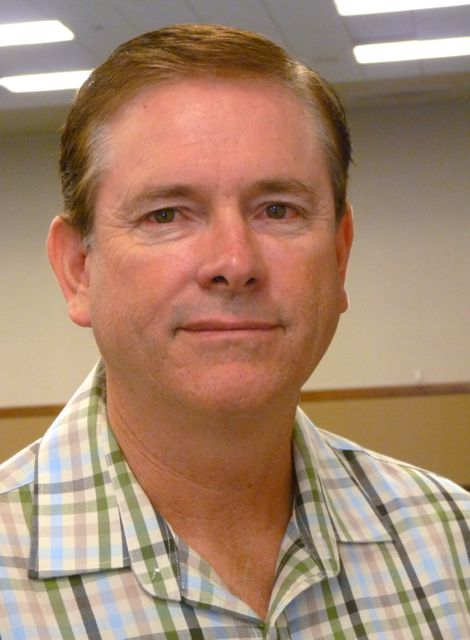
Dana Merrill is a seventh-generation farmer of an eighth-generation Californian farming family and president of Mesa Vineyard Management, a premium vineyard management service on the Central Coast. A graduate from Cal Poly with an Agriculture Business degree, He is a member of the Merrill Family Estates, an estate that produces premium winegrapes for its Pomar Junction Winery, and he’s extremely involved with the Paso Robles Wine Community.

Recently, his winegrape growing operation earned the Sustainability In Practice (SIP) certification.

“We worked very hard to attain this certification,” Merrill said. “Most of the changes were positive moves. It’s not meant to be a penalizing certification, but there are specific restrictions. For example, we don’t use any Class I restricted materials. If the US Environmental Protection Agency has commented about a substance, ‘Hey, that is Class I. It may be legal, but as an herbicide, it has a tendency to leach into the groundwater,’ then the SIP system won’t allow it. There are times when I’ve said, ‘Boy, I wish I could use a certain material,’ but there are some I simply cannot use in order to qualify for the certification.”SIP Certified

Merrill continues, “The SIP also takes into account how you treat your labor. For example, more ‘points’ are awarded if you offer a benefit program, continuing education support, a retirement program, or health insurance. These days, everybody has to offer health insurance, but points are awarded for that, even though some of us have offered it for over 20 years. Points are also earned for best-practice management whether it is fertility management, soil probes, or having water meters on all your wells and using the information to manage how you irrigate. The idea is to encourage folks to do more and raise the bar.”

“Being SIP-certified helps with marketing too,” noted Merrill. “If you get the SIP seal on a bottle of wine, a consumer can go be assured of the excellent quality of that product.”

“It is marketing in the sense that we are always selling ourselves to the consumer,” Merrill explained. “You know, the consumer may ask, ‘Why should I buy a bottle of SIP wine? Why should I buy California wine?’ I think that branding or labeling conveys a message to customers about what is important to them. Some consumers are very environment-oriented; others are looking primarily for quality. Your label conveys that message. There are customers to whom it is less important, but I see its significance growing. I would say 50% of the people who visit our tasting room find that label on an SIP-certified bottle of wine quite meaningful,” Merrill said.

_______________________

Links

Mesa Vineyard Management

Sustainability In Practice (SIP)

US Environmental Protection Agency

2016-05-31T19:27:07-07:00October 14th, 2015|

More on Federal Milk Marketing Order

Continued Coverage on Federal Milk Hearing in Clovis

More on Federal Milk Marketing Order: Let the Market Sort it Out

By Patrick Cavanaugh, Deputy Editor


Bill Verboort is the General Manager for AgriTech Analytics (ATA), a national company based in Visalia Calif. Owned by the Holstein Association USA, AgriTech is part of the U.S. Dairy Herd Improvement Association System, and provides data to dairy producers for management, genetic improvement and pedigree purposes. Verboort has been attending the USDA Federal Milk Marketing Order (FMMO) hearing in Clovis, Calif., which is gathering testimony from milk industry people who want, or do not want to abandon the California Milk Marketing Order and adopt the FMMO.

“I think it is a very historic day, because I think California is one of the only major markets outside the FMMO,” said Verboort. “When the Federal system came in the 1930s, there were good reasons for us to be on a state order due to geographic isolation, etc. Today, I don’t see us as geographically isolated as we once were. So why not be part of the FMMO?”

Verboort noted that the FMMO should put California producers on par with the rest of the country when it comes to milk and cheese prices. “That is the intended and anticipated effect,” he said.

Of course there are many against adopting the FMMO. “Some are saying if the California producer is going to get more money for his milk, he is going to produce more,” said Verboort. “If you look at the industry over decades, when the price of milk has gone up, producers have produced more. You’ve got to make hay when the sun shines, so to speak. And when prices are down, the cash flows are down, so a producer needs to get more cash. What is the solution to that? Produce more milk!”

“So the California producers are going to produce more milk whether the FMMO system is in place or not; at least that’s the way I see it,” Verboort explained. “But if our producers in California are at a disadvantage to producers in other parts of the country, we need to make an equitable situation here.”

“And the market will shake it out. It is as simple as that,” he said. “We can produce milk products more efficiently in California and I think that is good for the U.S. and for the consumer. If the producer can produce it here more efficiently by getting on the right strategy with the FMMO rather than the California milk order, then we are on the right track.”

“California producers have been on the short end of the stick for a long time,” Verboort said. “Even though last year was a very good year for most producers throughout the country, and for California producers as well, they still sold their milk for several dollars per hundred weight less than the rest of the country,” Verboort said.

As for the hearing taking place in Clovis, Verboort said it seems that the momentum is going in a good direction. “But we will find out; that is what these hearings are about,” he added.


AgriTech Analytics (ATA) is a certified Dairy Records Processing Center.   

Part of the U.S. DHIA System, AgriTech Analytics provides data to dairy producers for management, genetic improvement and pedigree purposes.  

By utilizing the reports and herd analysis made available by AgriTech Analytics, Herd owners are able to maximize profitability and better position themselves in today’s competitive dairy industry.

________________________________________

Links:

AgriTech Analytics

U.S. Dairy Herd Improvement Association System


2016-05-31T19:27:07-07:00October 14th, 2015|

Outlook on California Poultry

Bill Mattos: Outlook for California Poultry Industry

By Charmayne Hefley, Associate Editor

California’s poultry industry has a positive outlook for the coming year despite the recent outbreak of the highly pathogenic avian influenza plaguing the rest of the nation’s poultry industry. Bill Mattos, president of the California Poultry Federation, said the coming year will see chicken overtaking beef.

“We’re learning from a lot of economists that we are going to have an exciting year for poultry next year and into the future,” Mattos said. “It looks like chicken is taking over beef next year, and all of poultry will be ahead of the red meats. We love our beef and pork friends, but we’re passing them. It looks like the healthfulness of chicken and the capacity to grow locally—everything in California—is looking good for the poultry industry. And we’re excited. We think the chicken and turkey industries will have a good year coming up.”

And although the price of corn is still higher in California versus nationally, Mattos said this industry is still doing well. “We still pay about a dollar or more a bushel for corn in California. But prices are outstanding compared to what they were two or three years ago, so our companies are making some money.”

With the flyways, or bird migration, coming back this fall, Mattos said the California poultry industry is prepared with increased biosecurity on their farms and ranches to prevent an avian influenza outbreak. Mattos said, “It’s very important that we make sure our companies are locking down their facilities—keeping visitors off and maintaining a biosecurity that’s first in the nation—because any type of bird flu that could invade here and spread would devastate the marketplace.”

____________________

California Poultry Federation

2016-05-31T19:27:07-07:00October 9th, 2015|

Cornell Kasbergen On Federal Milk Marketing Order

Continued Coverage of Milk Hearing

Dairyman Cornell Kasbergen: We Need Federal Milk Marketing Order

By Patrick Cavanaugh, Deputy Editor

Cornell Kasbergen, a dairyman in Tulare County, is fed up with the flawed California State Milk Marketing Order. So much so, that he and other dairymen and women have a great desire to switch to the Federal Marketing Order.

This idea is presently front-and-center in Clovis, CA as USDA officials are holding an historic hearing that may extend into early November.

“It started three to four years ago when our milk prices were dramatically less than those in the rest of the country, and we wanted to get our industry on a level playing field. It has been a lot of work getting the co-ops together, but we are just at the beginning of this whole process.”

Having the USDA here is, in itself, a big beginning,

Kasbergen has worked hard to drum up interest in the idea. “When I was a co-op board member at Land O’Lakes, Inc. [a national, farmer-owned food and agricultural cooperative milk cooperative], we worked with other dairy co-ops and their members to get educated.  We discovered, for the last three to four years, California’s whey value in its milk pricing formula deviated from national prices, and California producers were losing money. Once we realized we were leaving a lot of money on the table—over a million dollars a day—it opened people’s eyes. That’s why we are having this hearing.”

“The California Department of Food and Agriculture intentionally left the state’s whey prices lower than the rest of the nation, and though we’ve been petitioning them over and over again to rectify the issue, they have failed,” said Kasbergen. “That’s why we have gone this route in getting our milk prices formulated by the federal government rather than by the state. Our state has really let us down.”

“The CDFA has taken hundreds of millions of dollars out of the dairy farmers’ pockets, the loss is killing the dairy industry in California,” said Kasbergen.

2016-05-31T19:27:07-07:00October 9th, 2015|

2nd in Series: Mental Health on the Farm

Part 2  Mental Health on the Farm:  Destigmatizing Mental Health

October 4th – 10th is National Mental Illness Awareness week, and National Depression Screening Day is tomorrow, October 8, 2015.

Resources are provided at the end of this post.

Karen Markland, Division Manager for the Fresno County Department of Behavioral Healths Planning, Prevention and Supportive Services. spoke with California Ag Today Editor Laurie Greene about mental health and the state’s farmers and farmworkers who have experienced increased stress due to the drought and environmental water restrictions impacting their livelihoods.

Editor: Back in April, your department partnered with the Fresno Economic Opportunities Commission (EOC) and the USDA to receive a grant specifically to host a conference called “The Drought Emergency and Preparedness Conference,” (DEAP). DEAP was a full-day event for farmers to discuss the drought and water, but also included representatives from mental health?

Markland: Here was the Department of Behavioral Health, a mental health partner, at an agricultural event. It was fascinating to see the curious looks that implied, “I kind of want to go up there, but I don’t want to go up there.” And by the end of the day, we had attendees and farmers approaching our table. We created an agricultural theme with plants and live videos of our gardening projects to destigmatize and show that mental health and mental wellness speak all languages. So we were pleased to be there.

Editor: We understand the Fresno County Farm Bureau participated?

Markland:   Yes, the meeting with the EOC and USDA was actually initiated by the Fresno County Farm Bureau, which is is very interested in the wellbeing of its community. Ryan Jacobson, Farm Bureau ceo/executive director, had received some communication indicating our farmers were feeling stress and that some had lost their lives based on the anxiety and depression brought on by these drought conditions. It was time for us to activate and come together to talk about a very uncomfortable subject.

Our Farm Bureau and the USDA partnered to talk to workers and farmers who aren’t just happy; rather, they are depressed and anxious, and we are worried about them. The collaboration among the Farm Bureau, USDA and mental health was wonderful.  It was an amazing dialogue to jointly say, “This is such a stigmatizing topic for a group of individuals who are typically adult male farmers who don’t want to share or hear these words. Yet, we’ve lost lives, so it is time to make a difference.”

The Fresno Department of Behavioral Health is dedicated to supporting the wellness of individuals, families, and communities in Fresno County who are affected by, or at risk of, mental illness and/or substance use disorders through cultivation of strengths toward promoting recovery in the least restrictive environment.County of Fresno Logo

The Fresno Department of Behavioral Health provides mental health and substance abuse services to adults within the County of Fresno. The programs within our department focus on delivering the highest quality of service. There are over 300 professionals and staff dedicated to providing services in both metropolitan and rural areas. The diversity of our staff has helped us create a department that is sensitive to cultural differences and attempts to bridge the language barriers with our consumers. 

2016-05-31T19:27:08-07:00October 8th, 2015|

Food Security – Inspections on Imports, Part 2

Rachel Martin on Food Security – Inspections on Imports, Part 2

By Charmayne Hefley, Associate Editor


This is the final segment of a two-part series with national chairman of Homeland Security for the National Federation of Republican Women, Rachel Martin on food security  – Inspections on imports into the United States.

Due to budget cuts, as reported in Part 1, the Department of Homeland Security inspects only 1 in every 60 containers arriving in the U.S. This ratio brings up two issues, according to Martin: (1) the threat of terrorism and (2) concern over food safety. Failure to properly inspect imported containers exposes American citizens to toxins in imported goods that don’t meet the same regulatory standards as food products produced in the United States.

“When you’re doing things en masse,” Martin said, “and the [containers with imported food] are not being inspected, many dangers can come into the country that can kill people—especially the elderly and kids because we know they are more susceptible to bacteria and chemical toxins.”

While she is aware of the potential for accidents and mistakes in food safety, Martin said risking the safety of our country and citizens by inspecting only a limited number of imported containers to save money is more harmful than helpful. “Accidents are going to happen with any food,” Martin said, “even with when I cook for myself in my own kitchen. I may undercook my meal, and there is a possibility I can get food poisoning that way.”

Martin said the Obama administration’s budget cuts have hurt Homeland Security’s inspection rate on food imports. “Number one, it’s not right, there are so many regulations here that we have to deal with,” Martin said. “And number two, it’s wrong that these containers are not inspected because people can become very ill and be killed by food toxins that come into the country in the absence of inspection. ‘Not to mention, the terrorists, bombs, weapons and anything else that is dangerous that could be on those containers.”


2016-05-31T19:27:08-07:00October 5th, 2015|

Historic Milk Pricing Hearing in Clovis

Historic Milk Pricing Hearing in Clovis:

Converting California to the Federal Milk Marketing Order

By Patrick Cavanaugh, Deputy Editor

In Clovis last week, an historic USDA milk pricing hearing commenced to gather testimony from the California dairy industry, which for the most part, favors changing to the Federal Milk Marketing Order (FMMO). This represents an abandonment of the state marketing order which has been harmful to dairies since it was altered 10 years ago to disallow dairies from getting paid the same price for their milk and whey products.

William Francis, director, USDA Order Formulation and Enforcement, is involved in the formal rule-making process for marketing orders. Francis commented, “There’s been tremendous interest in a federal order for California and we are holding a formal rule hearing for the promulgation of a California FMMO. This is an historic event. For years, the state has operated a program. But, farmers have gotten together and invited us to come in for the state’s hearing.”

The hearing could last as long as eight weeks to review each of four proposals. Francis noted, “We are here as long as it takes. We want to make sure we have a complete and accurate record so there are no time constraints,” He said the USDA will post a transcript on their website, filter through all of the documentation and make a recommendation.

A comment period with a sufficient amount of time will follow the public announcement of the USDA decision. “Then we will generate a modified final decision,” Francis said. “By the time we complete that process, farmers will have the opportunity to vote on the modified decision through a referendum process, which could be up to two years away.”

USDA Federal Milk Marketing Order (FMMO)

Industry Information Request postings

All of the proposals can be viewed at www.ams.usda.gov/CAOrder.

2016-05-31T19:27:08-07:00October 2nd, 2015|

Americans Support Endangered Species Act Reform

Americans Support Endangered Species Act Reform, Survey Says

Nothing is more priceless and more worthy of preservation than the rich array of animal life with which our country has been blessed.”
-President Nixon, upon signing the Endangered Species Act

The Endangered Species Act of 1973 (ESA) was signed on December 28, 1973, according to the National Oceanic and Atmospheric Administration website and provides for the conservation of species that are endangered or threatened throughout all or a significant portion of their range, and the conservation of the ecosystems on which they depend. The ESA replaced the Endangered Species Conservation Act of 1969. Congress has amended the ESA several times.

The California Endangered Species Act (CESA), per the California Department of Fish and Wildlife, states that all native species of fishes, amphibians, reptiles, birds, mammals, invertebrates, and plants, and their habitats, threatened with extinction and those experiencing a significant decline which, if not halted, would lead to a threatened or endangered designation, will be protected or preserved. The California Department of Fish and Wildlife will work with all interested persons, agencies and organizations to protect and preserve such sensitive resources and their habitats.

American Farm Bureau issued the following press release:

Most Americans think the Endangered Species Act is outdated and needs to be revised, a survey by Morning Consult shows. The poll conducted in early August adds impetus to congressional efforts to overhaul the increasingly outdated 1970s-era statute.

The survey shows:
• 63 percent of Americans support modernizing the ESA;
• 62 percent of Americans believe the act should help with species recovery, as opposed to merely cataloguing changes in their populations;
• 69 percent of Americans want the federal government to offer resources to third parties to help species recovery; and
• 49 percent of Americans believe that state or local authorities, rather than the federal government, lead in recovery of endangered and threatened species. Only 31 percent of Americans favor the federal government taking the lead.

“The intent of the Endangered Species Act is inspiring, but results have been less so,” American Farm Bureau President Bob Stallman said. “Farmers, ranchers and environmentalists agree that we must save wildlife facing preventable extinction, but the current recovery rate of less than 2 percent shows the law is a failure.

“Today, many landowners hesitate to establish habitat that would help endangered species. That’s so because the law itself makes it impractical for them to use their land once they have made the effort to help in the first place. The ESA can and must be modernized to protect endangered species and respect private property rights. Neither agriculture nor the endangered species have time to wait.”

A statistical summary of the poll can be found here. Detailed questions and answers can be found here.

2016-07-23T16:04:51-07:00October 1st, 2015|

Import Food Safety, Part 1

Import Food Safety: Only 1 in 60 Containers Is Inspected

By Charmayne Hefley, Associate Editor


This is the first in a two-part series with Rachel Martin, the national chairman of Homeland Security for the National Federation of Republican Women, on import food safety in the United States.

Food safety is a crucial element in the production of food, and many government regulations exist to keep our food safe for people to eat. Yet, Martin explained, those regulations don’t necessarily reach imported food. Specifically, she said, “Due to budget cuts under the Obama administration, only 1 in 60 containers arriving in the U.S. is inspected by Homeland Security.”

Martin’s initial reaction to this statistic was to consider the possibility that terrorists could smuggle in weapons, chemicals and themselves into the United States.

“The second thing that came to mind was food safety,” Martin said because as we grow less food domestically, we import more food. “We’re already overregulated here in California—not only in the United States, but it’s worse here—with mandated inspections, regulations on our food and regulated chemicals, spraying, pesticides and so forth. Yet when food enters the United States, the majority of it isn’t even inspected.”

Martin said her own daughter has been affected by the risks of importing food that is not inspected by or grown under strict U.S. standards set for the United States.

“My daughter’s first job was at a local water park when she was 17-years-old, slicing limes to make juice for the kids there,” said Martin. “The limes were imported from Mexico. My daughter developed a rash on her arm from chemicals that were applied to the limes that looked like she had third-degree burns. It went away in a couple of months, but to this day—she’s now 23—it  returns on a random basis.”

2016-05-31T19:27:09-07:00October 1st, 2015|

Plants Do Not USE Water…They Borrow it!

Plants Transpire Most of the Water They Use!

Editor’s note: California Ag Today interviewed Allan Fulton, an Irrigation and Water Resources Advisor, UC Cooperative Extension Tehama County, in Redbluff CA, to comment on the debate about the agricultural industry’s use of water and to focus on a critical but disregarded process—that all plants transpire, even plants cultivated for the crops we eat.

Allan Fulton, Irrigation and Water Resources Advisor

Allan Fulton, Irrigation and Water Resources Advisor

CalAgToday: We hear in the media that our crops are using too much water. And while all plants need water to grow food, we also know that a high percentage of water taken up by all plants actually transpires back into the atmosphere, to form clouds and precipitation, right?

Fulton: Yes, when plants transpire, the water just returns to the local hydrologic cycle, leaving the harvested crop that we distribute elsewhere in the US or in the world actually very low in water content.

CalAgToday: When we think about transpiration, are the plants actually “borrowing” the water?

Fulton: Yes. We get a lot of questions about why we irrigate our crops so much, and it comes from the general public not being as close to farming everyday. The truth is, plant transpiration is a necessary biological process. The water cools the tree so it stays healthy and exits the leaves through special cells called stomata. While the stomates are open to allow water to transpire, carbon dioxide enters and is used in photosynthesis, making sugars and carbohydrates for the plant to create the fruits and nuts that we eat. So, an inadequately watered plant cannot take in enough carbon dioxide during transpiration, resulting in defective fruits and nuts that are smaller, shriveled, cracked—all the things the typical consumer does not want to buy.

Plants cannot gain carbon dioxide without simultaneously losing water vapor.[1]

CalAgToday: Can we say 95 or 99% of the water that is taken up by the plant gets transpired and definitely not wasted?

Fulton: Definitely. We converted to pressurized irrigation systems, micro sprinklers and mini sprinklers, so we have a lot more control over how much water we apply at any one time. We do not put water out in acre-feet or depths of 4-6 inches at a time anymore. So, much like when rainfall occurs, we can measure it in tenths, or 1 or 2 inches at most. As a result, the water doesn’t penetrate the soil very deeply, maybe only 1 or 2 feet each irrigation.

We are very efficient with the water, but because we deliver it in small doses, we have to irrigate very frequently. That is why we see irrigation systems running a lot, but they are systems that efficiently stretch our water supply and do not waste it.

CalAgToday: But again, the vast majority of the water that the tree is taking up is being transpired, right?

Fulton: Yes, most of the time, at least 90% of the water that we apply taken up through the tree and transpired so that photosynthesis can happen.UCCE Tehama County

CalAgToday: And transpiration increases on a hot day?

Fulton: Yes, we do get a little bit of loss from surface evaporation from wet soil, but we try to control that with smaller wetting patterns—drip-confined wetting patterns. When you think about it, the heat of the day is in the afternoon when many irrigation systems don’t run because of higher energy costs. There are incentives not to pump in the middle of the afternoon, but those who do try to confine the wetted area to limit evaporation. And the hot hours of the day make up about 4 hours of a 24-hour cycle, so we irrigate mostly during the nighttime and early morning hours to lesson evaporative loss.

CalAgToday: Growers are doing everything they can to conserve water. If the trees and vines are all transpiring most of their irrigated water, why is using water to grow food a problm?

Fulton: I think the emphasis throughout the United States has always been to provide a secure food supply. That security has many benefits, economically and politically; and in the end, we are trying to provide the general public with good quality, safe food at the best price possible.

______________________________________________

[1]  Debbie Swarthout and C.Michael Hogan. 2010. Stomata. Encyclopedia of Earth. National Council for Science and the Environment, Washington DC.

CIMIS


The California Irrigation Management Information System (CIMIS) is a program unit in the Water Use and Efficiency Branch, Division of Statewide Integrated Water Management, California Department of Water Resources (DWR) that manages a network of over 145 automated weather stations in California. CIMIS was developed in 1982 by DWR and the University of California, Davis (UC Davis). It was designed to assist irrigators in managing their water resources more efficiently. Efficient use of water resources benefits Californians by saving water, energy, and money.

The CIMIS user base has expanded over the years. Currently, there are over 40,000 registered CIMIS data users, including landscapers, local water agencies, fire fighters, air control board, pest control managers, university researchers, school teachers, students, construction engineers, consultants, hydrologists, government agencies, utilities, lawyers, weather agencies, and many more.

2021-07-23T14:31:38-07:00September 23rd, 2015|
Go to Top