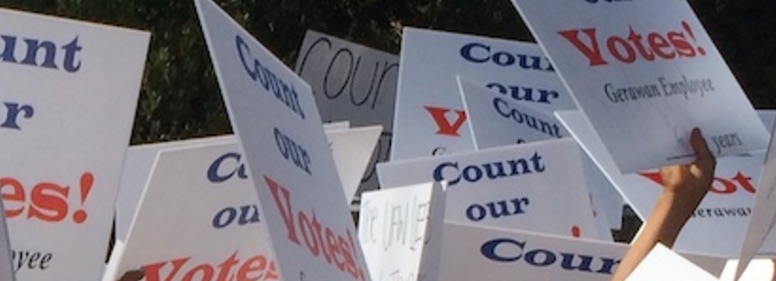
Motion Filed in Fifth District Court to Count the Votes!

Editor’s Note: Anthony Raimondo with Raimondo & Associates filed a motion with the Fifth District Court of Appeal in Fresno to count Gerawan ballots .


SILVIA LOPEZ AND GERAWAN FARMING, INC V. AGRICULTURAL LABOR RELATIONS BOARD

COURT OF APPEAL OF THE STATE OF CALIFORNIA IN AND FOR THE FIFTH APPELLATE DISTRICT (FRESNO)

No. F073730

To Whom It May Concern:

On May 30, 2018, the Fifth District Court of Appeal in Fresno issued a unanimous decision that the Agricultural Labor Relations Board (ALRB) violated farmworkers’ Constitutional and statutory rights by refusing to count their ballots, essentially stripping them of their right to decide for themselves whether to be represented by a union.

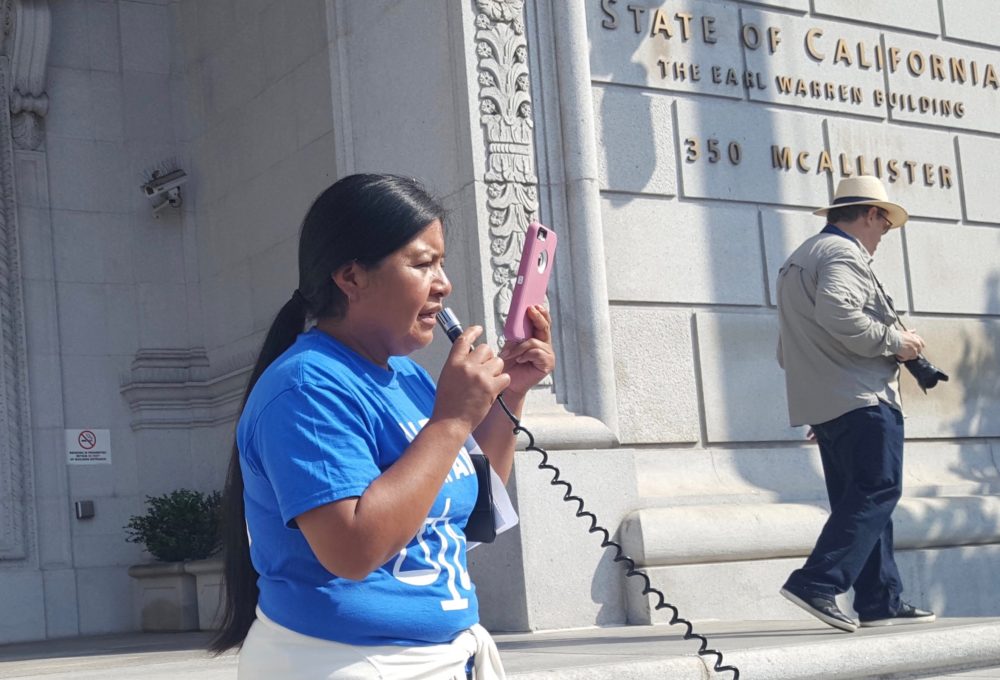
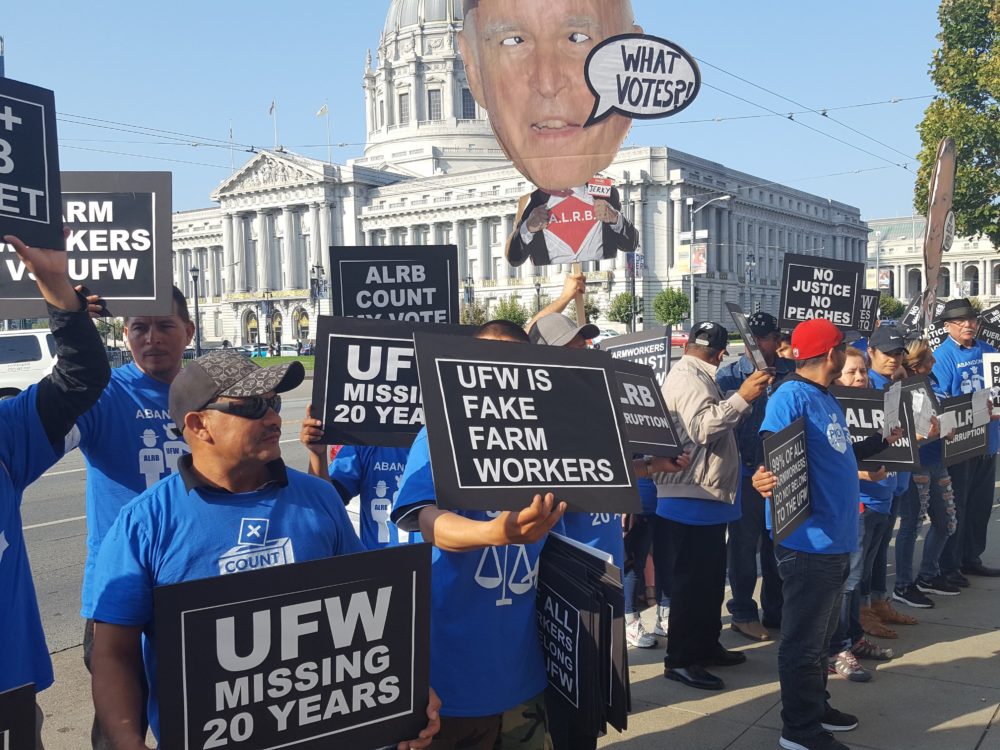
Silvia Lopez and her co-workers from Gerawan Farms organized themselves in opposition to the state’s effort to force the United Farm Workers Union, a dying union looking to save itself with money from their paychecks, and through determination, organization, and civil disobedience forced the ALRB to hold what was the largest farmworker vote in history. From the dawn hours to late in the evening, thousands of farmworkers voted on whether to be represented by the union. Sadly, the ALRB, in cahoots with the union, refused to count the votes, suppressing the workers’ vote in order to protect the UFW.

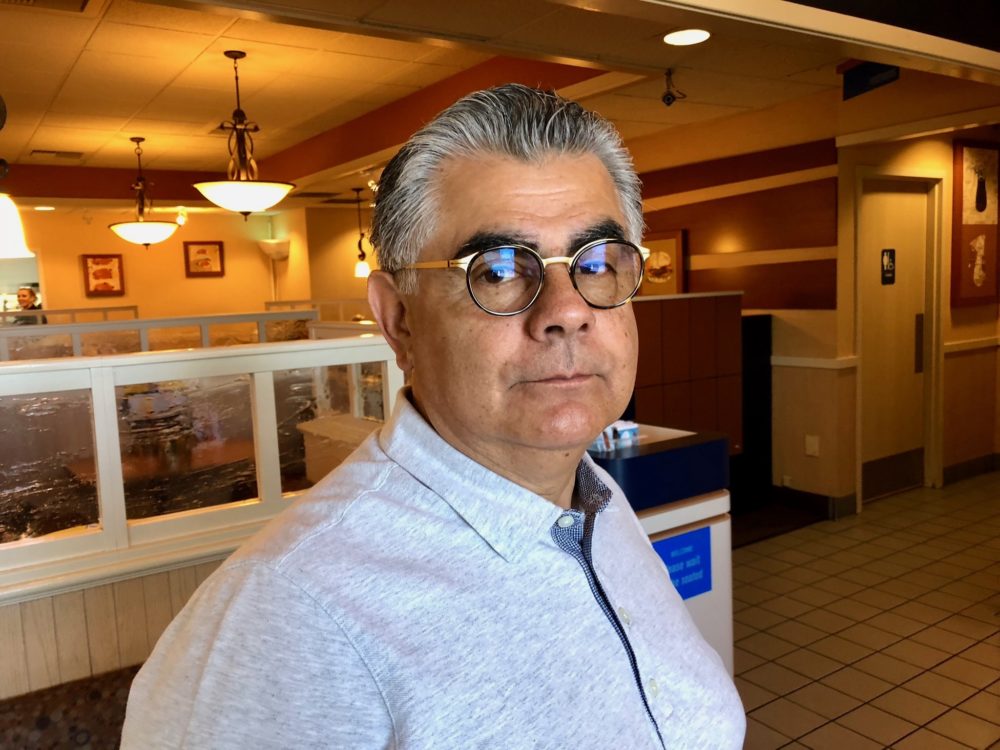
Anthony Raimondo

Anthony Raimondo, of Fresno-based Raimondo & Associates, attorney for Gerawan employee spokesperson, Silvia Lopez

Since that time, the workers have been fighting to expose ALRB corruption and get their ballots counted. While they believed that day had finally come, the ALRB has chosen to defy the court and continues to refuse to count the ballots. In fact, the ALRB refuses to confirm where the ballots are stored, or whether it has them at all.

On behalf of the Gerawan workers, Silvia Lopez has filed a motion with the Fifth District Court of Appeal in Fresno, respectfully requesting that the Court order the state to immediately open the ballots, complete the election process, and preserve the record of the election as appeals wind their way through the Court.

The workers believe, as the Court ruled, that to suppress worker votes violates not only principles of democracy, but principles of government transparency as well. In the view of the workers, there is simply no justification to refuse to count the ballots, except for a desire to avoid exposing the overwhelming worker opposition to UFW representation.

2018-07-06T18:03:29-07:00July 6th, 2018|

Immigration Policy: Focus, Initiate and Stop Reacting

Opinion/Editorial

By Arnoldo S. Torres with the National Institute for Latino Policy

I want to focus on the imperative of altering the narrative set by this president and his supporters and proposing policies that are comprehensive, inclusive, and responsive to the needs of the nation.  Regardless of any success or failure this year to pass any elements of immigration reform, I cannot underscore enough the urgency and importance for altering the false narrative.

Simultaneously it is imperative that Latinos prepare an immigration reform alternative that allows the public and policymakers to recognize a policy path that can be more effective and humane while protecting our border and internal security. We must not be ethnocentric but rather defy xenophobic nationalism, avoid isolation—not advocate an “open border” but be realistic, balanced, practical, and fair.

Politics have long reigned over policy on the reform of U.S. immigration law. This president’s actions and words over the last month cannot be better examples of this ugly and dangerous reality. In the past three weeks, the President ratcheted up his rhetoric on immigration at his Michigan rally.  We also saw and heard in Michigan and before military audiences that despite there being more than 100 million Americans who can trace their history to Ellis Island, there are far too many who today stand in support of the very sentiments and “know-nothing” values that would have denied their ancestors entry to this nation. The words of fear, anger, and demagoguery sound so similar to what was said in the early 19th century when we experienced the most significant movement of immigrants to this nation from Europe.

Up to now, immigration advocates and Latino elected have responded in kind, defensively and with emotion. The liberal groups funding immigrant rights groups seem more interested in media coverage than creating a strategy that can overcome the political extremism that has evolved in the nation.

False Narratives

The false narrative around the causes and consequences of immigration has a clear intent: repeat it enough times that the public comes to believe that undocumented immigrants are criminals involved in trafficking drugs, who threaten the national security of this nation, advocate for open borders, do not reflect the “best” of their countries of origin, and live in sanctuary cities that are “breeding grounds” for criminals. This must change. It dictates and corrupts the substance and policy path for solutions.

Those advancing this image select anecdotal examples to bolster their mean, racist and xenophobic values. This president does this virtually every time he speaks to his base. Despite his demagoguery comments in Michigan and his threat to close down the federal government if he does not get funding for his border wall, even substantial numbers of evangelicals continue to support an agnostic, at best, in the name of the Lord!

Latinos, immigrant advocates, and liberal foundations spend most of their time responding and reacting, not initiating. This has always placed us in a defensive position while allowing false narratives to be circulated and take hold in the public’s mind and with policymakers.

Many who support these claims fail to come to terms with the facts that immigrants—legal, undocumented and refugees—at the turn of the century were engaged in organized crime in Jewish, Italian, Irish, and English immigrant communities.  Many immigrants that came to the Island of Hope came from countries that fought against the U.S. in World War I and II.

In response to the constant hateful words, bully tactics and persecuting policies on immigration, we have allowed this behavior to infect our judgment.  We have failed to recognize that all immigrants are not Jesus-like—we are human! We have imperfections, and many will do bad things that cause intended and unintended consequences to others.  When these things have happened, we have not condemned such actions, we have, at best, ignored them for fear that we are giving into this narrative.  In failing to denounce such acts we have contributed and strengthened this narrative.

Similarities of Yesterday and Today’s Immigrants

We must remind this nation that today’s immigrants and refugees have much in common with those at the turn of the century. Some efforts have been made to emphasize these points, but they are primarily secondary arguments in the national media.

Latino voices on this issue spend most of their time defending their concerns and aspirations for legalization by engaging in campaigns of embarrassing Republican and some Democrat elected officials. While many deserve it, this is a losing tactic which in most situations has merely served to satisfy the expectations and stereotypes applied to Latinos.

Immigrants yesterday and today have experienced many of the same “push factors” that caused them to make this most difficult journey. They arrive today for the same reasons some 12 million entered between 1892 and 1954. As an Italian immigrant is credited with saying, “If America did not exist, we would have had to invent it for the sake of our survival.” We share the same experiences of living in countries of origin that serve as a police state, suppress economic opportunities, deny education, and ignore the concepts of a democratic society. Contrary to the statements of immigration nationalists, people do not decide to journey to this nation because they want to be Democrats or Republicans. Freedom is what all seek!

Yesterday’s immigrants primarily came via boats in steerage class that government reports described as, “The unattended vomit of the seasick, the odors of the not-too-clean bodies, the reek of food, the awful stench of the nearby toilet rooms make the atmosphere in steerage such that it is a marvel that human flesh can endure it.”

Today’s immigrants must walk through deserts, hostile countries, risk life and limb on trains, pay thousands of dollars up-front and after they enter—if they enter—the U.S. They are profit centers for organized smuggling rings and transportation for illegal drugs. Many perish on this path because they are easily exploited and manipulated.

The descendants of past immigrants sit in harsh judgment of those fleeing the same situations their forefathers were fortunate to leave. They argue that their ancestors are different from today’s immigrants which is an ignorance ripe for the type of exploitation that has been growing since the 1980s and only getting worse with time. There is no better example of this ignorance and hovering xenophobic nationalism than the comment made by White House Chief of Staff and former General John Kelly, who stated that the majority of immigrants are “… not people that would easily assimilate into the U.S. … They don’t speak English … They don’t integrate well, they don’t have skills.”  This is almost precisely the very words used to describe the immigrants that came from Ireland, and all of Europe.

There are NO immigrant groups in this nation that have a perfect profile and behavior regardless of when they entered!

2018-07-02T12:11:40-07:00July 2nd, 2018|

Gerawan Farm Employees Await Justice

When Will the Court Ordered Gerawan Votes Be Counted? Part 1

By Laurie Greene, Founding Editor

Jesse Rojas, a farm worker rights activist and spokesperson for Pick Justice, (PickJustice.com) expects the California Agricultural Labor Relations Board (ALRB) and United Farm Workers union (UFW) will appeal the recent ruling by Fifth District Court of Appeals in Fresno, which ordered the ALRB to count Gerawan Farming, Inc. employees’ votes cast nearly five years ago.

Specifically, on May 30, 2018, the Court ordered the ALRB to count Gerawan farm employees’ votes cast in a November 2013 government-sanctioned election to decertify the United Farm Workers (UFW) as their collective bargaining representative, a union that abandoned the workers for over two decades.

Jesse Rojas, spokesperson for Pick Justice (PickJustice.com)

The ALRB held the decertification election in response to petitions filed by Gerawan employees following notification that the UFW moved to impose both UFW bargaining representation and union dues (three percent of salary) on Gerawan employees under the Mandatory Mediation and Conciliation Regulation created in 2002 but then amended in 2011 to allow ALRB to reverse election wins.

Historically, the ALRB certified the UFW as the bargaining representative of Gerawan employees in 1992; however, the UFW never attempted to negotiate in good faith with Gerawan Farming, Inc. on behalf of the employees, nor did the UFW collect dues. The UFW then abandoned the Gerawan employees for nearly a quarter of a century.

Rojas explained, “Our state government continues to refuse to count the votes. That is un-American. These thousands of workers, Hispanic workers who are Americans, came to this country for freedom and the ability to choose what is best for them and their families. They have been waiting for nearly five years for the government to count these votes. Where are the votes? We don’t even have confirmation of the safety and status of those ballot boxes.”

“When the Fifth District Court of Appeals made this announcement, Silvia Lopez was absolutely stunned by it,” said Rojas. “She feels like we haven’t really won a lot in the last few years. At one time, Silvia said, ‘I escaped the corruption from my government in Mexico and I get to California and I’m starting to experience the same and feel the same way,” Rojas said.

“Ninety-nine percent of my family still lives in Mexico, so I know what we ran away from, what makes this country great, and why we are here. So it’s really sad for us to see in this particular state, with Jerry Brown and the majority of the legislators in Sacramento, they are breaking away families because of economic suppression and government corruption,” he said. “They are destroying jobs or they are complicit in the destruction of thousands of jobs, not just at Gerawan Farms, the biggest example. There are multiple companies where the UFW and the ALRB, both, and our government, have failed to protect worker rights and their jobs.”

“I’ll tell you, ” Rojas continued, “from reading most of the decision, which was over 130 pages, it was historic—not just because they said, ‘Count the votes,’ but because of specific legal arguments they used. They went as far as putting a footnote that told the legislature they should amend or change the law, so this does not happen again. They really went above and beyond to explain why this has been really wrong and why it needs a big remedy.”

“I’m not only biased,” Rojas said, “I am 100 percent pro-agriculture and pro-farm workers because I grew up in farming. You know, the moment my parents and I arrived from Mexico, we encountered the history of the grape strikes and UFW beginnings. I grew up hearing their stories and ideology.”

Seeing how their current actions and results differ from the original movement told throughout history, this drove Rojas to step out and publicly speak about it.

Pick Justice advocates freedom of choice for farm workers. They are concerned citizens who support the rights of workers to choose whether or not they want to have a union represent them. They are standing up for workers who are victimized by a politicized government agency. They believe that freedom of choice is a human right. From their “About Us” page: “People who are not educated are deprived of their freedom by those who are educated.

Pick Justice exists to educate the public about the corrupt relationship between a once-noble union and the dishonest government employees at the California Agricultural Labor Relations Board (ALRB). We want to help social change to show that, once a union has violated the trust of those it purports to represent, that union no longer votes for the workers.” Pick Justice encompasses the vibrant website www.PickJustice.com, plus YouTube, Twitter, Facebook, Instagram, Pinterest, Tumblr, and Snapchat social media outlets.

Rojas is also founder and CEO of The Redd Group, LLC based out in Bakersfield. “At The Redd Group, we provide all aspects of labor relations and human resources consulting,” he explained. “This year, we started doing more political consulting and public relations, helping campaigns and companies understand data blind spots that may keep them from maximizing their potential and coach them to adopt winning strategies by focusing on the simple 3 M’s of marketing: identify the specific Market, then craft the exact Message, then finally choose the best Medium to deliver the message. Wherever and however we can, we try to contribute our views and beliefs, as well as whatever we can do to change a little bit of the government for the better and create awareness where needed.”

2018-07-07T15:22:48-07:00July 2nd, 2018|

Agriculture Grads in High Demand

Many Grads are Interested in Day-to-Day Farming

By Jessica Theisman, Associate Editor

There is a big demand for college graduates with agricultural degrees, especially in plant and crop sciences. California Ag Today spoke with Shannon Douglass, first vice president of the California Farm Bureau Federation and a recruiter for CalAJobs, about the need for agriculture grads.

CalAgJobs

Shannon Douglass, First VP of California Farm Bureau Federation and recruiter for CalAgJobs

“I often encourage people to minor in crop science,” Douglas said.

If you are a business major, having some background in crop science is beneficial. As a farm manager, understanding the crops are going to be vital.

“I encouraged animal science majors to think about getting a minor in crop science to understand what we are feeding those animals that they are studying, because that is a huge piece of California agriculture,” Douglass said.

Everything from agronomy and soil science to irrigation and pest control management are vital. Many college graduates are interested in being involved in the day-to-day farming operation.

“I talked to a class at Chico State a couple of weeks ago, and there are a lot of young people that they really want to be in the farming,” Douglass said.

Many students do not want to be in sales, but a large majority would like to be the farmers themselves.

“I really encourage them that you can absolutely be a day-to-day farmer and not necessarily a farm owner,” she said.

Douglass is also a recruiter for CalAgJobs.

“It is a private company, and we work with internships as a grant-funded project. In fact, it is completely free for both the employer and the student to use,” she explained.

These internships are a tool in helping to get those that are in college to look at these ag careers, particularly in specialty crops and crop science overall. Internships can be a wonderful gateway into long-term careers.

“The second part of our website is a classified type job-posting service,” she said.

CalAgJobs uses social media and targeting along with a weekly email.

“Another part of our business is the recruitment services that we offer. We work with employers who need more help on some of these really tough to fill jobs,” Douglass said.

CalAgJobs does their best to help fill those employment opportunities to help others run their farms.

For more information on internships or job postings, visit CalAgJobs.com.

2018-06-27T16:27:37-07:00June 27th, 2018|

Labor Contractor Fresh Harvest Deep in Vegetable Harvests

Fresh Harvest Relies on H-2A

By Jessica Theisman, Associate Editor

Steve Scaroni, along with his wife Brenda, owns Fresh Harvest, a premier labor provider, staffing and harvesting company for the agricultural industry in the western United States.

Steve Scaroni, with Fresh Harvest.

“Expansion for Fresh Harvest is coming, but the main emphasis is crops related to salads. They even expanded into citrus last year,” Scaroni said.

Fresh Harvest has also expanded into pears. Vegetables are the heart and soul of Fresh Harvest.

“Anything that goes into a salad, a lot of lettuce, romaine, broccoli; we touch a lot of salads every day,” he said.

The H-2A temporary agricultural program allows agricultural employers who expect a shortage in domestic workers to bring non-migrant foreign workers to the U.S. to perform agricultural services for a temporary or seasonal nature.

“If it wasn’t for H-2A, I wouldn’t be in business,” Scaroni said.

Scaroni explained that the H-2A gets legal workers to serve his customers demands for the services he offers. A majority of the demands are labor and harvesting, along with other farm services.

“We’re bringing up 100 irrigators this year to put throughout the Salinas Valley because our Salinas customers can’t get enough irrigators,” he said.

Laborers that show great work ethic will be able to work for a longer period of time. A worker could technically stay if moved from contract to contract.

“If the timing works, he gets up to three years, but then he has to go back for 90 days,” Scaroni said.

2018-06-07T15:50:41-07:00June 7th, 2018|

Heat Illness Prevention for Field Workers

Farmers Guard Their Most Valuable Asset

By Patrick Cavanaugh, Editor

When temperatures are heating up, it’s important that growers are keeping farm employees safe to prevent exhaustion and heat-related illnesses and to ensure that their employees go home to their families at the end of the day.

On an average day, temperatures in fields can range from eight to 10 degrees hotter than the average temperature in the area.

“We try always to have a regular tailgate meeting to remind all of our farm employees about the hazards of working when temperatures are more than 80 degrees,” said Ron Samuelson, a Fresno County grower who produces almonds and cherries. “We educate our employees about the importance of drinking water, the emergency procedures if needed. And for increased prevention, we are in constant contact with the workers throughout the day.”

heat illness

Some type of shade must be available to field employees when temperatures reach 80 degrees.

Samuelson said that shade is essential once temperatures reach around 80 degrees and they make sure there is adequate shade in the morning if temperatures are going to get to that high.

“If field employees are in an almond orchard where there are mature trees, there is adequate \shade for them to sit and rest under a tree to cool down,” Samuelson explained. “And when the temperature begins to reach 100 degrees, it’s not uncommon for work to stop to give employees a break from the heat.”

“If temperatures go over 95 degrees, we employ other procedures. The first thing we would do is to talk to the guys to get their input as to what’s their thoughts on how soon they want to stop working for the day.”

“A lot of times, we’ll start a little bit earlier and knock off earlier. Then we take breaks more often as well. We try to maintain that, encourage them to drink at least a quart per hour throughout the day. We make sure they let us know if the water jugs are down to a gallon are less. That way we can get them refilled right away.”

Employee safety is paramount because it would be impossible for farmers to farm without them.

“So it’s essential to help them get through the day and avoid heat stress. At the end of the day, our employees matter most,” Samuelson said.

2018-06-05T16:29:47-07:00June 5th, 2018|

California Food Processing: $200 Billion in Value

California Food Processing is Massive Business

By Patrick Cavanaugh, Editor

The food packaging business is massive in California. California Ag Today spoke recently with Rob Neenan, president and CEO of the California League of Food Producers, based out of Sacramento, about California food processing.

“The League of Food Producers is a statewide trade association. Our primary function is regulatory and legislative affairs on behalf of our members,” Neenan said.

Rob Neenan is president and CEO of the League of Food Processors

The association represents about 50 food processor members across the state, most of the Central San Joaquin Valley, but it serves seven or eight members in southern California. “We have Del Monte in Modesto. We have Hilmar Cheese in Hillmar. In Lodi and Woodland, we have Pacific Coast Producers. We also have also some nut processors, dried fruit processors, so the whole gamut,” Neenan said.

“There aren’t as many frozen fruit and vegetable companies as there used to be, but we have a few, for example, Del Mar Food Products in Watsonville and a couple of companies in the Merced area,” Neenan noted.

The processing industry represents a big part of the power of California agriculture.

“The annual output of the food processing industry in California is about $200 billion. About $25 billion is in direct value added on top of the ingredients,” he said.

The food processing industry directly employs about 190,000 people. However, if you add in all the people who work in packaging, labeling, trucking, energy, IT, in support of the industry, there are 760,000 people in California whose jobs either directly or indirectly rely on the food processing industry, and that’s on top of the production agriculture component.

It’s the third largest industry in the state regarding the manufacturing sector—only high tech and oil refining are larger in California.

And Neenan explained that there are some significant issues that canners are facing.

“The biggest is the proposed steel and aluminum tariff situation. The canning industry needs tinplate steel, which is also used in cans and aluminum foil, which is inside of some packaging as well. For the canneries left in California, this is going to increase their cost of doing business greatly,” Neenan said.

2018-06-04T15:43:45-07:00June 4th, 2018|

Gerawan Workers Have Been Vindicated

Gerawan Workers Will See Vote Counted After 4.5 Years of Seeking Justice

By Laurie Greene, Founding Editor

Following the Nov. 5, 2013 Gerawan Farming, Inc. employees’ legally unresolved election to decertify the United Farm Workers (UFW) as their collective bargaining representative, the employees’ message has been simple: Count the votes!

Silvia Lopez, Gerawan Employee

Yesterday, California’s 5th District Court of Appeals—in a 3-0 decision—ordered the California Agriculture Labor Relations Board (ALRB) to unseal the ballots, count them and issue an official tally.

Dan Gerawan, who co-owns Gerawan Farming, Inc. with his brother Mike and father Ray, said “This is a victory for our employees who never gave up the struggle to achieve the same rights that all other workers have. And we never wavered from our support of their right to choose.”

Dan Gerawan, co-owner Gerawan Farming, Inc.

Dan Gerawan, co-owner Gerawan Farming, Inc.

“I have no clue when the votes are to be counted,” Gerawan explained. “The ARLB and UFW are going to appeal this decision to the California Supreme Court. I do not know if the California Supreme Court will take it.

“But I’m certain that ARLB and UFW are going to try to get the California Supreme Court to take it because the last thing they want is for our employees to have a choice. They want this unionization forced on them against their will,” Gerawan said.

“This is a huge victory and well deserved to these thousands of Latino immigrant farmworkers who have been fighting and sacrificing their time and families’ future to simply have the right to choose and vote in America,” Jesse Rojas, Spokesperson for Pick Justice, an advocacy group for Gerawan farm employees.

“The ALRB and UFW clearly continue to show that they are afraid to let workers vote and show what they want and what is better for their families. After glancing through the Fifth District Court of Appeals decision, I find the attached highlighted screenshots worth noting,” said Rojas.

Anthony Raimondo, president of Fresno-based Raimondo & Associates, is the attorney for Gerawan Farms employee Silvia Lopez, who started the petition and campaign to oust the UFW when they returned to the farm following 20 years of absence. The UFW never successfully represented the employees in reaching a contract with their employer, nor did it ever collect union dues from employees.

“The Court of Appeal is very clear,” said Raimondo. “It just says, ‘You’ve got to count the ballots.’”

Anthony Raimondo

Anthony Raimondo

“The first thing that Silvia said to me was how happy she is to get this decision from the Court,” Raimondo continued. “This is a vindication of what the workers have been fighting for, for more than five years now, since they first began this effort to expel the union. They aimed to protect their income from going to fund the UFW’s efforts,” Raimondo stated.

“The workers have been ignored. Their rights have been trampled on by the ALRB. The ALRB has disregarded them. They were told that they didn’t matter. They were told that their voice would never be heard, but they never gave up,” Raimondo said. “They never stopped fighting. This decision is a vindication of the fact that justice can be done and that the right thing can happen when people remain committed to it. I can’t say enough about the commitment these workers have shown to this effort.”

“This is a huge victory for these farm employees,” said California Assemblymember  Jim Patterson who represents the 23rd Assembly District that covers parts of Fresno and Tulare Counties.

Jim Patterson

“I’m happy for them. Justice is being done, although it is taking a long, long time. It’s another indication of just how far off base the ALRB is. Primarily, the ALRB is a tool for the UFW to force the Gerawan field employees into contracts that they do not want, cannot approve, and did not vote for. So it’s a very good decision for these workers to have the kinds of freedoms that everybody else has.”

Patterson emphasized that the ALRB’s goal is to take those kinds of freedoms away. “The vote count will probably go forward. My guess is ALRB will try to drag their feet. But I think this is a solid [Court] opinion. And now we wait and see if the ALRB considers themselves to be above and beyond the law, or whether they recognize that they have gone far afield, and they’re going to have to correct some very, very illegal behavior,” Patterson said.

Raimondo explained, “There is no substantive history in the record that demonstrates that the ALRB had any jurisdiction or any legal standing to take those ballots and stash them away for all of these years. It was a blatant effort to stifle their votes to do the bidding of the UFW. They have gotten caught at it, and now they’re going to have to correct their illegal activity. If they don’t, I think they are going to suffer some severe decisions with these Courts. I think if they don’t comply, they’re going to get very close to breaking Court orders and breaking the law.”

Gerawan added, “Don’t forget, fifteen million taxpayer dollars have been spent to suppress those ballots. That kind of money spent by anyone, even the government, could [indicate] a lot of fraud took place with that ballot box.”

Raimondo claimed, “It is clear that the Gerawan farm employees are not cynical. They believe in the promise of America. They believe in our system of justice. That’s why they have continued to fight. It’s why they have continued to protest. It’s why they have continued to assert their voice in Court.”

“They knew from the very beginning that this was an injustice,” Raimondo continued..”They knew that the ALRB was mistreating them. They knew that they were treated like second-class citizens, but they also believed that if they continued to fight and to do things the right way—through peaceful protest and by asserting their positions in Court—that the right thing would happen. The workers had faith that the system works, that judges would ultimately hear their voices and that justice would be done.”

“The reality here,  I believe, and the Gerawan workers believe, is that in the end, justice will prevail. We believe we will be heard and corruption will not win. The workers’ voice is going to win here. Democracy is going to win here. Those votes will be counted,” Raimondo said.

2018-06-06T09:09:04-07:00May 31st, 2018|

Officials Applaud Ruling in Gerawan Employees’ Favor

Ballots in UFW Decertification Vote Must be Counted

By Joanne Lui, Associate Editor

Two officials spoke out via press release following today’s ruling that the Agricultural Labor Relations Board (ALRB) must count the ballots cast by Gerawan employees in the 2013 vote to decertify the United Farm Workers (UFW) as their union bargaining representative.

George Radanovich, President of the California Fresh Fruit Association, applauded the decision by the 5th District Court of Appeal.

George Radanovich

George Radanovich

Radanovich stated, “This has been a long time coming. We are encouraged and pleased to see the Court account for the most important opinion in this entire matter, the prerogative of the employees.”

Gerawan employees voted in a sanctioned election in November 2013 to decertify the United Farm Workers as their bargaining representative. Despite having ordered, sanctioned and supervised the election, the ALRB impounded the ballots, withheld a final vote count, and thereby denied recognition and acceptance of the employees’ decision.

Radanovich continued, “Today’s Court action would not have occurred without the determined effort of Gerawan Farming, Inc.; the Gerawan family; and in particular, company president Dan Gerawan, for defending his company and his employees’ right to choose. Finally, sunlight has been cast onto this injustice and the farmworkers’ voice will be heard.”

Assemblymember Jim Patterson (R-Fresno) made the following statement regarding today’s ruling:

Jim Patterson

“This moment is the next step in the most important civil rights battle of our time. More than 2,600 immigrant farmworkers from the Central Valley cast their ballots to determine their own future. Those votes were locked up tight and stowed away by the ALRB—the same agency whose job it is to protect the rights of farmworkers.”

“These hard-working men and women know exactly why their ballots were taken, and they have spent countless hours fighting for the fundamental right to have their votes counted so their voices can be heard loud and clear. Today is victory for them.”

2018-05-31T20:24:07-07:00May 30th, 2018|

Latinos’ Responsibility on Immigration Reform

Commentary on Latinos and Immigration Reform – 2 of 4 Parts

Latinos Have a Unique Challenge 

By Arnoldo S. Torres with the National Institute for Latino Policy

 We have a unique challenge as Latinos. We must provide a path to solving this public policy puzzle of immigration reform while avoiding the ugly attitudes and behavior that are rampant today. We must undertake a critical assessment of our tactics, strategies, activities, and words we use because words are essential not only on one side but all.

This self-critique is hard to undertake; it’s always easier to point the finger. Latinos have played a key role in not achieving what we say we seek: a practical, humane, efficient and fair immigration reform.  There are aspects of this long and ugly road traveled that we must understand (from more than one point of view and experiences), discuss, dissect and correct if we are to bring about what we say we seek.

How I Learned About Immigration

My perspectives, ideas, and vision for humane, practical, fair and just immigration policy for this nation began to be developed 39 years ago in 1979.  I had the honor of serving as the legislative director for the League of United Latin American Citizens (LULAC) in Washington, D.C. I had the privilege of working with a group of people from other nationally known organizations on the recommendations of the Select Commission on Immigration and Refugee Policy (SCIRP) for comprehensively reforming U.S. immigration policy. Law created the Commission in 1978, making it bi-partisan, and included four public members representing labor unions, local and state government, and the judicial branch.

It could not have been created nor efficiently functioning today because there is a dangerous lack of courage and leadership in Congress on both sides of the aisle. It appears, by their statements and actions, that the majority of Congressional members are incredibly ignorant of the dynamics surrounding U.S. immigration policy, the “push” and “pull” factors that cause people to take phenomenal risks. They have intentionally failed to read and comprehend the history of these factors that virtually color all immigrants to the U.S. with the same desperation, survival instincts, desires, and dreams.

These members have not elevated the tone of the emotionally-charged rhetoric or imagery, but intentionally over-simplified the complexities and motives of immigration movements. There are too many “aggrieved parties” who lack the desire to solve problems facing the nation unless they can satisfy the growing ideology and political silos on the right AND left! They follow a very narrow and faulty narrative on immigration.

immigration reform

Arnoldo Torres

I learned first-hand the many facets, difficult choices, and responsibilities associated with the realities surrounding immigration policy many years before my experience in D.C.  I began working in the tomato fields of California agriculture at the age of ten. It was not a summer outing but a necessity. I had the responsibility of having to pay for my school clothes for the year, which was referred to as “la cosa Christiana” as my grandfather put it.  My mother and uncles began work at an earlier age in Texas, younger than ten years old, while going to school.

Beginning at five years old, and every other year after until I was 28, I would visit relatives in Ciudad Delicias, Chihuahua, Mexico. I came to recognize early the sacrifices my grandfather made to cross the border at the age of 12 to work as a water boy on the railroads of Texas. At 17, he was able to bring his mother, brother, and sister to the U.S. Two generations of my family experienced a great deal of discrimination before I began to see and feel it when I was very young.

Political Parties and Media

Elected officials, from both political colors, express their concerns about the immigration polemic, defending or attacking one another, insisting that their positions are true and pure. Posturing for their ideological fan base is primary while facts and knowledge play a secondary role.  There is a prevalent attitude of “don’t confuse me with the facts” because my base only wants “red meat” regardless of its quality. Both parties have made this issue so toxic by having it be more about politics than about policy, fairness and economic reality.

At such a crucial time for Latinos and the nation, we have two ill-prepared political parties who cannot rise to the challenge of what the world sees is the demise of the shining country on the hill. Liberals believe Democrats are better for us, but that is because Republicans care so little about us.

Making a significant contribution to this dynamic has been a President that began his campaign by revving up the deepest-seeded xenophobic characteristics of American nationalism. He has made it so much easier for this ugly side of nationalism to be manifested in the style of a Tucker Carlson show or commentary by the mean and hypocritical Ann Coulter or Laura Ingraham—all in the name of Making America Great Again.

Fox News churns out the type of stereotypes Hollywood used decades ago and even to this day about Latinos; they ignore facts and make sure that the Latino immigrant profile never deviates from the criminal, drug dealer, and threat to U.S. security and motherhood. The very people whose history in this nation includes organized crime, criminals in their countries of origin, and enemies against the U.S. in TWO world wars now sit in harsh judgment of us.

On the other side of the spectrum, we have Jorge Ramos of Univision forgetting that he is the journalist but behaves like a one-dimensional advocate. He is well intended and has become the darling of the political left in journalism.

You want a Latino to talk about immigration; the English media selects Jorge, who provides no real insight but ticks off the usual talking points.  Then we have CNN, whose hosts and panels/guests discussing immigration are primarily non-immigrants and non-Latinos. The guests representing the left and the right say all the typical things but in a very chaotic format. They exhibit such intolerance for one another that it turns off the viewer and furthers the divide and ignorance.

2018-05-17T15:36:41-07:00May 17th, 2018|
Go to Top