Developing On-Site Rescue Plans for Worker Safety

Western Agricultural Processors Association Seeks to Improve Worker Safety

By Melissa Moe, Associate Editor

Agricultural work can be very dangerous when working in confined spaces. If a worker was to receive an injury, such as a heart attack or even just a sprained ankle while down in a pit, they would be unable to climb a ladder to safety. It is important for workers to be aware of these dangers and have a plan to rescue others in times of emergency.

Roger Isom is the president and CEO of the Western Agricultural Processors Association, representing California’s almond hullers and cotton ginners. We spoke with Isom about the dangers of working in confined spaces, and what producers can do to keep workers safe.

“Confined spaces are basically just an area you’re not normally working in, where if something happened, it would be very difficult to get you out of that hole, or out of that silo, or out of that baghouse. It’s a permanent required confined space, difficult to get in and out of, like a pit,” said Isom.

In an ongoing effort to increase safety awareness, the Western Agricultural Processors Association is conducting specialized confined spaces training workshops.

“The training that’s going on involves recognizing when and where you have confined spaces, what kind of safety plan you need to have in place, and what kind of rescue plan you need to have in place, so in the event someone does get hurt or has an illness, you can rescue them,” he said.

Most confined spaced accidents are completely preventable and involve workers who do not have a well thought out, organized plan. It is important to have these plans in place so that everyone returns home to their families at the end of the day.

“Nine times out of ten, a confined space accident is where somebody goes in to rescue the person that’s down. Maybe you’ve got a gas leak. You see the guy laying down in the pit as you walk by and think, “Oh my gosh, I gotta go down there and get him.” Then you’re overcome. Then the next guy comes along and he’s overcome by the gas,” Isom said.

“This is why companies need a rescue plan,” he explained.
2017-05-22T15:14:29-07:00May 22nd, 2017|

Safeguarding CA Farm Workers Rights – Part 2

Updates on California Farm Workers’ Rights 

By Laurie Greene, Founding Editor
Our ongoing coverage of developments among United Farm Workers (UFW), Agricultural Labor Relations Board (ALRB), Gerawan Farming, Inc. and California farm workers chronicles the continuing, increasingly complex quagmire that masquerades as protecting California farm workers’ rights.

UFW Underpaid Employees – UPDATE

As previously reported, on March 26, Monterey County Superior Court Judge Thomas Wills ruled that the UFW underpaid their own employees and mandated the UFW to pay a $1.2 million award that covers former employees, organizers, and other members of the class action suit, as well as penalties for California Labor Code Violations.

On April 27, Judge Wills added $772,000 to UFW’s court expenses for attorney fees incurred by Noland, Hamerly, Etienne & Hoss (NHEH), the law firm that represented former UFW employee Francisco Cerritos in the class action and Private Attorney General Act lawsuit on behalf of himself and other current and former UFW employees.

In issuing the additional costs to the UFW, according to a May 3 NHEH press release, Judge Wills stated that, “The Court has not placed an amount to destroy someone, and the union does serve a socially laudable purpose, but (the union) has to follow the law; and when it doesn’t do so at the expense of others and that results in drawn out, protracted and complex litigation, it cannot expect the Court to turn a blind eye to what the consequences of what that conduct are.”

Gerawan Violated Labor Law by Negotiating “in bad faith”— UPDATE

As previously published, ALRB Administrative Law Judge William L. Schmidt issued a decision on April 14 in favor of the UFW, finding Gerawan violated labor law by negotiating a collective-bargaining agreement with UFW “in bad faith—commonly called “surface bargaining”—in the eight-month period from January 2013 through August 2013.

In an April 17 news release, Gerawan Farming called the April 14 decision of the Administrative Law Judge “erroneous” in that Gerawan did bargain in good faith. Further, Gerawan maintains that imposed mandatory mediation and conciliation does not constitute volitional negotiations. Gerawan will appeal this decision. The following are excerpts from this press release:

This unprecedented ruling would punish an employer for failing to “negotiate” the terms of a “contract” dictated and imposed by the ALRB. This is an in-house judge who is not independent; he is an employee of the ALRB. He criticizes Gerawan’s positions and second-guesses how it participated in what was supposed to be a confidential mediation and trial-like arbitration, but he never asked the only relevant question: How does this forced contracting process resemble a “negotiation”?

The so-called “mandatory mediation and conciliation” procedures (MMC) are neither consensual nor voluntary. It is forced contracting. The ALRB tells the employer what wages to pay, what employees to hire or fire or promote, and what portion of the employees’ salary will be turned over to the union. The employer may not opt out, and the employees are not given the choice to ratify or reject the so-called contract that will be forced on them, even if there are provisions detrimental to them.

Gerawan had no choice but to submit to this coercive process.

…The UFW did not bargain; it asked the ALRB to impose terms, based on a forced contracting process the California Court of Appeal has since ruled to be unconstitutional (and is now under review before the California Supreme Court).

To date, UFW’s unexplained 17-year disappearance from the Gerawan farm workers remains unexplained. During its absence, the UFW never negotiated a single wage increase for any Gerawan employee, nor did it attempt to bargain for a contract, collect dues, or file a single grievance on behalf of the employees. Meanwhile, Gerawan claims its workers are among the highest paid in the industry.

Yet, the ALRB’s controversial 2002 MMC provision appears to allow this AWOL union to force current Gerawan farm workers to choose between paying union dues or losing their jobs. The majority of Gerawan employees twice asked ALRB for an election to decertify the UFW. At the ALRB’s request, the Fresno Superior Court intervened and supervised the decertification petition and election process. This was the first time in the history of the ALRB that a court oversaw an ALRB election.

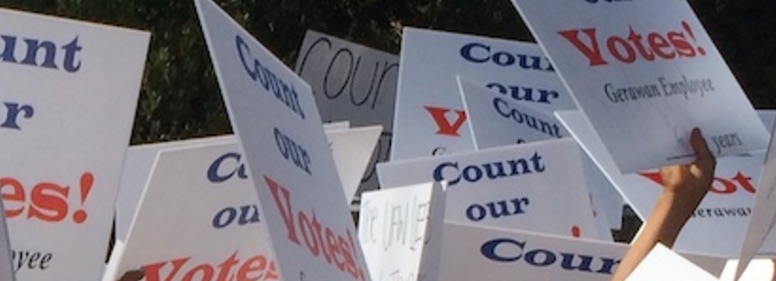
As yet, ballots cast by Gerawan farm workers in the sanctioned November 2013 election to decertify the UFW have never been counted, are being stored in an undisclosed and possibly an insecure location, and are the target of legal attempts by the ALRB and UFW to be destroyed.

The Court of Appeal is preparing to decide whether the ALRB may deny employees the right to choose who will represent them at the bargaining table—a seemingly basic American democratic right. The California Supreme Court is preparing to decide whether the UFW’s longstanding abandonment of Gerawan’s employees justifies this forced contracting process. California farm workers deserve a full and fair hearing on these issues.


Who Safeguards California Farm Workers’ Rights? Part 3 – Bargaining in Bad Faith


Resources:

Gerawan February 27, 2017 press release, Gerawan Farming Asks Court to Order Disclosure of Information Related to ALRB ‘Whistleblower’ Allegations: A 30-year ALRB Employee Alleges Corruption Inside ALRB.”

2018-05-07T01:00:56-07:00May 17th, 2017|

Heat Illness Prevention for Workers

Training is Key to Heat Illness Prevention

(Part One of a Series)

By Patrick Cavanaugh, Farm News Director

Temperatures heating up throughout Central California are a reminder of the critical importance of heat illness prevention for farm employees working in the luminous fields.

Scott Peters farms peaches and nectarines in the Reedley and Dinuba areas of Fresno County. He carefully watches his workers. “During the high heat periods, we have to be very careful so the guys don’t get heat illness, heat stroke types of symptoms. So we have shade and cold water readily available. We’re working on portable toilets now that have covers over them so they’re not as warm, for summer use.”

Scott Peters

Peters maintains that prevention is always the best way to keep workers safe. “It comes down to regular training,” he said.

“We also conduct heat illness training with all the field workers. We go over proper clothing light-colored clothing, cool clothing, hats, bandanas and sunscreento help prevent issues,” Peters said. “If the field worker is safe and happy, he does a better job. It’s better performance and, all the way around, everybody benefits.”

And Cal/OSHA rules require certain provisions to ensure workers’ safety as the days warm up. “We have postings,” Peters said. “Our crew bosses have binders with all the heat illness information, emergency contact numbers – both company and medical – such as 911 and the local hospital. [These postings] are with them in their vans and [affixed] to our restroom units in the field.”

2017-05-10T22:35:56-07:00May 5th, 2017|

Labor Issues in Sweet Potatoes

Sweet Potato Season Under Way: Labor Issues Are Big Concern

By Patrick Cavanaugh, Farm News Director

With the 2017 sweet potato season getting under way, there are major concerns about the cost of labor – in particular, the new overtime law.

“It is a high-labor crop, which makes it a very expensive crop to farm. It use to be that fumigation challenges were the biggest concern, but now it’s the overtime law,” said Scott Stoddard, a Merced County vegetable crops farm advisor with UC Cooperative Extension.

“Before the new law, workers often put in a 10-hour day during harvest. So I think in order for growers to survive, they will be forced to change the harvest methods. We have to figure out how to make the harvest less expensive,” Stoddard said.

Stoddard has had a conversation with growers about figuring out a way to increase harvest efficiency.

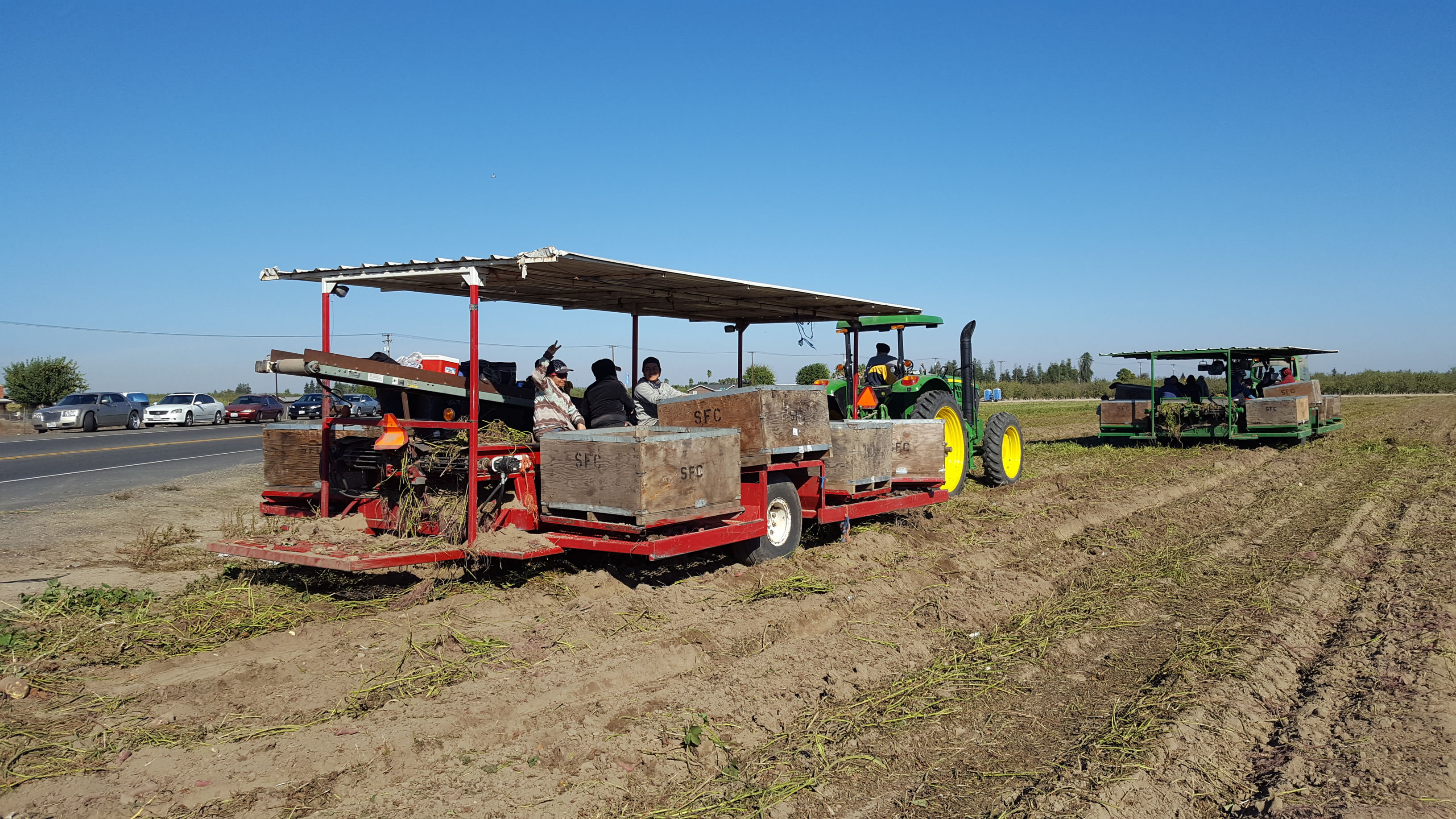
“Again, the expensive part of the operation is the fact that harvesting is a very slow operation,” Stoddard explained. “You’re going to have a tractor and a driver, and you’re going to have five or six people on this piece of equipment. And in a 10-hour day, this harvester might do one acre of ground.”

Right there alone, there are six employees that are making at or more than minimum wage: $12 to $15 an hour. After workman’s comp and social security are factored in, farmers are looking at six people at $12 an hour or combined $72 dollars an hour. Multiply that by 8 hours – that’s $576 dollars – and that’s only for the labor.

“And if you have to go overtime, which is needed at harvest, then labor cost rise very steeply,” Stoddard said.

Then you have to throw in everything else: the equipment costs, diesel and maintenance. And you also have the driver of the harvester. And then you have the forklifts out in the field and the portable bathroom rentals. All of a sudden, costs are up around $1,500 an acre just for harvest.

We have to ask, is it really profitable to grow sweet potatoes?

“They continue to do it, so it must be,” Stoddard said. “However, the changes in both the overtime law as well as the increase in the minimum wage are increasing the labor by 50 percent. So that means growers will need to increase their efficiency an additional 50 percent. And that’s what the industry is working on.”


2017-05-02T15:46:45-07:00May 2nd, 2017|

Who Safeguards California Farm Workers’ Rights?

Mudslinging in the Field

By Laurie Greene, Founding Editor

In his 1984 Address to the Commonwealth Club of California, American labor leader and civil rights activist Cesar Chavez explained that he cofounded the National Farm Workers Association, the forerunner to UFW, in 1962 “to overthrow a farm labor system in this nation which treats farm workers as if they were not important human beings.” Yet recent developments among United Farm Workers (UFW), Agricultural Labor Relations Board (ALRB), Gerawan Farming, Inc. and farm workers illustrate the continuing, increasingly complex quagmire that masquerades as protecting California farm workers’ rights.

ALRB Chairman William B. Gould IV, who resigned on January 13, wrote to Governor Jerry Brown that the Agricultural Labor Relations Act (ALRA) is irrelevant to farm workers because they are unaware of the law’s provisions, procedures and rights.

“The instances of unfair labor practice charges and invocation of the Mandatory Mediation and Conciliation Act (MMC) are few and far between,” Gould explained. “There is no union organizing which might make workers aware of the [ALRA].” He added that only one union representation petition was filed during his 3-year tenure.

Nevertheless, under Gould’s watch, the ALRB doubled both its staff and taxpayer-funded budget to harass Gerawan and its farm workers.

Remarkably, on March 26, Monterey County Superior Court Judge Thomas Wills ruled that the UFW underpaid their own employees. Consequently, UFW must pay a $1.2 million award that includes funds to plaintiff former UFW employee Francisco Cerritos and other internal organizers, sums to other members of the class action suit for pay stub violations and penalties for California Labor Code Violations.

“It’s unfortunate that a union asks for laws to be respected,” plaintiff Cerritos said, “but [the union does] not respect them.” The UFW, Cesar Chavez’s legacy, has shortchanged its own workers.

Furthermore, ALRB whistleblower Pauline Alvarez, a 30-year former ALRB field examiner, filed a retaliation lawsuit in 2015 against the ALRB, which is still pending in Sacramento Superior Court. According to a February 27 Gerawan press release, Alvarez alleges that she recommended to former ALRB chief counsel Sylvia Torres-Guillén the dismissal of cases in which the UFW failed to cooperate and provide witnesses and evidence to support its allegations. Alvarez claims Torres-Guillén directed her and other field examiners “to dredge up witnesses that would assist the UFW’s position.”

Alvarez also asserts that she protested the settlement of farm worker cases against the UFW that contained sufficient evidence to establish UFW violations of the law. Stunningly, she affirms that the ALRB refused “to notify workers of their rights to file charges against the UFW when the UFW violated the workers’ rights,” and the “ghostwriting” of the UFW legal brief by the ALRB staff.

Perhaps most astonishing, the ALRB withheld this whistleblower’s report from ongoing legal proceedings with Gerawan and Gerawan farm workers for seven months.

Most recently, ALRB Administrative Law Judge William L. Schmidt issued a decision on April 14 in favor of the UFW, finding Gerawan violated labor law by negotiating a collective-bargaining agreement with UFW “in bad faith”— commonly called “surface bargaining”— in the eight-month period from January 2013 through August 2013.

To explain this decision in context, the UFW was voted in by Gerawan farmworkers in a runoff election in 1990 and certified by the ALRB in 1992. Significantly, UFW never reached a contract to represent Gerawan farm workers in wage negotiations with their employer. Neither did the UFW collect dues from or provide services for the farm workers, reportedly among the highest-paid in the industry.

The UFW effectively abandoned the Gerawan farm workers – that is, until 2012, after the California State Legislature amended the Agricultural Labor Relations Act to allow and accelerate an imposed mandatory mediation and conciliation process for union contracts. Thus, UFW offered a new contract proposal, via imposed mandatory mediation, to Gerawan farm workers.

Meanwhile, during the same time period in which Gerawan supposedly negotiated with UFW in bad faith, Gerawan farm workers were actively collecting signatures to petition the decertification of the UFW as their bargaining representative. The ballots cast in the ALRB-certified election in November 2013 have never been counted, to this day. Rather, they were sealed and stored in an undisclosed location, allegedly in ALRB custody.

Who is safeguarding California farm workers’ rights?

An ongoing conversation.


Safeguarding CA Farm Workers Rights – Part 2


Resources

Chavez, Cesar. “Address to the Commonwealth Club of California,” San Francisco, CA, November 9, 1984.

Cloud, Tal and Matt Patterson, “The ALRB and UFW: Partners in Crime,” The Fresno Bee, 4/24/17.

Gould’s January 13, 2017 Resignation Letter provided by the LA Times.

Grimes, Katy, “ALRB Spent $10 Million To Prevent Gerawan Workers’ Ballots From Being Counted,” FlashReport, March 22, 2016.

Mohan, Geoffrey, “California Farm Labor Board Chairman Quits in Anger,” LA Times, January 13, 2017, http://www.latimes.com/business/la-fi-alrb-resignation-20170112-story.html 

Sheehan,Tim, “Rising expenses, accusations of bias confront state agency in Gerawan farm-labor conflict,” Fresno Bee, July 31, 2015.

State of California Agricultural Labor Relations Board Decision And Recommended Order, signed by William L. Schmidt, ALRB Administrative Law Judge, on April 14, 2017.

Wu, Amy, “UFW ordered to pay $1.2M in wages, OT,” The Californian, March 29, 2017, updated March 31, 2017.

2018-11-16T12:45:16-08:00May 1st, 2017|

Indoor Heat Regs: A Solution to a Problem?

New Regs Target Indoor Heat Illness Prevention

By Patrick Cavanaugh, Farm News Director

Many agricultural organizations have submitted written comments opposing Cal-OSHA’s proposed heat illness prevention in indoor places of employment. California has long had an outdoor heat illness regulation, but now an indoor regulation is a possibility. Roger Isom, President and CEO of the Western Agricultural Processors Association – which includes California’s nut processors, cotton gins and other industries – spoke to California Ag Today about the issue.

“This is a solution looking for a problem,” Isom said. “There’s no problem here. The incidents that drove the legislation came out of the Riverside-Ontario, area where you had warehouses that don’t have air conditioning. Most of the time, the temperature in that area is in the 70s and 80s, occasionally in the 90s. Every once in a while they’ll get that rare heat wave that gets up to 100, and if you’re not used to it, yeah, you’re going to have a problem.”

Because Central Valley agriculture is used to the higher heat levels, the buildings are designed differently for the workers, Isom explained. “They’re adequately ventilated. The air moves through it, and we’re used to that heat, so it’s not what we’re talking about in the San Joaquin Valley. Why throw everybody under the bus, so to speak? Makes no sense in this case. It really should be a targeted regulation. The legislature’s allowed for that. Cal-OSHA just need to be directed,” Isom said.

Nearly all the farm buildings have big open doors and are well ventilated with fans and some portable evaporative coolers. Workers who come out of the field where it’s 105 degrees and then walk into those buildings find it quite comfortable.

“It’s going to not make a lot of sense that if we’re telling the guys that are working out on the gin yard to come into the gin for shade if you’re feeling hot or you’re feeling ill. Now you’re subject to another rule regarding higher heat in the building that might be contrary to what you’re doing. It just doesn’t make a lot of sense,” Isom said.

2021-05-12T11:05:17-07:00April 21st, 2017|

A Great Time to Be in Agriculture

Lowell Catlett On Ag, Part One

Agriculture Is Primed to Provide Different Food to Masses

By Jessica Theisman, Associate Editor

Lowell Catlett says California agriculture is in a good place.

Lowell Catlett, a former professor at New Mexico State University who continues to lecture with a style that keeps the audience engaged, shared with us what a great time it is to be in agriculture. “I think it is the best time because we have never had a period in history where we have had so many people, worldwide, rising out of abject poverty into middle class” he explained.

“They become consumers, and they want things, and they want a lot of things. They want the things that they see other people have. That means they want California pistachios, almonds and walnuts, and all the bounty that California produces, including its milk and eggs and cheeses, and everything else,” Catlett said.

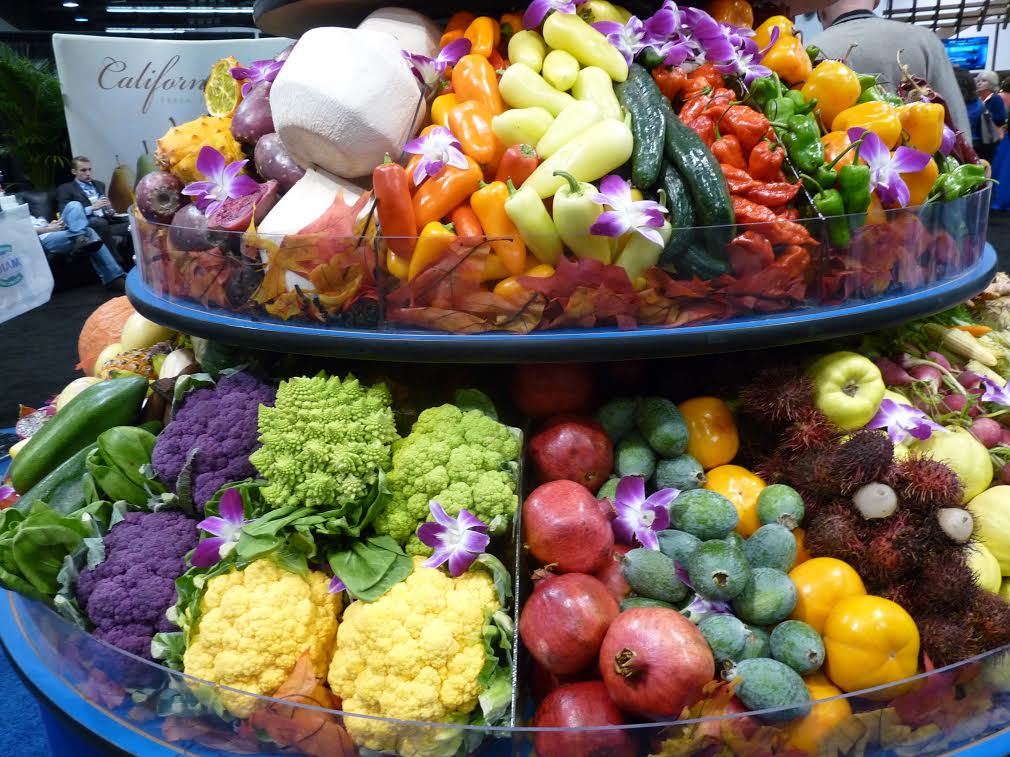
“Once someone earns more money, one of the first things they change is their diets, and they like to get things that are unusual and unique. And California is the breadbasket of the world in terms of its ability to produce different things, and you’re seeing that translate into best time ever to be in agriculture,” he said.

Not only does current agriculture have the products, but there is plenty of money to buy those products. “There is so much money. The net worth of the United States right now over 123 million households is $94 trillion. The world’s output last year was $73 trillion, so we have $20 trillion more in household net worth than the whole world combined, The consumers want organic, or they want certified to the source. We have to certify those things to the source. They want all kinds of different food choices,” Catlett said.

“Before, people just wanted food, and they now want all these other foods. They may want gluten free, and they many not even have celiac disease. And it all helps the farmers to have markets we never had before, and that is fabulous,” Catlett said.

2017-04-20T13:54:41-07:00March 22nd, 2017|

AgJobs4U Connects Employees and Ag Businesses

AgJobs4U.com Helps Workers and Farmers

By Brian German, Associate Broadcaster

Two years ago, Josh Pitigliano encountered a problem when coming into harvest season. He didn’t have enough qualified labor for his almond orchard.  Timing is critical during almond harvest, and Josh had sweepers and pickup machines parked because of a lack of labor.  That was the motivator for establishing AgJobs4U.com, a website that connects motivated employees to successful agriculture businesses.

Josh offered some insight as to how the website works.  “We are connecting farmers to employees and making that connection through a profile that the employee can create, that gives them access to a job board,” Josh said.

Last year at the World Ag Expo, Josh and his wife, Jennifer, officially launched AgJobs4U.com, and the website has been gaining momentum ever since.  There are over 4,000 job seekers in the database this year.

Jennifer and Josh Pitigliano

Jennifer said, “We have a handful that are outside of California, but we’re focused really on California to make sure that we’re doing a good job and offering a good service here before we would potentially expand out.”

Josh said the website has an overall goal of going national sometime in the future.

The website boasts that it was “created by a farmer, for a farmer, to alleviate the stress of finding skilled agricultural workers.”  They have a wide variety of positions listed on the website.  “Anything from irrigator checker, milker, feeder, mechanic, harvester, driver, specialized jobs like a shaker driver, to a bookkeeper, front secretary, packing house personnel, even PCAs,” Josh said.

Employers can purchase a subscription that will give them unlimited access to the database of employees available for immediate hire.  Employers can also post a job that is available in order to create a pool of candidates.  “For an employer, it works two different ways,” Jennifer said. “They can either wait to see who contacts them, or who has a profile in the database. … It’s beneficial for an employer to post a job, in addition to extracting people out of the database.”

The website is designed to be easy to navigate and fill the needs of both employers as well as those looking for ag jobs.  “When an employer puts a job on the job board, they have the choice, too, of whether it’s a part-time or full-time job,” Jennifer said. “That way, in case someone is looking for another job to supplement their current job, they have access to do that.”

AgJobs4U.com also helps to bridge the language barrier by offering a Spanish language option on the site. “Right at the top right of the website, with the click of a button, it will translate the whole website over to Spanish. … That way, me as someone who only speaks English, I can still find that person for that job by easing that translation barrier that’s between the two of us,” Jennifer said.

The company is 100% web-based.  It is also very mobile sensitive, so employers and potential employees alike can use their smartphones to navigate the site.  AgJobs4U.com is all about getting the right person for the right agricultural position.  “It is the American way,” Jennifer said. “People are trying to improve themselves, and if we give them the ability to do that by connecting them to different farmers, then at the end of the day, it’s a good job.”


2017-04-24T18:30:13-07:00March 16th, 2017|

Conflict of Interest Between ALRB and UFW

ALRB and UFW Conflicts Concern Industry

By Brian German, Associate Broadcaster

Governor Jerry Brown’s appointments to the Agricultural Labor Relations Board (ALRB) is causing quite a bit of concern for farmworkers and ag employers alike.

George Radanovich is the President of the California Fresh Fruit Association and a former California congressman who served from 1995 until 2011, representing California’s 19th District. He expressed his disappointment in so many United Farm Workers of America advocates being appointed to the ALRB.

“The board is there to protect the interests of the farmworker. What they’re doing is trying to protect the interests of the United Farm Workers, and that goes completely against what they were created by law to do,” Radanovich said.

William Gould, who was appointed by Governor Brown to chair the ALRB in 2014, announced his resignation recently.  In his resignation letter, he noted that during his tenure, only one petition for unionization had come before the board.  Gould also previously noted that the board spent more of its time on petitions from workers trying to kick out the UFW, rather than petitions seeking to join the union.  That seems pretty telling as to how desirable the UFW is to farm workers.

“The UFW only represents about 2 precent of farmworkers in the state,” Radanovich said. “And the reason is, is because farmworkers are happy with the growers. I mean, there’s a very good relationship there, and they view the UFW as intrusive.”

Radanovich referenced what happened with Gerawan Farms as an illustration of the already problematic relationship between ALRB and the UFW.  “Way back in the ’90s, there was a union vote to unionize, and the UFW just sat back and didn’t mobilize. They didn’t unionize the farmworkers. Twenty years later, they walk back into the operation and say, ‘Okay, it takes effect now.’ Where would that happen anywhere else?” Radanovich said.

The Gerawan workers decided to have a new election, with a majority of workers expressing their disinterest in joining the UFW.  However, those votes were never officially counted.

“They refused to count the votes because it’s real obvious that they’re going to lose, the union would. So the ALRB says, ‘Well, we just won’t count the votes,’ ” Radanovich explained.

According to him, the employment landscape has changed dramatically since the establishment of the UFW in 1962, essentially making the UFW obsolete.  “The reason UFW is so weak and they can’t get membership is because the farmworker is pretty well off today having a good relationship with their employer, and that’s better than union status. The farmworker really is in a better position if he’s got a good relationship with the grower, which accounts for about 90 percent of what’s out there in ag labor today,” Radanovich said.

Radanovich is also a wine grape grower in Mariposa and has a first-hand understanding of just how hardworking and appreciated farmworkers are.  “Growers know that if they don’t take care of their farmworkers, there’s going to be nobody there to pick the fruit. So there’s a natural inclination for the farmer to want to take care of the farmworker. And none of that is accounted for in the way that the ALRB implements these rules.”

The ALRB is designed to be a neutral organization, but filling it with so many UFW sympathizers appears to be a significant conflict of interest.  “It’s really unjust. The ALRB is not there to promote union membership; they’re there to protect the farmworker and I think they’ve lost their focus. … I mean, you only need a union in there if the grower has failed the farmworker and that’s not happening,” Radanovich said. “They’re taking good care of their farmworkers and giving them opportunity and providing them a living at the prevailing wage.”


2017-02-07T16:34:53-08:00February 6th, 2017|

CalAgJobs: Big industry Needs

CalAgJobs Connects Job Seekers

By Brian German, Associate Broadcaster

The men and women in the California agriculture industry help provide food to consumers all around the world.  That makes it even more important to prepare the next generation of farmers and ranchers to fill that role.

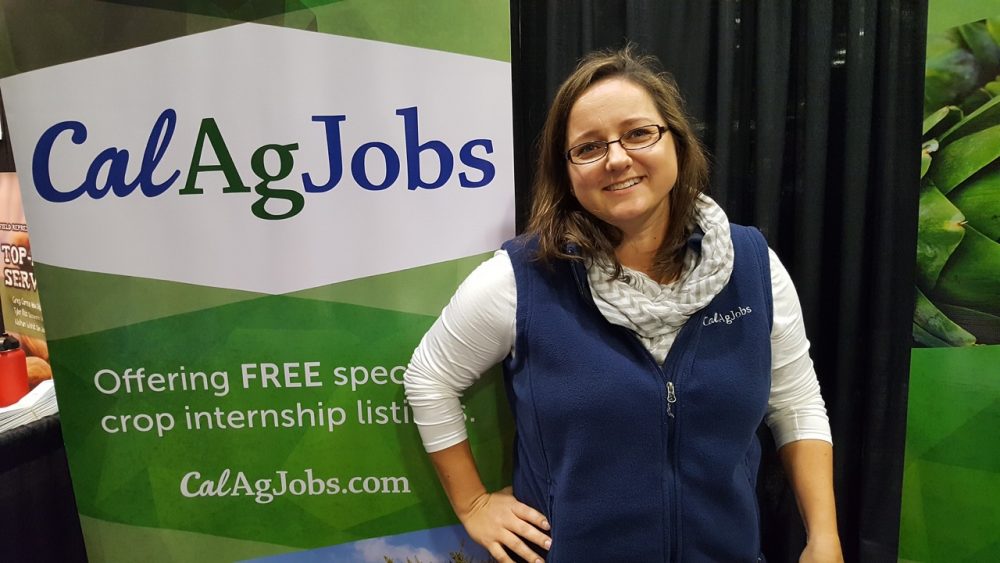
Shannon Douglass is the Director of Outreach at CalAgJobs – a company that connects those looking for ag careers with employers who are looking to find long-term team members. Some people think about agriculture in terms of being a shrinking industry, but Douglass explained that California agriculture is as vibrant as ever. “Farms themselves are getting larger, and we need people who are those professionals, who can help the farmers and help those farms continue,” she said.

Throughout the state, agricultural companies face unique needs that require specialized knowledge. CalAgJobs was established with a goal to link passionate and qualified people with great ag careers.  “We think it’s really important to be encouraging people in college, especially, to be looking at internships in agriculture so eventually they’ll look at those jobs,” Douglass said.

The team at CalAgJobs believe that agriculture is more than just a job – it’s a way of life.  Douglass indicated that a tremendous number of opportunities available for those who are interested in studying agriculture.  “We end up with about 4.5 job opportunities for every crop science grad in California; especially in crop science, the jobs are huge,” Douglass said.

To search for employment using CalAgJobs, go to their website here.


2016-12-31T12:14:17-08:00December 31st, 2016|
Go to Top