
JIM PATTERSON ON CALIF0RNIA WATER NEEDS

Assembly Member Jim Patterson on Water

Storage is Critically Needed

State Assembly member Jim Patterson represents the 23rd district, which encompasses   eastern Fresno County and part of eastern Tulare County.  His comments on what needs to be done regarding California water for agriculture and urban use were made at the recent Water Summit in Fresno.

Jim Patterson, 23rd Assemblyman
I am new to the Assembly, in “sponge-mode”/listening mode and attempting to understand what we can and cannot achieve in the short-term and long-term. So what I have been trying to do is to set a framework in which I can be engaged and supportive of the water bond in 2014. And my hope is that the Senate democratic leadership will be as clear as possible with respect to the principles that the 2014 bond is going to put forward.

So there are a few principles that I will be looking for:

Principle number one is, if we are going to pass the statewide water bond, it has to create net new water. It’s not good enough, merely, to rearrange the deck chairs on the Titanic.

We continue to fight over a stagnant water supply. I think we must pay attention to the wet-year runoffs, and that means storage. That means we capture it, store it, and save it, and we use it during the dry years.

When I was mayor for eight years, two of every four years were wet years. I took a look from a helicopter ride over Millerton Lake in 1997, and I saw hundreds of thousands of acre-feet flow out the Bay. I think we need to have a net, new water bond that actually gets us more of a water supply.

Secondly, the water bond absolutely has to contain storage. We live in Central California where we can look up to our mountains and we can see the benefits of hydrology that comes from the Kings River Watershed and the San Joaquin River Watershed.

We need to modernize our historic hydrology. I think there are too many people in Sacramento who want to essentially ignore the fact that we have good dams, we have hydrological systems, and they have served us exceedingly well. Not only do we get water, we get flood control, potable water, agricultural water, recreation and inexpensive energy.

Those are all strong cases to be made for storage. There are quite a number of dams that are up to capacity and others in the supply chain.

For the water policy in the long term, I think Central California has to ensure that we retain the water rights along our watersheds—the San Joaquin and Kings Rivers. I don’t think it does us any good to have a water policy that starts to begin to move our water supply to other places and to other people, because of the highest bidder. We can’t be exporting water out of our watersheds.

Whatever policy, long-term, has to incorporate net new water storage and conveyance, particularly during the wet years for use in dry ones. We have to protect our water rights; we can’t give those away in negotiations.

Finally, in the short-term, I am a little frustrated. I’ve been here for a while, and it seems we have lot of other folks are looking at our watch and telling us what time it is. And the watch is broken, and we ask them, “Can you please fix the watch?” And they tell us that they can’t.

So, in the short term, with all due respect for those who seem they cannot do anything, folks, I don’t know what the answer is on the federal level. We have to continue to encourage those people we send to Washington, D.C. and get those pumps turned on now.

There has to be a databased, fact-based, information-based approach to this that can convince those in Washington to act now. You send 800-000 acre-feet out the Bay, as it happened just last year, and for what? Because there were a little more than 300 smelt discovered in the pumps? To me, that is insanity, and the effects of it are huge.

You talk about being in a crisis; those 800,000 acre-feet of water would serve 100,000 people, irrigate 200,000 acres and employ thousands. And yet, we have the Endangered Species Act, biological findings and activity by our federal government that I can only conclude is dictatorial. And we have got to be consistently pressing those who beat us that it is not good enough for them to just say, “We are working on it; we are trying to fix it.”

I know it is easy for me as a member of the Assembly and a freshman, to say to the federal water officials, ‘”Please, you’ve got to do something.” But I want to commend those on the Panel today and those in Congress, that we have a Senate we have got to deal with, and we need to be encouraging Dianne Feinstein, Barbara Boxer and others because good things are developed in Congress, only to have them shot down in the Senate.

And while all that goes on, 800,000 acre-feet get sent out—over some smelt.

I think the major stressor is how The Endangered Species Act has been excessively and absolutely improperly used to penalize us downstream for what is going on upstream.

We have predation issues, predators are eating the smelt, and we get blamed for it.

State Assembly member Henry Perea said to revisit the stressors. Absolutely, and the fact is that Sacramento and Stockton are putting sewage into the river, and the ammonium levels are rising, and yet we are the ones at the end of the water flow who have to give up 800,000 acre-feet.

2016-05-31T19:45:17-07:00September 12th, 2013|

100’s OF LIVE ACP FOUND IN DINUBA

BREAKING NEWS

Live Asian Citrus Psyllids Found

In Dinuba Residential Area


By Patrick Cavanaugh, Editor


CDFA confirmed yesterday that two traps from two young residential citrus trees on the southeast side of the city limits of  Dinuba (Tulare County), had one Asian Citrus Psyllid adult. Immediately, inspectors went to the area where the traps had been hanging and found several live ACP adults along with live nymphs on a citrus tree two doors down from where the trapped Psyllids were found.


Tom Tucker, Assistant Tulare County Ag Commissioner, told California Ag Today that this find is the most profound in the valley as live Psyllids and nymphs have been observed, in fact too many to count.  Many were collected, and lab tests are being run to determine if they were carrying the bacteria that causes huanglongbing (HLB), a fatal citrus disease.


He noted that CDFA had a treatment crew in the area late on Tuesday spraying the trees where the live Psyllids were found.


Beth Grafton-Cardwell, Director of the UC Lindcove Research and Extension Center said, “The fact that inspectors found live ACPs on the tree is very troubling as it shows a breeding population. Because we see multiple life stages in the Dinuba area, it means they have had multiple generations and most likely have been around for a few months, and that means the adults could have spread to ‘who knows how far’.”


“It appears that the young trees may have been brought into the area from southern California citrus areas which are under a heavy quarantine. People should not be moving citrus material around the state. That message must get out,” Grafton-Cardwell said.


There is no commercial citrus immediately nearby, but Tucker noted this will soon turn into a five-mile radius quarantine that will stretch out into commercial citrus areas.


This comes after several trapped adults were found near Porterville in early July, as well as one trapped adult announced last week in Wasco (Kern County).


Tucker said that delimitation traps will be put out within nine square miles of the Dinuba finds. “We need to see if there are other Psyllids in the area and treat where necessary. These traps will be checked weekly,” Tucker said.


“Right now, intensive spraying will take place of all citrus trees within an 800-meter area around where the trapped and live Psyllids were found,” said Tucker.


The ACP is an invasive species of grave concern because it can carry the disease huanglongbing (HLB).  All citrus and closely related species are susceptible hosts for both the insect and the disease. There is no cure once a tree becomes infected.  The diseased tree will decline in health and produce bitter, misshaped fruit until it dies.   To date, HLB has been detected oonly one property in the Hacienda Heights neighborhood of Los Angeles County.

“We want to emphasize citrus fruit is safe to eat and the disease is not harmful to human health,” said Tulare County Agricultural Commissioner Marilyn Kinoshita. “The Asian Citrus Psyllid is another example of the many invasive species that enter our state every year.”


Residents in the area who think they may have seen the pest are urged to call the Pest Hotline at 1-800-491-1899 or the Tulare County Agricultural Commissioner.  For more information on the Asian Citrus Psyllid and huanglongbing disease visit: http://www.cdfa.ca.gov/plant/acp/.

2016-05-31T19:45:18-07:00September 11th, 2013|

VALLEY’S GOLD SET TO PREMIERE SEPT. 18TH

ValleyPBS Program Focuses on Valley Agriculture
Fresno County Farm Bureau and ValleyPBS are pleased to announce the debut of Valley’sGold, a weekly series that will present a behind-the-scenes look at the economic engine that drives our region, agriculture. 

The show will premiere Wednesday, Sept. 18 at 7 p.m. only on ValleyPBS. The program will re-broadcast each weekend on Saturday at 6:30 p.m. and Sunday at 10:30 am.

Topics in the first 13 episodes will include grapes, peaches, tomatoes, figs, Fresno State’s farm and ice cream, almonds, pistachios, cotton and more. Viewers will learn about and experience a close-up look at every aspect of the journey crops and commodities take from field to fork, across the San Joaquin Valley, from Merced to Kern Counties.

Each show is comprised of several segments that demonstrate how crops are planted, tended, harvested and processed. The historic photos of Pop Laval are incorporated to demonstrate how farming practices have evolved and many episodes include tips for home growers as well as recipes utilizing the featured ingredient.

ValleyPBS President and CEO, Paula Castadio, is excited about the program’s impact. “Thanks to increased donor support from our President’s Circle members, ValleyPBS is pleased to partner with the Fresno County Farm Bureau to shine a spotlight on our “Valley’s gold.” In an uplifting and story-telling way, this series will strengthen pride about where we live and add perspective to what we know about our area and the families that work here.”

Fresno County Farm Bureau CEO Ryan Jacobsen is the host of the show. During Valley’s Gold, Jacobsen speaks with growers about their family histories and helps share insight into the various techniques, practices and advancements used in Valley farming and agriculture.

“Our region offers a diversity of agriculture seen nowhere else on the planet. Yet many don’t know how these crops are produced and processed,” said Jacobsen. “Valley’s Gold will provide this behind-the-scenes look and empower local residents with knowledge of our important agricultural industry and the role it plays in the worldwide diet.”

The Valley’s Gold webpage will be live at valleypbs.org/valleysgold on Tuesday, Sept. 17.  Click here to preview Valley’s Gold.


2016-05-31T19:45:18-07:00September 11th, 2013|

CLASS 44 AG LEADERSHIP PROGRAM CHOSEN

Class 44 Fellows Selected for California Agricultural Leadership Program

Twenty-four individuals have been selected for Class 44 of the California Agricultural Leadership Program, an advanced leadership development experience for emerging agricultural leaders. The new fellows will be inaugurated on Oct. 17 at California State University Fresno.

Through dynamic seminars during an intensive 16-month program, fellows will study leadership theory, effective communication, motivation, critical and strategic thinking, change management, emotional intelligence, and complex social and cultural issues.

Seminars are delivered by four partner universities – Cal Poly Pomona, Cal Poly San Luis Obispo, Fresno State and UC Davis – and other academic institutions. Fellows will participate in 55 seminar days, including a 10-day national travel seminar and a 15-day international travel seminar.

“In this rapidly changing environment, we need strong leaders who will be better prepared to deal effectively, competently and confidently with the issues and challenges affecting agriculture, businesses, organizations and communities,” said Bob Gray, president and CEO of the California Agricultural Leadership Foundation (CALF). “The new fellows will use the important skills and lessons learned in the program to make a difference as successful future leaders.”

ALF invests about $45,000 per fellow to participate in the program, which is underwritten by individual and industry donations. Ag Leadership is considered to be one of the premier leadership development programs in the United States. Since it was first delivered in 1970, more than 1,200 men and women have participated in the program and have become influential leaders and active volunteers in the agriculture industry and other areas.

Class 44 Fellows:

• Matthew Altman, Altman Plants, Vista
• Jose Arriaga, Department of Agriculture, San Diego
• John Chandler, Chandler Farms, Selma
• Gabe Cooper, J.G. Boswell Co., Corcoran
• Megan Foster, Yuba-Sutter Farm Bureau, Yuba City
• Dustin Fuller, Raisin Administrative Committee, Lemoore
• Steve Garland, Five Star Bank, Loomis
• Taylor Genzoli, Hilmar Cheese, Hilmar
• Layci Gragnani, Greenheart Farms, Arroyo Grande
• Eric Heinrich, Heinrich Agriculture, Modesto
• Patrick Hooker, Colorful Harvest, Salinas
• Greg Krzys, U.S. Bureau of Reclamation, Temecula
• Jessica Light, Zoetis, Sloughhouse
• Tom Merwin, Merwin Vineyards, Clarksburg
• Trevor Meyers, Meyers Farming, Firebaugh
• Heather Mulholland, Mulholland Citrus, Orange Cove
• Matt Neubert, Helena Chemical Company, Yuba City
• Paul Parreira, Parreira Almond Processing Co., Los Banos
• Justin Perino, Scheid Vineyards, Salinas
• Julie Rentner, River Partners, Modesto
• Carissa Rivers, Audubon California, Winters
• Brandon Souza, AdFarm, Sacramento
• Eric Thor, Rabobank, Fresno
• Luke Wilson, Wil-Ker-Son Ranch, Gridley

2016-05-31T19:45:18-07:00September 11th, 2013|

California Legislature Dismantling Water Bond

Families Protecting the Valley:

Two Water Bonds: Both Bad


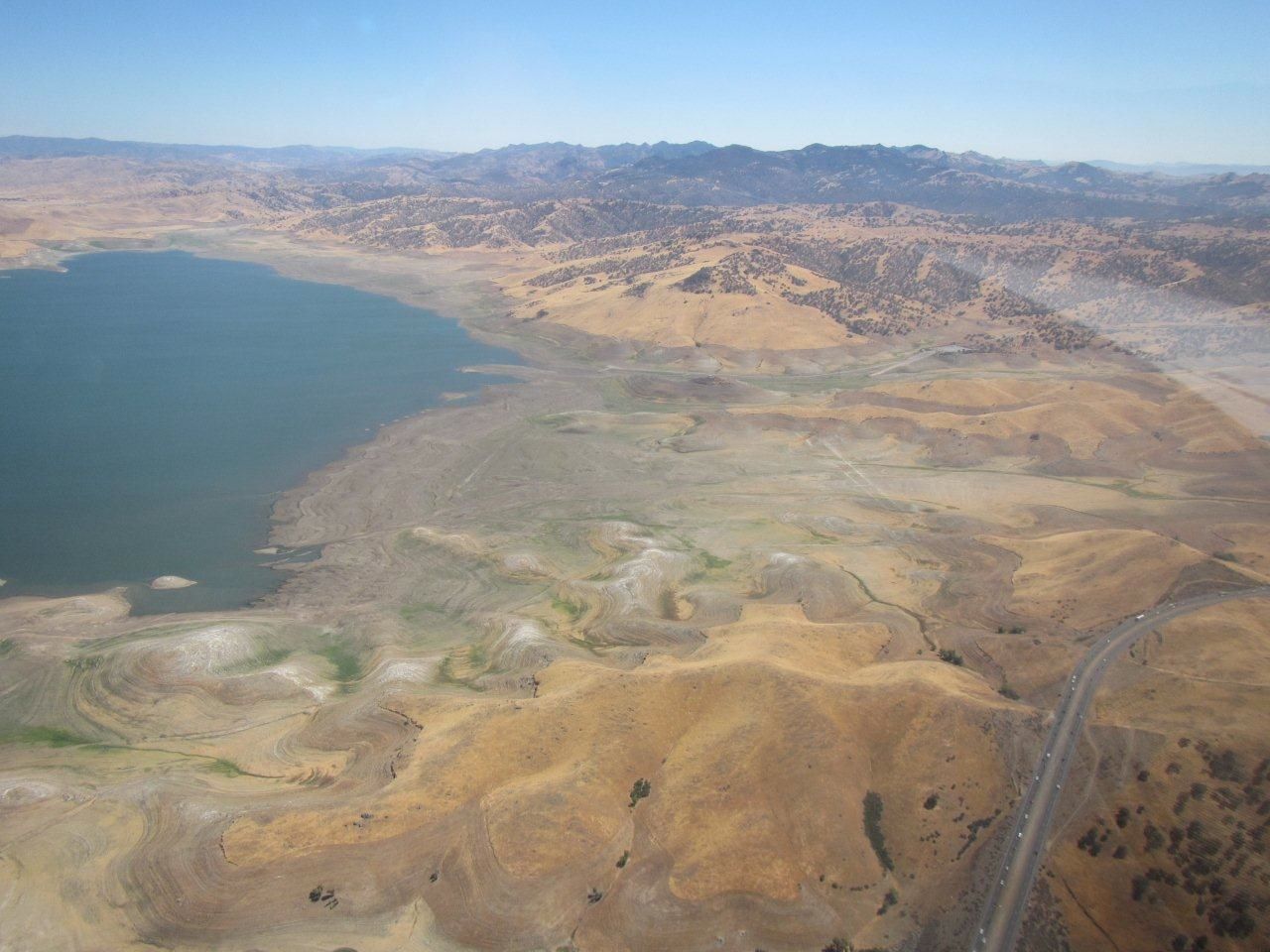
A mid-August image of the San Luis Reservoir indicating a bad water year.
There are two water bond proposals making their way through both chambers of California’s legislature. And neither one is good for California agriculture or for domestic water for all Californian’s.

In the senate version authored by Democrat State Senator Lois Wolk of Davis, there is “$1.5 billion on safe drinking water projects, $1.8 billion on water quality and watershed projects, $1.3 billion on flood control and $1 billion for water system operations improvements such as groundwater storage and recycled water storage.  Senate Bill 42 prohibits using bond money to build or do mitigations for a new water conveyance project.”  There is nothing in her proposal for Temperence Flat Dam or any other dam, and nothing for the twin tunnels.

The Assembly version, authored by Democrat Anthony Rendon of Lakewood, has released only a set of principles:  One principle would prohibit earmarks to specific water projects, which would appear to bar the specific allocations for the two water storage projects that Republicans, backed by farm groups, had insistedon including in the 2009 version, as well as for some of the local projects that were placed in the bond for political purposes.

It was the early morning hours of Nov. 4, 2009, when the original comprehensive package was passed by the state Legislature. The bond’s goal was to overhaul California’s seriously ailing water system.  The package included an $11 billion bond, with $3 billion set aside for new storage.

But the current legislature is dismantling it to suit their needs.

Hopefully, Governor Brown will see how useless the bond’s rewriting would be without a storage component for the heavy rain and snow years.

The bond, in whatever form it is in, is scheduled to go to voters in 2014.

2016-05-31T19:45:18-07:00September 11th, 2013|

LABOR UPDATE: A FEW ISSUES ACROSS STATE

Labor Shortage About the Same As Last Year

Raisin Industry is Not Feeling the Pinch


By Patrick Cavanaugh, Editor


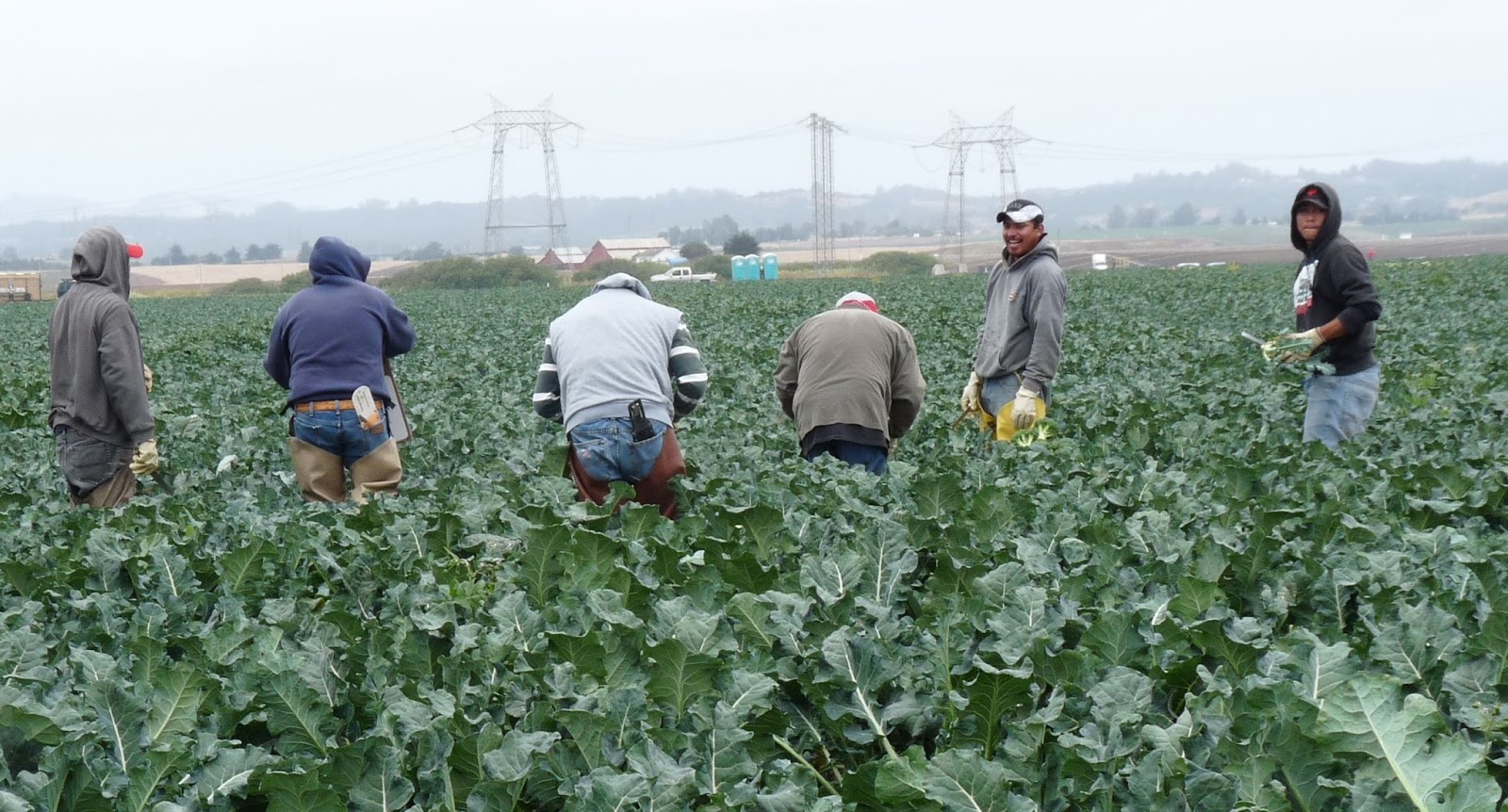
Salinas valley labor in a broccoli field earlier this Spring.
Bryan Little who oversees labor relations with the California Farm Bureau Federation in Sacramento said the shortage of agriculture labor this year is about 25 to 30 percent, very similar to the way it was last harvest season.


Particular shortages are in Salinas Valley strawberries and Lake County and Delta area pears.  “There is fruit that is being left in the fields and on the trees; they could not get it out due to not having enough people, ” Little said.


Steve Spate, a Fresno County raisin grower and Grower Representative for the Raisin Bargaining Association said labor has not been a big issue. “There are some spot issues on getting enough people for crews. But there has been quite a bit of labor that has come over from the tree fruit industry, which is getting close to the end of their season,” Spate noted.


Spate said the raisin harvest started earlier this year, which allowed for a longer season for the workers to spread out their labor.


Spate also said workers make more money on the piece rate of laying down trays, than the hourly rate of picking up the rolls and boxing them. “Some growers in earlier vineyards are ready to box, but labor is not available. So, they are having to wait until workers have laid all the grapes on the trays for drying in other vineyards.”


“I think we will make it through the season this year,” Spate said.


The reason that labor is short is due, in part, to trouble on the border. “There is crime and fear at the border, but the Mexican population there is getting a little older, and the Mexican economy is getting a little better. Put that with the fact that the U.S. economy is not all that great, and you have less people wanting to come here,” said Little.


2016-05-31T19:45:18-07:00September 10th, 2013|

Inspectors Do Not Find More Psyllids in Wasco

Wasco Area is now Restricted Due to ACP Find

 By Patrick Cavanaugh, Editor

According to Glenn Frankhauser, Assistant Ag Commissioner with the Kern County Ag Commissioners office in Bakersfield, the neighborhood where the latest male Asian Citrus Psyllid was trapped was surveyed over the weekend, and no additional Psyllids have been found.


“We have finished deploying another 150 delimitation traps around the initial find in a front yard citrus tree near Wasco,” said Frankhouser. “The first mile and half out from the initial find,  all traps will be checked every day for the first week. And for the first month after that all the traps will be checked once a week, and then after that, inspections will go to normal servicing at once a month.”


Spraying has not commenced yet in the area. “Once spraying does start, it will be of every citrus plant 800 meters around the initial find,” said Frankhouser.


One and a half miles around the initial find is now a restricted area for the next two years, if no other Psyllids are found. The restriction means no one is allowed to move any citrus trees or citrus fruit from that area.

2016-05-31T19:45:18-07:00September 9th, 2013|

IMPORTANT ACP UPDATE IN WASCO

California Ag Today, First in ACP Reporting

Kern County ACP Update

Please See more ACP news in earlier blog posts

According to Victoria Hornbaker, CDFA Manager of Citrus program: One male Psyllid found in yellow sticky trap in a residential neighborhood near Wasco, in Kern County

Delimitation traps are now in place and will be checked daily within a mile arc around trap. One to two miles out more delimitation traps will be checked every other day.

Within a five-mile arc of trap, there is no commercial citrus.


Neighbors being notified about urgent spray program.

Also, homeowners are being called to action to:

1. Check their trees for psyllids (see description at californiacitrusthreat.org )
2. Assist CDFA with treatments on their trees.
3. Do not move plants or citrus out of the area.

2016-05-31T19:45:18-07:00September 7th, 2013|

FEINSTEIN TO DHS: HALT I-9 AUDITS; SOLVE AG WORKER SHORTAGE

Urges ICE To Re-Focus 
On Violent Crimes


Senator Dianne Feinstein (D-Calif.), a senior member of the Senate Judiciary Committee, posted a press release on her website on Wednesday, September 4, 2013, declaring that she is urging the Department of Homeland Security to use prosecutorial discretion and to focus immigration enforcement efforts on violent criminals rather than on legitimate agricultural employers and their workers.

In a letter to Secretary Janet Napolitano, Feinstein described the troubling feedback she is receiving from California farmers that Immigrations and Customs Enforcement (ICE) is continuing to use I-9 worksite audits against agricultural employers, an issue she first raised in a letterto former ICE Director John Morton in June 2012.


Text of the letter follows:


September 3, 2013


The Honorable Janet Napolitano


Secretary
, U.S. Department of Homeland Security


Washington, DC 20528


Dear Secretary Napolitano:


As you may be aware, I wrote former U.S. Immigration and Customs Enforcement (ICE) Director John Morton a little over a year ago on June 13, 2012, requesting that ICE’s enforcement efforts focus on immigration law violations that involve serious violent crimes, per President Obama’s directive, as opposed to members of the agricultural community. Please find the June 13, 2012 letter, attached. I am unfortunately again receiving troubling feedback from farmers in California that ICE is increasing I-9 worksite audits against agricultural employers. As you have recognized previously, the agricultural industry faces an acute shortage of domestic workers. Therefore, I respectfully request that you redirect ICE’s enforcement efforts to focus on immigration law violations that involve serious violent crimes, and that you exercise prosecutorial discretion to forego enforcement against legitimate agricultural employers and their workers.


Many farmers and growers in California informed me that their business and livelihood are at risk due to a shortage of legal harvesters, pickers, pruners, packers, and farm workers. As you can imagine, with approximately 81,000 farms in California, I am very concerned that these audits will result in significant harm to the agricultural industry and the state’s overall economy.


Nor is California’s situation unique in our country, although, as the largest agricultural state, California is particularly affected. Farmers from all across the United States have expressed the severe harm they have been suffering from the lack of willing and available domestic agricultural employees. For your benefit, I am enclosing a booklet that I compiled, which provides examples of the workforce crisis facing the agricultural industry from every one of the 50 states in the U.S.


The utilization of I-9 enforcement audits against agricultural employers exacerbates this crisis. When employers being audited receive notification that certain employees have not provided proper work authorization documents, those workers must be terminated. Because the reality is that the majority of farm workers in the U.S. are foreign-born and unauthorized – which is well-known –, I am afraid that this aggressive worksite enforcement strategy will deprive the agricultural sector of most of its workforce and cause farmers and related industries across the country significant economic harm, as well as driving up food prices for consumers.


As I believe you are aware, this year, I collaborated with Senators Rubio, Bennet and Hatch to negotiate and develop a new bipartisan legislative proposal to solve this crisis that is balanced and fair. This proposal, the “Agricultural Worker Program”, was incorporated into the Border Security, Economic Opportunity, and Immigration Modernization Act, which the Senate passed in June 2013.


However, until Congress passes comprehensive immigration reform laws, I strongly believe that we cannot ignore the plight of America’s farmers, especially during tough economic times. For every job lost on farms and ranches, the country loses approximately three jobs in related sectors, like packaging and manufacturing that are supported by having the agricultural production here in this country. Without action on this important issue, I am concerned that the production of American-grown fruits, vegetables, and dairy will continue to downsize or move overseas, which puts the economy and health of the Nation at risk.


Immigration and Customs Enforcement has wisely used its prosecutorial discretion to defer removal of young people who arrived in the United States without documentation as children, recognizing that our limited resources are better spent targeting aliens with criminal records or who otherwise present a threat to the safety of the United States. I respectfully suggest that you adopt a similar policy of exercising prosecutorial discretion to defer enforcement against agricultural employers and workers, and concentrate instead on removing those who would and have harmed our society, rather than those who contribute to our vital agricultural economy and heritage, and the safe and high-quality food supply that benefits all Americans.


Sincerely,


Dianne Feinstein


United States Senator

2016-05-31T19:45:19-07:00September 7th, 2013|

ACP DETECTED NEAR CITY OF WASCO, KERN COUNTY

Breaking News

USDA/ CDFA on Full Alert

Regarding This Latest ACP Find

The Kern County Agricultural Commissioner, in cooperation with the California Department of Food and Agriculture and the United States Department of Agriculture will begin an extensive survey and treatment program in response to the detection of one Asian citrus psyllid near the City of Wasco in Kern County.

One male Asian citrus psyllid was confirmed on Thursday, September 5, 2013 near the City of Wasco in Kern County. A treatment program will be carried out on all citrus host plants within 800 meters surrounding the site where the insect was trapped. Residents in the treatment area will be notified in advance.

The pest is of grave concern because it can carry the plant disease huanglongbing (HLB). All citrus and closely related species are susceptible hosts for both the insect and the disease. There is no cure once a tree becomes infected. The diseased tree will decline in health and produce bitter, misshaped fruit until it dies. To date, HLB has only been detected in one backyard tree and one psyllid in the Hacienda Heights neighborhood of Los Angeles County.

“The Asian citrus psyllid is a dangerous pest of citrus,” said Ruben Arroyo, Kern County Agricultural Commissioner. “We’re working to determine the full extent of this incident so that we can protect our state’s vital citrus industry as well as our backyard citrus trees. We want to emphasize citrus fruit is safe to eat and the disease is not harmful to human health. Working together, we will rid our state of this invasive species.”

Florida biologists first detected the pest in 1998 and the disease in 2005, and the two have now been detected in all 30 citrus producing counties in Florida. The pest and disease are also present in Louisiana, Georgia, South Carolina and Texas. Biologists in Mississippi, Arizona and Alabama have detected the pest but not the disease.

Residents in the area who think they may have seen the pest are urged to call the Pest Hotline at 1-800-491-1899. For more information on the Asian citrus psyllid and huanglongbing disease visit: http://www.cdfa.ca.gov/plant/acp/.

We will keep you posted with any additional developments including public meeting dates when they are established by CDFA and our office. If you have any questions, please call the Kern County Department of Agriculture/Measurement Standards at 661-868-6300.

2016-05-31T19:45:19-07:00September 7th, 2013|
Go to Top