Recycling an Almond Orchard

Care Needs to be Taken on Chip Size When Recycling an Almond Orchard

By Patrick Cavanaugh with the Ag Information Network

When a grower wants to replace his orchard with new more productive trees they may opt for recycling the older trees in their orchards—meaning the old trees are chipped up and applied back to the soil

Mae Culumber is a UCANR Nut Crops Farm Advisor in Fresno County. She noted some concerns that growers have with wood decay pathogen impacting the new trees.

“Growers have a lot of concerns especially if they had problems with fungi and a lot of wood decay,” Culumber said. “I’ll sometimes get calls from growers questioning whether or not to do recycling stating that they had some wood decay fungi that killed some some of their mature trees in their last orchard.”

And of course, that is the big grower worry.

“The current research suggests is that if it’s chipped to a small enough size, it’s not going to have a long lifespan, as a soil-borne pathogen in the soil. So eventually that will break down and it shouldn’t be a problem for the next orchard,” explained Culumber.

“So we recommend that people use as small as a four-inch screen to run the chips through. The practice now is that the trees are excavated, then run through a chipper and the chips are screened out when they are distributed with a modified manure spreader,” she said.

Those chips are incorporated in the ground and then the all the normal preparation that occurs with a pre-plant orchard, can take place after that.

2020-09-18T09:42:37-07:00September 18th, 2020|

Roma Tomato with ToBRFV Resistance?

Bayer Launches Large-scale Pre-launch Trial of New Tomato Varieties with Resistance to Tomato Brown Rugose Fruit Virus (ToBRFV)


Bayer announced today the final large-scale pre-launch trials of Roma-type tomatoes to help growers address Tomato brown rugose fruit virus (ToBRFV). The trials, which begin later this month in Mexico, will include two varieties of Roma-type tomato that claim Intermediate Resistance (IR) to ToBRFV.

The type of IR Bayer has seen in these varieties is commonly referred to as the “symptomless carrier,” where, despite the presence of virus particles, the crop can show little or no symptoms of the virus in the leaf and/or fruit should the crop become infected by the virus. Adding ToBRFV in the pathogen list for tomato was discussed during last week’s September meeting of the International Seed Federation.

ToBRFV was first observed in 2014 and spread rapidly to different world areas. This viral disease impacting tomato plants represents a challenge for the industry as it can be transmitted very easily through many vectors including farming tools and equipment, workers’ hands, plants, water, soil, and people.

“ToBRFV can quickly devastate tomato crops, so Bayer worked to develop a product to help growers combat it,” said JD Rossouw, Head of Bayer’s Vegetable Seeds R&D. “Bayer leveraged our global cross-functional teams and extensive research and development pipeline to offer a solution designed to ease the day-to-day challenges faced by growers. Our research continues across several tomato species with the goal of bringing further innovative resistance to growers as quickly as possible.”

Following the trials, Bayer anticipates the products will be available for commercial sale in Mexico in 2021, to later be followed by offerings in other important markets around the world.

The ToBRFV resistance program is part of Bayer’s corporate commitment to Health for All, Hunger for None. It complements the company’s SHIELD program, a comprehensive approach to deliver clean seeds season after season to growers around the world. For more than 10 years, the focus of SHIELD has been on the prevention, detection and elimination of pathogens at our own Bayer production and processing sites, as well as third-party production and processing sites for Seminis and De Ruiter brands.

The SHIELD program continues to incorporate market-leading best practices into seed production and supply. In addition to its strict production protocols that are applicable whatever the growing environment (open field, greenhouse or glasshouse), Bayer has always, and will continue to have, stringent testing measures in place aligned with the International Seed Health Initiative (ISHI) guidelines and any applicable laws, which includes testing our seed for the presence of ToBRFV before it is shipped to customers.


2020-09-15T13:40:21-07:00September 15th, 2020|

Farm and Tractor Safety

Important to Maintain All Safety Equipment


By Rick Worthington, with Ag Information Network

Rollovers or overturns are involved in about half of the fatal tractor accidents and are responsible for many disabling injuries and much property damage.

With the use of protective frames and crush-resistant cabs with seat belts, the number of serious and fatal injuries from such accidents should decrease. Rollovers are generally due to driving too fast for conditions; striking surface hazards such as rocks, stumps and holes; running into ditches; hitching high for extra traction; driving on steep slopes; and operating front-end loaders improperly. Tractor upsets also occur when handling large round hay bales and other heavy loads with front-end loaders.

Falls from moving tractors often result in serious and sometimes fatal injuries. Many times the victim is a child, but operators and adult riders can also fall. Falls often occur from smaller and/or older tractors used around the farmstead, where extra riders and overhead hazards are more common than in fields.

Another cause of tractor-related death and serious injury is being caught by, or entangled in, rotating power takeoff (PTO) shafts. In most cases, the PTO shields were inadequate or had been removed.

Other tractor-connected injuries and damage involve:

  • Colliding with motor vehicles or roadside objects;
  • Slipping and falling while mounting and dismounting;
  • Running over bystanders;
  • Striking overhead hazards;
  • Being struck by flying objects, broken parts, or hydraulic fluid;
  • Being crushed by a poorly supported tractor during repair work;
  • Sustaining cuts, bruises, burns and other nuisance, but painful injuries, connected with maintenance and routine operation;
  • Being overcome by exhaust gases inside closed buildings;
  • Being burned by fires that erupt during refueling or as a result of a collision or upset.
2020-09-15T11:12:30-07:00September 15th, 2020|

More Water Storage is Critical

Doing Every Possible to Have Water Storage For Drought Years

By Patrick Cavanaugh, with the Ag Information Network

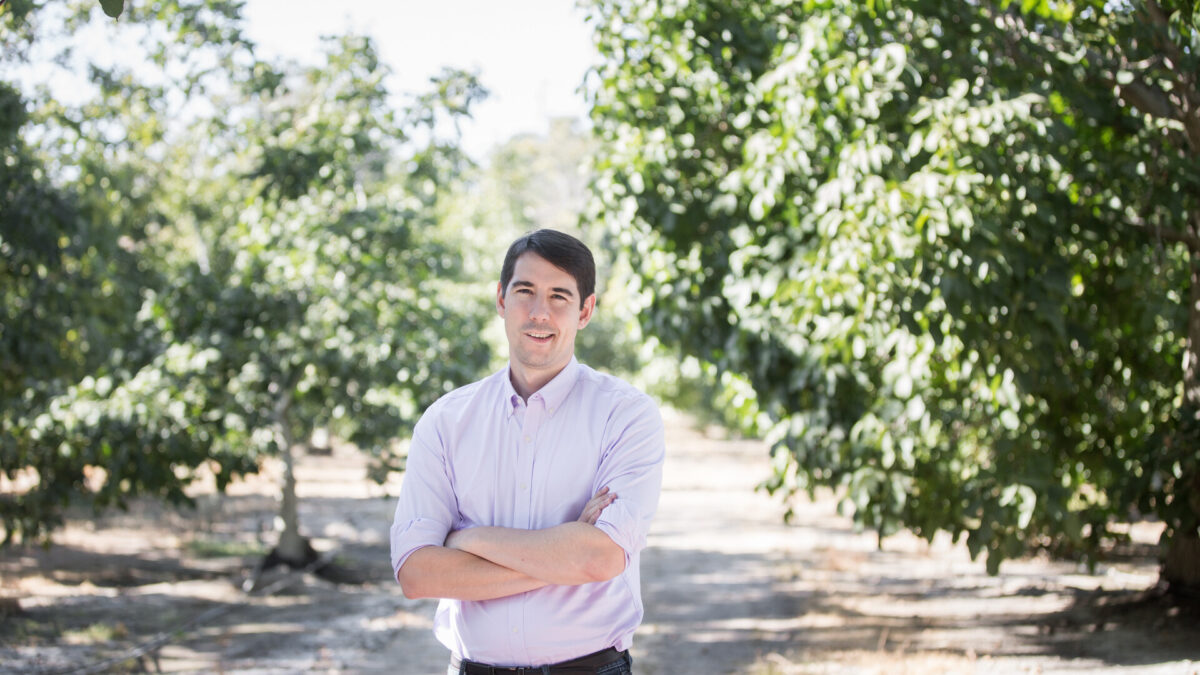
Save Water Resources Act, is written by Congressman Josh Harder representing the Modesto area.  The Act will fund the construction or upgrades of several water storage areas such as Sites Reservoir, Del Puerto Canyon Reservoir, Los Vaqueros and San Luis Reservoirs and provides $100 million in storage funding.

It’s all about helping Californian’s including the farmers during drought. “That’s right. I mean, we know that we are having more and more extended droughts.  We know the next one is around the corner and we know what we have to do in order to address it,” said Harder

“In order to  make sure that we have a full, comprehensive approach to water and all of the above approaches that combined storage with recycling and groundwater recharge,” noted Harder

Harder said shipping all the water out to the ocean is not the way to go. “Instead of just shipping out water to the ocean, we can actually make sure that we can put it in these reservoirs such as Los Vaqueros, Sites and Del Puerto and that’s going to be really essential for the almond and walnut growers in the Central Valley,” Harder said.

“When you have tree crops, you have to have a reliable source of water. We can’t just be in a boom and bust cycle where you have water one year and not the next; maybe that works for row crops, but it doesn’t work very well for trees. And so these reservoirs are going to go a long way towards ensuring water, stability and water security for the long-term,” Harder said.

2020-09-14T20:58:02-07:00September 14th, 2020|

Low Priced Imports Hurt CA Growers

CCM Commends Actions Regarding Seasonal and Perishable Products


California Citrus Mutual commends the Office of the U.S. Trade Representative (USTR), U.S. Department of Agriculture (USDA), and U.S. Department of Commerce (DOC) for the actions they recently announced to address the injury caused by increased imports of seasonal and perishable products.

Low-priced imports have previously caused a substantial market disruption for the California citrus industry during its marketing season. We are encouraged by both the Administration’s plan and its determination to bring relief to fruit and vegetable growers who are suffering from similar import issues.

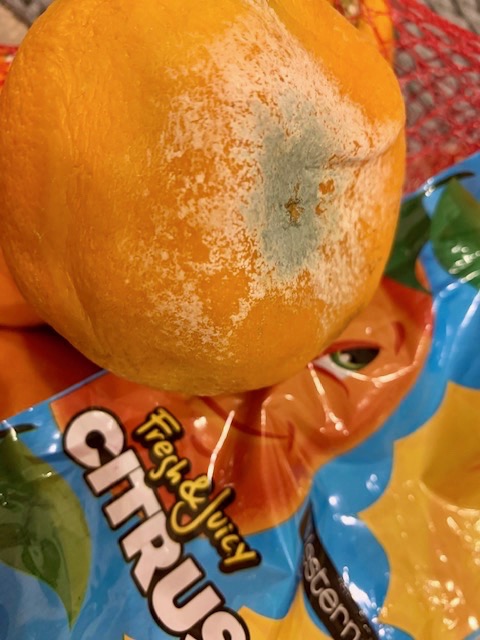
Imported Citrus Often Lacks Quality

The trade remedy steps announced include the self-initiation of Section 201 global safeguard action on certain imports, USTR’s coordination with specific sectors to monitor and investigate imports under the Section 201 provisions covering perishable agricultural products and citrus products, DOC’s coordination with effected sectors on possible self-initiated antidumping and countervailing duty actions, and the Administration’s indication that still other actions and investigations may be taken. These steps are essential safeguarding and supporting all U.S. fruit and vegetable growers harmed by this problem.

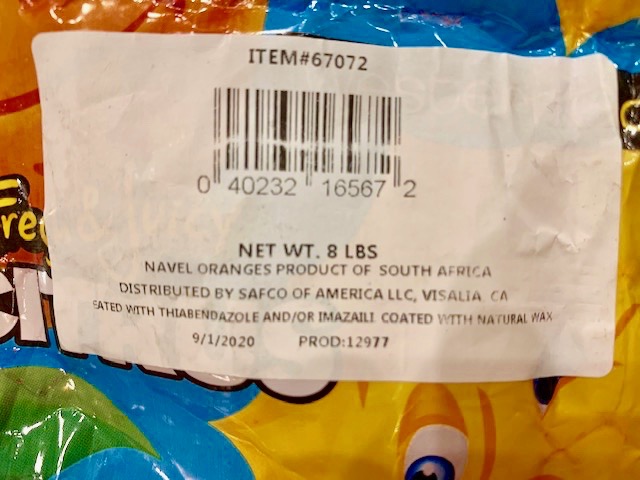
In 2017, low-priced citrus imports from the Southern Hemisphere increased 40% over the prior year’s shipments, causing significant price declines and harm to California growers. Consistent with last week’s announcement, California Citrus Mutual will closely monitor imports in the coming California season and continue to coordinate with the U.S. Government regarding any import surges, unfair import practices, and injury to our citrus growers.

2020-09-10T18:06:02-07:00September 10th, 2020|

Stop 4 Bills Affecting Farm Employment Law

Stop Crippling Employment Policy Bills Before the Legislature Adjourns

The California Legislature is expected to consider four important bills in the last week of the 2020 legislative session that will make detrimental changes to California employment law and hinder California farm businesses’ ability to recover from the COVID-19 recession:
AB 685 (Eloise Reyes, D-San Mateo) imposes vague new reporting requirements to numerous government agencies for new COVID-19 infections that may or may not be work-related; may make an employer liable for a retaliatory employment action for sending a sick worker home; and requires employers to give employees medical advice on how to properly isolate at home.
SB 1383 (Hannah-Beth Jackson, D-Santa Barbara) is a massive expansion of family and medical leave requiring employers of as few as five employees to provide job-protected family and medical leaves of up to 12 weeks. SB 1383 also imposes a private right of action permitting small agricultural employers to be sued for unintentional, technical violations of the California Family Rights Act.
SB 1102 (Bill Monning, D-Monterey Bay) requires a misleading new notice for non-immigrant H-2a ag workers that mis-states state California law by claiming that all travel time in employer-provided transportation is compensable time, and that all occupants of employer-provided housing are protected by California landlord/tenant law. These mischaracterizations of California law in a newly-required notice will strengthen employee advocates’ legal position when they sue ag employers claiming that travel time is compensable or that ag employees are protected by landlord/tenant law.
Please contact your Senator TODAY and urge opposition to AB 685, and contact your Assembly TODAY and urge opposition to SB 1383, SB 1159 and SB 1102.
2020-09-05T15:09:22-07:00September 5th, 2020|

Big Updated To Food Safety Practices

California Leafy Greens Marketing Agreement Takes Action to  Update Food Safety Practices

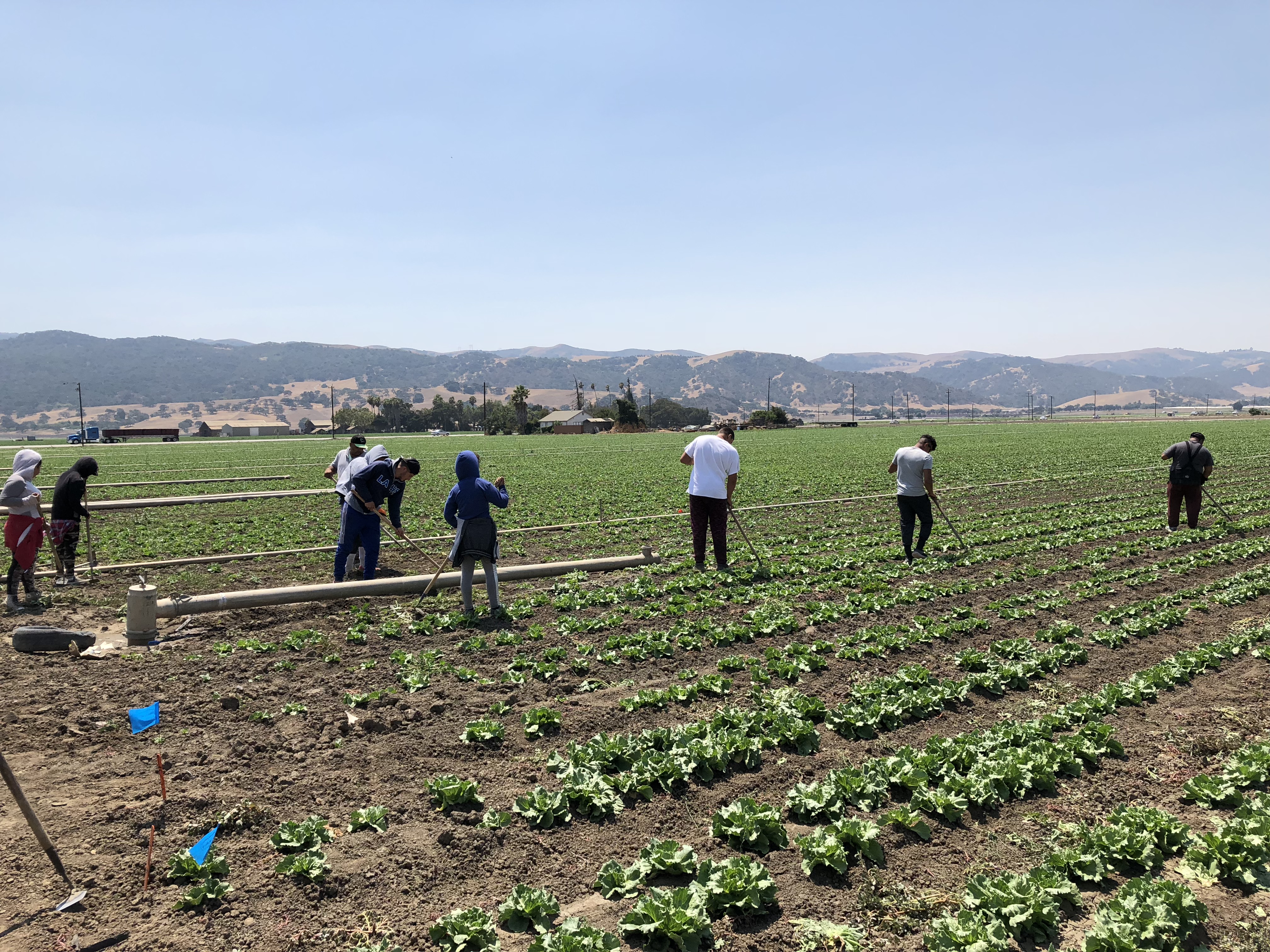
The California Leafy Greens Marketing Agreement Board voted last week to accept several updates to required food safety practices for the farming of leafy greens.

“Over 50 recommended changes were unanimously approved by the Board to strengthen food safety requirements for the production of leafy greens in the areas of Farm Water Use and Field/Equipment Sanitation,” explained Scott Horsfall, CEO of the California Leafy Greens Marketing Agreement (LGMA). “These are in addition to several significant changes made by the LGMA less than a year ago.”

Scott Horsfall, CEO LGMA

Horsfall explained the most recent updates are the first of many more as the LGMA conducts a complete review of all its mandatory food safety practices, or metrics, in the wake of recent outbreaks linked to romaine lettuce.

“A series of Subcommittees has been reviewing the LGMA’s required food safety practices in all areas,” explained Horsfall. “The Subcommittees for Water Use and Field/Equipment Sanitation met numerous times in recent months to consider new research, examine findings from outbreak investigations, gather input from food safety experts and the public before making recommendations to the full LGMA Board last week. This process is being facilitated by Western Growers as part of an open, transparent process.”

“The LGMA is committed to strengthening required food safety practices throughout our processes,” said Dan Sutton, Chairman of the LGMA and a leafy greens farmer from San Luis Obispo, CA. “We are doing everything possible on our farms to prevent future foodborne illness outbreaks.”

Although many of the 50+ changes strengthen existing language or provide additional guidance and direction for leafy greens food safety, several substantive changes were approved by the LGMA Board last week. Some of the more important changes include:

  1. Adoption of new requirements that ensure the safety of water used during overhead application of pesticides and crop protection materials. This update is similar to changes approved by the LGMA last year requiring that any water from open sources – such as a canal or reservoir — applied via overhead application must be treated to eliminate pathogens during the previous 21 days before harvest.
  2. Approved enhancements to monitoring requirements for water used in farming leafy greens to ensure that regular water quality tests are conducted and that samples are collected throughout the irrigation systems used in leafy greens fields.
  3. Added language to minimize the risk of water applied via furrow irrigation from coming into contact with any edible portion of the leafy greens plant.
  4. Updated best practices for cleaning harvest equipment, containers, tools and bathroom facilities in and near leafy greens fields.
  5. New language designed to prevent the cut end of leafy greens product from coming into contact with the ground during harvest.

Similar changes were also adopted by the Arizona LGMA.

“California and Arizona produce approximately 90% of the leafy greens grown in the U.S.,” said Horsfall. “The LGMA programs ensure a unified set of food safety practices based on the last science are being followed on leafy greens farms in these two states.”

Horsfall explained that approved updates will now be forwarded to the California Department of Food and Agriculture to be incorporated into food safety checklists used by government auditors to verify new practices are being followed on leafy greens farms.

The LGMA program will immediately begin educating members on how to comply with the new standards.

“Additional updates are forthcoming in the areas of Soil Amendments/Inputs and Adjacent Land as the Subcommittees assigned to these topic areas are currently meeting to review existing practices. These Subcommittees will be making their recommendations to the LGMA Board in the near future,” said Horsfall. “We are very grateful to the industry members and scientists who are working diligently as part of the LGMA Subcommittee process to help improve the safety of leafy greens.”

2020-08-28T13:26:46-07:00August 28th, 2020|

50,000 Masks Distributed to Ag Employees In SJV

California Fresh Fruit Association and California Farmworker Foundation Distribute More Than 50,000 N-95 Masks

The California Fresh Fruit Association (CFFA) and California Farmworker Foundation (CFF) are pleased to announce they have distributed over 50,000 N-95 masks and single-use surgical masks to agricultural employees across the Central San Joaquin Valley.

Both organizations are appreciative of the quick action and partnership between the Fresno County Agricultural Commissioner, California Department of Food and Agriculture (CDFA) and Governor Gavin Newsom’s Office of Emergency Services (OES) to supply agricultural employees with much-needed protection while the air quality index levels are at unhealthy levels due to the wildfires in California.

Ian LeMay

CFFA President Ian LeMay stated, “The wellness of Central Valley agricultural employees is of paramount importance, as they are an essential part in keeping the food supply chain moving every day. We are grateful for the partnership between Fresno County Department of Agriculture, CFDA and Governor Newsom’s OES for their support to provide these employees with the resources they need to keep them healthy.”

CFF Executive Director Hernan Hernandez added “CFF’s mission is to provide support to California’s farmworkers, and having the ability to distribute these N-95 masks through our Ambassador program enables employees to stay safe while working outside. We are grateful to all of the partners that have contributed to this cause.”


2020-08-26T10:44:57-07:00August 26th, 2020|

Could a Treatment Soon Be Available for HLB Disease?

UC Riverside Discovers Effective Treatment for HLB Disease


By Jules Bernstein, UCR Senior Public Information Officer

UC Riverside scientists have found the first substance capable of controlling Citrus Greening Disease, which has devastated citrus farms in Florida and also threatens California.

The new treatment effectively kills the bacterium causing the disease with a naturally occurring molecule found in wild citrus relatives. This molecule, an antimicrobial peptide, offers numerous advantages over the antibiotics currently used to treat the disease.

UCR geneticist Hailing Jin, who discovered the cure after a five-year search, explained that unlike antibiotic sprays, the peptide is stable even when used outdoors in high heat, easy to manufacture, and safe for humans.

“This peptide is found in the fruit of greening-tolerant Australian finger limes, which has been consumed for hundreds of years,” Jin said. “It is much safer to use this natural plant product on agricultural crops than other synthetic chemicals.”

Currently, some growers in Florida are spraying antibiotics and pesticides in an attempt to save trees from the CLas bacterium that causes citrus greening, also known as Huanglongbing or HLB.

“Most antibiotics are temperature sensitive, so their effects are largely reduced when applied in the hot weather,” Jin said. “By contrast, this peptide is stable even when used in 130-degree heat.”

Jin found the peptide by examining plants such as the Australian finger lime known to possess natural tolerance for the bacteria that causes Citrus Greening Disease, and she isolated the genes that contribute to this innate immunity. One of these genes produces the peptide, which she then tested over the course of two years. Improvement was soon visible.

“You can see the bacteria drastically reduced, and the leaves appear healthy again only a few months after treatment,” Jin said.

Because the peptide only needs to be reapplied a few times per year, it is highly cost effective for growers. This peptide can also be developed into a vaccine-like solution to protect young healthy plants from infection, as it is able to induce the plant’s innate immunity to the bacteria.

Jin’s peptide can be applied by injection or foliage spray, and it moves systemically through plants and remains stable, which makes the effect of the treatment stronger.

The treatment will be further enhanced with proprietary injection technology made by Invaio Sciences. UC Riverside has entered into an exclusive, worldwide license agreement with Invaio, ensuring this new treatment goes exactly where it’s needed in plants.

“Invaio is enthusiastic to partner with UC Riverside and advance this innovative technology for combating the disease known as Citrus Greening or Huanglongbing,” said Invaio Chief Science Officer Gerardo Ramos. “The prospect of addressing this previously incurable and devastating crop disease, helping agricultural communities and improving the environmental impact of production is exciting and rewarding,” he said. “This is crop protection in harmony with nature.”

The need for an HLB cure is a global problem, but hits especially close to home as California produces 80 percent of all the fresh citrus in the United States, said Brian Suh, director of technology commercialization in UCR’s Office of Technology Partnerships, which helps bring university technology to market for the benefit of society through licenses, partnerships, and startup companies.

“This license to Invaio opens up the opportunity for a product to get to market faster,” Suh said. “Cutting edge research from UCR, like the peptide identified by Dr. Jin, has a tremendous amount of commercial potential and can transform the trajectory of real-world problems with these innovative solutions.”

2020-08-24T10:36:56-07:00August 24th, 2020|

Wildfire Smoke Damaging Many Crops

Respirators in Short Supply For Outdoor Farm Employees


By Tim Hammerich, with the Ag Information Network

With the state’s wildfire season beginning to intensify, farm groups say they’re looking for solutions to a lack of N95 respirators. State regulations require the respirators to be available to outdoor employees when wildfires worsen air quality, but the masks have been in short supply during the pandemic. Groups representing the fresh-produce business have asked Congress to include resources for farm employee safety in the next COVID-19 relief package.

Speaking of fire season, Farmers in Northeastern California say they expect smoke damage to crops from the Caldwell Fire, which has burned nearly 81,000 acres of land in Modoc and Siskiyou counties. Officials continue to assess damage to grazing land scorched by the fire, and farmers say smoke will likely hurt the quality of hay, potatoes, onions and other crops. One farmer says irrigated farmland acted as a buffer that stopped the fire from spreading to some areas.

It turns out forest management is not just helpful for fire prevention, but also for water. New research quantifies how forest-management activities such as mechanical thinning and prescribed burns contribute to increased downstream water availability. By studying 20 years of data and satellite imagery for the Yuba and American rivers, scientists at the University of California, Merced, determined the forest-management actions could enhance runoff in the basins by up to 10%–enough water for as many as 4 million people.

2020-08-23T22:13:37-07:00August 23rd, 2020|
Go to Top