Pecan Growers Excited about Federal Marketing Order

Calif. Pecan Growers Gather to Discuss Federal Marketing Order

By Patrick Cavanaugh, Farm News Director

On Wednesday, August 3, nearly 100 people attended the California Pecan Growers Association meeting at Linwood Nursery, the oldest supplier of pecan trees in the world, located in Le Grand in eastern Merced County.

Not all attendees were current pecan growers; many were contemplating planting pecan trees. New interest and excitement in pecan farming surrounds the newly approved (May 2016) and forthcoming Federal Marketing Order For Pecans (FMO) that will assess growers a few cents per pound to increase pecan marketing and awareness in California and other areas of the country.

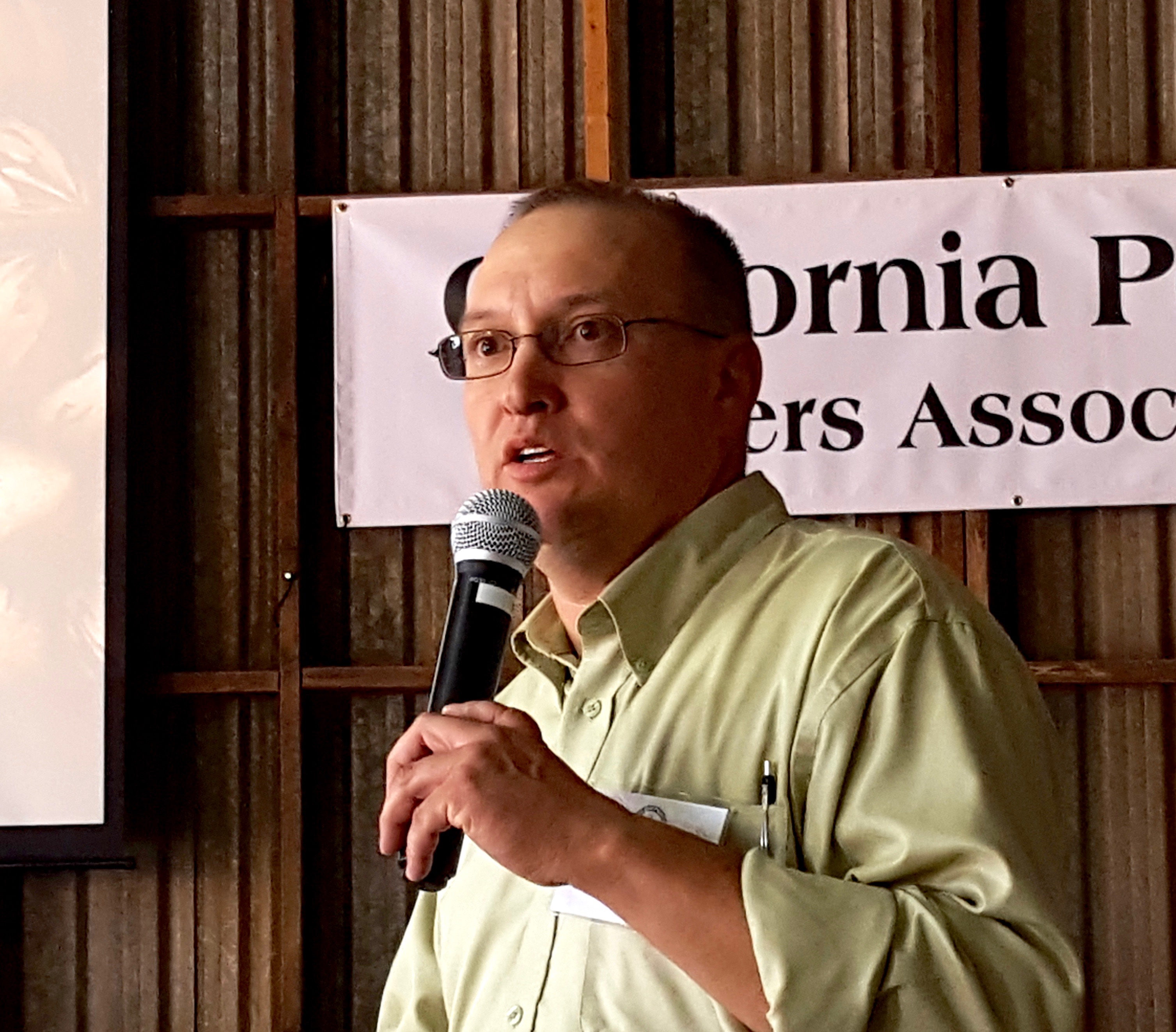
Pecan growers and others interested in the crop gathered in Le Grand to discuss Federal Marketing Order for Pecans

“We want to model it after the Almond Board of California,” said Mark Hendrixson, president of the California Pecan Growers Association, whose members farm approximately 4,000 acres of the crop throughout the San Joaquin and Sacramento Valleys.

“We had a very a good turnout. Pecans are a growing industry in California; we have great weather for them,” said Hendrixson. “We do things a little bit differently because of our great weather, but we’re able to produce extremely good quality.”

CPGA-Logo“Pecans are extremely healthy,” said Hendrixson. “The research has been out there for quite some time, but the pecan industry has never had a unified marketing voice. Once we develop the Federal Marketing Order, we will be able to spread the message about health and other great benefits that will help drive interest in pecans and pecan consumption, and to deliver quality product to consumers around the world.

Hendrixson expects the Federal Marketing Order For Pecans to be in place very soon. The USDA will officially seat the Board of the American Pecan Council (APC), the new governing board of the FMO, by October 1, 2016 by calling for board member nominations, qualifying the candidates and issuing a ballot for qualified voters to vote on those nominations.

“Once those ballots are approved by the Secretary of Agriculture,” Hendrixson said, “we’ll have an elected Board that can begin to function and actually set the assessment, which in turn will be approved by the USDA going forward.”
2021-05-12T11:05:50-07:00August 4th, 2016|

It Is California Cantaloupe Week!

California Cantaloupe Week Begins in Fresno County

By Lauren Dutra, NAFB Summer Intern


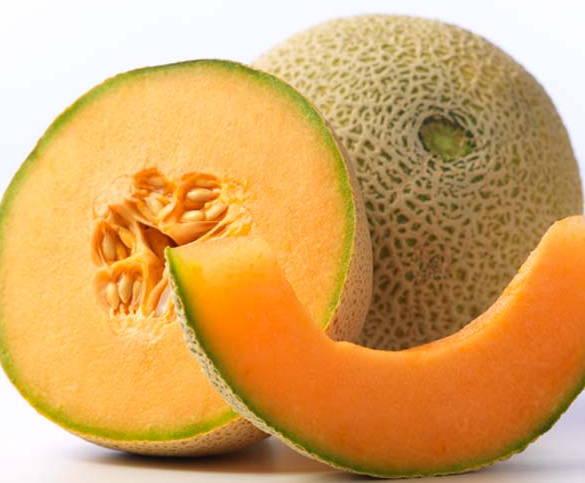
Established by the Fresno County Board of Supervisors for this week, Monday July 25 through Sunday, July 31,“California Cantaloupe Week,” recognizes Fresno County as the lead canteloupe-producing county in California, which currently produces 75% of all cantaloupes sold in the United States.

Steve Patricio, president and CEO of Westside Produce, a grower, packer and shipper in Firebaugh said, “The quality has been absolutely outstanding this year, with some of the highest sugar results we’ve seen in recent years.” Patricio has also observed great demand in the marketplace as well.  At this point, it’s time to eat those beautiful California cantaloupes,” he noted.

Tri Westside ProducePacked with nutrition, “Cantaloupes are one of the most outstanding things we can eat for our health,” Patricio affirmed. “That daily dose of cantaloupe can do wonders for a healthy lifestyle.”

The California Cantaloupe industry has been on the forefront of the food safety movement throughout the world, “You can be assured that every cantaloupe grown, packed and shipped from California meets the highest standard of food safety anywhere in the world,” Patricio stated.

The California Cantaloupe Advisory Board (CCAB) requires all California cantaloupe growers, packing operations, and cooling facilities undergo mandatory announced and unannounced government food safety audits. The audits are based on a set of food safety standards developed from 20 years of university research along with input from government, food safety and farming experts. CCAB food safety systems allow for science-based standards to be updated as new information or science becomes available.

You can review all of the safety checkpoints here.

2021-05-12T11:05:51-07:00July 27th, 2016|

Breaking News: Cal Poly Opens New Greenhouse and Insect Rearing Facility

New Greenhouse Facility Opens to Save Citrus from Psyllids that Vector HLB

Facility to Rear Tamarixia Radiata, Natural ACP Predator

By Patrick Cavanaugh, Farm News Director


Scores of citrus industry leaders, citrus growers, scientists and CDFA officials attended the ribbon cutting event TODAY at the opening of a new greenhouse on the Cal Poly Pomona campus to rear Tamarixia radiata, a tiny parasitic wasp imported from Pakistan because it is an Asian Citrus Psyllid (ACP) nymph predator. ACP, in turn, is a serious nonnative citrus pest that can vector Huanglongbing (HLB)—a deadly citrus disease also known as Citrus Greening—that has devastated the powerhouse citrus Screenshot 2016-07-25 12.24.41.png

industry in Florida, threatens to ruin additional citrus economies, and is the biggest threat the California citrus industry has ever faced.

According to the United States Department of Agriculture Animal and Plant Health Inspection Service (USDA-APHIS), infected citrus trees “produce fruits that are green, misshapen and bitter, unsuitable for sale as fresh fruit or for juice. Most infected trees die within a few years.” ACPs have been detected in Alabama, American Samoa, Arizona, California, Florida, Georgia, Guam, Hawaii, Louisiana, Mississippi, Northern Mariana Islands, Puerto Rico, South Carolina, Texas and the U.S. Virgin Islands. Of those locations, the HLB disease has been detected in California, Florida, Georgia, Louisiana, Puerto Rico, South Carolina, Texas and the U.S. Virgin Islands.

ENTER:  Tamarixia radiata

Use of the ACP predator, Tamarixia radiata as a biological control for ACP was discovered by Mark Hoddle, biological control specialist and principal investigator, UC Riverside ( UCR), Department of Entomology. The first release of Tamarixia was in December 2011 after USDA-APHIS cleared the natural enemy for release from the Quarantine Facility at UCR.

Mark Hoddle UC Riverside Department of Entomology

Mark Hoddle UC Riverside Department of Entomology

“Tamarixia can kill ACP nymphs in two different ways,” explained Nick Hill, a Tulare County citrus producer and Citrus Pest & Disease Prevention Program (CPDPC) chair.  “The first is parasitism. In this instance, a female parasitoid lays an egg underneath a fourth or fifth instar—the larger and final developmental stage of the ACP nymph before becoming an adult—nymphs that are most preferred by Tamarixia for parasitism. When the egg hatches, the Tamarixia larva begins to feed on the under-surface of the ACP nymph. Eventually the larva completely excavates the body cavity of the ACP nymph and pupates inside the empty shell of its host.”

Hill explained the first releases of the tiny and harmless wasp will occur this fall in urban areas, “to help control ACP so that we do not have to do mitigations such as spraying in those areas. We hope to get to a point where we no longer need to go into people’s yards and ask if we can treat the trees.”

“The issue,” commented Valerie Melano, professor and chair, Cal Poly Pomona Plant Sciences and interim chair, Cal Poly Agribusiness & Food Industry Management/Agricultural Science, “is that we need to come up with the best possible ways to raise enough wasps for big releases to prey on ACP. We will have CDFA employees working in this green house, as well as student workers who have participated in our research program all along,” noted Melano.

Nick Hill, CPDPC chair

Nick Hill, a Tulare County citrus producer and Citrus Pest & Disease Prevention Program (CPDPC) chair.

Hill added, “The idea is to get enough Tamarixia out there so they start reproducing themselves and they become self sufficient. This is tough to accomplish, but researchers think if they can get big numbers of the wasp into the urban areas, they can put a big dent in lowering the populations of ACP.”

Cal Poly Pomona Greenhouse

The new Cal Poly 5,040-square-foot research greenhouse, built in collaboration with Citrus Research Board and constructed through a $400,000 grant from the Citrus Pest & Disease Prevention Program, will house the second Tamarixia production program in California. CDFA’s Mount Roubideaux facility in Riverside houses current production. Both facilities will support the CPDPC biological control program that oversees releases in urban areas with high ACP populations.

The new greenhouse should produce a 1-ACP Research Greenhouse1.5 million wasps. “It’s a very nice facility,” said Hill. “We are trying to boost the biological control program to produce four million Tamarixia a year.”

California Quarantine

The California Department of Food and Agriculture (CDFA) operates an extensive monitoring program to track the distribution of the insect and disease in both residential areas and commercial citrus groves. Results have determined quarantine zones, guided releases of biological control agents, and prioritized areas for a residential chemical control program. Nearly all of southern California is under quarantine for ACP, due to the fact that more than 15 residential trees have been discovered to be in infected with HLB.

The ACP quarantine in California includes parts of the following counties:  Fresno, Kern, Kings, Madera, Monterey, San Benito, San Joaquin, San Luis Obispo, San Mateo, Santa Clara, and Stanislaus; and the following entire counties: Imperial, Los Angeles, Orange, Riverside, San Bernardino, San Diego, Santa Barbara, Tulare County, and Ventura.

Asian Citrus Psyllid Cooperative Program California, Arizona, Baja California, and Sonora (USDA-APHIS)

Asian Citrus Psyllid Cooperative Program
California, Arizona, Baja California, and Sonora (USDA-APHIS). Visit our Citrus Diseases page to identify a plant infected by citrus greening, citrus canker, citrus black spot and sweet orange scab. If you detect an infected plant, report it  immediately.

2021-05-12T11:05:51-07:00July 25th, 2016|

BREAKING NEWS: ACP QUARANTINES IN MERCED AND MONTEREY COUNTIES

ASIAN CITRUS PSYLLID (ACP) QUARANTINES IN MERCED AND MONTEREY COUNTIES

Quarantines are now in place in both Merced and Monterey Counties due to recent Asian citrus psyllid (ACP) detections.  One ACP was detected near the City of Merced in Merced County and two ACP in one trap within the City of Salinas in Monterey County.

The quarantine zone in Merced County measures 123 square miles, bordered on the north by Kenney Avenue; on the south by W Dickenson Ferry Road; on the west by Shaffer Road; and on the east by

SaveOurCitrus

SAVE OUR CITRUS app is a free USDA iPhone to report and identify the four leading citrus diseases: citrus greening, citrus canker, citrus black spot and sweet orange scab. Report your symptoms, upload a photo and citrus experts will respond. ACP

E Yosemite Avenue. Monterey County’s quarantine measures 111 square miles and is bordered on the north by Pesante Road; on the south by the Salinas River; on the west by Castroville Road; and on the east by Gabilan Creek. The quarantine maps for both Merced and Monterey Counties are available online at: www.cdfa.ca.gov/go/acp-maps. Please check this link for future quarantine expansions in these counties, should they occur. Quarantines in new counties will be announced separately.

The quarantine prohibits the movement of citrus and curry leaf tree nursery stock, including all plant parts except fruit, out of the quarantine area and requires that all citrus fruit be cleaned of leaves and stems prior to moving out of the quarantine area.  An exception may be made for nursery stock and budwood grown in USDA-approved structures which are designed to keep ACP and other insects out.  Residents with backyard citrus trees in the quarantine area are asked not to transport or send citrus fruit or leaves, potted citrus trees, or curry leaves from the quarantine area.

ACP county-wide quarantines are now in place in Imperial, Los Angeles, Orange, Riverside, San Bernardino, San Diego, Santa Barbara, Tulare and Ventura Counties, with portions of Alameda, Fresno, Kern, Kings, Madera, Merced, Monterey, San Benito, San Francisco, San Joaquin, San Luis Obispo, San Mateo, Santa Clara, and Stanislaus counties also under quarantine.

The ACP is an invasive species of grave concern because it can carry the disease huanglongbing (HLB), also known as citrus greening.  All citrus and closely related species, such as curry leaf trees, are susceptible hosts for both the insect and disease.  There is no cure for HLB and once a tree becomes infected, the diseased tree will decline in health and produce bitter, misshaped fruit until it dies.  In California, HLB has only been detected on residential properties in Los Angeles County.  This plant disease does not affect human health.
Residents in the area who think they may have seen ACP or symptoms of HLB on their trees are urged to call CDFA’s Pest Hotline at 1-800-491-1899 or your local agricultural commissioner’s office (Merced County (209) 385-7431; Monterey County (831) 759-7325).  For more information on the ACP and HLB, please visit: www.cdfa.ca.gov/go/acp.

2021-05-12T11:05:52-07:00July 14th, 2016|

Jasieniuk on Weed Evolution

Tracking Herbicide Resistance in Weed Evolution  

By Emily McKay Johnson, Associate Editor


Marie Jasieniuk, professor and weed scientist at UC Davis College of Agricultural and Environmental Sciences, discussed her groundbreaking research, “I work on the population genetics and evolution of agricultural weeds and invasive plants,” she said. “We use molecular tools to look at the origins and spread of weeds. We also use molecular tools and genetic studies to understand the evolution of herbicide resistance in weeds,” Jasieniuk added, “to be able to propose management approaches that reduce the likelihood of further evolution and spread of resistant weeds.”

UC Davis Annual Weed Day 2016

UC Davis Annual Weed Day 2016

Jasieniuk and her team identify the origins of invasive plants, and determine how they were introduced. “We study how they were introduced, how they have spread and whether they have been introduced multiple times. Again, if we understand how they’re spreading, we can do something to try to stop the spread,” she said.

Italian rye grass, a weed Jasieniuk is currently studying, is problematic because it is resistant to Roundup, a popularly used weed and grass killer by growers. “UC ANR Cooperative Extension specialist, now emeritus, Tom Lanini, and I sampled over 100 locations of Italian rye grass and tested them for resistance to Roundup ten years ago,” she said about the project, funded by USDA. “Last year, we re-sampled all of those sites, and we’re re-testing to see if there’s been an increase or a decrease or no change in resistance to glyphosate, to Roundup,” she said.

Roundup isn’t the only weed and grass killer available on the market. “We’re looking at resistance to three other herbicides,” she said. Working with growers to determine the most efficacious weed treatments that also reduce the likelihood of wood resistance to herbicides,” Jasieniuk explained, “We interview growers about their herbicide use, non-chemical approaches, and integrated management techniques to identify management practices that correlate highly with low or no resistance,” she explained.

Resistance management is found to be more effective with a rotation of various herbicides. “What you want to do is rotate different types of herbicides with different modes of action,” Jasieniuk said. “Perhaps do tank mixes and incorporate non-chemical approaches as well,” she added.

Eliminating weeds can be as simple as disking and digging them out with a shovel when there are only a few. “I think, in many cases, this would have done a lot to prevent new weeds from coming in and certainly resistant weeds from spreading,” she noted.

2021-05-12T11:05:53-07:00July 11th, 2016|

Brexit Affects U.S. Agricultural Trade

Joel Nelsen’s Commentary on Washington D.C. Meetings, Brexit and U.S. Agricultural Trade

By Lauren Dutra, Associate Editor

Joel Nelsen, president of California Citrus Mutual based in Exeter, Calif., spoke about his advocacy for growers and the impact Brexit has on U.S. agricultural trade as he arrived at the Fresno Yosemite International Airport from Washington, D.C. last week. Brexit is an abbreviation of “British exit,” which refers to the June 23, 2016 referendum by British voters to exit the European Union (EU), according to Investopedia.

Nelsen explained, “There were two missions I was on while I was in Washington. One had to do with a proposal to allow lemon imports from Argentina. We’re definitely opposed to it because of pests and diseases, and a lack of transparency in that country over the last one to two decades.”

“We have a comment period,” Nelsen continued, “but we have asked for an extension on that comment period because of the scope of the rule and the economic impact, and we haven’t heard a word on that,” he said. “We met with our colleagues and friends in Washington, D.C.  Senator Feinstein, Senator Boxer and a couple of House Office Committees have agreed to make a phone call to the Secretary of Agriculture and get a determination on that,” he said.

SaveOurCitrus

@SaveOurCitrus is a free USDA iPhone app to report and identify the four leading citrus diseases: citrus greening, citrus canker, citrus black spot and sweet orange scab. Report your symptoms to SaveOurCitrus.org and upload a photo, and citrus experts will respond.

The second purpose of Nelson’s trip was to discuss trade and the impact on the U.S. economy due to the recent Brexit, as Nelsen is chairman of the Fresh Fruit and Vegetable Agricultural Technical Advisory Committee (ATAC), a national trade committee that offers information and advice about agricultural products and trade issues to the USDA Secretary of Agriculture and the U.S. Trade Representative. “People from across the country came, and we talked about trade subjects, such as the Trans-Pacific Partnership (TPP) agreement and Britain’s separating itself from the EU,” said Nelsen. “It’s obvious that this upset everybody; Ambassador Michael Froman, United States Trade Representative (USTR) who advises the president on international trade and investment issues, said, “I know what I don’t know, and I don’t know a lot right now.”

Nelson explained, “We think [Brexit] will slow down the fresh fruit and vegetable sector, as well as the passage of the Transatlantic Trade and Investment Partnership (T-TIP). According to the USDA Foreign Agricultural Service, since the U.S. market share of agricultural products and food imported by the EU—the world’s largest importer in the category—is shrinking despite continued growth of the EU market, T-TIP negotiations offer a major opportunity to address unjustified tariff and non-tariff trade barriers to U.S. exports.

“Quite frankly,” Nelsen summarized, “we’re less than excited about [T-TIP] because it didn’t address the inherent problem that we have from competition: fresh fruit and vegetable producers in the EU get a direct subsidy and growers in the United States do not.”

___________________________

Some additional members of the ATAC for Trade in Fruits and Vegetables include:

  • Julie Adams, Almond Board of California
  • James R. Cranney, Jr., California Citrus Quality Council
  • Robert Guenther, United Fresh Produce Association
  • Richard Hudgins,
    California Canning Peach Association
  • Randy Hudson, National Pecan Growers Council
  • Marcy L. Martin, California Fresh Fruit Association
  • Matthew McInerney, Western Growers
  • Ken Melban, California Avocado Commission
  • Mike Montna, California Tomato Growers Association
  • Jim A. Zion,
    Meridian Growers, LLC
2021-05-12T11:03:00-07:00July 6th, 2016|

Hope Yet For California Dairy Industry

Proposed Federal Marketing Order Would Benefit California Dairy Farmers

By Brian German, Associate Editor

Chandler Goule, senior vice president of programs for the National Farmers Union

Chandler Goule, senior vice president of programs for the National Farmers Union

California gets hit the hardest when milk prices drop and it is the last state to recover from depressed dairy prices. The California dairy industry eagerly awaits a decision from the USDA regarding the move to a Federal Milk Marketing Order (FMMO). Chandler Goule, senior vice president of programs for the National Farmers Union, believes the state will gain from moving to FMMO.

“I think it will definitely be a win for the dairy industry,” said Goule, “and for our dairymen out there.” Goule anticipates increased participation in the margin revenue program that was incorporated into the FMMO.

Should the USDA hand down a positive determination, the move to a federal order would require a 2/3 majority vote from California dairy producers. “With California being so far from the corn and grain belt, even though you all produce a lot of food in California, it’s not necessarily feed additives for livestock,” Goule remarked.

Unfortunately, the FMMO has a much better chance of being voted in during a time when milk prices are low, according to Goule, as high milk prices may lessen voter turnout and sense of urgency.

“I’m definitely not advocating for low milk prices whatsoever,” Goule said. “We want high milk prices out there. The sooner we can get this vote done, the better off California will be, and the better off your milk prices will be. Then we can start working on this as a nation rather than 48 states—and California by itself.”

2021-05-12T11:17:13-07:00June 20th, 2016|

BREAKING NEWS: First ACP Found In Monterey County

First ACP Found In Monterey County

By Patrick Cavanaugh, Farm News Director

An Asian Citrus Psyllid (ACP) has been found in Monterey County, thus expanding the ACP Quarantine in the state. This is breaking news as the ACP vectors or has the ability to carry a fatal citrus bacterial disease known as Huanlongbing (HLB) or citrus greening.

Save our citrus from citrus greening

Save our citrus

“It was in a residential area of northeast Salinas,” said Bob Roach, assistant ag commissioner for Monterey County, “and it’s not really unexpected because, with the exception of Santa Cruz County, we are surrounded by other counties where ACP have been identified on the sticky traps.”

This ACP find was in a residential yard, just north of Salinas. “The most likely cause,” said Roach commented, “When you find it in a residential area, the likely source of the introduction is when people move plants around” from other regions where the psyllid is present.

The California Department of Food and Agriculture (CDFA) will begin the trapping next week,” Roach explained. “They flood the area with traps and then take care of the treatments.” CDFA will coordinate spray programs within 800 meters from the find. “They’re all set up for that,” said Roach.

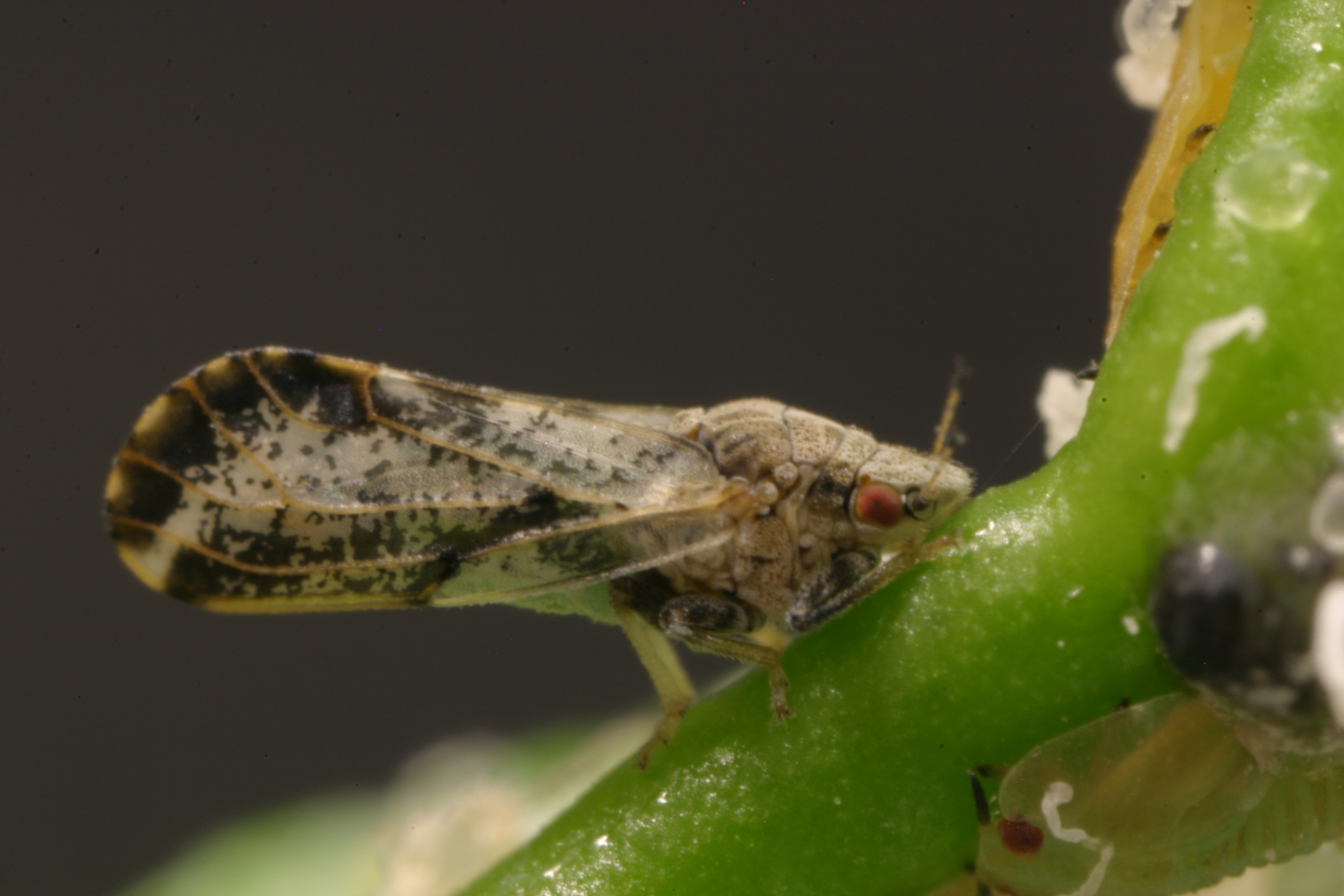
Featured Image: Adult ACP (Source:  The Citrus Pest & Disease Prevention Program)

2021-05-12T11:03:01-07:00June 9th, 2016|

LGBTQ+ Agriculture Summit

Cultivating Change: Building A Network of LGBTQ+ Agriculturists

June 8th – 11th, 2016 Kicks off the 2nd Annual Cultivating Change Summit In Sacramento

The Cultivating Change Foundation is hosting their 2nd annual Cultivating Change Summit designed to explore and empower the intersection of the agriculture industry and the LGBTQ+ communityLesbian, Gay, Bi, Transgender and Questioning  (and allies)a group of people rarely represented in either of the communities of which they are a part, the agriculture community or the LGBTQ+ community, for the most unique professional development conference ever. 

CDFA LOGOParticipants can go to http://www.cultivatingchangefoundation.org and register to join this important conversation. The Summit is the first of its kind providing a safe space for LGBTQ+ agriculturalists and people who love and respect them to come together and connect through a shared experience. With over 200 participants from industry leaders to innovators uniting June 8th-11th, in Sacramentothe epicenter and capital of the number one agriculture producing state in the nation, with a common goal of amplifying and elevating this global conversation. This Summit will allow LGBTQ+ agriculturists of theUSDA past, present, and future to see that they are not alone and recognize the Ag industry needs all of us for a sustainable future.

“It is important that the community come together to share information and best practices, not only to ensure we all reach our full potential, but also to support one another as so many LGBTQ people across the country contribute daily to our rural and agriculture communities.” – Ashlee Davis, LGBT Rural Summit Series, U.S. Department of Agriculture.

Over the three days, the Cultivating Change Summit will have 40 speakers, workshop presenters, and keynotes delivering content focused on four different areas: agricultural education, production agriculture, government and policy in agriculture, and urban agriculture. Some of the Summit’s distinguished guests include the California State Secretary of Agriculture, Karen Ross, and the President of California Farm Bureau, Paul Wenger. Representatives from the United States Department of Agriculture, Sacramento government officials, and individuals from global agricultural companies will be present.

CFBF logoThe main summit events will take place at the Crest Theatre in Downtown Sacramento, 1013 K Street. The final day of the summit will include tours of Northern California’s Agriculture landscape and local agricultural operations.

“I’ve waited more than 20 years for someone to start the conversation. I believe in Cultivating Change! Let’s do this!” – Rob Larew, Staff Director, US House Committee on Agriculture.

About The Cultivating Change Foundation

Founded in 2015, the Cultivating Change Foundation, a 501(c)(3) nonprofit, focuses on valuing and elevating minorities in agrarian communities through innovation, education, and advocacy.

Tickets are available for the Cultivating Change Summit and can be purchased through the website for $225. Special group ticket packages, sponsorship opportunities, and a detailed schedule are also available online. Visit www.cultivatingchangefoundation.org for more information.

2016-05-31T19:24:03-07:00May 16th, 2016|

The Fight Against Food Misinformation

Kavin Senapathy: Correcting Food Misinformation and Alarmism

By Patrick Cavanaugh, Deputy Editor

Kavin Senapathy, science communicator/advocate and contributor to Forbes Magazine, among others, is tightly focused on her goal to debunk miscommunication about human health, as well as genomic, food, and genetic engineering. Senapathy stated, “There is this culture of alarmism,” about food safety and food misinformation versus the science-based reality of our food safety management. “The alarmism and fear is so amplified, people don’t realize how very safe we are right now.”

Senapathy gets her facts from the source, “I speak to as many scientists as possible, and I know how to read and dissect a scientific paper. I know there is a very important difference between cherry picking from one study to support a bias, and looking at the weight of scientific evidence,” she said.FDA, FSMA Food Safety

“I also talk to farmers and I’m learning more about the hands-on practices,” Senapathy said. “California farmers produce a wide variety of fruits and vegetables,” she said, “and we all should be eating more of them.”

“I think a lot of the fear and misinformation take away from the message of eating the right things,” continued Senapathy. “Thinking, ‘I should avoid MSG, I should avoid GMOs or xyz additive,’ really detracts from the most important message—that we should be eating less unhealthy things like sodium and saturated fat, and not too many calories,” noted Senapathy. “We should be eating lots of fruits and vegetables and whole grains.”

And though she lives in Wisconsin, Senapathy says she is amazed by how many fruits and vegetables are available, even in the wintertime. “I can go to the grocery store in February and come home with grapes, strawberries, bananas, and all kinds of fruits and vegetables,” Senapathy said. “You know, we should marvel at the bounty of this more often.”

She’s quick to thank farmers for feeding her family and those of everyone, everywhere. “We forgetwith all the fear and misinformation in social mediathat our food supply is more abundant and safer than it has ever been,” she noted. “We should all be appreciative and thankful for that.”

2021-05-12T11:00:54-07:00May 12th, 2016|
Go to Top