Soil Health

Keeping Soils Healthy is a Top Priority

By Brian German, Associate Editor

Along with working on water issues, Jennifer Lester Moffitt, Deputy Secretary for the California Department of Food and Agriculture, addresses soil quality. Muffin said, “We need to do everything we can do increase water holding capacity so that when do irrigate, when it does rain, we are able to retain that water in the soil. And there are so many additional benefits, I need to look up the exact number, but roughly half the biodiversity of the earth is in the soil.”

While many research budgets have already been stretched thin to deal with the drought, soil research has been funded largely by the healthy soils initiative from the USDA.

Moffitt explained, “Potential state funding sources might be green house gas reduction revenue, but in order to use that money, we would have to show carbon offsets. If we were able to do that, we could show demonstration projects and develop incentives for farmers to sequester carbon, and the impact could be immense. I mean, we have 9 million acres of farmland in the state, and even if we get a small percentage of growers to adopt these practices, we could really make a huge impact.”

Moffitt stated, “You know, I think definitely there are benefits to managing the soil, studying the drought and looking at how we can be more resilient. Particularly for agriculture during drought, maintaining excellent soil health provides a huge benefit–I think a dual benefit–along with mitigating climate change. There’s a whole handful that healthy soils can do.”

Moffitt also mentioned other departments involved in the health soils initiative, “The Department of Conservation is working on this, especially with their Farmland Mapping and Monitoring Program (FMMP).” According to the The Department of Conservation’s Division of Land Resource Protection (DLRP) website, FMMP “produces maps and statistical data for analyzing impacts on California’s agricultural resources. Agricultural land is rated according to soil quality and irrigation status; the best quality land is called Prime Farmland. The maps are updated every two years with the use of a computer mapping system, aerial imagery, public review, and field reconnaissance.”

“CalRecycle,” continued Moffitt, “especially with regard to compost and their goal to reduce green waste in landfills by composting and applying it on agricultural land, is a win-win, all around. Also, the Water Board, Air Resources Board, Department of Water Resources and the land they manage, are really part of a holistic approach.”

2016-05-31T19:28:15-07:00May 30th, 2015|

California Exports: The Future of the Agriculture Industry

In 2013, California’s agriculture exports totaled to approximately $19.5 billion dollars. Those exports not only helped to boost farm prices and income, it also supported the existence of approximately 147,700 jobs both on and off the farm.

“Every one billion dollars in agricultural exports generates another 1.2 dollars in economic activity outside the agriculture sector,” said USDA Foreign Agriculture Service Associate Administrator Janet Nuzum. “When we help promote agricultural exports – it’s not just agriculture that benefits.”

According the USDA, U.S. agriculture producers rely heavily on foreign markets to sell their products. Approximately 70% of nuts, 75% of cotton and 40% of grapes are exported internationally, and California agriculture greatly contributes to those statistics.

Ninety-five percent of the world’s food consumers live outside of the United States, and only 1% of U.S. companies actually export.

“Export opportunities for those involved with agriculture are immense,” said California Center for International Trade Development Director Alicia Rios. “Most growers don’t realize that there are many programs out there to help them learn about the industry and can help them to market their product to international food buyers.”

At an Agricultural Trade Roundtable event, Nuzum met with and discussed the implications of international trade with key agribusiness representatives from California’s Central Valley. Nuzum noted that American producers actually benefit from trade agreements. The goal is to have them eliminate foreign tarrifs, unscientific regulatory barriers and bureaucratic administrative procedures that are designed to block trade.

With the world’s population growing, and with income fluctuations in developing countries, there are many opportunities for the U.S. ag industry to market its products.

“2015 is going to be a key year in setting the stage on the future conditions that the U.S. agriculture industry will face,” said Nuzum. “If we don’t take advantage of international opportunities, somebody else will.”

For more information about export programs, click on the links below.

http://www.fas.usda.gov

http://fresnocitd.org

2016-05-31T19:30:28-07:00March 4th, 2015|

2014 California Winegrape Harvest: Earliest and Third in a String of Great Vintages this Decade

By: Monique Bienvenue; Cal Ag Today Social Media Manager/Reporter

California vintners and growers across the state are grateful for another excellent vintage, despite an ongoing drought and earthquake that rocked south Napa in late August just as crush was getting underway. A mild winter and spring caused early bud break, although the overall length of the growing season was similar to past years.

“We are about 80 percent done, going into the second week of October,” said Glenn Andrade, vice-president winemaking for Trinchero Family Estates, farmers of more than 10,000 acres of vineyards across Napa, Sonoma, the Central Coast, Lodi and Amador. “We’ve had pretty light to moderate yields this harvest, resulting in exceptional quality. Our Amador Zinfandels are amazing—great intensity and quality. We should be done by the week of October 20, which is early for us, as typically, it’s the first week in November.”

According to the United States Department of Agriculture Pacific Regional Crop Production Report of August 2014, California’s winegrape production this year is forecast at 3.9 million tons, down 8 percent from 2013’s record high crop. The 2014 harvest is the third largest on record.

“The 2014 vintage was by far the earliest start of any harvest I can recall,” said Adam Mettler, director of winemaking for Michael David Winery in Lodi. “Early concerns about adequate storage quickly faded as our vineyards continued to check in at 20-25 percent down in volume from the previous two years. The moderate crop size allowed for rapid sugar accumulation early, which created some challenging high-density fermentations, but resulted in some real nice wines.”

A compacted harvest began in July for sparkling wines and started winding down by mid-October for later ripening varieties. Moderate temperatures, with only minimal rain in September, allowed for even ripening. Despite unusual circumstances, President and CEO of Wine Institute Robert P. (Bobby) Koch is extremely pleased with the 2014 vintage for California wine.

“We are very pleased with the assessments of an exceptional 2014 vintage for California wine statewide,” said Koch. “And we look forward to sharing these outstanding 2014 wines with wine lovers throughout the nation and the world. Although we came through this harvest without major impact, we’re keenly aware of the ongoing drought and its effects on California’s entire agricultural community, including wine. We are doing our part as vintners and growers to mitigate water usage through a variety of sustainable practices.”

2016-05-31T19:32:18-07:00October 28th, 2014|

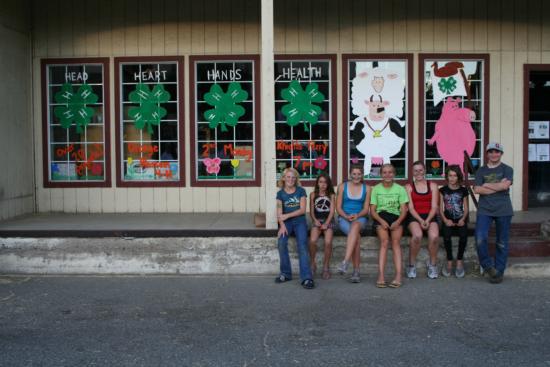
Head, Heart, Hands & Health – The 4-H Pledge

The 4-H Pledge Means Dedication

By: Monique Bienvenue; Cal Ag Today Social Media Manager/Reporter


At a glance, one might not think twice about that four-word pledge. But to countless individuals, that short, simple phrase represents dedication to 4-H, a prestigious organization devoted to teaching America’s youth the skills necessary to become successful outside the classroom.

Agriculturally-based, 4-H began in the 1800s as a way for students to communicate new and innovative farming techniques to those who were disconnected from university campuses. Eventually, this education trend caught on and in 1902 the first 4-H club was formed.

4h-pledge, 4-H Head Heart Hands HealthThe Cooperative Extension System was later created in 1914, and in partnership with the National Institute of Food and Agriculture under the United States Department of Agriculture, 4-H was officially nationalized. Clubs were established all across the United States.

4-H


Today, there are hundreds of children involved in 4-H. From health issues to food security, there isn’t an issue that these young, energetic individuals aren’t taking on.

For more information about 4-H, visit their website at http://www.4-h.org.

2016-10-13T14:36:53-07:00October 13th, 2014|
Go to Top