2014 Fresno County Crop Report Sets Record Production

2014 Fresno County Crop Report Sets Record Production — $7 billion+

Les Wright, Agricultural Commissioner/Sealer submitted the following information to Karen Ross, California Department of Food and Agriculture Secretary, TODAY accompanied by the 2014 Fresno County Crop Report showing record production.

It is my pleasure to submit the 2014 Fresno County Agricultural Crop and Livestock Report. This report is produced in accordance with Sections 2272 and 2279 of the California Food and Agriculture Code, and summarizes the acreage, production, and value of Fresno County’s agricultural products. The figures contained herein represent gross returns to the producer, and do not reflect actual net profit.

Jacobson, Wright and Matoian

Photo, from left, Ryan Jacobson, Fresno County Farm Bureau CEO, Les Wright, Fresno County Ag Commissioner and Richard Matoian, American Pistachio Growers Executive Director

This report is a testament to the resiliency and determination of the Fresno County agricultural industry. For the first time ever, the gross value of Fresno County agriculture exceeds seven billion dollars. Almonds remain the number one crop at a value of 1.3 billion dollars with grapes a close second at $905 million.

The total gross production value of Fresno County agricultural commodities in 2014 was $ 7,039,861,000, a 9.26 percent increase from the 2013 production value of $6,443,236,500.

Increases were seen in:

  • vegetable crops (0.47% = $5,599,000)
  • fruit and nut crops (13.16%= $422,664,000)
  • nursery products (46.89%= $20,022,000)
  • livestock and poultry (31.48% = $301,144,000)
  • livestock and poultry products (22.09% = $116,299,000
  • apiary (17.39% = $10,738,000)
  • industrial crops (107.05% = $3,795,500).

Decreases in:

  • field crops (-36.20%= -$149,822,000)
  • seed crops (-14.67%= -$5,823,000).

I would like to express my appreciation to the many producers, processors, and agencies, both private and public, who supported our efforts in producing this report. I would also like to thank all my staff, especially Fred Rinder, Scotti Walker, Angel Gibson, Vera Scott-Slater, and Billy Hopper. Without their hard work and valuable input this report would not be possible.

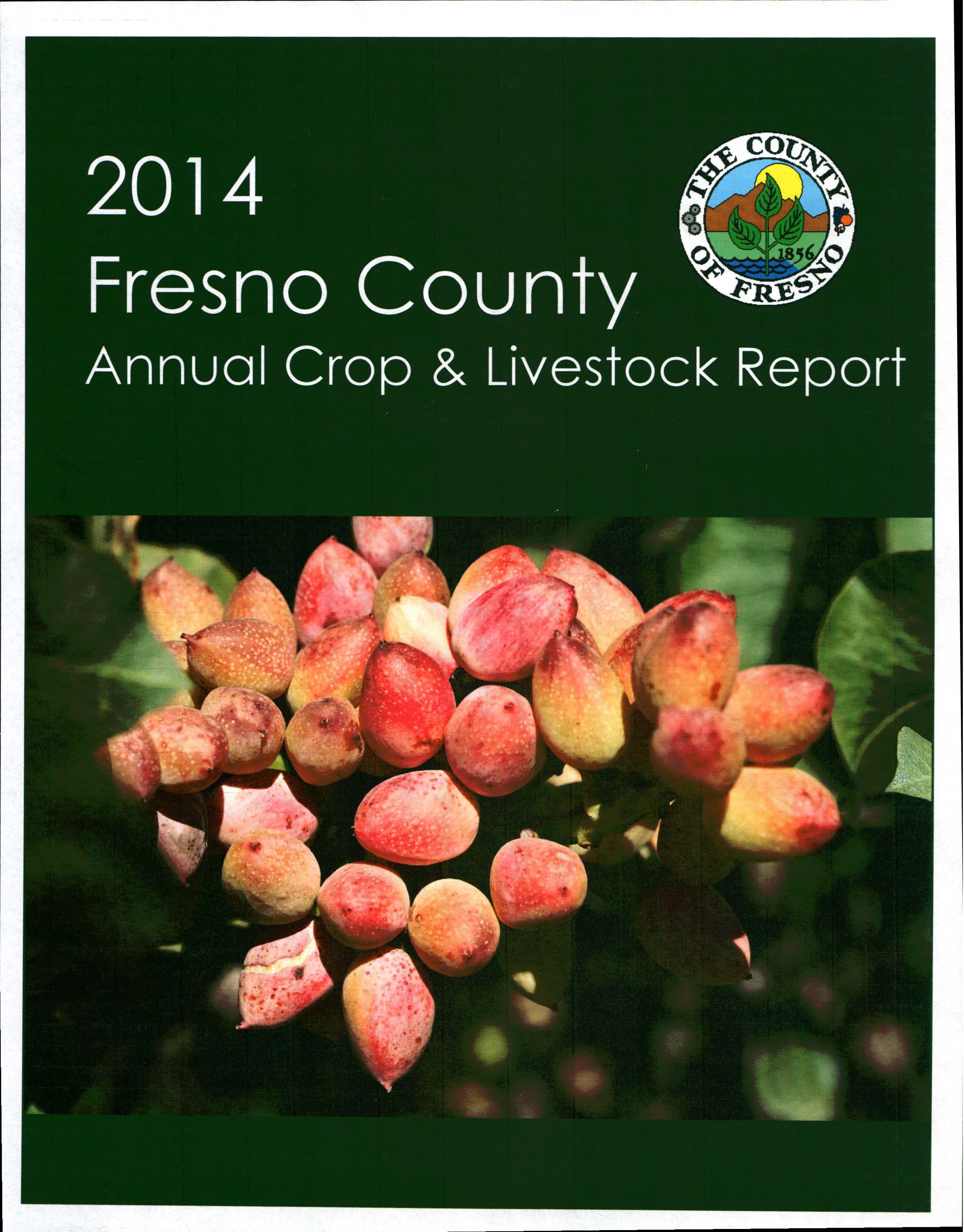
Pistachios, featured on the cover of the 2014 Fresno County Crop Report, were Fresno County’s seventh top crop last year, with a value of nearly $380 million dollars.

The top nut—and crop, for that matter—was almonds, followed by grapes, poultry, milk, cattle and calves, tomatoes, pistachios, garlic, peaches and cotton.

Also included in the report was this quote from President John F. Kennedy:

Our farmers deserve praise, not condemnation; and their efficiency should be cause for gratitude, not something for which they are penalized.

2016-05-31T19:28:06-07:00August 25th, 2015|

New Medfly Quarantine

A portion of San Diego County was placed under Medfly quarantine earlier this week following the detection of 4 adult Mediterranean fruit flies (Medflies) in the La Mesa area.  The United States Department of Agriculture (USDA), the San Diego County Agricultural Commissioner, and CDFA are working collaboratively on this project.

The quarantine area in San Diego County measures 93 square miles, bordered on the north by Prospect Avenue; on the south by Mount Miguel Road; on the west by Fairmount Avenue; and on the east by Vista Grande Road.  A link to the quarantine map may be found here: www.cdfa.ca.gov/plant/medfly/regulation.html.

To eradicate the infestation, the release of sterile male Medflies began on August 10, at a rate of 250,000 flies per square mile per week.  The new release area is approximately 59 square miles.  In addition, properties within 200 meters of detections are being treated with an organic formulation of Spinosad, which originates from naturally-occurring bacteria in soil, in order to eliminate any mated females and reduce the density of the population. Finally, fruit removal will occur within 100 meters of detection properties in order to remove any fruit infested with eggs and larvae.

The quarantine will affect any growers, wholesalers, and retailers of susceptible fruit in the area as well as local residents. Home gardeners are urged to consume homegrown produce on site and not move it from their property.  These actions protect against the artificial spread of the infestation to nearby regions where it could affect California’s food supply and our backyard gardens and landscapes.

In the eradication program,  sterile male Medflies are brought to San Diego County from the joint CDFA/USDA sterile insect rearing facility in Los Alamitos, which prepares sterile files for release everyday over the Los Angeles basin.  The sterile release program has a proven track record of eradication in southern California.  Sterile male flies mate with fertile female flies in the environment but produce no offspring.  The Medfly population decreases as the wild flies reach the end of their natural life span with no offspring to replace them, ultimately resulting in the eradication of the pest.

The Medfly can infest more than 250 types of fruits and vegetables, causing severe impacts on California agricultural exports and backyard gardens alike.  Residents who believe their fruits and vegetables are infested with fruit fly larvae are encouraged to call the state’s toll-free Pest Hotline at 1-800-491-1899.

2016-05-31T19:28:06-07:00August 21st, 2015|

2015 Drought Costs Ag Nearly Two Billion!

DROUGHT COSTS CALIFORNIA AGRICULTURE $1.84B AND 10,100 JOBS IN 2015

The drought is tightening its grip on California agriculture, squeezing about 30 percent more workers and cropland out of production than in 2014, according to the latest drought impact report by the UC Davis Center for Watershed Sciences.

In 2015, the drought costs to the state’s agricultural economy will reach about $1.84 billion and 10,100 seasonal jobs, the report estimated, with the Central Valley hardest hit.

The analysis also forecasts how the industry will fare if the drought persists through 2017.

‘NOT A FREE LUNCH’

Currently, the industry overall remains robust. The agricultural economy continues to grow in this fourth year of severe drought, thanks mostly to the state’s vast but declining reserves of groundwater, which will offset about 70 percent of the surface water shortage this year, the researchers said.

California is the world’s richest food-producing region. Continued strong global demand and prices for many of its fruits, nuts and vegetables has helped sustain the farm economy along with intrastate water transfers and shifts in growing locations.

“We’re getting by remarkably well this year — much better than many had predicted — but it’s not a free lunch,” said lead author Richard Howitt, a UC Davis professor emeritus of agricultural and resource economics.

The heavy reliance on groundwater comes at ever-increasing energy costs as farmers pump deeper and drill more wells. Some of the heavy pumping is in basins already in severe overdraft — where groundwater use greatly exceeds replenishment of aquifers — inviting further land subsidence, water quality problems and diminishing reserves needed for future droughts.

Further, several small rural communities continue to suffer from high unemployment and drying up of domestic wells because of the drought, particularly in the Tulare Basin.

“If a drought of this intensity persists beyond 2015, California’s agricultural production and employment will continue to erode,” said co-author Josue Medellin-Azuara, a water economist with the UC Davis Center for Watershed Sciences.

MAJOR CONCLUSIONS

The UC Davis team used computer models and the latest estimates of surface water availability from state and federal water projects and local water districts. They forecast several drought-related impacts in the state’s major agricultural regions for the current growing season, including:

  • The direct costs of drought to agriculture will be $1.84 billion for 2015. The total impact to all economic sectors is an estimated $2.74 billion, compared with $2.2 billion in 2014. The state’s farmers and ranchers currently receive more than $46 billion annually in gross revenues, a small fraction of California’s $1.9 trillion-a-year economy.
  • The loss of about 10,100 seasonal jobs directly related to farm production, compared with the researchers’ 2014 drought estimate of 7,500 jobs. When considering the spillover effects of the farm losses on all other economic sectors, the employment impact of the 2015 drought more than doubles to 21,000 lost jobs.
  • Surface water shortages will reach nearly 8.7 million acre-feet, which will be offset mostly by increased groundwater pumping of 6 million acre-feet.
  • Net water shortages of 2.7 million acre-feet will cause roughly 542,000 acres to be idled — 114,000 more acres than the researchers’ 2014 drought estimate. Most idled land is in the Tulare Basin.

The effects of continued drought through 2017 (assuming continued 2014 water supplies) will likely be 6 percent worse than in 2015, with the net water shortage increasing to 2.9 million acre-feet a year. Gradual decline in groundwater pumping capacity and water elevations will add to the incremental costs of a prolonged drought.

GROUNDWATER LAWS COULD HELP

The scientists noted that new state groundwater laws requiring local agencies to attain sustainable yields could eventually reverse the depletion of underground reserves.

“The transition will cause some increased fallowing of cropland or longer crop rotations but will help preserve California’s ability to support more profitable permanent and vegetable crops during drought,” said co-author Jay Lund, director of the UC Davis Center for Watershed Sciences.

The report was primarily funded by the California Department of Food and Agriculture.

Other authors on the report include Daniel Sumner, a UC Davis professor of agricultural and resource economics and director of the UC Agricultural Issues Center, and Duncan MacEwan of the ERA Economics consulting firm in Davis.

2016-05-31T19:28:07-07:00August 18th, 2015|

URGENT HLB Quarantine UPDATE

HLB Quarantine Update

A Huanglongbing (HLB) quarantine is now in effect in part of Los Angeles County following the detection of HLB in four citrus trees.

On July 10, a kumquat tree on a residential property was confirmed to be infected with the incurable HLB disease. After extensive surveying and testing in the area, three more diseased trees were found nearby. The four diseased trees were on four separate properties close to one another. The tree varieties include kumquat, lime, mandarin and calamondin.

California Department of Food and Agriculture (CDFA) has already removed two of the diseased trees and is currently working with the homeowners at the other two properties to remove those trees as soon as possible. See the CDFA press release below for more details on the resulting quarantine.

QUARANTINE FOR HUANGLONGBING DECLARED IN SAN GABRIEL, LOS ANGELES COUNTY

SaveOurCitrusSACRAMENTO, July 22, 2015 – An 87-square mile quarantine in the San Gabriel area of Los Angeles County has been added to the existing huanglongbing (HLB) quarantine in the Hacienda Heights-area following the detection of the citrus disease huanglongbing, or citrus greening.

Additional information, including a map of the quarantine zone, is available at the CDFA Save Our Citrus website The quarantine boundaries are: on the north, E. Orange Grove Boulevard; on the east, N. Lemon Avenue; on the west, Griffin Avenue; and on the south W. La Habra Boulevard.

This area is part of a much larger quarantine already in place for the Asian citrus psyllid (ACP), the pest that spreads bacteria causing huanglongbing (HLB). The new quarantine will prohibit the movement of all nursery stock out of the area, while maintaining existing provisions allowing the movement of only commercially cleaned and packed citrus fruit. Any fruit that is not commercially cleaned and packed, including residential citrus, must not be removed from the property on which it is grown, although it may be processed and/or consumed on the premises.

“The success of any quarantine depends on cooperation from those affected,” said CDFA Secretary Karen Ross. “The stakes couldn’t be higher for California citrus. We urge residents in the San Gabriel-area to do all they can to comply.”

CDFA, the USDA and the Los Angeles County Agricultural Commissioner’s continue their work to investigate the source of the disease, to survey and test for it throughout the Los Angeles Basin, and to continue with ground treatment of citrus trees within 800 meters of the find sites – which began earlier this week. In the long term, the strategy is to control the spread of ACPs while researchers work to find a cure for the disease.

Huanglongbing has been confirmed four times in San Gabriel, in a kumquat tree on a residential property, in a lime tree on an adjacent residential property, and in calamondin and mandarin trees on residential properties in close proximity to the original find. The disease is bacterial and attacks the vascular system of plants. It does not pose a threat to humans or animals. The Asian citrus psyllid can spread the bacteria as the pest feeds on citrus trees and other related plants. Once a tree is infected, there is no cure; it typically declines and dies within a few years.

Huanglongbing is known to be present in Mexico and in parts of the southern U.S. Florida first detected the disease in 2005, and the University of Florida estimates that the disease causes an average loss of 7,513 jobs per year, and has cost growers $2.994 billion in lost revenue since then. Huanglongbing has also been detected in Georgia, Louisiana, South Carolina and Texas as well as Puerto Rico and the U.S. Virgin Islands.

A total of 15 states or territories are under full or partial quarantine due to the presence of the ACP: Alabama, American Samoa, Arizona, California, Florida, Georgia, Guam, Hawaii, Louisiana, Mississippi, Northern Mariana Islands, Puerto Rico, South Carolina, Texas, and the U.S. Virgin Islands.

The Asian citrus psyllid was first detected in California in 2008 and quarantines for the pest are now in place in 17 California counties. If Californians believe they have seen evidence of huanglongbing in local citrus trees, they are asked to please call CDFA’s toll-free pest hotline at 1-800-491-1899 FREE. For more information on the Asian citrus psyllid and huanglongbing, please visit: http://www.cdfa.ca.gov/phpps/acp/.

2016-05-31T19:28:09-07:00July 23rd, 2015|

HLB Found in LA

Huanglongbing Detected on LA County Pre-Symptomatic Kumquat Tree


By Patrick Cavanaugh, Farm Director; Laurie Greene, Editor, California Ag Today


#CitrusMatters

#CitrusMatters (provided by Bayer CropScience, in partnership with California Citrus Mutual)

“It’s disappointing, but fortunately it was found in a residential area,” commented Joel Nelsen, president of California Citrus Mutual (CCM), on the second discovery of Huanglongbing  [wong-long-bing] (HLB), or citrus greening, in California. CCM refers to HLB as “a death sentence for California citrus” as once the plant is infected with this bacterial disease, there is no known cure.

Joel Nelsen

Joel Nelsen, president, California Citrus Mutual

“HLB was detected in plant material taken from a kumquat tree in a residential neighborhood in the San Gabriel area of Los Angeles County,” Nelson stated. “The 20-year-old tree was in the front yard of a residence and had not yet shown any symptoms.”

The San Gabriel neighborhood is located about 15 miles from Hacienda Heights, where the first HLB case in the state was detected in 2012 in a residential citrus tree. The  An aggressive trapping program for the Asian citrus psyllid (ACP), a pest known to spread the HLB bacteria as it feeds on citrus trees and other plants, has been ongoing ever since this first finding, including in the San Gabriel area.

“It’s fortunate that the homeowner is quite cooperative,” said Nelsen, “and other neighborhood homeowners are allowing officials to run PCR tests (polymerase chain reaction) on samples of their trees to determine if the disease is present.” PCR analysis is a sensitive research technique for detecting and identifying small numbers of bacteria in plants via DNA amplification.

Nelsen declared, “This find is exactly what the Citrus Pest and Disease Prevention Program is designed to do. PCR testing of a random sampling of leaves and stems in the area, as our program prescribes, enabled us to hit a positive” before symptoms appeared.

“We do not know how long the tree had been diseased,” said Nelsen, “but we do know that we have been trapping ACPs there for a long time and had not found any HLB before. You do not want to

Citrus Pest & Disease Prevention Program

find anything,” Nelsen said, “but when you do, you want to find it before it becomes an epidemic.”

In a statement on Friday, California Department of Food and Agriculture (CDFA) Secretary Karen Ross said, “Citrus is a cherished part of our landscape and our shared history, as well as a major agricultural crop.” CDFA has been planning and preparing for HLB detections since before the first ACP was detected in the state in 2008. Quarantines are now in place in 17 California counties.

Los Angeles County Agricultural Commissioner Kurt Floren will mobilize his team over this week to check on citrus trees in plant nurseries that fall within the 800-meter radius around the infected tree area. A spray protocol is already in place for all citrus trees within the 800-meter radius.

“More traps are going out so we can try to delineate the scope of the problem. Hopefully it will be nothing more than this one tree, like the solitary diseased tree we found in Hacienda Heights,” Nelsen said.

Resources

To support the citrus industry in its fight against HLB, go to California Citrus Mutual Action Center.


For questions about the ACP or HLB, visit or call CDFA’s toll-free pest hotline at 1-800-491-1899.


View the Distribution Map  of ACP, HLB and parasites in California published by the UNIVERSITY OF CALIFORNIA Division of Agriculture and Natural Resources.

USDA's free "Save Our Citrus" iTunes app

USDA’s free “Save Our Citrus” iTunes app


Visit the Citrus Pest & Disease Prevention Program.


Verify plant symptoms at USDA’s SaveOurCitrus website.


For information and ACP solutions, go to #citrusmatters, provided by Bayer CropScience, in partnership with California Citrus Mutual


2016-05-31T19:28:11-07:00July 13th, 2015|

UC ANR Horticulture Advisor Retires After 28 Years

John Kabashima wrapped up his horticultural career on July 1, after 28 years with University of California Agriculture and Natural Resources. Nursery professionals lauded the UC Cooperative Extension advisor’s service to the nursery and landscape industry and to homeowners in Orange and Los Angeles counties.

“He’s one of the few people who could translate science into business with a sense of candor and fact-based conversation,” said Robert Crudup, president of Calabasas-based Valley Crest Tree Company, of Kabashima.” John has long-term vision, which he used throughout his career to move the nursery industry forward.”

John Kabashima

John Kabashima, UC ANR

“He is smart about political science as well as plant science,” Crudup said. On a regular basis, Kabashima would warn growers about emerging issues that were likely to affect the nursery industry, such as regulations to control the spread of polyphagous shot hole borer, red imported fire ant and palm borer.

“He’s been very, very valuable,” said retired nurseryman Gary Hayakawa, noting that Kabashima not only contributed research on pest control and water issues for the nursery and landscape industries, but also persuaded people from UC campuses, the California Department Food and Agriculture and industry to work together. “Before he was involved in issues, the work was all separate. Industry didn’t have input,” Hayakawa said. “What John has done is to work with all three to form a coalition.”

Crudup, whose company has nursery operations in Los Angeles, Ventura, Alameda and San Joaquin counties, agreed.

“John’s biggest contribution was his work with the glassy-winged sharpshooter subcommittee,” said Crudup, who served on the subcommittee. “He brought a voice of reason that helped counterbalance emotional sides of the discussion.”

“His ability to act as the primary liaison between the nursery industry, CDFA, the UC, the county agricultural departments and the wine and grape industries was the primary reason this part of the GWSS (glassy-winged sharpshooter)  program was so successful and, more importantly has resulted in the continued viability of the California nursery industry in light of significant regulatory pressures,” said Bob Wynn, who was statewide coordinator of the CDFA Pierce’s Disease Control  Program and who  continues to oversee the program as senior advisor to Secretary Karen Ross.

“The CDFA, with advisement and counseling from John, developed what is known as the Approved Nursery Treatment Program, which allows nurseries in the infested areas of the state to ship by merely treating the plants with an approved treatment,” Wynn said.  “John was the primary author in the development of the nursery ‘Approved Treatment Best Management Practices’ document published in 2008. The use of this document has allowed the nursery industry to save millions of dollars in regulatory compliance costs over time.”

A native of Los Angeles, Kabashima says he started working in his family’s nursery business as soon as he was tall enough to water 1-gallon nursery plants.  “After killing thousands of plants, I was finally allowed to manage the family business from 1970 to 1976,” he quipped.

In 1976, his family sold the nursery and Kabashima enrolled at California Polytechnic University, Pomona. After he  earned a B.S. in agricultural biology from Cal Poly Pomona in 1979, he was hired by UC Riverside horticulture entomologist Pat Morishita as a lab technician. While working at UC Riverside, Kabashima earned a  master’s degree in pest management. He would later complete a Ph.D. in entomology at UC Riverside.

Kabashima earned his MBA at Pepperdine University in 1986 while managing the Ornamental Horticulture Division at Target Specialty Products. In 1987, the UC Division of Agriculture and Natural Resources recruited him to become a UC Cooperative Extension environmental horticulture advisor in Orange and Los Angeles counties.

Over the years, he has studied the management of insects, diseases and weeds in horticulture production systems, biological control of exotic pests, and water-related problems in landscapes, golf courses, nurseries, municipalities and watersheds.

In 1998 Kabashima took over the fledgling UC Master Gardener Program in Orange County, which as of now has trained more than 300 UC Master Gardener volunteers to extend research-based information on gardening and horticulture to the public.

The UCCE environmental horticulture advisor has also served as director of UC Cooperative Extension in Orange County and interim director of the UC ANR South Coast Research and Extension Center.

In 1994, when Orange County filed for bankruptcy and the Board of Supervisors voted to discontinue funding and housing for the local UC Cooperative Extension, Kabashima worked with Gary Hayakawa to keep UCCE in the county.

“When Orange County cut Cooperative Extension’s budget, we found out that without extension you don’t have 4-H or Master Gardeners,” Hayakawa said. To preserve the UC Cooperative Extension programs, Hayakawa, who was an Orange County Fair Board member, helped Kabashima  secure office space in trailers on the fairgrounds. In 2014, the UCCE office moved from the fairgrounds to UC ANR South Coast Research and Extension Center in Irvine.

Kabashima belongs to many professional organizations including the Entomological Society of America, California Association of Nurseries and Garden Centers, Nursery Growers Association, Western Chapter of the International Society of Arboriculture, United Agribusiness League, and San Diego Flower and Plant Association. The scientist has served on numerous government and industry advisory committees.

Throughout his career, Kabashima’s achievements in education and research have been recognized by various organizations. To name a few, he received the 1987 Education and Research Award from the Orange County Chapter of the California Association of Nurseries and Garden Centers (CANGC), 1993 CANERS Research Award from CANGC, 2002 Nursery Extension Agent Award from the American Nursery and Landscape Association, 2008 Western Extension Directors Award of Excellence, 2010 Entomological Society of America’s National IPM Team Award and the 2011 California Agriculture Pest Control Advisors Association Outstanding Contribution to Agriculture Award. In 2014, he and his friend Hayakawa were inducted into the Green Industry Hall of Fame.

Being a UCCE advisor has suited Kabashima. “I love learning new things, sharing that information with others, and using my skills to solve problems facing California, such as the ever-increasing arrivals of exotic and invasive pests,” he said. The avid photographer has been able to unite his avocation with his vocation. His photographs of insects have been used to illustrate textbooks, websites and news articles.

“Success in one’s field is often a combination of natural ability, informal and formal training and education, being mentored, and networking with collaborators and colleagues, all sprinkled with a little bit of luck and support from one’s family and friends,” Kabashima said.

In retirement, Kabashima plans to seek new culinary experiences with his wife Janet and daughter Misa, at  home and in their travels together. He has been granted emeritus status by UC ANR and he will continue his efforts to help UC Irvine save trees on its campus that are infested with polyphagous shot hole borer.

UC Agriculture and Natural Resources researchers and educators draw on local expertise to conduct agricultural, environmental, economic, youth development and nutrition research that helps California thrive. Learn more at ucanr.edu.

2016-05-31T19:28:11-07:00July 12th, 2015|

BREAKING NEWS ON HUANGLONGBING CITRUS DISEASE

HUANGLONGBING CITRUS DISEASE DETECTED IN SAN GABRIEL AREA OF LOS ANGELES COUNTY
CDFA
Release #15-031

Sacramento, July 10, 2015 – The California Department of Food and Agriculture (CDFA) and the United States Department of Agriculture (USDA) have confirmed detection of huanglongbing (HLB) citrus disease, or citrus greening. The disease was detected in plant material taken from a kumquat tree in a residential neighborhood in the San Gabriel area of Los Angeles County.

This is the second time HLB has been detected in California. The first detection occurred in 2012 in a residential citrus tree in Hacienda Heights, about 15 miles from San Gabriel.

HLB is a bacterial disease that attacks the vascular system of plants. It does not pose a threat to humans or animals. The Asian citrus psyllid (ACP) can spread the bacteria as the pest feeds on citrus trees and other plants. Once a tree is infected, there is no cure; it typically declines and dies within a few years.Residential Citrus Trees

“Citrus is a cherished part of our landscape and our shared history, as well as a major agricultural crop,” said CDFA Secretary Karen Ross. “CDFA is moving quickly to protect the state’s citrus. We have been planning and preparing for HLB detections with our growers and our colleagues at the federal and local levels since before the ACP was first detected here in 2008.”

A CDFA crew has removed and disposed of the infected tree and is preparing to conduct treatment of citrus trees for ACP infestation within 800 meters of the find site. By taking these steps, a critical reservoir of disease and its vectors will be removed, which is essential.

An intensive survey  of local citrus trees and psyllids is underway to determine if HLB exists anywhere else in the area. Planning has begun for a quarantine of the area to limit the spread of the disease by restricting the movement of citrus trees, citrus plant parts, green waste, and all citrus fruit except what is commercially cleaned and packed. As part of the

SAVE OUR CITRUS app is a free USDA iPhone to report and identify the four leading citrus diseases: citrus greening, citrus canker, citrus black spot and sweet orange scab. Report your symptoms, upload a photo and  citrus experts will respond.

SAVE OUR CITRUS app is a free USDA iPhone to report and identify the four leading citrus diseases: citrus greening, citrus canker, citrus black spot and sweet orange scab. Report your symptoms, upload a photo and citrus experts will respond.

quarantine, citrus and closely related plants at nurseries in the area will be placed on hold.

Residents of quarantine areas are urged not to remove or share citrus fruit, trees, clippings/grafts or related plant material. Citrus fruit may be harvested and consumed on-site.

CDFA, in partnership with the USDA, local agricultural commissioners and the citrus industry, continues to pursue a strategy of controlling the spread of ACPs while researchers work to find a cure for the disease.

HLB is known to be present in Mexico and in parts of the southern U.S. Florida first detected the pest in 1998, and the disease in 2005, and the two have now been detected in all 30 citrus-producing counties in that state. The University of Florida estimates that the disease causes an average loss of 7,513 jobs per year, and has cost growers $2.994 billion in lost revenue since HLB was first detected in that state in 2006.

HLB has also been detected in Georgia, Louisiana, South Carolina and Texas, as well as Puerto Rico and the U.S. Virgin Islands. A total of 15 states or territories are under full or partial quarantine due to the detected presence of the Asian citrus psyllid: Alabama, American Samoa, Arizona, California, Florida, Georgia, Guam, Hawaii, Louisiana, Mississippi, Northern Mariana Islands, Puerto Rico, South Carolina, Texas, and the U.S. Virgin Islands.

The ACP was first detected in California in 2008, and quarantines are now in place in 17 California counties. If Californians have questions about the ACP or HLB, they may call CDFA’s toll-free pest hotline at 1-800-491-1899 or visit:  http://www.cdfa.ca.gov/phpps/acp/.

2016-05-31T19:28:11-07:00July 10th, 2015|

ASIAN CITRUS PSYLLID QUARANTINE EXPANSION IN KERN COUNTY

The California Asian Citrus Psyllid Quarantine includes, as of TODAY, two portions of Kern County following the detections of two ACP within the City of Bakersfield, one in the Westchester area and the other in the Panorama Drive area. The quarantine zone measures 63-square miles in the Westchester area and 65-square miles in the Panorama Drive area.  A link to the quarantine maps may be found here: www.cdfa.ca.gov/plant/go/acp-qmaps

The quarantine prohibits the movement of citrus and curry tree nursery stock out of the quarantine area and requires that all citrus fruit be cleaned of leaves and stems prior to moving out of the quarantine area.  An exception may be made for nursery stock and budwood grown in USDA-approved structures which are designed to keep ACP and other insects out.  Residents with backyard citrus trees in the quarantine area are asked not to transport citrus fruit or leaves, potted citrus trees, or curry leaves from the quarantine area.

County-wide Asian Citrus Psyllid Quarantines are now in place in Imperial, Los Angeles, Orange, Riverside, San Bernardino, San Diego, Santa Barbara, Tulare and Ventura Counties, with portions of Fresno, Kern, Madera, San Benito, San Joaquin, San Luis Obispo, and Santa Clara counties are also under quarantine.

The ACP is an invasive species of grave concern because it can carry the disease huanglongbing (HLB), also known as citrus greening.  All citrus and closely related species, such as curry trees, are susceptible hosts for both the insect and disease.  There is not cure once a tree becomes infected, the diseased tree will decline in health and produce bitter, misshaped fruit until it dies.  HLB has been detected just once in California – in 2012 on a single residential property in Hacienda Heights, Los Angeles County.  This plant disease does not affect human health.

Residents in the area who think they may have seen ACP or symptoms of HLB on their trees are urged to call CDFA’s Pest Hotline at 1-800-491-1899.

For more information on the ACP and HLB, please visit: www.cdfa.ca.gov/go/acp.

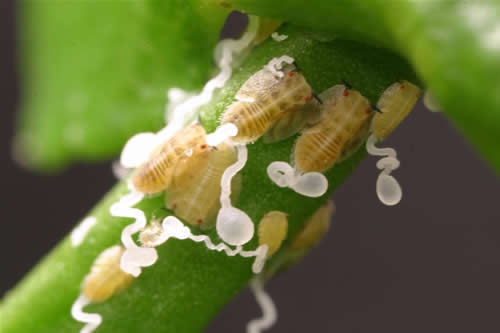
Featured Photo: Asian Citrus Psyllid, UC ANR

2016-05-31T19:28:14-07:00June 17th, 2015|

Op-ed: California Agriculture Is Worth the Water

California agriculture is worth the water

Op-ed co-authored by Secretary Ross and Daniel Sumner in the LA Times

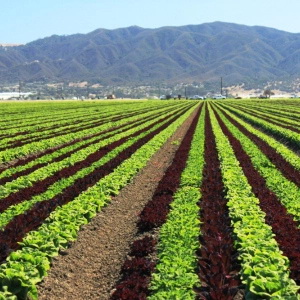
SalinasLettuce1000

By Karen Ross and Daniel Sumner

Pundits here in drought-stricken California have become fond of proclaiming that farms consume 80% of the state’s water and generate only about 2% of its gross domestic product. “Why devote so much of our water to an industry that contributes so little fuel to our economic engine?” they ask.

Both of those figures are deceptive. It’s only possible to arrive at 80% by not accounting for the amount of water dedicated to environmental uses. (For example, the water in rivers that flows into the sea.) And the 2% figure grossly undersells the importance of food grown in California.

California’s economy is incredibly diverse, much like its topography, its climate and its population. That’s a significant benefit when you’re the eighth-largest economy in the world. And agriculture is a key part of that diversity.

Of course, many aggregate sectors constitute a larger share of our economy than agriculture. Finance, insurance and real estate tops the list at 21%. Professional services and government follow at 13% and 12%, respectively.

Beyond those sectors, we have a broad, flat grouping of several categories, each representing just a few percent of the state’s GDP. That’s a remarkably balanced profile that lends resilience and dynamism to our economy.

Let’s look more closely at that data, though. Is agriculture really just 2.1%? As is so often the case with statistics, what’s not in that number is more significant than what is.

Take the “utilities” category, for instance. It includes power generated for farms and for processing and marketing crops once they’re harvested. The “real estate” piece includes sales and leasing of agricultural acreage and processing facilities. “Non-durable goods manufacturing” includes food and beverage processing. “Wholesale trade” and “retail trade” does not just mean the shopping mall; it includes the supermarket, the food court and the regional produce hub.

Categories such as “transportation and warehousing” and “finance and insurance” are linked into every one of our 78,000 farms, each of which needs trucks, banks and insurance coverage to bring in the harvest.

“Accommodation and food services” not only runs on food but also is fond of promoting the fact that many of the most healthful and desirable foods and beverages grow on California farms and ranches. California, after all, helped start the farm-to-plate movement, and it’s not an exaggeration to say that agriculture is tied to the state’s identity from harvest (Cesar Chavez) to table (Alice Waters).

Granted, all economic sectors have ripple effects and multipliers. But unlike most other segments, California’s agricultural productivity and diversity are not readily duplicated elsewhere. Our soils and climate are what have made it possible for us to supply so much of our nation’s and the world’s food.

Food is central to California in more than just the nutritional sense. It contributes to nearly every aspect of our economy and our lives, an important point to keep in mind as we weigh what our water is worth during this drought, and the next one.

Karen Ross is California agriculture secretary. Daniel Sumner is a professor of agricultural and resource economics at UC Davis.

2016-05-31T19:28:15-07:00June 3rd, 2015|

Soil Health

Keeping Soils Healthy is a Top Priority

By Brian German, Associate Editor

Along with working on water issues, Jennifer Lester Moffitt, Deputy Secretary for the California Department of Food and Agriculture, addresses soil quality. Muffin said, “We need to do everything we can do increase water holding capacity so that when do irrigate, when it does rain, we are able to retain that water in the soil. And there are so many additional benefits, I need to look up the exact number, but roughly half the biodiversity of the earth is in the soil.”

While many research budgets have already been stretched thin to deal with the drought, soil research has been funded largely by the healthy soils initiative from the USDA.

Moffitt explained, “Potential state funding sources might be green house gas reduction revenue, but in order to use that money, we would have to show carbon offsets. If we were able to do that, we could show demonstration projects and develop incentives for farmers to sequester carbon, and the impact could be immense. I mean, we have 9 million acres of farmland in the state, and even if we get a small percentage of growers to adopt these practices, we could really make a huge impact.”

Moffitt stated, “You know, I think definitely there are benefits to managing the soil, studying the drought and looking at how we can be more resilient. Particularly for agriculture during drought, maintaining excellent soil health provides a huge benefit–I think a dual benefit–along with mitigating climate change. There’s a whole handful that healthy soils can do.”

Moffitt also mentioned other departments involved in the health soils initiative, “The Department of Conservation is working on this, especially with their Farmland Mapping and Monitoring Program (FMMP).” According to the The Department of Conservation’s Division of Land Resource Protection (DLRP) website, FMMP “produces maps and statistical data for analyzing impacts on California’s agricultural resources. Agricultural land is rated according to soil quality and irrigation status; the best quality land is called Prime Farmland. The maps are updated every two years with the use of a computer mapping system, aerial imagery, public review, and field reconnaissance.”

“CalRecycle,” continued Moffitt, “especially with regard to compost and their goal to reduce green waste in landfills by composting and applying it on agricultural land, is a win-win, all around. Also, the Water Board, Air Resources Board, Department of Water Resources and the land they manage, are really part of a holistic approach.”

2016-05-31T19:28:15-07:00May 30th, 2015|
Go to Top