LGMA Food Safety Webinar Scheduled April 17
|
||
|


|
||
|
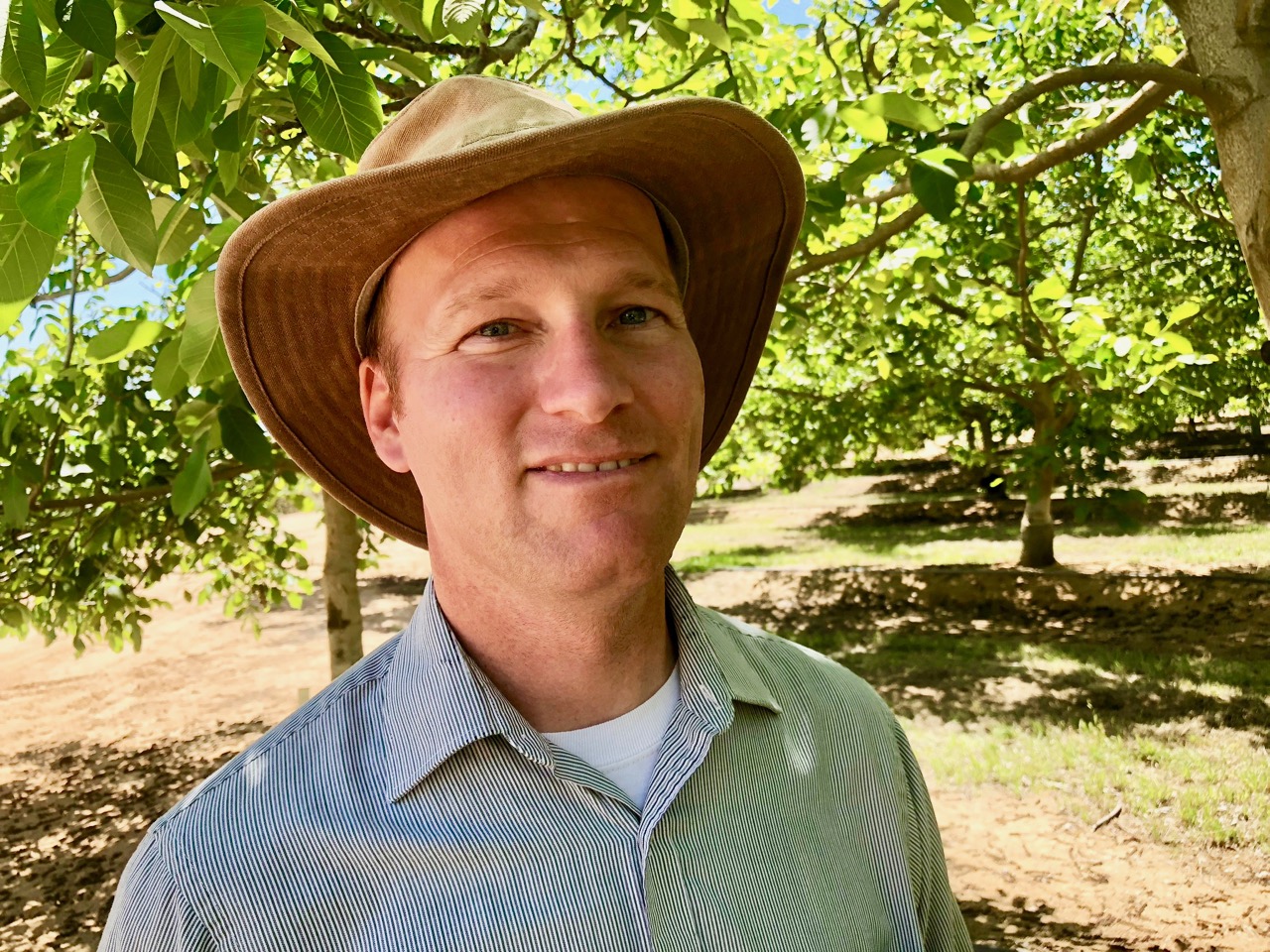
When to start the irrigation on those almond orchards? Most growers want to get out there early to get the trees the water they need and to apply nitrogen through fertigation. However, there are risks associated with starting irrigation too early. This according to Dave Doll, who spent 10 years as a UC Farm Advisor in Madera County and is currently managing a farming operation in Portugal.
“The risks you have about starting the irrigation season too early is that you apply too much water that reduces the amount of oxygen within the root zone that depletes the ability for the tree to develop feeder roots or find feeder roots, which help with nutrient and water uptake,” said Doll. “So as such, what we would recommend and what still is a recommendation from my perspective and what we’re doing on an operation here, is to evaluate these trees for water demand in the spring before we start our application.”
“And this can be done through the use of a pressure chamber, which measures stem water potential, or even watching soil moisture probes to make sure that you’re getting a depletion in your top two feet of in soil moisture before you start applying in irrigation,” noted Doll.” And this in essence, will help you have better water management or more resiliency in your water management as a tree continues to grow and the temperatures pick up.”

United Fresh Produce Association and a number of industry partners have presented to the U.S. Department of Agriculture a comprehensive Produce Market Stabilization Program to immediately support critical financial needs in the produce supply chain. In addition, 108 members of Congress have sent a letter to USDA Secretary Sonny Perdue urging USDA to support this immediate relief.
“Since the beginning of this crisis, our association has worked to help our industry keep produce moving to consumers,” said Michael Muzyk, President, Baldor Specialty Foods, and Chairman of United Fresh. “And, we’ve worked to help our members actually survive following the devastating financial impact of this crisis. Today is an important day on a path toward some stability for our industry to be able to serve consumers when we’re finally past this terrible time.”
“There is a long road still ahead,” said United Fresh President & CEO Tom Stenzel. “But this is a critical step – our industry has come together to support a consensus proposal to USDA, and Congress has come together to let our national decision-makers know how important this is across the country and every sector of our business.”
“I especially want to thank Representatives Jimmy Panetta (D-CA), Fred Upton (R-MI), Jim Costa (D-CA) and Doug LaMalfa (R-CA) for spearheading the Congressional support for this letter, and all of my colleagues in produce associations around the country who’ve worked together. Most organizations represent specific sectors and members who are suffering, but we’ve set aside competitive interests to support a common approach that gets us the best chance of securing real relief for our industry.”
“The first step was encouraging Congress to pass the CARES Act devoting $2 trillion to the economy, and some $9.5 billion specifically carved out for fruits and vegetables, livestock, dairy and local food systems. Now, comes this urgent proposal with a roadmap of how USDA can support our industry immediately. Next will come deep discussions and analysis within USDA in channeling resources to multiple interests. And eventually, we believe there will have to be continuing additional financial relief from Congress if our economy is going to be able to pull out of this crisis and grow again,” he said.
|
|
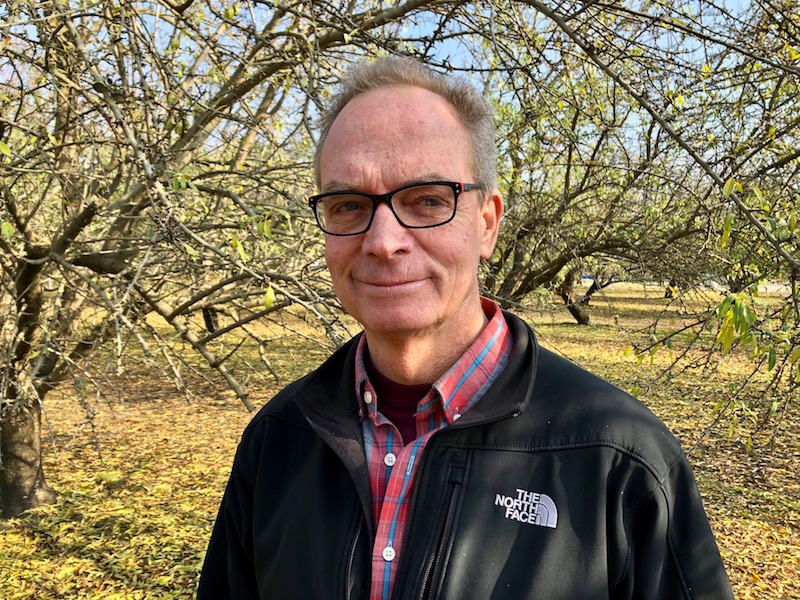
And Tollerup said that’s the Southern fire ant and the pavement ant. And we asked Tollerup how a grower would go about identifying these ants. “You can go out and collect some ants using corn chips in vials and put out several vials into the orchard and collect them in the morning and throw them in the freezer and the next day, put them out on a plate and look at them with a hand lens. And there’s some very good resources on the University of California IPM website that’ll help identify those ants,” he said.
Tollerup noted sampling should be done anytime through April and May.“It gives you plenty of time to get out there, identify those ants, and see what you got,” he said. “And the interesting thing is that you don’t have to sample, but just one time a year or maybe even one time every couple of years because ants don’t reinvest orchards very, very quickly.”
And if you have an ant issue, go to the UCI PM website on ants where they also have recommendations on control products. Again, over the next six weeks is a good time to be looking for those yield-robbing ants.
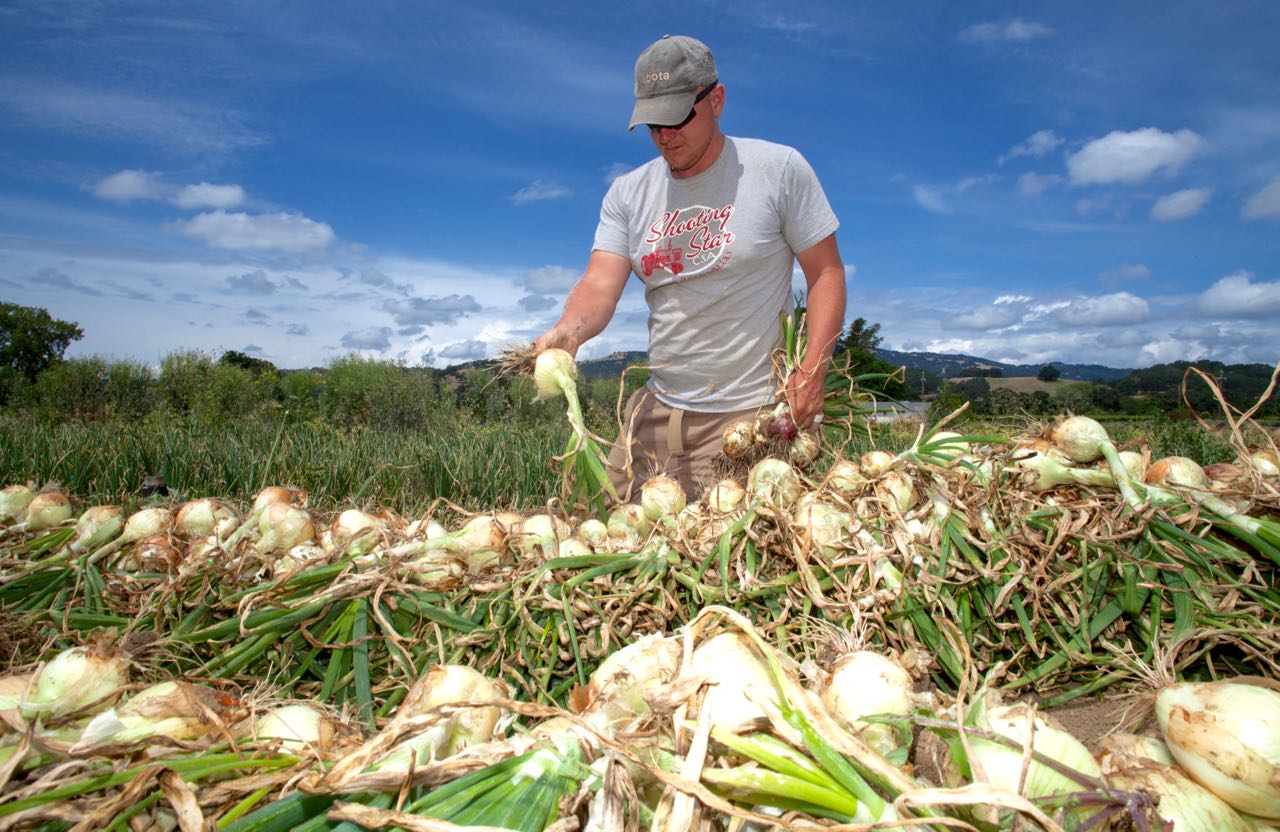
In fields, orchards and vineyards around California, farmers and their employees have been observing new social-distancing protocols to avoid spread of the novel coronavirus. Training sessions have been held to reinforce the need for additional precautions. Where necessary, farmers have adjusted operations to allow for distancing. Hand washing and other sanitary procedures are already routine to ensure food safety.
As people hunker down and cook more meals at home, they’ve been buying more beef. That has led to surging demand, particularly for hamburger. But demand for higher-end cuts has suffered, due to restrictions on restaurants and on export sales. The turbulent markets, combined with dry weather in recent weeks, have left cattle ranchers facing complicated decisions about how to manage their herds and when to send animals to market.
The closure of most retail florists and postponement or cancellation of public events and weddings has caused flower sales to plummet. Flower growers say they saw demand fall by 90% or more after stay-at-home protocols took force. The California Cut Flower Commission says at least one large farm has closed permanently. Others have suspended operations or are trying to find new outlets for their blooms.

According to AgFunder, over $6.5 billion was invested in agtech companies in 2019. This brings the total up to somewhere around $30 billion since 2012. But how much of this investment is actually leading to tools farmers are actually using?
Aaron Magenheim of Growers Insight believes the technology is out there that growers need. But, he says, most agtech companies don’t go far enough to help customers fully integrate the technology into their operations.
“I just about guarantee the technology is out there for farmers for the next five years, anywhere in the world. We track through Agtech Insight, our other company, we tracked 3,000 digital technology companies around the world that work in ag,” said Magenheim. “So we know who’s out there globally, what they’re doing, where they’re at. So we really believe that in order to utilize those technologies that are already being paid for and on the farm.
“But to utilize them more, there’s the cultural aspect of these farming organizations. And that’s the challenging piece and nobody’s addressing that. Startups want to sell their technology and train one or two people and, and that’s it. But if you have one or two people in an organization of 300 using a technology, it’s not being utilized anywhere near as much as it could be,” he said.
Magenheim is helping growers understand where technology fits on their operations. Then, he makes sure the technology is fully integrated so growers maximize the return on their investment.

The spotted lanternfly is a colorful insect pest that has been infesting vineyards and orchards in the eastern U.S. So far, we have been effective in our efforts to keep the pest away from California’s multi-billion dollar ag industry. But we must remain diligent in these efforts, says Dr. Surendra Dara, Entomology and Biologicals Advisor in San Luis Obispo and Santa Barbara Counties.
D“Spotted lanternfly is an invasive pest because of the reason we don’t have any natural enemies that can suppress their populations in a natural way in a new environment,” said Dara. “And it can actually infest grapes and several other hosts in California of commercial importance. So it is important for us to be aware of the potential impact and do the need to prevent the damage.”
Researchers are trying to develop potential control methods, but the pest is known to spread very quickly and can be very damaging to vineyards and orchards.
“So they mainly feed on the stems and trunks, so they insert their stylets. Then they suck the plant uses. And they also excrete large amounts of honeydew, which can promote the growth of a sooty mold,” he said.
Keeping pests like this out of the state and developing control measures is of the utmost importance to California’s ag economy.
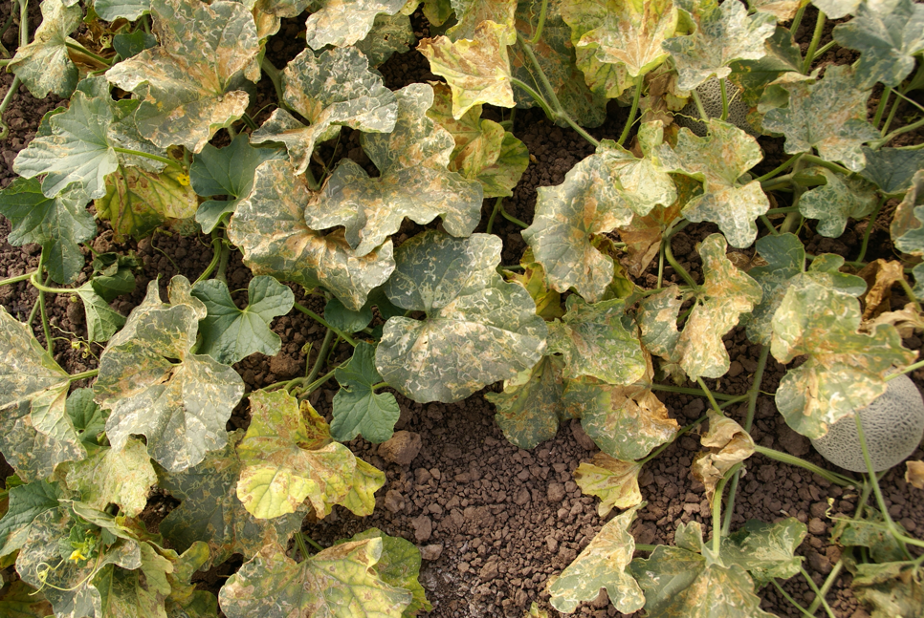
With spring melon production well under way, PCAs should be on the lookout for Liriomyza leafminer on cantaloupes, honeydews and watermelons.
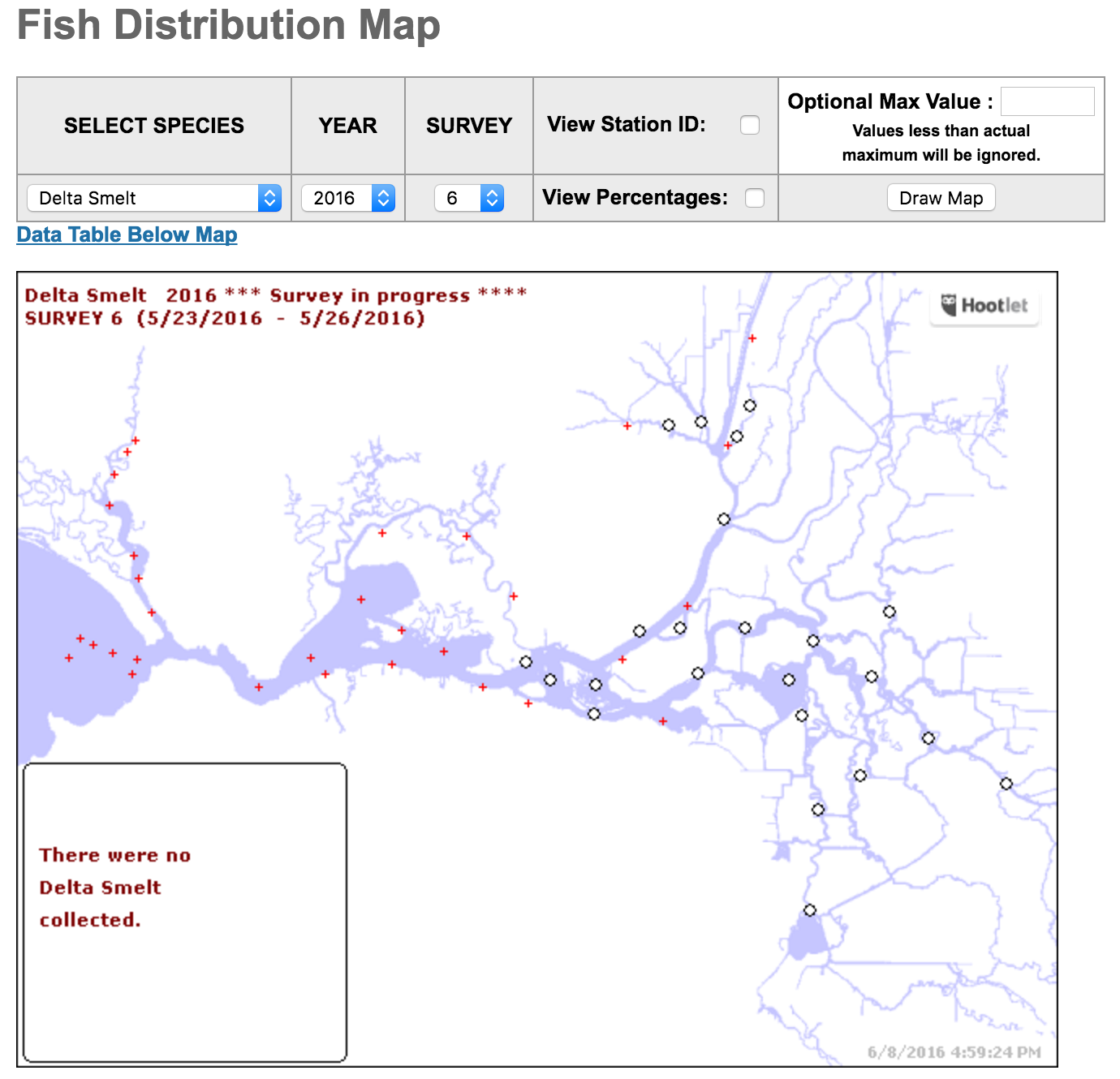
Recent sticky trap catches from our area-wide monitoring network indicate that leafminer adults are becoming quite active and beginning to disperse where melons are being grown. In these trap locations, both Liromyza sativae and L. trifolii were found on traps. This is important because L. trifolii is typically more difficult to control with insecticides. Furthermore, the 10-day forecast calls for temperatures in the 80’s which will enhance leafminer larval development.
Leafminers can cause significant economic damage to melon plants, particularly on later planted spring melons. Mining of leaves by the larvae can cause direct injury to seedling plants by removing chlorophyl and reducing the plants photosynthetic capacity.
Mines and feeding punctures can also produce an entrance for pathogenic organisms. In severe infestations, leafmining may cause plant death, particularly to seedlings or transplant watermelons. During May and June, excessive leaf mining on older plants can cause leaves to dessicate and defoliate, resulting in sun burning of fruit and reduction in yield and quality. Damage to mature plants can occur when attempting to hold the crop longer for extended harvests.
The good news is that several insecticide products are available that can effectively control both leafminer species. Our research has shown that the most effective products are those that work via translaminar activity and can penetrate the leaf surface where they contact or are ingested by the developing larvae. These include Radiant (5-7 oz/ac), Coragen (5-7 oz/ac), Besiege (8-9 oz/ac), Exirel (15-20 oz/ac), Agri-Mek SC (3.5 oz) and Minecto Pro at 10 oz. These compounds can effectively kill newly emerged larvae in the leaf mines before they cause significant damage.
Because these products are selective, they have minimal impact on beneficial parasitic wasps that can be important in naturally suppressing leafminer populations. It is recommended that a penetrating adjuvant (e.g., MSO or MSO/Silicone blend) be added to these products to enhance translaminar movement of the product. For more information on leafminer biology and management please go to Leafminer Management on Desert Melons.
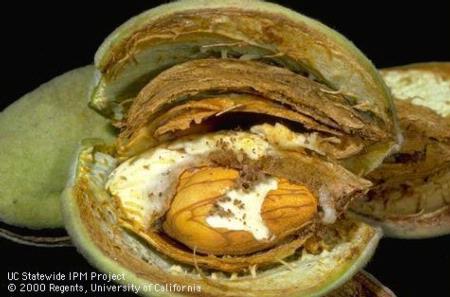
In the cotton pink bollworm program sanitation, a mandatory plow down of cotton stubble was a big part of the bollworm eradication strategy. Similarly in tree nuts the mummy nuts left in the tree post-harvest must be removed as they often harbor navel orangeworm larvae.
Joel Siegel is a USDA ARS entomologist based at Kearney near Fresno. He spoke recently at the American pistachio growers annual conference.
“Sanitation was a key element of the pink bollworm program. In fact, it was mandatory sanitation complete with people going out and checking and there were penalties for people that didn’t sanitize.,” noted Siegel. “One of the things that government does is they like to repeat all of the elements of what they think of as a successful program. If APHIS is making the investment, which they are in terms of providing the sterile insects for this navel orange worm program, logically they’re probably going to want mandatory sanitation as well.”
Again, it may be required to follow through with mandatory sanitation.
“There are challenges because we don’t have a standard. So what I tell people is to plan on getting everything out of the tree,” Siegel said.
California Ag News…
At Your Fingertips!
Copyright 2021 California Ag Today | CaliforniaAgToday.com owned and operated by Californians.
Copyright 2021 California Ag Today | CaliforniaAgToday.com owned and operated by Californians.

