Bill Introduced to Repair Central Valley Canals

Costa, Feinstein Introduce Bill to Restore San Joaquin Valley Canals

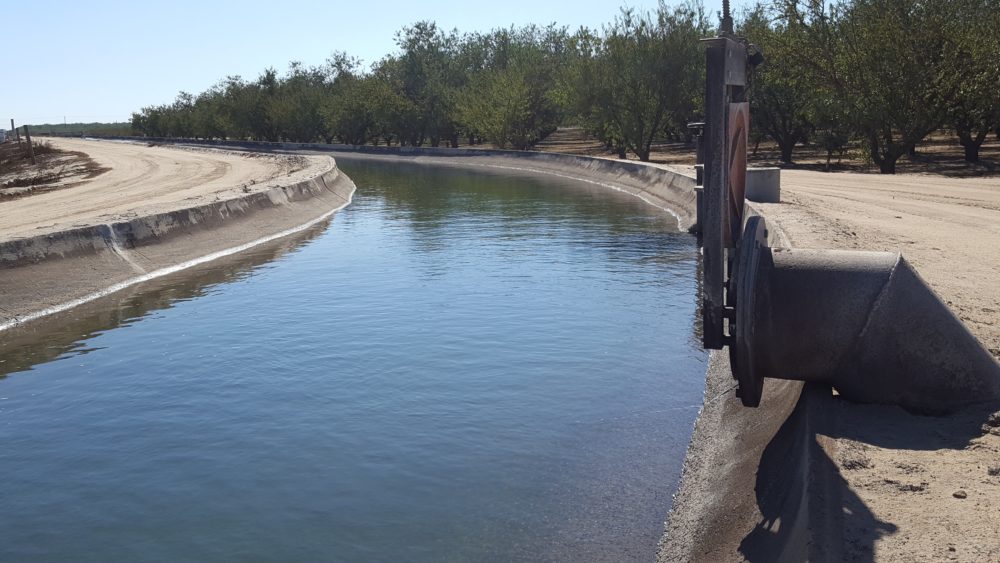
Congressman Jim Costa (CA-16) and Senator Dianne Feinstein, along with Representatives John Garamendi (CA-03) and Josh Harder (CA-10) today introduced the Canal Conveyance Capacity Restoration Act, a bill to authorize more than $653 million to restore the capacity of three San Joaquin Valley canals. Restoring these canals would improve California’s drought resilience and help farmers comply with limits on groundwater pumping under the state’s Sustainable Groundwater Management Act.

“It’s past the time to repair our aging water infrastructure,” said Congressman Costa. “With another drought here, we must act now to repair our broken canals and develop long-term plans for future delivery of water to our communities. This bill will provide funding to restore and increase the resiliency of the Delta-Mendota Canal, Friant-Kern Canal and the California Aqueduct, all critical to deliver water to our valley farms. We know water is the lifeblood for California and the foundation of our agricultural economy. Failing to act on this issue is no longer an option.”


“A severe lack of water is causing land to sink throughout California. One harmful effect of this subsidence is the damage it has caused to canals throughout the San Joaquin Valley, significantly reducing their capacity to carry water,” said Senator Feinstein. “However, we can restore that capacity if we work together at the federal, state, and local levels, ensuring that there will be more water for farmers and to combat subsidence. But our bill isn’t just a win for farmers, it would also restore salmon runs vital to the Chinook salmon, helping protect this threatened species.”

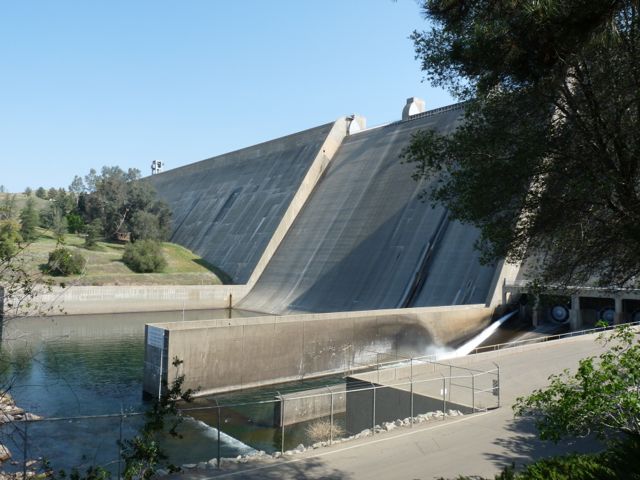
The bill also authorizes an additional $180 million to restore salmon runs on the San Joaquin River. The funding is for fish passage structures, levees, and other improvements that will allow the threatened Central Valley spring-run Chinook salmon to swim freely upstream from the ocean to the Friant Dam.

“I am pleased to work with my California colleagues to bring new federal investment to repair our state’s aqueducts and canals, which have fallen into disrepair after years of neglect and land subsidence from groundwater over-pumping,” said Congressman Garamendi. “All told, our bill would provide the largest federal investment in California’s statewide water infrastructure in decades. Beyond just repairing existing infrastructure, we must make forward-looking investments to modernize California’s water supply to meet our state’s future water needs and become more resilient to climate change. I plan to continue working with my colleagues in California’s Congressional delegation to do just that.

“Whether you’re a Republican or Democrat you need reliable, affordable water,” said Congressman Harder. “This bill will do a ton of good to ensure our Central Valley water infrastructure is set up for long-term success, and that helps everyone in our community.”

“This year’s low water allocations for the communities and ecosystems that depend on the water provided by the Authority’s member agencies only reinforces the need to focus investments in two key areas – increased water conveyance and increased water storage,” said Federico Barajas, Executive Director of the San Luis & Delta-Mendota Water Authority. “Increasing our resilience to climate change demands that we move water in the years when it’s available and store it for the droughts we know will come, like this year.

The Canal Conveyance Capacity Restoration Act continues the historical local-state-federal partnership that built California’s water system which provides national food security, improves our regional and statewide economy, and protects ecosystems and habitats that are critically important to the Pacific Flyway.”


“The Canal Conveyance Capacity Restoration Act represents a holistic, statewide approach to restoring the capacity of the statewide and regional canals that deliver water for people, farms and the environment. Doing so will improve climate resiliency, create and protect local jobs, and protect disadvantaged communities,” said Jennifer Pierre, General Manager of the State Water Contractors. “As we seek to increase our resiliency to climate change, restoring the capacity of California’s water conveyance systems will help to secure our state’s limited water resources, both now and into the future.


California State Senator Melissa Hurtado (D-Sanger) introduced corresponding legislation in the California legislature to provide an equivalent amount of state funding to restore the canals.


“Senator Feinstein and Congressman Costa deeply understand the importance of food security and safe drinking water for farmworker communities. The introduction of the Canal Conveyance Capacity Restoration Act further proves that,” said State Senator Hurtado. “The Canal Conveyance Capacity Restoration Act and my state bill – the California’s Water Resiliency Act – are crucial complementary steps to securing food to feed our nation and to provide for the workers that sacrifice to make our farms go. It has been an honor these past two years to work side-by-side with these longtime friends of farmers, farmworkers, and the communities they live in.”

What the bill does:

The bill would authorize a one-third federal cost-share for restoring canal capacity. A bill introduced by California State Senator Melissa Hurtado would authorize one-third of the cost to be paid for by the state, and the remaining one-third would be paid for by local agencies.

The bill would authorize $833.4 million for four major projects:

$180 million to restore the Friant-Kern Canal.

$183.9 million to restore the Delta Mendota Canal.

$289.5 million to restore the California Aqueduct.

$180 million to restore salmon runs on the San Joaquin River.

The funding may not be used to build new surface storage or raise existing reservoirs. It may also not be used to enlarge the capacity of any canal, except for a temporary increase to mitigate anticipated future subsidence.
 

2021-04-21T20:46:18-07:00April 21st, 2021|

Republicans Unhappy with Gov. Newsom on Drought Designations

California Republicans Issue Statement on Governor Newsom’s Inadequate Drought Emergency Announcement


Today, Congressman David G. Valadao along with House Republican Leader Kevin McCarthy and Representatives Ken Calvert, Mike Garcia, Darrell Issa, Young Kim, Doug LaMalfa, Devin Nunes, and Michelle Steel released the following statement in response to Governor Newsom’s decision to declare a drought state of emergency for only two counties – Mendocino and Sonoma – while counties in the rest of the state are also experiencing severe drought conditions:

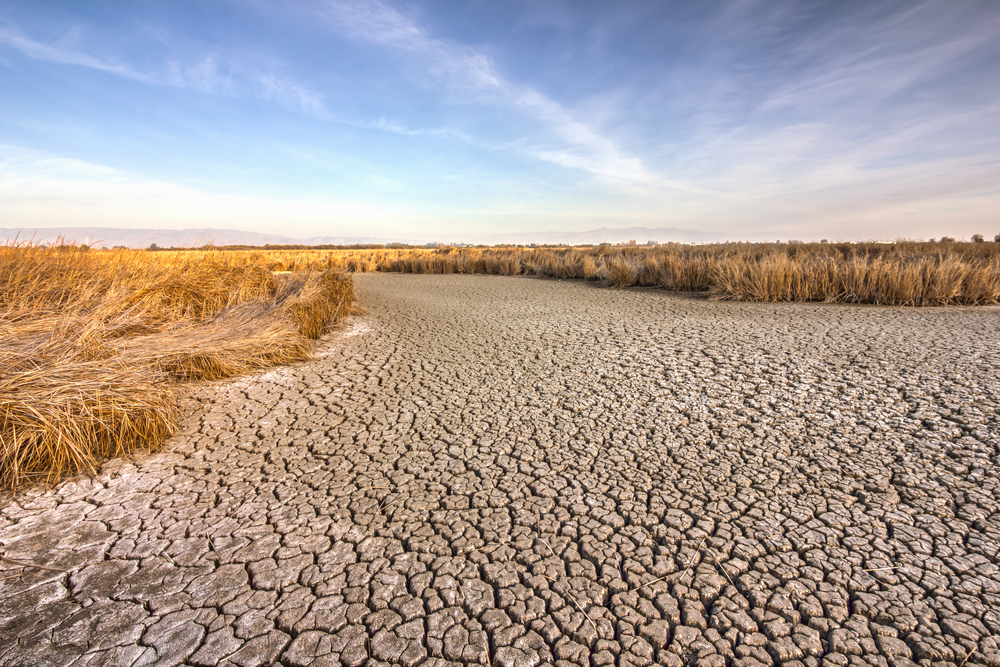
“Governor Newsom’s irresponsible decision to declare a state of emergency in only two counties is an absolute outrage. Mendocino and Sonoma face drought conditions that warrant State action. But far more than two counties in California are in desperate need of water. The Central Valley is responsible for putting food on the table for the rest of the nation, and farmers and ranchers simply cannot grow the food we need without reliable access to water. Our local economies are crippled by water scarcity, and by ignoring the needs of the Central Valley, the lack of action by Governor Newsom in addressing this crisis is a failure to lead.

“Agriculture groups, farmers, elected officials, and community leaders at every level on both sides of the aisle have repeatedly requested Governor Newsom issued a statewide declaration of emergency due to the dire drought conditions, and he has made it clear that he is not listening.”

Background

As of April 13, the National Drought Mitigation Center reported in the Central Valley, 38.97% of Fresno County, 40.94% of Kern County, and 68.53% of Tulare County are currently experiencing Extreme Drought conditions. By comparison, 0% of Mendocino County and 3% of Sonoma County were designated as currently experiencing Extreme Drought conditions.

The entire California Republican delegation has requested Governor Newsom issued a statewide declaration of emergency due to severe drought conditions, with every county experiencing at least Moderate Drought conditions and the majority of California experiencing Severe Drought conditions or worse.

2021-04-21T17:38:30-07:00April 21st, 2021|

Lowering Cattle Emissions Part 2

Cattle Feed Additives Lower Greenhouse Gas Emissions

(Part Two)


By Tim Hammerich with the Ag Information Network

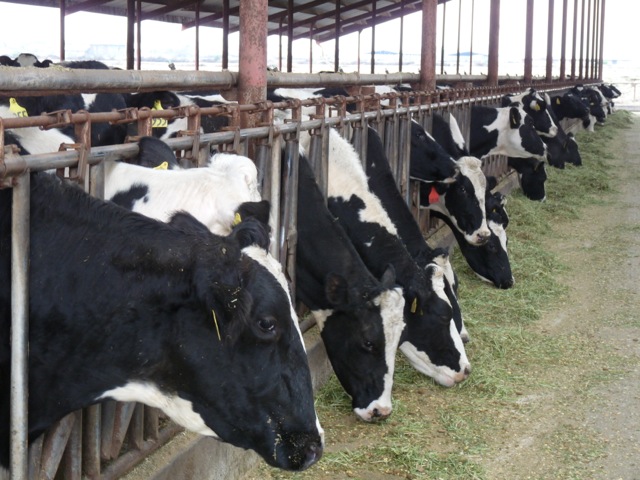
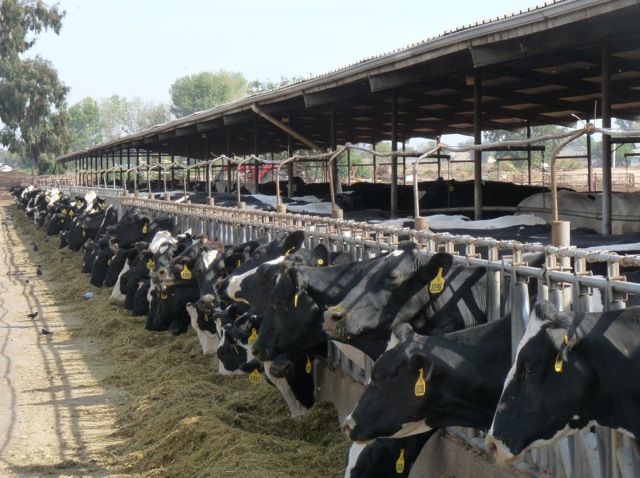
Researchers at UC Davis are finding that a seaweed-based feed additive can drastically reduce greenhouse gas emissions from cattle. One of the nice things about this approach is it does not have to replace any of the normal rations these cattle are fed. Ermias Kebreab is the associate dean and professor of animal science at UC Davis.

“The ration is going to be exactly the same. There’s nothing changing in the ration because we are giving the feed additive in such a small quantity. It has no contribution to the nutrition of the diet,” said Kebreab

This does represent an additional expense for producers, but Kebreab says regulations will make it necessary.

“There are states like California, who are going to mandate a reduction of methane emissions by 40% in the next nine years. So when you have a Monday like that, then it becomes more attractive to get something like this, to be able to show that you’re achieving the reductions that the state is mandating. And I see that this kind of thing is going to happen more and more often, particularly as the livestock industry in the U S and worldwide, has a goal to achieve net zero. And if you have something like this would really, really help the whole industry achieving net zero, a lot quicker than otherwise,” said Kabreab.

Further research will look at the use of these feed additives under various conditions.

2021-04-20T15:27:07-07:00April 20th, 2021|

Lowering Cattle Emissions Part 1

Cattle Feed Additives Lower Greenhouse Gas Emissions

By Tim Hammerich with the Ag Information Network

Cattle are sometimes criticized for their contribution to greenhouse gas emissions, but a new seaweed-based feed additive could make a big difference. Ermias Kebreab, associate dean and professor of animal science at UC Davis, says their research is showing big drops in greenhouse gas emissions with certain feed additives.

“I have not seen any other additive that would reduce by as much as the seaweed that we had been working on. In this case, we’ve seen a reduction, anywhere between 50% to 80% or more,” said Kebreab.  “And it just depends on the substrate or what they have been fed. Those animals fed at the early stage with high forage high fiber, the reduction was more about 50% to 60%. And then when we go to more concentrate-based typical feedlot diets, then we see the reduction of over 80%.”

Kebreab said along with these drops in emissions, the research on the seaweed-based feed additives is also showing increases in efficiency.

“With the seaweed, for example, what we’ve seen was that there was a 20% increase in the feed conversion efficiency. So what this means is that for the same amount of feed that you give to the animals, you get an additional growth, additional meat, in this case, from the animal,” Kebreab said,

The cattle industry continues to find innovative ways to be more efficient and sustainable.

2021-04-15T16:06:06-07:00April 15th, 2021|

Timing Required In Vegetable Cover Crops

Cover Crops in Vegetables

(2nd of Two Parts)


By Tim Hammerich, with The Ag Information Network

There can be benefits of incorporating cover crops into vegetable cropping systems. However, it can’t be overlooked that executing a cover crop strategy is not always easy. USDA ARS research horticulturist Eric Brennan says it’s a lot like juggling.

“Growers in this area know that cover crops are helpful. We’ve known this for decades. The challenge is that growing cover crops makes your management more challenging because you’ve got to time things better. And so for example, probably the most common analogy that I use with this is juggling,” said Brennan “So I like to juggle. And if you can think of juggling three balls, that’s kind of like having two crops in a system, you know, those would be two balls and then you add the third ball and that’s the cover crop. It’s far more challenging to manage three different crops.”

And Brennan would know. He has been studying the impacts of cover crops on vegetables for 18 years.

“For the first eight years, we had some systems where we cover cropped every single winter. You’ve really gotta have the timing down correctly for it to work. Over time I got better at it. So a lot of this is practice, learning from others, trying new methods. So I’m optimistic, but I’m also aware that it’s challenging,” said Brennan.

Brennan’s research focuses on lettuce and broccoli specifically.

2021-04-13T16:19:52-07:00April 13th, 2021|

Vegetables Do Well with Cover Crops

Cover Crops in Vegetables Can Pickup Nitrogen

(First of Two Parts)

By Tim Hammerich, with the Ag Information Network

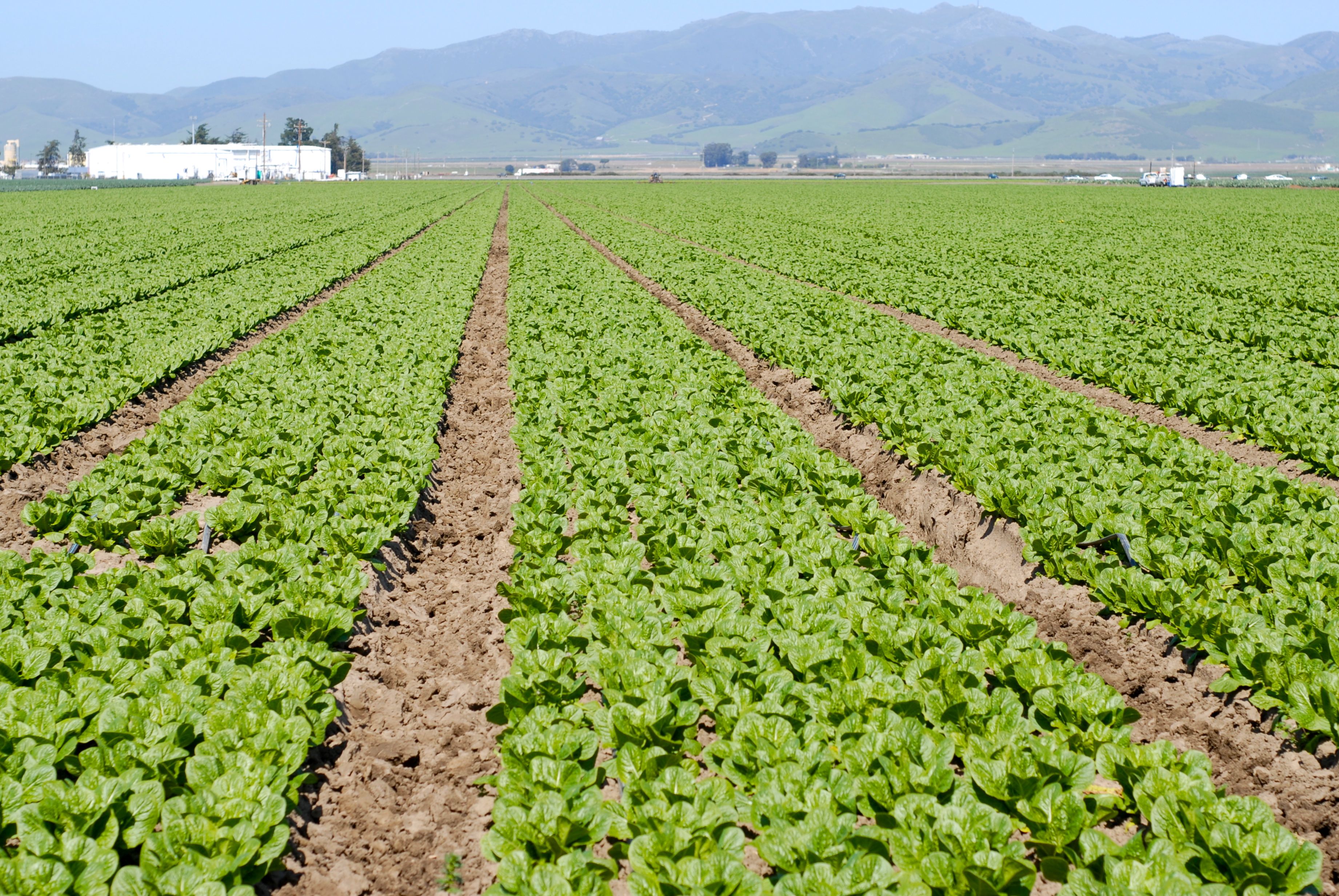
More and more row crop farmers are looking to cover crops every year, but will they work on vegetable crops. According to Eric Brennan, a research horticulturist with the USDA ARS in Salinas, the answer is a resounding “yes”. In fact, he says it’s one of the most important things a grower can do to comply with the new ag order 4.0.

“For example, if you grow, say a lettuce crop and then broccoli during the warmer periods of the year in Salinas. If you follow that with a cover crop like rye, which is a grass – a cereal. That can basically scavenge nitrogen that would otherwise leach down into the aquifer that we use for drinking and irrigation, and then recycle that that can be used in the following year’s production,” said Brennan.

Brennan’s study on the impact of cover crops is now in its 18th year, and he says the data is pretty clear.

“What we found was that if you frequently cover crop, then you tend to get much higher yields than if you don’t cover crop as often. And that’s assuming that you apply the same amount of fertilizer. So a farmer could get a higher yield if they don’t grow a cover crop, but they would have to apply more fertilizer. But when we’re growing cover crops, we’re able to get relatively high yields with fewer fertilizer inputs,” noted Brennan.

Brennan says the nitrogen in the cover crop biomass is released back into the soil when it decomposes.

2021-04-12T18:44:16-07:00April 12th, 2021|

Growers Worry over Revoking of 5 Percent Allocation

Revoking/Postponing of 5 Percent Allocation is Worrying Growers

By Patrick Cavanaugh, with Ag Information Network

The US Bureau of Reclamation’s, recent revoking of the earlier announced 5% allocation for federal water users is a great concern for many tree nut growers farming in those districts, Ryan Jacobsen is CEO and executive director of the Fresno County Farm Bureau. He said even that new biological opinion is not working out well.

“Yeah, but you know, the inflexibility of those, during this time in which those are being challenged,” said Jacobsen. “And so, we are currently living with what we have in existence and the unfortunate nature of this whole thing right now is that there are people that will suffer from this. There are people that will lose jobs that crops will not be planted because this is a very significant development. That’s going to continue to hammer our, Western side of the County .”

And it wasn’t a big, robust year of rain and snow, but it wasn’t like California got nothing. In fact, in Northern California, they got 51% of average precipitation and the snowpack levels are at 63% of average. And it was hoping that that earlier 5% allocation announcement would move to 10 or 15% somewhere around April 1st.

“Yeah, our hope was based on the fact that there was the potential for some additional storms to still come in,” Jacobsen said.

And some moderate storms actually did come in, but it just wasn’t enough.

“What’s used in the water world is the April 1st average. Typically, that’s the snowpack number up and down the state. And so obviously we’re, we’re quickly approaching that at this point,” noted Jacobsen.

2021-04-08T13:13:59-07:00April 8th, 2021|

Westlands Water District Scholarships Available

Westlands Water District Opens 2021 Scholarship Application Period for College-Bound Seniors

Four additional scholarships will be awarded in 2021, for a total of 10 scholarships


Westlands Water District Westside Scholarship application period has begun. This year, Westlands Water District Board expanded its scholarship program to include additional westside high schools and will award 10 scholarships to graduating high school seniors. Through this program, the District has been proud to recognize and reward exceptional academic achievement and leadership for 15 years.

“Westlands’ expanded scholarship program is a small gesture of appreciation for the people who live on the westside of the San Joaquin Valley and play a pivotal role in feeding our nation,” commented Tom Birmingham, Westlands’ general manager. “With the compounding challenges presented by the COVID pandemic and this year’s drought conditions, Westlands hopes the scholarships will help ease some of the financial burdens of higher education for the recipients and that each recipient continues to contribute to their community and the region.”

College-bound high school seniors from the following westside high schools are eligible to apply for the District’s scholarship: Avenal, Coalinga, Firebaugh, Hanford Joint Union High Schools, Lemoore, Mendota, Riverdale and Tranquillity. Each scholarship recipient will receive $1,000 to be used for college expenses. Applicants will be judged on their academic performance, school activities, and community leadership.

For an application and a list of instructions, please contact the Public Affairs Office at pubaffairs@wwd.ca.gov or download the application on the District website.

Applications and all supporting documents must be received by the District by 5:00 pm on May 21, 2021 and may be submitted by email to pubaffairs@wwd.ca.gov with the subject line “Scholarship Application 2021” or by mail to Westlands Public Affairs, P.O. Box 6056, Fresno, CA 93703.

2021-04-07T20:08:02-07:00April 7th, 2021|

Protecting California’s Pollinators

Almond Alliance of California Joins With Diverse Group of Agriculture, Conservation, and Natural Resource Organizations to Protect California’s Pollinators

Alliance Sponsoring AB 391 to Provide Critical Funding for Pollinator Habitat

The Almond Alliance of California (AAC) is joining with a broad array of organizations from across California’s agricultural and environmental landscape to form the California Pollinator Coalition to address a shared commitment to the health of pollinators. The Coalition is focusing on increasing the value working lands provide to our environment while benefitting biodiversity and farmers alike.

“It’s a simple fact that without honey bees, there would be no almonds. The Almond Alliance strongly supports this collaborative effort to increase habitat for pollinators on working lands,” said Alliance Chairman Mike Curry.

The Alliance is sponsoring AB 391 California Pollinator Conservation Funding, authored by Assemblymember Carlos Villapudua (D-Stockton). This bill will provide critically needed funding for activities that accelerate the adoption of conservation practices designed to integrate pollinator habitat and forage on working lands. “California almond farmers know that every almond exists because a honey bee visited an almond blossom,” explained Curry. “Honey bees and other pollinators need a varied and nutritious diet. This bill will help growers implement those important conservation practices that benefit honey bees as they forage for pollen and nectar in the orchard. The Almond Alliance is proud to sponsor this bill and looks forward to working with its partners for the bill’s successful passage in the California legislature.”

Assemblymember Villapuda noted the importance of protecting pollinators. “Pollinators are responsible for bringing us one out of every three bites of food,” he explained. “They also sustain our ecosystems and produce our natural resources by helping plants reproduce. Working lands offer an opportunity to expand habitat and forage for pollinators which will help sequester carbon and contribute to climate risk reduction. To further engage growers in delivering solutions that benefit pollinators, state investment is critical for activities that accelerate the adoption of conservation practices that integrate pollinator habitat and forage on working lands.”

AB 391 will appropriate $5 million dollars to provide funding to a variety of agencies to deliver technical assistance, outreach and grants to incentivize participation in state and federal conservation programs where pollinator habitat and forage is established.

The California Pollinator Coalition, convened by Pollinator Partnership, the California Department of Food and Agriculture, and the Almond Board of California, includes more than twenty organizations – representing the large majority of California’s crop and rangeland – pledging to increase habitat for pollinators on working lands. Together, the goal is to increase collaboration between agriculture and conservation groups for the benefit of biodiversity and food production. The result will be on-the-ground improvements, technical guidance, funded research, documentation of relevant case studies, and track progress toward increasing healthier pollinator habitats.

Current California Pollinator Coalition membership includes:

Agricultural Council of California
Almond Alliance of California
Almond Board of California
California Alfalfa and Forage Association
California Association of Pest Control Advisers
California Association of Resource Conservation Districts
California Cattlemen’s Association
California Citrus Mutual
California Department of Food and Agriculture
California Farm Bureau Federation
California State Beekeepers Association
California Sustainable Winegrowing Alliance
Environmental Defense Fund
Monarch Joint Venture
Monarch Watch
Pollinator Partnership
Project Apis m.
University of California Agriculture and Natural Resources
USDA Natural Resources Conservation Service of California
Western Growers
Dr. Neal Williams, University of California, Davis

2021-04-07T16:09:58-07:00April 7th, 2021|

President Biden: More Water Investments Needed

National Ag, Water Coalition Highlights Need for More Water Investments in Biden Infrastructure Proposal

Recognizing the constructive elements of conservation, efficiency, recycling, and watershed management included in the Biden administration’s initial infrastructure proposal, a national coalition of over 200 agricultural organizations and urban and rural water districts said today it would urge the federal government to further bolster investment in the nation’s aging water facilities.

In January, the coalition called on the administration and congressional leaders to invest in a diversified water management portfolio that enhances water supply and quality for urban and environmental uses, while keeping water flowing to Western farms and rural communities.

While the details of the plan are still forthcoming, the coalition said it looks forward to working with the administration and Congress on the larger need for Western water infrastructure, such as above- and below-ground water storage facilities, conveyance and desalination, along with federal financing mechanisms for such water projects.

With Western states facing another drought and their importance in supplying much of the nation’s food supply, the coalition said it is even more critical to recognize the need for rural water infrastructure investments to capture and store water for use when it is needed most.

“To ensure that food can continue to be safely and affordably produced in the West, and that rural communities continue to have access to the water critical to their economies, it is important that water supply investment be included as a necessary component of a national infrastructure package,” California Farm Bureau President Jamie Johansson said. “We will continue to work with Congressional leaders to build on the administration proposal with enhanced funding for water infrastructure.”

“Decades of neglect have rendered our federal water projects unable to meet the human and environmental needs of the West,” Western Growers President and CEO Dave Puglia said. “While highways and bridges are front and center in the administration’s proposal, federal investments in water storage and conveyance would present an opportunity to strengthen our farming and rural communities while providing good-paying jobs and an economic boon for the construction industry.”

“The severe drought punishing much of the West only emphasizes the need to plan now for future droughts and provide the funding needed to not only fix, but to ‘build back better’ the national system responsible for delivering water to homes, businesses, farms, and the environment,” Family Farm Alliance Executive Director Dan Keppen said.

“Appropriate investments in water infrastructure will assure that underserved rural communities throughout the nation have access to clean, reliable water,” Association of California Water Agencies Director of Federal Relations David Reynolds said. “Water infrastructure funding can help the nation adjust to climate change, better protect the environment and help ensure safe, abundant local food supplies.”

“The Biden administration has put its opening hand in the infrastructure debate on the table,” National Water Resources Association President Christine Arbogast said. “We look forward to additional details and discussion on the Western water and rural water elements specifically mentioned in the President’s Build Back Better proposal. Infrastructure needs in the West are different from other regions of the country, and they deserve the attention and investment which will come from the vigorous debate which will now begin in earnest. We look forward to working with the administration and Congress on this critical effort.”

The coalition includes organizations from 15 states that collectively represent $120 billion in agricultural production, nearly one-third of all agricultural production in the country, and tens of millions of urban and rural water users.


2021-04-06T17:28:08-07:00April 6th, 2021|
Go to Top