Environment

Ross Supports Desalination

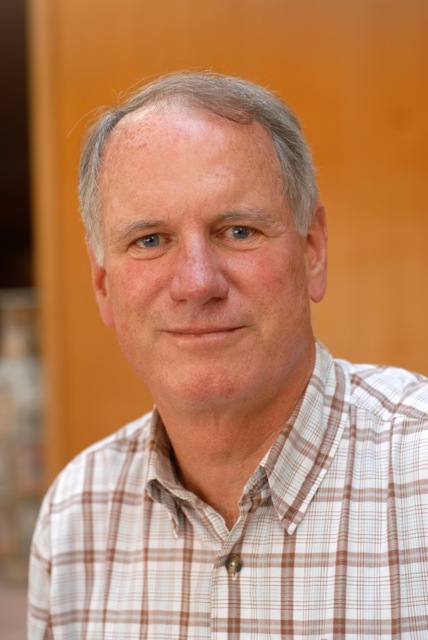
CDFA’s Karen Ross Supports Desalination Plants

By Brian German, Associate Editor


Following the opening of the Carlsbad Desalination Plant near San Diego, the largest seawater desalination plant in the Western Hemisphere, CalAgToday asked CDFA Secretary Karen Ross if she views desalination as a possible solution to the drought-induced water reductions in California.

“Desalination is an important part of the solution,” answered Ross. “Israel has really advanced this technology and there is much for us to learn about its use from Israel.”

Israel has had great success in battling drought by building many desalination plants along the Mediterranean Sea. The plants provide fresh desal water to the cities, which is used, cleaned and recycled for use on the country’s farms.

Ross continued, “I am especially optimistic about the use of practical smaller-scale desal projects to reuse our brackish water—the more inland saline water. Our researchers can use this technology to help us solve the ‘brine waste’ problem; it will absolutely be part of our new water picture. There is no single solution to our water picture, and I think we need to look to Israel to learn from their experiences as well.”

“’There is, no doubt, a cost to this new technology, but by figuring out the technology and foçusing on smaller scale projects, we should be able to scale this up to a point that will make it cost-effective,” said Ross. “Let’s face it, the value of the water it brings back for reuse is potentially going to change the price we all pay for it. But we really need to focus on improving this technology and getting those costs down as much as we possibly can.”

“The Carlsbad plant is a billion dollar investment, which is overwhelming and intimidating,” said Ross. “But when we amortize the cost and calculate what it means per household, this investment represents a very important source of supplemental water that also gives us some flexibility and resiliency for the next drought, and the one after that. Our circumstances are different than ten or twenty years ago, so the costs pencil out in a different way.”

________________________________

The Claude “Bud” Lewis Carlsbad Desalination Plant is a 50 million gallon per day (56,000 acre-feet per year (AFY)) seawater desalination plant located adjacent to the Encina Power Station in Carlsbad, California. Desalination has evolved into a desirable water supply alternative by tapping the largest reservoir in the world – the Pacific Ocean. The technology, available for decades, is at work in many arid areas of the world including the Middle East, the Mediterranean and the Caribbean. A 30-year Water Purchase Agreement is in place between the San Diego County Water Authority and Poseidon Water for the entire output of the plant. The plant has been delivering water to the businesses and residents of San Diego County since December 2015.

________________________________

Poseidon Water, the developer and owner of the Claude “Bud” Lewis Carlsbad Desalination Plant, is a privately held company that develops and invests in water projects throughout North America. Poseidon offers customized solutions to meet the water needs of municipal governments, businesses and industrial clients.

________________________________

The Huntington Beach Desalination Project is also a 50-million gallon per day facility currently in late-stage development, also by Poseidon Water. Located adjacent to the AES Huntington Beach Power Station, the plant is scheduled to be operational by 2018.
2021-05-12T11:06:00-07:00December 23rd, 2015|

Avian Influenza

Waterfowl  Migration Flyways Have Poultry Industry on Guard

By Brian German, Associate Editor

We are at the peak of migrating bird traffic flying north to south, and poultry operations throughout California and the rest of the country are looking skyward with dread. The industry aims to detect all flyways as migrating birds are suspected of spreading Asian Highly Pathogenic Avian Influenza (HPAI) A (H5N1) virus that devastated the poultry business last year throughout the Midwest with some lesser problems in California. In fact, more than 48 million birds, primarily turkeys and laying hens, were infected and had to be depopulated last year throughout the Midwest.

“These global flyways waterfowl use to move north and south and back again every year are basically like freeways,” said Maurice Pitesky, a Veterinarian and UC Cooperative Extension assistant specialist and UC Davis School of Veterinary Medicine lecturer in Population Health & Reproduction. “And in those freeway lanes,” he continued, “different birds interface with each other. We have a Pacific flyway that covers California, which can interface with the East Asia and Australian flyways. If you look at the genetics found in North America, especially in California, the genetics match some of the HPAI found in South Korea.”

Locating birds in flyways can alert poultry operations to implement immediate measures to prevent potential HPAI spreading on anything on the outside or inside of the poultry house.

_______________________________

Feral Swine Also a Problem

Pitesky noted a great abundance of feral swine in California, and the geographical extent is poorly understood. “But what we do know with respect to influenza is that although feral swine, and swine in general, are unique species, influenza viruses from humans and influenza viruses from birds can infect swine. That represents one of the ways we get new strains of Avian Influenza that could adversely affect all animals, including birds and potentially humans,” he noted.

Of course, poultry HPAI is not a problem for humans. Pitesky noted, “When people say ‘highly pathogenic,’ it has nothing to do with whether humans get it or not. The ‘highly pathogenic’ label is specifically for birds in that it makes birds sick. There is no evidence any of those strains we found in North America are zoonotic, meaning able to infect humans, at this point,” he said.

_______________________________

_________________

Biosecurity Explained – 6 Simple Steps

The USDA Animal and Plant Health Inspection Service (APHIS) wants to help poultry owners keep their birds healthy by practicing biosecurity to reduce the chances exposure to animal diseases such as avian influenza (AI) or exotic Newcastle disease (END).

APHIS advises the following consistent daily biosecurity practices:

_________________

The USDA’s Fall 2015 HPAI Preparedness and Response Plan to preventing and responding to future HPAI cases, in collaboration with industry and State partners, includes:

 Promoting improved on-farm biosecurity practices in order to prevent future HPAI cases to the greatest extent possible

 Improving HPAI surveillance in wild birds as a means to provide “early warning” risk information to States and industry

 Expanding Federal, State and industry response capabilities, including availability of personnel, equipment, and depopulation, disposal and recovery options

 Improving USDA’s capabilities to rapidly detect HPAI in domestic poultry and to depopulate affected flocks within 24 hours to reduce the environmental load of HPAI viruses and their subsequent spread

 Streamlining the processes for payment of indemnity and the cost of eliminating viruses so that producers receive a fair amount quickly, to assist them in returning to production

 Enhancing our ability to communicate in a timely and effective way with producers, consumers, legislators, media, and others regarding outbreaks and other information

 Making preparations to identify and deploy effective AI vaccines should they be a cost beneficial addition to the eradication efforts in a future HPAI outbreak.

_________________

Resources:

UC Davis School of Veterinary Medicine 

2015 Avian Influenza News (Bird Flu)

California Animal Health and Food Safety (CAHFS) Laboratory System

_________________

CDFA

Poultry Facility Biosecurity Risk Assessment Guide: “We will always be one step ahead.”

Highly Pathogenic Avian Influenza (HPAI) outbreak in the United States

Avian Entry Requirements into California Update

_________________

USDA

Animal and Plant Health Inspection Service

2015 Avian Influenza News 

Avian Influenza Disease

_________________

2021-05-12T11:17:15-07:00December 22nd, 2015|

California Water Ballot Initiative

California Water Ballot Initiative May Go to Voters in Nov. 2016

[embedvideo id=”O6sMsPaJPB4″ website=”youtube”]

Aubrey Bettencourt, executive director of the California Water Alliance (CalWA or “Alliance”), described the Alliance’s California water ballot initiative to California Ag Today’s farm news director, Patrick Cavanaugh. If passed by the voters, the measure, which rests in the hands of California Attorney General Kamala Harris to approve it for inclusion on the state’s November 2016 ballot, would strikingly change the water horizon for California. The initiative prioritizes all water to go to citizens of California and then to farms, before it reaches the environment. It combines $8 billion from the high-speed rail project funding with the $2.7 billon approved in November 2014 for water storage projects.

CalWA, a non-profit advocacy and education organization that is dedicated to raising awareness about the nature of water, advocates for the short- and long-term, sustainable policy and infrastructure positions that meet the need for safe, reliable and affordable water by the people, cities, businesses, farms and environment in California.

Aubrey Bettencourt, executive director of California Water Alliance

Aubrey Bettencourt, executive director of California Water Alliance

Cavanaugh: You have created a California water ballot initiative that, hopefully, will appear on the November 2016 ballot.

Bettencourt: Yes. It’s known as “California Water 4 All,” and it is really quite simple. After the Water Bond of 2014 passed, the California Water Commission—the fund administrators entrusted with the $2.7 billion allocated for water storage—placed other stipulations on that funding.

For instance, 50% of the water had to go to the environment and 50% had to directly benefit the Delta. Furthermore, the Commission would not release project funds prior to December 2016, so even though voters allocated funding and were promised water storage, construction was not to start for a long time. All these stipulations on the California Water Commission, through no fault of their own, actually challenged and limited the availability of regional water projects.

Then, when the Commission started to monitor both its funding and its responsibility over that funding—which we don’t blame them for, whatsoever—a lot of organizations that had opposed the Water Bond in 2014 for creating new water storage, suddenly started soliciting the Commission with letters saying, “You don’t have to define that water storage component as traditional water storage. You can open up that funding and grant it to anything else. You don’t have to use it for new water.”

We, as an organization, filed a number of letters in response and actually brought it to [the press], “Hey, they are trying to gut this tiny sliver of funding that was allocated in this program voted on by the people of California as a promise to create new water for us in this drought.” And also, “$2.7 billion would maybe build one and one half projects in California.”

We all know our water infrastructure is 60 years out-of-date, and it cannot keep it up with the needs of the environmental community, the government community, the agricultural community, and the urban community. You will hear everyone say that our infrastructure is so out-of-date that it can’t even keep up with the number of people we have or the amount of priorities we have set. Take a look at how various environmental projects end up competing against each other; a good example is when all of this came to light in the 2014 water bond fight.

Look at this year alone; there wasn’t enough water in storage and there wasn’t enough water available anywhere, so state policymakers had to decide between species. Which species were going to live? Which species were going to die? Why? ’Because there wasn’t enough water for all of them.

There are wetlands in Los Banos that never got water. The creatures and animals and species that are dependent on that habitat and viable property for their existence, did not get that opportunity. Why? ’Because an environmental project and species upstream took higher priority. There is not enough water to go around for all of the water users.

Cavanaugh: So what was the thought process behind combining the approved public funding of the high-speed rail project with the approved Water Bond funding?

Bettencourt: We are very connected to our community. We have always heard, “Well what if we could just change the priorities?” So we thought, “What if we could just take that money being used for high-speed rail and use it for water storage?”

Fallowed Field in Fresno County, California in 2014 due to zero water allocation.

Fallowed Field in Fresno County, California in 2014 due to zero water allocation.

Finally, our conversation with a number of our members and board transitioned to, “Well, what if? What would that look like?” Nobody had really looked into it. So our board decided to really invest into what that would look like. Could it be done? We were always told it couldn’t from a practical standpoint or even from a legal standpoint. We spent some time and resources looking into “What if” with some great legal minds in Sacramento.

We spoke with other organizations and people, especially those who had been involved in the rail and transportation side of this equation longer than we had—Citizens for High Speed Rail Accountability, most notably. We started pooling our resources into this inquiry, and sure enough, we found out it could be done.

Cavanaugh: And if the initiative were allowed on the ballot, it would be up to the voters to decide?

Bettencourt: Yes, it would. So, as we looked at it, we figured it was really quite remarkably elegant to reprioritize. And really, the theme of this ballot initiative is priorities. It is about getting our priorities in this state in the right order again and letting the public direct our elected officials with those decisions.

This ballot initiative takes the unissued bond funding from the high-speed rail project, which is about $8 billion, plus the $2.7 billion in water storage money from the 2014 Water Bond, and pools it in a new locked fund. The reason we did that is, quite frankly, “Why would we have two pots of money going toward the same thing?” It all needs to go into this new locked fund with the sole purpose of expanding the supply of new water for the state of California.

That fund can’t be borrowed against, pulled away from or pirated. The only way to change that funding would be to go back to the ballot and get the voters’ approval to move that funding around again.

An elected board would administer the locked fund.

Cavanaugh: ’Not the Water Commission?

Bettencourt: ’Not the Water Commission, nor appointed body at the state level, not even a legislative body. The board would be elected members from each of the water management districts. So, people from your community who have expertise and experience in water in their own region administer this fund that will benefit the entire state. Everybody gets a vote. You don’t have one region of the state having more of a vote than another region of the state; that is not what happens here. Everybody has a vote, and there is one at-large member that everyone in the state gets to vote on.

Cavanaugh: What about the Bay Area, and Los Angeles?

Bettencourt: ’Equal Players. Each of the regions has a representative on the board.

Cavanaugh: They only get one vote?

Central Valley Project (CVP) Water

Central Valley Project (CVP) Water

Bettencourt: That’s right. So, in that structure, the funding is used fairly for the whole state. That is the long-term infrastructure portion of the proposed initiative.

We always talk about how the water crisis in California has two problems. One is an infrastructure problem, and, two: we have a management crisis. We don’t have set rules and regulations for where our water goes and how.

Cavanaugh: Can you elaborate?

Bettencourt: A good example is our own governor is saying he doesn’t have a plan for getting us out of this, and we don’t know what will happen when it starts raining. We don’t know how the system is supposed to be operated. There are no guidelines on the books anywhere right now. And in this time of drought, where you have low supply, you are seeing regulators making ad-hoc decisions. Well, there are no rules and there are no first, second, and last priorities. They are making decisions on a case-by-case basis, and that is no way to solve this.

We address the long-term shortage by expanding our water supply with more storage. Expanding the water supply for everyone increases the flexibility of our system, overall, for the environment, for agriculture, and for the communities of our state.

Cavanaugh: Is a constitutional amendment part of the initiative?

Bettencourt: The theme of this ballot is to get our priorities straight. We are taking what is already in the California Water Code that was passed in 1928. The people of California said, “This is the way we want our water used and in this priority,” and it was put in the California Water Code. Since then it has been subjectively adhered to.

But we take what was in the California Water Code—the intention of the people of California—put it into the State Constitution. And we say, “Reasonable and beneficial use of water is for people, food security, irrigation; and then everything else.” And we define what that is.

It is very simple. It is nothing new. It is already out there; but what is so important is that it addresses the immediate, and it instantly hands down the guidelines:

So, this is how we operate the system.

This is how we make these decisions.

These are the rules and orders of operation.

This is how we get ourselves out of the drought.

This is how we get our system back up and running. This is how you address the short-term: by setting the priorities, making them clear, providing guidelines to the regulators so they can do their jobs on behalf of the people of California to get us out of this drought and protect us from future droughts. From an operational standpoint, this provides the certainty we need in our water supply that we just don’t have. Also, when you expand supply for everybody, you gain back flexibility in the system.

Cavanaugh: That’s great, because as we know, the proposed Temperance Flat Reservoir can move water North or South and really help out if a seismic event were to occur in the Delta. How do we get around the Environmental Species Act (ESA) rules that affect the Delta?

Water in Friant-Kern Canal

Water in Friant-Kern Canal

Bettencourt: That is all federal, and this initiative does not address federal law. This is purely California-only. However, I think, should this measure pass, it would bump against the federal statute from an infrastructure standpoint because California pays for half the cost of an infrastructure project and from an operations standpoint as well. How would the federal regulatory system affect this California measure, should it pass? A new dialogue with the federal government would have to ensue after state voters adjust the priorities for our water supply.

Cavanaugh: So “California Water 4 All” is going to address water infrastructure. Of course, you can leave the whole ESA out of the conversation. So are building dams beyond Temperance, plus the Cross-Valley Canal the top priorities?

Bettencourt: Yes, we outline four specific projects within the infrastructure component of this initiative: Temperance Flat and Sites are the two darlings of the recent new water projects. In addition, we outline raising both Shasta and San Luis, which would minimally impact the environment and maximally impact water supply. The cost is low because while you are building on existing infrastructure and having less impact on the space you are taking up, you end up capturing more water utilizing existing footprints, which is great.

So we outline those four specific projects, which leaves almost $5.5 billion for additional regional water projects with the stipulation of creating new water. One good example is our partners in the Southland have a mandate from both the state and federal governments to capture and use storm runoff, but they don’t have the mechanisms to do that.

This ballot initiative could help them capture and store rain runoff in Southern California, which would provide more local regional water and increase flexibility to move water around the state north of them. So it is all about capturing more water and expanding supply, so we have more supply to go around.

Cavanaugh: It appears the best part of this initiative is that it benefits everyone in the state.

Bettencourt: Absolutely, and that was important to us when we crafted this initiative, that it couldn’t be so tight. This proposal really does benefit the entire state, not only from the macro-economic standpoint, such as new reservoirs; we are talking about groundwater recharge, storm water runoff, water recycling, desal, all of these projects would have a nice pot of money with the explicit direction of creating new water supply. And the best part about this entire initiative is it doesn’t cost anybody anything.

Cavanaugh: That must ring very nicely up there in Sacramento.

Bettencourt: It does. There is no new burden on the taxpayers; these are dollars that already been approved of by the voters. The only thing we are doing is reprioritizing. It is no different than if you are at home considering, “Well, I’d really like that new pair of shoes, but I have a leaky toilet I must fix. I’m going to take that money and say, “The shoes are great. I love the shoes. They get me to where I want to go, but the toilet is kind of mandatory right now. It is the only one in the house and that’s that priority.”

We have only one water supply, and transportation is absolutely important…

Cavanaugh: You are talking about the health and safety of the state—not just drinking water—but health and safety.

Bettencourt: The health and safety of our state and its environment are absolutely important. We were talking about this as a team, and someone on the team said, “This is about survival. In order to survive, you need to know what your need and use priorities are.”

California voters have made priorities of water need and use very clear, and it is time that we put that first so we can afford everything else. This is a great state and our organization always advocates from the position of, “We should be able to BE the Golden State and grow and revolutionize going forward over the next century. And that will happen if we get up to speed and have our priorities straight to meet and provide the most basic needs of the innovators and doers of California.

Lettuce Harvest in Fresno County

Lettuce Harvest in Fresno County

So we have written the initiative; that was a heavy lift. Then we found two great proponents in California State Senator George Runner, Vice Chair of the Board of Equalization, and California State Senator Bob Huff to act as our submitting proponents. We, at CalWA, are the sponsoring organization, and we have submitted the package to Attorney General Harris.

Now the Attorney General has 50 days from November 13, 2015 to say, “Yes this can go on the ballot,” and to return it with a suggested title and ballot summary or how it will appear on the ballot to be read by the voter.

We have also held required meetings with the Legislative Analyst’s Office, which score the ballot measure’s costs to the taxpayer. The costs will be budget neutral because there are no new funds. So, after 50 days, we will know whether or not we will be permitted to qualify for the ballot. We are hoping we will be, at which point we would have until April 16 to get 900,000 signatures of California voters to qualify automatically.

Cavanaugh: April 16 is not a lot of time before the election.

Bettencourt: That’s right. So everyone with a ballot initiative has to follow these rules: 50 days then hit the streets and get the signatures. This is the campaign mode so voters can make this decision in November 2016.

Cavanaugh: Do you anticipate any lobbying from Attorney General Kamala Harris’s office?

Bettencourt: No, It’s strictly in Kamala Harris’s hands on this one. We are permitted to suggest our own title and summary, but the decision will come from her office. I think over 100 ballot initiatives have been submitted.

Our biggest concern is that someone will say there are too many initiatives. Secondly, how do we stand out among so many other ballot initiatives?

Cavanaugh: How do we ensure this initiative stands out? It is going to be competing for attention in a presidential election year, as well as a big election year in the state, so it is no easy undertaking.

Bettencourt: The feedback we are getting is voters want to make this decision. They want to say, “Yep, we are changing priorities, not that we think certain projects are not important. We believe certain projects are more important than others at a given point in time.”

Cavanaugh: Doesn’t it seem like the best time to do it? A poll of California citizens shows they are concerned. The top priority, behind jobs, is water availability.

Bettencourt: Yes, the Public Policy Institute of California’s polls over the last year support that. And I think the Hoover Institute conducted an independent survey of California voters at the beginning of last year, ranking the top 36 priorities of the state: number 36 was high-speed rail and number 2 was water. So the California public is stating, “This is our priority now.” We want to make sure we give the voters of California an official opportunity to say that.

Cavanaugh: While we wait for the Attorney General’s approval or disapproval, where can we get more information on California Water 4 All?

Bettencourt: Visit our website: CAWater4All.com. There you will find the language of the ballot initiative. You’ll be able to read the legalese, first-hand. It is about 25 pages—could be worse; could be better.

We worked really hard to make that tight. You’ll also find summaries of the initiative, how it benefits the environment, what the facts are on high-speed rail and why all of a sudden we think high-speed rail needs to be a different priority at this point. What are the facts on water supply and where are we on our storage? Where are we regarding the competing mandates on our existing supply? Why are changes in direction and priority needed? We must create certainty in our water supply so we can get out of this drought and we need to know how to handle the next one when it comes.

Cavanaugh: Comment on your outreach for people to connect with you on the website to increase voter awareness of what’s going on.

Bettencourt: We are setting up this campaign to be as interactive with constituents as possible. Right now during the 50-day period, there is not much to do besides staying connected with us. We’ll be communicating on a weekly basis, if not more often. We’ll share not only what are other people saying about the initiative, but also where we are in the process: when it is time to sign up, to volunteer and to help us gather these signatures and where to get them.

If you visit the website, CAWater4all.com, you’ll can register with your email, your cell phone if you choose, and your zip code so we know your location in the state. You’ll be able to stay connected with us on next steps in the process and be active with us as well. There is also a donation page. This ambitious endeavor is going to take time, treasure and talent, so we need all the help we can get.

Cavanaugh: Once on the ballot, what do you envision initiative cost will be?

Bettencourt: The rule of thumb for an average statewide campaign in California when we took this on was $10 million, and that is the operating budget we are thinking about here. So, this is going to take little donations and big donations. But more importantly, this is going to take spreading the word, so we really encourage people to get connected.

Cavanaugh: Other social media?

Bettencourt: All social media:  @cawater4all on on Twitter and cawater4all on Facebook as well.

 The Water Priorities Constitutional Amendment and Bond Act (Source: California Water 4 All, CalWA)

The Water Priorities Constitutional Amendment and Bond Act (Source: California Water 4 All, CalWA)

Links:

California Water Alliance

California Water Code

Citizens for High Speed Rail Accountability

2016-05-31T19:27:01-07:00December 18th, 2015|

Almond Conference Announces AIM Strategy

Annual Almond Conference Announces AIM Strategy and Improved Leadership

By Patrick Cavanaugh, Deputy Editor

Leadership was the recurring theme for the 3,000+ attendees over the three-day 43rd Annual Almond Conference, hosted by the Almond Board of California last week in Sacramento. “We are focused on the fact that the almond industry is accepting its responsibility to provide leadership for California agriculture and to use our treasure and talent to work on solutions for a lot of the problems that are very daunting,” said Richard Waycott, president and CEO of the Almond Board. “We have talked a lot about what is expected by consumers and by consumer product goods companies, which is our customer base,” Waycott noted.

At the conference, the Almond Board launched Accelerated Innovation Management (AIM), a major strategic effort designed to further increase the almond industry’s efficiency and sustainability, that features four major initiatives described by Waycott:

Water Management and Efficiency – A focus on accelerating almond farmer transition to more efficient irrigation scheduling and management practices to maximize the most crop per drop of water.  This initiative, which builds on the 33 percent reduction in water used per pound of almonds achieved by the industry over the last 20 years, includes working with farmers to fine tune irrigation techniques and adopting more advanced water management technologies.

Sustainable Water Resources – First, an exploration of how to best leverage a unique strength of the California Almond industry—its acreage—to accelerate natural flood-year groundwater recharge of aquifers. Collectively, California’s aquifers are the state’s largest water storage system; water recharged through this program would benefit all Californians, not just farmers. Second, an investigation of opportunities to recycle water from multiple sources, such as municipal wastewater, as a way of increasing overall water availability for farmers and all Californians.

Air Quality – Investigation of various methods the almond industry can help meet the Central Valley’s exacting air quality standards. This initiative will scrutinize all components of almond farming that impact air quality and evaluate opportunities to decrease emissions. This initiative will identify alternatives, such as decreased fossil fuel use, that will result in cleaner air for all those who live in California’s Central Valley—farmers, their families, and surrounding communities.

22nd Century Agronomics  A recognition that we need to better understand and then adopt the technologies that will lead California farming into the 22nd century. The Almond Board of California will lead a comprehensive exploration of almond farming techniques, bringing an exploratory mindset to consider all options as to what innovations and technical “leap frogs” will be needed to sustainably farm in the future. Each component of almond farming will be considered, from land preparation and varietal development, to equipment and processing.

Link: Almond Board of California

2016-05-31T19:27:01-07:00December 14th, 2015|

Raisin Bargaining Association Negotiations for 2015

Glen Goto: Raisin Bargaining Association Negotiations for 2015

By Charmayne Hefley, Associate Editor


In the midst of the 2015 (RBA) Raisin Bargaining Association negotiations on behalf of its members, the RBA  has reached a price agreement with one processor among 13 thus far, according to CEO Glen Goto. “It is a negotiation, so we don’t know where it will end up,” Goto said. “We also don’t know when it will end up, but we’re trying to do it as quickly as possible.”

Goto said California accounts for 30 to 35 percent of the world raisin supply. This year, Turkey, California’s largest competitor, which typically produces about the same amount, is experiencing a decreased supply due to a devastating April frost. “We are a world commodity,” Goto said. “The United States and Turkey, together, produce most of the dried grapes in the world, so we do look at Turkey as a competitor. Nevertheless, in certain markets, we may want to work together with Turkey. We are very structured with regard to our export destinations, and Europe is one of our big markets. Turkey is also very big in Europe, so our export success there varies by year and by supply situation.”

Goto is optimistic about the raisin industry despite its challenges and the loss of acreage as growers convert their vineyards to almonds, other nuts, citrus and other tree fruit crops. He explained, “Growers are doing their due diligence to determine the best economic scenario for their operations. And given other good, profitable commodities in the marketplace, more power to growers if they have the ability to convert their acreage to them.”

2016-05-31T19:27:02-07:00December 8th, 2015|

More Rain, More Fungi, More Use for Multiuse Fungicides

With More Rain, More Fungi, More Use for Multiuse Fungicides

By Patrick Cavanaugh, Deputy Editor

With spring rains, many vegetables, tree fruits, grapes and nuts succumb to fungi pressure. However, during the past few years, only trivial amounts of spring rain have moistened California’s soil and lulled farmers to abandon their vigilant watch for fungi proliferation. But now, the strong likelihood of El niño-driven wet weather this spring could catch growers off-guard.

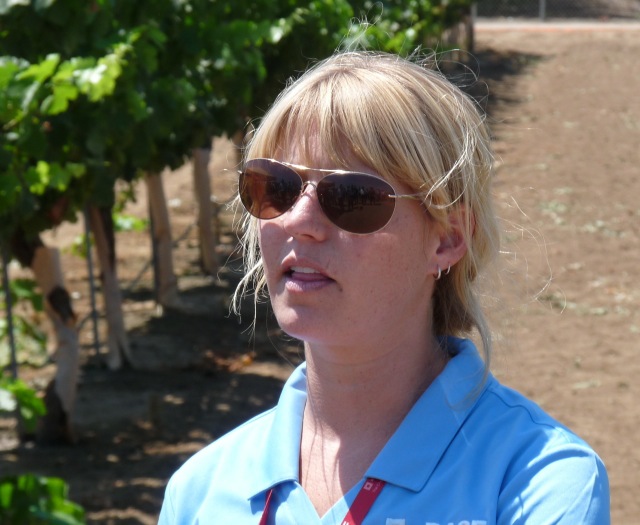
“We have an El niño coming that has already been tagged, ‘Too big to fail,’ which will bring a lot of rain. So it’s really important for folks to think about switching gears this year on their pest management mindset. With more rain, comes more fungi disease. We always see really high pressure disease years with rain,” said Kate Walker a technical services representative with BASF Corporation on the Central Coast, who advises use of a multiuse fungicide product already on hand.

Anthracnose in Strawberries, UC Statewide IPM Project

Anthracnose in Strawberries (Source: UC Statewide IPM Project

Strawberries, in particular, are vulverable to fungi. “We have heard from our strawberry growers,” said Walker, “that these fungal diseases are always present in California, but they vary significantly in their severity year-to-year depending on the weather,” noted Walker.

“One major disease that accompanies higher moisture, Anthracnose, often called leaf, shoot, or twig blight,” Walker explained, “results from infection caused by the fungus Colletotrichum. I’ve heard some growers have not experienced Anthracnose issues in 10 years,” said Walker. “As it emerges and becomes more problematic in strawberries, farmers really need to know which types of fungicides to use to manage this and other diseases.”

“It is very important for farmers and PCAs to walk through and scout their fields for disease,” Walker said, “and when they identify one, to become very aggressive with their fungicide management program. So, as representatives for BASF, we are lucky to have multiuse fungicide products available to control these diseases, such as Merivon Fungicide.”

Walker noted Merivon has two modes of action, “so it is very broad-spectrum. Typically we position Merivon in California for use on powdery mildew and Botrytis, but what we seldom talk to growers about is its utility for Anthracnose. We see a lot more  Anthracnose in Florida and on the East Coast due to the increased rains; whereas, it usually doesn’t come through every year in California. So it is good to for farmers and PCSs to know that the product with which they are familiar for use in Botrytis, is also very effective with other issues, like Anthracnose.”

Walker offered, “Another very common disease that flourishes with increased rain, Rhizopus, occurs post-harvest, after the berries are picked up from the field. Again, Merivon has utility for Rhizopus as well, so growers don’t have to change or reinvent their program to manage these diseases.”

Walker said, “Rhizopus is an airborne bread mold. It is very common in the air and in the soil, so anytime a fruit or a nut is exposed to the spores blowing in the wind, it is vulnerable to infection with this disease.”

2016-05-31T19:27:02-07:00December 4th, 2015|

New Biodico BioFuel Facility In Fresno County

Biodico Biofuel Facility, World’s First, to Operate Entirely on Renewable Heat and Power

Biodico Inc., a sustainable biofuel and bioenergy company, announced the opening of its Biodico Westside Facility, the world’s first biofuel production facility to operate entirely on on-site power-generated renewable heat. Biodico’s ribbon-cutting ceremony from 11:30 a.m. to 1 p.m. tomorrow, Friday, December 4, 2015, at the at Red Rock Ranch in Five Points, Fresno County, California, is open to the public and will feature the “Sustainable Rhythm” of the Mendota High School Marching Band’s drumline.

Biodico is transforming biofuel production with sustainable solutions to convert diverse feedstocks into environmentally sound renewable sources of fuel and energy. The Westside Facility will produce up to 20 million gallons of biodiesel annually, utilize multi-feedstock functionality, incorporate advanced sensors for real-time and remote monitoring, leading to complete system automation, and provide 45 new jobs to the San Joaquin Valley.

“Our new facility in the Valley will produce economically and environmentally viable biobased* fuel and energy for local farmers and truckers, and create new jobs in the community,” said Biodico president and founder, Russ Teall, an internationally-acknowledged leader in biofuels with more than 20 years of experience in all aspects of the industry including legal and regulatory affairs. “This facility demonstrates Biodico’s commitment to an integrated value chain model that includes accelerated and inexpensive construction and deployment, enhanced throughput with reduced operating costs, and increased monetization of renewable fuel and energy,” said Teall.

Teall successfully evolved patented and proprietary biorefinery* technology in conjunction with the U.S. Navy and the California Energy Commission. The most recent generation of equipment, the MPU (Modular Production Unit) brings automation and remote real-time sensing to biorefineries as part of an integrated self-sustaining system, utilizing anaerobic digestion, gasification, solar, and advanced agricultural and algaculture* [a form of aquaculture involving the farming of species of algae, Wikipedia].

Teall is currently the California Biodiesel Alliance president, California Air Resources Board Panel on the Low Carbon Fuel Standard member, and CIA Afghan Energy Project panelist; and formerly National Biodiesel Board (NBB) vice chair and the NBB Legislative Committee chair. He has provided biorefinery consulting services to private companies, governments and trade associations throughout the world, including the US, Argentina, Australia, Bolivia, Canada, China, Dominican Republic, Ghana, Haiti, Hong Kong and the PRC, India, Israel, Malaysia, Mexico, the Philippines, Singapore, South Africa and Thailand.

_____________

Again, Biodico will host a ribbon-cutting ceremony at the facility on Friday, December 4, 2015, featuring the “Sustainable Rhythm” of the Mendota High School Marching Band’s drumline.  Details follow:

What: Ribbon-cutting ceremony to celebrate the world’s first fully sustainable biofuel facility.

When/Where:  Friday, December 4, 2015, 11:30 a.m. to 1 p.m. at Red Rock Ranch in Five Points, Fresno County, Calif.

Why:  Fossil fuels are finite and the world needs economical alternatives that reduce toxic air emissions and greenhouse gases.

About Biodico: Biodico is a privately held company headquartered in Ventura, Calif. that (1) builds, owns and operates sustainable biofuel and bioenergy facilities, (2) conducts research, development, and validation studies with the U.S. Navy, and (3) collaborates with strategic joint venture partners to commercialize new technology and initiatives.

The company and its management have been pioneers in the industry for the past 23 years, with an emphasis on using advanced, patented and proprietary technologies for the sustainable multi-feedstock modular production of next generation biofuels and bioenergy.

_____________

Lexicon

[Source: Wikipedia]

*algaculture – a form of aquaculture involving the farming of species of algae, Wikipedia].

*biobased = intentionally made from substances derived from living or once-living organisms

Biobased products, designated by the Secretary of Agriculture, are commercial or industrial products that are composed in whole, or in significant part, of biological products or renewable domestic agricultural materials or forestry materials.

*biorefinery is a facility that integrates biomass conversion processes and equipment to produce fuels, power, heat, and value-added chemicals from biomass. The biorefinery concept is analogous to today’s petroleum refinery, which produce multiple fuels and products from petroleum.

The International Energy Agency Bioenergy Task 42 on Biorefineries has defined biorefining as the sustainable processing of biomass into a spectrum of bio-based products (food, feed, chemicals, materials) and bioenergy (biofuels, power and/or heat).

_____________

What is biomass electricity?

[Source: California Energy Commission]

Biomass electricity is drawn from combusting or decomposing organic matter. There are about 132 waste-to-energy plants in California, with a total capacity of almost 1,000 megawatts. These plants power our homes and businesses with electricity from waste matter that would have been released into the atmosphere, added fuel to forest fires, and burdened our landfills.

2016-05-31T19:27:02-07:00December 3rd, 2015|

Pistachio Crop Insurance Due Dec. 31

Pistachio Crop Insurance Recommended for 2016

Upcoming Deadline is Dec.31

By Patrick Cavanaugh, Deputy Editor

Due to the warm winter weather this year, many California Pistachio growers’ crop yields were only slightly more than half of what was expected.  And despite having an existing risk management insurance program, which helped a lot of growers, others who did not have pistachio crop insurance will have to shoulder all their losses.

James Otto, a senior risk specialist with the USDA Risk Management Agency at the Davis Regional Office, commented, “A lot of growers did not take it due to risk management reasons, they were unaware of it, or their agents did not inform them of the availability of pistachio crop insurance.”

And for growers considering purchasing insurance for next season, Otto urges them to be aware of the upcoming December 31, 2015 deadline. “Growers have to sign up for the insurance by that date,” he said. “Signing up can be complicated in that growers must agree to take insurance for two consecutive years, and they also must agree to what coverage level and price percentage to take. Growers are locked in for a two-year policy, but each year stands on its own.”

Pistachios

Pistachios

Payments are based on average yields and the coverage the grower elects. Otto said, “There are some fundamental basics. You have to determine what your average yield is; if it is 2,000 pounds per acre, growers have to select a coverage level (50%, 65%, 70%…),” which is used to adjust the insurance premium rates. Given their chosen coverage level, if their production for the year drops below this level, growers would be compensated for the shortfall by the insurance policy.

“So, for example,” he said, if a grower’s average yield is 3,000 lbs., and he has taken a 65% coverage level—which is roughly 2,000 pounds, if his average yield for this year is 1200 lbs., the result is an 800-pound shortage. The grower gets paid an indemnity of 800 pounds, times an established price.”

Richard Matoian, director, American Pistachio Growers based in Fresno, said pistachio growers should definitely consider risk management insurance, “We think all growers should consider crop insurance, even at the most minimal level—which is what they call “cat” or “catastrophic”—as a risk management tool for operations. In a year like this year in which we had historically low yields on a per-acre basis, crop insurance for many growers is going to be their savior to keep them going.”

Interestingly, Otto explained, Nick Jerkovich, an insurance broker with All Crop Insurance Services, in the Fresno County town of Kerman, Calif., came up with the idea. Otto said, “Back in 2009, Nick mentioned there were a lot of pistachio trees in the ground that did not have a crop insurance program.” It was recommended to Nick to get a petition signed by multiple growers and gather acreage data.

“So Nick, on his own dime, calculated roughly 75-80% of the acreage in the value, submitted that to an administrator, and got the ball rolling.” Otto said Jerkovich’s proaction suggested, “Hey, there is interest! There is interest from the grassroots.” Otto continued, “Based on that initial letter, Risk Management Agency contracted out to have the program developed. It is interesting to see what one individual person achieve!”

2016-05-31T19:27:03-07:00November 25th, 2015|

IFPRI Tackles More Food with Less Water

IFPRI Tackles More Food with Less Water

By Patrick Cavanaugh, Deputy Editor

Feeding a growing population is significantly dependent on irrigation—not only expansion but making existing irrigation more effective. The expansion of irrigation and water supplies has been limited by growth in demand from other sectors, like urban and industrial usage, but also livestock and aquaculture, noted Mark Rosegrant, director, International Food Policy Research Institute (IFPRI) Environmental and Production Technology Division.

“Obviously, the water sector is facing several challenges, not just in California, but around the world, including declining water quality, falling groundwater tables, and growing environmental demands for water that further restrict availability for irrigation and agriculture,” he said. “With climate change, we also will see changes in the volume and pattern of rainfall in crucial production areas that also will have negative effects in the developing world.”

“So the potential for significantly increased water scarcity in terms of water quantity and quality could put much more stress on the potential for meeting future food demand and food security,” Rosegrant said. “Thus reforming water management policies and investments to improve water use efficiency is critical to food production. Increased flexibility and adaptability of water systems to stress will need to be developed and strengthened,” Rosegrant explained. “We also need to look outside the water sector, purely defined, to things like agriculture and productivity growth through investment in the talks here.”

Rosegrant said though it is seems like there is a big water meeting around the world at least once every week, the contributions of IFPRI’s water research meeting held in Bonn, Germany last week, “Bonn 2011 Conference: The Water, Energy, and Food Security Nexus–Solutions for the Green Economy,” offered advantages and differences. “First, as you can see, we are not only looking at problems, but also looking at very highly interdisciplinary solutions, whether they be in engineering, hydrology, economic policy, or macro-policy. IFPRI also brings together academics, policy makers, development banks, politicians and NGO’s as well,” said Rosegrant.

“Finally I think it is very much an international meeting, we share global experiences for many regions of the world, but also with a strong focus on California, which not only faces extreme water difficulties, but also has probably the best ability in the world to deal with those kind of water crises. So many lessons can be learned from the California experience for the rest of the world,” he concluded.

2016-05-31T19:27:03-07:00November 23rd, 2015|

“The Other Drought”

“The Other Drought” in America’s #1 Agricultural State

By Charmayne Hefley, Associate Editor

California’s agriculture industry is experiencing a severe drought in terms of water shortage; however, this is not the only devastating drought in the state. Harold McClarty, owner of HMC Farms, told California Ag Today a secondary drought—“The Other Drought”—is plaguing California:  the loss of the family farmer.

McClarty explained, “I’ve taken a very liberal definition of the word ‘drought’ and tried to talk about the loss of the small farmer and the culture and values that are instilled in you when you grow up on a small farm. We’re going to lose the next generation [of family farmers] because of the consolidation of these farms.”

HMC Farms,1887 (Source: HMC Farms)

HMC Farms,1887 (Source: HMC Farms)

McClarty, whose company, HMC Farms, a grower, packer, and shipper of tree fruit and table grapes in the San Joaquin Valley, began in 1887 as a small 40-acre family farm, said his farm’s growth is representative of the progressive loss of the family farmer. When HMC Farms officially became an established company in 1987, 100 years after its establishment, he cofounder Mike Jensen began to purchase the property of family farmers who chose to leave the business when their children rejected farming to pursue careers in law, medicine and other fields.

McClarty admitted, “I’m obviously part of the problem, but this is the environment that I live and work in—that enables me to exist.” McClarty said in agriculture you’ve got to be able to do and keep up with all of the factors that go into farming. Unfortunately, the increasing work, pressures and regulations facing small family farms are overwhelming.

McClarty concluded, “the risks are so great, small farmers can’t do it anymore. They can’t keep up, and it’s just not worth it with today’s farm values.”

Of note, HMC Farms was named by the National Restaurant Association (NRA) as one of 18 Food and Beverage Product Innovation Award winners in 2012 for Grape Escape, the company’s washed and ready-to-eat de-stemmed grapes packed in single-serve two-ounce or three-ounce bags. Featuring an 18-day shelf life with no preservatives or additives, Grape Escape “meets the challenge of profitably serving healthy fresh fruit snacks year round,” according to a 2012 NRA news release.

2016-05-31T19:27:03-07:00November 19th, 2015|
Go to Top