Environment

Record Enrollment at UC Davis College of Agriculture and Environmental Sciences

UC Davis College of Agriculture and Environmental Sciences Really Rocks!

By Patrick Cavanaugh, Farm News Director


Helene Dillard, dean, UC Davis College of Agriculture and Environmental Sciences, is pleased with the big numbers of students attending the top-ranking College of Agricultural and Environmental Sciences.

Helene Dillard, dean, UC Davis College of Agriculture and Environmental Sciences

Helene Dillard, dean, UC Davis College of Agriculture and Environmental Sciences

“It’s really rocking,” said Dillard. “We’re doing very, very well. We have one of the largest numbers of incoming students ever in the entire university. Our College has peaked out its 7,300 undergraduates. We’ve never had that many at one time.”

Why the increased interest in studying agriculture? Dillard said, “We think what’s moving that needle is that everyone is interested in food. They are interested in agriculture.  And they are really interested in that intersection between agriculture and the environment. We have a record number of students that just cannot wait to come on board. We are really thrilled with how smart they are and how eager they are to learn.”

Among the many courses offered by the College, Dillard said Animal Science classes are probably among the most popular. “But of course, beer classes and the coffee class are really popular too. But right now, I’m seeing tremendous interest in agricultural economics and in animal science, to become veterinarians and ranchers, plus specific academic interest in poultry and sheep.”

“Again, those are all things that UC Davis does, so we’re really excited. We’re also seeing a lot of interest in plant sciences, more on that sustainable and food systems and our viticulture and enology program’s growing as well.


Recent Graduate Program Rankings for UC Davis College of Agriculture and Environmental Sciences and related disciplines include:
  • 1st in agricultural sciences (Thomson Reuters ScienceWatch 2011) 
  • 2nd in agriculture and forestry (QS World University Rankings 2016)
  • 2nd in agriculture worldwide (U.S. News & World Report’s “2016 Best Global Universities”)
  • 1st in ecology and the environment (Thomson Reuters ScienceWatch 2011) 
  • 1st in food science and nutrition (Thomson Reuters ScienceWatch 2010)
  • 1st in plant science (U.S. News & World Report’s “2016 Best Global Universities”)
  • 1st in animal science (U.S. News & World Report’s “2016 Best Global Universities”)
  • 1st for veterinary science (QS World University Rankings 2016)
  • 1st among the nation’s veterinary schools (U.S. News & World Report’s “Best Graduate Schools” 2016)
  • Between 1st and 15th among 44 programs in nutritional biology (National Research Council 2010)
  • 4th in environment/ecology (U.S. News & World Report’s “2016 Best Global Universities”)
  • Between 1st and 7th in Entomology among 28 programs (National Research Council 2010)
  • Between 5th and 29th among 116 programs in plant biology (National Research Council 2010) 
  • Between 7th and 42th among 116 programs in plant pathology (National Research Council 2010)
  • 13th in environmental engineering worldwide (QS World University Rankings 2016)
  • 29th in environmental engineering worldwide (2016 Global Ranking of Academic Subjects, ShanghaiRankings)

(Source:  University of California, Davis, Graduate academic program rankings.)

UC Davis College of Agriculture and Environmental Sciences

2021-05-12T11:17:11-07:00December 7th, 2016|

Postcard Campaign to Stop Additional Pesticide Regulations Near Schools

Call to Growers: Join Postcard Campaign to Stop Additional Pesticide Regulations Near Schools before Friday, Dec. 9


By Brian German, Associate Broadcaster


Proposed DPR Regulations

“The proposed California Department of Pesticide Regulation (DPR) further restricting growers from applying crop protection products near schools is unnecessary,” noted Kelly Covello, president of the Almond Alliance of California, which advocates and lobbies for the almond industry.

“Basically, this proposed rule is going to add a layer of unnecessary regulation. It proposes restricting pesticide applications within a quarter mile of schools and daycare centers between Mondays and Fridays, 6am to 6pm,” said Covello. She noted there are already regulations in place to protect both the community and the applicator.

Likewise, Colleen Cecil, executive director, Butte County Farm Bureau, said, “We’re very confident in the regulation that currently exists and the responsibility that landowners take when it comes to spraying anywhere. There are rules in place and these rules work.”

“The environmental community has done a bang-em-up job at fear-mongering, period. They believe they can take pictures of kids next to fields and make the farmer the bad guy. Nothing can be further from the truth,” Cecil said.

“Nothing is more important than the health and safety of people,” noted Ceil. “As stewards of the land, farmers already do everything in their power to mitigate risks involved in agriculture and the application of pesticide is no exception.”  Cecil added, “The puzzling part of the proposed regulation is that DPR have stated themselves that they were ‘unable to quantify the benefits’ and that ‘any health benefits of the prohibitions are unknown.'”


Postcard campaign to stop additional pesticide regulation near schools dpr

Postcard campaign to stop additional pesticide regulation near schools

Call for Growers to Take Action

“We have joined California Farm Bureau Federation (CFBF) and other organizations that are working on this issue,” said Covello. “One of the main calls to action for grower engagement with DPR is CFBF’s postcard campaign. If you would like postcards to share with your grower network, please email staff@almondalliance.org or simply print from the Postcard PDF document and mail directly to DPR (contact information is on the last page of the PDF document).   A high volume of input will be critical.

Growers can also sign and share CFBF’s petition. Farm Bureau will deliver the petitions to DPR before the comment period closes on December 9.

“This [proposed regulation] really is unnecessary,” said Covello. “There is no science. There is no injury or illness that has sparked the need for new regulations. We are really hoping we can get our growers engaged by sending in a postcard or sending in comments. Again, growers can contact the Almond Alliance by email at staff@almondalliance.org and by phone at (209) 300-7140.

“We would be happy to get you a postcard,” Covello said. “We can also email it to anyone. So please help us in this fight to stop unnecessary regulation.”


Almond Alliance of California

Butte County Farm Bureau

California Department of Pesticide Regulation

California Farm Bureau Federation

2021-05-12T11:05:43-07:00December 5th, 2016|

Algae in Soils Increases Soil Health, Better Crops

Is Algae in Soils a New Frontier in Plant Health and Yield?


By Patrick Cavanaugh, Farm News Editor


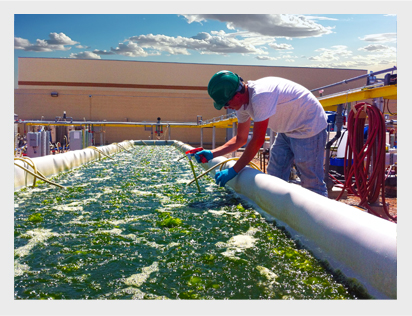
Could applying microalgae to the soil boost yield and strengthen plants? We spoke to Len Smith, chief business office, Heliae Development LLC., based in Gilbert, Arizona, in the southeast Phoenix metropolitan area. “Heliae is a company that is dedicated to unlocking the potential of microalgae,” said Smith. “We’ve been in business now for over eight years. We hope to be able to deliver microalgae products in a lot of areas, including in plant agriculture.”

“While we work with hundreds of algae species, the algae we are currently marketing for plant agriculture is a green algae. It is actually subject to genetic classification so I couldn’t even tell you the exact species at the moment,” noted Smith. “We’re working on several others as well. We have often seen in our early stage testing that many different kinds of microalgae have different positive effects on plant agriculture, so we’re bringing many of them along,” he said.

Unlock the secrets in the soil diversity

Natural Resources Conservation Service (NRCS) Soil Health Campaign

Smith said these algae are among the most common components in healthy soil. “A lot of what we’re doing is actually restoring what is already present in the soil. A lot of the scientists we work with think this is a critical component of the whole plant ecosystem below the soil line.”

Similarly, many university researchers are taking a closer look at algae. “We have about 30 university and contract research studies in, and we are working with growers. We have been selling the product in what I would consider almost a beta launch mode for about two years. So, we probably have about that same number of grower trials—maybe even double that,” said Smith.

Having the algae in the soil not only increased yields, according to Smith, it increased crop quality and strengthened the soil. “Benefits include root mass; in fact, we saw a 20 percent root mass increase in cotton. We have also seen the plant’s ability to grow in stressed environments such as heat stress and drought stress, in some of the work UC Davis did for us. We saw a 25 to 30 percent increase in overall yield in the stressed soils in which the algae was present, as compared to the control,” Smith explained.

Could it be that algae may be the new frontier in plant health and yield? “Yes, we’re very excited about what we’re doing. I would say we are opening a field here that nobody else is really paying attention to. I think that you will be seeing more of these products come to market, hopefully  helping growers get better results in a restorative and natural way,” Smith said.


Heliae Development LLC.

Phycoterra

2021-05-12T11:05:43-07:00December 5th, 2016|

Early Rain Caused Concern for Butte County Rice Growers

Butte County Rice Growers Respond to Early Rain


By Brian German, Associate Broadcaster


The Butte County Farm Bureau has been working to protect agriculture’s interests since 1917, thanks in large part to the continued hard work of their members. With continued support, the Bureau is able to advocate for growers on important issues in the community and fund educational opportunities.

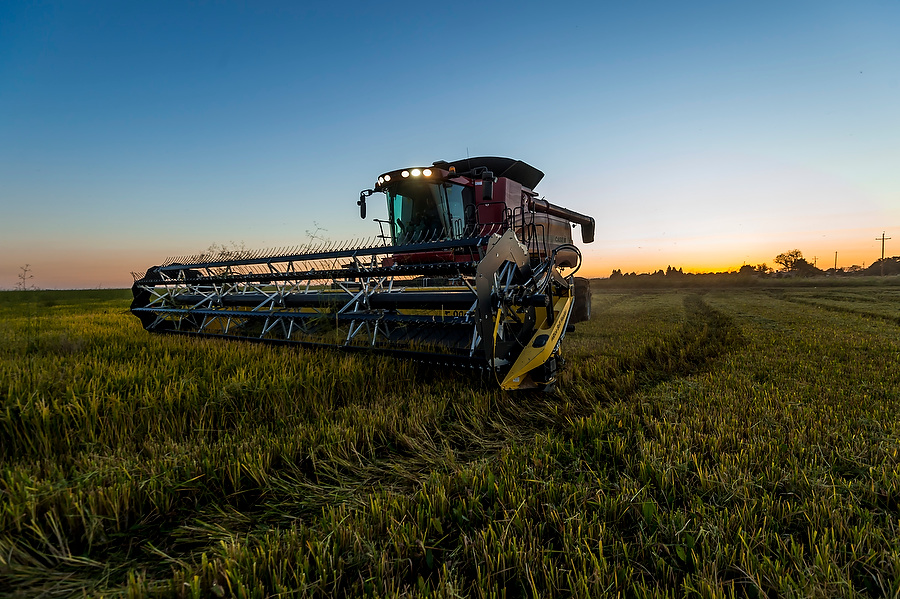
Colleen Cecil, executive director of the Bureau, observed the rice harvest looks strong for Butte County rice growers, but a weather-related issue caused a bit of a problem during harvest. “We had some wet weather and then we had a break. Then it was, ‘Hurry up and get it done before the next storm comes in,’” said Cecil.

While the weather was an issue for growers, its impact was minimal. “There was a percentage, somewhere in the teens likely, of rice that was still left out in the field after the last wet weather event [in which] we just got pounded with rain,” Cecil noted.

“Water shortages over the past couple of years had forced many rice growers in Northern California to cut back on overall production. However earlier this year, as a result of improved rainfall last winter, growers went back to planting a more average level of rice. Those fields that had been taken out of production had a good amount of rest, and are now producing nicely once again.”

Though not uncommon, growers may have adjusted their harvest schedule in response to the early winter rain. “While it does happen on occasion, it is not ideal for farmers to harvest rice after wet weather all the time. It goes more slowly, it becomes a little messier, and it requires a transition from tires to tracks on their harvesting equipment. Again, it slows it down,” Cecil said.

“In 2013, the average rice grower in Butte County was producing just under 90 sacks per acre, with each sack weighing the [approximately] 100 pounds. Butte County has close to 88 thousand bearing acres of rice. While the local industry remains strong, early rainy weather can put a dent in production.”

Cecil explained, “It wasn’t that they couldn’t get [the rice] out, it was that the crop wasn’t ready to come out. There was still a tremendous amount of moisture in it and it wasn’t at the right percentage of moisture to take out of the field, so they had to wait.”

Last year’s crop report shows that Butte County’s five most valuable crops were walnuts, almonds, rice, prunes and peaches. The area’s walnut crop alone was valued at just under $241 million dollars. Cecil said this year’s harvest, “the almonds came off without a hitch. The walnuts got tagged at the end with the wet weather, but I don’t think it slowed everybody down,” Cecil said.


Featured Photo: Richard and Laurel Nelson’s Farm, Twin Creek Ranch, on Pleasant Grove Road and Marcum, Thursday, September 29, 2016.
Photo Courtesy of California Rice Commission/Brian Baer Photography

Butte County Rice Growers Association (BUCRA)

2016-12-01T12:56:49-08:00December 1st, 2016|

Water Diversion Plan for Fish, Part 2

Grober: It Won’t Help to Vilify People

Part 2 of 2-part Series 

By Patrick Cavanaugh, Farm News Director


California Ag Today conducted an extensive interview with Les Grober, assistant deputy director, State Water Resources Control Board (SWRCB, Water Board) Division of Water Rights. We published Part 1, “Water Board’s Point of View on Increasing San Joaquin River Flows,” on November 28, 2016.

http://yn2.000.myftpupload.com/increasing-san-joaquin-river-flows/

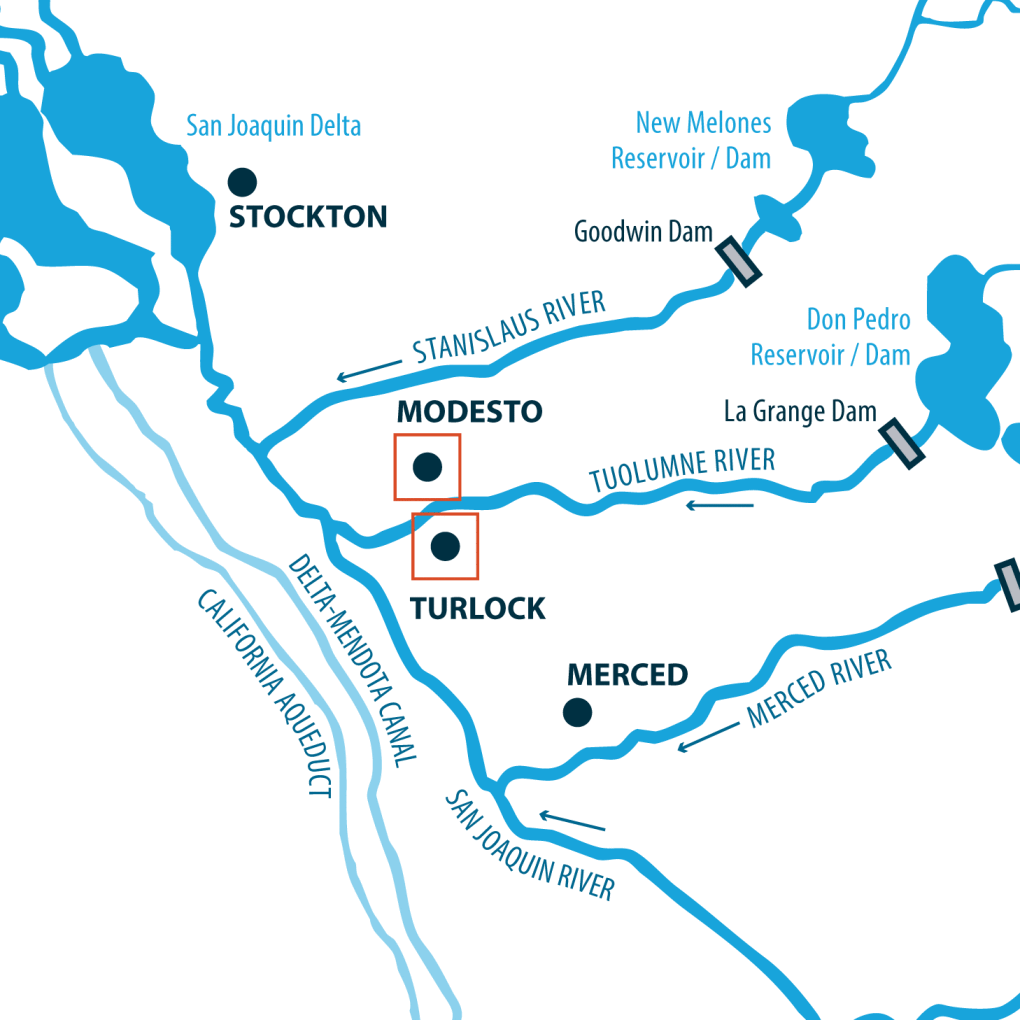
Grober explained the Water Board’s water diversion plan to adjust the flow objectives on the San Joaquin River to protect fish and wildlife. The plan, specifically, is to divert 40 percent of water flows from the Stanislaus, Tuolumne and Merced Rivers that flow into the lower San Joaquin River. 

California Ag Today: We asked Mr. Grober to explain how the Federal Water users on the Westside of Fresno and Kings Counties were granted a mere 5 percent allocation this year, and why many did not receive their full 5 percent.

Grober: The 5 percent allocation is due to the junior water rights of those growers and to the interconnections of so many things — priority of right, hydrologic conditions, and minimal protections or fish and wildlife. Anyone who thinks it’s all due to fish is simplifying a very complex situation. 

California Ag Today: Regarding the water hearings that are scheduled over the next few months, is the Water Board trying to give information to farmers and others would be affected by the decreased water should the Water Board’s proposal go through?

Grober: The ultimate goal is to make people even more prepared to provide comments to the Board at the scheduled hearings. It’s part of a public process where, if we did not get our economic figures right, we want [accurate] information from the stakeholder to make it right.

We thought we did a good job in an economic analysis on how we thought the proposed taking of 40 percent water would affect the communities and farmers. We clearly heard from many people who thought we did not do a good job, and my response is: Good, show us why, make a proposal and take it to the Water Board hearings, and then we can adjust it.

California Ag today: The Water Board has a 3,100-page report all about saving the salmon.

Grober: The reason we have a big report is because we are making a proposal and we’ve shown our work. Although it is work for people to look at it and review it, we have tried to make it easy so that people can see if we have made mistakes, if there are things that are left out or if we have made an incorrect assumption. That’s why we’ve shared it with everybody and here’s your opportunity for setting us straight.

It won’t help to vilify different people who are making good use of the water or to vilify or disparage the implementation of our laws and what we are required to do. We have a great process I think, as hard as it is, a public process where we can work these things out in the open, just to use it and deal with each other professionally.  
-Les Grober, assistant deputy director, State Water Resources Control Board (SWRCB, Water Board) Division of Water Rights


California Ag Today: We are sure you are getting a lot of information from farmers and city leaders about this not being a good use of the water.

Grober: These problems are not so simple that they could be reduced to a sound bite. I think we would have solved the salmon problems by now, but because we are in the drought situation, we are dealing with a precious resource, which is water. Everybody wants the water but there’s not enough to do all the things we would like to do with it. 

California Ag Today: But there are many people in California who feel that more water for fish instead of farmers is reprehensible.

Citrus Tree devastated by drought.

Citrus Tree devastated by drought.

Grober: It won’t help to vilify different people who are making good use of the water or to vilify or disparage the implementation of our laws and what we are required to do. We have a great process I think, as hard as it is, a public process where we can work these things out in the open, just to use it and deal with each other professionally. 

California Ag Today: But we’ve heard from experts that have been studying this, that the increased flows have not really helped these species. Do you have proof that they have?

Grober: It’s hard to show proof one way or the other because recently we have not increased flows to see what effect it would have. That seems to be a notion that is out there, that we have somehow done something to increase flows in recent years, and that’s simply not the case.

If anything, flows have gone down. And in the recent drought years, as I said, even the minimal flows that were required were adjusted downward. You would have to show me that evidence that flows have gone up and there has been no response to those higher flows. I do not believe that there is any.

California Ag Today: So, the Water Board wants 40 percent of unimpaired flows?

Grober: When we say the requirement is 30 percent to 50 percent of unimpaired flows, it is 30 percent to 50 percent of that amount, which means just the opposite. It means that 50 to 70 percent of [flows] for February through June would be available for consumptive use.

That is frequently misunderstood and turned around. That is still from February through June, so it means more than 50 to 70 percent since other times of the year this water is available for consumptive use.

California Ag Today: Is the Water Board looking at the fact that if the water is needed for the species, it is going to force these growers to use more groundwater? That is a direction in which we do not want to go, especially in a region that has not yet had critical overdrafts. How does the Water Board look at that domino effect forced on these growers in order to survive, stay in business and produce the food in this major Ag production region?

Grober: Implementing that 30 to 50 percent of unimpaired flows would mean less surface water available for diversion. So our analysis of the potential environmental effects and overall effects of the program, based on recent drought information and other information, shows we would see increased groundwater pumping.

California Ag Today: Is the increased pumping weighted at all in the proposal, because overdraft groundwater pumping is not sustainable?

Grober: By our analysis, the area is already in overdraft.

California Ag Today: What? Why would there be overdraft pumping in an area that has great irrigation districts such as Modesto and Oakdale Irrigation Districts delivering surface water? We did not think growers in those districts would be overdrafting.

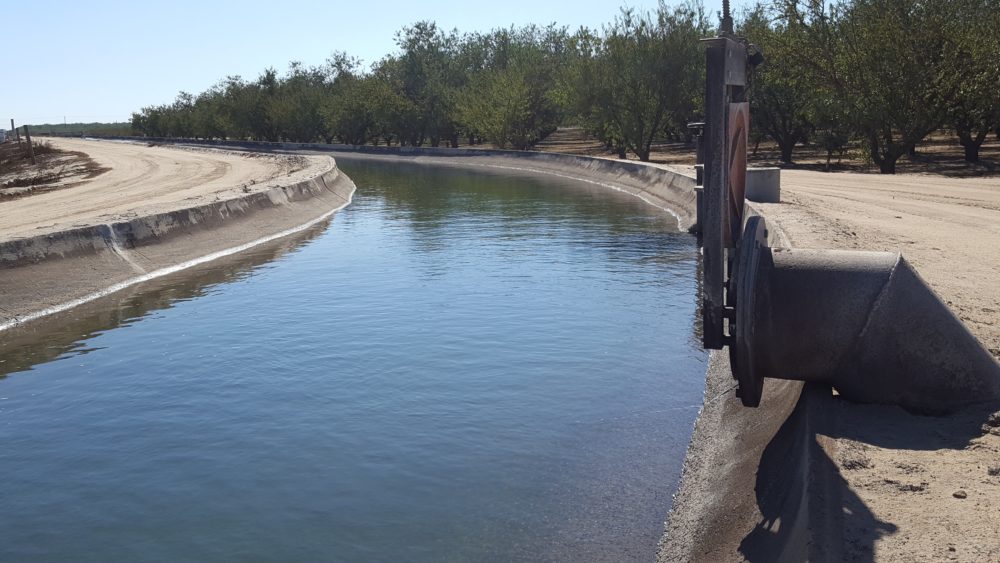
Grober: Sure. Within those irrigation districts themselves, they are not overdrafting. That’s why the analysis we do goes into that level of detail. The irrigation districts that already have a source of surface water actually apply much more water than they need just for the crop, so they are recharging groundwater within those districts, and even with this proposal, would continue to recharge groundwater. It is all those areas outside of those districts that don’t have access to surface water that are pumping groundwater.

California Ag Today: There is a lot more pumping of groundwater on the east side near the foothills.

Grober: Based on the information that we have, the total area — not just the districts that have access to surface water — but the total area, is already overdrafting groundwater. And there are many areas on the east side of these districts now, up into areas that were previously not irrigated, converting now to orchard crops. So with the information we have, there are large areas of production using water from the basin. The entire area is to some extent pumping more groundwater than there is recharge.

California Ag Today: We’ve been concern about this.

Grober: That’s why the Sustainable Groundwater Management Act (SGMA) is going to be good, because the local areas are going to have to get on top of that information and on top of the management.

2016-11-30T10:25:24-08:00November 29th, 2016|

California Proudly Provides Most of Thanksgiving Feast to America

Enjoy Your Thanksgiving Feast

From California’s Farms to Your Table


By Patrick Cavanaugh, Farm News Director


Turkeys come from several areas of the state, and while California is ranked No. 7 in turkey production, we do supply most of the western United States.

The famous Mrs. Cubbison’s dressing comes from Sophie Cubbison, a California entrepreneur who was born in 1890 in the San Marcos area of San Diego County. A longer fascinating story made short: In May 1920, she graduated from California Polytechnical University with a degree in Home Economics. In 1948, she added seasoning to broken pieces of the popular Melba toast to make stuffing. A factory in Commerce, California churns it out this time of year.

Farmers and farmworkers in California produce almonds, raisins, walnuts, prunes, pistachios, figs and dates, apricots, pumpkins, pecans and pomegranates. . . right on up the food line.

These are all part of the American Thanksgiving feast.

Celery from the Oxnard and Ventura area, and the rest of the ingredients for the stuffing mix, plus carrots, lots of crisp lettuce and fresh spinach from Salinas — all these greens waiting for you, already washed and bagged in the produce department. The green beans in your casserole come from California growers.

You’ve got oranges and kiwi fruit, table grapes, strawberries, raspberries freshly harvested from the Salinas and the San Joaquin Valleys. You’ve got sweet potatoes from Merced County — this is their pinnacle season. You’ve got all kinds, colors and sizes of potatoes and tomatoes, plus parsley, onions and garlic. . .  all grown in California.

Practically all the fruits, vegetables and nuts make America’s Thanksgiving celebrations festive, and nearly all of them come from California.

And don’t forget about the great variety of California winegrapes cultivated by California growers and then crafted with great care into great California vintage.

Wait! We grow firm, juicy apples and those small round watermelons that are a great snack or accent to a flavorful dessert fruit salad. And besides poultry, we even have California lamb, beef, rice or pasta—if you want to go that way.

Of course, you’ve got Martinelli’s sparkling apple or grape cider from Watsonville, near the Monterey Bay area. Local growers provide the tree-ripened fruit to the award-winning company, which is still family-owned and is run by the founder’s grandson and great-grandson.

At more than 140 years old, Martinelli’s is merely one century younger than our nation. In fact, the company received a first place award at the California State Fair in 1890.

By the way, do you know that little pop-up turkey timer that indicates when the turkey has reached the correct internal temperature? Food public relations genius Leo Pearlstein¹, along with a turkey producer from Turlock, invented that gizmo. Pearlstein, who handled the promotions for the California Turkey Advisory Board, was contemplating the enduring Thanksgiving conundrum—how long to cook the turkey and how to figure out when it is done?

Pearlstein said he and the turkey rancher were sitting in Pearlstein’s test kitchen mulling over ways consumers could determine when the turkey was done. They noticed the fire sprinkler system overhead. When the kitchen gets too hot, the fire sprinkler turns on. A metal alloy in the sprinkler is activated or melted when subjected to the high temperature of a fire in the room (185 degrees Fahrenheit). They applied that concept to the pop-up timer.

Officially, the National Turkey Federation advises consumers also use a conventional meat thermometer to verify that the cooked turkey’s internal temperature reaches:

165 degrees F to 170 degrees F in the breast or
175 degrees F to 180 degrees F in the thigh and
165 degrees F in the center of the stuffing
.

Except for cranberries, it is really a California Thanksgiving.


¹Leo Pearlstein is founder and president of Lee & Associates, Inc., a full-service public relations and advertising firm, which he opened in 1950. According to the company website, he currently runs the company with his partners, two of his sons, Howard and Frank Pearlstein. He is also founder and director of Western Research Kitchens, the food and beverage division of his agencyHe is considered a pioneer food consultant and his agency was recently named as one of the top agencies in the country that specializes in food and beverage clients.

For more food safety guidelines, the United States Department of Agriculture (USDA) Food Safety and Inspection Service (FSIS) provides this portal.

2021-05-12T11:17:11-07:00November 23rd, 2016|

Fighting to Protect Family Farms from Water Diversion

In Face of Water Diversion Threat, Ag Industry Experts are Speaking Out

By Laurie Greene, Editor


California Ag Today has been reporting on the California State Water Resources Control Board’s (SWRCB) proposed plan to divert 40 percent of the surface water from the Tuolumne River and two additional tributaries of the San Joaquin River between February 1st and June 30th every year. The SWRCB plan is designed to increase flows in the Delta in an effort to help the declining smelt and salmon populations. Yet, these water diversions would severely impact not only the farm industry, but communities in the Modesto and Turlock Irrigation Districts as well.

Michael Boccadoro, president of West Coast Advisors

Michael Boccadoro, president of West Coast Advisors

Ag officials say this is yet another threat to family farms in an attempt to protect the smelt and salmon. Farmers would lose a major portion of their surface water and be forced to pump more groundwater.

“Farming is not just a job; it’s a way of life for many of these families. And that livelihood, that way of life, is being threatened,” said Michael Boccadoro, president of West Coast Advisors, an independent, nonpartisan public affairs and advocacy firm that specializes in complex and often controversial public issues in Sacramento.

Boccadoro said the farm industry in the region is not sitting still while all of this is happening. There is a website, worthyourfight.org, that addresses this new assault on agriculture.

worthyourfight-logo Water Diversion

WorthYourFight.org

“It is worth fighting for,”said Boccadoro. “I was born and raised in agriculture, and I still think it’s a wonderful lifestyle. We need to protect it at all costs. This is starting to border on the ridiculous in terms of just one issue after another. . .  This is not a “Mother Nature” issue; this is government putting these obstacles and these problems in front of agriculture, and that’s troubling.”

“We produce much of the fruits and vegetables and nearly all the nut crops for the entire nation. So, of course, we would expect to see significant amounts of water being used by farming in California,” Boccadoro said.

“It’s just reality, and for whatever reason, I think people have been misled and don’t understand this is just part of growing food. Like I have said, if you are concerned about it, all you’ve got to do is quit eating. It’s that simple.”


Links:

California State Water Resources Control Board’s (SWRCB)

West Coast Advisors

worthyourfight.org

2016-11-22T22:11:51-08:00November 22nd, 2016|

Sustainable Conservation Works with Growers and Dairies to Solve Problems

Farmers and Sustainable Conservation Collaborate on Economic Improvements

By Laurie Greene, Editor


Sustainable Conservation helps California thrive by uniting people to solve some of the toughest issues facing our land, air and waters. Everyday the organization brings together business, government, landowners and others to steward the resources that Californians depend on in ways that make economic sense.

“We partner extensively with farmers in California on a variety of issues which focus on how to find, solutions that will solve the environmental issue, but also work economically,” said Ashley Boren, executive director, Sustainable Conservation, which has a home office in San Francisco as well as an office in Modesto.

ashly_boren

Ashly Boren, Executive Director of the Sustainable Conservation

“We work with the dairies in California to find manure management practices that work for the farm but also reduce nitrate leeching to ground water, to better protect groundwater quality.

“We help simplify the permeating process for landowners who want to do restoration work, maybe stream bank stabilization or erosion control projects,” Boren said. “We make it much easier to get good projects done.”

“We have a partnership with the nursery industry. This voluntary collaboration aims to stop the sale of invasive plants because fifty percent of the plants that are invasive in California were introduced through gardening, and the nursery industry has really stepped up to be part of the solution on that issue,” she said.

Sustainable Conservation is also doing a lot of work with groundwater. “We think there’s a real opportunity for farmers to help be part of the solution in sustainable ground water management. We are particularly focused on how to capture flood waters in big storm events, and how to spread the water onto active farmland as a way of getting it back into the ground,” Boren said.

Boren noted that she has partnered with the Almond Board of California and other grower associations regarding floodwater management. We actually have a pilot program with Madera Irrigation District and Tulare Irrigation District on helping them with some tools, as well as developing some tools together with them, that will help them figure out how to optimize groundwater management in their basins.

2016-11-21T14:39:08-08:00November 21st, 2016|

Another Record Season for Walnuts

Walnut Yield Could Continue to Increase Over Next Few Years

By Brian German, Associate Broadcaster

October was the peak of harvest for the state’s biggest tree nut crops: almonds, pistachios and walnuts. California growers have completed this year’s walnut harvest, and so far growers are pleased with the yields. Final statistics for California walnut production in 2016 will not be available until mid- to late-January 2017.

The USDA National Agricultural Statistics Service (NASS)’s 2015 estimate of 365 thousand walnut acres in California (of which 300 thousand were bearing acres), represents a 50 percent increase versus a decade ago, according to Dennis Balint. Balint, who just retired as longtime executive director of the Folsom-based California Walnut Board and CEO of the California Walnut Commission since 1995, became the new special assistant to the California Walnut Board on November 1, 2016.

Dennis-Balint, California Walnuts

Dennis-Balint, California Walnuts

Growers had a record walnut harvest last year, and this year looks even more promising. “This year’s crop estimate from USDA’s California Agricultural Statistic Service (CASS) is 670 thousand tons, an 11 percent increase over last year’s 603,000 tons. 

The NASS office in Sacramento, as relayed by Balint, reported this year’s walnut season began with a significant amount of winter moisture, along with an ample amount of chilling hours and average weather conditions during walnut bloom.  Springtime rain concerned some growers because of the increased chances of blight and any resulting damage is under assessment.

While overall weather conditions were advantageous for growers, results were varied. “If you’re in Reading or Modesto, or Visalia, different factors affected you: climates, your own horticultural practices, what varieties you’re growing, etc.,” said Balint.

The estimate of this year’s harvest is good news for growers who, not many years ago, were fortunate to harvest merely 300,000 tons. Even with the estimated record harvest, there are still close to 80,000 acres of younger, nonbearing walnut trees in the state. Balint commented, “As those acres mature and come into production over the next few years—all things being equal—California’s walnut harvest could potentially increase by another 30 to 40 thousand tons per year.”

california-walnut-boardBalint also reported the Walnut Board has four tests in the grocery marketplace to determine how to increase stores’ holiday inventory of walnuts. [EDITOR’S NOTE: For fans of inshell walnuts, buy your supply early and often. Inventory of inshell walnuts is not expected to extend beyond the holidays.]

As of November 1, 2016, board members of the California Walnut Industry appointed Michelle Mcneil Connelly, former senior marketing director, as executive director of the California Walnut Board and as CEO of the California Walnut Commission.


Links:

The California Walnut Board was established in 1948 to represent the walnut growers and handlers of California. The Board is funded by mandatory assessments of the handlers. The California Walnut Commission, established in 1987, is funded by mandatory assessments of the growers.

USDA’s National Agricultural Statistics Service California Field Office is operated in cooperation with the California Department of Food and Agriculture.

2016-11-17T13:33:58-08:00November 16th, 2016|

A Brief History on the Pest Control Adviser and Certified Crop Adviser Programs

Longtime Crop Adviser Helped Increase Job Market for CCA Industry

By Brian German, Associate Broadcaster


The Certified Crop Adviser Program (CCA) was introduced in 1992 as a means to address the increased concerns regarding agriculture’s contributions to a variety of environmental issues.  By 1994, the CCA program was fully established with the support of the California Department of Food and Agriculture, along with the American Society of Agronomy and the California agricultural industry. The program was designed to raise the awareness and professional standards of individuals who make recommendations on agricultural fertilizers, pesticides and related products. 

Allan Romander has a long history with the CCA program, having joined the CCA Board in 2004. “I am currently with the Certified Crop Adviser Program in California, and Arizona I might add. I am a consultant with the organization. I just concluded my term as ICCA Chair and past Chair,” Romander said.

Allan Romander, member, California Certified Crop Adviser Board

Allan Romander, member, California Certified Crop Adviser Board

A Pest Control Adviser (PCA) since 1979, Romander joined the California CCA Board in 2004 and was instrumental in helping to develop a marketing program that nearly doubled the number of CCAs in California in a little less than six years. 

California is one of just a few states that require people who advise farmers on pest control management to be licensed as a Pest Control Adviser.  Amidst rising public concerns regarding pesticide use on California farms, the PCA program was launched in 1973 to ensure that those who make pesticide recommendations are both qualified and knowledgeable. “But that only certified them in the area of pest management,” Romander said. “It never said anything about their competency in the area of crop management or soil or water management.”

certified crop adviser logo“There has long been a gap between growers and consultants. Consultants historically have just held a Pest Control Adviser’s license,” Romander said. Over time, farmers began to ask their PCAs for guidance on multiple subjects outside of pest control, such as fertilizers and irrigation. 

“That’s where the Certified Crop Adviser Program comes in and picks up where the PCA program leaves off.  It covers those categories and certifies to a grower that [the adviser] has competency in those other areas,” Romander said.

Currently, there are close to 4,000 EPA-licensed Pest Control Advisers in California.  Romander noted, “Eighty-five percent of the Certified Crop Advisers in California are also Pest Control Advisers. So it’s a well-established program and well-respected throughout not only the United States, but North America and the rest of the world.”

2021-05-12T11:02:56-07:00November 14th, 2016|
Go to Top