Pick Justice Stands By Courageous Gerawan Farm Employees

Pick Justice’s Jesse Rojas and Gerawan Employees Will Never Give Up

By Laurie Greene, Founding Editor

For nearly five full years, Gerawan Farming Inc. employees have fought a legal battle for the State of California to count their votes cast in the November 2013 election to decertify the United Farm Workers (UFW) as their bargaining representative. According to Jesse Rojas, a farm worker rights activist and spokesperson for Pick Justice, “Anything the UFW does, the California Agricultural Labor Relations Board (ALRB) is right next to them; and anything the ALRB does, the UFW is right next to them. They are one single entity for the most part; they are a partnership.”

Rojas said the ALRB and UFW filed an appeal to the state Supreme Court this week of the Fifth District Court of Appeal decision to count the votes. “We would not be surprised if the state Supreme Court accepts the appeal because Governor Brown appointees and friendly judges would always be likely to take the case, said Rojas.

“This is where the UFW and the ALRB have failed to mention to the public the fact that we are just asking for the votes to be counted,” Rojas explained. “We are not saying, ‘Certify the results.’ We are not saying, ‘Once you open them and count them, let that be the final choice.’”

“We are saying, ‘You can still litigate it,’ Rojas continued. “‘You can still appeal it. You can still destroy [the ballots] if you want but count them. So why are you so afraid to simply count them?’

Gerawan Employees

Gerawan Farm Workers Protest against UFW at California Supreme Court.

‘This is the perfect question for the UFW, the ALRB, and our California legislators: Why are you so afraid? Employees deserve to know what the choice was, even if you choose to destroy [the ballots] afterward,” Rojas said.

Rojas explained how Governor Brown appointed people to the ALRB who are UFW sympathizers or people who have worked for the UFW.

“It is not only corrupt, it is also very sad and unfair to see over the last years how many companies and jobs have been lost. How many employees and families have been affected? I am not talking just about Gerawan Farming Inc. workers. We can go on and on in McFarland, Delano, Bakersfield, Salinas and Santa Maria for similar examples of how the ALRB has failed to protect farm workers.”

“Launching Pick Justice was great because it started with thousands of Gerawan farm employees who have been very courageous and have not given up,” Rojas explained. “Pick Justice expanded when other workers started reaching out to us from different companies, perhaps dealing with different issues. For example, we have a lot of workers from the Monterey and Salinas area that have been under a UFW contract for decades, but the UFW fails to protect them.”

“The UFW neglects its members by not reporting certain things to them, by segregating those employees who are unhappy with [the UFW] as well as keeping them away from information or meetings,” Rojas said. “Also, by being on the side of the employer—whatever the employer wants to force upon the workers, even if it’s not in their best interests—and forcing it down their throats.”

“After I reached out to Silvia Lopez, we started to meet over the following months. Many of the workers reached out to me. I have spoken to them on my phone. I’ve gone to their houses. I know their spouses. I know their children. I’ve eaten with them, and that’s where I became even more passionate. I said, ‘Look, you guys are the face of this. Your courage is what makes this effort great over so many years; you just don’t give up. You know what you want, and you know what is right.’ ”

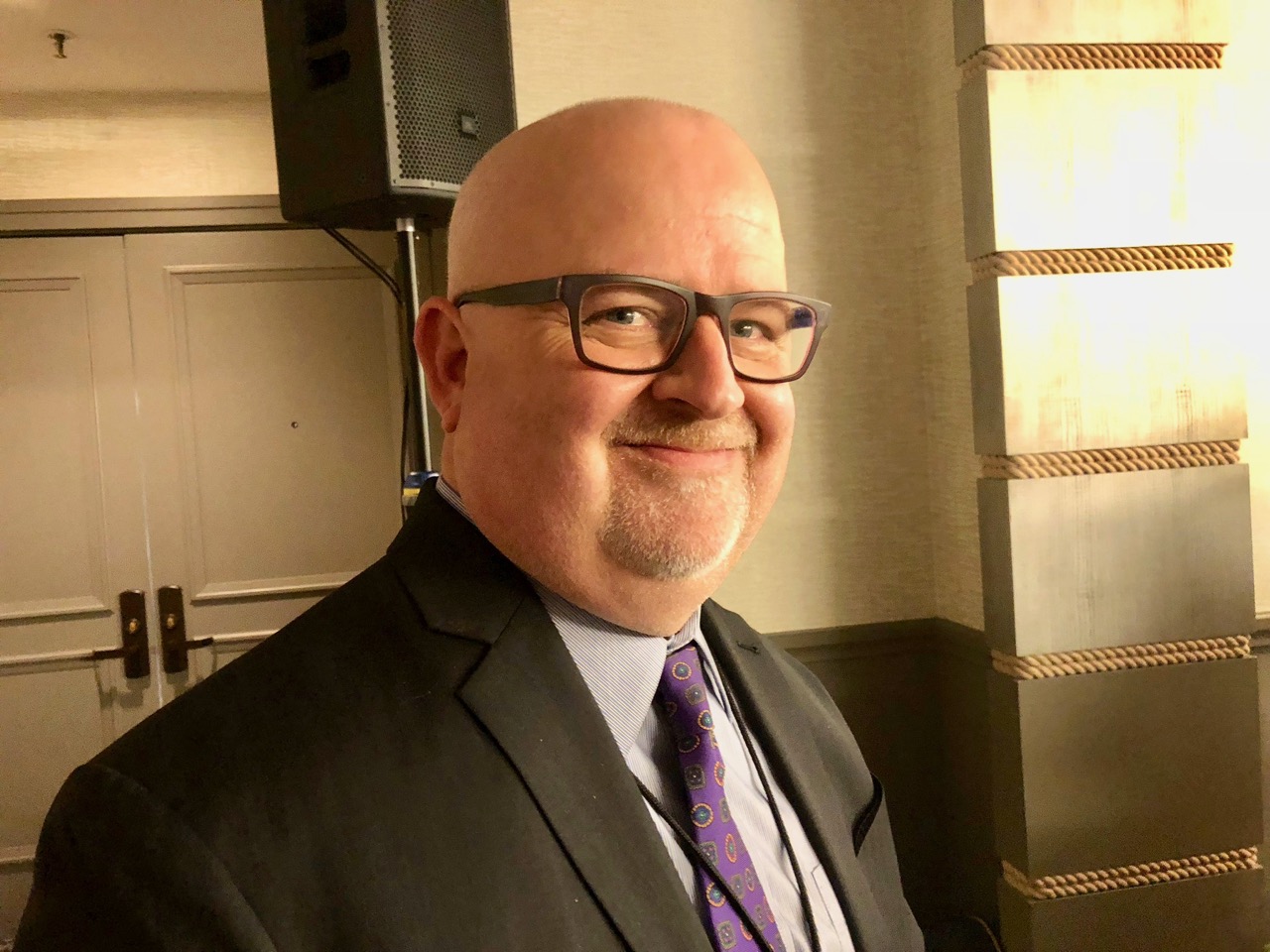
Jesse Rojas, spokesperson for PickJustice.com

“All I have to do,” Rojas continued, “is help you with communication media using techniques that I know, which is so simple. Social media, digital marketing, things that I grew up with and that I’m very good at. Pick Justice is not about me; it’s about them. If they weren’t still fighting, if they weren’t as strong and courageous as they are, we would not have Pick Justice today.”

“In this fight, we’ve gone up against almost all odds. We are going against the state government. We are going against a three- to four-decade-old system, with views, opinions, and decades-long teachings of the UFW and its leaders—its idols, per se—who have parks, schools, and streets named after them.”

“We’ve been attacked, and we continue to be attacked. But we know what we’re doing is right, and we have the numbers. If I didn’t have thousands of workers standing behind me, I wouldn’t be able to do this.”

Rojas said the Gerawan farm workers absolutely knew if they kept fighting, they would be vindicated.

“They did not give up; they are so motivated. And now, we’re in a waiting game for the most of accounting, but the stakes are high.”

Silvia Lopez

Silvia Lopez, Gerawan Employee

“Think about Silvia Lopez,” he said. “You don’t think she’s going to be attacked by the UFW after attending Ivanka Trump’s recent Central Valley event? You don’t think I’m going to be attacked? I’ll give you an example. When Silvia met Tim Donnelly, a 2014 gubernatorial candidate who cared about her story, the UFW circulated a flyer of that picture and called her a racist towards all employees. Why? Because she’s searching for help for farm workers.”

“The UFW is weak; they represent less than one percent of the farm workers. California has an estimated average of 800,000 farm workers in the state—could be more, could be less,” Rojas said. “Current UFW membership fluctuates around 5,000 active members—less than one percent of farm workers. So for them to continue to be quoted as ‘the champions for farm workers and for Latino workers’ is absolutely wrong.”

“Specifically, their words and their actions do not go with one another,” he continued, “including their stance on immigration. If people simply looked up some of the legislation opposed by the UFW, they would see that the UFW is actually not for immigration. It is ironic and hypocritical to keep quoting and portraying the current UFW leadership as pro-employee and pro-Latino.”

“I know I will never give up and I know that thousands of workers behind me will never give up.”
2018-07-26T19:45:07-07:00July 26th, 2018|

Kroger Backs off “Net 90” Payment Plan to Produce Shippers

Produce Industry Gets Praise for Unified Voice on the Matter

News Release

The California Fresh Fruit Association is pleased with Kroger’s recent announcement that produce shippers will not have to comply with its new “Net 90” payment plan.

California Fresh Fruit Association President George Radanovich stated, “We appreciate Kroger’s acknowledgment that the ‘Net 90’ payment plan didn’t work for the produce industry. We stand by our position that Kroger’s original push to implement its plan was wrong and illegal.”

To force suppliers to forfeit their rights under the Perishable Agricultural Commodities Act (PACA), an act created specifically to protect the perishable fresh fruit industry, was unconscionable and should never have been proposed.

Radanovich continued, “We would like to commend the fresh produce industry for coming together as a unified voice for our industry. Today we held the line on an important issue.”

Radanovich concluded, “As I’ve stated before, the fresh produce industry has been a good partner to Kroger; we appreciate that Kroger remembered that partnership and fixed the mess it created.”

2018-07-11T16:40:06-07:00July 11th, 2018|

California Fresh Fruit Association: Kroger Must Not Adopt Net 90 Payment Plan

Kroger’s Net 90 Payment Intention Will Hurt California Farmers

By Patrick Cavanaugh, Editor

The California Fresh Fruit Association told California Ag Today recently that they do not want to see any relaxation or easing of Kroger Supermarket Chain in what they announced as a 90-day payment intention for all vendors.

Ian LeMay

“What our industry wants to see is Kroger to withdraw this proposal and to go back to the 30 day payment period,” said Ian LeMay, Director of Member Relations and Communications with the California Fresh Fruit Association in Fresno.

Kroger is the largest supermarket chain in the U.S,. spanning the East, South, and Midwest, and they have stated that they want a net 90 day payment plan on all vendors, including the farmers in California, which provides up to 70% of the fruits and vegetables and 100% of the nut crops that consumers enjoy throughout the year.

As to why Kroger is going this way? It’s most likely to help on their cash flow.

“That’s not necessarily the prerogative or needs to be the interest of our shippers. The shippers have a payroll to make and other bills to pay and they don’t need to carry that credit for Kroger,” LeMay said. “It’s just not good business and not to mention, we’re dealing with multiple commodities with many of our commodities, with a harvest that does not last many weeks. I mean, cherries here in California are six weeks long, so they’re supposed to carry that credit longer than their own season? It just, that doesn’t make sense.”

And making matters worse is that Kroger is even asking farmers to forfeit their rights under the Perishable Agricultural Commodities Act, created by Congress to specifically protect the perishable fresh fruit industry. The act states that payments must be made in 30 days.

“Their answer to that … [is] that they’re partnering with Citibank and that … if you want an expedited payment, then you would have to basically pay upwards of .72 percent on the money you’re owed, so you’re actually going to have to pay money to get money back,” LeMay explained.

LeMay said he thinks when two people are doing business with each other, there’s an expectation that they will keep agreements between each other.

“This is not what California shippers agreed upon. Kroger wants to force this on then. We would like to see Kroger withdraw and hold true to PACA,” he said.

2018-07-02T01:46:36-07:00July 2nd, 2018|

Agritourism in California

UC Davis Experts Help Farmers, Ranchers Profit  in Growing Trend

News Release Edited By Patrick Cavanaugh

Agritourism is growing in California, along with sales and production of much of the world’s fruits, vegetables, and nuts. More and more people are paying to enjoy the bounty and beauty of California’s farms and ranches by touring peach and cherry farms near Fresno, taking classes in beekeeping, attending festivals devoted to strawberries or attending a host of other activities offered by farmers and ranchers throughout the state.

Many farmers could benefit from agritourism and the added value it brings, but developing successful agritourism operations can be tricky. Experts at the Agricultural Sustainability Institute (ASI) at UC Davis are helping farmers and others in the agricultural community understand the regulations, permits, insurance, marketing and other considerations needed to succeed.agritourism

“Agritourism operations are more successful when they’re part of a supportive community of tourism professionals, county regulators, agriculture regulations and others,” says Gail Feenstra, ASI’s food, and society coordinator.

Feenstra and her team recently received a $73,000 grant from Western Sustainable Agriculture Research and Education, a U.S. Department of Agriculture program, to develop training, resources and peer support for farmers and ranchers considering agritourism. Feenstra is working with Penny Leff, ASI’s statewide agritourism coordinator and team project manager.

Leff led previous projects that offered agritourism education to groups of farmers, ranchers, and others involved in California agritourism. In this new project, Leff is providing comprehensive training to smaller, more targeted groups that will then offer training to others in their community.

“We’re helping farmers and ranchers assess their agritourism potential, whether it be U-pick farming, dinners on the farm, classes or even overnight lodging,” Leff says. “We help navigate everything from zoning ordinances to marketing plans.”

The project’s ultimate goal is to develop at least 24 clusters of vibrant agritourism operations in California that sustain producers, educate visitors and support the economic health of the entire community.

As Leff explained, “Agritourism is an exciting opportunity for farmers, and also for visitors who can learn about and enjoy what farm living has to offer.”

You can learn more about agritourism opportunities at the ASI agritourism website. For more information on upcoming workshops, contact Penny Leff at paleff@ucdavis.edu or call 530-752-5208.

2018-06-29T16:49:08-07:00June 29th, 2018|

Increased Chinese Tariffs Could put California Producers in a Tight Spot

There is Fear China Could Turn to Other Countries For Ag Products

By Mikenzi Meyers, Associate Editor

The ongoing threat of Chinese tariffs on American agriculture has recently been the topic of conversation for agriculturalists. With China posing a possible 25 percent tariff on U.S. soybeans back in April, it seems this conversation is here to stay. The added tariff could drive Chinese buyers to choose other markets on many California commodities, including walnuts, tree fruit and beef.

Matt Lantz, vice president of global access for Bryant Christie Inc., deals with international trade, and these issues on a daily basis. Bryant Christie is an international affairs management firm that is based in Sacramento and Seattle, where they help U.S. commodity groups and agricultural companies with their international trade issues in order to export their products.

Lantz explained that this new threat is a major concern for California agriculture.

“China is an incredibly important market for California fruit and vegetable exploiters, and any tariff or increased inspection makes it more difficult to export,” he said.

Making matters worse, Lantz pointed out that buyers are going to turn to the countries without the tariff—which can be bad news for producers.

2018-06-28T16:49:05-07:00June 28th, 2018|

California Agriculture’s Future in the Hands of New Tariffs

There Is Worry that Some Companies May Lose Ground on Exports to China

By Mikenzie Meyers, Associate Editor

California growers are on edge due to newly imposed tariffs that could cause the state’s agriculture to suffer. After China recently retaliated against the United States’s steel and aluminum tariff by pushing its own on U.S. imports, they have good reason to be worried. California Ag Today recently spoke to Shannon Douglass, first vice president of the California Farm Bureau Federation, who is heavily involved in this conversation.tariffs

“No matter what you’re growing, so much of our products are exported, and so it’s a really vital concern to many of our farmers,” Douglass said.

She explained that it isn’t just a concern for those involved with fresh produce—which might be the first affected—but also any farmer who depends on sales to foreign markets.

One of the biggest concerns is losing the progress made in growing the foreign market, but Douglass seemed hopeful as CFBF has continued working with those driving legislation,

“We certainly don’t want to lose that ground that we worked so hard to develop,” she said.

Agriculture has always been a winner in the trade arena, and although the climate of foreign markets may be uneasy, Douglass and the California Farm Bureau Federation are continuing the conversation to make progress toward a hopeful future for all farmers.

2018-06-26T14:41:07-07:00June 26th, 2018|

Tracking Social Media To Understand Consumer Food Likes

Social Media is Helpful in Agriculture

By Jessica Theisman, Associate Editor

Reaching consumers is key to helping with food confusion. Tamika Sims, the director of Food Technology communications for the International Food Information Council Foundation, is using social media to aid consumers.

“We will follow what is happening in … social media—including Facebook, Twitter, LinkedIn and Pinterest—to get a feel for how consumers are talking about food,” Sims said.

Sims noticed that differences and similarities between organic and conventional crops are being discussed with consumers, emphasizing how safe both are.

“That’s the one that we can’t seem to get enough of,” she said.

They talk about the differences and similarities as far as organic and conventionally grown fruits and vegetables.

“We talk to consumers about how they’re equally safe and equally nutritious and that one is not superior to the other when it comes to food safety or nutrition,” Sims said. “If you have access to either, feel free to enjoy both in an equal way.”

Interested in learning more? You can go to the IFIC’s website to check out their resources.

2018-06-20T16:50:20-07:00June 20th, 2018|

Product Recall Awareness

Social Media Can Hurt a Company

By Jessica Theisman, Associate Editor

Product recall coverage has a publicity element. California Ag Today recently spoke with Caitlin McGrath, national product recall and contamination risk consultant with Lockton Insurance Brokers, about the importance of the topic.

Caitlin McGrath, with Lockton Insurance Brokers.

Product recall coverage’s publicity element can be adverse, with the accusation of contamination coming into play.

“The example I always use is a mom who puts online a food item that made her kid sick, and this gets shared 100,000 times. You get calls from your customers, supermarkets, and drug stores asking you to stop sending your product,” McGrath said.

If products are not selling, that can be a very significant loss.

“Most recalls are voluntary. They have to be reported to the FDA if they are going to cause bodily injury or property damage,” McGrath said.

She suggests having an internal communication and external communication setup. Be aware of what testing labs you are going to use, what PR companies you are going to use.

Many times, companies try to execute their recall and are not ready for the customer demands.

“Sometimes customers are coming to them and saying, ‘you owe us all this money,’ ” McGrath said. “It is important to have the plans for the whole logistics of the recall.”

2018-06-11T16:31:23-07:00June 11th, 2018|

California Food Processing: $200 Billion in Value

California Food Processing is Massive Business

By Patrick Cavanaugh, Editor

The food packaging business is massive in California. California Ag Today spoke recently with Rob Neenan, president and CEO of the California League of Food Producers, based out of Sacramento, about California food processing.

“The League of Food Producers is a statewide trade association. Our primary function is regulatory and legislative affairs on behalf of our members,” Neenan said.

Rob Neenan is president and CEO of the League of Food Processors

The association represents about 50 food processor members across the state, most of the Central San Joaquin Valley, but it serves seven or eight members in southern California. “We have Del Monte in Modesto. We have Hilmar Cheese in Hillmar. In Lodi and Woodland, we have Pacific Coast Producers. We also have also some nut processors, dried fruit processors, so the whole gamut,” Neenan said.

“There aren’t as many frozen fruit and vegetable companies as there used to be, but we have a few, for example, Del Mar Food Products in Watsonville and a couple of companies in the Merced area,” Neenan noted.

The processing industry represents a big part of the power of California agriculture.

“The annual output of the food processing industry in California is about $200 billion. About $25 billion is in direct value added on top of the ingredients,” he said.

The food processing industry directly employs about 190,000 people. However, if you add in all the people who work in packaging, labeling, trucking, energy, IT, in support of the industry, there are 760,000 people in California whose jobs either directly or indirectly rely on the food processing industry, and that’s on top of the production agriculture component.

It’s the third largest industry in the state regarding the manufacturing sector—only high tech and oil refining are larger in California.

And Neenan explained that there are some significant issues that canners are facing.

“The biggest is the proposed steel and aluminum tariff situation. The canning industry needs tinplate steel, which is also used in cans and aluminum foil, which is inside of some packaging as well. For the canneries left in California, this is going to increase their cost of doing business greatly,” Neenan said.

2018-06-04T15:43:45-07:00June 4th, 2018|

Importance of Recall Insurance

Brokers Can help Growers Minimize Losses

By Jessica Theisman, Associate Editor

California Ag Today recently met with Caitlin McGrath, the national product recall and contamination risk consultant with Lockton Insurance Brokers. Insurance is needed for California growers in case of recalls and contaminations. Lockton feels the most important part of finding the right recall insurance is the consulting element.

Caitlin McGrath, Lockton Insurance Brokers

“Now, what I think is the most important part of insurance coverage is the consulting element,” McGrath said.

These are consulting services that are available if you are a recall or contamination insurance purchaser that allows you access to specialists during and before incidents. One of the struggles that McGrath is noticing is that the quality assurance folks she speaks to are not insurance buyers.

“They are the ones finding out the information about all these services that are available, and it’s not always getting down into the field,” she said.

Preparation in the case of recalls or contamination is important.

“Fan Favorite, as I call them, do a lot of really great work on behalf of a lot of our clients,” McGrath said.

Some of that work can be Hazard Analysis Critical Control Point (HACCP) training and mock recalls. Financial costs are rising due to the increasing number of recalls.

“We believe that that’s the effect of [the Federal Information Security Management Act or] FISMA. They are getting larger in financial cost, and that has to do with the amount that is being recalled and the implications in terms of publicity,” McGrath said.

Recall plans need to cover all of the elements, not just mock recalls.

“The internal message is just as important and knowing who is going to handle what within an organization. Planning and practicing that is really critical to help mitigate if there is a problem,” McGrath explained.

“Having directives around the use of social media as an employee of an organization is very important, but just one department not talking to another is going to have a huge part in this,” she said.

Buying product contamination insurance is expensive, but necessary. Since McGrath started, the number of brokers has nearly tripled.

“I think that not having insurance is now the outlier, so I think the majority of folks are still buying,” she said.

2018-05-23T16:37:56-07:00May 23rd, 2018|
Go to Top