Stem the Loss of California Farmland

Diverse Coalition Calls for Action to Stem the Loss of California’s Farmland

California loses an average of 30,000 acres of farmland per year to non-agricultural uses. The relentless, permanent conversion of agricultural lands threatens our food production capacity, environmental health, and economy. In response, the California Roundtable on Agriculture and the Environment (CRAE) today issued a report calling on policymakers to take urgent action to stem the loss of farmland.

Key policy recommendations from A Call to Action to Preserve California Agricultural Land include:
Fully fund efforts to understand the scope of the challenge, such as the California Farmland Mapping and Monitoring Program.
Strengthen state and local land use policies that prioritize the conservation of California’s agricultural lands, such as updating general plan guidelines to conserve agricultural lands and creating policies that discourage urban sprawl.

Finance long-term and permanent conservation of agricultural land by reinstating Williamson Act subvention payments, dedicating on-going AB 32 auction proceeds to farmland conservation, and providing statewide agricultural land mitigation guidelines.
Keep farmers farming by ensuring strong markets for agricultural products, appropriate regulations, adequate labor force and infrastructure, and community support.

The recently released California Farmland Conversion Report for 2008-2010 confirms the urgency of this call to action. It found that during the deepest recession in a generation, the state still lost more than 20,000 acres of farmland to urban development. It also noted new threats to farmland, such as high-speed rail, oil and gas development, and utility-scale solar energy projects.

“The current severe drought demonstrates the vulnerabilities of agriculture to a changing climate and the need to protect its land base,” says CRAE member Jeanne Merrill of the California Climate & Agriculture Network. “This year alone, it is anticipated that 410,000 acres will be fallowed in the Central Valley and climate change is predicted to further stress agriculture with more extreme weather events. This places a premium on conserving and protecting our remaining farmland.”

Although state and local policies have not been successful in stemming the loss of agricultural land, the members of CRAE believe that opportunities do exist for strategic and effective agricultural land conservation and that it is imperative that we act upon them.

Holly King, a principal of King & Gardiner Farms, LLC and a CRAE member, indicates, “Protecting our farmland is protecting our food supply – not only for California, but for our nation. Implementing these recommendations will combat the cumulative consumption of farmland by the multiple uses that convert our prime farmland. We need to quit talking about protecting farmland and actually do it.”

John Lowrie, of the California Department of Conservation and a CRAE institutional partner, explains, “It’s particularly important for decision makers to hear from diverse groups like CRAE in considering new policies. Because the members represent all sides of an issue, we can rely on the recommendations being thoroughly vetted, which enables us to move forward with more confidence.”

A Call to Action to Preserve California Agricultural Land is available for download at http://aginnovations.org/images/uploads/CRAE_AgLand_CallToAction3.pdf.
2016-05-31T19:34:18-07:00July 10th, 2014|

Metropolitan Water District Brings California to Life to Deliver Water-Saving Message in Response to Drought

California comes to life in a series of television advertisements by the Metropolitan Water District that began airing today on stations throughout the Southland promoting the need to protect the state and its future by saving water during the historic, ongoing drought.

Scheduled to run over the next 12 weeks, the 30-second television spots personifying California are the latest additions to Metropolitan’s multi-pronged public outreach and advertising campaign created in cooperation with the district’s 26 member public agencies.

The comprehensive campaign includes the 30-second television spots, 60-second radio advertisements and traffic report sponsorship, as well as online and mobile ads throughout the district’s six-county service area through Oct. 30.

“We’re building a broad outreach campaign that reinforces to Southern Californians just how serious the drought is,” said Metropolitan General Manager Jeffrey Kightlinger.

“Southland consumers and businesses have certainly made significant improvements in using water more efficiently over the past 20 years, for which we thank them. This drought, however, compels all of us to take water conservation to the next level by incorporating permanent changes to ensure we use water—particularly outdoors, where up to 70 percent of water is used,” Kightlinger said.

Dubbed the “Don’t Waste Another Minute Wasting Water” campaign, the television ads will air on Los Angeles and San Diego area stations through Sept. 28. The spots join radio advertisements and traffic report sponsorships on English, Spanish, Mandarin, Cantonese, Vietnamese and Korean stations.

The two new television spots present California as a golden-colored, full-bodied mascot in the shape of the state. In one spot, she’s dismayed and discouraged as people waste water in and around their homes before easy and practical water-saving practices are embraced, showing love for California. The second ad features a man proclaiming all he’s prepared to do to save water and save his relationship with California.

“This campaign taps into people’s love for California and our lifestyle,” said Renee Fraser, chief executive officer of Fraser Communications, which created the campaign for Metropolitan.

“Knowing that people are already conserving, we found a way to move people into a higher level of conserving, like replacing a section of their lawn with California Friendly® plants,” Fraser added. “This campaign promotes the idea of being California Friendly as a way of life.”

The ad buy is part of $5.5 million authorized by Metropolitan’s Board of Directors in March for a regional communications, outreach and advertising campaign aimed at promoting greater water awareness and encouraging additional conservation.

Along with the television and radio spots, Metropolitan’s water-saving message will be the focus of specialized “Water Wise Wednesdays” segments offering conservation tips on television and radio stations as well as on-line advertising. The campaign also will feature focused billboard and movie theater advertising.

In addition, in a parallel education effort, Metropolitan will use the tagline “Water is Serious Business” to deliver more complex messages, using long-form formats to delve into related water reliability issues.

More information on water-saving tips and rebates for conservation devices is available at www.bewaterwise.com

2016-09-13T14:14:58-07:00July 8th, 2014|

Modesto Strives to Get Water Customers to Conserve

By Kevin Valine; The Modesto Bee

Modesto is asking everyone to conserve water as the state bakes under a third straight year of drought.

And in case folks have not gotten the message, the city is helping them. Since May, three city employees have been making sure the city’s roughly 77,000 water customers follow water restrictions, such as not watering lawns or washing cars from noon to 7 p.m.

The employees drive throughout the city, and surrounding communities served by Modesto, responding to complaints about water wasters, canvassing neighborhoods to check for compliance and investigating when they spot something suspicious, such as water from a broken sprinkler flooding a gutter.

The three issued 536 notices of violation June 1 to 24. The number of violations issued in May was not available.

City officials emphasized that the effort is not punitive, but focused on education and getting customers to comply. There is no fine for the first violation. A second violation can result in a $50 fine; a third violation is $200; a fourth violation is $250. City officials say they have not issued any fines, but may issue a $50 fine to an apartment complex.

“We want to make sure people adhere to the rules and hopefully reduce their water use,” Water Systems Manager Dave Savidge said.

On a recent weekday, Water Conservation Specialist Juan Tejeda checked in with a woman who had complained that her neighbors had partially flooded her backyard because they had left their sprinklers on overnight.

Karen Brown said this was not the first time her west Modesto neighbors had flooded her yard. She said she has tried to talk with them, but to no avail. Tejeda spoke with Brown and took pictures of the standing water in her backyard before knocking on the neighbors’ door. The woman who answered said it was a mistake and would not happen again.

Tejeda issued her a notice of violation and gave her information about Modesto’s water restrictions.

In some cases, Tejeda will turn off the water to the irrigation system of the home or business if he can’t make contact with the offender. He also will leave a notice for the home or business to call the city to resolve the violation and get the water restored.

His other stops that day included checking with the residents of two homes to see if they had corrected problems that had resulted in violating the city’s water restrictions. One problem was a broken sprinkler, and the other a sprinkler system set to water on the wrong day.

Tejeda said his job often involves letting homeowners, shopping centers and apartment complexes know their sprinkler systems have been set to water on the wrong day or are malfunctioning. “We know there are a lot of people in Modesto who care about conservation and we want to thank them for that,” he said.

Modesto is feeling the effects of the drought. It gets a significant amount of its water from the Modesto Irrigation District, with the rest coming from its roughly 100 wells. In early May, MID cut its annual water allocation to the city by 43 percent, which is the same reduction MID imposed on its other customers. MID gets its water from the Tuolumne River.

Modesto had been getting on average 30 million gallons of water per day from MID. It’s now getting on average 17 million gallons per day. Modesto used about 59 million gallons of water per day on average for 2013. Daily water use for the first six months of this year averaged 48 million gallons. But Modesto is heading into its peak season for water use.

Savidge said he believes the city can go until May, when MID sets its next annual water allocation, without imposing further water restrictions. But he expects the city to impose more restrictions if the drought continues into a fourth year.

The city has been under stage 1 water restrictions from its drought contingency plan since 2003. They call for reducing water use 10 percent to 20 percent and include such measures as limiting the days and times when residents can water their lawns. City officials have said water use has dropped 20 percent since 2003.

Savidge said the reduction has come about through conservation efforts; replacing older, leaking water mains with new ones; and getting more residential customers on water meters. He said about three-quarters of the city’s residential users are on meters and the city expects to be at 100 percent by 2022. Commercial water users are on meters.

The city’s stage 2 water restrictions call for reducing water use by as much as 15 percent more.

More about the stage 1 restrictions, water conservation tips, information about rebates for the purchase of high-efficiency toilets and clothes washers, and other resources is available at www.ci.modesto.ca.us/pwd/water/conservation. Customers can call (209) 342-2246 to report water restriction violations.

2016-05-31T19:34:19-07:00July 8th, 2014|

The Truth About Kale

Kale is a Nutritional Powerhouse!

By WebMD Expert Column


Eating a variety of natural, unprocessed vegetables can do wonders for your health, but choosing super-nutritious kale on a regular basis may provide significant health benefits, including cancer protection and lowered cholesterol.

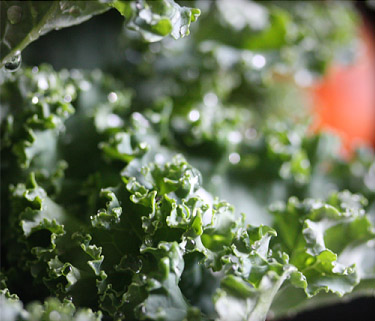
Kale, also known as borecole, is one of the healthiest vegetables on the planet. A leafy green, kale is available in curly, ornamental, or dinosaur varieties. It belongs to the Brassica family that includes cruciferous vegetables such as cabbage, collards, broccoli, and Brussels sprouts.

Kale is a Nutritional Powerhouse

One cup of chopped kale contains 33 calories and 9% of the daily value of calcium, 206% of vitamin A, 134% of vitamin C, and a whopping 684% of vitamin K. It is also a good source of minerals copper, potassium, iron, manganese, and phosphorus.

Kale’s health benefits are primarily linked to the high concentration and excellent source of antioxidant vitamins A, C, and K — and sulphur-containing phytonutrients.

truth kaleCarotenoids and flavonoids are the specific types of antioxidants associated with many of the anti-cancer health benefits. Kale is also rich in the eye-health promoting lutein and zeaxanthin compounds.

Beyond antioxidants, the fiber content of cruciferous kale binds bile acids and helps lower blood cholesterol levels and reduce the risk of heart disease, especially when kale is cooked instead of raw.

Super-Rich in Vitamin K

Eating a diet rich in the powerful antioxidant vitamin K can reduce the overall risk of developing or dying from cancer, according to a study in the American Journal of Clinical Nutrition. Vitamin K is abundant in kale but also found in parsley, spinach, collard greens, and animal products such as cheese.

Vitamin K is necessary for a wide variety of bodily functions, including normal blood clotting, antioxidant activity, and bone health.

But too much vitamin K can pose problems for some people. Anyone taking anticoagulants such as warfarin should avoid kale because the high level of vitamin K may interfere with the drugs. Consult your doctor before adding kale to your diet.

Kale might be a powerhouse of nutrients but is also contains oxalates, naturally occurring substances that can interfere with the absorption of calcium. Avoid eating calcium-rich foods like dairy at the same time as kale to prevent any problems.

Eat More Kale

In summer, vegetable choices abound. But during the cooler months, there are fewer in-season choices — with the exception of kale and other dark, leafy greens that thrive in cooler weather.

To find the freshest kale, look for firm, deeply colored leaves with hardy stems. Smaller leaves will be more tender and milder in flavor. Leaves range from dark green to purple to deep red in color.

Store kale, unwashed, in an airtight zipped plastic bag for up to five days in the refrigerator.

2016-10-16T20:03:52-07:00July 7th, 2014|

California Rice Farmers Could Get Pollution Credit

Source: Edward Ortiz; The Fresno Bee

California’s evolving cap-and-trade market may soon have a new player: rice farmers.

A proposal by the California Air Resources Board staff, up for board approval in September, would allow rice farmers in the Sacramento Valley to sell carbon emission offsets as part of the state’s effort to combat climate change.

Rice farmers would flood their fields for shorter periods, which would reduce the decomposition process that emits methane – a potent greenhouse gas.

Businesses seeking to offset their own greenhouse gas emissions could buy credits from the farmers who had made gains in curbing pollution.

“The rice cultivation protocol is the first time rice practices have been identified as a potential source of greenhouse gas emission mitigation for California,” said Dave Clegern of the Air Resources Board.

The program, called the Rice Cultivation Projects Compliance Offset Protocol, is slated to go into effect on Jan. 1, 2015, and run for a 10-year period. State air quality officials and environmental groups say other crops could eventually be included in cap and trade as well.

“I think this rice protocol sets an important precedent for agriculture,” said Robert Parkhurst, director of agriculture and greenhouse gas markets for the Environmental Defense Fund. The nonprofit has been working with the California Rice Commission and the Air Resources Board to craft the program.

Rice was selected as the first crop because it’s a potent contributor of methane – a greenhouse gas implicated in climate change.

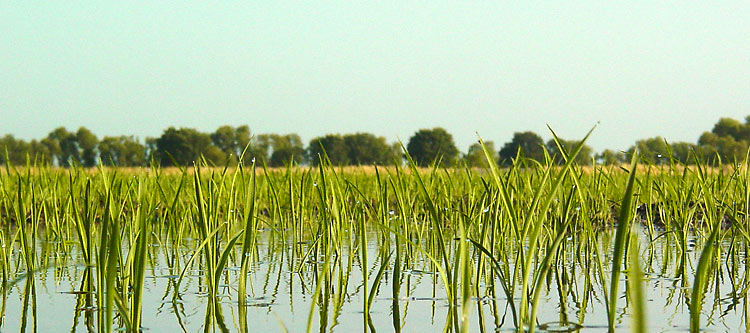
Methane is produced when rice farmers flood fields during spring seeding and prior to fall harvest. Flooding cuts off the soil’s exposure to oxygen. This causes anaerobic fermentation of the organic matter in the soil. Methane is an end product of that fermentation. The methane is released into the atmosphere primarily through the rice plant. A smaller portion bubbles up from the soil and escapes through the water.

The cap-and-trade program, launched in 2013, is an outgrowth of the state’s emissions-reducing law, AB 32. The program caps overall greenhouse gas emissions at a lower level each year. It allows industries to buy pollution allowances, within a certain limit, to offset their own release of greenhouse gases.

Farmers are largely exempt from cap and trade, and the offset program is voluntary for rice farmers. In order to sell credits, they will need to prove they changed the way they flooded their fields and reduced the amount of methane emitted as a result. The reductions will be measured using a complex computer model with independent third-party verification before offset credits are issued, according to the air board.

Those reductions can then be sold as part of the cap-and-trade program – at a market rate.

“For this to be successful, we’re going to need to see a group of farmers get together to cooperate in order to create these projects,” said Parkhurst. “The opportunity is large because there are a large number of acres, but the credits per acre (figure) is on the small side.”

The amount of methane that can be reduced would be about a half a ton to a ton per acre per year, said Parkhurst.

“What we would like is to take the opportunity with rice and see how it can be applied to other crops in other regions,” Parkhurst said.

He said that almonds are among a few crops now being considered for involvement in the cap-and-trade program. The Environmental Defense Fund has been working with the California Almond Board on a proposal.

That program would likely address fertilizer application practices in almond cultivation and their contribution to greenhouse gases.

The ARB is offering rice farmers two options under the new program. The first is a process called ‘dry seeding’ – where water is put on rice fields later during seeding season. The other demands farmers drain rice fields seven to 10 days earlier than usual.

Most of the 550,000 acres of rice planted in the state is in the Sacramento Valley, and most of that is grown by farmers who flood their fields – typically to a depth of 4 to 5 inches prior to seeding

Many unresolved factors could limit enthusiasm among rice farmers for the program, said Tom Butler, owner of the Sutter Basin rice farm corporation.

Butler grows 4,000 acres of rice and 265 acres of almonds several miles south of the Sutter County town of Robbins. He’s one of four farmers participating in a pilot program begun in March as part of the cap-and-trade effort with rice farmers.

The new practices suit his farm because his soil drains much more quickly than most rice farms in the Sacramento Valley. He said he thinks other farmers will be wary about draining their fields.

“Pulling water on and off can cause some serious nitrogen and erosion problems for your rice if you are not careful,” said Butler. “I would not have jumped into it feet first if we did not have the soil we have.”

If a lot of farmers sign up, however, the drying of their land could cause another environmental problem. Flooded rice fields provide more than 300,000 acres of wetland habitat for waterfowl and other birds that travel through the Sacramento Valley on the Pacific Flyway.

For now the air resources agency has decided to exclude winter flooding of rice fields from the cap-and-trade program. It is winter flooding – and not flooding during spring seeding or before harvest – that provides the most crucial wetland habitat for bird populations.

Butler said he’s decided to participate in the cap-and-trade program more for altruistic reasons than financial ones.

“I think about this as the right thing to do,” Butler said. “We’re trying our best to be good stewards of the land, and produce a crop … and this program could be a next step for us.”


2016-05-31T19:34:19-07:00July 7th, 2014|

CDFA Official on Success and Future of California Dairy

Karen Ross, Secretary for the California Department of Food and Agriculture, talks about the role of California Dairy has on the current global market, and what the future hold for the industry.

“So we really have seen a couple things going on. One is this huge constant demand for California milk-based products. the export markets looking for powders, they can’t get enough powders, they have huge confidence in the food safety of our milk production here, we‘re strategically located,” said Ross. “So that demand has really drive up prices, but at the same time fortunately for us our friends in the Midwest had great corn and soybean harvest and so those grain prices had moderated so that farmers are finally to the point where their realizing some margins and they need to rebuild their equity,” she added.

Ross mentions that industry leaders are already looking towards the future.

“We also to the credit of the leaders and the producers and processor community, are still meeting as part of their California Dairy Futures Task Force, and we actually have a couple different proposals for some reform to of our pricing system going forward, that we are taking a deeper dive in. We have some economists that are doing some analytics on that and concurrently the cooperative continues to work on the petition and we will find out people are willing to consider seriously going into a federally milk marketing order. ” said Ross.

Ross explains some aspects of the dairy industry need to change.

“So I think its healthy for the industry now that we have some margins in the business and to really think about our future and this almost 60-year old pricing system, and what works, and we want to retain and where we need to create some flexibility so that we can be very competitive  and maximize our opportunities in the export market.” said Ross.

2016-05-31T19:34:20-07:00July 3rd, 2014|

Thank a Farmer For Your Food Independence

As you fire up the grill this Independence Day, be sure to thank a farmer, whose contributions help keep the cost of a Fourth of July feast under $6 bucks a person, according to a recent survey by the American Farm Bureau Federation.

Considering Americans spend just 10 percent of our incomes on food – the lowest of any country – we are all indebted to the “thin green line” of only 210,000 full-time U.S. farms that produce a product that is safe, abundant and uniquely American.

These farmers are also critical to our nation’s “food independence.” This food security does not happen by accident. It is a blessing that is fostered by smart policy.

The roots of government involvement in U .S. agriculture are actually as old as the nation itself.   Government involvement began with the founding fathers of the nation and carries the fingerprints of other great Americans who followed.

In 1799, after years of colonies and states granting tracts of land to citizens encouraging people to plant crops and begin commerce, George Washington called for the establishment of the National Board of Agriculture to collect information on the nation’s agricultural inventories.

Not surprising since our first president was also quoted as saying: “It will not be doubted that with reference either to individual or national welfare, agriculture is of primary importance.”

President Abraham Lincoln then established the USDA in 1862, a department that has grown since then to include promoting agriculture trade, working to assure adequate and safe food and striving to end hunger in America and abroad.

Over the next 40 years, as the world population grows from 7 billion to 9 billion and demand for agricultural commodities doubles, we need such policies that encourage investment and constant improvement.

If done right, more nations and peoples will continue to know the happiness of a safe and reliable and affordable food supply.

2016-05-31T19:34:20-07:00July 3rd, 2014|

State Must Use Caution on Groundwater Management

By Danny Merkley; Ag Alert 

In the face of the California water crisis, many in the state Legislature appear to be rushing toward new groundwater management policy that could threaten certain property rights and the overlying groundwater rights of landowners.

Generally, legislation that has been introduced would require groundwater basins to be managed “sustainably” by local entities but would authorize the state government to step in if the local entities do not adopt management plans with certain components by a specified time.

Farm Bureau and other agricultural organizations continue to urge the Legislature to proceed with caution on the issue of groundwater management. Failure to take adequate time to address this complex issue could lead to huge, long-term impacts on farms and on state and local economies.

People’s livelihoods and jobs are definitely at stake. All involved in the effort to better manage groundwater need to focus on future ramifications of the various authorities and directives being considered.

Groundwater management is as diverse and complex as the 515 distinct basins and sub-basins in California. For that reason, Farm Bureau believes groundwater must be managed locally or regionally, while protecting overlying property rights. To their credit, most of the pending measures do provide for local management, but working out the details is certainly a challenge.

With members of the Legislature feel the need to do something about groundwater, Farm Bureau is working with other agricultural stakeholders and decision-makers to identify a path forward toward a reasonable and workable groundwater management system.

We have repeatedly stated that the reason we face groundwater challenges is not due to a lack of regulation, but because of lack of availability of surface water. It must be recognized that the state’s increased reliance on groundwater for growing food, fiber and other agricultural commodities has resulted not just from drought, but from restrictive environmental laws, court decisions, regulatory actions and “flashier” river systems, as watersheds receive rain instead of snow.

All of those factors have reduced availability of surface water—surface water that would help recharge groundwater basins and allow farmers to reduce their reliance on groundwater. Farm Bureau strongly believes groundwater recharge should be established as a beneficial use of water.

The reasonable and beneficial use of groundwater is a basic property right under California law. These rights must be recognized and respected under any groundwater-management framework. This does not mean that areas with significant overdraft issues should be ignored, but that in dealing with these areas, current groundwater rights must be protected.

It also needs to be recognized that restricting the use of groundwater has broad economic consequences for agricultural communities and the farm families, farmworkers and the related support, processing and supply enterprises in those communities. Drastic changes in groundwater policy will impact land values and the ability for farmers and ranchers to secure adequate financing, both for land acquisition and for operating expenses.

Appropriate protection of groundwater resources for future generations must be carefully thought out, not rushed through the legislative process to meet arbitrary deadlines. There’s no good time for hurried legislation, but during a critical drought year, when canals and ditches are dry and groundwater is the lifeline for farms, is absolutely the wrong time.

Please contact your representatives in the state Legislature to urge them to proceed carefully on new groundwater legislation, and to take the time necessary to adequately deliberate the issues and to identify and balance the benefits and risks going forward.

2016-05-31T19:34:20-07:00July 3rd, 2014|

Secretary Ross Teams Up With Visit California to Promote Agritourism

Two top state officials for agriculture and tourism paid Fresno a visit Monday to talk about how local growers can benefit from the fast-growing trend of agritourism.

About 60 agriculture and business leaders gathered at the California State University, Fresno campus to hear Food and Agriculture Secretary Karen Ross and Caroline Beteta, Visit California’s chief executive officer, explain how the CA Grown and Visit California brands will work with Sunset and Food and Wine magazines to promote agritourism.

Self-proclaimed foodies want to see where their meals comes from and meet the farmers behind this farm-to-fork movement.

“It’s about, ‘here’s what farmers and ranchers are doing as your neighbors,’ their environmental stewardship,” said Ross. “It’s about the pride of what we produce here, and it’s about this wonderful lifestyle and supporting the economy at the same time.”

Fresno County is the top producing agriculture county in the nation with the value of the 2012 crops reaching $6.5 billion. Of the $112 billion spent on tourism in 2012 in California, about a fourth of that was spent on food.

That same year, tourism brought $1.3 billion to Fresno County, according to Ross. Much of this is due to Yosemite tourists, the Blossom Trail and Fruit Trail, she said.

The Blossom Trail is a self-guided motor and bike tour of blossoming orchards along Fresno Country roads. The Fruit Trail is similar to a wine trail and features a drive through the county where visitors can taste and purchase local produce fresh from the farm.

The University of California at Davis runs the agricultural tourism directory for the state. Penny Leff, the agritourism coordinator with UC Davis and the Small Farm Program, said that from 2007 to 2012, agritourism has really picked up in California.

“Most families don’t have anyone on the farm anymore to go visit,” said Leff. “Farmers are interested in educating the public in what’s going on, what goes into making the food. They really want to share with the public and make them understand.”

According to UC data, the amount of sales from agritourism and recreation services has increased 84% in the state from 2007 to 2012, to $64.5 million.

A Sanger couple has seen the rise of agritourism first hand. Debbie Van Haun and her husband, Jim, own a bed and breakfast with a winery attached. She said that during the busy summer season, the area could use more businesses to handle all the tourists.

Van Haun said that most of their business comes from tourists traveling to Yosemite or Sequoia Kings Canyon National Parks, but they do see local couples trying to get away for an anniversary weekend.

“It’s a lot of hard work and is a labor of love,” Van Haun said. “We moved here thinking agritourism would make a difference in the area and it has.”

The couple opened Sequoia View Bed and Breakfast first about 15 years ago, and fixed up the vineyard in 2003. They produce 130 barrels, or 7,800 gallons, of mostly red wines annually.

Van Haun said that the Blossom Trail and Fruit Trail have increased the agritourism in the Sanger area, and the couple attributes much of the credit to the Fresno County Office of Tourism.

With the booming wine industry and traffic picking up at the bed and breakfast, Van Haun said she is seeing their revenue return to what it was in 2008.

Through CA Grown and Visit California, the state hopes to create the kind of interest in locally grown food to rival the desire people have for California wine, Beteta said.

2016-05-31T19:34:20-07:00July 3rd, 2014|

Agriculture Recognized by Governor’s Environmental and Economic Leadership Awards

Agriculture Environmental and Economic Leadership Awards

What do Joseph Gallo Farms, Gills Onions and Parducci Wine Cellars have in common? Yes, they are all California farms with well-known, high-quality products, but they have something else in common. They are all past winners of a Governor’s Environmental and Economic Leadership Award (GEELA), the state’s highest environmental honor.

This year, for the first time, GEELA has an agricultural category titled “Agricultural Ecosystem Services”. This category was designed for farmers and ranchers that demonstrate innovative and sustainable approaches to water conservation, efficiency and protection of working ecosystems.

CDFA has defined Ecosystem Services in agriculture as “the multiple benefits we gain from farming and ranching including crop and livestock production.

In addition to valuable open space and wildlife habitat, the management decisions and conservation practices of farmers and ranchers also enhance environmental quality, provide recreational opportunities and offer social benefits.”

CDFA recognizes there are many farmers and ranchers doing a lot on water conservation, especially in consideration of the drought.

In less than two weeks, the current application process will close for GEELA. Applications will be accepted through July 11, 2014. We hope farmers and ranchers will consider applying. Click here to apply.

2016-10-06T12:38:40-07:00July 2nd, 2014|
Go to Top