Water Crisis Reducing Valley Fruit Production

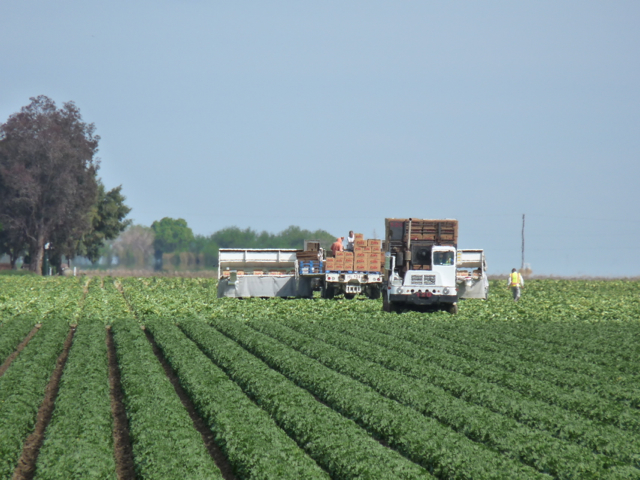
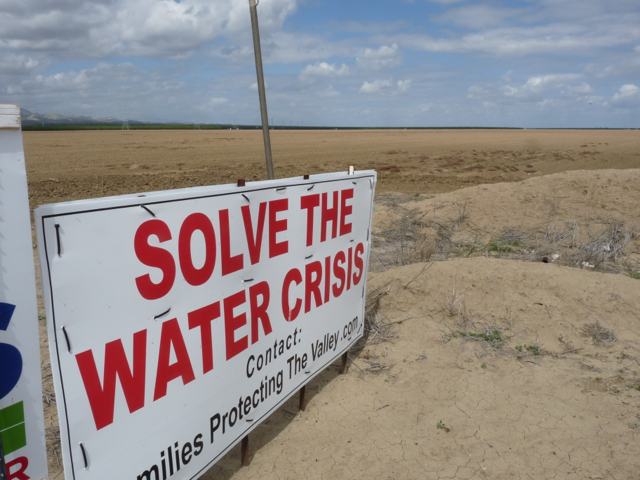
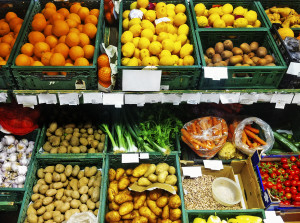
The impact of the worsening drought can be seen in the expected drop in crop production.

Valley fruit production is down on many farms, but the lack of water isn’t the only factor causing the lower expectations.

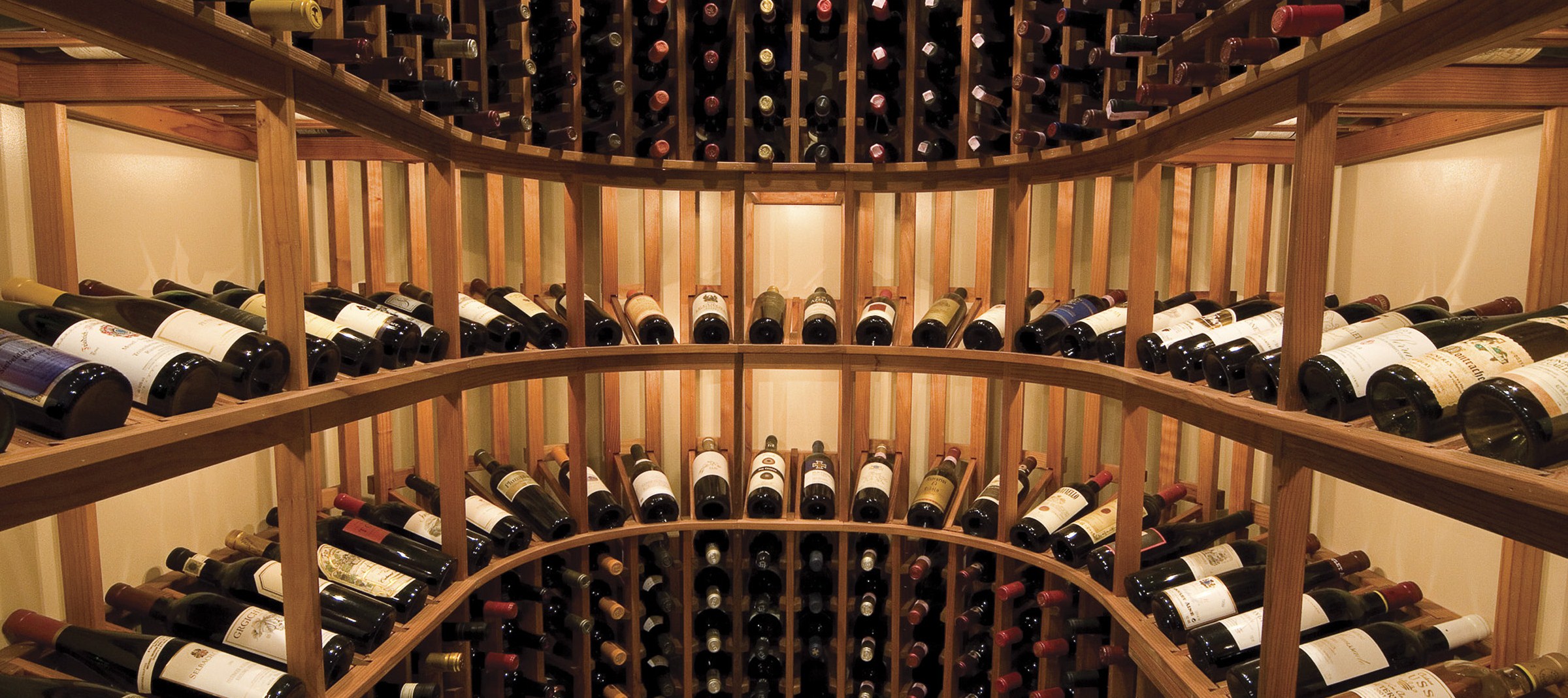
The grape crop is ready for harvest in many Valley vineyards but there’s not nearly as much of the sweet fruit this year. The U.S. Department of Agriculture expects grape production in California to dip 9 percent.

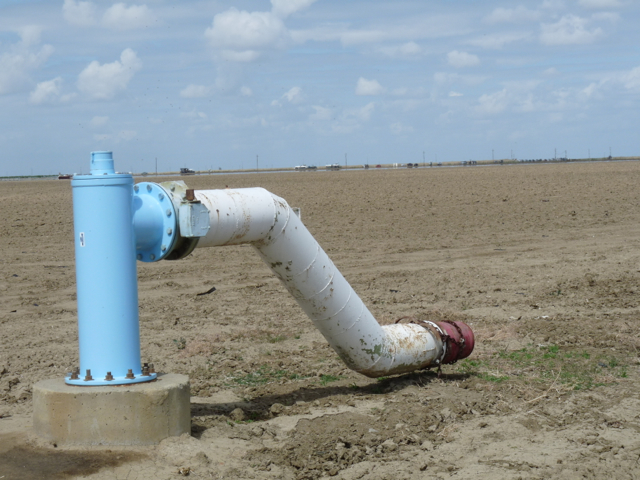
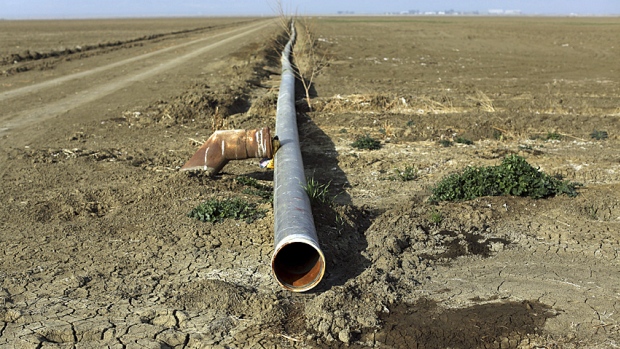
“We came off two big years in both wine grapes and Thompson seedless, so those vines are taking a little bit of a rest,” said Nat Dibuduo with Allied Grape Growers. “The other factor is obviously the drought. We’ve got growers that lost wells or they’re minimizing their irrigations to stretch out the water they do have.”

Table olives fared even worse with the dry conditions. Production is expected to dip 45 percent statewide but as much as 60 percent in Tulare County. 

“When olive trees go into dormancy they need some good deep soil moisture and they didn’t get it,” said Adin Hester with the Olive Growers Council. “The lack of moisture is something that certainly exacerbated, number one. Number two, we’ve got growers that are just flat out of water.”

Peach production is down 4 percent. We’re seeing peach, olive and grape growers rip out orchards and vineyards to put in more profitable crops like almonds and pistachios.

“I think there’s going to be not only Thompson seedless grapes pulled out after this harvest but also wine grapes throughout the San Joaquin Valley because they’re not making money, and they see their neighbors are making money with any of the various nut crops,” said Dibuduo.

Dibuduo is worried about this year’s outlook. He says winery demand for Valley grapes has taken a big hit because of international competition. Some grapes, he says, might not get sold.

Other crops like pears, apples and rice are also down from a year ago.
2016-05-31T19:33:30-07:00August 19th, 2014|

CALIFORNIA HELPING FARM LABORERS PAY BILLS DUE TO DROUGHT

“The majority of the jobs here are Ag related so you’re talking close to 80 percent of the community that depends on Ag; from truck drivers to field workers to working in the packing sheds,” said Mendota Mayor Robert Silva.


When water is scarce, so are jobs in the fields — making it harder for people to pay rent. 

“People are working but they’re not working as much as they used to,” said Silva.

Which is why the state of California is helping laborers pay their bills. The Department of Housing and Community Development is offering drought housing rental subsidies in 24 counties including Fresno, Tulare and Merced.

“I wouldn’t expect it to be available past November but hopefully the drought will have subsided by then and people will be getting back to work,” said Evan Gerberding of DHCD. 

There’s roughly $7 million left from the subsidies available for people who can’t afford rent or utility bills — an emergency net to last families up to three months. The state agency hopes the short term disaster assistance provides some sort of relief. 

In addition to rental and utility assistance, communities like Mendota have ramped up their food distribution.

2016-05-31T19:33:31-07:00August 19th, 2014|

Western Growers applauds US $7.5B water support proposal

Source: www.freshfruitportal.com

Western Growers has praised a deal struck by California lawmakers that would see a US $7.5 billion package to bolster the state’s water supply and infrastructure.

California residents will now vote on the matter in November.

In a statement, Western Growers president and CEO Tom Nassif said he was delighted with the passage of legislation by the California Assembly and Senate, which includes US$2.7 billion for water storage.

“We are especially pleased that the storage portion of this legislation is a continuous appropriation preventing the legislature from withholding funding. Passage of this legislation is an essential first step in adding capacity to our state’s existing storage infrastructure,” Nassif said.

“This legislation replaces the existing bond slated for this November’s statewide ballot. Our Association will work diligently with Governor Jerry Brown to garner support for the initiative.”

California is currently facing one of the worst droughts in decades, and many in the industry have raised serious concerns over the unsustainable rate at which the water supplies are being depleted.

Nassif also commended members of both parties who came together to support compromise legislation he described as ‘critical’ not only for growers but for all of the state’s residents and water users.

“Western Growers particularly appreciates Governor Brown’s leadership on this issue. We look forward to his support of this measure as we work together to gain voter approval for the initiative this November,” he said.

California Citrus Mutual president Joel Nelsen added his praise to the legislation that he said met the needs of all the state’s regions.

“I believe we have turned a corner in our State in which we quit destroying the land and the people that provide the world food and fiber,” he said in a press release.

“I applaud the hard work and dedication of Assembly Members Connie Conway and Henry Perea and Senator Andy Vidak in leading the legislature in an effort to strengthen a bond proposal that we feel was previously incomplete.

“To the Governor’s credit he and his team listened to stakeholders and came a long way from the $2 Billion for storage that was included in his original proposal to a more comprehensive package that addresses our Valley and the state’s needs for a real solution.”

He added the state now had more money for storage, a path towards cross valley connectors, and funding for ground water cleanup in disadvantaged communities.

“The previous proposals contained less money, no pathway for the connector, and in reality made too few happy,” Nelsen said.

“This is a positive step forward and I believe the Speaker and the Governor when they say we will work together to achieve all our goals.”

2016-05-31T19:33:31-07:00August 18th, 2014|

Commentary: Proposed EPA ‘waters’ rule hangs farmers out to dry

Source: Don Parrish; Ag Alert

The U.S. Environmental Protection Agency proposal to expand the scope of “navigable waters” subject to Clean Water Act jurisdiction was drafted, according to the agency, to reduce uncertainty. It’s very clear the proposed waters of the U.S. rule is designed to allow the federal government to regulate every place water flows when it rains, including small and remote “waters” and ephemeral drains and ditches.

We all know that water flows downhill and that at some point, some of that water eventually finds its way into a creek, stream or river. Yet, based on nothing more than the flow of rainwater along a natural pathway across the land, the EPA wants to call vast areas of otherwise dry land “tributaries” and therefore “navigable waters.”

With its proposal to regulate land that is dry most of the year and miles from the nearest truly navigable water, EPA is putting farmers in a tenuous position. EPA and other supporters of the proposed rule have made much of a long-standing exemption for agriculture, and claim that it still stands; however, the proposed rule narrows that exemption and opens it up to litigation. The “normal farming and ranching” exemption only applies to a specific type of Clean Water Act permit for “dredge and fill” materials. There is also no farm or ranch exemption from Clean Water Act permit requirements for what EPA would call “pollutants.”

Ultimately, the new permitting requirements that would come with this proposal would mean that common farm activities could trigger Clean Water Act liability and the need for Section 402 National Pollutant Discharge Elimination System permits if pollutants could incidentally be deposited into ditches, ephemerals and other features that will now fall under federal jurisdiction.

At the same time EPA and the U.S. Army Corps of Engineers are telling farmers and ranchers they’re got nothing to worry about because the exemption puts them in the clear, the agency is moving forward with a guidance document that will govern how it interprets the “normal farming” exemption contained in Section 404 of the Clean Water Act.

This interpretive rule makes fundamental changes in how the exemption for normal agricultural activities at “established” farms will be applied and enforced. Contrary to assertions by proponents, this interpretive rule narrows how the exemption is applied and increases farmers’ liability by requiring that farmers comply with Natural Resources Conservation Service conservation standards, which were previously voluntary, in order to be exempt from Section 404 permitting.

Like the proposed waters of the U.S. rule, the interpretive rule conflicts with congressional intent. In 1977, Congress amended the Clean Water Act to exempt “normal” farming, ranching and silviculture from Section 404 “dredge and fill” permit requirements. However, EPA and the Corps are now asserting that farmers are exempt from Section 404 permits so long as any of 56 listed practices comply with NRCS standards, despite the fact that those practices have qualified as the “normal” farming, ranching and silviculture activities for 37 years.

The newly proposed interpretation of “normal farming and ranching” would apply only to farms and ranches that EPA determines to be “established” and “ongoing”—not newer or expanded farms and ranches. Where does this leave the children and grandchildren of farmers and ranchers who want to work the land but need to grow the operation to support an expanding family? What does this mean for the billions of people who will need to be fed in the future?

Worried about the answers to those questions and the many threats the proposed rule poses to agriculture, the American Farm Bureau Federation launched a website at ditchtherule.fb.org to help farmers, ranchers, landowners and others express the need for EPA to “Ditch the Rule.” Focused on topics and analysis related to the proposed rule, the site includes several sections: Take Action, Go Social, Find Answers and Get Resources. We encourage you to visit the site, sign up to learn more, comment on the proposed rule and send tweets using the hashtag #DitchTheRule. You should also voice your concerns to your state and local officials and your U.S. representative and senators.

2016-05-31T19:33:31-07:00August 15th, 2014|

CaliforniaAgNews Streams 24/7, Globally

CaliforniaAgNews 24/7 Available on Any Platform


Clovis, Calif., August 14, 2014  Timely, relevant and important California agricultural radio news is now available for the first time ever –online, 24/7. Find it at www.CaliforniaAgNews.com.

Listen to the most comprehensive California agricultural news, updated continuously, on your smartphone, iPad, tablet, or any computer.

CaliforniaAgNews 24/7 includes the latest reports broadcasted on the CaliforniaAgToday Radio network, plus extensive in-depth interviews and reports, all presented to users in a state-of-the art, multi-platform format.

“CaliforniaAgNews 24/7 uniquely covers the state’s $45 billion dollar agricultural industry,” noted Ag News Director Patrick Cavanaugh, a thirty-year-veteran agricultural news reporter, often breaking stories.

“Our broadcast team is constantly in the field reporting news directly from farmers and other industry leaders throughout the state,” said Cavanaugh. “We also report relevant USDA news.”

“This new service will spread the word on what’s really happening in California agriculture during this severe drought crisis, worsened by federally-imposed environmental restrictions,” said Cavanaugh.

“In California, a major disconnect exists between the urban consumer and the farming community. CaliforniaAgNews 24/7 bridges the gap between the field and the fork; connecting the public to the land, resources, science & technology, politics and policies of California’s safe and local food, fiber, and fuel,” noted Cavanaugh.

“Hearing a farmers’ voice talking about how she or he provides a safe and nutritious crop will go a long way towards that city listener’s understanding of the farmer. On CaiforniaAgNews 24/7, listeners will hear, firsthand, about the concerns and challenges of farming in California – the leading and most diverse farming state in the nation,” said Cavanaugh.

2016-05-31T19:33:31-07:00August 14th, 2014|

Access to water proves key factor in farmland value

Source: Kate Campbell; Ag Alert

With drought adding new constraints on the state’s water supplies and farmers and ranchers increasingly turning to groundwater to sustain food production, lawmakers now are contemplating bills requiring changes to how groundwater basins are managed. If adopted, opponents said, the bills have the potential to undermine food production, reduce agricultural land values and hamper the overall economy.

Two pieces of legislation were each amended twice last week and now have identical language, requiring assessment of impacts on local ecosystems from groundwater pumping. The measures will be heard in their respective Appropriations Committees this week. The California Farm Bureau Federation and other agricultural and water organizations oppose both measures.

Jack Rice, CFBF associate counsel, warned of unintended consequences from laws that are hastily passed and implemented.

“Figuring out how to improve groundwater management in California requires figuring out the best possible solution for a highly complex problem,” Rice said. “That doesn’t mean throwing legislation together and passing it before people even have a chance to understand the implications of how a new groundwater management framework will operate. Poorly conceived and executed changes to groundwater management would be very disruptive.”

Among the issues hanging in the balance, he said, are farm and ranch land values, which depend on property rights for access to groundwater supplies, particularly when surface water supplies are unreliable due to drought, plus regulatory and water-system constraints.

In summarizing current farm and ranch real estate trends, the California Chapter of the American Society of Farm Managers and Rural Appraisers concluded in its 2014 trends assessment that acute drought threatens many growers this year, and long-term water policy will have long-term ramifications on the farm and ranch sector.

In a presentation to agricultural land appraisers this spring, the association said “property in areas with threatened ground and surface water is at risk, but property in areas with good water will continue to be attractive.”

Rice said discussions about potential changes to groundwater management raise questions about the ability of affected property to sustain anticipated cash flow.

“Those kinds of uncertainties can have an impact on the value of underlying assets, such as land values, property improvements and equipment,” he said.

The Salinas Valley, which produces much of the nation’s fresh produce, is in a unique situation, according to Monterey County Farm Bureau Executive Director Norm Groot.

“We’ve been working for the past 60 years to manage our water resources—addressing everything from groundwater management and saltwater intrusion to surface supplies and flood control,” he said.

Because landowners have been engaged on many issues at the local level, Groot said, “we think another layer of regulation from the state will only hinder what we’re doing. It’s a hindrance we don’t need.”

Tony Toso, a Mariposa County rancher and professional farm and ranch land appraiser, said land appraisal values are based “on what has occurred in the rearview mirror,” but that how well water is managed at the local level has an impact on values.

“The market is going to start telling me as an appraiser what’s happening to land values in specific irrigation districts and groundwater basins based on reliability and quality of water supplies,” said Toso, who is a CFBF director.

“We do know groundwater is essential to ensuring a consistent agricultural land value,” he said. “Everyone knows that land without water isn’t worth much.”

Overall, appraisers said California farm and ranch land prices have held steady. However, rangeland without access to water has seen a decline in recent years.

Experts warned that not getting groundwater regulation right has the potential to strip some of California’s best farmland of its productive use and set off a decline in asset values.

“It’s hard to prove something that could happen in the future,” Toso said, “but if you don’t analyze water supply problems right, if regulations aren’t implemented right, if it’s turned into an emotional issue, then asset values could start heading for zero.”

Changes to groundwater management regulations could have a “huge” effect on local economies, said Tod Kimmelshue, a senior lender with Northern California Farm Credit, who explained that agricultural lenders always take into account water quantity and reliability for farm operations.

The question lenders need to determine, he said, is what is the highest and best use of a piece of land.

“Farmers need to be heavily involved in deciding who determines beneficial use,” said Kimmelshue, who is a past CFBF director. “It’s important for groundwater users to start monitoring how much water they’re using so they can document how much water they need for beneficial use.”

He said lenders are requiring increasingly more information on a property’s wells and access to groundwater, adding, “It’s a huge part of the collateral we consider when making individual lending decisions. But the impact of poorly designed groundwater management regulations could extend beyond affecting agricultural land values; there could be a ripple effect that moves through local economies from reduced property and business tax revenue and local jobs.”

2016-05-31T19:33:32-07:00August 14th, 2014|

A comparison: How California farms stack-up around the country

By Don Curlee; the Porterville Recorder

Counting the ways farming in California differs from farming in the rest of the country might result in some surprises, especially for proud Californians.

To begin with, farms in California are about 25 percent smaller on average than those in the rest of the country. The contrast between farming here and farming there is even more remarkable when you consider that the state’s smaller farms outpace those in the rest of the country by producing almost five times the dollar amount per acre. Of course, that means farmers in the Golden State receive more income than those elsewhere.

These characteristics of the country’s farm profile come from information collected in the 2012 Census of Agriculture, the latest every-five-years exercise conducted by the federal government. Comparing data from the most recent census with that from the 2007 effort reveals some memorable results.

Some of those results have been compiled by Emma Knoesen, a research associate and Rachael Goodhue, a professor of Agricultural Resource Economics (ARE) at the University of California, Davis. Their report was published in the May/June issue of Update, published by the Giannini Foundation of Agricultural Economics at Davis.

In the conclusion of their report they say: “(The census) indicates that California agriculture remains distinct from U. S. agriculture as a whole, although in both cases farms continue to grow larger in both acreage and market value of production.”

One of the report’s tables shows that almost a quarter of California farms are between one and nine acres, compared to only 11 percent of farms at that size elsewhere in the country. Another quarter of California farms are between 10 and 49 acres, not that different from the rest of the country, and 17 percent fall into that 50 to 179- acre bracket, opposed to 30 percent of farms that are outside the state.

A very telling statistic puts the number of California farms with 2,000 acres or more at 2,434, while the number of farms in the other 49 states with 2,000 acres or more is more than 82,000. Seems that fly-over country has some pretty big spreads, and it isn’t puny backyards where Texans raise their cattle.

Perhaps even more telling is the effect of California’s higher value crops, the vegetables, fruits and specialty commodities. The report says: “The average market value of production per acre of farmland in California was $1,667, compared to $289 in the United States as a whole.”

On average, California farms produced a market value of $547,510, about three times that of other U.S. farms, which averaged $187,097.

Production of high-value fruit and vegetable crops continued in California at about the same pace and in about the same places as reported in the 2007 census. Tree and vine crops dominated the Central Valley counties, and vegetables were the commodities of choice in coastal areas and in the Imperial Valley.

Imperial County registered a strong increase from 2007 to 2012 in the amount of land used to grow vegetables, from less than 69,000 acres in the earlier census to nearly 106,000 acres in 2012. The number of farms growing vegetables there increased as well, from 86 to 105.

Even though the number of California farms decreased from 2007 to 2012, the total market value of their production increased by a little more than 25 percent.

No question, farming is a winner in California and a significant contributor to the state’s economy. If overzealous legislators and social and environmental purists can control themselves enough to leave it alone the state’s different-but-better agriculture can continue to prosper and continue to help overcome world hunger.


2016-05-31T19:33:32-07:00August 13th, 2014|

Winegrapes: New acreage helps offset drought impacts

Source: Steve Adler; Ag Alert

Although per-acre yields may be down in some regions due to drought and other concerns, California farmers expect to produce another large winegrape crop this year, as a result of increased acreage. Winegrape harvest has started throughout California, primarily for early varieties of white grapes that are destined to become sparkling wines.

Government estimates issued last week placed California winegrape acreage at 570,000 acres in 2013, up from 508,000 the previous year. About 45,000 of the 2013 winegrape acres were classified as non-bearing.

With the harvest beginning in most areas from 10 days to two weeks earlier than usual, the biggest concern among growers is that many wineries do not yet appear prepared to receive the grapes.

“Being this early, I don’t believe the wineries were prepared to open on time, so right out of the gate we had some quality issues because of early ripeness and delays on the winery side,” Tulare County winegrape grower JR Shannon said. “We’ve barely been picking for two weeks and it is already showing signs that the winery tanks are still full from last year and they aren’t very eager to get grapes in right away.”

Noting that harvest will continue for several more weeks, Shannon said many wineries haven’t even opened yet.

“The early signs are that it is going to be a long, non-grower-friendly season and the wineries are showing no excitement about anything except pinot grigio. We spent a lot of money planting these new vineyards for them and they are not cooperating in getting the grapes into the wineries,” he said.

That view was supported by Nat DiBuduo, president and CEO of Allied Grape Growers in Fresno, who said there is real concern among growers who don’t have contracts with wineries.

“We are getting reports of some of the larger wineries that have decided to bottle as needed, which means the tanks are full. We know the 2012 crop and the 2013 crop were big, and what that has created is that they aren’t buying any more grapes than what has been contracted for. And there are a lot of grapes that aren’t contracted,” he said.

DiBuduo said the vast majority of grapes are under long-term contracts, but there are some that don’t have contracts and growers in that situation are just waiting for wineries to start buying them.

“I hope the wineries start to realize that this is going to be a lighter crop. They will all honor their contracts, but I am hopeful that they will recognize the smaller crop and buy these other grapes. The speculation is that some of these wineries will come out with lower prices when all of these growers are in panic mode,” he said.

In Lodi, winegrape grower Joe Valente of Kautz Farms said harvest at his vineyards would begin this week, putting it 10 days earlier than usual.

“It is probably one of the earliest or second-to-the-earliest starts that I have seen here in Lodi in the past 35 years. We are starting this week, but it all depends on the sugars. Ideally, once we get started we can keep going, but it is all dictated by the sugars,” he said.

Valente also expressed concern about a potential shortage of tank space for this year’s grapes.

“The last two years were large crops, and how empty the tanks are going into harvest will dictate how much we will be able to pick. It depends on the varietals that are in demand. They will find room in the tanks for certain varieties that are in demand,” he said.

On the South Coast, grape grower Jeff Frey of Santa Maria said he has heard talk of tank shortages, but at this point it doesn’t appear to be an issue in his area. A bigger issue for coastal growers is the ongoing drought, he said.

“The situation concerning drought on the South Coast depends on where you are at. We haven’t had any rain to speak of, but growers who were able to irrigate through the winter are looking pretty good. We have a pretty good crop set and we will start harvesting next week, which is very early for us. I have a few vineyards that are out of the periphery that have wells that are going dry and there isn’t much water, so those yields will be down,” he said.

In the Paso Robles area, grower Neil Roberts of Templeton said he is very pleased with the way winegrapes developed this year.

“The crop looks average in size, which is probably a good thing, and the quality looks tremendous,” Roberts said. “We’ve been OK with water. Some of the shallower wells have had some issues, but overall there weren’t any problems. If everything goes well, we should be done by the end of October.”

DiBuduo said the drought is having an impact in the San Joaquin Valley as well. The quality of the grapes being produced is fine and sugar levels are good, but the berries and the bunches are smaller, he said.

“It appears that the overall crop will be lighter than last year and a lot of it has to do with the drought. Growers have tried to maintain the vines and keep them as fresh as possible, but we are hearing from all over the place about growers’ pumps going out and it has been taking several weeks for the pump repair people to take care of the problem,” he said.

Shannon, too, has been having problems with lack of water. He said he has been forced to pay up to $1,200 an acre-foot for water that in a normal year costs $60.

“It is kind of salt in the wound right now with all the other issues we have been dealing with,” he said. “Hopefully the groundwater will last another three months.”

Shannon said he has three or four wells out of commission waiting for pump repair, calling 2014 “the toughest year in my experience.”

Valente said that so far this season, he hasn’t had any problem with wells.

“Our concern is groundwater legislation and what that might mean to us. We keep hearing that farmers aren’t managing our groundwater, and I truly believe that the state and federal governments aren’t managing our surface water,” he said.

2016-05-31T19:33:32-07:00August 13th, 2014|

Understanding California’s Groundwater

California’s Groundwater Is in Crisis

Source: Janny Choy and Geoff McGhee; Water in the West


California’s groundwater is back in the spotlight. Largely invisible, lightly regulated and used by 85% of California’s population and much of the state’s $45 billion agriculture industry, groundwater is a crucial reserve that helps stave off catastrophe during drought periods like we’ve experienced over the past three years.

Unheralded, Underegulated and Overused, California’s Groundwater Is in Crisis

California's groundwater managementBut after more than a century of unregulated use, California’s groundwater is in crisis – and with it the state’s hydrologic safety net. This carries profound economic, environmental, and infrastructure implications. How did it come to this, and what do we do now?

6 Million Californians Rely on Groundwater

Over 6 million Californians rely solely or primarily on groundwater for their water supply. Many of them reside in towns and cities in the Central Valley and along the Central California coast, where communities generally have limited local surface water options or don’t have the ability to finance other water supply sources.

For Others, Groundwater Complements the Surface Water Supply

Generally, though, groundwater is used alongside surface water to meet the state’s needs, which range from urban and industrial uses to irrigating roughly half the fruits and vegetables grown in the United States.

In normal and wet years, groundwater provides 30 to 40% of the water supply. It supplements surface water that is collected from snowmelt and rainfall then is stored and conveyed by a vast system of state and federal dams, reservoirs, and aqueducts.

During droughts, surface water availability can be sharply reduced, leaving water users to pump water from local wells. At times like these, groundwater can surge closer to 60% of water used statewide, and even higher in agricultural areas like the Central Valley.

When Rain and Snow Don’t Fall, Groundwater Prevents Disaster

This year, the third consecutive year of an extreme and extensive drought, state officials have warned that little or no surface water will be made available to most consumers. In turn, water providers are advising large users to pump their own groundwater.

As bad as this drought is, it is not uncommon. Droughts are a part of life in California, as anyone who has lived here long enough knows. But what most may not know is that groundwater has been getting us through droughts, including the last big one in the 1970s, and it is getting us through the one today.

In fact, 5 million acre feet of additional groundwater will be pumped in the Central Valley alone to make up for the 6.5 million acre feet in surface water reductions for agriculture in 2014. Even so, the economic loss for the Central Valley from this drought is expected to be $1.7 billion.

By Overusing Groundwater Today, We Are Living Off Our ‘Savings’

Writers often turn to financial metaphors to explain the importance of groundwater. As Tom Philpott of Mother Jones magazine wrote recently, “To live off surface water is to live off your paycheck … To rely on groundwater, though, is to live off of savings.”

Another metaphor frequently applied to groundwater is that of mining. In fact, “groundwater mining” is exactly what experts call nonrenewable groundwater use, where farmers “mine” water to grow almonds, alfalfa or grapes. You could even say they are “mining” those commodities themselves.

Recommendations for Groundwater Reform 

Through numerous hearings, workshops, and consultations with experts and interest groups, recommendations by groups such as the California Water Foundation are coalescing around the concept of local groundwater management with the state serving as a backstop authority if local action has not occurred or is insufficient.

Next steps might include creating and empowering local groundwater management entities; requiring groundwater management plans; and defining the state’s role for assistance, oversight, enforcement and funding. Read more in the California Water Foundation’s report with recommendations for sustainable groundwater management.

2016-10-14T19:45:06-07:00August 12th, 2014|

Water Use in California – Analysis from the Public Policy Institute of California (PPIC)

Source: Jeffrey Mount and Jay Lund, UC Davis, and Emma Freeman, PPIC

Water in California is shared across three main sectors. Statewide, average water use is roughly 50% environmental, 40% agricultural, and 10% urban. However, the percentage of water use by sector varies dramatically across regions and between wet and dry years. Some of the water used by each of these sectors returns to rivers and groundwater basins, and can be used again.

Environmental water use falls into four categories: water in rivers protected as “wild and scenic” under federal and state laws, water required for maintaining habitat within streams, water that supports wetlands within wildlife preserves, and water needed to maintain water quality for agricultural and urban use. Most water allocated to the environment does not affect other water uses.

More than half of California’s environmental water use occurs in rivers along the state’s north coast. These waters are largely isolated from major agricultural and urban areas and cannot be used for other purposes. In the rest of California where water is shared by all three sectors, environmental use is not dominant (33%, compared to 53% agricultural and 14% urban).

Agricultural water use is holding steady even while the economic value of farm production is growing. Approximately nine million acres of farmland in California are irrigated, representing roughly 80% of all human water use. Higher revenue perennial crops—nuts, grapes, and other fruit—have increased as a share of irrigated crop acreage (from 27% in 1998 to 32% in 2010 statewide, and from 33% to 40% in the southern Central Valley).

This shift, plus rising crop yields, has increased the value of farm output (from $16.3 billion of gross state product in 1998 to $22.3 billion in 2010, in 2010 dollars), thereby increasing the value of agricultural water used. But even as the agricultural economy is growing, the rest of the economy is growing faster. Today, farm production and food processing only generate about 2% of California’s gross state product, down from about 5% in the early 1960s.

Despite population growth, total urban water use is also holding steady. The San Francisco Bay and South Coast regions account for most urban water use in California. These regions rely heavily on water imported from other parts of the state. Roughly half of urban water use is for residential and commercial landscaping. Despite population growth and urban expansion, total urban water use has remained roughly constant over the past 20 years.

Per-capita water use has declined significantly—from 232 gallons per day in 1990 to 178 gallons per day in 2010—reflecting substantial efforts to reduce water use through pricing incentives and mandatory installation of water saving technologies like low-flow toilets and shower heads. Coastal regions use far less water per capita than inland regions—145 gallons per day compared with 276 gallons per day in 2010—largely because of less landscape watering.

The current drought exposes major water use challenges. In the Central Valley, where most agricultural water use occurs, the failure to manage groundwater sustainably limits its availability as a drought reserve. The increase in perennial crops—which need to be watered every year—has made the region even more vulnerable. In urban areas, the greatest potential for further water savings lies in reducing landscaping irrigation—a shift requiring behavioral changes, not just the adoption of new technology.

Finally, state and federal regulators must make tough decisions about how and when to allocate water to the environment during a drought. They are faced with balancing short-term economic impacts on urban and agricultural water users against long-term harm—even risk of extinction—of fish and wildlife.

2016-05-31T19:33:33-07:00August 11th, 2014|
Go to Top