US rice farmers see opportunity in China – from the Los Angeles Times

By David Pierson

Gregg Yielding was given a quixotic task: travel to China and determine if consumers there would be willing to eat American rice.

So he set up tables at some of the most popular supermarkets in southern China, hung American flags and began dishing out steamy samples of rice from Arkansas and California.

“At first they’d say, ‘There’s rice in the U.S.?” said Yielding, head of emerging markets for the U.S. Rice Producers Assn., a Houston-based trade group. “And we’d have to show them a map to explain that it’s grown in California and the South. Then they’d try it, and they would really like it.”

Chinese importers, distributors and grocery chains lined up. Selling U.S. rice to China seemed like a slam-dunk. But eight years after Yielding’s first venture on behalf of the U.S. industry, not a single shipment of American rice has officially made it into Chinese hands.

That won’t happen until the two countries agree on a so-called phytosanitary protocol, which determines the necessary steps U.S. rice exporters must take to mitigate pests such as insects. The disagreement highlights the growing pressure on U.S. agricultural producers to either accommodate China or risk being shut out of the world’s largest emerging consumer market.

That might not have mattered a decade ago when U.S. farmers could rely on domestic buyers or traditional foreign markets such as Mexico and Canada. Today, China’s swelling appetite for food is touching agribusiness everywhere and forcing companies to choose whether to adapt.

Those that comply are seeing dividends. American agricultural exports to China rose to a record $25.8 billion last year from $5 billion a decade earlier.

Until a few years ago, no one would have considered exporting much rice to China, the world’s largest producer and consumer of the grain.

Tim Johnson, president and chief executive of the California Rice Commission, called it “the ultimate example of selling ice to the Eskimos.”

But starting in 2012, China went on a spree, scooping up millions of tons of the grain from countries such as Vietnam, Pakistan and India. China is now on pace to import a record 3.4 million tons of rice this year — six times more than it did in 2011, according to the U.S. Department of Agriculture.

Other industries remain shut out. The U.S. beef industry is still trying to overturn a 2003 ban on American cattle over mad cow disease. Starting late last year, nearly a million tons of U.S. corn have been rejected at Chinese ports because of inclusion of an unapproved genetically modified strain. And some American pork imports were halted this month over fears they contained traces of ractopamine.

“Demand is growing so quickly in China for so many food products — and with so many places to get them from — China can pick and choose,” said Jim Harkness, a senior advisor on China for the Institute of Agriculture and Trade Policy in Minneapolis. “From a U.S. perspective, it looks like the Chinese are being picky and erecting non-tariff barriers for political reasons. But I think from the Chinese perspective, the U.S. is an outlier in some cases. Ractopamine is banned in over 100 countries.”

In addition to China, the European Union and Russia also ban the additive. It’s deemed a risk to people with cardiovascular problems.

While other products struggle to win access, the U.S. rice growers are hopeful that officials in Washington and Beijing can come to terms as early as next year. If they do, analysts estimate, U.S. rice exports to China could reach several hundred million dollars a year. That would make China a top buyer of the American grain, on par with Mexico and Japan.

Though it produces only 2% of the world’s rice, the U.S. accounts for nearly 10% of the rice traded globally — enough to make it the fifth-biggest exporter. About half the rice grown in the U.S. ends up abroad. Still, rice consumption in China is so high the country could eat through America’s annual production in 17 days.

The growing Chinese appetite for imported rice may partly reflect surging food demand, analysts said. But it’s mostly driven by arbitrage, as government policies have kept domestic rice prices high to protect Chinese farmers. Rice mills in China decided it was cheaper to buy foreign supplies.

American rice producers can’t meet that sort of mass demand — nor do they want to. Their interest is in selling packaged rice to China to fill a high-end niche. The rice producers association’s survey of Chinese consumers buttressed that idea. Despite the concerns of Chinese regulators, shoppers in China overwhelmingly perceived U.S. rice as a safe alternative in a country hit by myriad food safety scandals.

Josh Sheppard, a fourth-generation rice grower in Biggs, Calif., about 60 miles north of Sacramento, said he’d welcome Chinese buyers because they probably would pay more for his grains than U.S. customers — much the way Japanese buyers currently do. That’s especially important now when drought has cut rice acreage in the state by 25%.

The cooperative is managed by Stuart Hoetger, co-founder of Stogan Group, an agricultural consulting firm in Chico, Calif.  Hoetger has arranged a partnership between the rice growers and Chinese food and agriculture conglomerate Wufeng.

Medium grain rice known as Calrose grown by the cooperative is being shipped in limited quantities to Chinese ports, where Wufeng is redirecting it to customers in small markets such as the Solomon Islands, the idea being Hoetger and his growers will be ready to ship to China shortly after a trade agreement is finalized.

“If China asks for something, you do it,” Hoetger said. “You ask any farmer that’s sold to China in the last few years and they’ll tell you they’ve made a lot of money.”

 

2016-05-31T19:33:28-07:00August 29th, 2014|

Drought lessons from a sheep rancher

Source: Brad Hooker, UC Davis

While a severe drought continues to devastate California agriculture, one sheep rancher in Oroville has found a centuries-old solution at the bottom of his wood stove — and researchers at UC Davis are paying attention.

After dumping ash from a weekend cookout in his backyard, Mel Thompson noticed the grass grew a little better. On the advice of Glenn Nader, a UC Cooperative Extension farm advisor based in Yuba City, Thompson took the initiative to research wood ash on his own, going as far as to establish a connection with an Oroville-based energy plant 20 minutes away, which was paying millions to deliver wood ash to the landfill.

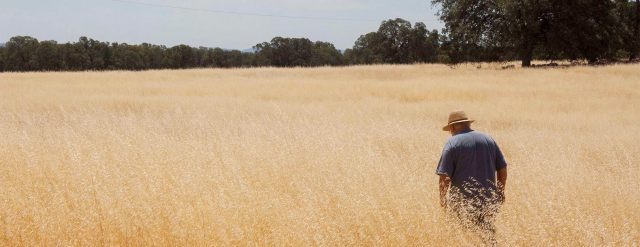
Today, the difference in growth from that wood ash can be seen in two adjoining pastures on Thompson’s foothill ranch. One layered in ash three years ago has chest-high grass despite the drought, while the untreated pasture has considerably shorter ground cover.

While the benefits of supplementing crops with ash have long been known, the UC Davis researchers were interested in specifically how it was altering the soil composition to promote plant growth and how it could help other ranchers in this Northern California region.

“It has improved our feed production significantly,” says Thompson. “With that, in conjunction with fencing and the rotational grazing, we seem to be doing OK through this drought period.”

Ken Tate, a plant sciences professor and a Cooperative Extension rangeland watershed specialist, recently surveyed more than 500 ranchers and says Thompson falls into the roughly 5 percent of California ranchers practicing these types of strategies in hopes of gaining more productivity from their land.

“Mel is what we call an early adopter, someone who has a large toolbox and a lot of information that he makes use of,” Tate says. “He’s an innovator and experimenter in the industry.”

2016-05-31T19:33:28-07:00August 28th, 2014|

Drought leaves Tulare County homes without water

By Associated Press

Hundreds of rural San Joaquin Valley residents no longer can get drinking water from their home faucets because California’s extreme drought has dried up their individual wells, government officials and community groups said.

The situation has become so dire that the Tulare County Office of Emergency Services had 12-gallon-per person rations of bottled water delivered on Friday in East Porterville, where at least 182 of the 1,400 households have reported having no or not enough water, according to the Porterville Recorder.

Many people in the unincorporated community about 52 miles north of Bakersfield also have been relying on a county-supplied 5,000-gallon water tank filled with non-potable water for bathing and flushing toilets, The Recorder said.

Emergency services manager Andrew Lockman, said the supplies of bottled water distributed by firefighters, the Red Cross and volunteer groups on Friday cost the county $30,000 and were designed to last about three weeks but are only a temporary fix. To get future deliveries, officials are asking low-income residents to apply for aid and for companies to make bottled water donations like the one a local casino made a few weeks ago.

“Right now we’re trying to provide immediate relief,” Lockman said. “This is conceived as an emergency plan right now.”

Officials said the problem is partly due to the shallowness of some residential wells in East Porterville that are replenished by groundwater from the Tule River, the Fresno Bee said. But river flows are way down due to the ongoing drought, leaving some wells dry.

East Porterville resident Angelica Gallegos fought back tears as she described being without water for four months in the home she shares with her husband,, three children and two other adults.

“It’s hard,” she told The Bee. “I can’t shower the children like I used to.”

Farmworker Oliva Sanchez said she still gets a trickle from her tap, but dirt started coming out with the water about a week ago.

“I try to use the least possible. I’ll move if I have to,” she said.

Along with experiencing inconvenience and thirst, some residents have been reluctant to speak up about being waterless because they are afraid their landlords will evict them or social workers will take their children away, The Recorder reported.

“We want to make it abundantly clear we are not going to make this harder for anyone,” Lockman stressed. “These lists aren’t going anywhere. (Child Welfare Services) isn’t getting a list. They (CWS) made it abundantly clear they are not going to remove children because of no water. We just want to help the people.”

2016-05-31T19:33:29-07:00August 26th, 2014|

Farm Beat: Farmers can sell near and far

Source: John Holland; The Modesto Bee

At one event next month, food producers can learn about exporting to China, South Korea and Southeast Asia. At another, they can learn about selling to school cafeterias close to home.

A Sept. 10 trade show, A Taste of California, will bring Asian food buyers to Fresno to see what the state has to offer in the way of fruits, vegetables and other goods. The Ceres Chamber of Commerce is a partner in the event and invites producers in Stanislaus County to take part.

On Sept. 19, the third annual Northern California Farm to School Conference will take place at the Stanislaus County Agricultural Center. It will deal with how to get local food onto schoolkids’ plates, along with educational activities related to farming.

The close timing of the events highlights the dual nature of food production in the San Joaquin Valley.

On the one hand, growers and processors serve local markets. This was by necessity in the days before trucking and refrigeration. Now it’s by choice for people who like to eat truly fresh food and to support nearby farmers.

On the other hand, exports play a key role in keeping Valley agriculture thriving. The majority of our almonds and walnuts go to other nations. Industries that mostly sell domestically – dairy, wine, canned tomatoes and others – count on foreign sales to boost their income.

Last week, Stanislaus County reported that its gross farm income hit a record $3.66 billion in 2013. Most of it was from U.S. buyers, but the report also touched on exports. A total of 133 commodities were shipped to 102 countries. Dollar figures were not broken out, but it’s safe to say that plenty of foreign money entered the local economy and sustained many jobs.

The Fresno show offers ways to boost the trade even more. The tickets are pricey, at $250 or $500, but they could be worthwhile if food producers score new markets abroad.

“We are so excited to be a part of this international event,” said Renee Ledbetter, president of the Ceres chamber, in a news release. “We recognize this as a great opportunity not only to help promote Ceres producers and exporters, but to promote food and ag businesses throughout Stanislaus County.”

The organizers said the Asian buyers want to see a variety of products, including dried fruits and nuts, processed produce items, frozen foods, confections, beverages, spices, sauces, jams, breads, grains and pastas.

The delegation will go to similar events next month in Oakland and Los Angeles. They are put on by the California Centers for International Trade Development in collaboration with the state Department of Food and Agriculture.

The farm-to-school event also could open new markets for farmers and processors in the Valley. It is part of one movement that seeks to make school meals healthier and another that aims to connect consumers with farmers and reduce hauling costs.

And there’s an extra treat on the agenda that day – a cooking contest modeled on the “Iron Chef” television show.

2016-05-31T19:33:29-07:00August 26th, 2014|

Regulatory Agency and Farmworkers Negotiate Accord

A farmworker advocacy group and the agency that regulates pesticide use in Monterey County today announced the establishment of a farmworker advisory committee to advise the agency and to connect field workers to resources that the agency can use to help them. “The advisory committee gives us direct access to farmworker leaders; to their concerns and to their suggestions,” commented Eric Lauritzen, the Agricultural Commissioner of the County of Monterey.

“This gives us the opportunity to engage in positive, productive conversations that will help us fulfill our obligations to the farmworker community and to the agricultural industry in general.”

Farmworker leaders trained by the Center for Community Advocacy (CCA) will compose the advisory committee.

“CCA strives to develop leadership capacity among farmworkers at the neighborhood level,” explained Juan Uranga, CCA’s executive director and lead attorney. “We use CCA’s housing, health and poder popular programs to spot, recruit and engage neighborhood leaders throughout the Salinas and Pajaro valleys.

These leaders first improve conditions in their housing units and neighborhoods. We then create venues where these neighborhood leaders can use their collective power to strengthen their families and create positive change in their communities.”

Six of these CCA-trained neighborhood leaders will comprise the advisory committee.

“We are excited about creating this opportunity,” said one of the CCA neighborhood leaders. “We are pioneers and we hope we’ll be able to work together to help our brothers and sisters who work in the fields. We had a ‘meet and greet’ session with the Commissioner and his staff and we were impressed by their willingness to work with us.”

The Committee will advise the Commissioner’s Office on policies and practices as they impact field workers in Monterey County. The advisory committee and the Agricultural Commissioner’s Office will strive to improve protocols that protect farmworkers from pesticide exposure and other protocols within the Commissioner’s jurisdiction that protect the health and safety of farmworkers.

The partnership will also help disseminate information about resources and programs that the Commissioner’s Office can make available to the farmworker community.

The advisory committee comes after negotiations that led to a Statement of Purpose between CCA and the Agricultural Commissioner’s Office.

The Statement describes the following functions for the committee:

  1. To meet at regular intervals with the Commissioner and his/her staff to exchange information and ideas that will improve the safety of farmworkers.
  2. To help disseminate safety information from the Commissioner’s Office to the farmworker community, as the need arises
  3. To host annual community dialogues where farmworkers and the Commissioner’s Office meet to discuss the Commissioner’s jurisdiction over agricultural lands in Monterey County.
  4. To promote a more sustainable agricultural economy in Monterey County by protecting its most critical resource: farmworkers.

Discussions about forming the committee began several years ago when the Agricultural Commissioner’s Office and Poder Popular, then a program of the Community Foundation for Monterey County and since a CCA program, hosted a community forum.

Working through a rocky start, both the Commissioner’s Office and CCA saw the incredible potential in developing a working relationship. The two agencies had never worked together. Each had questions about the other’s willingness to work cooperatively.

The two agencies developed their relationship by working together on several projects including the AgKnowledge Program hosted by the Grower-Shipper Foundation and a series of small forums between the Commissioner’s Office and CCA-trained leaders. Now, both the Agricultural Commissioner’s office and CCA look forward to this joint effort.

2016-05-31T19:33:29-07:00August 25th, 2014|

USDA Reopens Chinese Market Access for California Citrus

Source: CDFA

Agriculture Secretary Tom Vilsack announced that California citrus farmers will be able to resume exports to China this season. California citrus exports are valued at $30 million annually.

“Resuming trade before the start of the 2014 citrus shipping season is the result of a lot of effort by a number of USDA employees, who worked very closely with their foreign counterparts to resolve China’s concerns,” said Vilsack. “Their extra effort means California citrus growers can once again ship to this important market.”

A series of scientific exchanges between the USDA’s Animal and Plant Health Inspection Service (APHIS) and China’s General Administration of Quality Supervision, Inspection, and Quarantine (AQSIQ) resulted in an agreement for California citrus to again be exported to China.  APHIS and USDA’s Foreign Agricultural Service worked closely with the U.S. citrus industry to ensure the successful outcome.

In April 2013, California-origin citrus was suspended from entering the Chinese market due to interceptions of brown rot (Phytophthora syringae), a soil fungus that affects stored fruit.  Over the next year, USDA worked with China to address China’s plant health concerns and reopen the market for California citrus exports.

Noting the importance of the Chinese market for U.S. citrus producers, Secretary Vilsack raised the issue with Chinese officials during the U.S.-China Joint Commission on Commerce and Trade in December 2013.  In April 2014, APHIS and AQSIQ officials met to discuss a proposed work plan that included protocols to effectively reduce the pest risk on citrus product shipped to China.  As a result of these discussions, U.S. and China officials finalized an agreement to resume exports on Aug. 3, 2014.

The Obama Administration, with Secretary Vilsack’s leadership, has significantly expanded export opportunities and reduced barriers to trade, helping to push agricultural exports to record levels.  U.S. agriculture is experiencing its best period in history thanks to the productivity, resiliency, and resourcefulness of our producers and agribusinesses.

Today, net farm income is at record levels while debt has been halved since the 1980s.  Overall, American agriculture supports one in 12 jobs in the United States and provides American consumers with 83 percent of the food we consume, while maintaining affordability and choice. Strong agricultural exports contribute to a positive U.S. trade balance, create jobs, boost economic growth and support President Obama’s National Export Initiative goal of doubling all U.S. exports by the end of 2014.

2016-05-31T19:33:30-07:00August 22nd, 2014|

Voters to decide fate of water bond this November

Source: Kate Campbell; Ag Alert 

Finding agreement on the $7.5 billion water bond measure headed to the November ballot wasn’t easy—it involved years of hard work by many stakeholders, including the California Farm Bureau Federation—but participants in the discussion said it’s a key step in addressing the critical need to upgrade the state’s broken water system.

“The severe water shortages we’re currently experiencing result from 30 years of neglecting our water-storage system,” CFBF President Paul Wenger said. “That neglect is magnified by the drought, and it’s time to reverse that pattern of neglect. Placing this water bond on the November ballot gives Californians a chance to provide more water for our cities, for food production and for the environment.”

CFBF Administrator Rich Matteis said passage of the water bond bill last week marked the end of more than five years of sustained effort.

“Farm Bureau has been involved in this issue since the beginning, working for a bond that would maximize the investment in new water storage for California,” Matteis said. “But as much as the passage of the bond bill marked the end of that process, it also signaled the beginning of a campaign to show Californians the essential need to invest in our state’s water system.”

Matteis noted that the water bond will come before voters in less than 11 weeks, meaning that supporters of new water investment will need to move quickly to solidify support for the measure.

“Farm Bureau members are uniquely positioned to work at the grassroots level to educate and build public awareness for much-needed water improvements,” Matteis said. “Every Californian has a stake in the voter outcome in November, but none more than farmers and ranchers who depend on adequate, reliable water supplies.”

The revised bond measure includes $2.7 billion for water storage projects and that money will be continuously appropriated, Matteis noted, meaning that future Legislatures will not be able to redirect it to other uses.

“This bond represents the state’s largest investment in water storage in more than 30 years,” Wenger said, “and it couldn’t come at a more critical time.”

The current drought has shown that California has lived too long with an outdated water-storage system, he said.

“We need to update that system to match changing weather patterns, in which more precipitation will fall as rain rather than as snow,” Wenger said. “Additional surface storage can capture those strong storm surges when they come, reduce flooding and bank that water for later dry times.”

In addition to new surface and groundwater storage projects, proceeds from the sale of bonds—if approved by voters—would be used for regional water reliability, sustainable groundwater management and cleanup, water recycling, water conservation, watershed protection and safe drinking water, particularly for disadvantaged communities.

Association of California Water Agencies Executive Director Tim Quinn called the revised water bond the “right size at the right time for California.”

Noting the bond includes $100 million that can be used by local agencies for groundwater plans and projects, the Kern County Water Agency commended those who negotiated the final version of the measure. The water bond also includes new funding for a variety of local water programs through integrated regional water management plans, or IRWMPs. Specifically, the bond measure would allocate $34 million to IRWMPs in the Tulare/Kern watershed.

The California Water Alliance, whose members include Central Valley farmers and agricultural businesses, applauded the bond’s placement on the November ballot.

“Most importantly, it recognizes that Californians statewide, from all walks of life, cannot afford to carry the burden of a dysfunctional water system that has been exacerbated by the worst drought in California history,” said Aubrey Bettencourt, executive director of the alliance.

The drought, she said, has resulted in dramatic levels of unemployment, higher food prices, increased utility costs, water rationing and severe losses for California farms, many of which have had to fallow thousands of acres.

“This bond provides the means to begin upgrading California’s water system for the 21st century, including new storage facilities and clean water projects for underprivileged communities,” Bettencourt said.

2016-05-31T19:33:30-07:00August 22nd, 2014|

Table olive growers report a ‘real bad’ crop

By Ching Lee; Ag Alert

Freezing temperatures last winter coupled with impacts from the drought have left many California table olive growers in the San Joaquin Valley with not much of a crop this year.

Although the U.S. Department of Agriculture reported a production forecast of 50,000 tons—down from last year’s crop of 91,000 tons—Adin Hester, president of the Olive Growers Council of California, said he thinks the estimate is “on the high side” based on what growers are reporting in Tulare County, where there’s about 12,000 acres, or 60 percent of the state’s table olives.

“It’s real bad down here,” said Rod Burkett, a grower in Tulare County and chairman of the council. “We don’t have any fruit down here to speak of, between the frost, the extensive heat during bloom and the drought.”

Olive trees are alternate-bearing, and this would have been the “off” year, yielding a lighter crop, Hester noted. But with the added weather issues and the drought, growers had a particularly challenging year, he said.

Hester noted that at a growers meeting held by processer Bell-Carter Foods last week in Visalia, not one grower from the San Joaquin Valley predicted yields of 4 tons per acre. Very few said they had 2 to 3 tons per acre, while half of them said they’re not going to pick at all.

Meanwhile, the state’s oil olive crop appears to have fared better.

Patricia Darragh, executive director of the California Olive Oil Council, said estimates for the oil sector are not available until mid-September, but she expects the state will produce about 3.5 million gallons, similar to last year. She said the crop was going to be lighter this year anyway because of the alternate-bearing factor, but noted that some new trees have also come into production. Current acreage is about 35,000.

“Some of the growers have reported a little bit of an increase in production, but some have reported a decrease in production. It does vary throughout the state,” she said, noting that individual growers in certain areas may have suffered more freeze damage than others.

Unlike the state’s table olive production, which is concentrated in Tulare, Glenn and Tehama counties, oil olive production is “pretty far flung in the state,” Darragh said, “so that’s positive for us.”

Jack Bozzano, an olive oil producer in Stockton, said his crop is probably down by half this year, but he attributes that to the trees’ “off” year and said he did not experience much freeze damage.

Table-olive grower Burkett said the December freeze killed much of the new fruit wood that sets this year’s crop, leaving him with a total of 1 to 2 tons spread throughout his 30 acres. That’s compared to 4-and-a-half tons per acre last year.

“There’s no way that I can harvest,” he said.

Art Hutcheson, who also grows table olives in Tulare County, said in addition to frost damage, high temperatures during bloom hurt production. He described his crop as “light” and said he is debating whether it will be cost effective to harvest, even though his fruit will make good size.

“What we do pick is going to bring good money,” he said. “It’s just not going to be a whole lot of it.”

Growers in Northern California also experienced freeze damage, said Mike Silveria, a grower in Orland and chairman of the California Olive Committee. But their production was much better on the Manzanillo variety, which he described as an average crop, whereas the Sevillano variety appears to be a light crop.

The majority of the north state’s crop is in Glenn and Tehama counties, with about 6,000 acres of Manzanillos and 2,000 acres of Sevillanos, while Tulare County grows predominantly Manzanillos, Hester said.

Silveria said the olive committee’s statewide estimate is 32,500 tons, but he thinks yield will be higher—about 42,000 tons, with the north district’s production coming in at around 25,000 to 27,000 tons and the south district at about 15,000 tons.

Ross Turner, who grows both table and oil olives in Corning, said even though many farmers fallowed ground this year due to drought, there’s still concern about whether workers in the San Joaquin Valley would leave the area to travel north to pick olives, as they may not be able to find housing or may have family obligations that prevent them from leaving.

“Labor is an unknown quantity and we’re all scared to death about the availability of labor,” he said. “So many crops are coming on early this year and there’s going to be a competitive market.”

Turner said while he doesn’t have much volume on his trees, he thinks he has a “salvageable” crop that he hopes to pick. But the drought also increased his production costs this year because he had to pump water, he noted. Another added expense was trying to control the olive fruit fly, infestations of which have escalated, he said.

Silveria said his water district will be shutting off irrigation water around late September, but harvest in the north will probably run from early September into October, so growers will have to pick early before their water is shut off, unless they have access to groundwater.

Hester said a lack of water would shrivel the fruit, and processors would reject it. Water shortages could also impact next year’s crop, as water is needed to grow new fruit wood.

Silveria said olive trees are drought-tolerant and can survive with limited water, but growers still need water to make a good crop.


2016-05-31T19:33:30-07:00August 21st, 2014|

California has given away rights to far more water than it has

Source: UC Davis News and Information

California has allocated five times more surface water than the state actually has, making it hard for regulators to tell whose supplies should be cut during a drought, University of California researchers reported.

The scientists said California’s water-rights regulator, the State Water Resources Control Board, needs a systematic overhaul of policies and procedures to bridge the gaping disparity, but lacks the legislative authority and funding to do so.

Ted Grantham, who explored the state’s water-rights database as a postdoctoral researcher with the UC Davis Center for Watershed Sciences, said the time is ripe for tightening the water-use accounting.

“Given the public’s current attention on drought and California water, we now have an unprecedented opportunity for strengthening the water-rights system,” said Grantham, who conducted the analysis with UC Merced Professor Joshua Viers.

Better information might enable state regulators to better target water cutbacks in times of drought, Grantham said.

Grantham and Viers verified that water-rights allocations exceed the state’s actual surface water supply by about 300 million acre-feet, enough to fill Lake Tahoe about 2.5 times.

The state has allocated a total maximum allowable use of 370 million acre-feet of surface water — more than five times the 70 million acre-feet available in a year of good precipitation, according to the researchers’ review of active water rights on record. The analysis was published today (Aug. 19) in the journal Environmental Research Letters.

The scientists said the California’s water-rights allocation system is complicated and backlogged, which contributes to the mismatched accounting. For example, people sometimes take water, apply retroactively for the right to use the water and continue taking it — sometimes for up to a decade — while their applications are pending.

Inaccurate reporting by water-rights holders worsens the problem. Some may even deliberately overestimate so they do not lose as much if cutbacks occur. The result is that in most water basins and in most years, far more people hold water rights than there is water. In the San Joaquin River basin, for example, water-rights allocations exceed the river’s average annual flow by eightfold.

“All those allocations mean that in times of drought, it’s hard to tell who should have to reduce water use, causing delays in issuing curtailments,“ said Viers, director of the Center for Information Technology Research in the Interest of Society at UC Merced.

During the current drought, the state water board has for some watersheds ordered curtailments for all water users, to protect fish.

Viers and Grantham, now with the U.S. Geological Survey, are working to iron out issues with its database and make the information available to policymakers.

2016-05-31T19:33:30-07:00August 20th, 2014|

Water Crisis Reducing Valley Fruit Production

The impact of the worsening drought can be seen in the expected drop in crop production.

Valley fruit production is down on many farms, but the lack of water isn’t the only factor causing the lower expectations.

The grape crop is ready for harvest in many Valley vineyards but there’s not nearly as much of the sweet fruit this year. The U.S. Department of Agriculture expects grape production in California to dip 9 percent.

“We came off two big years in both wine grapes and Thompson seedless, so those vines are taking a little bit of a rest,” said Nat Dibuduo with Allied Grape Growers. “The other factor is obviously the drought. We’ve got growers that lost wells or they’re minimizing their irrigations to stretch out the water they do have.”

Table olives fared even worse with the dry conditions. Production is expected to dip 45 percent statewide but as much as 60 percent in Tulare County. 

“When olive trees go into dormancy they need some good deep soil moisture and they didn’t get it,” said Adin Hester with the Olive Growers Council. “The lack of moisture is something that certainly exacerbated, number one. Number two, we’ve got growers that are just flat out of water.”

Peach production is down 4 percent. We’re seeing peach, olive and grape growers rip out orchards and vineyards to put in more profitable crops like almonds and pistachios.

“I think there’s going to be not only Thompson seedless grapes pulled out after this harvest but also wine grapes throughout the San Joaquin Valley because they’re not making money, and they see their neighbors are making money with any of the various nut crops,” said Dibuduo.

Dibuduo is worried about this year’s outlook. He says winery demand for Valley grapes has taken a big hit because of international competition. Some grapes, he says, might not get sold.

Other crops like pears, apples and rice are also down from a year ago.

2016-05-31T19:33:30-07:00August 19th, 2014|
Go to Top