Secretary Ross Signs Landmark Trade Agreement

CDFA Secretary Karen Ross signed a cooperative trade agreement with officials from the Secretariat of Agriculture, Livestock, Rural Development, Fisheries and Food (SAGARPA) in Mexico City. This agreement is a follow-up to the Governor’s Trade Mission that occurred earlier this year.

The trade agreement includes a number of trade priorities that address such diverse issues as cross-border trade delays, technical dialogue related to beef and organic trade, agricultural cooperative extension outreach, and climate change collaboration.

SAGARPA Mexico

“Mexico is a vital partner for California agriculture,” said Secretary Ross. “Further collaboration between our countries will enhance the opportunities within the agricultural sector for farmers and ranchers in both of our nations.”

The agreement follows months of dialogue between CDFA and SAGARPA that culminated in a meeting between Secretary Ross and Secretary Enrique Martinez at the Produce Marketing Association trade show in Anaheim at the end of October.

California is the largest agricultural producer and exporter in the nation, with more than $18 billion in food and agricultural exports. Mexico is California’s fifth largest export destination valued at $888 million. Over the last ten years, agricultural exports to Mexico have increased three-fold.

2016-05-31T19:32:11-07:00December 12th, 2014|

BASF Helps Fight Hunger With $75,000 Donation To Feeding America

Contribution will help provide nearly 340 tons of fresh fruits and vegetables to U.S. food banks


By Laurie Greene, CalAgToday Editor, Reporter


BASF is donating $75,000 to Feeding America, the nation’s largest hunger-relief organization, to help feed struggling families and individuals throughout the U.S.

“Hunger is a very real problem for tens of millions of people in America, including low-income families and seniors,” said Scott Kay, Vice President, U.S. Crop Protection for BASF. “Through our contribution to Feeding America, we can help provide healthy fruits and vegetables to people and communities who may not have regular access to them. In many ways, this partnership is an extension of the work we do every day with growers to help them feed our hungry world population.”

The donation will support Feeding America’s National Produce Program, an initiative that helps with planning, transportation and logistics to ensure fresh produce deliveries to the 200 member food banks around the country.

The commitment from BASF will help Feeding America provide 675,000 pounds of produce to families and individuals in need. The donation includes $5,000 in contributions from BASF grower customers who chose to be part of this donation.

“BASF was a natural fit to partner with Feeding America as we continue to focus on providing more nutritious fruits and vegetables for the clients we serve,” said Nancy Curby, vice president of corporate partnerships for Feeding America. “Their support will help extend the reach of our National Produce Program and help more Americans in need.”

Employees at the Research Triangle Park, North Carolina, BASF headquarters also raised more than $18,000 for the Food Bank of Central & Eastern North Carolina through a virtual food drive and a special showing of the movie “Farmland.” The BASF Crop Protection division is also sponsoring the local ABC network affiliate WTVD’s “Heart of Carolina” food drive during the holiday season to collect food and raise money for the Food Bank of Central & Eastern North Carolina and the Second Harvest Food Bank.

“Our business and our employees are very pleased to partner with the many dedicated food bank volunteers who share our commitment to feeding those facing hunger, not only during the holidays, but all year long,” Kay said.


BASF’s Crop Protection division provides innovative solutions in crop protection, seed treatment and biological control as well as solutions to manage water, nutrients, plant stress, pest control and public health. The Crop Protection division supports growers to optimize agricultural production, improve their business efficiency and enhance the quality of life for a growing world population. Further information can be found on the web at www.agro.basf.com or through our social media channels.

2016-05-31T19:32:11-07:00December 11th, 2014|

California Farm Bureau’s Paul Wenger Addresses 96th Annual Meeting

California Farm Bureau President reflects on membership triumphs & challenges in 2014 and his hopes for 2015

By Kyle Buchoff, CalAgToday Reporter

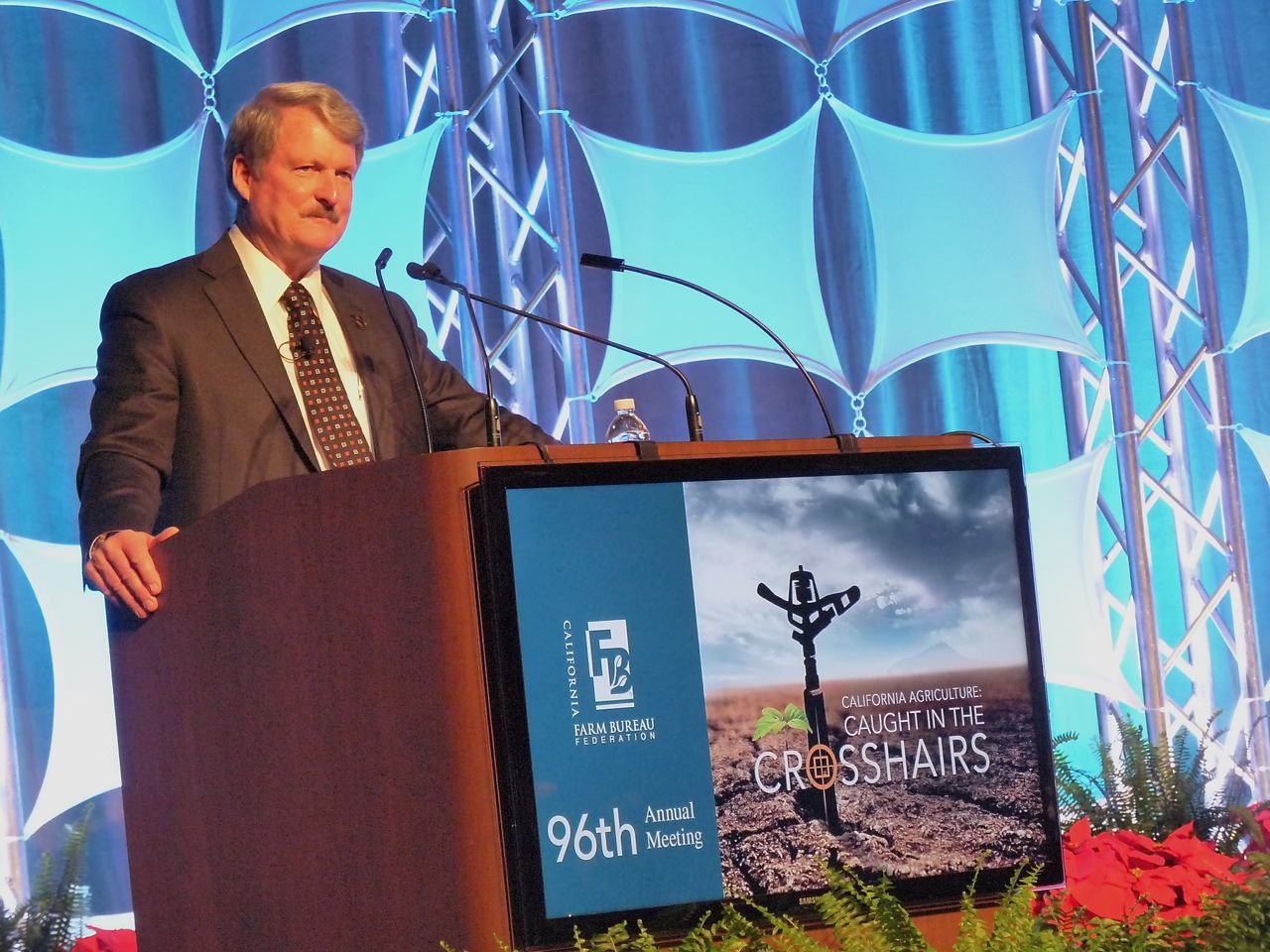
Paul Wenger, president of the California Farm Bureau Federation (CFBF) welcomed attendees to the 96th Annual CFBF Meeting by introducing the conference’s theme, ‘California Agriculture Caught in the Crosshairs.’

“The only way to be a target is to be standing still. I can guarantee we are not going to stay standing still, but from time to time, I think we have stood still. It is interesting; people say this is provocative, but it is also spot-on, California agriculture has adapted and improved, and continued to adapt and improve, and continues to provide food and fiber. We have become a victim of our own success, and because many times we would just as soon as sit back and hope the world would pass us by while we do nothing short of miracles by producing more and more food and fiber with basically the same resources we have had for years, all of a sudden, we’ve become victims of our own success.”Farm Bureaus Meeting Theme

“After two wet years when our reservoirs were brimming to capacity, our farmgate value in 2011 rose to a record of $43.5 billion. Now that’s farmgate, and you will hear other states say how they have a $100 billion farm economy, but this is just the farmgate, and we are not even talking about what our multiplier effect is.”

Wenger explained that California agriculture slipped by $1 billion in 2012, and “we have yet to see what the final report for 2013 will be. But, if it is any indication by what we have been witnessing  through the county ag commissioners in their reports for food and fiber production, it will likely set a new level.”

“And ladies and gentlemen, as bad as 2014 was for water, the fact that we had 4, 5 or 6 hundred thousand acres out of production, the fact that we had 17,000 jobs lost, what the University of California said was a $2.2 billion dollar farmgate loss due to lost production; I would estimate (and we won’t know until 2015), that 2014 will probably set a record year for farmgate value and income.”

“And we will have our detractors and others who say, ‘what is wrong on the farm?’ Agriculture continues to increase and produce even though we have challenges. The underlying number 1 challenge of the statistical health of California agriculture is water. Today’s presentation though is going to be forward-looking.”

Wenger’s presentation included a “Working for You” document handed out to each member that detailed the organization’s policies, and the duties of its staff, officers, and board of directors. Wenger recognized the efforts of Rich Matteis, CFBF administrator and staff to prepare the document and solve issues for the California Ag industry. Wenger explained, given the challenges over the last few years, and especially with the Affordable Care Act, “Rich Matteis has been doing nothing short of miracles, orchestrating our staff to be able to do more with less.” Wenger urged Farm Bureau members to carefully review the document to understand how the organization is endeavoring to work on their behalf.

Though the document did not include contributions from the 53 county farm bureaus, Wenger recognized the farm commissioners and the work product from their bureaus, led by volunteer staff who have to transition around new leadership every few years. “They have to keep air in the tires, and the bearings greased so everything works in our county farm bureaus. As a grassroots organization, it’s those folks and the folks we have at CFBF and the American Farm Bureau Federation (AFBF) that really help those of us who are farmers and ranchers to accomplish what we do.”

Wenger considers 2014 a very interesting year and expects the same in 2015. “It’s all about water, folks. Think back not too long ago to August when we had all the mechanizations around the water bond: ‘is it going to be a $6.5 billion bond? Is it going to be $6 billion bond?” There were questions about water storage and how much funding would be allocated for water storage.

“We finally got it done with a near unanimous vote to get the water bond on the ballot for $7.5 billion with $2.7 billion continuously appropriated for water storage. We don’t know what will happen, but we are glad it got on the ballot.”

Continuing, Wenger said that shortly afterwards, all the attention turned to groundwater. “The two groundwater bills working their way through the legislature were signed by the governor in September.” Later, one of the authors, former Democratic California State Assemblymember Roger Dickinson, wrote, “The Governor signs historic groundwater legislation. California’s water future is secure.”

“Nothing could be further from the truth,” said Wenger, attributing Dickinson’s recent defeat at the polls to the funding and efforts of the California Farm Bureau Fund to Protect the Family Farm (FARM PAC).

“Let’s not lose focus on what happened in November. For the first time in four decades, the electorate decided to do something about our water infrastructure.” Their message to Sacramento, well beyond the water bond, was, “We need to do something about our water infrastructure, not only for our environment, not only for municipal and industrial, but most of all for agriculture because we are feeding the world.”

“And so what happened is nothing short of phenomenal,” he continued, congratulating the board for stepping up and spending the funds to be able to get over the threshold and have a win.”

Returning to the theme of the conference and its positive outlook in his closing, Wenger stated, “A lot of folks will say that ‘Caught in the Crosshairs’ is a picture of despair. I actually say, ‘no, it’s hope.’”

Wenger said there’s hope for what the industry can do if given a little bit of water. “Some folks will say that with the clouds, it is doom and gloom; but remember, we need to have rain clouds to have water in our reservoirs and streams. Really this is a picture of opportunity and of what can be and will be if we work together and really take an aim on advocacy.”

“As we take an aim at advocacy, everybody gives the example of a three-legged stool: one leg is not any good without the others. “That’s absolutely true; I couldn’t do what I do without Kenny Watkins (First Vice President) and Jamie Johansson (Second Vice President). As we look to the future, we have to educate; we have to engage; and, we have to be advocates.”

2016-05-31T19:32:11-07:00December 11th, 2014|

USDA Announces New Support to Help Schools Purchase More Food from Local Farmers

By: Monique Bienvenue; Cal Ag Today Social Media Manager/Reporter 

Agriculture Secretary Tom Vilsack announced that more than $5 million in grants will be given to 82 projects that support the U.S. Department of Agriculture’s (USDA) efforts to connect school cafeterias with local farmers and ranchers through its Farm to School Program. The program helps schools purchase more food from local farmers and ranchers in their communities, expanding access to healthy local food for school children and supporting local economies.

According to USDA’s first-ever  Farm to School Census released earlier this year, school districts participating in farm to school programs purchased and served over $385 million in local food in school year 2011-2012, with more than half of participating schools planning to increase their purchases of local food in the future.

“USDA is proud to support communities across the country as they plan and implement innovative farm to school projects,” said Vilsack. “These inspiring collaborations provide students with healthy, fresh food, while supporting healthy local economies. Through farm to school projects, community partners are coming together to ensure a bright future for students, and for local farmers and ranchers.”

Secretary Vilsack made this announcement at Common Market, a pioneering food hub in Philadelphia that connects wholesale customers to farmers in New Jersey, Pennsylvania and Delaware. Common Market is receiving a grant to support their “An Apple a Day” Program. The facility will act as a bridge between Pennsylvania Family Farms, a small Pennsylvania value-added processor, and public charter schools to provide food safety, product development, packaging, educational, marketing, planning, ordering and delivery support to farm and school food service partners.

Together, Common Market and the other selected projects will serve more than 4,800 schools and 2.8 million students, nearly 51 percent of whom live in rural communities.

2016-05-31T19:32:12-07:00December 8th, 2014|

New Program Seeks Growers to Help Curb Declining Bee Population

The U.S. Bee Buffer Project, a Pollinator Partnership initiative, is seeking 300 farmers, ranchers and foresters in California to set aside small plots of land as bee buffer zones. The soon-to-be-established honey bee forage supports pollination-reliant crops, which represent one-third of the food we eat.

“Honey bees play an integral role in the success of American agriculture,” says Laurie Adams, executive director for the Pollinator Partnership. “By fostering the health and growth of bee colonies, farmers are helping to enrich their crops and, ultimately, improve their bottom line.”

Why Bees? Why Now?

Honey bees are valuable to the nation’s crops and economics, contributing approximately $15 billion to the U.S. economy each year. Still, U.S. bees are having trouble finding food to store for winter months; 2012-2013 winter losses totaled more than 30 percent of honey bee colonies nationwide.

Specific to California’s economy agribusiness community, the state’s high-value crops requiring extensive pollination include:

  • Almonds – annual state crop value $4,347M
  • Berries – annual state crop value $2,122M
  • Avocados – annual state crop value $386M

Bee buffer zones between areas of pesticide application and sensitive species, sensitive habitats, water, and potential nectar sources, help to offset bee loss while improving the health of crops and orchards within four miles.

“We are excited to work with California farmers to improve bee habitat across the state, says Bill Lewis, president of the California State Beekeepers Association and U.S. Bee Buffer beekeeper partner. “This initiative is vital to encouraging a healthy pollinator habitat that results in a vibrant and diverse forage base for bee pollinators throughout the state, which is critically important to sustaining healthy bee colonies.”


Land owners in California willing to dedicate and maintain .25 to 3 acres – collectively impacting 6,000 acres – for an official bee buffer zone, can apply for the U.S. Bee Buffer Project. Those selected will receive free flower seed kits to plant in their buffers.

To learn more, reference the U.S. Bee Buffer Frequently Asked Questions. To review the eligibility requirements and complete participant application, visit http://beebuffer.com/.

The U.S. Bee Buffer Project is sponsored in part by Burt’s Bees®– through its non-profit organization The Greater Good Foundation – formed to help create 10,000 acres of healthy pollinator forage in the United States by 2020.

About the Pollinator Partnership

The Pollinator Partnership is a non-profit 501©3 organization—the largest organization in the world dedicated exclusively to the protection and promotion of pollinators and their ecosystems. Birds, bats, bees, butterflies, beetles, and other small mammals that pollinate plants are responsible for bringing us one out of every three bites of food. They also sustain our ecosystems and produce our natural resources by helping plants reproduce. Without the actions of pollinators agricultural economies, our food supply, and surrounding landscapes would collapse.

2016-05-31T19:32:12-07:00December 6th, 2014|

Agriculture Emerging: a progress report at CDFA

The following was written by California Agriculture Secretary Karen Ross…

Positive. Productive. Creative, collaborative, cooperative … CDFA staff, from scientists and veterinarians to inspectors and technicians, embody these characteristics as they undertake a variety of projects and programs on behalf of the agriculture industry and the people of the Golden State. A new report, Agriculture Emerging: Balanced Budgets, Big Decisions, Bright Future, is our opportunity to share our recent successes and provide updates on many ongoing efforts.

Agriculture has its share of challenges, starting with the drought. Looking ahead, though, global demand for California’s commodities is on the rise, and food and nutrition are front-and-center in the media and on the minds of consumers. Whether their crops, livestock and other products are headed for the produce aisle, the commodity exchange, international export or the local farmers’ market, California’s farmers are well-positioned to take advantage of these conditions.

Among the most significant changes at CDFA is the department’s addition this year to the governor’s Strategic Growth Council, which also includes agencies and departments within Business, Consumer Services and Housing, Transportation, Natural Resources, Health and Human Services, and Environmental Protection, along with the Governor’s Office of Planning and Research.

This core group provides local assistance grants and coordinates activities that support sustainable communities by emphasizing strong economies, social equity and environmental stewardship. When diverse agencies embrace these fundamental values and goals, the results are powerful. The inclusion of agriculture in this process is an important step as we embrace the challenges and opportunities of the 21st Century.

With Governor Brown’s leadership, the State of California is again on the rise. The budget is balanced. Businesses are getting back on track. Slowly but steadily, confidence is being restored. Throughout this recovery, agriculture has been a steady fixture in the state’s economy.

This report is by no means a full account of the department’s activities, but it does take stock of many of our efforts and achievements over the past few years. Like the farmers we support, CDFA has earned a reputation for innovation and effectiveness. I am proud of the people here who make that possible.

2016-05-31T19:32:12-07:00December 5th, 2014|

Farm to Food Bank Month

The following was written by Governor Brown…

California is America’s most robust and bountiful agricultural producer. With over 81,000 farms and approximately 400 crops, agriculture in the Golden State is responsible for feeding much of the nation and world.

As California’s economy recovers amidst one of the worst droughts on record, farmers and ranchers across the state are also doing their part to prevent the spread of hunger and expand access to affordable, nutritious food in their communities.

We owe those within the agricultural sector our gratitude during these challenging times. I urge all Californians to recognize the contributions of California’s agricultural community, as well as the food banks and partner organizations they work with to provide nourishment to the most vulnerable among us.

Farm to Food Bank Month


Celebrate Farm to Food Bank Month and team up with the California Association of Food Banks, the California Department of Food and Agriculture, & California Grown to help out! For more information http://www.cafoodbanks.org/ 


2016-05-31T19:32:12-07:00December 3rd, 2014|

State employees donate 13 tons in Turkey Drop, Set record at Sacramento Food Bank

By: Monique Bienvenue; California Ag Today Social Media Manager/Reporter 

A partnership between California state employees and the Sacramento Food Bank has helped produce a record number of turkey donations via the 2014  Turkey Drop. The food bank accepted more than 9,300 turkeys for needy families in the Turkey Drop, with 1,760 of them–more than 26,000 pounds (13 tons!)–provided by state employees.Sacramento Food Bank

The Turkey Drop is one element in the ongoing State Employees Food Drive. Other ways to contribute include a rice donation program and a continuing effort to collect canned food and other items. State offices throughout the region have staged colorful bins to make donations easy.

The Sacramento Food Bank is Sacramento County’s largest direct food bank provider feeding approximately 40,000 food-insecure individuals a month, including 15,000 children and 8,000 senior citizens. In 2013, the food bank distributed over 6.5 million pounds of food, including 2 million pounds of fresh California-grown fruits and vegetables.

December is Farm to Food Bank Month . Help increase farm to food bank donations to 200 million pounds annually by making a product donation or future donation pledge today – contact Steve Linkhart, California Association of Food Bank at (510) 350-9916.

2016-05-31T19:32:12-07:00December 2nd, 2014|

Mann’s Snap Pea Sensations Kits Wins Award

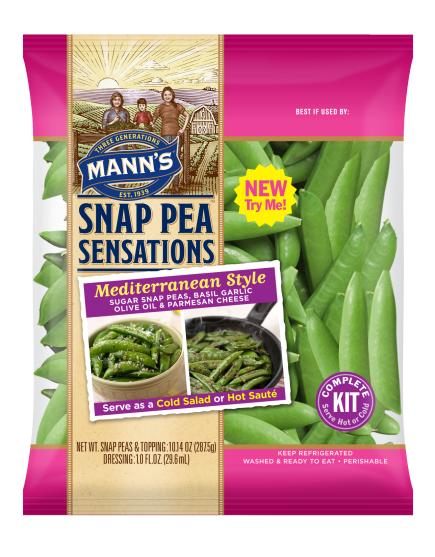
Mann’s Mediterranean Style Snap Pea Sensations™ Kit was named a Supermarket Star by Women’s Health Magazine and is featured in the November issue on newsstands now.

This is the second year in the row that a Mann product has been named a Supermarket Star by Women’s Health. The magazine is sold in the United States and Canada and has a circulation of 1.6 million. The magazine’s demographics match up well with Mann’s target market as the median reader age is 38, college educated and female.

“Mann’s snap peas outsell the competitors’ five to one; we know consumers love them and we also know time-starved parents are looking for creative and healthy meal solutions that are quick and easy to prepare for their families” said Kim St George, director of marketing and innovation. 

The kits are unique due their versatility—they can be prepared as a cold salad or a hot sauté; and served as a side dish, or as an entrée by adding protein.

“We’re very excited about these first-of-their-kind snap pea kits,” St George said. “There are no other vegetable kits on the market with this versatility.”

Mann’s 11-ounce Snap Pea Sensations kits are available in two flavors—Asian Sesame and Mediterranean Style. The Asian Sesame kit includes sesame seeds and an Asian-style dressing; the Mediterranean kit includes grated Parmesan cheese and a basil garlic-infused olive oil dressing. As with Mann’s value-added fresh-cut products, Snap Pea Sensations kits have a 16-day shelf life. The suggested retail price is $3.99 to $4.99.

Mann’s produced a video demonstrating the easy prep involved to produce a Snap Pea “Sensations” cold salad or sautéed dish.

Beginning Nov. 1, the company applied more than 125,000 instant redeemable coupons for $1 off purchase to packages of the Snap Pea Sensations kits throughout US and Canada. The offer will be good through December at stores nationwide.

For more information about Mann Packing, visit veggiesmadeeasy.com.

2016-05-31T19:32:13-07:00November 27th, 2014|

A Grateful Word from Karen Ross

The following was written by California Agriculture Secretary Karen Ross…

What’s on the table for the Thanksgiving feast is often a matter of household tradition. In my family, that means turkey with all the fixings! Maybe your traditional Thanksgiving is much the same, but it’s good to know that here in California our bountiful crops and agricultural products make the options pretty inspiring. Whatever is on your family’s table – including flowers – Californians are blessed to live in this beautiful, productive and diverse place, and consumers all over the world are thankful for what our farmers provide.

Protecting the long-term viability of our agricultural systems and the people who make up California’s farm communities is part of our job here at CDFA, and we are so proud to be a part of that effort. It takes a lot of hands to bring a crop to harvest, starting with the ranchers, farmers and farmworkers themselves. It has been heartening in recent years to see so many consumers paying more attention to where their food comes from and who grows it. Our farmers deserve our thanks for the care and attention they devote to our food supply. Let me also express my thanks for all of the other agencies, stakeholders, scientists, educators and representatives who, along with CDFA, play supporting roles in the achievements of our farmers and ranchers.

I feel fortunate to have been given such vital work to do, and such wonderful employees and colleagues to work with. Ranchers, farmers and farmworkers don’t shy away from hard work, and they have entrusted us at CDFA to be a partner in their efforts. Gratitude for what we have in-hand and what we have accomplished together is an essential part of the Thanksgiving spirit, but it is also important to be thankful for the anticipation of worthwhile work that remains.

I wish you and your loved ones a very happy Thanksgiving and a joyous holiday season!

2016-05-31T19:32:13-07:00November 26th, 2014|
Go to Top