CDFA Secretary Karen Ross Celebrates Banned Books Week

According to the American Library Association, more than 11,300 books have been “challenged” by schools, bookstores and libraries. Banned Books Week was created to celebrate the freedom to read, and celebrates open access to information.

To draw attention to the harms of censorship and celebrate the importance of free speech, the California State Library is hosting an online video “Read-Out” during Banned Book Week, September 21-27.

Many books that have been removed from library shelves and classrooms over the years are now considered classics of modern literature and taught in schools throughout the country.

John Steinbeck’s The Grapes of Wrath is included in that list, and is the same book from which CDFA Secretary Karen Ross was invited to read. In 1939, it was banned due to its harsh portrayal of Dust Bowl refugees and the hardships they faced coming west. It was banned in at least one California county, and Joseph Stalin banned it in the Soviet Union.

California State Librarian Greg Lucas started the week by reading a passage from One Flew Over the Cuckoo’s Nest, and Secretary Ross has joined other Brown Administration cabinet members in reading from banned books throughout the week.

Banned Books Week ends on September 27; make sure to celebrate your right to read and your freedom of speech.
2016-05-31T19:33:24-07:00September 26th, 2014|

Governor Brown’s Groundwater Legislation Signing was Imminent

The Process of the Governor’s  New Groundwater Legislation is Flawed

 By Kyle Buchoff, California Ag Today Reporter

On September 15, Governor Brown signed a new package of groundwater legislation into law.

Barry Bedwell, president of the California Fresh Fruit Association, which represents a large part of the tree fruit industry across the state, says the signage of those bills was imminent. Bedwell, known to be an agricultural leader who fights for farmers, remarked, “I think given the severity of the drought, and the fact that everyone has been calling for action, no one should be surprised that the governor has decided to sign these bills.”

“I think the problem is that the process itself is flawed,” Bedwell continued. “We, as stakeholders, particularly from Agriculture, did not have the opportunity to vet the ideas, weigh in on this groundwater legislation and try to come to a consensus–much like we did on the water bond–to make sure that agriculture had a buy-in to the process. That is what was lacking here,” said Bedwell.

Bedwell says that no one in Ag argues against the need for sustainability in groundwater management. “We all understand that. But once again, when you have three bills that were amended the last few days of the session, and then voted on in the wee hours of the night on the last day, it is just not a system that inspires confidence. You just can’t do that.”

Bedwell predicts attorneys will be lining up for litigation. “For the next 30-40 years, maybe, these people will be in litigation on these kind of issues,” he said.

2016-05-31T19:33:24-07:00September 23rd, 2014|

Commentary: Groundwater Legislation: “One Size Fits All” Just Doesn’t Fit

By Sen. Tom Berryhill; Ag Alert

In the waning hours of the legislative session, three bills that will drastically alter California’s groundwater management were passed with little vetting by the public or stakeholders impacted by the proposed changes. Senate Bill 1168 and Assembly Bill 1739 had been making their way through the legislative process, but in a completely different form than what was presented in the final days of the legislative session. Senate Bill 1319 was added to the package with just hours to go and voila, the legislative leadership declares a negotiated groundwater management package that works for all of California.

Far from it. “Negotiated” implies people of opposing viewpoints had input, something that did not happen.

Almost universally, agriculture was opposed, and I would imagine had it not been “negotiated” behind closed doors, there would have been an outcry from other regions and stakeholders throughout the state as well. Make no mistake, these groundwater bills will radically change decades of California water policy and give unprecedented authority to the state’s water bureaucracy to declare winners and losers. All without an appeals process. This is no way to craft policy.

Legislators of both political parties immediately sent a joint letter to Gov. Jerry Brown requesting that he veto the bills and call a special session of the Legislature to develop a reasonable groundwater management plan.

Earlier this summer, the Legislature put together groundbreaking water bond legislation. We did it in the light of day with months of negotiations and years of work behind the policy changes. These negotiations were a true victory for the people of California and a shining example of how well we can do something when we work together.

As a farmer and a Californian, I am absolutely concerned about increasing conditions of overdraft in many groundwater basins and the long-term effects on access to groundwater and land. But I believe California is playing a dangerous game if it pursues the one-size-fits-all approach of these bills.

Add into the mix a devastating drought that has severely tested our ability to prioritize where dwindling supplies of water should go—agriculture, environment or homes—and any solution becomes murkier.

Some basins have been critically overdrafted for decades, and in those instances state oversight may be an appropriate option as a way to spur local-management improvements. However, other basins have little or no overdraft problems or already have effective management systems in place. These bills treat all scenarios the same, a de facto punishment of the basins doing it right.

What started earlier this year as a legislative effort to remedy overdraft of aquifers in specific areas of the state morphed into a policy package that addresses issues well beyond mitigation of overdraft, all done at the last minute, without policy hearings, in the final weeks of the legislative session.

The regulatory regime for groundwater extraction enacted in these bills will not only invite lawsuits, it turns a blind eye to the differences between the 500-plus water basins in California and ignores ongoing local overdraft mitigation efforts. This is a bureaucratic power grab by the state’s water agencies, not an honest solution to a problem.

It took us more than 10 years to craft a good water bond that addresses the needs of a variety of communities, interest groups and industries. Was three weeks enough time to fully consider and seek consensus on the numerous, substantial policy changes made to groundwater management? I think not.

In the coming years and decades, the authorities granted in this bill will radically change the landscape of groundwater management. That will have a de-stabilizing impact on those who depend on groundwater supplies, particularly in Northern and Central California, thus the virtually unanimous opposition of the agriculture community to these proposals.

Yes, it is time to craft groundwater regulation that meets today’s needs, but these bills won’t get us there. Let’s go back to the drawing board and craft a narrower, more effective measure focused on basins where real problems exist, encouraging them to implement management measures modeled by other regions and providing a mechanism for the state to partner with areas when local management fails. We came together and passed the water bond; we can, and should, do the same for groundwater management.

2016-05-31T19:33:24-07:00September 21st, 2014|

California gets $22 million from USDA for conservation programs

Source: CDFA

Agriculture Secretary Tom Vilsack announced that $328 million in conservation funding (more than $22 million to California) is being invested to help landowners protect and restore key farmlands, grasslands and wetlands across the nation. The USDA initiative will benefit wildlife and promote outdoor recreation and related sectors of the economy.

“Conservation easements help farmers and ranchers protect valuable agricultural lands from development, restore lands that are best suited for grazing, and return wetlands to their natural conditions,” Vilsack said. “These easements are making a dramatic and positive impact for our food supply, rural communities and species habitat.”

The funding is provided through the Agricultural Conservation Easement Program (ACEP), which was created in the 2014 Farm Bill to protect critical wetlands and encourage producers to keep lands in farming and ranching. Approximately 380 projects nationwide were selected to protect and restore 32,000 acres of prime farmland, 45,000 acres of grasslands and 52,000 acres of wetlands. A summary of ACEP funding provided to each state can be found online.

In addition to protecting cropland and critical habitats, conservation strengthens outdoor recreation and helps boost the economy. According to the National Fish and Wildlife Federation, annual United States conservation spending totals $38.8 billion, but it produces $93.2 billion of economic output throughout the economy – 2.4 times more than what is put in. This output takes the form of more than 660,500 jobs, $41.6 billion in income and a $59.7 billion contribution to national Gross Domestic Product, or GDP.

Through ACEP, private or tribal landowners and eligible conservation partners working with landowners can request assistance from USDA to protect and enhance agricultural land through an agricultural or wetland easement.

These easements deliver many long-term benefits. For example, this year’s projects will:

  • Improve water quality and wetland storage capacity in the California Bay Delta region;
  • Reduce flooding along the Mississippi and Red rivers;
  • Provide and protect habitat for threatened, endangered and at-risk species including sage grouse, bog turtles, Florida panthers, Louisiana black bear, and whooping cranes to recover populations and reduce regulatory burdens; and
  • Protect prime agricultural land under high risk of development in urban areas to help secure the nation’s food supply and jobs in the agricultural sector.

ACEP consolidates three former Natural Resources Conservation Service (NRCS) easement programs – Farm and Ranch Lands Protection Program, Grasslands Reserve Program and Wetlands Reserve Program – into two components. One component protects farmlands and grasslands, and the other protects and restores agricultural wetlands.

2016-05-31T19:33:26-07:00September 12th, 2014|

Joel Nelsen issues Statement Following NASS Navel Orange Crop Estimate

California Citrus Mutual Responds to Navel Orange Crop Estimate

California Citrus Mutual (CCM) President Joel Nelsen issued the following statement in response to the 2014-15 California Navel Orange Objective Measurement Report released today by the National Agricultural Statistics Service, Pacific Regional Field Office.

“Today’s release of the navel orange crop estimate by USDA is a necessary and mandated announcement that historically has provided an accurate assessment of California’s Navel Orange crop. Since California supplies 85% of the Nation’s fresh citrus this release is usually received with anticipation and fanfare.

“Generally speaking it sends signals to the consumer and to the markets around the country and world that California citrus growers are back. The number released is developed via a painstaking field assessment and formula that rely upon a bevy of statistics compiled over the years. This year that data base is being disrupted because of the drought and therefore the accuracy of the total number is suspect, in our view.

“The statistical team relies upon specific acreage for fruit-set and limb count which, over the years, establishes a record for the average number of fruit per tree. However, this year there is no way of knowing if that acreage has been affected by the drought, whether it has had a full complement of water, or if it has been removed. Additionally, the statisticians have no way of knowing how much of total acreage has been adversely affected.

“After canvasing a significant number of producers and shippers CCM believes the crop estimate is high. We know acreage has been removed from production but getting figures for a range has been difficult. We know the lack of water has affected fruit size during the growth stages but surveying 126,000 acres is almost impossible. We also agree there is more fruit on the tree as compared to last year, however fruit size is a concern. All of this effects the number of cartons ultimately packed.

“CCM believes that a ‘normal’ crop will materialize in the first four months of the season. The season will start early if we begin to have cooler nights and the fruit breaks into a bright orange color. It also appears that the hot temperatures during the summer has created a highly flavorful crop. Size structure through February will be positive for the consumer. Exterior quality is also excellent.

“Water costs have been obscenely high which will be reflected in sales prices in order for growers to offset the increased expense. The industry is mindful, however, of its obligation to move a quality product to the market at a reasonable price.

“CCM also believes that the amount of Mandarin varieties available to the consumer will be larger than in past seasons due to the increased number of trees now in production. Again, prices will reflect higher water costs.

Last year’s Navel Orange and Mandarin crop was adversely affected by the December freeze. The 2014-15 crop will have a higher number of Mandarins available than last year’s forecast, while Navel Oranges will be equal to or slightly less than last year’s forecast due to factors attributed to the drought.

“All of the above is predicated, of course, on a moderate winter without freeze related losses.”

2016-05-31T19:33:26-07:00September 11th, 2014|

Food donations underscore drought impact

By Kate Campbell; Ag Alert

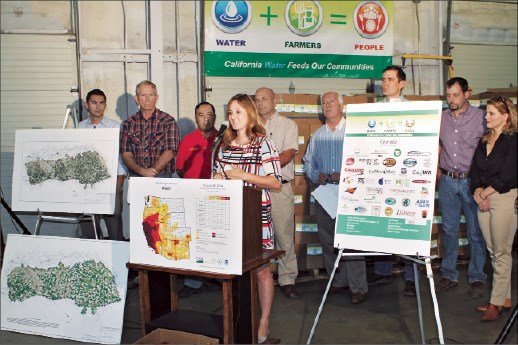
Central Valley farmers and businesses donated and shipped about 30 tons of fresh fruits, vegetables and nuts last week to help address food shortages at California food banks. A newly organized grassroots coalition, “California Water Feeds Our Communities,” was joined by the California Community Food Bank, Westlands Water District, the California Water Alliance and El Agua Es Asunto De Todos to bring valley-grown produce to those in need across the state.

Fresno County farmer Bill Diedrich said the impact of fallowing hundreds of thousands of acres of irrigated cropland in the San Joaquin Valley this year translates into significant economic losses for the valley’s small farming communities.

“It’s the people—and the communities that depend on agricultural production—that are getting hurt,” Diedrich said at a news conference in Fresno to announce the donations. “For example, the schools are being hurt. If people are moving on, there’s no reimbursement for (school) attendance and the children of those families who’ve stayed are losing out. Besides the school districts, cities and counties also are being affected and their ability to help in this crisis is reduced.”

Diedrich said that when he drives through the valley’s small towns, he sees workers standing around idle, “because there’s so much fallowed ground there isn’t the normal demand for labor. We’re looking at a disaster and we’re hoping for regulatory relief,” noting that Congress will be considering drought-relief bills in coming weeks.

Kym Dildine with Fresno-based Community Food Bank said one in four people in Fresno, Kings, Madera, Kern and Tulare counties copes with food insecurity, a situation made worse by the ongoing drought.

Prior to the drought, she said the agency was serving about 220,000 people a month. With the drought, that number has increased by another 30,000 people a month in the five-county area.

“Every food bank we’ve spoken to is really grateful to be receiving an entire truckload of fresh produce grown right here in the valley,” she said. “Because less fruit is available, they’re having a harder time accessing it.”

To help address the problem, 15 trucks were loaded with boxes of fresh produce at Simonian Fruit Co. in Fowler before heading to food banks in Fresno, Merced, Bakersfield, Los Angeles, Watsonville, Salinas, Santa Maria, Oxnard, Riverside and San Diego.

“The food we grow here extends far and wide,” said Gayle Holman of the Westlands Water District. “In fact, most people don’t even realize the food they may be eating in other parts of the state, or across the United States, actually originates here.”

The Fresno County Farm Bureau, along with many valley farms and businesses, supported the food donation effort, as did irrigation districts and service groups such as the Girl Scouts of Central California-South and the Fresno Area Hispanic Chamber of Commerce, as well as California State University, Fresno.

Participants said the coalition hopes not only to bring attention to the impact of the drought and how far-reaching it is, but also to set the stage for future food donation drives as the crisis deepens during the winter. Diedrich said the effort also brings attention to the fact that an unreliable water supply jeopardizes everyone’s food security.

“The drought has impacted California’s food banks because they can no longer adapt to the spike in food prices resulting from a lack of water for farmers,” said Cannon Michael, president of Los Banos-based Bowles Farming Co. “This campaign has been launched to feed the needy and raise awareness about how the drought hurts the most vulnerable people in the state.”

Drought-related land fallowing brings “many unintended consequences,” Michael said.

“We hope raising awareness about the drought will bring all stakeholders together to find short- and long-term solutions,” he said.

Westside farmer Sarah Woolf said the coalition will continue to support food banks.

“This was just one small aspect of how we’re trying to help,” she said.

When the U.S. Bureau of Reclamation announced a zero water allocation for farm customers south of the Sacramento-San Joaquin Delta, Mendota Mayor Robert Silva said his community knew it was facing “a terrible situation.” But he said the city learned from the drought in 2009 and immediately began preparing.

“We got service agencies and utilities to come in and set up assistance programs right away,” Silva said. “We’ve added recreational opportunities for our youth to keep them busy and we’ve been finding ways to support our schools.”

In 2009, Silva said water shortages led to severe social problems such as domestic violence and higher school dropout rates that might have been eased with adequate social services. The unemployment rate in Mendota today is in the range of 35 percent, he said, compared to 50 percent at the same time in 2009.

“Unemployment is still high, but not as bad as we feared,” Silva said. “But we’re not out of danger yet. I understand it’s going to be a short growing season this year, harvest is nearly over, and that means more people will be unemployed for a longer time. We haven’t seen the worst yet.”

He said Mendota residents have been planning ahead and “trying to get the resources they’ll need to get by until they can go back to work next year,” and more agencies are prepared to help.

“But it’s going to be a long winter,” Silva said.


2016-05-31T19:33:26-07:00September 10th, 2014|

CA Grown Releases New “Growing California” Video

The California Department of Food and Agriculture released a new segment in their “Growing California” video series. This installment, “Water Wise,” focuses on one of the most pressing and contentious issues facing the state, efficient water use while also producing crops.

In the words of CDFA Secretary Karen Ross, the video series is a way to connect people to the food they eat and the tremendous bounty of California agriculture. “I just see this yearning for people to make a connection,” Secretary Ross said. “In an era when people want to know more than ever about the origins of their food, we wanted to do our part in sharing these important, compelling stories.”

Total viewership on CDFA’s Planting Seeds Blog for a tracked period in 2013 (February through September) was 59,071 – a 22,384 viewer increase from the previous year. Of the increased viewership – the video series is representative of approximately 44 percent of this total. Average viewership per video, as of September 2013, is estimated at 346 views.

Growing California is a partnership between CDFA and the Buy California Marketing Agreement, which is behind the “California Grown” campaign. The videos, which have won a total of six Telly Awards, were produced in association with the Creative Services department at California State University, Sacramento (CSUS).

You can see more videos in the series here at http://www.californiagrown.org/growing-california/.

2016-05-31T19:33:27-07:00September 8th, 2014|

Twin Tunnels Could Produce Friant Dry Year Water Woes

Source: Friant Waterline 

While “progress” on the Bay-Delta Conservation Plan’s ambitious and controversial twin tunnels planning continues to mostly be marked by delay, Friant Division contractors and the Friant Water Authority are looking long and hard at findings in troubling computer modeling.

Friant Water Authority directors were told at their August 28 meeting in Visalia that the twin tunnels proposal to bypass the fragile Delta not only lacks benefits for Friant users, it could actually make Friant’s future dry year water supply problems worse.

‘LOSING PROPOSITION’

“Computer modeling shows it is a losing proposition with less water supply reliability to Friant, particularly in dry years,” said Ronald D. Jacobsma, FWA General Manager.

The FWA and its member districts have been evaluating the state’s twin tunnels plan to determine if Friant users would benefit from the two tunnels’ development. That includes San Joaquin River Exchange Contractor water, Cross Valley Canal water and San Joaquin River Restoration Program recirculation in addition to assumptions as to allocation of costs amongst water contractors.

All of this is crucial in Friant’s BDCP consideration because the tunnels, expected to cost many billions of dollars, are to be financed on a “beneficiary-pays” basis. Jacobsma said project proponents have indicated Friant’s share could be about $3 billion.

“The current process has lots of uncertainty,” Jacobsma said. “The bottom line is they won’t be starting construction any time soon on those twin tunnels.”

MORE DELAY

Delay, in fact, popped up again in late August when the California Department of Water Resources indicated that the BDCP needs more work as a result of the massive volume of public comments received on a draft environmental impact report.

Nancy Vogel, DWR spokeswoman, told the Sacramento Bee, “We’re going through it and we’re going to revise and send it back out for public review. We continue to look for ways to reduce the impacts to Delta residents and landowners.”

With a revised BDCP now scheduled to be released early next year, the newest delay is certain to consume several months. The plan has been seven years in the making.

The entire program’s cost is estimated at $25 billion. The BDCP is not to be funded through the pending state water bonds, should Proposition 1 be approved by voters. The Legislature intentionally kept the bond “Delta neutral” because of controversy surrounding the BDCP and twin tunnels.

The tunnels would be an isolated water conveyance system under the Delta between Courtland and state and federal water export pumping plants near Byron, northwest of Tracy.

EPA CONCERN

Meanwhile, a new wrinkle in the twin-tunnels plan popped up August 28 when the U.S. Environmental Protection Agency suggested the project could violate the Clean Water Act and increase harm to endangered species. EPA said the project could increase Delta concentrations of salinity, mercury, bromide, chloride, selenium and pesticides.

2016-05-31T19:33:27-07:00September 5th, 2014|

Bayer CropScience Plans Further US Growth, Opens New R&D Site in California

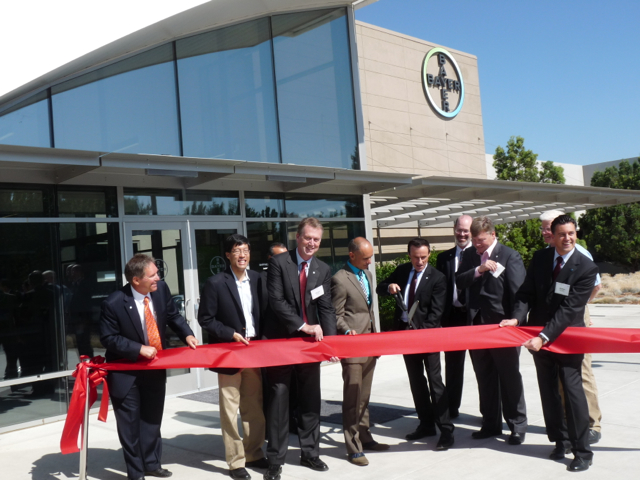
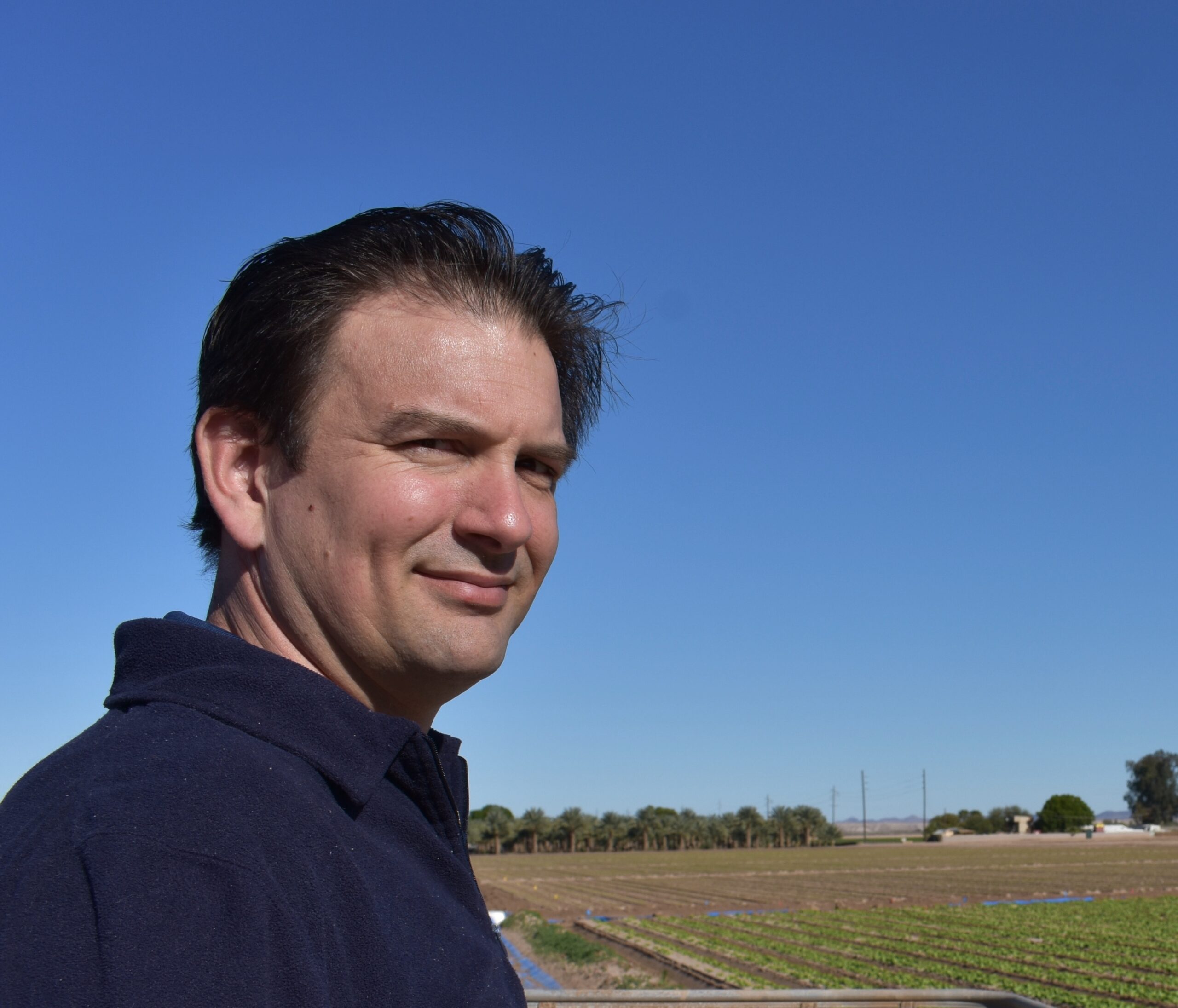
Bayer CropScience sees a positive long-term market development in North America and is committing significant resources to spur further growth. “We see future growth driven by increasing and sustained demand from customers for improved seeds and innovative crop protection products,” said Bayer CropScience CEO Liam Condon at the September 3, 2014 official inauguration of the company’s new integrated R&D site in West Sacramento, California.

Liam Condon, CEO of Bayer CropScience

Liam Condon, CEO of Bayer CropScience

“We are investing heavily in R&D infrastructure such as laboratories, greenhouses and breeding stations as well as new production capacities and seed processing facilities,” Condon explained. He said that the company aims to grow faster than the U.S. market.

Bayer CropScience plans to invest close to US$ 1 billion (EUR 700 million) in Capital Expenditures (CAPEX) in the United States between 2013 and 2016, mainly to ramp up research and development and to expand a world-class product supply of its top crop protection brands. These expenditures are part of a global investment program Bayer CropScience started last year, with a total CAPEX for the period 2013 to 2016 of EUR 2.4 billion (approximately US$ 3.3 billion).

Consolidating and expanding R&D organization is key for Bayer CropScience

Bayer CropScience seeks to better leverage its full research and development capabilities by consolidating and expanding its global R&D organization. “Our integrated West Sacramento site represents a major step forward in our efforts to enhance our vegetable seeds and biological crop protection innovation efforts,” said Dr. Adrian Percy, Global Head of Research and Development at Bayer CropScience. “The investment into this state-of-the-art facility creates an environment where our researchers and experts can find the best possible conditions to discover solutions that growers across the globe can depend on to produce high-quality food in a sustainable manner.”

The new West Sacramento site, which also serves as the global headquarters of Bayer CropScience’s Biologics Business has the capacity to house up to 300 employees. The approximately US$ 80 million facility is situated on 10 acres of land and features a 100,000-square-foot building and a 35,000-square-foot pilot plant to support research and development of biological crop protection products, as well as a 30,000-square-foot Vegetable Seeds research building. The facility will also include a 2,000-square-foot greenhouse and five acres of nearby land for future greenhouse space.

Expansion of production capacities in the USA

Bayer CropScience's New West Sacrmento Biologic Facility (PAC)

Bayer CropScience’s New West Sacrmento Biologic Facility

In addition to building its R&D network in the USA, Bayer CropScience is also investing significantly in the production capacities of its crop protection products.

“Along with capacity expansions at our Muskegon, Michigan and Kansas City, Missouri sites, the construction of our new plant in Mobile, Alabama for the production of our herbicide Liberty™ will contribute significantly to our future growth plans,” stressed Condon, who pointed out that the increased production of Liberty™ will help U.S. growers fight weed resistance, a key challenge for U.S. farmers.

“The single biggest investment item in the USA is our planned capacity expansion of Liberty™ herbicide. This is a strong signal to the market as Liberty™ is the only nonselective herbicide that controls glyphosate-resistant weeds,” said Jim Blome, president and CEO for Bayer CropScience LP and Head of Crop Protection for the North American region. “Two-thirds of our planned investments in the United States between 2013 and 2016 are intended to expand our production capacities. This includes measures to further optimize our supply chain in order to increase flexibility and thrive despite market volatility,” Blome added.

Investments in Seeds business and U.S. infrastructure

Bayer CropScience is also investing constantly in its Seeds business. In June 2014, the company announced plans to expand its North American and global Seeds headquarters in Research Triangle Park (RTP), North Carolina. The RTP site has experienced significant operational growth in recent years, and approximately US$ 200 million will be invested through 2016. “The construction of greenhouses as well as the necessary infrastructure and land development represent our continued commitment to growth in RTP,” said Blome.

The overall RTP investment program includes further important projects, for example the construction of the Development North America facility dedicated to Crop Protection and Environmental Science research; renovations to Bayer CropScience´s North American headquarters, scheduled to be completed in 2015; construction of the 6,000 square-foot North American Bee Care Center; and the purchase of 70 acres of land to accommodate future growth, which includes a new 29,500 square-foot greenhouse.

Bayer CropScience also plans to invest approximately US$ 90 million in its Cotton Research and Development Laboratory in Lubbock, Texas. Founded in 1998, the company’s global cotton headquarters is focused on providing cotton growers with the products and solutions they need to meet the world’s growing demand for fiber. With a staff of around 120 experts, Bayer CropScience operates two breeding stations, a seed processing plant, a quality assurance lab, a seed warehousing facility, and a state-of-the art research and development lab.

Complementing this, the company also invested US$ 17 million in the expansion of its Memphis Research and Development site, bringing total greenhouse capacity to 76,000 square feet. Located in the heart of the Mississippi Delta, a world-class group of scientists, researchers, technicians and agronomists with a specialized set of skills is developing high quality cotton and soybean varieties as well as trait innovations. Their aim is to support Bayer CropScience’s growing global cotton and soybean seed businesses through molecular breeding and other innovative technologies.

2016-05-31T19:33:27-07:00September 5th, 2014|

DPR Scientists Say Most Fresh California Produce Tested Has Little/No Detectable Pesticide Residues

The California Department of Pesticide Regulation (DPR) announced that once again, the majority of produce it tested annually had little or no detectable pesticide residues and posed no health risk to the public. 95 percent of all California-grown produce, sampled by DPR in 2013, was in compliance with the allowable limits.

“This is a vivid example that California fresh produce is among the safest in the world, when it comes to pesticide exposure,” said DPR Director Brian R. Leahy. “DPR’s scientifically robust monitoring program is an indication that a strong pesticide regulatory program and dedicated growers can deliver produce that consumers can have confidence in.”

DPR tested 3,483 samples of different fruits and vegetables sold in farmers markets, wholesale and retail outlets, and distribution centers statewide. More than 155 different fruits and vegetables were sampled to reflect the dietary needs of California’s diverse population.

Of all 3,483 samples collected in 2013:

  • 43.53 percent of the samples had no pesticide residues detected.
  • 51.51 percent of the samples had residues that were within the legal tolerance levels.
  • 3.99 percent of the samples had illegal residues of pesticides not approved for use on the commodities tested.
  • 0.98 percent of the samples had illegal pesticide residues in excess of established tolerances. A produce item with an illegal residue level does not necessarily indicate a health hazard.

Each piece of fruit or vegetable may legally contain trace amounts of one or more pesticides. The amount and type of pesticide (known as a tolerance), is limited by the U.S. Environmental Protection Agency. DPR’s Residue Monitoring Program staff carries out random inspections to verify that these limits are not exceeded.

The produce is tested in laboratories using state-of-the-art equipment operated by California Department of Food and Agriculture (CDFA). In 2013, these scientists frequently detected illegal pesticide residues on produce including:

  • Cactus Pads from Mexico,
  • Ginger from China,
  • Snow Peas from Guatemala and
  • Spinach from the US

Most of the 2013 illegal pesticide residues were found in produce imported from other countries and contained very low levels (a fraction of a part per million). The majority of the time they did not pose a health risk.

One exception occurred in 2013 when DPR discovered Cactus pads, imported from Mexico, that were tainted with an organophosphate-based pesticide. This had the potential to sicken people. DPR worked with the CA. Dept. of Public Health to issue an alert to consumers in February 2014. DPR also worked diligently to remove the entire product it from store shelves and distribution centers. In addition, DPR asked the US Food and Drug Administration to inspect produce at the borders and points of entry to stop shipments into California.

California has been analyzing produce for pesticide residues since 1926 and has developed the most extensive pesticide residue testing program of its kind in the nation. The 2013 pesticide residue monitoring data and previous years are posted at: http://www.cdpr.ca.gov/docs/enforce/residue/rsmonmnu.htm

2016-05-31T19:33:27-07:00September 4th, 2014|
Go to Top