CVCWA Encourages Valley Residents to Join Chapter

Written By: Monique Bienvenue; Cal Ag Today Communications Manager

With the California Women for Agriculture recently celebrating its 40th anniversary, it’s no surprise that the Central Valley Chapter (CVCWA) is taking initiative to recruit new members.

“The CWA has been an integral part of my life,” said Central Valley Co-President Jane Bedrosian. “I may not have been present at the last Statewide Meeting in San Luis Obispo, but I saw renewed excitement about the CWA on the faces of the ladies who did get to go. I want to help share that excitement about agriculture with our friends and neighbors here in the Central Valley.”

The CWA is a statewide organization dedicated to bringing women together to “speak on behalf of agriculture in an intelligent, informative, direct and truthful manner.” Beginning in 1975, the CWA has been an instrumental organization in shedding positive light on what the agriculture industry is all about. From planning community events, speaking to politicians in Sacramento and promoting agriculture education – CWA members are determined to bridge the gap between agriculturalists and those removed from the industry.

“There is power in numbers,” said Central Valley Co-Presdient Marlene Miyasaki. “I believe that the stronger our presence is in our community, the easier it will be for us to inform others of the hard work necessary to provide food for the world.”

With 18 CWA chapters located throughout the state, there are ample opportunities for women to become advocates for agriculture within their communities. And the kindred spirit doesn’t end there; various statewide meetings are held annually, bringing together hundreds of CWA members from all over California.

The CVCWA has approximately 30 active members, but is looking to expand its membership. With issues like the California Drought and Immigration Reform currently taking the Central Valley by storm, agriculture literacy has never been more crucial.

The CVCWA is planning to make an appearance at the World Ag Expo in Tulare and Farm and Nutrition Day in Fresno; they are also currently working with Fresno County 4-H for other community events.

For more information about the CWA and its many chapters, click here.
 

2016-05-31T19:30:33-07:00January 30th, 2015|

UC Davis Launches Innovation Institute for Food and Health

Tackling Food Issues is Big Goal of the Innovation Institute

By Edward Ortiz

Sacramento Bee Reporter

The fate of the world’s food supply, the relationship of food to health, and the role of venture capital in farming were among a slate of issues tackled by noted national scientists and others during the official launch of the Innovation Institute for Food and Health at UC Davis on Wednesday.

The center is a partnership between the university and Mars Inc., and signals a deepening of a 40-year relationship between the two.

The institute is destined to operate under the umbrella of UC Davis’ planned World Food Center, which the university has said it wants to establish in Sacramento, possibly in the downtown railyard.

Wednesday’s event at the Mondavi Center was the first held by the Innovation Institute, which will be funded with $40 million from Mars, the company best known as the maker of Snickers and M&Ms. UC Davis will contribute $20 million.

“This will be a research-based relationship, but there is another element to it. It will also be an innovation-based relationship,” said Harold Schmitz, chief science officer at Mars Inc.

In participating, Mars hopes to find a sustainable business model it can use in the long term for its food operations – especially its growing pet food operation.

For UC Davis, the Institute is being seen as a Silicon Valley-like center where startups and innovative research will be created within the food realm.

Mars will not be the only company involved in the center. Other companies, universities and entities will eventually be brought into the fold, said Linda P.B. Katehi, chancellor of UC Davis.

“A number of faculty have already started collaboration work with other companies, and we will invite them to participate,” Katehi said. She did not specify which companies are involved, or what research might be included.

The broad-based approach the institute seeks to take in tackling food issues was evident in the wide-ranging and powerhouse roster of speakers invited to the symposia.

One of those was molecular biologist and Nobel Laureate Elizabeth Blackburn, who spoke about how education and genetics affect health. Blackburn won a Nobel prize in medicine in 2009 for her research into how chromosomes are protected by shoelace cap-like end pieces called telomeres.

Blackburn related a key study of 100,000 Californians that found those who did not finish high school had shorter telomeres, a phenomenon correlated with the onset of disease, like cancer.

Blackburn said that an innovation institute could allow such research to get into the hands of those who can use it for the public good.

“Communication is absolutely the key thing,” Blackburn said. “Scientists are skeptical of other areas of science. There’s a lot of mutual mistrust.”

Karen Ross, secretary of the California Department of Food and Agriculture, also attended. “I believe this is a watershed moment for food and health” she said. “At the end of the day, nutrition education is an important foundation for helping our youth learn lifelong habits and this is the kind of thing that should happen in this region.”

Climate change and its effect on food security was also a topic of discussion.

“We’re at a tipping point where we’ve seen warning signals. We can no longer plead ignorance, we’re no longer bystanders,” said Benjamin Santer, atmospheric scientist at the Lawrence Livermore National Laboratory. “So, I hope this new institute can do a better job of communicating the science of climate change.”

2016-05-31T19:30:34-07:00January 16th, 2015|

California Projects in New USDA Regional Conservation Partnership Program

Agriculture Secretary Tom Vilsack has announced 115 high-impact projects across all 50 states and the Commonwealth of Puerto Rico will receive more than $370 million in federal funding as part of the new USDA Regional Conservation Partnership Program (RCPP).  In addition, these projects will leverage an estimated $400 million more in partner contributions—for a total of nearly $800 million—to improve the nation’s water quality, support wildlife habitat and enhance the environment.

“This is an entirely new approach to conservation efforts,” said Secretary Vilsack. “These partnerships empower communities to set priorities and lead the way on conservation efforts important for their region. They also encourage private sector investment so we can make an impact that’s well beyond what the Federal government could accomplish on its own.”

The RCPP competitively awards funds to conservation projects designed by local partners specifically for their region. Eligible partners include private companies, universities, non-profit organizations, local and tribal governments and others joining with agricultural and conservation organizations and producers to invest money, manpower and materials to their proposed initiatives.

Through the RCPP, partners propose conservation projects to improve soil health, water quality and water use efficiency, wildlife habitat, and other related natural resources on private lands.

Four of the selected projects are connected to California:

1) Expansion of Waterbird Habitat – The current sequence of events for rice production creates a situation where birds are frequently left with abrupt changes in habitat availability. The proposal extends the “watering” season of flooded rice fields beyond just the production phase and adds shallow water habitat in the winter/spring and fall months. This proposal supports the California Rice Commission in expanding the Waterbird Habitat Enhancement Program (WHEP) by 50 percent, thus enhancing the wildlife value of 165,000 acres of rice and the long term sustainability of rice agriculture.

2) Rice Stewardship Partnership – The Rice Stewardship Partnership, composed of Ducks Unlimited, the USA Rice Federation, and 44 collaborating partners, will assist up to 800 rice producers to address water quantity, water quality, and wildlife habitat across 380,000 acres in Mississippi, Arkansas, California, Louisiana, Missouri, and Texas.

3) Tricolored Blackbird Habitat – The Tricolored Blackbird once was abundant in California with a population in the millions. It now has an estimated 145,000 birds remaining statewide, and many predict that it is heading toward extinction. This proposal is a partnership between the dairy industry and conservation groups, with Audobon California as the lead partner, to address the factors that challenge California dairy farmers and threaten Tricolored Blackbirds, with the goal of finding a sustainable solution for management of colonies on farms and saving the Tricolored Blackbird from extinction.

4) Klamath-Rogue Woodland Health and Habitat Conservation – Many at-risk and listed species depend on quality oak woodlands that are threatened by conifer encroachment, densification, and severe wildfires in this project area, covering portions of Oregon and California. Working with landowners, including historically underserved producers, and using a sound, science-based approach, the partners will target 3,200 high-priority acres recently identified in a Conservation Implementation Strategy to preserve, enhance, and restore the structural diversity, ecological function, and overall health and persistence of oak habitats and their watersheds.

A complete list of the projects and their descriptions is available on the NRCS website.


2016-05-31T19:30:34-07:00January 15th, 2015|

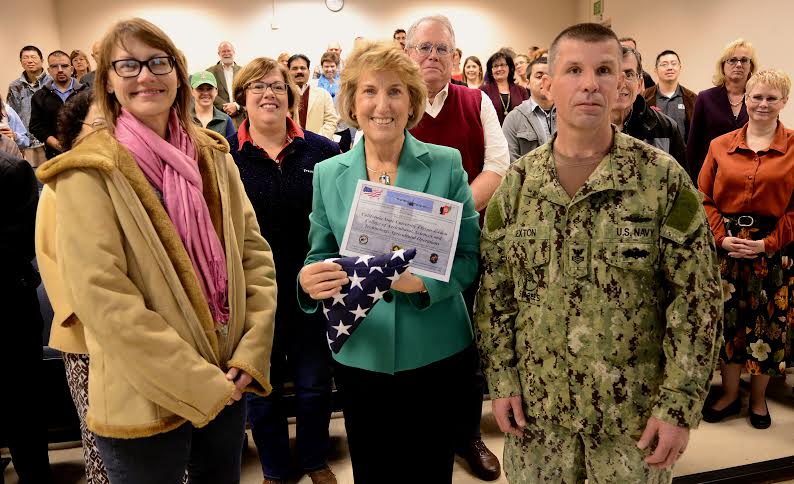
Afghanistan vet presents flag at Jordan College Assembly

Fresno State mechanic Danny Sexton marked his return from an eight-month deployment to Afghanistan by presenting an American flag to the Jordan College of Agricultural Sciences and Technology Tuesday.

The 10th-year mechanic is based full-time out of the Ag Operations office and presented the 3×5 flag to his co-workers as a thank-you for their support while on active duty with the U.S. Navy last year.

The E6 Petty Officer 1st Class returned to Fresno in late November after an eight-month stint at Bagram Air Base near Charikar, Afghanistan as an equipment operator after two months of training in Kentucky, New Jersey and Virginia.

“Fresno State was very supportive and held my job while I’m gone,” Sexton said. “I wanted to give one of the flags we flew back to the College to show how much I appreciated their support.”

In Afghanistan, he served on the logistics task force for transportation, and his main duties involved moving cargo and soldiers to other nearby destinations. Vehicles are also at the core of his Fresno State duties as he maintains campus vehicles ranging in all sizes.

“I enjoy both jobs because I’ve always liked working on equipment,” Sexton said. “They are complimentary since I can fix things on campus job and operate machinery in the military. I can also use the other position’s skills when necessary without missing a beat.”

While away last year, he still kept in close contact with his family and friends through Facebook, cell phones, texting and mail, and watched his granddaughter grow up on Skype. He also tracked the Bulldogs football team online and emailed with co-workers to keep updated on office news.

He first enlisted in the Navy in 1986 after high school to follow the career path of an uncle who had also served in the military. That move began a 20-plus year stint that began with five years of active duty in Europe and Florida. After a 10-year break, he re-enlisted in July 2001 and has been a naval reservist ever since.

He has served two other 10-month deployments in Iraq (2003) and in Kuwait (2009-10). In those stints, he served as a heavy equipment operator in the construction battalion, and operated all types of equipment used to build or dig camps, roadways, level & clear land for buildings, dig trenches, and roll out/pave roads.

Navy training will continue to be an active part of his life with his once-a-month weekends of service and a two-week stint during the year. Down the road, he hopes to deploy again before he retires from the Navy.

When he returned home the day before Thanksgiving, it made the holidays even more special for his wife Kathy, stepson and granddaughter Victoria.

“My wife hadn’t planned on me being there for Thanksgiving so it was pretty special when I texted her a couple days before,” Sexton said. “She was a little shocked and went into overdrive to get everything ready for an early return. On that afternoon, she was worried nobody would be there when we arrived because our dogs had gotten out and she ran into some traffic problems. But it all turned out fine, and she was there with plenty of time with some of our friends and family, including my 14-month old granddaughter.”

2016-05-31T19:30:34-07:00January 14th, 2015|

Farmers protect citrus crop from freezing weather

By Steve Adler; Ag Alert

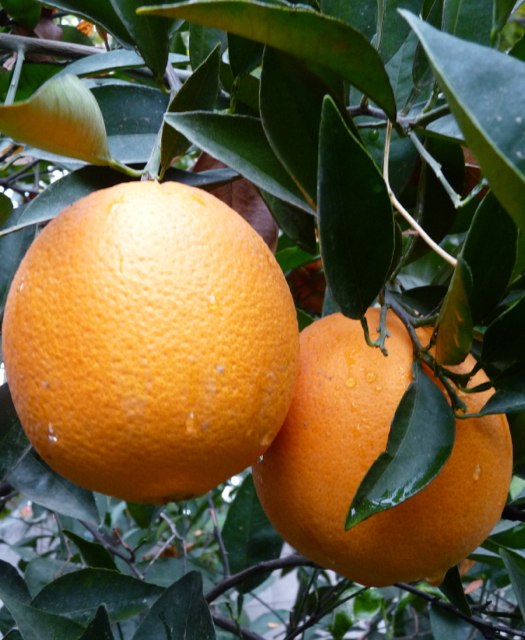
San Joaquin Valley citrus, which last year suffered multimillion-dollar losses due to freeze, escaped a similar fate at the turn of the new year, even though temperatures dropped to well below freezing.

The entire state felt the impact of a cold front that moved through California from Canada, and it was a particular concern in the citrus belt that extends north from Kern County to Madera County.

Cold temperatures prevailed throughout citrus-growing areas for six nights, prompting growers to activate their frost-protection measures. California Citrus Mutual said groves in Riverside, Kern, Tulare, Fresno and Madera counties all experienced temperatures dropping to 26-29 degrees for short durations.

CCM President Joel Nelsen said there could be “isolated areas of damage” to mandarin groves, particularly to trees and fruit farthest from wind machines, but he said any losses “should not affect volume or price significantly.”

The two primary citrus crops grown in the citrus belt are navel oranges and mandarins. Of the two, navels are more cold-tolerant and typically become vulnerable to frost only when temperatures drop below 28 degrees for several hours or for several nights in a row. Mandarins, on the other hand, can suffer freeze damage once temperatures dip below 32 degrees.

Any damaged fruit that won’t pass quality standards to go into the fresh market would go to processing, said Bob Blakely, CCM vice president.

The current citrus harvest began a few weeks ago, and an estimated 75 percent of the fruit remained on the trees when the cold weather began. Growers use wind machines or irrigation systems, or a combination of both, as frost-protection measures. By irrigating, growers can elevate the ground temperature slightly. Wind machines help to keep the air moving, breaking up pockets of cold air that can create problems.

Citrus Mutual estimated there are more than 22,000 wind machines throughout the citrus belt, most of which operate on propane. The organization estimated Monday that farmers had spent more than $16.5 million on frost-protection measures during the six-night freeze operation.

Given the drought situation, Nelsen said, most growers remained “very judicious” in using groundwater for frost protection.

“Our information is that pumping groundwater has been minimal,” he said.

One of the most water-starved areas is Terra Bella in Tulare County, where many farmers bought emergency water at high prices last summer to keep citrus trees from dying in the drought. Many of those growers have a little bit of that water left, and said they were using it to protect their groves from frost.

“On our farm, we bought some emergency water last summer and we still have some of that available to us until February,” said Roger Everett, a citrus grower in Terra Bella, “so we are using that water that we have left for frost protection. Growers who didn’t buy any of that water probably don’t have any water available for frost protection.”

Everett said it has been his experience that citrus trees are able to tolerate the cold fairly well, but the fruit can be vulnerable. Blakely of CCM agreed with that assessment.

“In California, it is typically a case of lost fruit rather than a killing of the trees,” he said. “Our conditions here in this state are such that in the wintertime we have enough cold temperatures where the trees can go into a quasi-dormancy, where they can withstand quite low temperatures before we have any damage to the fruiting wood.”

The freezing temperatures came just over a year from a December 2013 freeze that caused an estimated $441 million in citrus losses.

Consumer demand for navels has been quite good, bringing “decent” prices to farmers, Blakely said.

“Prices were higher a few weeks ago, but we are starting to see them come off a little bit. Consumer acceptance of the fruit has been very good and demand has remained steady. Movement in the domestic market last year was actually higher than it was in the previous year. In the wintertime, there really aren’t any other producing areas that are providing navel oranges to the United States. However, if there is an event that causes a reduction in the California crop, some of that market could possibly be taken up by some of the European mandarins,” he said.

San Joaquin Valley citrus wasn’t the only crop or region that faced potential crop losses due to the freezing weather. Temperatures of below 32 degrees were recorded in the Coachella Valley as well as the desert areas of the Imperial Valley and Yuma, Ariz. The cold temperatures caused some reported production losses to all varieties of lettuce as well as to spinach. As a result, customers might see some short-term shortages in the next couple weeks, farmers and shippers said.

The Coachella and Imperial valleys and the Yuma area produce about 90 percent of the nation’s winter vegetables. Cold weather slows plant growth and delays the daily harvest activity until the plants begin to thaw in late morning or early afternoon.

2016-05-31T19:30:34-07:00January 12th, 2015|

Women in Ag Survey: Gauging the Aspirations and Needs of Women in Agriculture

The American Farm Bureau Women’s Leadership Program has launched “Women in Ag,” an online survey that aims to gauge the goals, aspirations, achievements and needs of women in American agriculture in a number of different areas.

All women who are farmers, ranchers, farm/ranch employees, employed in agricultural businesses, pursuing ag-related higher education or supportive of agriculture in other ways are invited to participate in the survey at womeninag.fb.org. Respondents must reside in the United States. Farm Bureau membership is not required to participate.

“This comprehensive survey is the first of its kind to ask women in-depth questions about how they are connected to agriculture and what leadership skills they think are most important today, as well as the top business challenges they’re facing,” said Terry Gilbert, a Kentucky farmer and chair of the American Farm Bureau Women’s Leadership Committee.  “All women involved in agriculture – not just Farm Bureau members – are invited to participate in the survey,” Gilbert emphasized.

Data collected from respondents will be used to gauge trends related to the achievements of women in agriculture, including leadership positions, business successes and election to public office.

The AFB Women’s Leadership Committee is sponsoring the survey and is working with other farm and agriculture organizations to encourage participation. Participants will be eligible for an opportunity to win one of five $100 gift cards after the survey closes. Preliminary findings from the survey will be released in February 2015 at AFBF’s FUSION Conference in Nashville, Tennessee; the full report will be released in late spring.

2016-05-31T19:30:35-07:00January 8th, 2015|

Early rains help range partially recover

By Ching Lee; Ag Alert

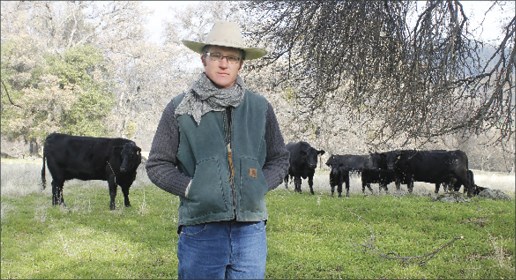
Late autumn and early winter storms that moved through the state have spurred greener pastures, improving grazing conditions on California rangelands, but ranchers say more rainfall is needed for them to begin rebuilding their herds.

“As far as grass growth, this is as good of a feed year as we’ve ever had this early in the season,” said Placer County cattle rancher Joe Fischer. “This early grass growth and early root establishment will really set us up to have a phenomenal feed year come spring if these rains continue.”

But he said he also prepared for additional drought by reducing the herd he manages by 20 percent last winter and leaving more residual feed on the ground in order to promote better grass growth this season.

Mild temperatures have also aided grass growth, Fischer said, but they don’t bode well for a healthy snowpack—sensors measure the Sierra Nevada snowpack at about half of average—and that will affect water supply for this summer where he has irrigated pasture. In addition, many springs are not yet flowing the way they should be, he added, noting that a lack of drinking water on one ranch prevented him from placing any cattle there in early fall, even though it had plenty of residual dry feed.

“I’m still fearful that we aren’t out of the woods yet when it comes to drought in California,” he said.

Despite his fears, Fischer said he’s “hopeful and optimistic that this is going to turn around for us” and that California ranchers will move toward reestablishing their herds, though their cattle numbers will remain conservative at first.

With last month’s deluge, Mariposa County rancher Clarence Borba said it appears he can start retaining some of his cattle, after being forced to cut his herd in half and to buy feed when there was nothing left to graze. Because he leases his ground, which receives no irrigation, Borba said his costs soared when he had to buy feed and pay rent on the land even when no grasses were growing.

“There were times when I didn’t know if we were going to make it through,” he said.

Borba said while he’s trying to build back his herd, he’s doing it slowly.

“Things are looking a lot brighter now than they were a few months ago, but our profit margin is pretty narrow, so you can’t make too many mistakes and spend too much money,” he said.

San Joaquin County rancher Diana Connolly said she sold about a quarter of her herd early last year and didn’t keep any replacement heifers, due to a lack of feed. Like many cattle ranchers around the state, she has had to buy plenty of hay during the last three years. Whether she will keep any replacements this year will depend on how the rest of the rainy season goes, she said, as she doesn’t have to make that decision until May, when she weans her calves.

Though she has filled her barns with hay, Connolly said if more rain does not come this season to improve pastures, “it won’t make any difference how much feed you have right now.” She recalled how the lack of precipitation last winter left ranchers scrambling, even though the fall began with some good moisture.

“The rains are good, but I think the whole cattle industry is still feeling the effects of the three-year drought,” she said.

One lesson that Sacramento County rancher Jim Vietheer said he has learned from the drought is to start buying crop insurance, with this year being the first time he’s signed up for it. He noted that federal disaster aid has allowed him to buy extra hay. Strong cattle prices have also allowed him to cull his herd more heavily than he normally would, so that he could reduce impact on his pastures.

He said even though recent rains “have helped our situation amazingly,” he fears it will be short-lived if the state does not continue to get more, periodic rainfall. For this reason, Vietheer said he’s going to remain conservative on his stocking rate on some of this leased properties, “in case it becomes another bad year.”

“I’m a lot happier, but you don’t want to count your chickens before they hatch,” he said.

For San Diego County rancher Jim Davis, his region has not gotten “significant amounts of rain” and it has “come very gently, with little runoff,” he said, but he also noted that “conditions are very much improved over what they were a month ago.”

He said his cattle will be on supplemental feed for another month and a half, but that is typical for this time of year. Being three hours away from the Imperial Valley, Davis said buying feed has not been a problem, and while the price of hay “is never low enough,” at least there’s an adequate supply.

But for now, he said he will try to maintain his herd at the current level.

“I’d like to see another year of good moisture before we start rebuilding,” he added.

Riverside County rancher Bud Wellman said his herd size has not bounced back because a fire two years ago destroyed much of his summer range, which is on forestland, and the U.S. Forest Service so far has not allowed grazing to resume.

“Right now is when the cattle would do the most good,” Wellman said, adding that cattle grazing would restore the forest ground so that water could penetrate it rather than causing floods.

What has helped him, he said, is that the Girl Scouts of Orange County has allowed his herd to graze its campgrounds for weed abatement and fire prevention.

While his summer range in the mountains has improved with the recent storms, Wellman said where he’s hurting is on his winter range, south of Palm Springs. He has not been able to place his cattle there because many of the springs and creeks cattle use for drinking water are still dry, and what rainfall the region received has not been enough to get them flowing.

“The water situation on the desert side is still very critical,” he said. “If we could get those streams and springs back, we’d be in good shape.”

2016-05-31T19:30:35-07:00January 7th, 2015|

34 Healthy Breakfasts for Busy Mornings

Source: Kate Morin; greatist.com 

When it comes to breakfast, the options are endless. Pancakes or waffles? Bacon and eggs? Muffin, followed by a pastry? So why limit chowing down on delicious breakfast foods to the morning hours? Here are 34 healthier snack options to keep filling those breakfast food cravings all month long.

Better Breakfast Snacks

1. Avocado Toast With Egg 

Sometimes, simple is just better. In this recipe, 2 slices of whole-grain bread, lightly toasted, topped with smashed avocado and a sprinkling of salt and pepper makes for a flavorful and rich base. Top that with two sunny-side-up eggs for a healthy dose of protein, and you’ve got a well-rounded breakfast. Stack ’em in a tupperware container for easy transport or cook the yolks a bit more and make the whole thing into a sandwich.

2. Peanut Butter Banana Smoothie 

Smoothies are a perfect on-the-go snack any time of day. Blend 1 frozen banana, 2 tablespoons peanut butter, 1 cup almond milk, and a few ice cubes. If this is a morning snack, keep it in a tight-sealing container and throw it in a gym or work bag. For an afternoon boost, prep it the night before and freeze, remove in the morning, and it will be thawed and ready to enjoy after lunch. Tip: Add a scoop of your favorite chocolate or vanilla protein for an extra protein boost.

3. Zapped Scrambled Eggs With Veggies 

Yes, it’s possible to make really good scrambled eggs in the microwave. And it’s easy! Beat 2 eggs, throw in a microwave-safe container, add 1 handful of your favorite veggies (cherry tomatoes and spinach leaves work well), and a sprinkle of cheese. Zap the mixture for 30 seconds, stir, and cook another 30 seconds, or until eggs are solid. Throw a top on the container to eat later, or store the raw mixture in a fridge until ready to heat and eat.

4. Fruit and Yogurt Parfait 

One of the easiest, healthiest, and tastiest breakfasts out there is a classic fruit and yogurt parfait. The best part? It can be made with any toppings you like. Try choosing fruits that are in season for the most flavorful options. (Try our stone fruit salad for summer, and opt for apples come fall).

5. Breakfast Burrito 

Who doesn’t love a burrito? Breakfast burritos are a great, easy snack to keep on hand. Scramble 2 egg whites, 1/4 cup black beans, 2 tablespoons salsa, and 2 tablespoons shredded cheese, and wrap in 1 small whole-wheat tortilla. Make a bunch, wrap in foil, and keep in the freezer for whenever the craving hits. Protein from the eggs and black beans keep you fuller longer, and the spicy salsa keeps things interesting.

6. Healthy Morning Glory Muffins 

An oat-based muffin packed with healthy carrots and zucchini, lightly sweetened with raisins and just a pinch of sugar makes a perfect breakfast or snack. Use a mini-muffin tin for smaller portions, and eliminate or cut back on the brown sugar or choose a healthier substitute to cut back on sugar.

7. Breakfast Quinoa Bites 

Here’s a new way to enjoy quinoa: make mini quinoa breakfast quiches! In a medium bowl, combine 2 cups cooked quinoa, 2 eggs, 1 cup your favorite veggies (spinach or zucchini work well), 1 cup shredded cheese, and a sprinkle of salt and pepper. Portion into a lightly-greased mini muffin tin, and bake at 350 F for 15-20 minutes. These are easy to bring along and delicious to enjoy warm or cold.

8. Fruit and Yogurt Smoothie 

Here’s a simple and delicious smoothie recipe for the morning rush. Blend 1 cup plain Greek yogurt with 1 cup frozen fruit (banana and berries work very well) with 1/2 cup liquid (milk, juice, coconut water—whatever you like). Freeze overnight and thaw throughout the day to enjoy in the afternoon, or blend up in the morning.

9. Leftovers n’ Egg 

Stuck with last night’s leftovers? Place a scoop of leftover roasted veggies, potatoes, or meat in a container, top with a cracked egg, and heat in the microwave until the egg white is cooked through, 30 to 45 seconds. (Or prep in the oven.) Feeling fancy? Sprinkle with some freshly grated parmesan cheese.

10. Fruity Breakfast Quinoa

Cooking quinoa in milk (cow, soy, or almond) and adding some sweet spices and fruit makes for a great substitute for classic hot breakfast cereals. Plus, it’s high in protein and essential amino acids like lysine, which is essential for tissue growth and repair. Simply cook quinoa according to package instructions, but substitute milk for water, and add some cinnamon or nutmeg instead of salt and pepper. Top with fresh berries and chopped roasted nuts.

11. Zucchini Bread Oatmeal 

Take a classic baked loaf and make it into oatmeal with this recipe! Adding shredded zucchini to oatmeal is a great way to fit in an extra serving of veggies. Throw on a handful of toasted walnuts or pecans for some added crunch.

12. Quinoa Fruit Salad 

Spice up a plain old fruit cup with a scoop of quinoa. Toss the whole shebang around until the quinoa is evenly distributed through the fruit. Add a scoop of plain yogurt and a drizzle of honey for a little extra body.

13. Oatmeal Squares 

Oatmeal is a great option for a hearty snack or breakfast, but what’s the best way to make it into a more convenient and portable snack? Bake it into squares!

14. Pumpkin Oatmeal Bowl 

A heaping dollop of pumpkin puree is a great way to squeeze in an extra dose of veggies. Plus, the super-orange superfood is packed with nutrients and a healthy dose of fiber. This recipe pairs the pumpkin with quick oats, pumpkin pie spice, and almond milk for a quick and easy breakfast on-the-go.

15. Ricotta and Tomato Breakfast Sandwich 

Here’s a healthier take on the classic breakfast sandwich: Take 2 slices of a hearty whole-grain bread, spread each slice with 1 tablespoon ricotta cheese and sprinkle with kosher salt and fresh cracked pepper to taste. Add 1-2 hearty slices of fresh beefsteak tomato (blotted with paper towel to remove excess liquid) and enjoy.

16. Savory Oatmeal With an Egg 

Try taking oatmeal to a whole new level by making it savory. Prepare as usual with milk or water, but add a pinch of salt and pepper instead of any cinnamon or sugar, and top with an over-easy or poached egg. Sprinkle with a little cheese for an extra yummy kick.

17. Overnight Oats 

This is the ultimate lazy-person breakfast. The night before, combine 1/2 cup milk, 1/3 cup rolled oats, 1/2 a banana (mashed), 1/4 cup chopped nuts, and a sprinkle of cinnamon in sealed Tupperware container. By morning, you’ll have delicious overnight oats! These can be heated in the microwave for 1-2 minutes if in the mood for something warm.

18. Zucchini Muffins 

Any way that fits a serving of veggies into a delicious baked good is a winner in my book. These zucchini and banana muffins with flaxseed fit three healthier options into one easy-to-tote package.

19. Peanut Butter, Banana, and Oatmeal Breakfast Cookies 

Cookies for breakfast? Yes please! While Oreos or Chips Ahoy may not make a balanced breakfast, a homemade cookie made of banana, peanut butter, protein powder, and oats is a wholesome choice. Plus, you can pick and choose what you like to mix—go for almond butter and raisins in one batch, or peanut butter chocolate chip in another.

20. Waffle PBJ-Wich

Try this sweet take on a classic breakfast sandwich the next time eating on the go. Prepare 1 whole-grain toaster waffle and slice in half. Spread with 2 tablespoons nut butter and layer 2-3 sliced strawberries on top in place of the traditional jelly (to cut down on sugar).

21. Egg and Cheese Cups 

Fried eggs are great, but what about baking a whole egg with veggies and cheese and skipping the added oil? Try making a pan of these egg and cheese cups at the beginning of the week and bringing one along each day. (Tip: If you use the individual silicone muffin molds, it makes the egg cups even more portable for on-the-go snacking.)

22. Homemade Instant Oatmeal

For anyone with a microwave or hot water at their disposal, these customized instant oatmeal packets are fantastic to have on hand. Instead of purchasing pre-made oatmeal packets, assemble your own in Ziploc baggies using whole rolled oats, cinnamon, and mix-ins like raisins and nuts.

23. Frozen Nutty Banana

Say banan-YEAH to this healthy snack. Cut 1 firm (but ripe) banana in half and un-peal, arrange on a small baking sheet or freezer-safe plate, and spread each half with 1 tablespoon almond butter evenly (on the sides not touching the plate). Here’s the fun part: Stick whatever toppings you like on top of the almond butter—our favorites are granola, chia seeds, or flax seeds and cinnamon. Insert a popsicle stick or skewer into the cut end of each half, and freeze until solid (at least 2-3 hours).

24. Chocolate-Banana Breakfast Quinoa

Here’s one healthy way to have chocolate for breakfast: a bowlful of quinoa makes for a protein-rich filling breakfast, and the banana even adds a serving of fruit.

25. Fruit Soup

There are just two ingredients in this tasty, cool snack: Cold fresh fruit, and cold milk. Chop 1 cup of fruit of your choosing (peaches, plums, berries, and mango are delicious!) and combine in a container with 1 cup milk of choice. Keep chilled until ready to enjoy.

26. Apple Surprise 

This is a perfect pick for apple season, Cut 1 apple in half and remove the core (plus a bit of the extra flesh around the core). Drop 1 tablespoon nut butter between the two holes, and sprinkle in 1 tablespoon granola. Wrap up the whole apple in plastic wrap or foil to save for later, or enjoy as is bite-by-bite.

27. Egg Sandwich 

Who doesn’t love a classic egg sandwich? Simply sautée a hefty handful of spinach and fry 2 eggs with a dash of salt and pepper. Place on top 2 whole-wheat English muffin halves (or toast) with 1 slice of cheddar cheese. Wrap in foil so the cheese melts evenly, and enjoy whenever the craving hits!

28. PBB&C 

Say what? A PBB&C is a great twist on the classic PB&J—peanut butter, banana, and chia. Try adding this superfood twist to the classic PB sandwich with 1/2 a banana (sliced) and a sprinkle of chia, which is packed with vitamins and minerals (like six times more calcium than milk!).

 29. Berries and Oats Microwave Muffin 
Muffins from the microwave? Yep, it’s possible! Add 1/4 cup quick oats, 1 egg, a handful of berries, and a sprinkling of brown sugar to a mug and mix until evenly combined. Microwave on high for 1 minute, remove to take a look, and keep cooking for 30 seconds at a time until the muffin looks firm.

30. Strawberry-Banana Quinoa Muffins 

By this point, I think the Greatist team believes quinoa makes anything better. So, muffins? It’s a no brainer. Try these strawberry quinoa muffins for an easily-packed snack or breakfast (or after lunch treat).

31. Pumpkin and Granola Parfait 

This one’s perfect to try out as fall sets in. In your favorite small Tupperware container (with a reliable lid!), top plain Greek yogurt with canned pumpkin puree and a handful of granola, then sprinkle with cinnamon. The best part? Pumpkin is a bonafide superfood rich in beta carotene, which is essential for eye health.

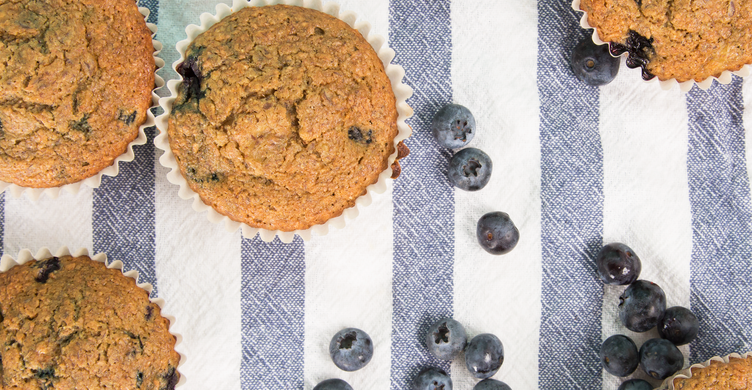
32. Whole-Wheat Banana Blueberry Flax Muffins 

At 200 calories each, these hearty, wholesome muffins make for the perfect portable breakfast. Flax lends a healthy dose of fiber and omega-3 fatty acids. Mashed bananas (one of our favorite healthy baking substitutions) allow for a slight reduction in the added fat and sugar in this recipe, too.

33. Egg Muffins 

Finally, a muffin without all the carbs. Plus, these guys are simple to make. Beat 10 eggs, 1/4 cup chopped onion, 3 handfuls of spinach, 1 shredded zucchini, 1/2 a bell pepper (chopped), 4 slices cooked bacon or ham, chopped, and a sprinkle of salt and pepper. Divide egg mixture evenly in a lightly-greased muffin tin, and bake for 20-25 minutes at 350 F. Zap it for a few seconds in the microwave before serving.

34. Lemon Poppy Seed Protein Squares 

Here’s a healthier take on the classic lemon-poppy seed muffin. Fiber-rich oat flour is paired with vanilla protein powder for a healthy, filling base. Yogurt lends moisture and some fat, and applesauce makes a great substitute for sugar. Vanilla extract, lemon zest, and (of course) make up the rest of the fresh flavor. The best part? One bar comes in at about 54 calories and six grams of protein—much better than any muffin we’ve seen on the shelves lately.

2016-05-31T19:32:09-07:00January 5th, 2015|

Why Almonds Belong in Your Diet

Almond Nutrition

Source: Alissa Fleck, Demand Media

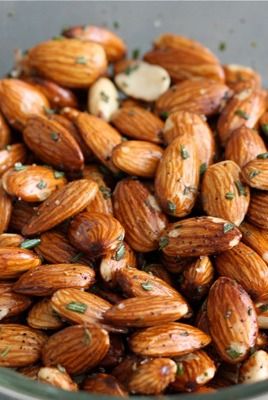
Natural, unsalted almonds are a tasty and nutritious snack with plenty of health benefits. Loaded with minerals, they are also among the healthiest of tree nuts. Just a handful of nutrient-rich almonds a day helps promote heart health and prevent weight gain, and it may even help fight diseases like diabetes and Alzheimer’s.

Nutrition

Eating about 23 almonds a day is an easy way to incorporate many crucial nutrients into your diet. Almonds are rich in vitamin E, calcium, magnesium, minerals and potassium. Additionally, almonds are a significant source of protein and fiber, while being naturally low in sugar. One 23-almond serving packs 13 grams of healthy unsaturated fats, 1 gram of saturated fat and no cholesterol or salt. Of all tree nuts, almonds rank highest in protein, fiber, calcium, vitamin E, riboflavin and niacin content by weight. There are 160 calories in 23 almonds. While many of these calories come from fat, it is primarily the healthy unsaturated fats and not the unhealthy saturated kind.

Almond Hull-split

Almond Hull-split

Heart Health

According to the FDA, eating 1.5 ounces a day of most nuts, like almonds, may reduce the risk of heart disease. Many of the nutrients in almonds help contribute to increased heart health. For one, almonds are rich in magnesium, which is critical in preventing heart attacks and hypertension. Several clinical studies have also shown almonds can be effective in reducing bad cholesterol and preserving healthy cholesterol, which plays a major role in heart health.

Weight Maintenance

Nuts, like almonds, are also beneficial for maintaining a healthy weight. The fiber, protein and fat content of almonds means it only takes a handful to keep you feeling full and satisfied so you won’t have the urge to overeat. According to “Fitness” magazine, the magnesium in almonds helps regulate blood sugar, which is key in reducing food cravings. Almonds may even be able to block the body’s absorption of calories, making them the ultimate weight-loss-friendly snack. Because almonds are naturally high in calories, it’s important to limit your serving size to the recommended 1 ounce, or 23 nuts.

Other Health Benefits

Almonds may also promote gastrointestinal health and even combat diabetes. The high fiber content of almonds gives them prebiotic properties, which contributes to health in the gastrointestinal tract. Prebiotics are non-digestible food substances, which serve as food for the good bacteria in the intestinal tract and help maintain a healthy balance. According to a study by the American Diabetes Association, a Mediterranean diet incorporating nuts, such as almonds, helps fight diabetes even without significant changes to weight, physical activity or caloric intake.

2021-05-12T11:06:01-07:00January 2nd, 2015|

CDFA ACCEPTING CONCEPT PROPOSALS FOR 2015 FERTILIZER RESEARCH AND EDUCATION GRANTS

The California Department of Food and Agriculture’s Fertilizer Research and Education Program (FREP) is currently accepting concept proposals for the 2015 grant cycle. FREP’s competitive grant program funds research that advances the environmentally safe and agronomically sound use of fertilizing materials.

The 2015 Request for Proposals (RFP) includes several initiatives put forth by the department to help effectively manage nitrogen fertilizers in agriculture. New this year is a call for integrating different aspects of nutrient management, including fertigation, irrigation, crop development and soil fertility into easy-to-use decision making tools and concepts that can help improve management practices. Additionally, the FREP seeks concepts and proposals to provide strong education and outreach opportunities on effectively and efficiently managing fertilizing materials.

Proposals for research projects are requested to fill gaps in nitrogen management information for specific crops, including corn, pima cotton, processing tomatoes, walnuts, citrus, and deep rooted vegetables such as carrots. Furthermore, the FREP is encouraging the development and submission of concepts that will demonstrate effective nutrient management practices that have been developed through experimental research trials (e.g., prior FREP research findings).

These demonstrations should implement practices at the field scale in organic and conventional fertilizers. Other priority research areas are developing Best Management Practices (BMPs), along with evaluating strategies and potential technologies to increase crop nitrogen fertilizer uptake; reduce nitrogen movement off irrigated agricultural lands, including nitrate leaching below the root zone; and minimize nitrous oxide emissions from nitrogen fertilizers.

Applicants are invited to submit two-page concept proposals to the FREP by Friday, January 16, 2015. Concepts submitted should be in line with at least one of the program’s identified priority research areas. Further information on the 2015 FREP request for concept proposals, including timelines, application criteria, priority research areas, and examples of successful proposals are available at: www.cdfa.ca.gov/is/ffldrs/frep/CompetitiveGrantProgram.html

In addition to the FREP’s regular RFP, CDFA is preparing a special RFP as part of its nitrogen initiatives. The priority areas for this special RFP are scheduled to be announced early January 2015. 

All concept proposals will be reviewed by the FREP’s Technical Advisory Subcommittee (TASC). Concept proposals that are selected by the TASC will be invited for development into full project proposals.

Applicants may also send e-mail inquiries to FREP@cdfa.ca.gov

Since 1990, the Fertilizer Research and Education Program has funded more than 160 research projects focusing on California’s important and environmentally sensitive cropping systems. A database of completed and ongoing research is publically available at: www.cdfa.ca.gov/is/ffldrs/frep.html

In collaboration with the University of California Davis, FREP is developing fertilization guidelines for major crops grown in California. The guidelines are uploaded on a flow basis and are available to growers and crop advisors through this web-based platform: http://apps.cdfa.ca.gov/frep/docs/guidelines.html

2016-05-31T19:32:09-07:00December 31st, 2014|
Go to Top