Whitefly and Aphid Pressure on Cotton

Cotton Growers: Beware of Whitefly and Aphid Pressure Early this Season 

By Laurie Greene, Editor

Pete Goodell

Peter B Goodell Ph.D., Cooperative Extension Advisor-IPM, Kearney Agricultural Research & Extension Center in Parlier, CA. (Source: UC ANR)

Pete Goodell, an IPM Advisor with UC Cooperative Extension based at the Kearney Agricultural Research & Extension Center in Parlier, Calif., noted that cotton growers should be treating for whitefly and aphid pressure earlier—instead of later—this season.

“On cotton, we are continually working with the whitefly and the green peach aphid. They have been a problem for the last 3-4 years, so we are continuously working with educational outreach to catch these pests early and manage their populations,” Goodell said.

Goodell explained, “I think with cotton acreage down significantly this year, we can really focus and ensure that everybody is aware of the pressure and how to handle the problem beginning in July. In some incidences, folks have misunderstood and treated whiteflys like aphids; folks started looking for the pests around the open cotton boll stage of growth. But that’s too late to treat for whitefly; growers must treat earlier to maintain a quality cotton crop.”

“That’s why we’re going to get ‘on the stick’ this year,” Goodell said. “We are going to hold a series of gin meetings and get the word out that growers need to start earlier to prevent damage from these insects.”


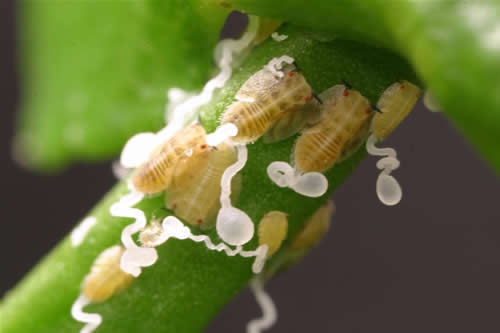
Feature photo source: Sweetpotato Whitefly, JackKellyClark, UC ANR
2016-05-31T19:28:13-07:00June 18th, 2015|

ASIAN CITRUS PSYLLID QUARANTINE EXPANSION IN KERN COUNTY

The California Asian Citrus Psyllid Quarantine includes, as of TODAY, two portions of Kern County following the detections of two ACP within the City of Bakersfield, one in the Westchester area and the other in the Panorama Drive area. The quarantine zone measures 63-square miles in the Westchester area and 65-square miles in the Panorama Drive area.  A link to the quarantine maps may be found here: www.cdfa.ca.gov/plant/go/acp-qmaps

The quarantine prohibits the movement of citrus and curry tree nursery stock out of the quarantine area and requires that all citrus fruit be cleaned of leaves and stems prior to moving out of the quarantine area.  An exception may be made for nursery stock and budwood grown in USDA-approved structures which are designed to keep ACP and other insects out.  Residents with backyard citrus trees in the quarantine area are asked not to transport citrus fruit or leaves, potted citrus trees, or curry leaves from the quarantine area.

County-wide Asian Citrus Psyllid Quarantines are now in place in Imperial, Los Angeles, Orange, Riverside, San Bernardino, San Diego, Santa Barbara, Tulare and Ventura Counties, with portions of Fresno, Kern, Madera, San Benito, San Joaquin, San Luis Obispo, and Santa Clara counties are also under quarantine.

The ACP is an invasive species of grave concern because it can carry the disease huanglongbing (HLB), also known as citrus greening.  All citrus and closely related species, such as curry trees, are susceptible hosts for both the insect and disease.  There is not cure once a tree becomes infected, the diseased tree will decline in health and produce bitter, misshaped fruit until it dies.  HLB has been detected just once in California – in 2012 on a single residential property in Hacienda Heights, Los Angeles County.  This plant disease does not affect human health.

Residents in the area who think they may have seen ACP or symptoms of HLB on their trees are urged to call CDFA’s Pest Hotline at 1-800-491-1899.

For more information on the ACP and HLB, please visit: www.cdfa.ca.gov/go/acp.

Featured Photo: Asian Citrus Psyllid, UC ANR

2016-05-31T19:28:14-07:00June 17th, 2015|

ADAMA Captan Gold ® 4L Now Registered in California

ADAMA Captan Gold ® 4L Fungicide Gets EPA “Go Ahead” for California Strawberries, Tree Fruits


Adama LogoADAMA has received EPA approval for Captan Gold 4L liquid fungicide for use on strawberries, tree fruits and other specialty crops. A multi-site contact fungicide, Captan Gold 4L penetrates fungal spores, protecting high-value crops against tough diseases like anthracnose, botrytis (gray mold), brown rot and scab.

“ADAMA Captan Gold 4L is the only liquid captan with a ‘Caution’ signal word,” states the company’s national marketing leader Sara Zinck. “Backed by more than 50 years of captan manufacturing experience, Captan Gold 4L delivers excellent efficacy through its multi-site mode of action, making it a trusted partner in fungicide resistance management.”

Gray Mold on Strawberry, UC IPM

Gray Mold on Strawberry, UC IPM


Captan Gold 4L on strawberries

For use on California strawberries, Captan Gold 4L is labeled for applications at 2 to 3 quarts per acre. Early applications at pre-bloom and bloom offer the best fruit protection from botrytis. Follow up applications can be applied at 7 to 14 day intervals up to harvest. Application rates are not to exceed 24 quarts per acre per crop cycle.

# # # # #

ADAMA Agricultural Solutions Ltd (formerly Makhteshim Agan Industries) is a leading global manufacturer of crop protection solutions. With a comprehensive range of high-quality, differentiated and effective products, ADAMA strives to provide accessible, easy-to-use solutions that simplify the user experience while improving crop yields.

For more information, call 866-406-6262 or visit Adama.com.

Always read and follow label directions. Captan Gold® is a registered trademark of an ADAMA Group Company. ©2015 Makhteshim Agan of North America, Inc. d/b/a ADAMA.

Featured photo: Strawberries, UC IPM

2016-05-31T19:28:14-07:00June 16th, 2015|

Westlands Water District Announces Westside Scholarship Recipients

Congratulations to the Westlands Water District Westside Scholarship Recipients!

Six outstanding high school seniors from communities on the Westside of the San Joaquin Valley have been selected to receive scholarships offered by the Westlands Water District. The 2015 scholarships are offered by Westlands under a program to recognize and reward exceptional academic achievement and leadership by graduate seniors at area high schools.

The recipients of the 2015 scholarships are:

Aneet Hundal, a senior at Coalinga High School. Ms. Hundal is an honors student who plans on attending the University of California, Irvine to pursue a degree in nursing. She was actively involved in the Academic Decathlon, Mock Trial, Link Crew, California Scholarship Federation and tennis and basketball. Additionally, she has received a number of awards including the Superintendent’s Honor Roll, Lab Biology II Star of the Month and Wendy’s High School Heisman.

Phillip Augusto, a senior at Lemoore High School. Mr. Augusto plans to attend Cal Poly, San Luis Obispo to pursue a degree in BioResource and Agricultural Engineering. He is an honors student who has received awards from the Future Farmers of America – Scholar Awards, State Degree, Chapter Degree and Greenhand Degree. Additionally, he has been a Robotics Team finalist at West Hills Collect Vex Robotics Competition and Student of the Month for the Lemoore High School Math Department.

Emily Parra, a senior at Tranquillity High School. Ms. Parra plans to attend Stanford University to pursue a degree in Economics/Education. She is an honors student who has been the president of the California Scholarship Federation, Associated Student Body Secretary and World Travel Club Vice President, Mathematician of the Year and Student of the Month.

Jackelyn Sanchez, a senior at Riverdale High School. Ms. Sanchez plans to attend University of California, San Diego to pursue a degree in Aerospace Engineering. She is an honors student who has competed in Academic Decathlon, is an AVID 8th Grade Tutor, Student of the Month, Science Olympiad Competitor, and won an End of the Year Award for maintaining a GPA above 4.0 throughout her high school career.

Gaston Ruben Aganza, a senior at Mendota High School. Mr. Aganza plans to attend Cal Poly, San Luis Obispo to pursue a degree in Engineering. He has held leadership positions in chess and Upward Bound and has participated in AVID, Young Legislators Program, Lend-A-Hand and MESA. Additionally, he was a cross-country runner.

Teddi Diedrich, a senior at Firebaugh High School. Ms. Diedrich plans to attend Menlo College to pursue a degree in agricultural business. She has received several awards in AVID (Student of the Year), Future Farmers of America Greenhand Degree, Honor Roll, Athlete Scholar, the Superintendent’s List and State Future Farmers of America and has also played softball and volleyball.

Each scholarship recipient will receive $1,000 to be used for community college or university expenses. Applicants were judged on their academic performance, school activities and community leadership. Each applicant submitted an essay on an agricultural-related topic.

“Westlands is honored to provide this assistance for these outstanding student leaders,” said Tom Birmingham, general manager of Westlands. “These scholarships represent a small gesture of thanks and support to the communities on the west side of the San Joaquin Valley that make our region such a productive and vibrant place.”

2016-05-31T19:28:14-07:00June 16th, 2015|

Farmers Are Doing the Right Thing for Dry Creek

Stanislaus County Farm Bureau Works With Growers to Clean up Dry Creek

By Laurie Greene, Editor, CaliforniaAgToday.com

Wayne Zipser is the Executive Director of the Stanislaus Farm Bureau and co-founder of the East San Joaquin Water Quality Coalition. Wayne spoke with California Ag Today about his work with both organizations and how farmers are doing the right thing.

Zipser addressed new nitrogen reporting standards for members of the coalition, “We’re the very first coalition in the Central Valley that will be required to report nitrogen use and that’s one of the things growers probably have not had to do yet. Right now they have to do their farm evaluation plans; they were due last year, but they had to be renewed this year.”

“The other coalitions will follow suit,” he said, “but we are the first coalition to require this for our growers. We’ve been successful; we’ve had success stories on a lot of our watersheds and we’ve actually improved our water quality. Part of being the first kids on the block is seeing the success stories,” Zipser said.

“One of the success stories involves Modesto’s Dry Creek, which was impaired with crop protection materials. Four years ago, the regional water board told us that we had to come up with a mitigation plan for all of our impaired water bodies. Well, all of them are impaired, so we had to create a priority list, and Dry Creek was one of the top priority watersheds in Modesto,” Zipser said.

“We visited with every grower along Dry Creek, just to let them know what the problems were and what we were finding. They generated their own solutions or we suggested some best management practices to mitigate problems. For the last two-and-a-half to three years, we have shown zero exceedences in the pesticides we are monitoring,” Zipser said.

“Farmers are out there doing the right thing. We showed them each problem, and they fixed it on their own. It doesn’t necessarily take rules and regulations to force people to do things. I congratulate all those farmers along Dry Creek. We also addressed issues along Lateral 5 on the Turlock Irrigation District.  As we continue to visit more the watersheds,” Zipser said, “we talk to those growers and see extreme improvements,” he said.

Zipser emphasized that most farmers just needed to be alerted about a watershed problem, and they readily collaborated to fix it. “They are all concerned about it,” he said. They all want to make sure they are doing the right thing. They also don’t want to lose access to the materials they have now, so they don’t want them to flow into the waterway and cause a problem down the road. I’ll tell you, it reinvigorates my belief that people want to do the right thing.”

Zipser acts as a grower representative of the Coalition, “If a grower has questions on how to fill out forms or on compliance issues, they can call me at the Stanislaus County Farm Bureau office.”


Contact Information:

Stanislaus County Farm Bureau

1201 L Street

PO Box 3070

Modesto, CA 95353-3070

(209) 522-7278 Phone

(209) 521-9938 Fax

Email: programs@stanfarmbureau.org

http://www.stanfarmbureau.com/index.htm

2016-05-31T19:28:14-07:00June 15th, 2015|

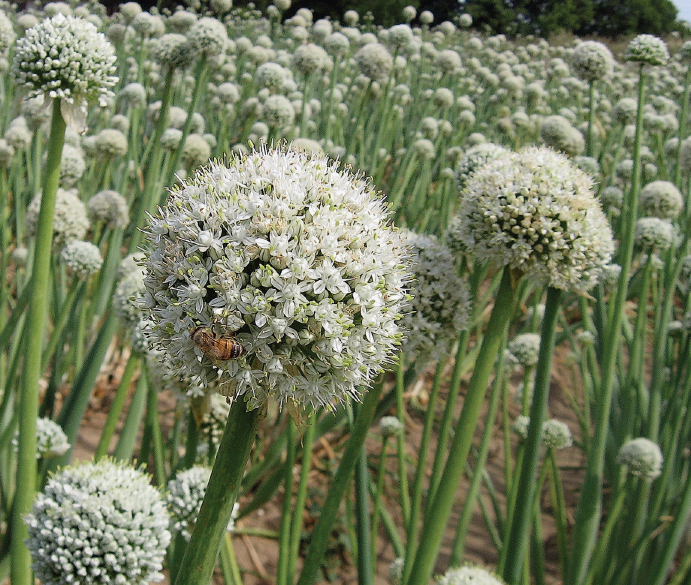
The Water Chase for Harris Farms Onions

Harris Farms Onions Diversify to Chase Water

By Patrick Cavanaugh, Associate Editor, CaliforniaAgToday.com

Some farmers facing very little or zero water deliveries in the Central Valley are investing in crops in areas where water is more plentiful. Steve Hamm, controller for Harris Farms near Coalinga in Fresno County, noted that Harris Ranch has taken this bold move and is now reaping benefits from farming in Kern County.

Hamm told California Ag Today, “We own a couple thousand acres of land in a little town called Mettler, near the intersection of 99 and I-5,” at the foot of a grade known as ‘The Grapevine’ that starts at the mouth of Grapevine Canyon and ascends the canyon to the Tejon Pass in the Tehachapi Mountains. “It is more of a gas stop; you’ve probably breezed by it many times heading to Los Angeles.”

“Despite the name ‘Grapevine Region,’ we do not grow any grapes. We grow crops similar to what we grow on the Westside, starting with almond trees, of course. These days, especially given over-priced water and an increase in fallowed ground, record almond prices is really the only thing keeping us afloat. Like almonds, we also grow melons, carrots, onions, tomatoes and lettuce down there,” Hamm noted.

“Although we duplicate a number of crops, farming in Mettler is unique. I’ll use onions as an example. We have an onion processing plant down there to process the onions as soon as they come in from the field, so they don’t  sit around for month–as in a bin. With onions, we are looking to getting through a certain tonnage per year and this is our window,” said Hamm.

“If we took onions from everybody on the Westside in Fresno County or northward,” Hamm explained, “processing them would not work efficiently. Harvest deliveries would arrive at the processing plant at the same time, resulting in a backup, and we would have to push the crop through the plant as fast as possible.”

Hamm says this inefficiency in delivering a large volume to market at one time would greatly impact prices. “What you are really looking for is a location at which you can harvest a crop when the market reaches its highest price. So, Kern County, especially south Kern County, right at the Grapevine but not quite at the granite mountain, still has good-enough soil to grow row crops like you do here in Fresno County. But Mettler is at a higher elevation, by hundreds of feet, and is also further south in latitude. Surprisingly, this combination places the Grapevine onion harvest first. So we harvest it down there, transport it up here to our packing shed, and that keeps us plenty busy for weeks until the local Fresno harvest, and that’s a huge volume.”

“These days the wholesale produce folks are looking for a year-round supply,” he continued. When they talk with an onion salesperson, they want a twelve-month supply. So our onion salesman looks into Mexico to start off the season, chasing it northward and all around California, wherever it becomes available. At the end of the season, we end up in Washington, even Canada. And when it gets too cold up there, we return to Baja Mexico. We may or may not pack each harvest, but when we geographically spread our supply, our market timing improves.”

In explaining the water chase for Harris Farms onions, Hamm said, “Kern County also has a very different water situation than the Westside of Fresno County, which is supplied by the Westlands Water District, a Federal system that delivered a zero percent water allocation last year. Our water systems in Kern County are Arvin-Edison and Wheeler Ridge-Maricopa, part of the state program, which delivered about a fifteen percent water allocation this year and five percent last year. And, unlike the Westside where the water district owns no wells, these Kern County districts have wells.”

“In addition,” he said, “we are actually part of a water bank in Kern, plus we have our own private wells, like most farmers there. But, here on the Westside, we have only two water sources; groundwater, of course, and our canal allocation that has been zero. So our Westside land is down to a single water source, not including free market trade. We are doing as much as we can in Fresno County on wells, but they have a maximum capacity–you can only run them 24 hours a day.”

“Even without buying water on the open market, we gain a lot more flexibility by diversifying with farms in Kern County that have these four water sources,” Hamm concluded.


Sources: California Ag Today interview with Steve Hamm; Harris Farms website; Wikipedia, “The Grapevine”

Featured Image: UCANR

2016-05-31T19:28:14-07:00June 13th, 2015|

Harris Farms Prepares For the Future

A Conversation with Steve Hamm, Controller of Harris Farms, Coalinga

CaliforniaAgToday: How long have you been working with Harris Farms?

Steve Hamm: I’ve been with Harris since December of 2013, so a year and a half. I have the freshest face on the farm!

CAT: That was the first year with zero water allocation; could that have been the worst time to start?

Hamm: I do not think it was a bad time to come in–even though 2013-2014 definitely was a hard hit, now look at 2015. I think it is an important time for me to be here. There are a lot of ways we used to do business that probably made sense under different scenarios. Now, whether we are looking at cost allocation or geographical diversification, we are thinking differently than before and challenging a lot of old assumptions, such as how much to plant, and how much water to carry over, and what are normal prices. A few years ago, people would laugh at $400-500/acre-foot of water; now you are paying triple that price.

CAT: Makes you think differently, doesn’t it?

Hamm: Everything is being challenged. I think when I started, it was a good time to ask questions–just within Harris Farms. Why do we do it this way, why do we do it that way? Have we considered this? And sometimes there is nothing you can really do to change, but other times, all it takes is really challenging old assumptions.

We are getting into some things we probably would not have considered a few years ago–just kind of the new reality. I really think about the future and making financial plans. Luckily, we are diversified, so if we don’t get Westside water, we’ll be OK. We’ve got the beef operation, plus hospitality with the Harris Ranch Inn & Restaurant in Coalinga, and other ranches for farming, so corporate will be OK. But looking at this farm here on the Westside, we’re all hoping next year the rains will come.

It reminds me of that old Jewish saying, “Next year…. in Jerusalem.” How many centuries did they say that before it happened? I wonder will the rains will come 2016? What if it is 2018? Are we preparing ourselves for that?

2016-05-31T19:28:14-07:00June 11th, 2015|

Building Trust Between California Farmers and Consumers

William Clark, Harvard Professor, on Building Trust Between California Farmers and Consumers

By Courtney Steward, Assistant Editor

Social and conventional media are sharing widespread and varied opinions about California farmers and farming across the Central Valley and beyond, using soundbites in place of fact-based dialogue.

William Clark, Harvard Professor

William Clark, Harvey Brooks Professor of International Science, Public Policy and Human Development, John F. Kennedy School of Government, Harvard University

At a recent workshop called “Food for a Healthy World: Monitoring Progress Towards Food Security,” sponsored by the UC Davis World Food Center and the UC Agricultural Issues Center, William Clark, Harvey Brooks Professor of International Science, Public Policy and Human Development, John F. Kennedy School of Government, Harvard University, at first appeared to dodge giving his opinion. “It would be dumb beyond belief for me to have opinions about farmers in California,” explained Clark, “except I enjoy what they produce.”

The goal for the group of campus and visiting experts who attended the workshop was to reach agreement on the major factors that must be considered to sustainably feed the world’s population. “The reason I’m here,” he said, “is because I work on sustainable development issues broadly, and much of what is going on here in California in the farming sector as well as in the energy sector are some of the most fascinating and useful experiments anywhere—in grappling with these issues. And I come out fairly frequently to UC Davis because I find it a wonderful point of contact with the farming community here. I’ve borrowed some UC Davis students, and I learn a lot when I visit.”

Clark explained, “I think California is a state that obviously thinks hard about how it can be a productive, vibrant economy, while taking care of the environment and of the people,” evidenced by great creativity and ingenuity among California farmers and researchers. “My colleague, Tom Tomich, director of the Agricultural Sustainability Institute at UC Davis recently co-authored one of the first peer-reviewed articles* to emanate from the California Nitrogen Assessment (CNA), an ongoing project at UC Davis.”

Assessment research indicates that while there are many pathways through which nitrogen can enter the environment, inorganic fertilizer use is responsible for the largest fraction of new nitrogen introduced in California annually. Currently, over 600,000 tons of nitrogen fertilizer are sold in the state each year.

Tomich maintains that better nitrogen use information is indispensable for the collaborative development of effective solutions to increase nitrogen use efficiency and save farmers money. The article describes both how nitrogen flows in crop production, but also how farmers can limit the flows that create problems in the environment.  Also included are recommendations on how data could be better compiled to improve understanding of statewide trends in fertilizer use.

Clark claimed, “That’s the best nitrogen study that’s been done anywhere in the world in terms of showing how farmers are working and could be working to capture the benefits of fertilizer without offsite damages to the environment.”

Regarding these offsite flows, Clark emphasized, “I’ve almost never met a farmer who does not care deeply about the land, or the fisher about the health of the fishery or of the sea. And I think sometimes the debates that between the conservation and farm communities go completely nuts on this,” Clark explained. “I mean, you start with somebody who is making their living—has chosen a life—on the land. That’s where you start.”

“That said, all of us end up sometimes doing stuff that has some consequences we didn’t intend,” stated Clark. “I look to the science community to help all of us, including farmers, see some of the downsides of some of the practices that we do that are invisible. So, perhaps science discovers this chemical we thought was safe turns out not to be safe. Or the way we are turning over our crops has impacts on biodiversity that we didn’t know about.”

“But again,” Clark continued, “it’s the responsibility of my community, the science community, to bring those invisible but measurable discoveries into light in a conversation with farmers to reach a joint understanding of why one might want to use less of these applications and how one could use less of them while still turning out an attractive crop.”

Clark said it’s been his experience that most growers listen and try new approaches.

Clark concluded that trust between farmers, consumers, retailers, and health advocates is an all-time low. “I think  food is one of the most complicated personal issues there is. If I were trying to build trust in an arena, there’s none harder, except maybe nuclear energy, than food issues. I think we all know that we have had less dialog and more soundbite exchange, and I don’t think any side is blameless.”

“My pitch here,” Clark summarized, “is simply I don’t see how we can move forward without starting meaningful dialogues that aren’t soundbites.” Clarke wants to inspire people to ask themselves, “What am I worried about?” instead of throwing blurbs into the middle of a on-air radio conversation. He elaborated, “Whether I’m a consumer advocate, a farmer, or a retailer, ‘What am I worried about? What do I think you guys are doing that I wish you weren’t doing?’ We aren’t brain dead; we should be able to work together, as long as we can talk instead of yell.”


*Rosenstock T, Liptzin D, Six J, Tomich T. 2013. Nitrogen fertilizer use in California: Assessing the data, trends and a way forward. Cal Ag 67(1):68-79. DOI: 10.3733/ca.E.v067n01p68.

2016-05-31T19:28:14-07:00June 11th, 2015|

Recycled Wastewater Could Help Growers in Del Puerto Water District

Recycled Wastewater Could Help Growers of Permanent Crops

By Kyle Buchoff, CaliforniaAgToday.com

Jim Jasper

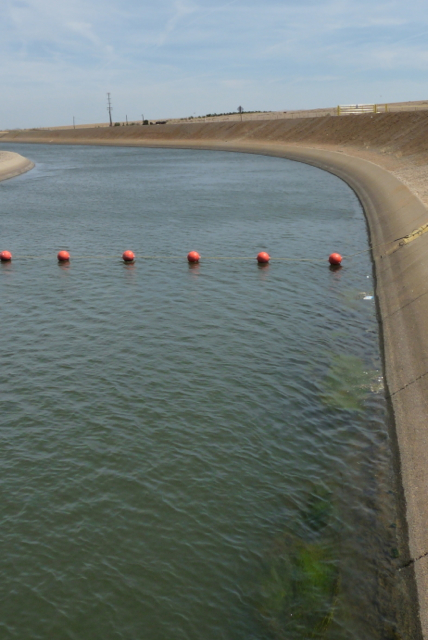
Jim Jasper, Owner/President, Stewart & Jasper OrchardsA recycled wastewater project from Modesto and Turlock wastewaster facilities may help provide 30,000 acre-feet to start with much more coming later if things work out. Jim Jasper, is a diversified grower with Stewart & Jasper Orchards in Newman, which is part of the Del Puerto Water District. “We hope to get about 30,000 acre-feet of water from the city of Modesto,” said Jasper, “and that would start in 2018 if we get it through the Del Puerto Water District which is 45,000 acres stretching from a little bit South of Tracy to just North of Los Banos, along the I-5 corridor.”

This would be enormously helpful for growers in the area, but Jasper said it hasn’t been easy. “We’ve been working on this for going on six years now,” stated Jasper.  “We’ve been back to Washington D.C. three or four times, and we are getting a lot of support. Del Puerto would pay to build a pipeline across the San Joaquin River to take recycled water from Modesto up to the middle of the canal. It would cost over 100 million dollars of farmers’ money to get it done, but it would give us a reliable source of approximately 30,000 acre-feet, which would be 1/3 of what our needs are to take care of our district.

And Jasper noted the supply would particularly help growers of permanent crops, “Of the 45,000 acres in our district, about 27-28,000 are permanent crops, mainly almonds, grapes, walnuts, and cherries. So it is very important that we have a dependable water supply. Obviously, 2015 is the second year that we have had a 0% allocation, so it has been extremely challenging to keep our crops alive.”

Jasper stated the Del Puerto Water District, “has 15,000 acres have been idled in 2015 of our 45,000 acres.”

He expounded, “On the Westside, along I-5, we just don’t have groundwater to substitute for our 0% allocation, so it has been very very difficult.”

Jasper said the only way to survive the 0% water allocation was to purchase water from someplace else. “We’re trying to purchase the water,” said Jasper. “Last year, one of the growers I work with in the almond business was successful at purchasing 1,000 acre-feet of water at $2100/acre-foot, so they were able to get through last year. But they sold their orchard because they could not continue that kind of expense. Another grower I do business with bought 1000 acre-feet of water at $2000/acre-foot, was not successful, and subsequently sold his orchard last year. So we see that as good as the almond industry seems to some people–where there is water, where there isn’t water, almond farmers are really hurting. They are pulling orchards–we pulled 400 acres of our 2,000 acres already–and water the younger trees, which have a better future. You just make these decisions. It’s been very challenging.”

And Jasper said that the recycling project gives them hope, “This recycled water will really help if if we can get it through. We’re in the process and are very, very hopeful.”

2016-07-05T03:28:23-07:00June 9th, 2015|

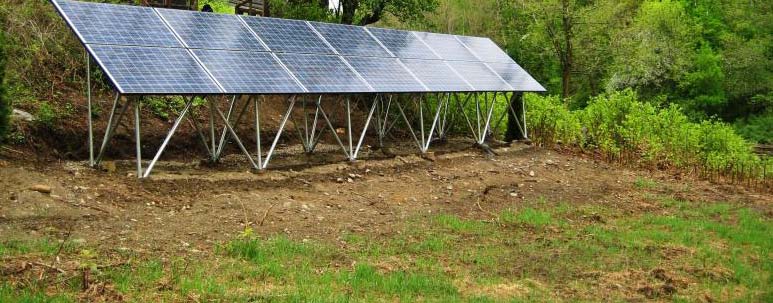
Protect Your Solar Panels from Thieves

Protect Your Solar

Thefts of solar panels have become an increasing problem in rural areas. Here are tips to protect your solar, offered by the Napa County Sheriff’s Office Problem Oriented Policing Program:

  • Map the panels with serial numbers. That way, solar panel owners can tell which panels have been stolen. This will also allow law enforcement officers to prove that recovered property is stolen.
  • Use locking bolts to secure solar panels, to make removal more difficult. Some owners have placed epoxy over the bolts so that the panels become even harder to remove. Other security methods include running aircraft wire through all the panels to secure them to the frame, or placing a weld that secures the panels to the frame or the bolts.
  • Place tamper-evident stickers with the owner’s name on all the panels. If the panels are stolen, the stickers will show the rightful owner.
  • Use alarms on solar panels. There are several companies that install alarms that are specifically set up for solar panels.
  • Use security cameras to cover your solar fields, so law enforcement officers can view suspects and possibly identify them. Some companies have systems with 24-hour monitoring, which can help to catch suspects in the act.
  • Place a fence around the panel systems to make getting to the panels and removal of the panels harder for thieves.
  • Contact law enforcement agencies immediately to report any suspicious people or vehicles. Provide descriptions of suspects and vehicles (including license plate numbers) to aid in the identification process.
  • If you recognize suspicious behavior or you have become the victim of a crime, do not disturb the crime scene; that will ensure the integrity of any potential evidence.
2016-05-31T19:28:15-07:00June 9th, 2015|
Go to Top