Farmers Fear Zero-Emission Trucking Proposal Could Strand Farm Products

By Caleb Hampton, California Farm Bureau

The California Air Resources Board is considering a proposed regulation to phase out big rigs and other trucks with internal combustion engines and replace them with zero-emission vehicles.

The proposed Advanced Clean Fleets regulation would include vehicles that transport agricultural commodities.

It would follow a 2020 executive order by Gov. Gavin Newsom banning the sale of new gas-powered cars by 2030, and apply to medium-duty and heavy-duty internal combustion vehicles. The proposal would force some federal agencies and trucking companies to begin converting their fleets to zero-emission vehicles in 2024 and prohibit the sale of all new fossil-fueled trucks by 2040.

Replacing these trucks and large delivery vehicles with zero-emission vehicles would augment California’s push to reduce air pollution and carbon emissions. While diesel-powered trucks represent a small fraction of the 30 million vehicles registered in the state, they produce about 70% of its smog-forming gases and 80% of carcinogenic diesel pollutants, according to the air resources board.

During a public hearing on Oct. 27, environmental advocates and industry groups clashed over the proposed rule. Environmentalists pushed for tighter rules and faster deadlines. Trucking industry leaders raised concerns about costs and the readiness of the electrical grid, vehicle technology and charging infrastructure for a statewide transition to zero-emission trucks within the proposed timeframe.

California farmers who rely on trucking companies for the timely transport of fresh commodities have also voiced concerns.

“Their concept is great, but the application is going to be hard,” said Keith Nilmeier, who farms 220 acres of oranges, peaches, apricots and grapes in Fresno County, and runs a trucking business with a fleet of 18 trucks. “They’re trying to drop it way too fast.”

Farming groups have pointed to a lack of rural charging stations and the limited range of zero-emission trucks, which they fear could slow or disrupt agricultural transport.

“Livestock, fruits and vegetables need to be transported in a timely manner to ensure food and animal safety,” Katie Little, policy advocate for the California Farm Bureau, said at the air resources board hearing. “The time required to charge these vehicles, in addition to the time needed to travel to these charging facilities, could jeopardize food security and availability.”

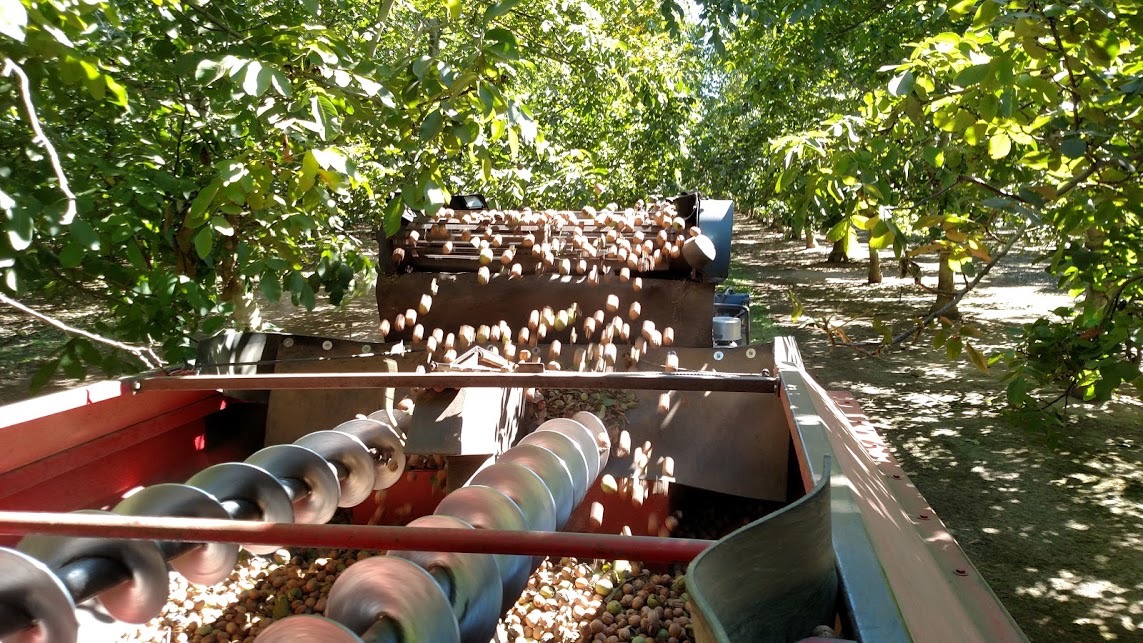
In typical tomato haul, for instance, a truck might travel over 800 miles in a 24-hour period. If the zero-emission vehicle’s range isn’t far enough, the charging infrastructure is not in place, or the electrical grid can’t handle the amount of big rig truck batteries that need to be charged, that could leave vehicles stranded in hot temperatures with thousands of pounds of fresh tomatoes.

State officials are pledging to invest $10 billion over several years to expand charging infrastructure and transition to zero-emission vehicles. But there currently are fewer than 2,000 zero-emission medium-duty and heavy-duty vehicles on California roads.

Joe Antonini, owner of Stockton-based Antonini Freight Express, which trucks tomatoes, almonds, walnuts and olives, said, “The infrastructure needs to be built prior to putting in place mandates.”

A coalition of commercial, transportation and agricultural organizations, including the California Farm Bureau, raised concerns about the proposed rule.

“We are extremely concerned that the proposed ACF rule will be unworkable in the real world and could result in compromising the delivery of essential goods and services to Californians,” the groups said in a letter to the air resources board.

Even if the basic infrastructure were in place, trucking company owners say the rule would impose significant hurdles.

Due to the weight of an electric truck battery, trucks could have their load capacity reduced by around 8,000 pounds, forcing companies to operate more vehicles in order to move the same tonnage. And with some of those vehicles sidelined while they charge, Antonini said his company, which has 240 trucks, may need as many as 50% more vehicles to move its freight.

With the sector already facing a driver shortage, the need for trucking companies to scale up their fleets could cause disruptions that impact farmers. “There are so many challenges on the ag side,” Antonini said. “This whole legislation will, in my opinion, have a very negative impact on California agriculture.”

Other farmers and trucking company owners raised questions about the cost of zero-emission vehicles, how long it might take to charge them and how many trucks could charge simultaneously at a single charging station.

“It’s terrifying for me to even think about,” said Tom Barcellos, owner of Barcellos Farms, a Tipton-based dairy farm and trucking company.

The upfront cost of an electric truck exceeds that of a conventional one, though the state’s air board staff project the cost of a zero-emission truck will go down as more models enter the market. They estimate that by 2035 it will be cheaper to buy and operate an electric semi-truck than a conventional one.

Nonetheless, farmers and trucking company owners expressed anxiety over the proposed timeline for transitioning the state’s fleets from diesel to electric. With diesel trucks, Barcellos said, “we can turn the key and go whenever we need to.”

The air resources board is set to hold a second hearing and a vote on the proposed rule in the spring. After a regulation is finalized, it would be subject to a public comment period.


2022-11-16T11:11:56-08:00November 16th, 2022|

Notice of the 2022-2023 Assessment Rate for the California Citrus Research Program

Upon the recommendation of the Citrus Research Board (Board), the California Department of
Food and Agriculture (Department) has established an assessment rate to be levied on California
citrus producers during the 2022-2023 marketing season, which is the period of October 1, 2022
through September 30, 2023. The assessment rate for the 2022-2023 marketing season has been
set at three and two-tenths cents ($0.032) per 40-pound standard field box, or the equivalent
thereof, of all types and varieties of citrus, as defined by the California Citrus Research Program,
marketed by producers and received by handlers or processors during the season. The
assessment rate for the 2022-2023 marketing season is two-tenths of one cent ($0.002) per
standard field box higher than last season’s rate.

In order to facilitate the collection of assessments, each handler or processor of California citrus is
required to remit assessment payments to the Board office on behalf of producers from whom they
receive citrus, including their own production. In turn, handlers and processors are authorized to
deduct such assessment payments from any money owed to such producers. Assessment forms
and additional instructions for reporting and remitting assessments on behalf of producers will be
provided to all citrus handlers and processors by the Board office.

Funds generated by this assessment are used to conduct general production research, a variety
improvement research program, a quality assurance program on agricultural chemical residues,
pest and disease control functions, and other activities pertinent to the California citrus industry.

If you have any questions regarding this assessment rate or the activities of the California Citrus
Research Program, please contact Marcy Martin, President of the Citrus Research Board, at (559)
738-0246, or Steven Donaldson with the Department’s Marketing Branch at (916) 900-5018.

2022-11-03T14:14:10-07:00November 3rd, 2022|

Lynda and Stewart Resnick Pledge $50M to UC Davis for Sustainability Research

Historic Gift Funds New Center for Agricultural Innovation and Research Grants to Drive a Sustainable Future

The University of California, Davis, today announced that philanthropists Lynda and Stewart Resnick, co-owners of The Wonderful Company, have pledged the largest gift ever to the university by individual donors. The $50 million pledge will support the school’s longstanding commitment to address today’s most pressing challenges in agriculture and environmental sustainability.


The $50 million gift will establish the Lynda and Stewart Resnick Center for Agricultural Innovation, with $10 million of the Resnicks’ gift to be directed toward annual competitive research grants through the Resnick Agricultural Innovation Research Fund. Their donation also supports UC Davis’ $2 billion fundraising campaign, “Expect Greater: From UC Davis, for the World,” the university’s largest philanthropic endeavor to date.


“Protecting and preserving our planet for the future means we must take bold steps and push the boundaries of what’s possible,” said Stewart Resnick, who is also a member of the UC Davis Chancellor’s Board of Advisors. “UC Davis is at the forefront of tackling climate change, developing groundbreaking technologies and solutions to reduce our collective carbon footprint, and creating a more sustainable agriculture system. This gift aims to help our greatest scientific minds rise to the great challenge of our time — the sustainability of our planet for future generations. Lynda, I, and The Wonderful Company are proud to partner with UC Davis to support this all-important work.”


2022-10-18T09:30:14-07:00October 18th, 2022|

CDFA Announces Awards for $5 Million for the Beginning Farmer and Farmworker Training and Workforce Development Grant Program

By Steve Lyle, CDFA

The California Department of Food and Agriculture’s  Office of Farm Equity announces that it is awarding $5 million in grants for projects throughout the state through the 2022 Beginning Farmer and Farmworker Training and Workforce Development Grant Program. An additional $5 million will be made available in a second solicitation in 2023. The funding for this grant program was made possible through the 2021-2022 California general fund budget.

This program provides support to organizations to enhance or expand beginning farmer and farmworker training/apprenticeship programs. The overall goal of the program is to ensure that resources are dedicated to strengthening support for socially disadvantaged and/or beginning farmers and ranchers in the first ten years of business, and for farmworkers who can improve job security with additional skills training. A secondary goal of the program is to build and grow regional networks to ensure organizations can provide adequate support and training opportunities for those most underserved in the agriculture industry.

“We need new farmers and ranchers in California, and this program is a crucial step in cultivating the next generation of talent in agriculture,” said CDFA Secretary Karen Ross. “There is a place for all who have the desire to farm or to improve their skills to become farm managers, and this program will help us focus support to grow opportunities in agriculture.

The complete list of grant awardees and summaries of their projects can be found at:http://www.cdfa.ca.gov/bfftp

Eligible applicants could apply for two types of awards in this program: program planning and curriculum development grants of up to $100,000, or program implementation grants up to $1,000,000 for both beginning farmer training, and farmworker training or workforce development programs.

The following entities were eligible to apply for this program: Non-profit organizations, Tribal Governments and Community colleges. Community colleges were eligible as co-applicants with local partner organizations. Entities receiving funding demonstrated expertise in assisting socially disadvantaged, small-scale farmers, and farmworkers in workforce development programs.

Note — 33 percent of California farms are on nine acres or less and 43 percent of farms have less than $10,000 in sales. Women are primary producers on 32 percent of our farms; only eight percent of California farms are owned by non-white producers according to race; and about 10 percent of farmers are military veterans.

2022-10-13T10:31:54-07:00October 13th, 2022|

Walnut Bargaining Association Asks Handlers to Hold Off on Setting Prices

By Jonathan Field, Walnut Bargaining Association

The Board of the Walnut Bargaining Association (WBA) met last month in Sacramento to discuss the outlook for this year’s walnut crop. Traditionally, this is the time of year when the industry begins to hear estimates from handlers about prices growers can expect to receive for their walnuts. But this year, the WBA is hoping to delay these decisions.

“So much is still uncertain at this time,” said Pete Jelavich, WBA member from Yuba City. “The California Ag Statistics Service (CASS) has set the pre-season crop estimate at 720,000 tons, but many growers believe recent weather events since the estimate was released will reduce yields. We’re also waiting to learn more about global supply conditions and about the volume and quality of last year’s crop that is still available for sale. Both of these factors will play a major role in the price we’ll receive for our walnuts for the new season.”

In general, grower prices for walnuts have been at record lows for the past few years. And while the WBA doesn’t expect things to change dramatically this year, they are cautiously optimistic that things will improve a bit over last year.

According to WBA statistics, last year’s CASS estimate was way off its pre-season estimate of a 670,000-ton crop. The actual crop was significantly larger and eventually came in at 730,000 tons. As a result, actual prices for walnuts were dramatically lower than what was predicted in early fall.

“This year, we could very likely have the opposite scenario,” said Jonathan Field, Executive Director of the WBA.  “The CASS crop estimate is just slightly below last year’s actual crop, but the report indicated far fewer nuts per tree and kernel weights that are much lighter than normal. As a result, the crop may come in lighter than predictions, which would hopefully drive prices up.”

“The WBA has sent a letter to handlers asking them not to jump the gun on setting walnut prices until we know more about the crop size and for some of the unstable market conditions to settle a bit,” said Jelavich. “Growers need to receive higher prices for our walnuts than we have for the past few years. So, we’re asking handlers to work with us and wait until we know more.”

According to Jelavich, the whole reason for the existence of the WBA is to improve grower pricing. But many walnut farmers don’t even know the WBA exists. To combat that, the WBA has recently launched a new website and is funding a series of ads in walnut growing trade publications to help raise awareness about the WBA and what it’s all about.

In short, the WBA is a grower-owned cooperative whose only goal is to help farmers get a fair price for walnuts. They do this by providing walnut farmers with accurate data, global market intelligence and information about actual prices walnut farmers receive from handlers.

“Each year, the WBA collects information about the prices our members have received for their walnuts,” says the WBA’s Field. “This information doesn’t come from coffee shop talk. We get it by collecting pay stubs that growers receive from their handlers.”

Grower pricing information submitted to the WBA is confidential. Name, address and ranch information on pay stubs is redacted to ensure anonymity. Specific information on handler names is also not made public. But the pricing information gathered by the WBA is the most accurate available anywhere. It gives WBA members a really good idea if the price they received was in line with the industry average or below it.

“In many cases, the WBA pricing report has empowered our members to go back to their handler and secure an enhanced payment,” said Field. “Our goal is to help make grower prices more transparent and to hold handlers accountable for paying farmers the right price.”

The WBA is embarking on a membership drive in an effort to help all walnut growers receive better prices.

“The more walnut farmers we have in our membership, the more accurate our pricing information will be and the greater unity we’ll have as a walnut farming community,” he said. “Joining the WBA might be the most important thing a walnut farmer can do to improve prices for walnuts.”

The cost to join the WBA is $2 per ton. In addition to information on prices received from handlers, the WBA provides a host of additional economic and market intelligence that is very difficult to get elsewhere. This includes information on sales, supply-demand issues, trade market pricing, quality, and other global economic trends.

To learn more about the information provided by WBA, growers can register here to receive a sample of WBA reports. The new WBA website includes much more information about the WBA and its benefits of members. Grow

2022-10-06T08:18:10-07:00October 6th, 2022|

California Fresh Fruit Association Reacts to the Signing of AB 2183

The California Fresh Fruit Association (CFFA) is disappointed in Governor Newsom for
signing AB 2183 (Stone), card check legislation that will strip agricultural employees of their right to
an impartial secret ballot election and employers of their due process rights when they challenge
alleged violations.

President Ian LeMay stated, “On behalf of the Association, we express our disappointment with the
signing of AB 2183 today. Since the veto of AB 616, a similar card check bill last year, there has been
zero engagement with the agricultural industry from Governor Newsom and his administration to find
a solution that best serves California farm employees. AB 2183 will not only eviscerate an employee’s
previously sacred right to a secret ballot in a unionization election. It will also erode the property
ownership and First Amendment rights of agricultural businesses across California. CFFA is also
concerned with the idea of a legislative ‘fix’to the issues in AB 2183 being drafted behind closed doors
with no opportunity for input by all stakeholders. If this is any example of how this bill will be
implemented, agricultural employees throughout California will have no say in their future. Today is
a sad day for California agriculture and California farmworkers.”

LeMay continued, “While the proponents of AB 2183 purported the focus of this bill is on “vote-by-mail balloting” for agricultural employees, it is not. Rather, the only beneficiary of AB 2183’s passage is a specific interested party looking to bolster their diminishing relevance. CFFA is disappointed that Governor Newsom succumbed to pressure from leaders in Washington, D.C. that voiced support for AB 2183. Their opinion on this issue was unwelcomed and should have had no bearing on his decision.”

Lastly, LeMay stated, “The Agricultural Labor Relations Act (ALRA) has long protected the right of
agricultural employees to a secret ballot election supervised by the ALRB, free of intimidation and
influence by any interested party. The enactment of AB 2183 takes away the right to a free and fair
election process for all farmworkers and could change how agriculture operates in California going
forward.”

2022-10-04T10:41:57-07:00October 4th, 2022|

Farm Bureau President Responds to Signing of AB 2183

By Peter Hecht, CAFB

California Farm Bureau President Jamie Johansson today responded to Gov. Gavin Newsom’s signing of Assembly Bill 2183.

“The California Farm Bureau is deeply disappointed in Gov. Newsom’s decision to sign the misguided union organizing legislation, Assembly Bill 2183. Farm Bureau stands with California’s agricultural employees and will continue to defend their right to make uncoerced choices about union representation. However, the governor’s unfortunate decision to sign this bill will create a mail-in balloting system that threatens the integrity of secret ballot elections and leaves farm employees vulnerable to intimidation by union organizers with an obvious interest in the outcome. It also forces California’s farmers and ranchers to choose to give up free speech and private property rights in a dubious trade to allow their employees a real voice in a union election.”

2022-09-30T08:41:28-07:00September 30th, 2022|

IFPA Applauds White House for Putting Fresh Fruit and Vegetables at Core of National Strategy on Hunger, Nutrition, and Health

The White House incorporated a majority of IFPA’s eight “Fruit and Vegetable Moonshots” in its national nutrition blueprint and accepted IFPA’s three industry commitments.

By Lee Mannering, IFPA

Washington, DC – The International Fresh Produce Association, the largest and most diverse international association serving the entire fresh produce and floral supply chain, had a significant and impactful presence at the White House Conference on Hunger, Nutrition, and Health held today in Washington. Fruit and vegetable consumption was a central part of the day’s discussions and at the core of the Administration’s new national strategy on hunger, nutrition, and health released this week

“President Biden sent a clear message at today’s bipartisan White House Conference that food and its connection to health are a national priority. It is a precedent-setting moment for our country. For the first time in more than 50 years, we’re taking a systems-wide approach by acknowledging and meaningfully addressing our diet-related health crisis,” said IFPA CEO Cathy Burns, who attended the conference with IFPA Vice President of Nutrition & Health Mollie Van Lieu.

“Seeing our fruit and vegetable moonshot recommendations represented in the nutrition blueprint is a powerful step forward for our industry,” added Burns. “Now it’s time for the industry to continue the work to make these policies a reality and produce healthcare outcomes for every American and across the globe. We are ready.”

In July, IFPA released its Fruit and Vegetable Moonshot, an 8-point plan on a national nutrition strategy, for the White House’s consideration. The final strategy released by President Biden this week incorporates a majority of IFPA’s policy recommendations including:

1. Produce prescriptions and financial incentives for all Americans. The plan calls for “Food is medicine” interventions—including medically tailored meals and groceries as well as produce prescriptions.

2. Increased access to nutrition-related services through private insurance and federal programs beyond Medicare and Medicaid.

3. More transparent labeling to quickly and easily communicate nutrition information.

4. Expanded incentives for fruits and vegetables in SNAP.

5. Updates to nutrition criteria in USDA Foods procurement specifications.

6. A coordinated federal vision for advancing nutrition science.

“Ending hunger and reducing diet related disease by 2030 requires scalable policy,” said Van Lieu. “Today’s conference and blueprint puts the nation on a clear path to improved dietary quality and in turn healthier lives. That’s in no small part to the decades of advocacy of our industry and to the bold Fruit and Vegetable Moonshot we delivered to the White House this summer.”

Burns and Van Lieu both gave voice to the fresh produce industry at the conference, participating in discussions and engaging other food industry groups and advocates in conversations on nutrition, food insecurity, and food safety.

In addition to the Fruit and Vegetable Moonshot, IFPA made several industry commitments ahead of the event that could contribute to the overall goals of the conference but fall outside the purview of the federal government’s capabilities. Today, the White House announced its support for industry commitments, including all three put forth by IFPA:

1. Launch a new public database in 2023 called Produce in the Public Interest to house and disseminate research about fruit and vegetable consumption with a focus on identifying and mitigating barriers to improving national eating habits;

2. Produce and disseminate culturally-informed, consumer-friendly resources to improve the public’s nutrition literacy; and

3. Facilitate a public-private partnership with the Partnership for a Healthier America, Indianapolis, and Denver to double residents’ consumption of fruits and vegetables by 2030 – then using lessons learned as a model to move to additional cities.

“Fresh produce improves lives, but people aren’t eating enough of it. Our job at IFPA is to clear a pathway for more produce in people’s lives, from cultivating personal curiosity to advocating public policy,” said Burns. “Our moonshots, our commitments, and our leadership at the White House Conference are solidifying IFPA’s position in Washington as an impactful champion for fresh produce and for all Americans.”

IFPA was also proud to provide all of the produce for conference attendees.

The White House Conference caps off a busy week for IFPA, which held its Washington Conference September 26-28. More than 400 association members came to town for educational sessions and hundreds of meetings with Hill offices, agencies, and embassies where they advocated for robust nutrition policy, among other priorities. As part of that event, IFPA released its first economic impact study, which evaluates fresh produce’s multi-billion-dollar-role role in the United States economy and nationwide employment. USDA Secretary Tom Vilsack, Senator John Boozman (R-SD), and Representative Dan Newhouse (R-WA), among other policy leaders, addressed IFPA members at the conference.

2022-09-30T08:42:03-07:00September 30th, 2022|

California Dairy Research Foundation Awarded $85 Million from USDA for Partnerships for Climate-Smart Commodities Project

By Jennifer Giambroni, California Milk Advisory Board

Agriculture Secretary Tom Vilsack announced that the U.S. Department of Agriculture is investing up to $2.8 billion in projects selected under the first pool of the Partnerships for Climate-Smart Commodities funding opportunity. Applicants submitted more than 450 project proposals; 70 were selected for funding.

The California Dairy Research Foundation, in partnership with more than 20 other dairy organizations, was among the recipients. CDRF’s grant partners include California governmental organizations, corporations and cooperatives, universities, producer organizations, environmental organizations, and others. The USDA has established an estimated funding ceiling of $85 million for this project to advance climate-smart dairy farming; the final award will be granted in the coming months.

“CDRF is extremely pleased to have received this grant on behalf of the entire collaborative team. The project brings together organizations throughout the value chain to the benefit of our hard-working dairy producers and the environment. We look forward to working with the California Department of Food and Agriculture, the California Milk Advisory Board, Dairy Cares, the universities and others to implement this advanced climate-smart ag project in California’s dairy industry,” said CDRF’s Executive Director Denise Mullinax.

Over the next five years, the project, “Partnering to Invest in and Build Markets for California’s Climate-Smart Dairy Producers,” will work to build climate-smart dairy markets and provide financial incentives for California dairy producers to adopt climate-smart manure management practices to reduce both methane emissions and nitrogen surplus and will leverage matching funding from non-federal sources.

“This funding represents the next critical installment and chapter in California’s world-leading dairy methane reduction efforts,” said Michael Boccadoro, Executive Director of Dairy Cares. “On-farm projects will be designed to not only reduce methane but will significantly improve water quality outcomes, ensuring broad benefits for our rural farm communities.

Partnerships for Climate-Smart Commodities is part of USDA’s broader strategy to position agriculture and forestry as leaders in climate change mitigation through voluntary, incentive-based, market-driven approaches.

“Dairy families in California continue to step up to ensure the agriculture sector contributes to climate change mitigation and adaptation,” said Karen Ross, Secretary of the California Department of Food and Agriculture. “The partnership between the State and dairy families has resulted in significant methane emission reductions making California a national and international leader in supporting on-farm livestock methane reductions using climate-smart agricultural management approaches and other environmental benefits, including improved water quality from dairy farms”.

Other partners supporting this project are California Department of Food and Agriculture, California Association of Resource Conservation Districts, California Milk Advisory Board, Dairy Cares, California Dairy Campaign, California Dairy Quality Assurance Program, Milk Producers Council, National Milk Producers Federation, Sustainable Conservation, Western United Dairies, California Farm Bureau Federation, University of California, Davis, University of California, Riverside, University of California Cooperative Extension, Truterra, California Dairies, Inc., Challenge Dairy Products, Nestlé.

2022-09-21T10:17:24-07:00September 21st, 2022|

World Agricultural Robotics Expo to Launch Oct. 18 in Fresno

Robots to ease labor shortage, climate concerns

By Pam Kan-Rice, UCANR

Drought, climate change and labor scarcity are driving farmers to seek new ways of accomplishing farming tasks. Sensors enable more precise application of precious irrigation water. Robotic machinery help plant, weed, prune and harvest, even in triple-digit weather. What other problems can technology solve?

World FIRA, the leading event in Ag Robotics, will launch FIRA USA in Fresno on Oct. 18, to provide autonomous systems and robots to California and North American growers.

Jointly organized between the French association GOFAR, the University of California Agriculture and Natural Resources, Western Growers Association and the Fresno-Merced Future of Food (F3) Initiative, FIRA USA 2022 will bring together people with diverse expertise for three days of problem-solving, decision-making and planning.

  • WHAT: World FIRA (International Forum of Agricultural Robotics) to bring together representatives of the agricultural, technology and finance industries for a fresh approach to adapting to climate change and labor issues.
  • WHO: Specialty crop growers, robot manufacturers, scientists, technologists, startup owners and investors
  • WHEN: From Tuesday, Oct. 18, at 8 a.m. to Thursday, Oct. 20, at 7 p.m. Free registration for journalists at https://avolio.swapcard.com/FIRAUSA22/registrations/Start.
  • WHERE: Fresno Convention & Entertainment Center, 848 M St, Fresno, CA 93721
  • VISUALS: Robots performing tasks such as planting, weeding and harvesting in the field Oct. 20 at 8 a.m. to 6 p.m.
  • SPEAKERS: Karen Ross, Secretary of the CDFA; Ben Alfi, Co-Founder of Blue White Robotics; Erez Fait, Co-founder of Agrinoz; Walt Duflock, Vice President of Vice President of Western Growers; Mark Borman, President of Taylor Farms California; Aubrey Bettencourt, CEO of Almond Alliance; Erez Fait, Chairman and Co-founder of Agrinoze; and more. See full list: https://bit.ly/3B8hGT6

The three-day event will feature ample opportunities to interview panelists, growers, robotics manufacturers and other participants. To learn more about FIRA USA , visit www.fira-agtech.com/event/fira-usa.

2022-09-21T10:10:50-07:00September 21st, 2022|
Go to Top