Fresno State Launches New Agricultural Leadership Program

Fresno State’s Avery Culbertson Launches Solid Agricultural Leadership Program


By Lauren Dutra, Associate Editor


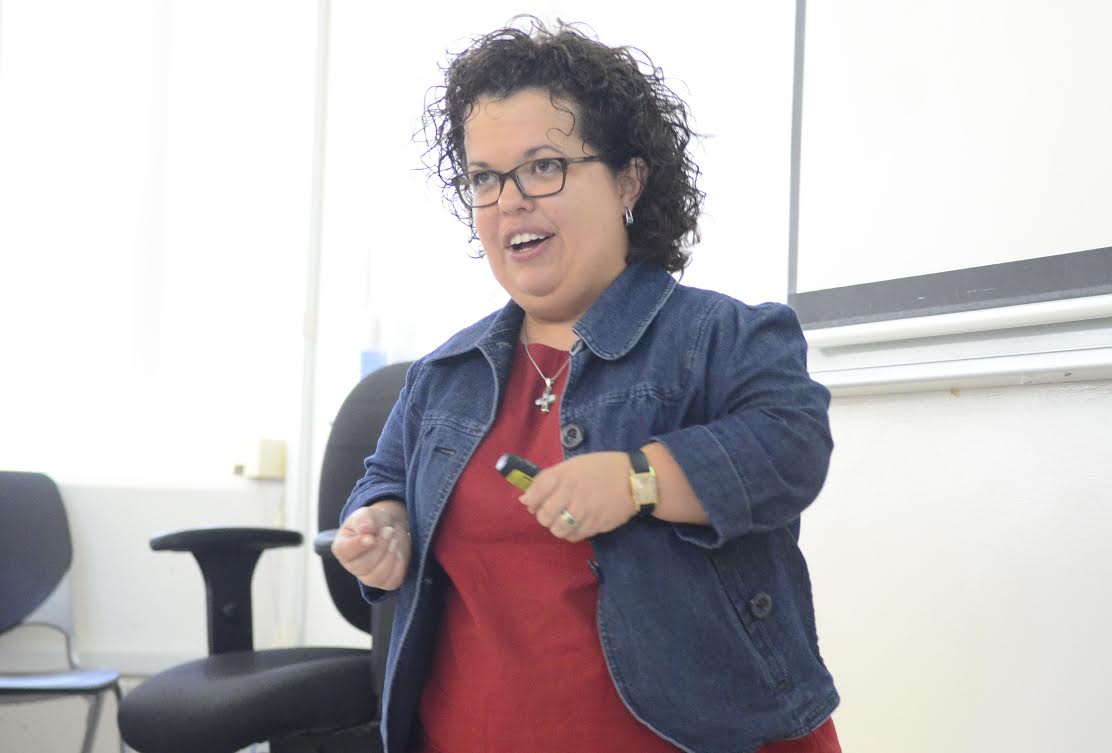
Dr. Avery Culbertson, who is passionate about agricultural leadership joined California State University, Fresno (Fresno State) in August, in a newly created position to develop an Ag leadership curriculum for the Jordan College of Agricultural Sciences and Technology.

Dr. Culbertson’s interest in Ag leadership was initially sparked by “being a product of National FFA Organization* (FFA). You have a lot of role models and influences around you. You start getting an idea of what Ag leadership is,” said Culbertson.

“After I got my degree in agricultural education and was looking for a job, I met with a colleague who said, ‘There are adult leadership programs around the country, and I want you to start one at New Mexico State University.’”

Having been trained by the California Agricultural Leadership Program, Culbertson was confident that she could successfully launch a program. “They really opened their arms to me,” she commented, “and provided resources. As that progressed, I started defining what leadership was.”

Culbertson asserted, “An agricultural leadership program is not only [about] understanding our industry, but understanding our customer. That became very important to me in and outside of the job. The only way that agriculture can lead in society is by understanding our stakeholders.”

Culbertson thinks it is critical not only to know how to lead—having the skill set to be a great speaker or to be knowledgeable in different fields,” she explained, “we also need to know who we are leading. As I’ve been discussing with my classes right now, leadership is a matter of taking a group of people and accomplishing a collective goal,” she said.


*National FFA Organization (FFA), formerly known as Future Farmers of America, helps students by developing their potential for premier leadership, personal growth and career success through agricultural education.

2016-09-21T10:50:45-07:00September 21st, 2016|

Senate Tells Gov. Agencies to Back Off WOTUS Rule

U.S. Senate Tells EPA/Army Corps to Back Off Farmers re: WOTUS Clean Water Act


Edited by California Ag Today Staff


A report issued TODAY by a U.S. Senate committee documents how federal agencies overreach their authority to regulate farmland, according to the California Farm Bureau Federation (CFBF), which said the report underlines the need for congressional action to reform the agencies’ practices, particularly regarding the WOTUS Rule.

The report from the Senate Environment and Public Works Committee describes numerous incidents in which the U.S. Army Corps of Engineers and the U.S. Environmental Protection Agency have tried to expand their authority to regulate what crops farmers grow and how they grow them, based on the agencies’ interpretation of the Clean Water Act.

“A disturbing number of the cases described in the Senate report came from California,” CFBF President Paul Wenger said. “Farmers and ranchers here have seen firsthand that the abuses outlined in this report aren’t theoretical—they’re real.”

One case in California is particularly troublesome. The U.S. Army Corps of Engineers (Corps) ordered John Duarte, a farmer and nurseryman to cease farming his land after he plowed 4-7 inches deep to plant a wheat crop in his field. Duarte, in turn, filed a lawsuit to vindicate his right to farm his land. The U.S. Department of Justice fired back with a countersuit.John Duarte WOTUS

Duarte has spent over $1 million in legal fees to date, yet the government is seeking $6-8 million in fines and “wetland credits.” Duarte now faces a costly appeal and legal battle, the outcome of which will set precedence on important issues affecting farmers and ranchers nationwide.

Landowners’ concerns stem from a rule the agencies finalized last year, known as the “Waters of the United States” or WOTUS rule, which would bring more waterways under the jurisdiction of the Clean Water Act. Although a federal court has temporarily halted enforcement of the WOTUS rule, landowners and their representatives say the Corps continues to enforce the act so narrowly that, as a practical matter, its actions mirror the intent of the new rule.

“We’re grateful the Senate committee has highlighted the impact on farmers and ranchers caused by overzealous interpretation of the Clean Water Act,” Wenger said. “Farmers and ranchers want to do the right thing and protect the environment as they farm. But they shouldn’t be tied up in knots by regulators for simply plowing their ground or considering a new crop on their land, and they shouldn’t have their land declared off limits if they must leave it idle due to drought or other conditions beyond their control.”

Wenger called on California Senators Barbara Boxer and Dianne Feinstein to join efforts to clarify Clean Water Act enforcement and reform agency practices. “Congress has the ability to restore balance to Clean Water Act enforcement,” said Wenger. “We urge our California members to help farmers grow food and protect the environment, free from fear of overreaching regulation.”

Details of Senate Statement

epa-logo-wotusU.S. Senator Jim Inhofe (R-Okla.), chairman of the Senate Environment and Public Works (EPW) Committee, released an EPW Majority Committee report titled “From Preventing Pollution of Navigable and Interstate Waters to Regulating Farm Fields, Puddles and Dry Land: A Senate Report on the Expansion of Jurisdiction Claimed by the Army Corps of Engineers and the U.S. Environmental Protection Agency under the Clean Water Act.”

The report releases findings from the majority staff’s investigation into how the Environmental Protection Agency (EPA) and the Army Corps of Engineers are interpreting and implementing their authority under the Clean Water Act.

“This new majority committee report demonstrates in detail that the EPA and the Army Corps of Engineers, under the Obama administration, are running rogue,” Inhofe said. “Case studies in this report show that the Obama administration is already asserting federal control over land and water based on the concepts they are trying to codify in the WOTUS rule, even though the courts have put that rule on hold. Congress shouldn’t wait on the Supreme Court to make the inevitable decision that this agency overreach is illegal.

“This report should be evidence enough that it’s time for Democrats and Republicans to work together rein in EPA and the Corps. Over the course of the past year, 69 Senators – a veto proof majority – have gone on the record about their grave concerns regarding the WOTUS rule. It’s time to come together to protect farmers, ranchers, water utilities, local governments, and contractors by giving them the clarity and certainty they deserve and stopping EPA and the Corps from eroding traditional exemptions.”

The report summarizes case studies that demonstrate the following:

EPA and the Corps have and will continue to advance very broad claims of jurisdiction based on discretionary authority to define their own jurisdiction.

The WOTUS rule would codify the agencies’ broadest theories of jurisdiction, which Justice Kennedy recently called “ominous.”

Landowners will not be able to rely on current statutory exemptions or the new regulatory exemptions because the agencies have narrowed the exemptions in practice and simply regulate under another name.

For example, the report highlights instances where if activity takes place on land that is wet: Plowing to shallow depths is not exempt when the Corps calls the soil between furrows “mini mountain ranges,” “uplands,” and “dry land;”

Disking is regulated even though it is a type of plowing:

Changing from one agricultural commodity constitutes a new use that eliminates the exemption; and puddles, tire ruts, sheet flow, and standing water all can be renamed “disturbed wetlands” and regulated.

On Tuesday, Inhofe delivered a copy of the report with a letter to 11 Senate Democrats who, in a letter on Nov. 3, 2015 to Gina McCarthy, administrator of the Environmental Protection Agency, and Jo-Ellen Darcy, assistant Secretary of the Army (Civil Works) on WOTUS, stated that: “Farmers, ranchers, water utilities, local governments, and contractors deserve clarity and certainty. Should the EPA not provide this clarity or enforce this rule in a way that erodes traditional exemptions, we reserve the right to support efforts in the future to revise the rule.”

In Inhofe’s letter to the 11 Senators, he said the new committee report should meet the test set forth in their Nov. 3 letter, and he called on the members to live up to their commitment and work with the committee on tailored legislation to end agency overreach.

2021-05-12T11:05:47-07:00September 20th, 2016|

National Farm Safety Week in the Golden State

California Agriculture Takes National Farm Safety Week Seriously


 By Patrick Cavanaugh Farm News Director


California is focused on National Farm Safety Week across all commodities and in all areas of the state. Amy Wolfe, president and CEO of AgSafe, based in Modesto, said National Farm Safety Week takes place in September because it is such a critical juncture for folks. “We’re gearing up at the beginning of harvest, or the middle of harvest for some, and it’s the end of harvest for others,” said Wolfe.


“It’s really a great opportunity to make sure you’re either taking a look at what’s going on in your operation and making those necessary mid-harvest adjustments, or evaluating what went well or what could be improved upon.”

lockout tagout agsafe safety


Sadly, Wolfe shared, Farm Safety Week follows a tragedy that occurred during the week of September 12 “when lack of agricultural safety cost somebody their life in the Huron area of Fresno County. We’ve had a fatality in our nut industry, which just continues to be—number one—a tragedy for those of us who work in agriculture. It is also a very significant reminder of the importance of addressing such issues as lockout-tagout, which ensures that equipment is properly shut down before any maintenance,” said Wolfe.


“There needs to be strict communication between everyone around the machine. Everyone should know why it may be shut down and why they should never restart the machine until everyone is cleared,” noted Wolfe. In addition, all equipment must be maintained so that it runs properly in the field. “We also need to make sure that good systems of communication are in place when someone is injured.


AgSafe is recognizing Farm Safety week in many creative ways this week. “This is the week to reflect on how well we are doing everything that we possibly can to protect our farmworkers,” Wolfe said. “If you book for Farm First Aid Training with us by Friday, you’ll receive a 10% discount. We are going to enter folks into a drawing at the end of the week for free attendance to the 2017 AgSafe Conference if you participate in some of the fun Q&As on Facebook and @AgSafeOnline on Twitter,” Wolfe said.


“We will also offer specials every day this week on our tailgate training kits, our pesticide decontamination kits, and on our compliance binders,” said Wolfe. “Its our way of getting folks even more engaged, and giving discounts for our services in honor of a very important week for the industry.”


For more information on these tailgate training kits and other events, go to Agsafe.org.


AgSafe is a statewide non-profit organization dedicated to providing employers and employees in the agricultural industry with education and resources to prevent injuries, illnesses and fatalities.

2021-05-12T11:05:47-07:00September 20th, 2016|

Eighteen New California Farm Academy Graduates!

Eighteen New Farmers Graduate from California Farm Academy


By Patrick Cavanaugh, Farm News Director


The California Farm Academy, a part-time, seven-month, beginning farmer training program run by the Land-Based Learning, graduated 18 new farmers on Sunday, September 18, 2016.


With more than 250 hours of classroom and field training behind them, these enterprising graduates were honored by notables such as Karen Ross, secretary, California Department of Food and Agriculture (CDFA); Craig McNamara, president and owner of Sierra Orchards, as well as president of the California State Board of Food and Agriculture; Sri Sethuratnam, director, California Farm Academy (CFA); and Mary Kimball, executive director, Center for Land-Based Learning, based in Winters California.

new farmers graduate from California Farm Academy beginning farmer training program run by the Land-Based Learning.

Eighteen new farmers graduated from California Farm Academy’s beginning farmer training program run by the Center for Land-Based Learning.


“The impetus of our program,” said Christine McMorrow, director of development for Land-Based Learning, “is the need for more farmers as the current ones age out. According to the USDA, over 700,000 new farmers will be needed in the next 20 years to replace those who retire.


CFA teachers, farmers, academic faculty and staff, and agricultural, natural resource and business professionals, teach CFA students basic production agricultural practices; crop planning; soil science; pest management; organic agriculture; irrigation and water management; marketing; ecology and conservation; obtaining loans, insurance and permits; farm financials; human resource management; risk management; farm safety; regulatory compliance and problem-solving.


McMorrow stated, “These folks have been with us since February, following a rigorous application process. A lot of these folks either have land they have dreamed of farming but did not know how to put it into production. Some of them come from farming families, but they wanted to get involved in the family business on their own. They may have been in a different career and now want to do something new or different. Perhaps they haven’t studied agriculture or they have not seen much agriculture other than what their family does, so this is an opportunity for them to learn and to explore a new business idea.


“We only take people who are serious about production agriculture. This is not a program for somebody who thinks, ‘I’ve got an acre in my backyard and I really want to grow something.’ While that’s a cool thing to do, the academy is not for those people.”


“Our graduating farmers, who range in age from their late 20s to early 50s, each wrote a business plan and presented it to folks within the agriculture industry,” said McMorrow. “They also planted some of their own crops on a farm in Winters.


McMorrow elaborated, “These new farmers have been able to create their own networks, having made contact with more than 40 different folks within the agricultural industry throughout the time they spent with us. These networks include local farmers around Yolo County, Solano County, Sacramento County, and other regions, and will help our graduates realize their dreams.”


California Farm Academy (CFA) We grow farmers

“This is the fifth class that has graduated,” explained McMorrow, “and mind you, these folks are doing lots of different things. Some of them already have their own land, some are going to work for someone who has land, some will work other farmers, and some will go into a food-related business.”


“Still others will stay and lease small plots of land from us,” McMorrow commented, “to start their own farming business. Beginning farmers face huge barriers to getting started, the biggest of which is access to land, capital and infrastructure. So, to get their farming businesses started, California Farm Academy alumni are eligible to lease land at sites in West Sacramento, Davis and Winters at a very low cost.”


The Center for Land-Based Learning exists to cultivate opportunity.

For the land.

For youth.

For the environment.

For business.

For the economy.

For the future of agriculture.
2021-05-12T11:00:49-07:00September 19th, 2016|

Keeping the California Dairy Industry Afloat

The Necessity of Keeping the California Dairy Industry Competitive


By Brian German, Associate Broadcaster


Anthony Raimondo, an attorney with 15 years of experience working with farmers and farm labor contractors, is concerned the California government is placing the state’s agricultural industry at an economic disadvantage compared to other states. Raimondo used the California dairy industry as a prime example in which arbitrary in-state legislation is giving other states an advantage.
dairy cows


“The state government tells the dairy farmer how much they get to charge for milk,” explained Raimondo. “They have now raised minimum wage and overtime, with AB-1066 becoming law, but they do not tie any of that [added cost] to the milk price. Farmers will lose money,” he said.


“The California dairy industry is still fighting to be a part of the USDA’s Federal Milk Marketing Order (FMMO),” Raimondo continued. “But until that happens, the added costs are causing many California dairymen to weigh their options.”


Increasing government regulation is making it difficult for California dairies to compete with other states, Wisconsin in particular. Raimondo elaborated, “For many years, Wisconsin’s milk production was on the decline and California’s milk production was on the rise; that trend has now reversed. Wisconsin is now on the rise again and California is on the decline because our dairies can’t make it with the level of regulation and the level of cost,” he said.


“Some dairies have reduced hours to keep costs low,” said Raimondo. “Other dairies are closing either because they are going out of business or because they are moving to places like Idaho and Texas where the milk price is better and the cost profile is more favorable.”


The move to a FMMO would help even the playing field for California dairies. Raimondo warned there is a lot at stake if nothing is done to lower milk production costs in the number one Ag state. “We are going to lose a segment of agriculture that is 100% family farms. Family farming is one of those things that is precious to our state, and it can’t be brought back once it’s gone,” Raimondo said.

2021-05-12T11:17:12-07:00September 16th, 2016|

Unique Wines Earn Packaging Design Awards

California Wines Win Packaging Design Awards for Innovation

By Laurie Greene, Editor 


Some interesting smaller California wineries won special awards during the third annual Wines & Vines Packaging Conference last month in Yountville, California, but not for the quality of their wine. It was all about what contained the wine—the packaging.


Jim Gordon, editor of Wines & Vines magazine that sponsored the awards, said, “One of the most interesting developments these days is the proliferation of different wine packaging types and designs. We decided to get a handle on that by starting the Wines & Vines Packaging Design Awards a couple of years ago.”


Out of 135 vintner and supplier entries from North American wineries, five wine packaging designs convinced a panel of five experts that they have what it takes to sway consumers to stop in the wine aisle to give the product a closer look. Packages were judged on their creativity, visual appeal, design functionality, appropriateness for the price segment and the package’s ability to stand out in a crowded marketplace.


Each package entered contained wine, was filled between Aug. 1, 2014, and July 31, 2016, and is currently available or was available to the general public between those dates. Submissions included wine boxes, wine bottles, wine bags or cans.

Wines & Vines 2016 Packaging Design Awards Winners (Source: Wines & Vines)

Wines & Vines 2016 Packaging Design Awards Winners (Source: Wines & Vines)

The winners of the 2016 Wines & Vines Packaging Design Awards are:

Supplier Contest

Most Outstanding Package–Supplier 

Stranger & Stranger’s design of Run Riot Pinot Noir

Run Riot, a Treasury Wine Estates brand created by Stranger & Stranger, an international design firm, is a “critter” brand with a purpose and a story about a wild boar that rampages through the vineyard. The wine label includes a fascinating die-cut and graphic.

Most Innovative Package–Supplier 

Quest Industries’ “masked spray” on a bottle of Reed Wine Cellars’ 2011 Lodi Cabernet Sauvignon

The bottle exterior is spray-coated in a unique process on the upper half in dark red.


Winery Contest

People’s Choice Most Innovative Package

One87 Wine & Cocktails’ single-serving plastic wine “glass” and “stem”

Designed by OGW/France, this single-serve container is a PET plastic, BPA-free vessel, 100% recyclable with a smooth glass-like rim and a guaranteed shelf life of 12 or more months.


Most Innovative Package–Winery

Rubin Wines’ Q&A brand packaging

A traditional bottle as well as a box wine was recognized for its large graphics. Each bottle of this new brand, known as “Q & A,” included sets of questions and answers that differed from bottle to bottle.


People’s Choice Most Outstanding Package

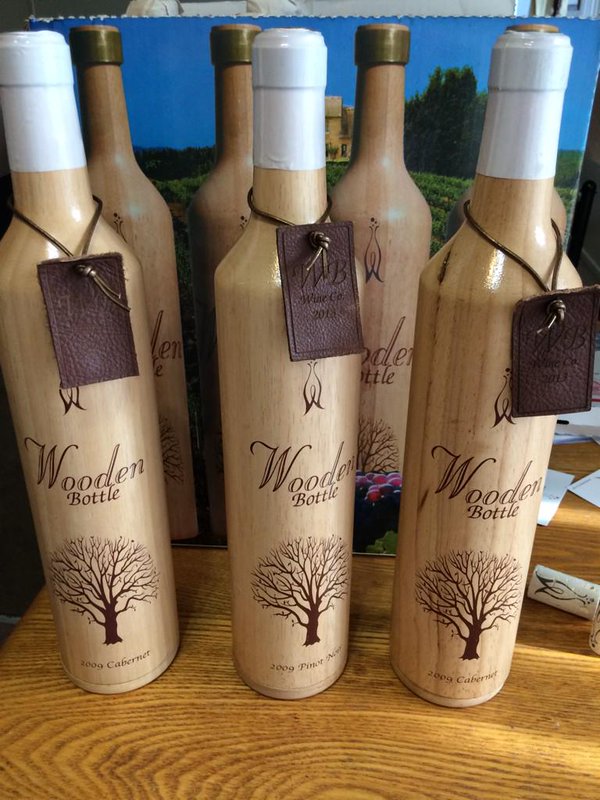
Wooden Bottle Wine Co.’s 2009 Pinot Noir

This wine was actually in a lathe wooden bottle designed and patented by owner Marcos Oliver crafted entirely of wood from the Thai rubber trees, lined with an FDA-approved, non-toxic product that protects the wine from wood and oxygen infusion.


Featured Photo: Wooden Bottle Wine Co.’s 2009 Pinot Noir, courtesy of Wines & Vines magazine.


Resources:

2016 Wines & Vines Packaging Design Awards

5 wine packaging designs win awards in Napa

Wine Packaging Design Awards Expand

Wooden and Plastic Wine Packages Win

2016-09-15T05:57:26-07:00September 15th, 2016|

Ag Leaders Discuss AB 1066 Consequences

Ag Leaders on AB 1066 Consequences

By Patrick Cavanaugh, Farm News Director and Brian German, Associate Broadcaster

California ag leaders hoped that Governor Brown would see how the AB 1066 overtime bill would actually hurt farmworkers and veto it. Now that the Governor has signed it, the following ag leaders weigh in on AB 1066 consequences: Norm Groot, executive director of the Monterey County Farm Bureau; Bryan Van Groningen, field manager for Van Groningen & Sons Farms; and Anthony Raimondo, a Fresno-based attorney who has been representing farmers and farm labor contractors for over 15 years, among them.

Norm Groot

Norm Groot anticipated, “The end result of AB 1066 is a big move to mechanized harvesting, which probably means a change in some of the crops that we’re growing here simply because currently we can’t harvest lettuce or strawberries or some of the other vegetable crops by mechanized means. Lawmakers are forcing the hand of the growers to move into crops that are less labor intensive and thus, save the [labor] cost,” said Groot.

Groot noted the inaccurate AB 1066 assumption—that an increase in overtime hours and pay will result from its passage. “We will probably see their hours cut back to the eight hours a day and forty hours per week,” he explained, as stipulated in the law. “Growers will adjust their planning schedules to the amount of laborers that they think they have available for harvest. It’s not an automatic given that we’re going to see all these paychecks increase, simply because we’re putting overtime at more than eight hours a day or after forty hours a week,” Groot said.

Groot added that farmworkers are not in favor of losing 33% of their income at this point. “I think overall, the unions have been supportive of this particular change, but the unions do not represent the majority of the laborers or field workers at this point,” he said.

“I think if you were to ask the average field worker whether he wants to work ten hours a day and sixty hours a week, he would probably say yes. Field workers want that income. They know they work in a seasonal business; they have to earn their income when they can,” he explained.

Bryan Van Groningen

Bryan Van Groningen

Bryan Van Groningen

“Our farmworkers, our employees, love to put in the extra hours because this is the time that they’re making wages. Our company is accustomed to paying overtime if that’s what it requires,” said Van Groningen, “and the majority of our workers are already satisfied with the existing compensation structure.”

But Van Groningen noted the problem lies in what is considered overtime. With a shorter workday, overtime compensation rates will kick in much earlier than in the past, which will end up being a tremendous cost to the employer. “That’s going to cause our farm to mechanize a little bit more to try to get through the harvest more bit quickly because [the cost] is going to become too big of a burden,” he said.

Growers want to help their employees as best they can, but Van Groningen predicts reduced hours may become a necessity. “It’s just smart business. We don’t want to cut hours, but if we’re forced to because our bottom line is starting to become an issue, that’s what we’ll have to seriously consider,” he said.

Anthony Raimondo

Anthony Raimondo

Anthony Raimondo

Anthony Raimondo foresaw the effects of AB 1066 could put California at a disadvantage in the global marketplace. “At the very least,” Raimondo said, “employers will be forced to evaluate where they can cut production costs.”

“The increased overtime in some industries is going to drive automation,” said Raimondo. “So you are going to lose jobs because now it’s worth it for people to do the research and development to have more automation, more machine-harvested crops and less labor.”

Raimondo also expects some employers to add more H-2A temporary agricultural guest workers to make sure hours stay low enough to prevent their costs from increasing. “In the end, this is really going to cost farmworkers in terms of their real wages and it creates a massive economic disadvantage for California’s agricultural industry,” he said.

Policies like AB 1066 become increasingly problematic as the global agricultural industry continues to become more competitive. “Increasingly, agriculture has become a global marketplace in which we compete against countries that do not maintain the same labor standards nor the same environmental standards that we maintain, so our agricultural industry continues to remain at an economic disadvantage with the rest of the world,” noted Raimondo.


Featured photo: Norm Groot, Monterey County Farm Bureau executive director

2016-09-14T12:51:49-07:00September 14th, 2016|

Celebrating California Agriculture . . .

Celebrating California Agriculture . . .  An Ongoing Series


By Laurie Greene, Editor


Celebrating California agriculture is a refreshing perspective. Peterangelo Vallis, executive director of the Fresno-based San Joaquin Valley Winegrowers Association, has an astute viewpoint on California agriculture. Vallis said, foundationally, consumers loves farmers—unless those consumers have been exposed to oppositional or politicized messagingbut most have not been.

“You go talk to any random person in any city,” said Vallis. “If they’re not politicized, which most people aren’t, they are just trying to live their lives, eat their food and rear their children. And they love farmers because farmers make food,” Vallis said.

blue-diamond-a-can-a-week-is-all-we-ask

(Photo Source: Blue Diamond Growers)

“What have been some of the most effective agricultural campaigns in the country? Wendy’s ‘Where’s the Beef?’ Blue Diamond almonds, ‘A Can A Week, That’s All We Ask.’ These ads humanize who we are talking about.”

“How about the California Dancing Raisins? That was huge,” noted Vallis.  “Everyone in any part of the country remembers those raisins. That’s positive PR. That was positive recognition for Ag. We’ve got to be doing more of that.”

congress-created-dust-bowl Billboard on CA SR 99

Vallis advocates more positive PR, but says we need to take a different approach. “Instead of all these billboards running up and down [State Route] 99 that make us look like vigilantes with pitchforks, we need to take whatever money that took, buy some billboards in L.A. and San Francisco, Washington D.C., and New York with some happy kids, with a bowl full of veggies saying, “Thanks, mom! This was great!”

“This is basic, basic stuff because, realistically, we’re marketing the fact that we need help to make more food,” Vallis noted. “We’re making safe domestic food, but if we don’t engage with the people that are our customers, we’re never going to be able to get our ideas and our needs across, because we’re just not talking to the right audience.”

Statewide Drought Forces Californians To Take Drastic Measures For Water Conversation

“They’re not enough people here in the valley to move the needle. We’ve got to figure out a way to get San Francisco and L.A. appreciating our position, loving what we do, and trusting that we’re doing the very best job possible,” said Vallis.

2016-09-13T14:16:59-07:00September 13th, 2016|

USDA NRCS Works To Increase Diversity

NRCS Conducts Outreach for Diversity


By Emily McKay Johnson, Associate Editor


The United States Department of Agriculture (USDA) Natural Resources Conservation Service (NRCS) works with local growers across America to conserve the nation’s soil, water, air and other natural resources. Elisabeth “Elise” Miller, is an area engineer for the entire Southern California region. “I also serve my agency as the NRCS-California LGBT Special Emphasis Program Manager, a collateral duty that I perform on several levels to increase diversity,” said Miller.


“First, I work to educate employees within my agency, to make them better informed and more in tune to language,” Miller explained. “Then, I work to get a more diversified workforce within the USDA,” she added, to make the organization stronger and better.


Unlock the secrets in the soil diversity

“My efforts might include going to a university,” she elaborated, “trying to tie in with their resource center and encouraging more people who identify as LGBT to apply for federal jobs. Our colleges, the University of California (UC) and the California State (Cal State) University system, have a lot of really good, positive and powerful resource centers that I’m hoping will continue to help us with our outreach and pull more people in who want to work for us.”


“Certainly we do have human resources,” commented Miller. “And we do a lot of outreach. With California being so large and so diverse,” Miller said, “it is hard to reach out to everybody. We have to start with the big UC schools first. We also try to reach out to universities such as Fresno State, Cal Poly, San Luis Obispo or Pomona or UC Davis, or Humboldt State. Those would be schools that certainly we want to outreach to and try to bring more of those graduating students in under our fold.”


“My agency is a very technical agency,” said Miller. “We work on conservation-type issues—resource issues that farmers, ranchers or private landowners might deal with—requiring an agronomist, biologist or soil scientist. I often go out with a multi-disciplinary team and meet with a farmer, rancher, or just a landowner.”


“Every farmer I meet has some kind of issue,” Miller commented, “whether it’s pest management, whether it’s dealing with manure management or an erosion issue that’s going on. If they have a hillside orchard, they have to deal with that.”


“And obviously they focus a lot on drought management and water conservation,” Miller explained, “A lot of these farmers of course are forced to use groundwater, which is depleting the groundwater sources and may be causing irreparable damage.


We work cooperatively to try to help them resolve their land issues. That’s what I like about my agency—that we’re invited there. We’re not there to push a regulation. We’re there to help them to better manage. They always maintain control of their decision making. We try to give them options available and we have cost share programs to assist them, if something is identified. We work towards developing conservation plans on the property.”


The agency is also responsible for the soil survey work. “We map the soils five feet deep,” said Miller, “to gather information, resource information, which has worked fantastically well for a farmer to know what kind of soil he’s dealing with. It may make a difference on how a farmer irrigates. It may be why he’s having a problem with a crop or many other areas that could be helpful to them.”


“We are in the community. We’re very much aware; we know who the farmers are, we know what the issues are and we work with farmers to try to address their land problems. We don’t just pop in and then pop out,” Miller said.


The United States Department of Agriculture (USDA) Natural Resources Conservation Service (NRSC) works with local growers across America to conserve the nation’s soil, water, air and other natural resources with voluntary programs and science-based solutions that benefit both the landowner and the environment. 

2021-05-12T11:05:47-07:00September 12th, 2016|

Spider Mites Gave Almond Industry Reprieve in 2016

Spider Mites Showed up Late This Season

By Lauren Dutra, Associate Editor


This year, near-perennial spider mite pressure on almonds was delayed until hull-split. “That’s the big story this year,” said David Haviland, UC Cooperative Extension entomology farm advisor, Kern County. “The orchards of people who did early management programs well their fields looked great until hull-split. And the orchards of people who did not do anything well their fields looked great at hull-split as well—when the mites showed up,” he said.

Almond hull-split

Almond hull-split

“And a good population of them arrived,” Haviland continued.  “People sprayed, but now we’re at the beginning of September, and everyone I have talked to in the Southern San Joaquin Valley have reported the arrival of the sixspotted thrip, a beneficial spider mite predator. The thrips came in fierce, cleaning out anything that didn’t get controlled prior to Nonpareil harvest,” said Haviland.

“We are on the tail end of the season in Kern County, and mites ought to be going away in a couple of weeks,” he said.

almond-tree-shaking-harvesting

Haviland also explained the appearance of navel orangeworm this year is about average. “As far as navel orangeworm goes, things are looking good. They are certainly out there. They’re certainly in some nuts, but trap captures have been about normal, so—nothing really alarming in terms of numbers,” Haviland noted. “I haven’t heard of anybody really getting hit hard this year, other than some orchard edges here and there.”

“Growers seem to be happy. We are about halfway through the harvest, hoping the second half of almond-shaking goes just as well as the first,” said Haviland.

2021-05-12T11:02:58-07:00September 9th, 2016|
Go to Top