California Proudly Provides Most of Thanksgiving Feast to America

Enjoy Your Thanksgiving Feast

From California’s Farms to Your Table


By Patrick Cavanaugh, Farm News Director


Turkeys come from several areas of the state, and while California is ranked No. 7 in turkey production, we do supply most of the western United States.

The famous Mrs. Cubbison’s dressing comes from Sophie Cubbison, a California entrepreneur who was born in 1890 in the San Marcos area of San Diego County. A longer fascinating story made short: In May 1920, she graduated from California Polytechnical University with a degree in Home Economics. In 1948, she added seasoning to broken pieces of the popular Melba toast to make stuffing. A factory in Commerce, California churns it out this time of year.

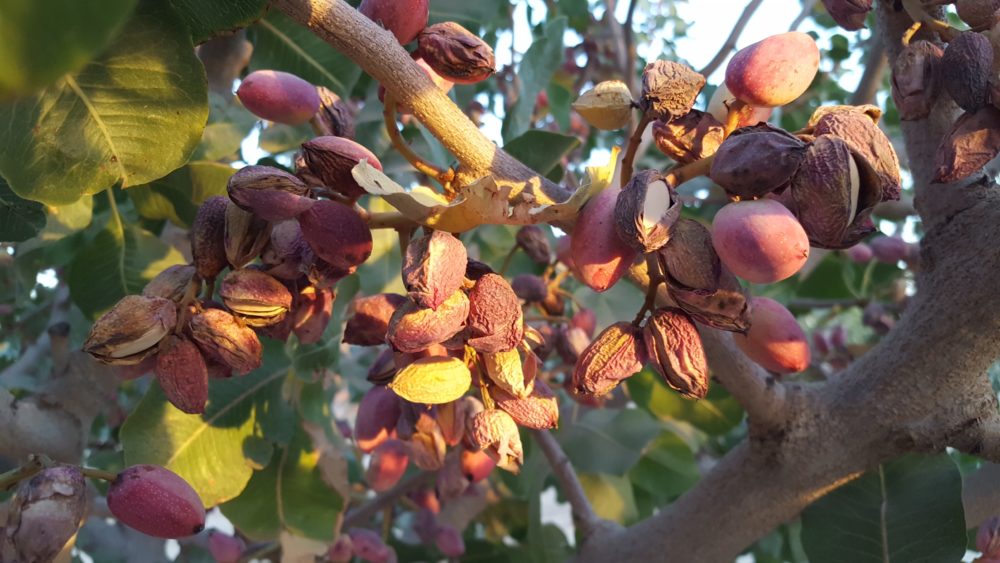
Farmers and farmworkers in California produce almonds, raisins, walnuts, prunes, pistachios, figs and dates, apricots, pumpkins, pecans and pomegranates. . . right on up the food line.

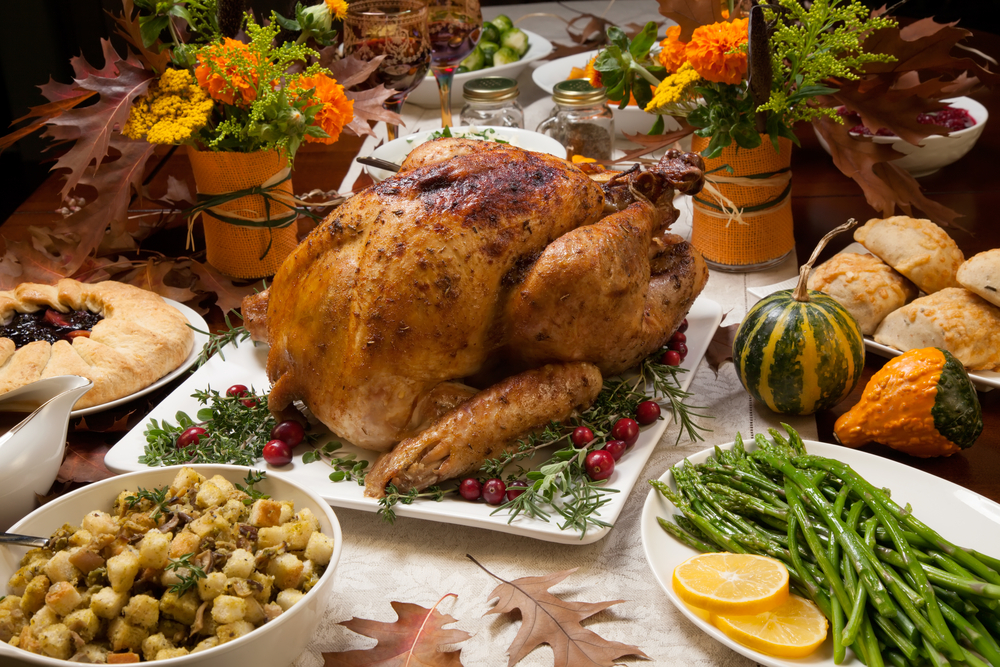
These are all part of the American Thanksgiving feast.

Celery from the Oxnard and Ventura area, and the rest of the ingredients for the stuffing mix, plus carrots, lots of crisp lettuce and fresh spinach from Salinas — all these greens waiting for you, already washed and bagged in the produce department. The green beans in your casserole come from California growers.

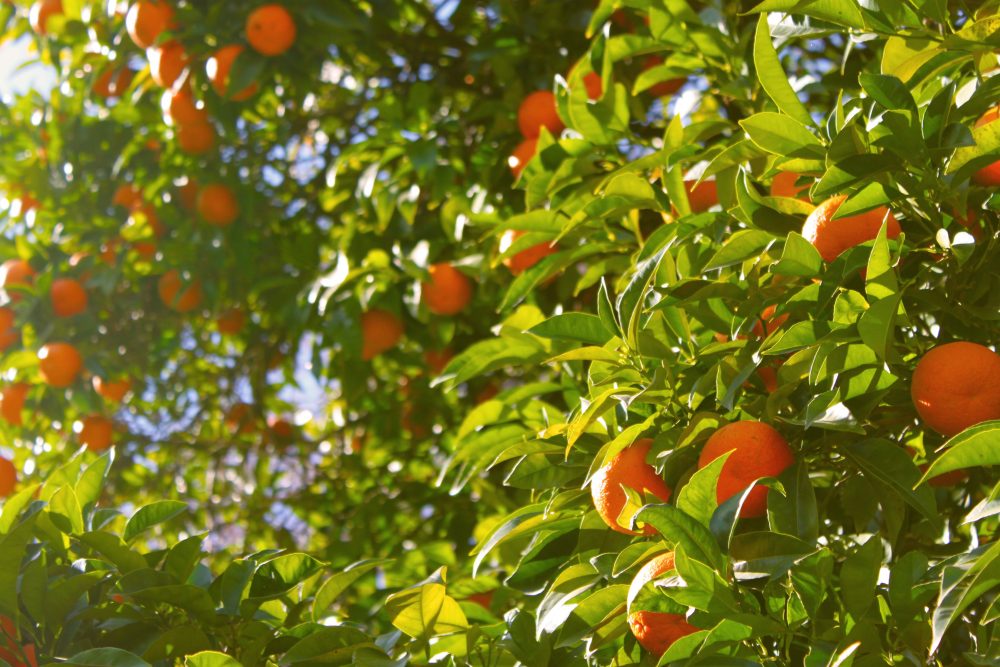
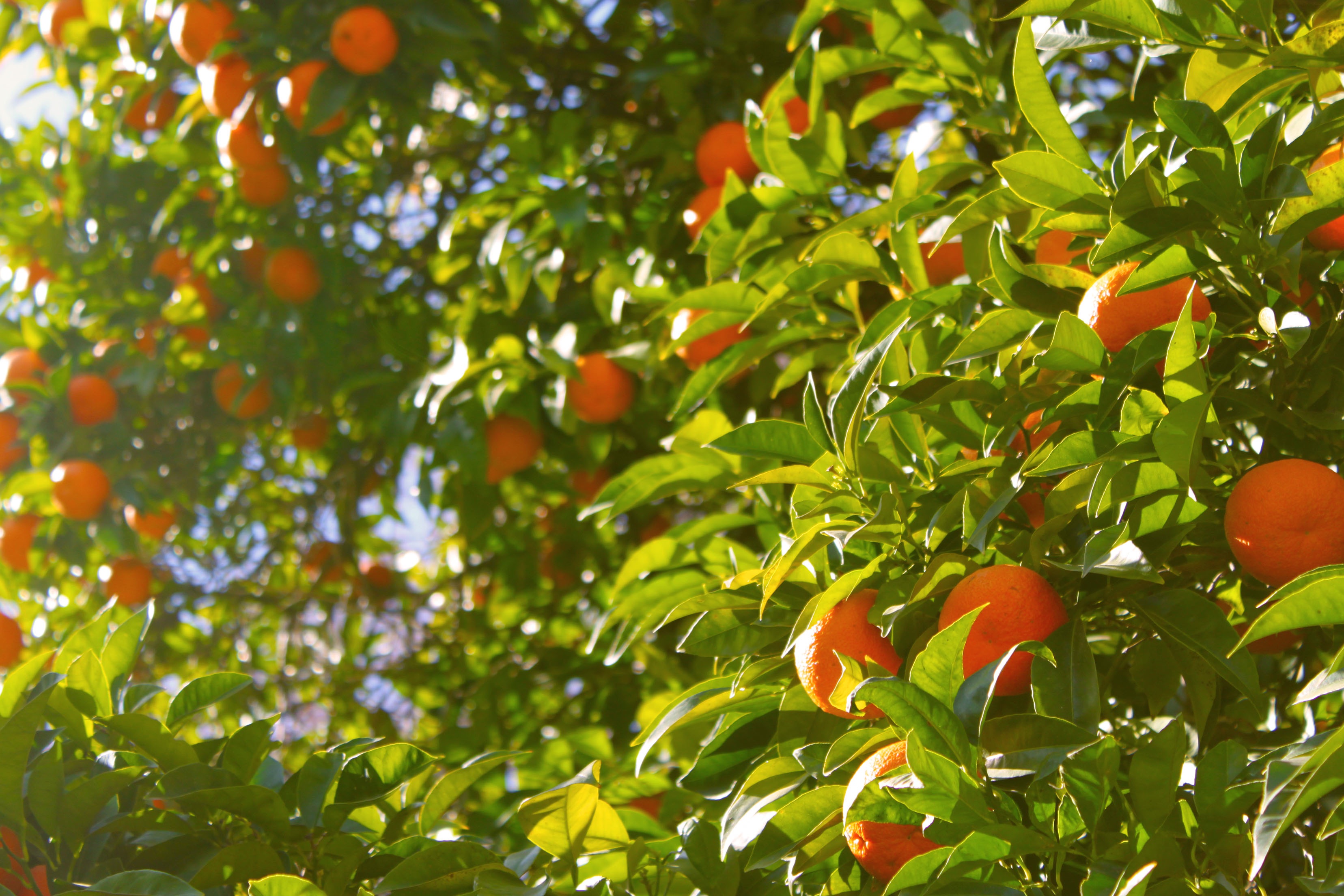
You’ve got oranges and kiwi fruit, table grapes, strawberries, raspberries freshly harvested from the Salinas and the San Joaquin Valleys. You’ve got sweet potatoes from Merced County — this is their pinnacle season. You’ve got all kinds, colors and sizes of potatoes and tomatoes, plus parsley, onions and garlic. . .  all grown in California.

Practically all the fruits, vegetables and nuts make America’s Thanksgiving celebrations festive, and nearly all of them come from California.

And don’t forget about the great variety of California winegrapes cultivated by California growers and then crafted with great care into great California vintage.

Wait! We grow firm, juicy apples and those small round watermelons that are a great snack or accent to a flavorful dessert fruit salad. And besides poultry, we even have California lamb, beef, rice or pasta—if you want to go that way.

Of course, you’ve got Martinelli’s sparkling apple or grape cider from Watsonville, near the Monterey Bay area. Local growers provide the tree-ripened fruit to the award-winning company, which is still family-owned and is run by the founder’s grandson and great-grandson.

At more than 140 years old, Martinelli’s is merely one century younger than our nation. In fact, the company received a first place award at the California State Fair in 1890.

By the way, do you know that little pop-up turkey timer that indicates when the turkey has reached the correct internal temperature? Food public relations genius Leo Pearlstein¹, along with a turkey producer from Turlock, invented that gizmo. Pearlstein, who handled the promotions for the California Turkey Advisory Board, was contemplating the enduring Thanksgiving conundrum—how long to cook the turkey and how to figure out when it is done?

Pearlstein said he and the turkey rancher were sitting in Pearlstein’s test kitchen mulling over ways consumers could determine when the turkey was done. They noticed the fire sprinkler system overhead. When the kitchen gets too hot, the fire sprinkler turns on. A metal alloy in the sprinkler is activated or melted when subjected to the high temperature of a fire in the room (185 degrees Fahrenheit). They applied that concept to the pop-up timer.

Officially, the National Turkey Federation advises consumers also use a conventional meat thermometer to verify that the cooked turkey’s internal temperature reaches:

165 degrees F to 170 degrees F in the breast or
175 degrees F to 180 degrees F in the thigh and
165 degrees F in the center of the stuffing
.

Except for cranberries, it is really a California Thanksgiving.


¹Leo Pearlstein is founder and president of Lee & Associates, Inc., a full-service public relations and advertising firm, which he opened in 1950. According to the company website, he currently runs the company with his partners, two of his sons, Howard and Frank Pearlstein. He is also founder and director of Western Research Kitchens, the food and beverage division of his agencyHe is considered a pioneer food consultant and his agency was recently named as one of the top agencies in the country that specializes in food and beverage clients.

For more food safety guidelines, the United States Department of Agriculture (USDA) Food Safety and Inspection Service (FSIS) provides this portal.
2021-05-12T11:17:11-07:00November 23rd, 2016|

Fighting to Protect Family Farms from Water Diversion

In Face of Water Diversion Threat, Ag Industry Experts are Speaking Out

By Laurie Greene, Editor


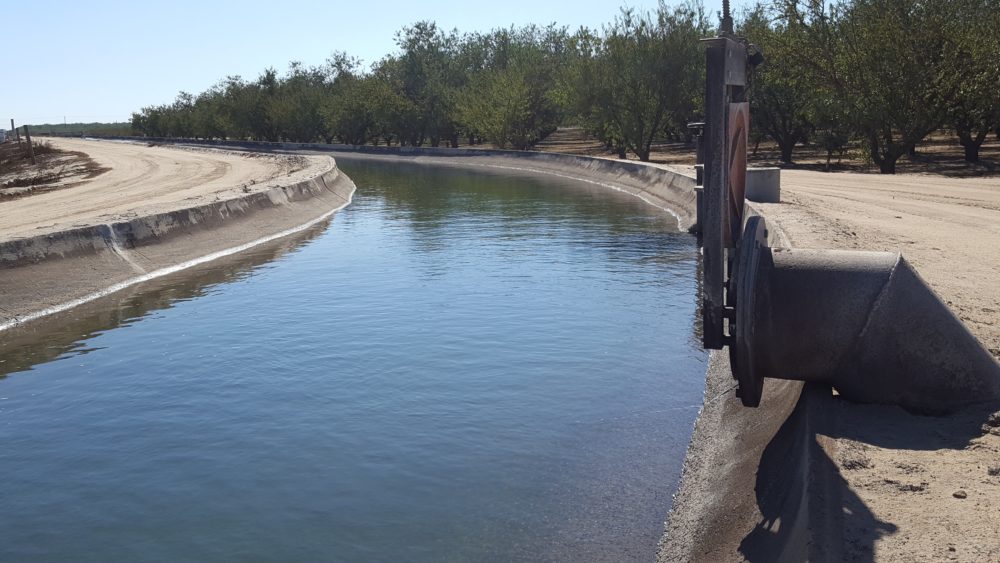
California Ag Today has been reporting on the California State Water Resources Control Board’s (SWRCB) proposed plan to divert 40 percent of the surface water from the Tuolumne River and two additional tributaries of the San Joaquin River between February 1st and June 30th every year. The SWRCB plan is designed to increase flows in the Delta in an effort to help the declining smelt and salmon populations. Yet, these water diversions would severely impact not only the farm industry, but communities in the Modesto and Turlock Irrigation Districts as well.

Michael Boccadoro, president of West Coast Advisors

Michael Boccadoro, president of West Coast Advisors

Ag officials say this is yet another threat to family farms in an attempt to protect the smelt and salmon. Farmers would lose a major portion of their surface water and be forced to pump more groundwater.

“Farming is not just a job; it’s a way of life for many of these families. And that livelihood, that way of life, is being threatened,” said Michael Boccadoro, president of West Coast Advisors, an independent, nonpartisan public affairs and advocacy firm that specializes in complex and often controversial public issues in Sacramento.

Boccadoro said the farm industry in the region is not sitting still while all of this is happening. There is a website, worthyourfight.org, that addresses this new assault on agriculture.

worthyourfight-logo Water Diversion

WorthYourFight.org

“It is worth fighting for,”said Boccadoro. “I was born and raised in agriculture, and I still think it’s a wonderful lifestyle. We need to protect it at all costs. This is starting to border on the ridiculous in terms of just one issue after another. . .  This is not a “Mother Nature” issue; this is government putting these obstacles and these problems in front of agriculture, and that’s troubling.”

“We produce much of the fruits and vegetables and nearly all the nut crops for the entire nation. So, of course, we would expect to see significant amounts of water being used by farming in California,” Boccadoro said.

“It’s just reality, and for whatever reason, I think people have been misled and don’t understand this is just part of growing food. Like I have said, if you are concerned about it, all you’ve got to do is quit eating. It’s that simple.”


Links:

California State Water Resources Control Board’s (SWRCB)

West Coast Advisors

worthyourfight.org

2016-11-22T22:11:51-08:00November 22nd, 2016|

Almond and Pistachio NOW Sanitation Critical This Winter

Joel Siegel on NOW Sanitation

By Patrick Cavanaugh, Farm News Director

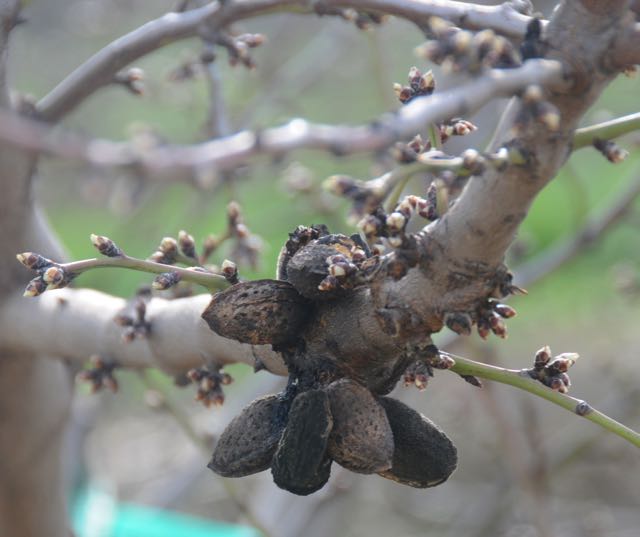
Last year was a bad year for navel orangeworm (NOW) mainly in pistachios, but also in almonds. If left in the trees, infested nuts become a great reservoir for more NOW to inhabit them.

Joel Siegel, NOW research entomologist, USDA Agricultural Research Service

Joel Siegel, research entomologist, USDA Agricultural Research Service

Joel Siegel, a research entomologist for the USDA Agricultural Research Service based in Parlier, stresses the importance of having a good sanitation plan in place to remove those NOW mummy nuts. “When we talk about sanitation, it should be the foundation for everyone’s nut program. That’s something that you control.”

“In almonds, it’s absolutely essential. Where we’ve taken a look at it in the south, every infected mummy per tree is good for 1 percent damage. So going from one mummy to two mummies, your damage on average increases another 1 percent.”

“It’s also important to destroy the mummies on the ground. You figure, for every eight or nine mummies on the ground, that’s good for about a half a percent increase in damage. Get them off the tree and shred the almonds.”

Siegel noted that while pistachio growers can clear mummy nuts off the tree, the industry has not been able to shred the fallen pistachios effectively. The hard, rounded pistachio shells just bounce around in the shredder machine.

almond_mummies

Almond Mummies

“What you can do is shake them off the tree as soon as possible so they’re on the ground where they can start rotting. You get those weeds growing around them. It has been shown that they break down faster in the weeds,” said Siegel.

“Growers disc them in. But if you’re going to disc them in, you have to disc them twice. Again, you’re not destroying the nuts, you are burying them so that NOW cannot lay eggs in the spring,” he said.

The risk of poor sanitation is high. Considerable NOW damage can prevent pistachio and almond growers from earning the premium paid for nuts that are pest-free.

2021-05-12T11:05:44-07:00November 22nd, 2016|

Drought Takes Big Toll on Sierra Nevada Mountains

New Aerial Survey Identifies More Than 100 Million Dead Trees in California

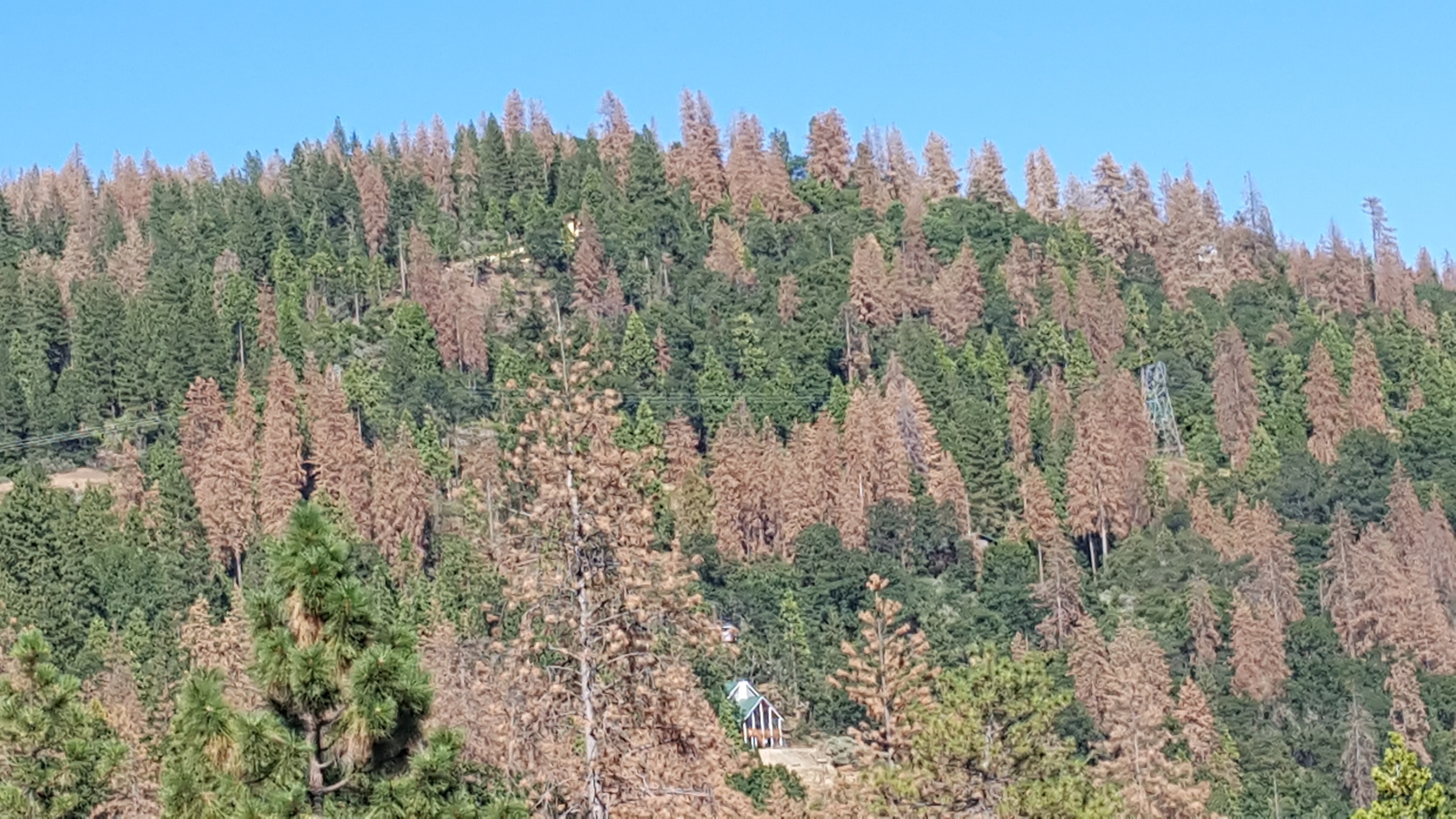
The U.S. Department of Agriculture (USDA) recently announced the U.S. Forest Service has identified an additional 36 million dead trees across California since its last aerial survey in May 2016. This brings the total number of dead trees since 2010 to over 102 million on 7.7 million acres of California’s drought-stricken forests. In 2016 alone, 62 million trees have died, representing more than a 100 percent increase in dead trees across the state from 2015. Millions of additional trees are weakened and expected to die in the coming months and years.

With public safety as its most pressing concern, the U.S. Forest Service has committed significant resources to help impacted forests, including reprioritizing $43 million in California in fiscal year 2016 to conduct safety-focused restoration along roads, trails and recreation sites. However, limited resources and a changing climate hamper the Forest Service’s ability to address tree mortality in California. USDA Secretary of Agriculture Tom Vilsack and Forest Service officials are seriously hampered not only by short-term budgets passed by Congress, but also a broken budget for the Forest Service that sees an increasing amount of resources going to firefighting while less is invested in restoration and forest health, Vilsack said.

“These dead and dying trees continue to elevate the risk of wildfire, complicate our efforts to respond safely and effectively to fires when they do occur, and pose a host of threats to life and property across California,” Vilsack said. “USDA has made restoration work and the removal of excess fuels a top priority, but until Congress passes a permanent fix to the fire budget, we can’t break this cycle of diverting funds away from restoration work to fight the immediate threat of the large unpredictable fires caused by the fuel buildups themselves.”


dead trees sierra nevada california drought

Bark Beetles have contributed to tree die-off in the Sierra Nevada forest due to the drought in California

The majority of the 102 million dead trees are located in ten counties in the southern and central Sierra Nevada region. The Forest Service also identified increasing mortality in the northern part of the state, including Siskiyou, Modoc, Plumas and Lassen counties.

Five consecutive years of severe drought in California, a dramatic rise in bark beetle infestation and warmer temperatures are leading to these historic levels of tree die-off. As a result, in October 2015, Governor Jerry Brown declared a state of emergency on the unprecedented tree die-off and formed a Tree Mortality Task Force to help mobilize additional resources for the safe removal of dead and dying trees.

This year, California had a record-setting wildfire season, with the Blue Cut fire alone scorching over 30,000 acres and triggering the evacuation of 80,000 people. In the southeastern United States, wildfires have burned more than 120,000 acres this fall. The southeast region of the Forest Service is operating at the highest preparedness level, PL 5, reflecting the high level of physical resources and funding devoted to the region. Extreme drought conditions persist, and many areas have not seen rain for as many as 95 days.

Longer, hotter fire seasons where extreme fire behavior has become the new norm,] – as well as increased development in forested areas – is dramatically driving up the cost of fighting fires and squeezing funding for the very efforts that would protect watersheds and restore forests to make them more resilient to fire. Last year, fire management alone consumed 56 percent of the Forest Service’s budget and is expected to rise to 67 percent in by 2025.

As the situation in the southeast demonstrates, the problem of shrinking budget capacity is felt across the U.S., not only in the western states. The health of our forests and landscapes are at risk across the nation, and the tree mortality crisis could be better addressed if not for the increasing percentage of the Forest Service budget going to fight wildfire. “We must fund wildfire suppression like other natural disasters in the country,” Vilsack said.

Forest Service scientists expect elevated levels of tree mortality to continue during 2017 in dense forest stands; stands impacted by root diseases or other stress agents; and in areas with higher levels of bark beetle activity. Photos and video of the surveys are available on the Forest Service multimedia webpage.

Learn more about tree mortality and the work to restore our forests in California at the Forest Service’s web page by clicking here.


U.S. Department of Agriculture (USDA)

U.S. Forest Service

2021-05-12T11:02:56-07:00November 22nd, 2016|

Gary Schulz Gives California Citrus ACP and HLB Update

California Citrus ACP and HLB Update from Gary Schulz

By Brian German, Associate Broadcaster


The Citrus Research Board (CRB) recently held their annual California Citrus Conference in Exeter, bringing together a variety of guest speakers and research presentations. The Conference focused on pressing Asian Citrus Psyllid (ACP) and Huanglongbing (HLB) issues, along with political action updates and current projects that are important to the citrus industry. Gary Schulz, president of the CRB, said “We have a 21-member board and we’ve been planning this event for the last 12 months. It’s been 4 years since we held the last conference,” noted Schulz.

Gary Schulz, president, Citrus Research Board

Gary Schulz, president, Citrus Research Board

The CRB is responsible for overseeing the California Citrus Research Program (CCRP), a grower-funded and grower-directed program created in 1968 under the California Marketing Act. The CCRP’s purpose to enable California’s citrus producers to sponsor and support research that furthers the overall industry. Therefore, close to 70 percent of the CRB’s overall budget is allocated to research.

Schulz said the Conference “was a great, great day to have a good update on some of the dollars the Citrus Research Board has been spending on the growers’ behalf on research.” Schulz explained HLB represents the single greatest threat that citrus growers have faced worldwide.

For the past seven years, the USDA and Congress have allocated between $10 and $12 million dollars annually for ACP and HLB research operations.  Advocacy groups and other supportive ag organizations have contributed the difference to reach an annual ACP and HLB research budget of close to $90 million dollars a year. We fund a lot of UC Riverside and USDA agricultural research, service researchers, plus research at UC Davis and the University of Arizona,” Schulz noted.

Schulz, who has many years of experience in California agriculture, having served as general manager of the Raisin Administrative Committee and CEO of the California Raisin Marketing Board, stated that CRB has a great working relationship with California Citrus Mutual (CCM). “Joel Nelson and CCM have worked very hard with the packers to assess themselves, put together a private foundation, and work with the university,” Schulz said.

Featured Photo:  Adult Asian Citrus Psyllid (Source: The Citrus Pest & Disease Prevention Program)


Resources

California Marketing Act

Citrus Research Board (CRB)

California Citrus Mutual

2021-05-12T11:05:44-07:00November 18th, 2016|

Another Record Season for Walnuts

Walnut Yield Could Continue to Increase Over Next Few Years

By Brian German, Associate Broadcaster

October was the peak of harvest for the state’s biggest tree nut crops: almonds, pistachios and walnuts. California growers have completed this year’s walnut harvest, and so far growers are pleased with the yields. Final statistics for California walnut production in 2016 will not be available until mid- to late-January 2017.

The USDA National Agricultural Statistics Service (NASS)’s 2015 estimate of 365 thousand walnut acres in California (of which 300 thousand were bearing acres), represents a 50 percent increase versus a decade ago, according to Dennis Balint. Balint, who just retired as longtime executive director of the Folsom-based California Walnut Board and CEO of the California Walnut Commission since 1995, became the new special assistant to the California Walnut Board on November 1, 2016.

Dennis-Balint, California Walnuts

Dennis-Balint, California Walnuts

Growers had a record walnut harvest last year, and this year looks even more promising. “This year’s crop estimate from USDA’s California Agricultural Statistic Service (CASS) is 670 thousand tons, an 11 percent increase over last year’s 603,000 tons. 

The NASS office in Sacramento, as relayed by Balint, reported this year’s walnut season began with a significant amount of winter moisture, along with an ample amount of chilling hours and average weather conditions during walnut bloom.  Springtime rain concerned some growers because of the increased chances of blight and any resulting damage is under assessment.

While overall weather conditions were advantageous for growers, results were varied. “If you’re in Reading or Modesto, or Visalia, different factors affected you: climates, your own horticultural practices, what varieties you’re growing, etc.,” said Balint.

The estimate of this year’s harvest is good news for growers who, not many years ago, were fortunate to harvest merely 300,000 tons. Even with the estimated record harvest, there are still close to 80,000 acres of younger, nonbearing walnut trees in the state. Balint commented, “As those acres mature and come into production over the next few years—all things being equal—California’s walnut harvest could potentially increase by another 30 to 40 thousand tons per year.”

california-walnut-boardBalint also reported the Walnut Board has four tests in the grocery marketplace to determine how to increase stores’ holiday inventory of walnuts. [EDITOR’S NOTE: For fans of inshell walnuts, buy your supply early and often. Inventory of inshell walnuts is not expected to extend beyond the holidays.]

As of November 1, 2016, board members of the California Walnut Industry appointed Michelle Mcneil Connelly, former senior marketing director, as executive director of the California Walnut Board and as CEO of the California Walnut Commission.


Links:

The California Walnut Board was established in 1948 to represent the walnut growers and handlers of California. The Board is funded by mandatory assessments of the handlers. The California Walnut Commission, established in 1987, is funded by mandatory assessments of the growers.

USDA’s National Agricultural Statistics Service California Field Office is operated in cooperation with the California Department of Food and Agriculture.

2016-11-17T13:33:58-08:00November 16th, 2016|

Support Agriculture By Being An ‘AgVocate’

Bayer CropScience Says Farmers Need to AgVocate with Consumers

By Brian German, Associate Broadcaster

The California Association of Pest Control Advisers (CAPCA) recently held their 42nd Annual CAPCA Conference & Agri-Expo in Anaheim.  It was a sellout crowd at the Disneyland Convention Center, with about 1,600 registered participants and more than 160 different trade show vendors participating.  The theme of this year’s conference was “Feeding a Nation, Fighting the Fear,” with speakers covering a variety of topics related to public interest in agriculture. 

David Hollinrake, vice president of Agricultural Commercial Operations (ACO) Marketing with Bayer CropScience, talked about a program that Bayer CropScience sponsors called AgVocate.   “AgVocacy really is about engaging the farmer population so that they can represent modern agriculture to the consumer population that has a growing disconnect from what we do,” Hollinrake said. 

vice president of Agricultural Commercial Operations (ACO) Marketing with Bayer CropScience, AgVocacy

David Hollinrake, vice president of Agricultural Commercial Operations (ACO) Marketing with Bayer CropScience

There has been a growing disconnect between those who are involved with agriculture and the overall consumer base.  “With misinformation sometimes comes misconceptions and mistrust,” Hollinrake noted. 

One of the reasons for the divide between growers and consumers is that the number of people involved in agriculture has declined significantly over the past 50 years.  “When my grandfather grew up on the farm, some 40 percent of people were involved in production agriculture. Today, there’s only 1 percent of the population involved in agriculture,” Hollinrake said.

It’s important to bridge that gap by giving consumers a better understanding of what agriculture is really about.  “Our role with AgVocacy is to enable the farmers to take an active role in describing the benefits of modern Ag and really dispelling a lot of the myths that exist in agriculture,” Hollinrake said.

Bayer-Cropscience-agvocate-amplify-your-voice-hero“One of the other topics that we spoke about was the difference between conventional agriculture and organic agriculture,” Hollinrake noted.  The growth in organic farms has created an atmosphere of misunderstanding; with consumers erroneously believing that traditionally grown produce is somehow less safe.  Without being involved in agriculture, it’s understandable for people to have misconceptions about how the industry works.  However, these types of beliefs solidify the need for the AgVocate program.

Hollinrake thinks meeting the dietary needs of a growing population will require both organic and traditional farming. “If we’re going to feed 10 billion people by 2050, it’s going to take all forms of agriculture. To me, it’s not an ‘either/or’ – it’s a ‘yes/and’ conversation,” Hollinrake said.

2016-11-16T10:49:02-08:00November 16th, 2016|

A Brief History on the Pest Control Adviser and Certified Crop Adviser Programs

Longtime Crop Adviser Helped Increase Job Market for CCA Industry

By Brian German, Associate Broadcaster


The Certified Crop Adviser Program (CCA) was introduced in 1992 as a means to address the increased concerns regarding agriculture’s contributions to a variety of environmental issues.  By 1994, the CCA program was fully established with the support of the California Department of Food and Agriculture, along with the American Society of Agronomy and the California agricultural industry. The program was designed to raise the awareness and professional standards of individuals who make recommendations on agricultural fertilizers, pesticides and related products. 

Allan Romander has a long history with the CCA program, having joined the CCA Board in 2004. “I am currently with the Certified Crop Adviser Program in California, and Arizona I might add. I am a consultant with the organization. I just concluded my term as ICCA Chair and past Chair,” Romander said.

Allan Romander, member, California Certified Crop Adviser Board

Allan Romander, member, California Certified Crop Adviser Board

A Pest Control Adviser (PCA) since 1979, Romander joined the California CCA Board in 2004 and was instrumental in helping to develop a marketing program that nearly doubled the number of CCAs in California in a little less than six years. 

California is one of just a few states that require people who advise farmers on pest control management to be licensed as a Pest Control Adviser.  Amidst rising public concerns regarding pesticide use on California farms, the PCA program was launched in 1973 to ensure that those who make pesticide recommendations are both qualified and knowledgeable. “But that only certified them in the area of pest management,” Romander said. “It never said anything about their competency in the area of crop management or soil or water management.”

certified crop adviser logo“There has long been a gap between growers and consultants. Consultants historically have just held a Pest Control Adviser’s license,” Romander said. Over time, farmers began to ask their PCAs for guidance on multiple subjects outside of pest control, such as fertilizers and irrigation. 

“That’s where the Certified Crop Adviser Program comes in and picks up where the PCA program leaves off.  It covers those categories and certifies to a grower that [the adviser] has competency in those other areas,” Romander said.

Currently, there are close to 4,000 EPA-licensed Pest Control Advisers in California.  Romander noted, “Eighty-five percent of the Certified Crop Advisers in California are also Pest Control Advisers. So it’s a well-established program and well-respected throughout not only the United States, but North America and the rest of the world.”

2021-05-12T11:02:56-07:00November 14th, 2016|

Interesting Forecast: Wetter Winter, with Possible Deep Frost?

Weather Pattern in California Could Hurt Citrus, Predictions Say

By Patrick Cavanaugh, Farm News Director


Some meteorologists are seeing evidence of  weather data on the North Pole that could point to more rain and snow this winter. However it could come with several freeze events, which could hurt crops, especially citrus.

The Global Forecast Center is a group of meteorologists in Northern Idaho that conducts weather forecasting for agricultural interests throughout  Florida, California and portions of Texas. In fact, they work closely with California Citrus Mutual.

Tom Dunklee, president and chief atmospheric scientist, Global Forecast Center and its associated “WeatherWatch” service, said, “What we see in our frost outlook is a cold year coming up and a bit of an increase in rainfall, which will make everybody happy. But we may have to pay the price with some very cold temperatures following these fronts.”

meteorologist Tom Dunklee of the Global Forecast Center

Tom Dunklee, president and chief atmospheric scientist, Global Forecast Center

“The rains may be more frequent, but they will not be real big rain producers. They won’t be like El Niño years, where you get an inch and a half of rain or more. They will be cold, wet weather systems that come through, one half inch of rain at a time, followed by a possibility of frost,” Dunklee said.

Dunklee predicts the rain events may be followed by some dry weather for three or four days, then by another front coming through, doing the same thing. “What we are seeing is the type of weather pattern we saw in the late 1960s. It’s been quite a while since we’ve had one of these years shape up,” he said.

“I don’t think we are going to have a “Miracle March.” Instead, we are going to have a warm and drier than average spring. Most of the moisture is going to come in December, January and February, comprising those frequent frontal systems. Most of them will be followed by cool air and showery weather. Then the weather will dry out for three or four days, and the wet weather will return.”

Dunklee spoke of the intrusions of the cold arctic air that could arrive. “We think the intrusions will be from the North and Northeast—from Montana coming down through Nevada, then through the San Joaquin river drainage bringing quite a bit of cold air filtering into the [Central] Valley, and we’ll get the possibility of a hard frost, and maybe a freeze sometime in late December,” Dunklee said.

Dunklee also spoke about an increase in snowpack. “At the 7,000 foot level this year we may see higher than average, about 120% to 130% of average snow fall. It will be on the average of about six or seven feet. It may not actually get that deep at one time, but the potential is there for that,” he said.

“Most of the time it’s going to be about two, three feet of snowfall during the real cold months. Then in the spring it will melt fairly quickly, but it potentially is  going to be a good snow pack, a little bit higher than average,” Dunklee said.

2016-12-12T09:19:13-08:00November 14th, 2016|

California Pistachios Are Set For Record Year

California Pistachios Make Comeback in 2016


By Brian German, Associate Broadcaster

California produces close to 99 percent of the nation’s pistachios. With harvest season just about wrapped up, growers are pleased with this year’s crop. 

Last year was a slow one for pistachios, with only 275 million pounds produced.  Because pistachios are alternate-bearing [tendency for an entire tree to produce a greater than average crop one year and a lower than average crop the following year], last year’s disappointing crop allowed the trees to rest before producing this year’s estimated record crop. 

Richard Matoian, executive director, American Pistachio Growers, estimated this year’s crop to be between 830 and 850 million pounds. The last record-setting crop was in 2012 when growers produced 555 million pounds of pistachios.  This year, some California growers have reported broken branches due to the heaviness of the crop, a phenominon Matoian has never seen before.  

Just as last year’s lower harvest enabled the pistachio trees to bounce back this year, increased rainfall last winter helped improve irrigation supplies for the nut trees this year. 

In addition, more chilling hours last winter also helped boost production.  Pistachio trees require cold nights, with at least 800 hours of temperatures below 19 degrees Fahrenheit.  This winter, trees experienced more than 1,000 hours of those conditions. 

Reports indicate that the pistachio crop from Iran, one of our biggest global competitors, is a bit down this year, which could help California growers get a better price for their pistachios.  “We all hope and try to keep the market as strong as it can be,” said Matoian, “but there are market forces at work. You can’t hold on to a crop forever. You have to be conscious of what the world supply is, and so a number of factors go into setting a price.”

Growers are pleased with the overall size of the harvest compared to last year, but they’re also a bit concerned about the prices. “The initial price the growers got last year was somewhere between $2 and about $2.20 per pound. Now we are at a $1.60 to about $1.80 per pound,” Matoian said.

2016-12-12T18:48:36-08:00November 10th, 2016|
Go to Top