Preventing Future Outbreaks in Leafy Greens

FDA Report Provides Clues to Prevent Future Outbreaks

Yesterday the FDA issued a report on its investigation of outbreaks involving romaine lettuce occurring in the Fall of 2019. The LGMA responded by issuing a press release and the following blog post:

California leafy greens growers are pledging to incorporate findings from a report issued recently by the U.S. Food and Drug Administration (FDA) into its ongoing process to strengthen required food safety practices on farms.

Leafy greens farmers work hard every day to follow the best-known food safety practices. Clearly, we need to look even beyond our own farms to help us prevent future outbreaks. Information from this new FDA report will be extremely valuable as we further strengthen our practices both in and around our farms.

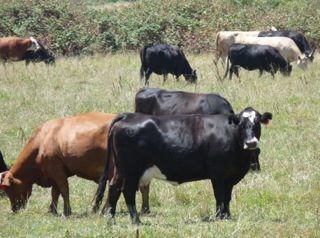
The FDA report issued today relates to what was actually three distinct outbreaks all occurring inf the Fall of 2019. In the report, identifies adjacent or nearby land used for cattle grazing as the most likely contributing factor associated with these three outbreaks.

The leafy greens industry hopes to learn more about how leafy greens are being exposed to pathogens like e. coli in the environment and on land surrounding farms through a series of research projects. A project to gather samples and collect data is now underway in Arizona in cooperation with producers, the University of Arizona and the FDA.

A similar study is being developed to perform research in California’s central coast growing areas with an eye toward considering preventative controls that may be necessary on land surrounding our farms as well as additional controls on the leafy greens farms themselves. The study would be done in cooperation with FDA, the California Department of Food and Agriculture, academia and the leafy greens industry. We’re hopeful this kind of work can be done to provide us with answers to help prevent future outbreaks.”

Even before these last outbreaks occurred, the leafy greens industry had launched a comprehensive process to review and update required food safety practices included under the California LGMA.

A series of subcommittees has been appointed to review practices in all areas. Water continues to be a focus of this effort and the industry is in the process of considering some 30 changes to further update practices for water used in farming leafy greens. Other subcommittees on soil amendments and sanitation have been meeting for weeks and a subcommittee on proximity to animals and adjacent land use is being appointed this week. All subcommittees are suggesting updates to strengthen existing requirements.

More information about the collaborative process for updating required food safety practices for leafy greens can be found here.

The goal is to create unified standards for how leafy greens are farmed using the best science and expertise available. We will be relying on information supplied by FDA, scientists and others to help us improve these practices so we can further protect consumers.

The real benefit of the LGMA system is that farmers clearly understand what practices are required. When new information is learned, the standards can quickly be updated and adopted throughout the industry

2020-05-22T14:31:39-07:00May 22nd, 2020|

New California FFA Officers

First Time Ever, FFA Officers Elected On-line

By Tim Hammerich, with the Ag Information Network of the West

This year for the first time, the California State FFA Officers were elected online. The 2020-2021 California FFA President is Dean Hill from Templeton FFA in San Luis Obispo County.

“I’m a fourth generation farmer. I joined FFA simply because my brother did it and it seemed interesting. And then the more I got invested into it, the more I kind of kept going and got excited and started looking forward to different events. And one thing led to another, and here I am today,” said Hill.

Dean’s FFA experiences may have just recently led him to state office, but agricultural leadership runs in the family.

“My grandpa, he lives up in Chico and he works on an almond orchard. And then my father works for Valent USA. That’s a chemical company and he’s always been really big and into entomology. He got his PhD from Purdue. Yeah, he’s been working with chemicals and out on the field for a lot of it. Now I’m just kind of taken after him and also my grandpa, learning all different kinds of things and it’s just really fascinating to me,” he said.

Despite current travel restrictions, Dean says he and the rest of the team are looking forward to the challenge of creating new ways to engage FFA members this year.

After his year of service to the youth agricultural leadership organization, he plans to attend Cal Poly to pursue a degree in Ag Systems Management.

His FFA Advisors are Ms. Brandi Bognuda, Mr. Chris Hildebrand, Ms. Sophie Johnston, and Mr. Russell Zimmerman.

Other 2020-2021 Elected Officers

Emma Thorpe, a student at El Capitan High School in San Diego County, was elected State Vice President. Thorpe served as the Southern Region President, attended the Sacramento Leadership Experience, served on the State Nominating Committee, took part in the National FFA Convention and attended the Washington Leadership Conference. Thorpe’s supervised agricultural experience has been in the area of agriscience research.

Her FFA Advisors are Ms. Brenda Davis-Landini, Mr. Don Dyer, Ms. Jesse Meade and Ms. April Perez.

Mia Arisman, a student at Galt High School in Sacramento County, was elected State Secretary. Arisman was a member of the State Champion Best Informed Greenhand Team, was a National Semi-Finalist in Agricultural Issues, participated in the Parliamentary Procedure team, attended the Sacramento Leadership Experience and served as the Central Region Vice President. Arisman has raised market hogs for the county fair and is managing the Warrior Grown small animal cooperative. Her FFA Advisors are Ms. Eileen Desmond, Ms. Jessica Hamilton, Ms. Holly Hockett, Ms. Cheryl Reece, Mr. Derek Silva and Mr. Isaac Valencia.

Reese Gonzalves, a student at Modesto High School in Stanislaus County, was elected State Treasurer. Gonzalves served as the Central Region President, was a member of the State FFA Executive Committee, participated in the Sacramento Leadership Experience, attended the National Convention and served as an Ambassador with the California Almond Alliance. Gonzalves manages a beef cattle production project.

Her FFA Advisors are Mr. Scott Layne, Ms. Julie Schellhase and Ms. Victoria Vanlieshout.

Taylor Sollecito, a student at Salinas High School in Salinas County, was elected State Reporter. Sollecito was the Chapter FFA President and Vice President, attended the Sacramento Leadership Experience, served as a committee chair at the State FFA Leadership Conference and was the Monterey Bay Section President. She raised market livestock that she showed at the local fairs.

Taylor’s FFA Advisors are Mr. Chris Evans and Ms. Rachel Martinez.

Maico Ortiz, a student at Chico State University and a graduate of Galt High School, was elected State Sentinel. Ortiz served as the Central Region Vice President, facilitated Greenhand Leadership Conferences, was a sub-committee chair at the State Leadership Conference, was a member of the State Champion Agricultural Issues team and served as the Chapter FFA President. Ortiz’s supervised experience included raising market livestock, managing the Warrior Grown small animal cooperative, and working at Cattleman’s Livestock Market.

His FFA Advisors are Ms. Eileen Desmond, Ms. Jessica Hamilton, Ms. Holly Hockett, Ms. Cheryl Reece, Mr. Derek Silva and Mr. Isaac Valencia.

2020-05-21T13:42:41-07:00May 21st, 2020|

Survey Respondents Needed To Assess Value of Cover Crops

Researchers Launch Survey on Cover Crops to Expand Use and Policy Incentive Programs

University researchers and the Western Cover Crops Council are conducting a survey of western farmers to improve understanding of cover crop use throughout the U.S. West. The survey results will provide valuable feedback on current use of cover crops in the west, future outreach and research needs to expand use, and inform federal cover crop incentive programs to better serve farmers.

Western farmers are asked to take this brief survey to share their perspectives on cover crops—whether they currently use them, have planted them in the past, or have never planted them. This survey research is being conducted by partners at the University of Idaho, Oregon State University, and Boise State University with funding from a USDA Sustainable Agriculture Research & Education (SARE) grant. This brief, confidential survey will take approximately 5-10 minutes to complete. Upon completion you will have the opportunity to enter a drawing for one of 10, $50 Amazon gift cards.


Survey Link: http://bit.ly/2U1GUvk

2020-05-12T12:06:48-07:00May 12th, 2020|

COVID-19 Continues to Reverberate Through Calif. AG


California Agriculture and COVID-19

By Tim Hammerich, with the Ag Information Network

In recent weeks, we’ve been sharing stories of how California agriculture is adapting under the current circumstances stemming from COVID-19. I have a few more for you here today.

The impacts of the COVID-19 pandemic reverberate through California agriculture, according to speakers at an online forum. During a virtual town hall hosted by chairs of the Legislature’s agriculture committees, economists said changes in diets and buying habits have disrupted every aspect of the farming business. One analyst said agriculture faces a “one-two punch” from the pandemic shutdown and a slow economic recovery.

By mid-May, the U.S. Department of Agriculture plans to begin shipping food boxes to food banks through a new program in response to the COVID-19 pandemic. An analysis by the American Farm Bureau Federation says the food boxes will be packaged for household use, and will contain fresh produce, dairy and meat products. AFBF says more Americans will likely need food assistance due to pandemic-related job losses.

Though classes have transitioned to virtual instruction, the student farm at Fresno State University continues operating, while observing social-distancing protocols. The university says its Agricultural Laboratory has maintained a “near-normal pace” the past month. Students continue to care for livestock and to manage orchards, vineyards and vegetable crops on campus. The farm market at Fresno State has remained open as well.

AgInfo.net is the largest Radio Network in the West with 140 Affiliate Radio Stations.

2020-05-06T20:06:25-07:00May 7th, 2020|

West Hills College Farm of the Future Part 2

Students Test New Agricultural Technologies and At Farm of the Future

By Tim Hammerich, with the AgInfo.net

West Hills College’s Farm of the Future is a unique program that provides students with practical, hands-on farming experience.

Director Terry Brase also envisions it as a chance to work with companies where in addition to hands-on learning, students can test new agricultural technologies.

“We also have another side of the farm where we’ve got close to a hundred acres that are made up of smaller plots. Those are the areas that are reserved for student projects,said Brase. And that currently we’re actually looking for funding where the project or the company that wants to maybe demonstrate a product will pay us. And pay a group of students to run a demonstration on one of these fields. And the students are directly responsible for the decisions and using the product, coming up with little research demonstration against the control part of the plot to see if it works or not.”

Brase said this gives companies early exposure for up-and-coming products, and the students a career related job during school.

“But I think what it really provides, the real value, is that the students are being paid through like a scholarship to work here on the farm. So they’re making money while they’re working on the farm. This way they’re getting the experience and we’re helping them through school,” Brase said.

Interested students or companies can visit West Hills College’s website for more information.

AgInfo.net is the largest Radio Network in the West with 140 Affiliate Radio Stations.

2020-05-04T20:44:44-07:00May 6th, 2020|

Cover Crops May Help Sequester Carbon in Vineyards

Carbon Sequestration in Vineyards

By Tim Hammerich, with the AgInfo Network

Agriculture has drawn attention in recent years as one potential solution for climate change. Sequestering carbon in soil is one of our few options for removing it from the atmosphere. But measuring carbon sequestration can be tricky.

However, Extension Specialist Kaan Kurtural and his team at the Oakville Experiment Station are currently evaluating the impact cover crops can have on carbon sequestration in vineyards.

Growers came to us. A couple of the questions they had was how can we sequester the carbon and how can we mitigate the amount of greenhouse gases we emit from the vineyards? So that was some background work done on it, said Kurtural.

Cover crops do sequester carbon and will store it in the soil. But as you till them, if you till the row middles, all this stuff is release back into the atmosphere. So we worked with a couple of private companies and we were able to get this new type of cover crop using a perennial system, said Kurtural. Meaning that it doesn’t have to be tilled or mowed, it just goes dormant. So we’re comparing now till versus no-till systems using perennial and annual cover crops. So that’s how that began.”

The study requires the use of infrared gas analyzers, measuring photosynthesis and respiration, and an analysis of methane and nitrous oxide emissions.

Kurtrual hopes to have results for growers by the end of this year.

2020-04-29T10:37:47-07:00April 29th, 2020|

California Pear Farmers Will Harvest in July

California Pear Farmers Set to Begin Harvest in Early July

 As the nation’s food industry is working hard to keep food on our tables, California pear farmers are preparing to harvest a crop of fresh pears in early July.

“California pear harvest appears to be on a normal schedule this year after two years of late harvest timing,” said Matt Hemly of Greene and Hemly in Courtland. “We’ve seen pear category sales affected in recent years during July because of our late harvest. This year we expect to be picking Bartlett pears in the River District within the first weeks in July. Retailers will have no problem getting American grown pears into their stores this year.”

“We want to thank retailers and all of their employees for keeping our food supply moving during this difficult time,” said Richard Elliot of Stillwater Orchards. “As we move out of this pandemic, we hope that retailers will support local growers, families and communities to put America first.”

California pear growers are taking extra steps in the orchards and packing facilities to ensure a safe, healthy supply of fresh pears during this time.

“We employ 450 people in our farms and packing house,” explains Chiles Wilson, owner of Rivermaid Trading Company, based in Lodi, CA. “We want to make sure we can give them their jobs back this year. It’s not just about us as farmers but all the people we employ and their families.”

“Flavor is most important to consumers,” explains Pat Scully of Scully Packing in Lake County. “California pear farmers take care to pick pears at a point when they have plenty of sugar, and we never treat our pears with anti-ripening products like 1-MCP.”

1-MCP is a product that impedes fruit ripening. Producers in many growing regions use 1-MCP to extend a pear’s storage life. Unfortunately, a 1-MCP treated pear may not ever ripen properly.  It may turn yellow and appear to be ripe but never soften. This disappoints consumers and prevents repeat sales.

“What we’ve found in repeated experiments in our lab is that pears treated with 1-MCP take as long as three weeks to ripen and, in fact, they may never get soft and juicy,” explains Dr. Beth Mitcham, a postharvest researcher at the University of California, Davis.

“We don’t believe that 1-MCP is a smart choice for pears like Bartletts that must ripen off the tree,” said Rivermaid Trading company’s Wilson. “We know 1-MCP inhibits the fruit’s ability to ripen, meaning no flavor and no softening.  With the increased use over the past few years, we think there is a direct correlation to retail pear category decline.”

Because Bartlett pears are picked green off the tree, they ship well and will ripen naturally.  Once a consumer brings them home, they will become a ripe juicy flavorful piece of fruit.

“We’re committed to producing pears that offer the best eating experience for our consumers,” said Hemly. “In early July, shoppers should begin seeing new crop Bartlett pears in-store grown by local farmers. Our California Pear Advisory Board representatives will soon be reaching out to retailers — even if it’s only virtually — to set up promotions for the new season. “

The California Pear Advisory Board is based in Sacramento, CA and represents all producers of pears in the state. More information about California pears, pear varieties and pear farmers can be found at www.calpear.com.

2020-04-21T16:35:13-07:00April 22nd, 2020|

Oak Trees Coming Back Following Atlas Fire in Napa County

Atlas Fire: Reality of Fires, Oaks, Vineyards and Napa’s Agricultural Future


By Igor Sill, Atlas Peak, Napa California

Almost three years after the devastating Atlas Peak firestorms, we begin to see our mountain landscape recovering and the once blackened oaks return to life on their own, essentially a re-birth.

Many woodland oaks survived the wildfires because they are a hearty, native hardwood species which have adapted to survive droughts and wildfires that have swept over Napa’s terrain for thousands of years.

The fires brought us an unpredictable but welcomed outcome. Today, Napa County has the greatest density of oak trees of any county in California. These oaks when combined with the beauty of vineyards are one of the defining features of Napa‘s scenery.

With the spring’s warmth, these reinvigorated oaks have thrown off pounds of acorns, showing their resiliency, adaptation and recovery to fire. Here at least, there will be no need to bring in new trees sprouted from acorns not native to this biota.

It’s been proven that fire directly promotes the establishment of oak seedlings by reducing competing understory vegetation, releasing needed soil nutrients and reducing numerous pathogens. Wildfire can also increase the regeneration of fire-adapted native species in the understory of oak woodlands while reducing the parasitic oak mistletoe.

Interestingly, Native Americans are thought to have set frequent fires in oak woodlands up until the 1800s so as to rejuvenate the land. We lost 27 oaks due to the fires on our Atlas Peak property. Today, I’ve counted well over 400 newly established healthy oak sprouts flourishing throughout the property, essentially “re-oaking” the property. A new, better post-fire era for Napa oak forests.

From a factual statistics point, oak woodlands and forests are not being eliminated within Napa County. According to David Morrison, Napa’s Director of Planning, Building & Environmental Services, nearly 42 percent of the county (or 213,000 acres) consists of oak woodlands, riparian forest, or conifer forests.

In comparison, only 13 percent of the county is used for farmland, and 6 percent is developed with urban uses. Trees cover more than twice as much land in Napa as agriculture and cities combined. The Conservation Regulations already require stream buffers and tree retention. Setbacks of 35 to 150 feet are mandated for vineyards, depending on the surrounding slopes.

Setbacks may also be applied to vineyard replanting and previously disturbed areas may be required to be re-vegetated. A minimum 60 percent of all tree canopies must be retained on any parcel where a vineyard is proposed. When biological studies are also applied, 90 percent of on-site trees are protected.

The amount of carbon absorbed by the average mature oak tree is 48 tons per year according to the Environmental Protection Agency (EPA). In comparison, cherry trees absorb approximately 20 tons of carbon per year.

So, oaks in general are incredibly important, both ecologically and economically. Nature has been lending us Napans a hand.

We all recognize that our Napa agriculture has a unique heritage. The 1968 agricultural preserve was passed by Napa’s then Board of Supervisors and later strengthened by a majority of voters to preserve, promote and protect agricultural land in Napa Valley for future generations.

The ordinance established agriculture as the “best use” of these lands and kept Napa from being overdeveloped. This was long before Napa County’s future as a prosperous wine country was assured, when many felt Napa Valley might go the way of urbanized Silicon Valley.

Napa County’s Ag Preserve was a visionary land-zoning ordinance, the first of its kind in the USA and, our farming legacy thrives today because of it, having become one of the most productive counties in the entire nation.

If governmental growth projections are correct, Napa Valley will remain a regional oasis of agriculture 50 years from now. With it, Napa’s vineyards have become the most regulated agricultural industry in California. The cost of compliance results in significant additional expense and time for us farmers, property owners as well as the County.

All farmers that I know in Napa, especially those in Atlas Peak, are tremendously diligent, responsible, eco-conscientious and concerned about always doing the right thing with their farms and surrounding lands.

It has become obvious that certifications of National Wildlife Federation, Fish Friendly Farming, CCOF and NapaGreen have become abundant and virtually posted everywhere, just note the number of vineyard signs attesting to prevention of water pollution, limited or total non-use of chemical fertilizers and pesticides to protect our surrounding waterbodies, wild life, air quality and our oaks.

This is a voluntary, conscientious movement by Napa farmers to continue to “do the right thing” for Napa’s oaks, land and community, without the need for further excessive governmental bureaucratic involvement. Napa vintners wish to protect the continued presence of trees, plants, wildlife and their habitats.

Napa is well known for its outsized share of activists that have alarmed the community with deceptive and erroneous reporting of false information surrounding Napa’s long-term strategic plan. Let’s consider the science-based facts, and not alter, change or add restrictions to an already restrictive and functioning policy.

Stay safe, stay sequestered, stay healthy and appreciate our wonderful lands from inside our homes until this health crisis passes and heals us all.


2020-04-17T16:58:11-07:00April 21st, 2020|

USDA: Cattle Price and Box Beef Inquiry

USDA to Expand Cattle Price Inquiry

By Russell  Nemetz with AgInfo Network

The USDA is expanding its investigation of the cattle market to include a recent disparity between boxed-beef prices and cattle futures prices, a United States senator from Nebraska announced in a tweet Wednesday afternoon.

A few weeks ago, boxed-beef prices spiked $45 during a four-day span. At the same time, cash cattle trade was sparse and traded sideways, while the board traded limit lower four out of the five trading days of the week.

USDA has been investigating price movements following an August 2019 fire at the Tyson Foods packing plant in Holcomb, Kansas, that caused cattle prices to fall and boxed-beef prices to climb.

Sen. Deb Fischer, R-Neb., said in a tweet Wednesday USDA is expanding the investigation.

“I spoke with the @USDA who confirmed that the agency will be expanding its Holcomb fire plant investigation to include COVID-19 market disruption,” she tweeted. “This is what I called for in my letter to USDA yesterday. This is a good decision to address potentially unfair practices.”

In a letter to Trump on Wednesday, Marty Smith, National Cattlemen’s Beef Association president and a Florida rancher, asked President Trump to take immediate action to investigate the market.

“After weeks of striking disparity between boxed-beef price increases and declines in both the cattle futures and cash price, we fear this trend could have devastating long-term impacts on cattle producers,” the letter said.

Smith’s letter pointed out the discrepancy between boxed-beef and cattle prices is not limited to COVID-19.

DTN Livestock Analyst ShayLe Stewart said cash prices were “all over the place” during the week of March 20 as ranchers became anxious.

“Fat cattle usually sell toward the latter part of the week, but that week, cash cattle trade developed as early as Monday for sharply lower prices,” she said.

“In the Northern Plains, cattle sold for $168 to $180, and in the Southern Plains, cattle sold for $105 to $113.”

The April and June live cattle contracts have each fallen roughly 15% in the past month of trade as well.

Fischer, a member of the Senate Agriculture Committee, on Tuesday called on USDA to expand its ongoing investigation.

In addition, Fischer asked the Senate Judiciary Committee to hold a hearing on the issue.

“I’ve heard concerns from Nebraskans across the state about the impact COVID-19 is having on their cattle operations and on the industry as a whole,” Fischer said in a statement.

“Americans are purchasing more beef products at grocery stores, which is resulting in another round of windfall profits for meatpackers,” Fischer said. “Meanwhile, producers are taking price losses that threaten the viability of their businesses. Something must be done now.”

In its letter, the NCBA asked the administration to address a variety of issues. That includes asking Trump to make sure packing plants keep operating during the COVID-19 crisis.

The coronavirus has been putting increasing strain on the meatpacking industry.

Earlier this week, Tyson Foods announced it was suspending operations at a pork processing plant in eastern Iowa after the plant reported 24 positive cases were tied to its workforce. National Beef announced it was accelerating a cleaning process at the Iowa Premium Beef plant in Tama, Iowa, after a worker tested positive. At least 13 workers at a JBS SA beef packing plant in Grand Island, Nebraska, have tested positive.

The meatpacking industry is deemed as essential by the federal government to keep food processing going.

“We ask that USDA work closely with the Department of Justice throughout this process, conclude this investigation quickly, and release the findings to the industry as soon as possible,” NCBA said in its letter.

“We also ask the Commodity Futures Trading Commission to study the influence of speculators on the CME Group’s Live and Feeder Cattle futures contracts to determine whether the contracts remain a useful risk-management tool for cattle producers,” NCBA said in its letter. “The market woes for cattle producers will only grow if packing plants shut down or slow down for an extended period. As cattle producers, we are the beginning of the beef supply chain, and we need continued vigilance and oversight of all cattle market participants — for the benefit of America’s cattle producers and all Americans.”

2020-04-16T07:26:15-07:00April 16th, 2020|

LGMA Food Safety Webinar Scheduled April 17

LGMA to Hold Webinar for Produce Buyers on Food Safety Practices and Audits

 The California Leafy Greens Marketing Agreement (LGMA) will update retail and foodservice buyers about government audits and the process for making changes to strengthen food safety practices for growing leafy greens during a webinar Friday, April 17 from 10 to 11 a.m. PDT.

“First and foremost, we want to assure everyone that LGMA government food safety audits are taking place during the current COVID-19 situation,” said Scott Horsfall, CEO of the California LGMA.  Horsfall emphasized the California Department of Food and Agricultural (CDFA) considers these audits essential and they are continuing as normal. “The LGMA is working with CDFA to offer solutions that allow for enhanced social distancing during audits but, as always, LGMA member companies will be audited an average of five times this year to verify required food safety practices are being followed on farms.”

Scott Horsfall

The webinar will also feature important information on the process for strengthening LGMA required food safety practices in the aftermath of the latest outbreak associated with romaine.

“A lot is happening that we want to share with the produce buying trade,” said Horsfall. “LGMA Subcommittees are meeting regularly to review all facets of our required food safety practices. The subcommittee dealing with water used in growing leafy greens has completed its review of the current LGMA required practices and is recommending over 30 separate changes to strengthen existing practices.”

The LGMA’s proposed changes to water metrics have been submitted as part of a collaborative process designed to gather input from stakeholders throughout the industry.  The process is being facilitated by Western Growers. A new website was launched last week to serve as the hub of this important effort.  Representatives from Western Growers will participate in the LGMA webinar to explain how the system to update metrics and how others can get involved.

“Efforts to improve the safety of leafy greens must go on – even in the midst of a pandemic,” said Horsfall. “We know your schedules are hectic and a lot is already on your minds, but we hope you’ll take 60 minutes to learn how the industry is working together to improve safety. More importantly, we hope you’ll engage as part of our leafy greens community.”

To register for the webinar, please visit the link below:

Collaborating for Safer Leafy Greens Webinar || Apr 17, 2020 10:00 AM PDT:
https://attendee.gotowebinar.com/register/4865354752159968526

2020-04-13T17:11:47-07:00April 13th, 2020|
Go to Top