Horticulture Teacher Wins ‘Outstanding Educator Award’

Courtesy of Peter Hecht

A Sacramento-area teacher who created a garden and horticulture program to introduce students to agriculture has been honored with the “Outstanding Educator Award” presented by the California Foundation for Agriculture in the Classroom.

Kevin Jordan, a science and horticulture teacher at Leo A. Palmiter Junior and Senior High School in the Sacramento County community of Arden-Arcade, received the award at the 105th California Farm Bureau Annual Meeting in Reno.

Jordan, who has worked at the school for 14 years, was also recently named the 2023 Teacher of the Year by the Sacramento County Office of Education.

A graduate of California State University, Sacramento, Jordan built an urban oasis to provide students with a hands-on understanding of growing food. “A school garden is truly a magical place that contains endless opportunities for students to explore, discover, create and grow,” he explained.

Jordan has also created and hosts agricultural-themed programs, including the Field Trippin’ YouTube channel and the Green Acres Garden Podcast.

“Understanding agriculture and where our food comes from helps students appreciate all aspects of food production in California,” Jordan said. “Laying the foundation for students’ passion in agriculture improves their opportunities for pursuing a higher education and paves the way for a potential job in the agriculture industry.”

“Kevin is a true advocate for agricultural education,” said Judy Culbertson, executive director of the California Foundation for Agriculture in the Classroom. “His dedication and enthusiasm shines through in his classroom in ways that impact his students now and in the future. We are excited to work with Mr. Jordan as our ‘Outstanding Educator’ this year and look forward to seeing his school garden project flourish.”
2023-12-04T15:43:51-08:00December 4th, 2023|

Farm Bureau President Urges Support to Sustain Farming

Courtesy of Peter Hecht

The leader of California’s largest agricultural organization today called on lawmakers to work to sustain agriculture well into the future by securing water supplies and rejecting policies that merely ask farmers and ranchers to be resilient in the face of unaddressed challenges.

Speaking before the 105th Annual Meeting of the California Farm Bureau in Reno, Farm Bureau President Jamie Johansson outlined “extraordinary events that have put all of California farmers and ranchers at risk.”

He noted the impacts of a three-year drought that resulted in the fallowing of more than 1.2 million acres of productive farmland. That was followed in 2023 by atmospheric river storms and destructive floods that caused hundreds of millions of dollars in damages to California farmland and crops.

Johansson took issue with California’s failure to complete long-planned water infrastructure projects that could have stored water for dry years and enhanced flood control in wet ones.

“While our members struggled, we faced administrations in Washington, D.C. and Sacramento who found it easy to blame it all on climate change,” said Johansson. He took political leaders to task for simply declaring that “agriculture would have to do less to meet climate goals.”

Johansson said farmers and ranchers need supportive policies rooted in science, not politics. He said Farm Bureau remains committed to “defending the use of science on our farms, our waterways…and saving the next generation of farmers and ranchers.”

“I truly believe it must be Farm Bureau and our membership who leads the fight.”

But Johansson cited some notable victories for California agriculture in 2023. That included advocacy that led Gov. Gavin Newsom to sign an executive order that rolled back unnecessary permitting requirements and bureaucratic red tape to allow farmers to divert floodwaters to recharge depleted groundwater aquifers.

“For 13 years, California Farm Bureau and some of our partners have been pushing the (California) State Water Resources Control Board to allow our farmers to use their land to recharge aquifers,” Johansson said. “This year, our efforts finally produced results.”

Johansson applauded actions by the governor that fast-tracked Sites Reservoir, a planned off-stream water storage project north of Sacramento long advocated by the Farm Bureau.

2023-12-04T15:08:02-08:00December 4th, 2023|

Park Farming Organics Receives California Leopold Conservation Award

Courtesy of Sand County Foundation

Park Farming Organics of Meridian is the 2023 California Leopold Conservation Award® recipient.


The award honors farmers, ranchers, and forestland owners who go above and beyond in their management of soil health, water quality and wildlife habitat on working land.


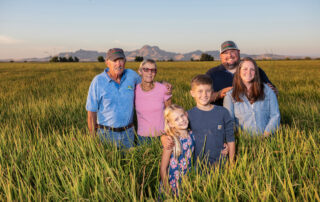
Park Farming Organics’ owners, Brian and Jamie Park, and Scott and Ulla Park, were presented with the award during the California Farm Bureau Federation’s Annual Meeting. The Park family receive $10,000 and a crystal award for being selected.


Sand County Foundation and national sponsor American Farmland Trust present the Leopold Conservation Award to private landowners in 27 states. In California, the award is presented with Sustainable Conservation and the California Farm Bureau Federation.


Given in honor of renowned conservationist Aldo Leopold, the award recognizes farmers and forestland owners who inspire others with their dedication to environmental improvement. In his influential 1949 book, A Sand County Almanac, Leopold advocated for “a land ethic,” an ethical relationship between people and the land they own and manage.


Among the many outstanding landowners nominated for the award was finalist Bowles Farming Company of Los Banos in Merced County. Earlier this year, California farmers, ranchers and forestland owners were encouraged to apply (or be nominated) for the award. Applications were reviewed by an independent panel of agricultural and conservation leaders.


The California Leopold Conservation Award is made possible thanks to generous contributions from American Farmland Trust, Sustainable Conservation, California Farm Bureau Federation, Sand County Foundation, The Harvey L. & Maud C. Sorenson Foundation, Farm Credit, The Nature Conservancy in California, McDonald’s, and California Leopold Conservation Award alumni.


ABOUT PARK FARMING ORGANICS

Scott and Ulla Park placed their bets on regenerative farming practices long before they were trending.


They spent the 1980s conventionally growing processing tomatoes before deciding to switch to organic production. Fueled by their love for agriculture and nature, coupled with a healthy dose of skepticism and common sense, they embarked on journey of exploration and discovery.


In their effort to mimic the natural world, the Parks chose gentler tillage methods, grew a variety of cover crops, and adopted a thoughtful rotation of crops. Their use of fertility inputs produced naturally balanced soils that help grow disease and pest-free plants. They noticed their once sterile soils became rich in earthworms and microbial life.


The Park’s farm, Park Farming Organics, grew to 1,350 acres, and is now run by their son Brian and his wife Jamie. What hasn’t changed is the family’s openness to experimentation and willingness to embrace new methods to adapt to changing consumer demands, market dynamics, environmental variability, and regulatory shifts.


Each year Park Farming Organics grows between 15-20 types of crops including rice, corn, wheat, sunflower, flax, alfalfa, barley, squash, cantaloupe, watermelons, cucumbers, and fresh market vegetables. It is governed by what the Parks call their “9 Cs of conservation”: critter cover, compost, controlled traffic, crop rotation, cover crops, conservation tillage, crop residue, conserving inputs, and crew care.


Their use of cover crops, compost applications, and crop residue annually returns an average of 15 tons of organic biomass per acre back to the soil. Growing sunn hemp as a cover crop helps improve soil properties, reduce soil erosion, conserve soil moisture, and recycle plant nutrients. The Parks’ unique border management of their fields includes growing diverse hedge rows that benefit wildlife and installing owl boxes to help control rodents.


Innovation and adaptability of farm equipment has been required to meet their production and conservation goals. Flotation tires on tractors help minimize compaction of rice fields. By modifying many core pieces of their farm equipment, the Parks have become leaders in developing specially adapted implements that other growers now rely on.


Exploring novel conservation practices has not been devoid of challenges and unexpected consequences. Scott and Brian participate in workshops, conferences, and fields days where they eloquently break down the challenges of organic and sustainable practices. Their expertise and willingness to share has made Park Farming Organics a go-to destination in northern California for students, scientists, journalists, and food sector professionals.


Collaborative partnerships with their local conservation district and universities have led to new innovations and provided regional context for adopting conservation practices. The impacts of their efforts to improve soil health are documented in a variety of peer-reviewed scientific journals. Promoting environmental stewardship among fellow farmers, educators, and environmental professionals is the purpose of the Parks’ involvement with the USDA Natural Resources Conservation Service’s Conservation Education and Awareness Center.


Through dedication, passion, and the ability to put their ideas into practice, the Parks have trailblazed a path for other farmers to begin their conservation journeys.


ACCOLADES

“We are honored to join Sand County Foundation, American Farmland Trust and Sustainable Conservation to recognize the extraordinary efforts of California farmers and ranchers who go above and beyond in their stewardship of our natural resources,” said Jamie Johansson, California Farm Bureau Federation President. “The Park family has championed organic and regenerative agriculture for decades. Their innovative and trailblazing spirit demonstrates the ability of California farmers and ranchers to find solutions for the environment while continuing to grow food that feeds the world.”


“The Parks define innovation and perseverance in California’s private land stewardship,” said Ashley Boren, Sustainable Conservation CEO, which has co-sponsored the award since its launch in California in 2006. “Caring for the soil, water, and air that nourish Park Farming Organics’ food crops is a full-time job. Brian, Jamie, Ulla and Scott go above and beyond that work with keen attention to how they’ll leave the land for future generations, how they can improve nutrition in the produce they grow, and how they can steward their precious water into the future.”


“As the national sponsor for Sand County Foundation’s Leopold Conservation Award, American Farmland Trust celebrates the hard work and dedication of Park Farming Organics,” said John Piotti, AFT President and CEO. “At AFT we believe that conservation in agriculture requires a focus on the land, the practices and the people and this award recognizes the integral role of all three.”


“These award recipients are examples of how Aldo Leopold’s land ethic is alive and well today. Their dedication to conservation shows how individuals can improve the health of the land while producing food and fiber,” said Kevin McAleese, Sand County Foundation President and CEO.

2023-12-04T13:04:41-08:00December 4th, 2023|

Detection of Huanglongbing Triggers Quarantine in Ventura County; First HLB Detection in County

Courtesy of Citrus Insider

The California Department of Food and Agriculture (CDFA) has declared a quarantine in Ventura County following the detection of the citrus disease Huanglongbing (HLB), or citrus greening, in two citrus trees on one residential property in the city of Santa Paula. These detections are the first HLB-positive trees in Ventura County. CDFA is working with the United States Department of Agriculture and the Ventura County Agricultural Commissioner on this cooperative project.

The disease was detected in plant material taken from one orange and one lime tree in a residential neighborhood in the Santa Paula area of Ventura County. These detections follow the confirmation of a Candidatus Liberibacter asiaticus (CLas)-positive Asian citrus psyllid (ACP) sample taken from the find site.

CDFA crews will be working to remove and dispose of the infected trees and are conducting a mandatory survey of every property within 250 meters of the detection site. After the survey is complete, all host plants in the 250-meter area around the detection site will be treated to suppress the disease vector, the ACP. By taking these steps, a critical reservoir of the disease and its vectors will be removed, which is essential to protect the surrounding citrus from this deadly disease.

These detections establish a mandatory five-mile citrus HLB quarantine area around the find site. The quarantine area is bordered on the north by Ojai Road; on the south by E Los Angeles Avenue; on the west by Wells Road; and on the east by Balcom Canyon Road. The quarantine prohibits the sale of all host nursery stock and the movement of all host plants or plant parts within a five-mile radius of the finds. The quarantine applies to residents and commercial operations alike. These detections will also place parts of Ventura County into Bulk Citrus Regional Quarantine Zone 6, which will require any commercial citrus growers to apply an additional mitigation step(s) to move fruit within or from this zone. Production and retail nurseries within the five-mile quarantine are being contacted by CDFA and will be issued a hold notice preventing the sale of nursery stock host plants. Visit CDFA’s Map and Quarantines page for more details.

Growers in Ventura County should contact Grower Liaisons Sandra Zwaal at szwaal2@gmail.com or Cressida Silvers at cressidasb@gmail.com for additional information about these detections. In response to the HLB detections in Santa Paula, a grower meeting is being held on Wednesday, Oct. 4. Stay tuned to Citrus Insider for details or reach out to the Grower Liaisons for more information.

An HLB quarantine area currently exists in parts of Los Angeles, Orange, Riverside, San Bernardino and San Diego counties, where more than 6,300 residential trees have tested positive for the disease and have been removed.

To read the full press release, please visit the CDFA website.

2023-10-04T08:09:53-07:00October 4th, 2023|

CALIFORNIA DEPARTMENT OF FOOD AND AGRICULTURE ACCEPTING PROPOSALS FOR 2023 SPECIALTY CROP MULTI-STATE PROGRAM

Courtesy of the CDFA

2023 SPECIALTY CROP MULTI-STATE PROGRAM
This is a federal grant program offered by the U.S. Department of Agriculture’s Agricultural Marketing Service. The purpose of the program is to competitively award funds to projects that enhance the competitiveness of specialty crops by funding collaborative, multi-state projects that address regional or national level specialty crop issues, including food safety, plant pests and disease, research, crop-specific projects addressing common issues, and marketing and promotion.

Specialty crops include fruits and vegetables, tree nuts, dried fruits, horticulture, and nursery crops (including floriculture). All prospective applicants are encouraged to review the 2023 Request for Applications: https://www.ams.usda.gov/sites/default/files/media/2023_SCMP_RFA.pdf

Additional information about the grant program , including application instructions and templates are available on the CDFA website: http://www.cdfa.ca.gov/Specialty_Crop_Competitiveness_Grants/SCMP.html

Grant awards will range from $250,000 to $1 million per project and projects may last for up to three years. Specialty crop producer associations and groups, other state agencies, Tribal government entities, universities, non-profits, and other stakeholder groups and organizations are eligible to apply.

All proposals must include at least two partners (referred to as “multi-state partners”) with substantive involvement in the project, and the multi-state partners must be located in two different states to qualify for the program.

The deadline to submit proposals is 1:59 p.m. PT on December 22, 2023. Proposals must be submitted electronically to grants@cdfa.ca.gov.

CDFA will conduct a webinar on Wednesday, October 25, 2023, at 10:00 am PDT featuring an overview of the proposal application. There is no cost to attend; however, space is limited and CDFA requests that attendees register in advance.

Webinar registration link: https://attendee.gotowebinar.com/register/3443709335194813016

All questions regarding the Specialty Crop Multi-State Program should be emailed to grants@cdfa.ca.gov. Please include “SCMP” in the subject line.

2023-09-28T13:23:00-07:00September 28th, 2023|

Congressman Valadao Introduces Bill to Expand Access to Fresh Produce for Those in Need

Today, Congressman David G. Valadao (CA-22) joined Representative Rosa DeLauro (CT-03) and Senator Sherrod Brown (D-OH) to introduce H.R. 5589, the Fresh Produce Procurement Reform Act. This bipartisan, bicameral bill establishes a new mechanism for the U.S. Department of Agriculture (USDA) to purchase a wide variety of U.S.-grown fresh fruits and vegetables for distribution to those in need. 

“We need to ensure our food insecure residents in the Central Valley have access to the fresh, nutritious fruits and vegetables we grow right in our own backyard,” said Congressman Valadao. “This bill not only helps our neighbors in need, but it also helps our domestic agriculture sector by ensuring the produce they grow is being put to good use. I’m proud to join my colleagues to introduce this bipartisan bill that will strengthen our agriculture economy and make fresh produce more widely available to those in need.”

“Far too many families across the United States do not have readily available access to high-quality fresh fruits and vegetables,” said Congresswoman DeLauro. “The USDA’s Commodity Procurement program buys more than $3 billion in domestically produced foods annually and helps drive important reforms across our food system. That is why I am introducing the Fresh Produce Procurement Reform Act with Senator Sherrod Brown and Congressman David Valadao. This will allow our diverse local and regional supply chains the opportunity to distribute U.S.-grown fresh produce to those in need.”

“Improving access to local fruits and vegetables is a win-win for Ohio farmers and residents,” said Senator Brown. “Not only does this bill make it easier for Ohio residents to access local produce, but it will also help create shorter American supply chains, ensuring Ohio small family farmers and businesses keep more of their money in their community.”  


Background:

On average, USDA directly purchases more than $2 billion annually of domestic commodities to redistribute to feeding sites around the country. Today, only five fresh produce commodities are available within the Emergency Food Assistance Program (TEFAP) catalog, accounting for just under $6.5 million of purchases. While USDA added a fresh produce box in 2021, it has had limited uptake due to constraints to the current program that limit the variety of fresh produce that can be included. The Fresh Produce Procurement Reform Act seeks to address the shortcomings of the current program to make a wider variety of produce available to organizations serving food insecure populations.

The Fresh Produce Procurement Reform Act would:

  • Provide USDA with an additional tool to partner with existing growers and fresh produce distributors to procure a greater amount of fresh fruits and vegetables
  • Distribute U.S.-grown fresh fruits and vegetables to local food banks, schools, youth-serving organizations, tribal governments, and other nonprofit community members serving nutrition insecure populations.
  • Strengthen access to a wide variety of U.S.-grown fresh fruits and vegetables to recipients in need by including at least seven types of U.S.-grown fresh fruits in vegetables to vulnerable communities living in poverty.

Provide opportunities for a wider variety of high-quality produce sourced, packed, and distributed from growers and distributors of all sizes, including veteran, women-owned, and socially disadvantaged members of the agriculture community.

2023-09-21T09:47:14-07:00September 21st, 2023|

Farmers Save money, water by adopting climate-smart agriculture practices

Courtesy of UC ANR News

CDFA, UC ANR help farmers access $36 million in grants to improve water-use efficiency, reduce greenhouse gas emissions 

A Hmong small-scale farmer in Merced County has saved about 14.4 acre-inches of water annually and reduced greenhouse gas emissions by 12.406 MTCO2e per year (equivalent to the greenhouse gas emissions produced from burning 1,396 gallons of gasoline) after upgrading her farm. Rosie Lee – who sells Asian greens, green beans, corn, strawberries and other produce at her farm stand and to Asian markets – is one of hundreds of growers benefiting from California Department of Food and Agriculture incentives and funds with the assistance of Climate Smart Agriculture community education specialists.

“She is one grower who would not have access to those funds without my bringing my computer out to the field,” said Caddie Bergren, a Climate Smart Agriculture community education specialist who has been working with growers in Merced County since the program’s launch.

To make it easier for farmers to adopt new practices, CDFA and UC Agriculture and Natural Resources partnered to create the Climate Smart Agriculture program.

“Since 2019, UC ANR’s Climate Smart Agriculture Team has provided in-depth technical assistance to more than 1,300 farmers and ranchers in 24 counties,” said Hope Zabronsky, academic coordinator for UC ANR’s Climate Smart Agriculture team. “Through their strong relationships with diverse farming communities, they support the implementation of soil health, water efficiency, and manure management practices that optimize climate benefits for all growers and Californians.”

The program’s community educators work with farmers and ranchers in 24 California counties to get CDFA-funded grants and implement Climate Smart Agriculture projects. These efforts, which emphasize outreach to underserved farmers and ranchers, have resulted in a total of $36.5 million invested from the State Water Efficiency and Enhancement Program or SWEEP, the Healthy Soils Program, and the Alternative Manure Management Program.

“Agriculture is an important part of the climate solution,” said CDFA Secretary Karen Ross. “This funding enables CDFA and UC ANR to partner with farmers and ranchers to scale up climate-smart agricultural practices. This is essential as we contend with our hotter, drier future.”

Lee, the Hmong grower, had been growing 18 acres of vegetables by flood irrigating with groundwater. To save water and reduce pumping costs, she asked Bergren to help her apply for SWEEP funds to convert to drip irrigation and install solar panels. Bergren brought her laptop to the field to help Lee pull together the necessary information for the application. After Lee received funds for the project, Bergren assisted her with the technical logistics of installing the irrigation and solar equipment.

“I called vendors and we were able to complete the project on time,” Bergren said.

CDFA and UC ANR have published an impact report highlighting the results of the multi-year partnership focused on increasing adoption of climate-smart agriculture practices to reduce water and energy use. 

The investments have funded more than 420 projects, so far. The projects are expected to save an estimated 8.3 billion gallons of water during their lifetime, enough to supply over 75,000 typical homes in California with water for a year. Additionally, there are projected reductions of more than 355,000 metric tons of carbon dioxide-equivalent, as much as would be achieved by removing 79,110 gas-powered vehicles from roads. 

The report highlights the importance of providing tailored outreach, education and technical assistance to small-scale, non-English speaking, and otherwise underserved farmers and ranchers.

To find the full details of the report, please visit https://ucanr.edu/climatesmartag2023.

2023-09-14T08:07:34-07:00September 14th, 2023|

India Reduces Current U.S. Almond Tariffs This Week

Courtesy of the Almond Board of California

We are pleased to report that India’s retaliatory tariffs on almonds will be removed effective Wednesday, Sept. 6, bringing the tariff rate back down to 35 rupees per kilogram on inshell and 100 rupees per kg on kernels. India published the notification today in their Gazette.

During his state visit to Washington, D.C. in June, India Prime Minister Narendra Modi joined U.S. Trade Representative Katherine Tai to announce the elimination of the tariffs on almonds and a handful of other commodities, including walnuts and apples, but did not set a concrete date, except to say it would happen within 90 days.

“We are very happy to see the retaliatory tariffs removed, which will both help increase demand in India and reduce the cost to consumers there,” said Julie Adams, the Almond Board of California’s vice president for technical and regulatory affairs. “The almond industry has been working hard along with government officials to reduce the impediments for exports of California almonds to India, which is our largest export destination. We continue to discuss further opportunities to improve export conditions related to tariffs and technical barriers.”

The 20% retaliatory tariffs were announced in June 2018 and imposed in 2019 by India in response to the Trump administration’s tariffs on steel and aluminum, among other actions. India raised the applied tariff rates on almonds exported to India from 35 rupees to 41 rupees per kg on inshell and from 100 rupees to 120 rupees per kg on kernels.

2023-09-06T08:22:43-07:00September 6th, 2023|

Aubrey Bettencourt Appointed to the Agricultural Policy Advisory Committee for Trade

Courtesy of the Almond Alliance 

The U.S. Secretary of Agriculture, Thomas Vilsack, and U.S. Trade Representative, Katherine Tai, announced the appointment of Aubrey Bettencourt to the Agricultural Policy Advisory Committee for Trade. Bettencourt, currently the Chief Executive Officer and President of the Almond Alliance, will serve on the committee until August 2027.


With a vast background in agriculture and international trade, Bettencourt has been pivotal in addressing industry trade policy matters and the supply chain crisis. Collaborating with agriculture, transportation, nationwide ports, and global shipping lines stakeholders, she worked diligently to restore the export of American agricultural products.


Previously, as the Director of Sustainability for the California Cattle Council and Western United Dairies, Bettencourt united diverse stakeholders to develop collaborative solutions to help dairy farmers navigate new regulatory and natural challenges. Bettencourt also served as the Deputy

Assistant Secretary of Water and Science at the Department of the Interior. 


As a fourth-generation California farmer, Bettencourt brings invaluable experience and expertise in agriculture, resource management, policy, politics, and people. She is committed to the agricultural community and the collaborative energy required to ensure sustainable and reliable food, fiber, fuel, and infrastructure sources to meet global needs.

2023-08-31T11:57:05-07:00August 31st, 2023|
Go to Top