Hotels Expanded for COVID Positive Farm Workers

More Hotels in More Counties Are Available for Any Farm and Food Processing Employees Not Able to Isolate At Home Due to COVID-19


The California Department of Food and Agriculture (CDFA) has announced that the counties of Kings, Riverside and Tulare will participate in Housing for the Harvest, a program announced by Governor Gavin Newsom in July to provide temporary hotel housing options for farm and food processing employees to self-isolate if they are COVID-19 positive and do not require hospitalization, or have been exposed and cannot properly self-isolate at home. Six counties are now participating in Housing for the Harvest: Kings, Riverside, Tulare, Santa Barbara, Fresno and San Joaquin.

The state is securing hotel rooms in participating counties, with local governments identifying administrators to manage the program and local community organizations to provide additional services, like meals, wellness checks and in-language assistance. Local administrators will serve as a point of contact for eligible workers. “Counties across the state are stepping up to provide a safe, temporary housing solution to protect agricultural workers who need to isolate,” said CDFA secretary Karen Ross. “These hardworking men and women are on the front lines of the pandemic and it is critical that we protect them, their families, and local communities.”

Housing for the Harvest will ultimately be made available statewide and provide opt-in housing support for any counties or regions that are interested. California has received FEMA approval for this program during the COVID-19 pandemic and will seek federal reimbursement for 75 percent of hotel costs.

Kings County
Kings County has partnered with Kings Community Action Organization (KCAO) to administer Housing for the Harvest as part of Kings Cares. In addition to hotel quarantine support such as transportation, meals, wellness checks and laundry service, Kings County has allocated resources for financial assistance and additional support for family at home.  Farmworkers and food processing workers in Kings County who are in need of these services are urged to visit www.thehealthyharvest.org or www.cosechasana.org or call 559-710-2000. Please note that personal information gathered through this process will be kept confidential. For agricultural business on-site testing scheduling, please visit www.thehealthyharvest.org.
Riverside County

Riverside County’s Department of Housing, Homelessness Prevention and Workforce Solutions has partnered with the local TODEC Legal Center to manage Housing for the Harvest in the county. The Riverside program will include meals, food, transportation and direct financial assistance of $2,000 for each family participating in the program.  Farmworkers or food processing workers in Riverside County who are in need of these services are urged to contact the TODEC Legal Center at (888) 863-3291 or via email at campo@todec.org. Please note that personal information gathered through this process will be kept confidential.
Tulare County

Tulare County’s program will be administered by Proteus, Inc. in coordination with the county’s Community Care Coalition. Through additional efforts of coalition partners, supplemental services are being offered to support families at home. The Central Valley Community Foundation has formed a regional Healthy Harvest program and will provide additional funding for support services and outreach. These partnerships are crucial to ensure needed outreach and investment in local communities.

Farmworkers and food processing workers in Tulare County who are in need of these services are urged to visit www.thehealthyharvest.org or www.cosechasana.org or call 559-710-2000. Please note that personal information gathered through this process will be kept confidential. For agricultural business on-site testing scheduling, please visit www.thehealthyharvest.org. We will continue to update you as more counties come on line.

2020-09-23T13:31:13-07:00September 23rd, 2020|

AgStart Provides Space for Innovation

AgStart Announces New Innovation Lab

By Tim Hammerich with the Ag Information Network

AgStart, the Woodland-based, food and ag incubator program, announced a public-private collaboration to fund a new, shared-use innovation lab. When complete, the $1.3 million ‘Lab@AgStart’ will feature a fully-equipped shared-lab and kitchen space as well as a co-working office space

John Selep is President of the Agtech Alliance, which is the non-profit parent organization for the AgStart Program.

“A lot of these companies, a lot of the technology-based innovations they have require some development and refinement, testing, et cetera,” Selep said. “And one of the things that a lot of startup companies have been sharing with us is they really are struggling to find space.”

“If they’re a postdoc or graduate student coming out of UC Davis, anything they do on UC Davis campus is owned by the university. Any intellectual property they come up with, any refinements to inventions or developments they do on the UC Davis property are owned by the university. And so it’s imperative for them to find an off-campus facility where they can conduct their research and innovation, and particularly the commercialization and refinement, so that they own those developments themselves,” he said.

Selep said the facility will be open to all qualifying entrepreneurs, not just people from the university. It is designed to accommodate development and commercialization of technologies that relate to agriculture, food, and health.

A broad coalition of public and private funding sources have been assembled to finance this project. Learn more at AgStart.org.

2020-09-23T11:17:40-07:00September 23rd, 2020|

The Dairy Download Podcast

IDFA and Blimling Announce “The Dairy Download,” a Podcast With Sharp Market and Policy Insights

Subscribe to The Dairy Download on Stitcher, Apple Podcasts, Spotify, Google Podcasts and Pandora

The International Dairy Foods Association and Blimling and Associates are partnering to produce “The Dairy Download,” a new podcast for anyone who follows the twists and turns of the U.S. dairy industry. Witty, fast-moving and stacked with dynamic guests, the podcast offers sharp insights in a neat package under 25 minutes. Blimling’s Phil Plourd and Kathleen Wolfley host each episode, leading listeners through a rundown of action in the CME markets and things to watch, while going in depth with guests on consumer, market and policy trends shaping dairy.

Wonks, nerds, data hounds and tech evangelists are welcome. Listeners will get the perspectives of various industry experts who can unpack challenging issues in fun and interesting ways.

In the premiere episode, available now, Plourd and Wolfley focus on how the COVID-19 pandemic has helped stir up unprecedented volatility, while exposing the government’s invisible hand (or perhaps just its thumb, resting on the scales of the market) during this unprecedented crisis. Joe Glauber, senior research fellow at the International Food Policy Research Institute and former chief economist with the U.S. Department of Agriculture, breaks down the federal government’s intervention in food and commodities, and explores the pros and cons of direct payments and purchase programs over more traditional safety nets. Marin Bozic, an assistant professor in Dairy Foods Marketing Economics at the University of Minnesota, discusses dairy market volatility, and offers insight into possible solutions with price reporting and risk management.

True to form in its first episode, “The Dairy Download” doesn’t look past tough issues, it doesn’t get caught in the weeds and it strives to entertain as much as inform.

“Our only rule for ‘The Dairy Download’,” says Plourd. “Never be boring.”

Subscribe for free on Stitcher, Apple Podcasts, Spotify, Google Podcasts, Pandora or in your favorite podcast app to automatically receive each new episode, which will publish every other week on Thursday morning. Find “The Dairy Download” by visiting www.idfa.org/thedairydownload.

Episodes 1-4 of “The Dairy Download” are sponsored by Stanpac, which has been manufacturing milk and ice cream packaging for companies located throughout North America for more than 70 years.

Phil Plourd is president of Blimling and Associates, Inc., a research and consulting firm focused on dairy markets. Phil has been involved in dairy market analysis, research, forecasting and risk management activities for 20 years. He is based in Madison, Wisc.

Kathleen Noble Wolfley is senior economist and research specialist for Blimling and Associates. Previously, she worked as a dairy economist for Leprino Foods, the world’s largest mozzarella cheese maker. She grew up on a dairy farm and today is based outside of Buffalo, NY.

2020-09-22T11:00:52-07:00September 22nd, 2020|

UC Riverside Awarded Big Grant

UC Riverside Wins Grant to Bring Artificial Intelligence to the Colorado River Basin

By Tim Hammerich with the Ag Information Network

The University of California, Riverside recently won a $10 million grant to develop artificial intelligence to improve environmental and economic stability throughout the western U.S.

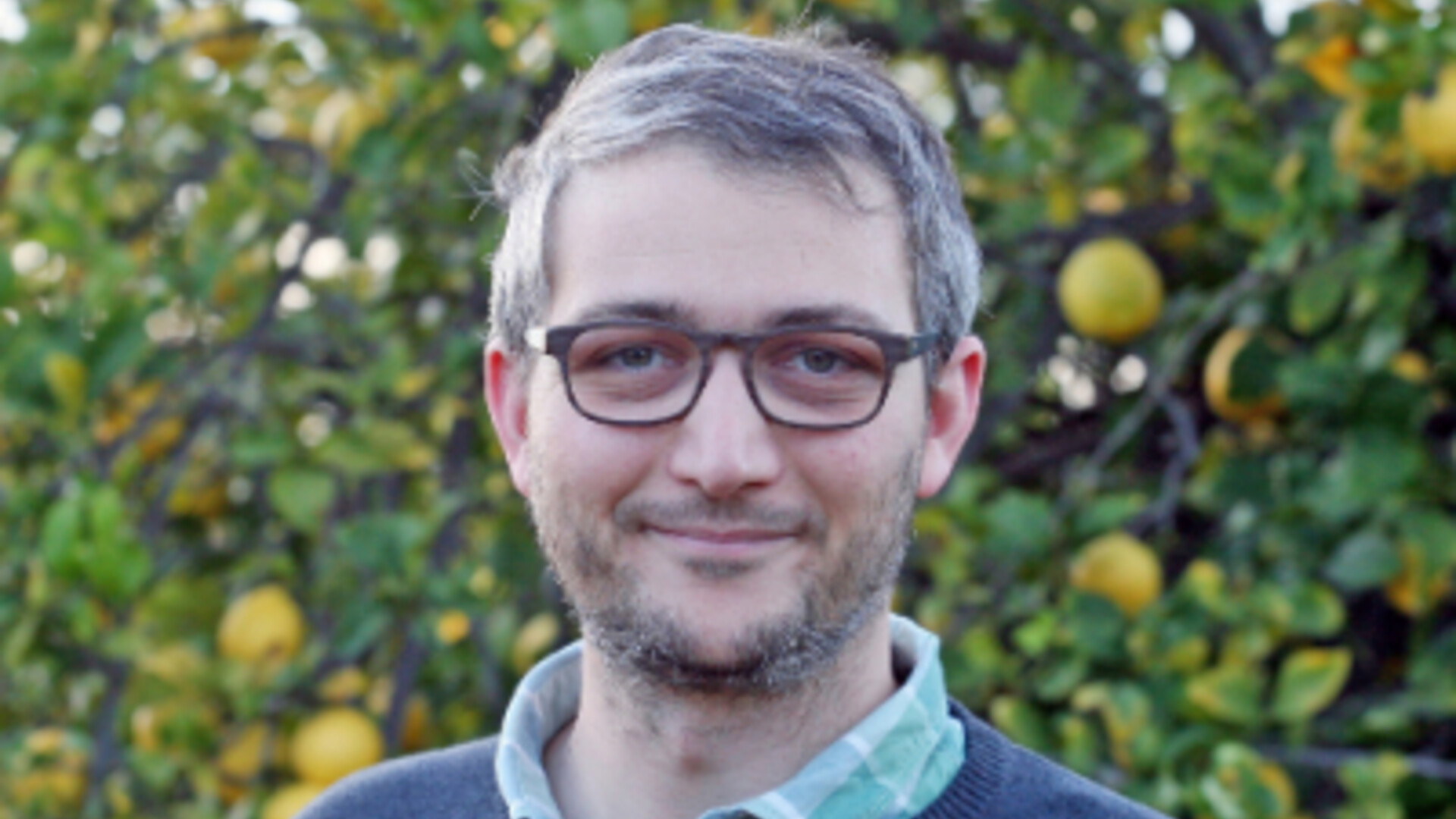
Elia Scudiero is a Research Agronomist at the UC Riverside

“So this will bring together university personnel and ag-tech companies that will provide training that will serve the farming communities in California, Arizona, Colorado, and the native American communities in the Colorado River Basin,” said Scudiero. “So we really hope that this is well -received by the growers and it can be useful to improve their current practices so that we can then continue this program beyond the duration of the project.”

Partnering with UC Riverside on this are Colorado State, Duke, University of Georgia, and the University of Arizona. Included in the program is an undergraduate Digital Agricultural Fellowship.

“So we are going to pair these undergraduate students with a faculty advisor for over a year, creating a very tight relationship there,” said Scudiero. “And these students will carry out independent research in the university lab. But at the same time, we will complement this type of experience for the students by sending them to have industry internships at our partners in the ag-tech industry.”

Stay tuned for more information on this exciting project to bring more artificial intelligence to agriculture. The researchers plan to release a website in the coming year.

2020-09-21T11:01:37-07:00September 21st, 2020|

California Fairs May Get Help Due to COVID Losses

Harder’s Bill to Support State and County Fairs Gains Momentum

Senator Doug Jones Introduces Senate Companion

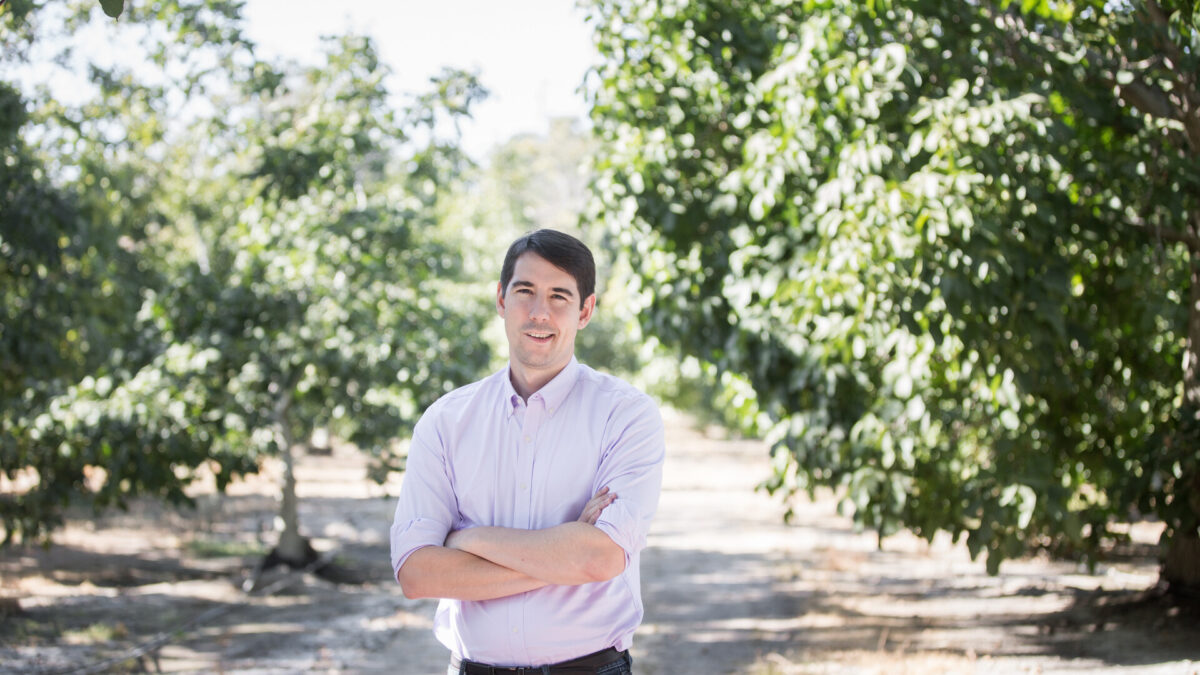
Today, Senator Doug Jones (D-AL) introduced the Senate companion to Representative Josh Harder’s (CA-10) Protecting Fairs During Coronavirus Act. The bill would establish a $5 billion federal grant program to offset fair revenue losses during the Coronavirus Pandemic.

“I want to thank Senator Jones for joining me in the fight to protect our county and state fairs,” said Rep. Harder. “Working together, we will continue pushing to get our fairs the relief they need to weather this storm – we don’t want to lose a single acre of fairgrounds or see any fairs close permanently because of the pandemic.”

“State and county fairs are not just an important part of our social fabric, they’re also a key part of the agriculture business. The COVID-19 pandemic has caused many of these fairs to be cancelled, leaving farmers without an important market and the fairs at risk of permanent closure,” said Senator Jones. “That’s why I’m introducing the Protecting Fairs During Coronavirus Act in the U.S. Senate to support fairs with emergency funding that will allow them to continue to serve our communities for years to come. I am proud to partner with Congressman Harder on this important legislation and appreciate his leadership in this space.”

The Protecting Fairs During Coronavirus Act’s grant program would be available for both 2020 as well as 2021. States could apply for aid from the United States Department of Agriculture (USDA) and then distribute the funds to fairs in their state. Rep. Harder originally introduced the bill in July.

2020-09-18T12:41:09-07:00September 18th, 2020|

Amy Hustead is First Master Beekeeper

California Master Beekeeper Program Announces First Master Beekeeper.


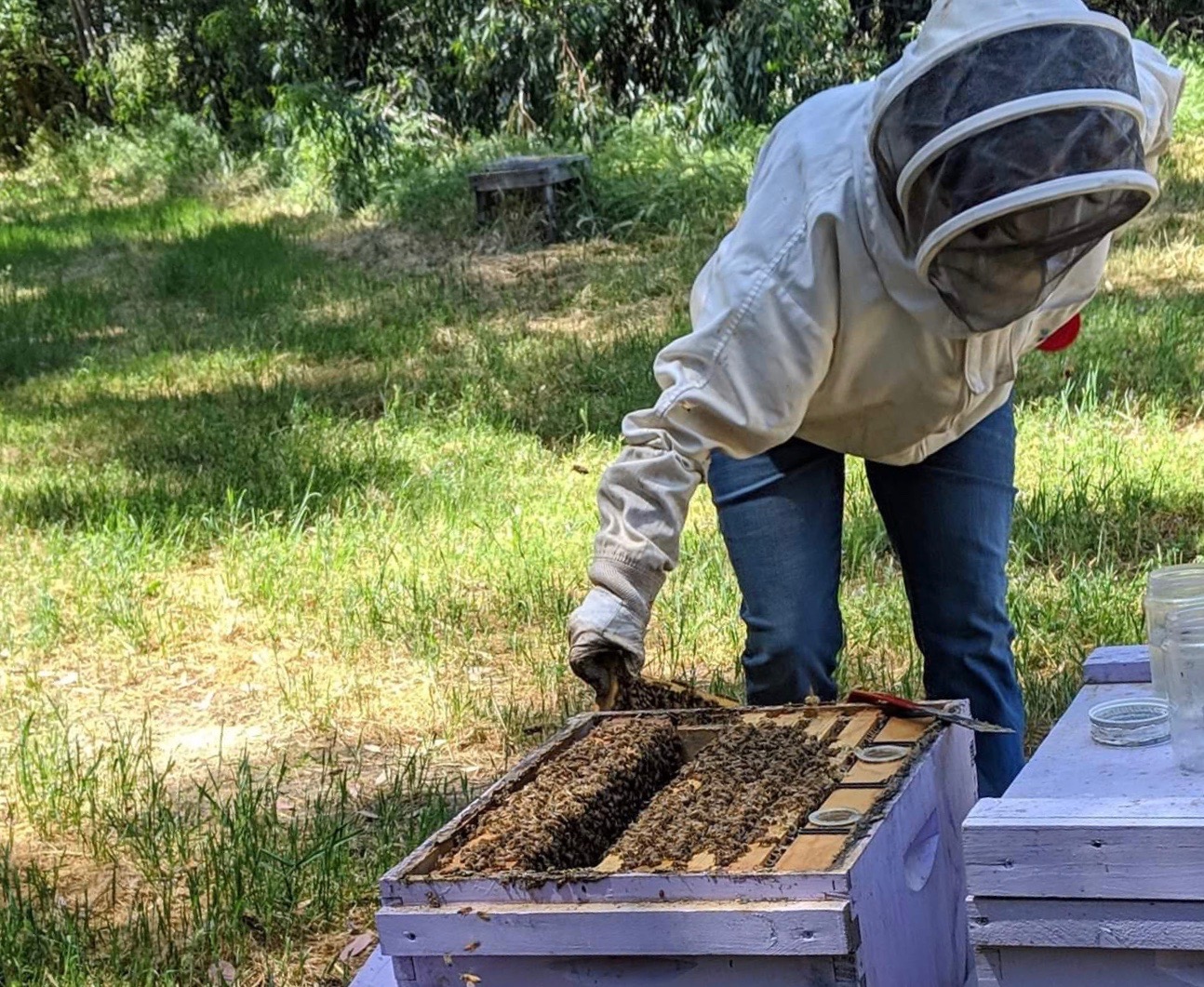
Despite COVID-19 pandemic precautions and constraints, the California Master Beekeeper Program (CAMBP), headquartered at the University of California, Davis, has certified its first-ever Master Beekeeper:  Amy Hustead of Grass Valley, a veteran beekeeper who also happens to be the first and only beekeeper in her family.

Hustead, president of the Nevada County Beekeepers Association and a veterinary technician, recently passed the Master-level beekeeper certification process.

CAMBP, founded and co-directed by Extension apiculturist  Elina Lastro Niño of the UC Davis Department of Entomology and Nematology, uses science-based information to educate stewards and ambassadors for honey bees and beekeeping. It offers three levels of certification (Apprentice, Journey and Master). Niño launched the first Apprentice class in 2016.

Hustead’s passion is education and outreach, said Niño and CAMBP manager Wendy Mather.

Hustead’s Master Capstone project involved teaching two, three-hour online CAMBP classes (“Planning Ahead for Your First Hives,” and “Working Your Colonies.”)  She designed, developed and successfully delivered “Intermediate Backyard Beekeeping,” an in-depth, online, four-hour course on science-based beekeeping for the hobbyist and sideliner.  Topics included winter and spring preparation, swarm prevention, active swarming, splits and nucs (nucs, or nucleus colonies, are small colonies created from larger colonies), diseases, nutrition, maximizing honey production, and harvesting honey, wax, propolis and pollen.

Amy Hustead, a wife,  mother of 9-year-old twin boys, and a seven-year beekeeper, said she really enjoys CAMBP. “It has allowed me to meet some really excellent beekeepers. I plan to continue to teach classes and help educate people on the biology of bees.”

Highly praised for her work, she has drawn such comments as “the class exceeded my expectations”; her “lecture style is professional, yet warm, which is needed in the context of Zoom classes”; and she “keeps an open mind about other beekeepers’ goals.” Wrote another: “Amy is very informed and easy to follow, and shares her information with the right amount of applicable detail for the intermediate.”

What fascinates Hustead about bees? “When I was in college I studied sociobiology, which is a field of biology that explains social behavior in terms of evolution,” she said. “I have always been fascinated by the cross section of evolution and behavior. Bees are the epitome of social insects. Everything they do is for the good of the whole.”

“I dabbled in homesteading when I first moved to the foothills, and like a lot of people, started out keeping chickens. I think I wanted to get goats but my husband was not on board, so I decided to get bees instead.”

As a veterinary technician, she works in low-cost spay and neuter programs. “I also volunteer with an organization that provides veterinary care to pets of homeless and low-income people in the Sacramento area.”

Bees keep her occupied at several locations. “I have between 15-20 personal colonies at three different locations,” Hustead related. ”I also manage a few colonies for other people.”

As it turns out, this year is not a good year for bees. “Mostly my bees aren’t doing well this year,” she said. “The nectar flow was non-existent, and the recent fires haven’t helped. For the first year ever I am harvesting no honey from my yard at home.”

Hustead home-schools her twins. “I am very serious about home-schooling my kids, and part of our curriculum is extensive travel.” The Hustead family has visited a number of states in the nation, and has already been to Mexico, Ireland, Costa Rica. “We are planning a Europe trip as soon as possible.”

Since late 2016, CAMBP has certified 206 Apprentices and 22 Journey-level beekeepers, who have volunteered more than 24,510 service hours in science-based education and outreach in beekeeping and environmental stewardship. Total value of the service hours: $623,289. Total number of individuals served:  98,618.

“This year, despite COVID-19 constraints, the California Master Beekeeper Program continues its mission of using science-based information to educate stewards and ambassadors for honey bees and beekeeping, by moving its courses and exams online,” Mather said.

Online Exams

CAMBP’s current 53 Apprentice candidates took their online exam Sept. 12. To pass, they had to score at least 75 percent. “Candidates uploaded videos or partook in ‘live from their apiary’ Zoom sessions to satisfy the requirements of the practical rubric,” Mather said.

The Journey-level candidates have completed the online written portion of their certification and their videos and Zoom practicals are in progress. “So far, we’re proud to announce that all 15 Journey level candidates scored above 80 percent on their written exams, and their videos and Zoom practicals are looking great!” Mather commented.

The Master level usually takes an average of five years to achieve. Some candidates choose to remain as Apprentice or Journey-level beekeepers. CAMBP offers pre-approved Master Capstone Tracks, but also encourages candidates to follow their passion if their favorites are not on the list, which includes:

  • Native Bees and Pollinator Gardens
  • Commercial Beekeeping
  • Scientific Research
  • Education and Outreach
  • Policy for Honey Bees and Native Pollinators

Seven Master-Level Candidates

The seven Master-level candidates for the 2020-21 season are pursuing a variety of projects, including mapping drone congregation areas, authoring a book on the history of honey in ancient Greece, establishing a pollen library for the state of California, starting a commercial beekeeping business, and training a “detector dog” in the apiary.

To maintain active status as a Master Beekeeper with CAMBP, members are required to perform and log 25 hours of BEEs (Beneficial Education Experiences).  Hustead will perform a minimum of 25 volunteer hours annually. Her volunteer service, at the minimum, is valued at $25.43 per hour or about $600 per year.

“Amy will have no problem doing that as she’s active as the president of her local beekeeping club,” Mather said, “and she mentors many new beekeepers to help them become science-based stewards and ambassadors of honey bees and beekeeping.”

For more information about CAMBP, see its website at https://cambp.ucdavis.edu/


2020-09-16T10:00:57-07:00September 16th, 2020|

Roma Tomato with ToBRFV Resistance?

Bayer Launches Large-scale Pre-launch Trial of New Tomato Varieties with Resistance to Tomato Brown Rugose Fruit Virus (ToBRFV)


Bayer announced today the final large-scale pre-launch trials of Roma-type tomatoes to help growers address Tomato brown rugose fruit virus (ToBRFV). The trials, which begin later this month in Mexico, will include two varieties of Roma-type tomato that claim Intermediate Resistance (IR) to ToBRFV.

The type of IR Bayer has seen in these varieties is commonly referred to as the “symptomless carrier,” where, despite the presence of virus particles, the crop can show little or no symptoms of the virus in the leaf and/or fruit should the crop become infected by the virus. Adding ToBRFV in the pathogen list for tomato was discussed during last week’s September meeting of the International Seed Federation.

ToBRFV was first observed in 2014 and spread rapidly to different world areas. This viral disease impacting tomato plants represents a challenge for the industry as it can be transmitted very easily through many vectors including farming tools and equipment, workers’ hands, plants, water, soil, and people.

“ToBRFV can quickly devastate tomato crops, so Bayer worked to develop a product to help growers combat it,” said JD Rossouw, Head of Bayer’s Vegetable Seeds R&D. “Bayer leveraged our global cross-functional teams and extensive research and development pipeline to offer a solution designed to ease the day-to-day challenges faced by growers. Our research continues across several tomato species with the goal of bringing further innovative resistance to growers as quickly as possible.”

Following the trials, Bayer anticipates the products will be available for commercial sale in Mexico in 2021, to later be followed by offerings in other important markets around the world.

The ToBRFV resistance program is part of Bayer’s corporate commitment to Health for All, Hunger for None. It complements the company’s SHIELD program, a comprehensive approach to deliver clean seeds season after season to growers around the world. For more than 10 years, the focus of SHIELD has been on the prevention, detection and elimination of pathogens at our own Bayer production and processing sites, as well as third-party production and processing sites for Seminis and De Ruiter brands.

The SHIELD program continues to incorporate market-leading best practices into seed production and supply. In addition to its strict production protocols that are applicable whatever the growing environment (open field, greenhouse or glasshouse), Bayer has always, and will continue to have, stringent testing measures in place aligned with the International Seed Health Initiative (ISHI) guidelines and any applicable laws, which includes testing our seed for the presence of ToBRFV before it is shipped to customers.


2020-09-15T13:40:21-07:00September 15th, 2020|

Farm and Tractor Safety

Important to Maintain All Safety Equipment


By Rick Worthington, with Ag Information Network

Rollovers or overturns are involved in about half of the fatal tractor accidents and are responsible for many disabling injuries and much property damage.

With the use of protective frames and crush-resistant cabs with seat belts, the number of serious and fatal injuries from such accidents should decrease. Rollovers are generally due to driving too fast for conditions; striking surface hazards such as rocks, stumps and holes; running into ditches; hitching high for extra traction; driving on steep slopes; and operating front-end loaders improperly. Tractor upsets also occur when handling large round hay bales and other heavy loads with front-end loaders.

Falls from moving tractors often result in serious and sometimes fatal injuries. Many times the victim is a child, but operators and adult riders can also fall. Falls often occur from smaller and/or older tractors used around the farmstead, where extra riders and overhead hazards are more common than in fields.

Another cause of tractor-related death and serious injury is being caught by, or entangled in, rotating power takeoff (PTO) shafts. In most cases, the PTO shields were inadequate or had been removed.

Other tractor-connected injuries and damage involve:

  • Colliding with motor vehicles or roadside objects;
  • Slipping and falling while mounting and dismounting;
  • Running over bystanders;
  • Striking overhead hazards;
  • Being struck by flying objects, broken parts, or hydraulic fluid;
  • Being crushed by a poorly supported tractor during repair work;
  • Sustaining cuts, bruises, burns and other nuisance, but painful injuries, connected with maintenance and routine operation;
  • Being overcome by exhaust gases inside closed buildings;
  • Being burned by fires that erupt during refueling or as a result of a collision or upset.
2020-09-15T11:12:30-07:00September 15th, 2020|

More Water Storage is Critical

Doing Every Possible to Have Water Storage For Drought Years

By Patrick Cavanaugh, with the Ag Information Network

Save Water Resources Act, is written by Congressman Josh Harder representing the Modesto area.  The Act will fund the construction or upgrades of several water storage areas such as Sites Reservoir, Del Puerto Canyon Reservoir, Los Vaqueros and San Luis Reservoirs and provides $100 million in storage funding.

It’s all about helping Californian’s including the farmers during drought. “That’s right. I mean, we know that we are having more and more extended droughts.  We know the next one is around the corner and we know what we have to do in order to address it,” said Harder

“In order to  make sure that we have a full, comprehensive approach to water and all of the above approaches that combined storage with recycling and groundwater recharge,” noted Harder

Harder said shipping all the water out to the ocean is not the way to go. “Instead of just shipping out water to the ocean, we can actually make sure that we can put it in these reservoirs such as Los Vaqueros, Sites and Del Puerto and that’s going to be really essential for the almond and walnut growers in the Central Valley,” Harder said.

“When you have tree crops, you have to have a reliable source of water. We can’t just be in a boom and bust cycle where you have water one year and not the next; maybe that works for row crops, but it doesn’t work very well for trees. And so these reservoirs are going to go a long way towards ensuring water, stability and water security for the long-term,” Harder said.

2020-09-14T20:58:02-07:00September 14th, 2020|

World Ag Expo 2021 Canceled!

COVID-19 Cancels World Ag Expo and Causes Big Economic Hit to Agri-Center, hotels, restaurants Etc.

For more than 52 years, World Ag Expo® has served agriculture by bringing buyers and sellers together to innovate, collaborate, and advance agriculture. In 2021, the show will not be held live for the first time in World Ag Expo® history.

“After working with the Tulare County Health Department and other officials, it has become evident that given health and safety restrictions from the State of California, holding a live, international event is not responsible in February,” said Jerry Sinift, International Agri-Center® CEO.

The International Agri-Center® Board of Director’s decision to cancel the 2021 World Ag Expo® was not taken lightly, and comes after months of research and evaluation of future trends and known constraints. The decision was finalized earlier than the initial November deadline to provide exhibitors, attendees, volunteers, concessionaires, contractors, and local businesses time to adjust their Tulare farm show plans.

The cancellation of World Ag Expo® comes as another negative effect of COVID-19 for the International Agri-Center®, exhibitors, non-profit food vendors, attendees, area hotels, restaurants, and other associated businesses.

Attendees are encouraged to follow World Ag Expo® social media channels and watch their email inboxes for more information on World Ag Expo® projects throughout 2020 and 2021. They can join the World Ag Expo® email list to stay up-to-date at http://bit.ly/WAEupdates.

World Ag Expo® staff will reach out to exhibitors concerning fees and more options for 2021 starting Wednesday, September 16.

The 2022 World Ag Expo® is scheduled for February 8-10 at the International Agri-Center® in Tulare, CA.

2020-09-14T11:38:14-07:00September 14th, 2020|
Go to Top