Westlands Water District Supports use of Adaptive Management

Courtesy of Westlands Water District 

Westlands Water District is encouraged by the recent decision to employ adaptive management as part of implementing a regulation affecting our federal and state water projects. The decision was related to the implementation of the Fall X2 measure, one piece of a set of operational measures set to enforce the Endangered Species Act. This example of relying on recent scientific information and real-time monitoring is an encouraging example of how flexible management can contribute to achieving the co-equal goals of ecosystem protection and a reliable water supply for the farms that feed that nation.

Based on the broad body of scientific knowledge, which includes a recent peer-reviewed scientific assessment of the benefits of implementation of the Fall X2 action, the California Department of Water Resources (DWR) and the U.S. Bureau of Reclamation (Reclamation) modified the Fall X2 action using an adaptive management component of the action. The Fall X2 action is intended to provide beneficial habitat conditions in the Sacramento/San Joaquin River Delta for endangered Delta smelt and other native species after a wet or above-normal water year. Through adaptive management this year, the Fall X2 measure was implemented in September while adding an action to operate the Suisun Marsh Salinity Gates, providing much-needed additional food and habitat for the species.


The Fall X2 action for Delta Smelt has the potential to result in a large water supply reduction for cities and farms. In 2023 the water cost to implement the Fall X2 action was greater than 730,000 acre-feet between the Central Valley and State Water projects. This year’s action demonstrates the ability to use recent scientific information and monitoring to adaptively manage the enforcement of the Endangered Species Act while providing similar or better outcomes for the species. This year’s action also acknowledges the value of preserving our water resources for future purposes, including fish and wildlife benefits.


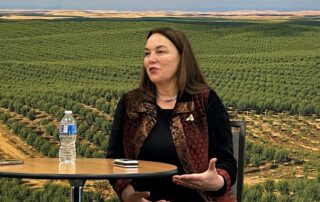
Allison Febbo, General Manager of Westlands Water District, stated, “Water is the lifeblood of our valley. We are encouraged to see the dedication from both State and Federal agencies to maximize the value of our limited water supplies while improving fishery conditions through flexibility and innovation. We applaud operators of both projects and fisheries agencies for their demonstrated commitment to science-based decision-making and their efforts to make transparent adaptive management a fundamental practice in the Delta.”


Fall X2 action modification aligns with the intended protections outlined in the 2020 Incidental Take Permit (ITP) and the 2019 Biological Opinion while smartly conserving our water supplies. Westlands looks forward to continuing our partnership with State and Federal agencies to refine these processes further, enhancing outcomes for both fisheries and water supply across California.
2024-10-02T07:59:08-07:00October 2nd, 2024|

Almond Alliance Calls for Swift Passage of Agriculture Disaster Relief Bill

Congressmen David G. Valadao (R-CA) and Jimmy Panetta (D-CA) have introduced the bipartisan Agriculture Disaster Relief Supplemental Appropriations Act after months of collaborative work on agricultural disaster relief. This legislation was developed in partnership with the Almond Alliance and a coalition of agricultural groups across California.


The bill aims to provide crucial support for farmers and rural communities that have been severely impacted by catastrophic natural disasters in 2023, including floods, droughts, and wildfires. This initiative comes in response to the significant challenges faced by California’s agricultural sector, which suffered billions in damages and losses due to severe weather events in 2023 alone.


The bill proposes $14 billion in disaster relief funding to the Office of the Secretary for Agriculture for 2023 disaster expenses, aimed at helping farmers recover from crop and livestock losses. It incorporates provisions from past relief programs, including drought definitions and direct payments, and ensures simultaneous payment administration for all producers. With California’s almond industry severely affected by ongoing drought and flooding, the Almond Alliance sees this relief package as vital to ensuring both the immediate recovery and long-term sustainability of the nation’s farming communities.


“Our almond growers and farmers across the nation faced significant losses in 2023 due to natural disasters,” said Blake Vann, Chairman of the Almond Alliance. “This bill will ensure they have the resources needed to recover and continue feeding our markets. It’s critical that Congress moves quickly to get this aid to the producers who are counting on it.”


The Almond Alliance thanks Rep. Valadao and Rep. Panetta for their leadership in introducing the Agriculture Disaster Relief Supplemental Appropriations Act. Their efforts are crucial to supporting farmers impacted by recent natural disasters.


Reps. Reps joined Valadao and Panetta in the introduction. John Duarte (R-CA), Jim Costa (D-CA), Vince Fong (R-CA), Jake LaTurner (R-KS), Dan Newhouse (R-WA), Salud Cabrajal (D-CA), Darren Soto (D-FL), Doug LaMalfa (R-CA), Marc Molinaro (R-NY), Mike Thompson and Josh Harder (D-CA).

2024-09-30T08:37:17-07:00September 30th, 2024|

Almond Board of California announces 2024 election results

Courtesy of Almond Board of California 

Almond Board of California Announces 2024 Election Results

New board will start its term Aug. 1.

MODESTO, Calif. — The Almond Board of California announced the Board of Directors election results on June 11 and the names of the following nominees have been submitted to the U.S. Secretary of Agriculture for selection to terms of office beginning Aug. 1, 2024:

Grower Position #1, Member:                                 Grower Position #1, Alternate:

1-year term

Paul Ewing, Los Banos                                                      Katie Staack, Hughson

Grower Position #3, Member:                                 Grower Position #3, Alternate:

3-year term

Joe Gardiner, Earlimart                                                     Garrett Bloemhof, Shafter

Handler Position #2, Member:                                 Handler Position #2, Alternate:

3-year term

Bob Silveira, Williams                                                         Justin Morehead, Coalinga

Handler Position #3, Member:                                 Handler Position #3, Alternate:

1-year term

Darren Rigg, Le Grand                                                         Chad DeRose, McFarland

Co-op Grower Position #1, Member:                      Co-op Grower Position #1, Alternate:

3-year term

Christine Gemperle, Ceres                                                    Lucas Van Duyn, Ripon

The ABC board is made up of five handler and five grower representatives. It sets policy and recommends budgets in major areas, including marketing, production research, advertising, public relations, nutrition research, statistical reporting, quality control and food safety.

2024-06-11T15:01:14-07:00June 11th, 2024|

MORE THAN 20 DAIRY PARTNERS DISPLAY DAIRY TRENDS, SUSTAINABLE INGREDIENTS IN REAL CALIFORNIA MILK’S STREET OF DAIRY AT 2024 INTERNATIONAL DAIRY DELI BAKERY ASSOCIATION SHOW

Courtesy of the California Milk Advisory Board 

The California Milk Advisory Board (CMAB) will spotlight a variety of innovative, on-trend sustainably sourced dairy products at the 2024 International Dairy Deli Bakery Association (IDDBA) show in Houston, Tex. June 9-11. As a key exhibitor at the event, which brings together 10,000 attendees and more than 800 exhibiting companies at the largest industry-only show for dairy, deli, bakery, and foodservice, CMAB will connect with industry professionals while sharing all that California dairy has to offer through on-trend culinary dishes and more.

An assortment of dairy applications will be sampled throughout the show in CMAB’s booth #3729, including specialty cheese, lassi, desserts, kefir, puffed protein snacks and more. California culinary expert Joe Baird will showcase a selection of trending recipes including Boysenberry Cheesecake Ice Cream Milkshakes, Irish Hand Pies, Honey Yogurt with Vietnamese-style Fried Bananas, Korean-style Mozzarella-filled Croffles, Sushi Salad Wraps, and Walking Tacos in a Bag will be featured in the Real California Kitchen.

California dairy processors in attendance include Angelo & Franco, Arbo’s Cheese Dips, Belfiore Cheese, Cheese Bits, Crystal Creamery, DiStefano Cheese, Dosa by Dosa, Gelato Festival, In Good Hands, Fiscalini Cheese, Lifeway, Karoun Dairies, Marin French Cheese, Moinear Farmhouse Butter, Pacific Cheese, Point Reyes Farmstead Cheese Co., Rumiano Cheese, Scott Brothers, Sierra Nevada Cheese Co., Super Store Industries, Sweet Craft Dolceria, and Win soon Inc.

California is the nation’s leading milk producer, and makes more butter, ice cream and nonfat dry milk than any other state. California is the second-largest producer of cheese and yogurt. California milk and dairy foods can be identified by the Real California Milk seal, which certifies they are made with milk from the state’s dairy families using some of the most sustainable farming practices in the world.

2024-06-05T08:24:05-07:00June 5th, 2024|

USDA Forecasts Larger Almond Crop

Courtesy of the Almond Board of California 

Harvest 2024 is estimated to be up 21% percent from last year after solid bloom.

The 2024 California Almond Forecast published Friday by the U.S. Department of Agriculture’s National Agricultural Statistics Service (USDA-NASS) estimates that the crop harvested in 2024 will come in at 3 billion pounds, 21 percent above last year’s 2.47 billion pounds.

Forecasted yield is 2,170 pounds per acre, 380 pounds from the 2023 harvest.

“This larger crop estimate is what the industry expected after a productive bloom this spring, but it is also a testament to the hard work done by almond farmers throughout California during difficult times,” said Clarice Turner, president and CEO of the Almond Board of California. “Demand for California almonds around the globe continues to grow and our almond farmers constantly deliver on producing high quality California almonds to meet that demand.”

The report said, “The 2024 almond crop experienced fluctuating, but mostly favorable weather for the first half of the growing season. The bloom began the second week in February for the early varieties. There were a handful of storms that brought rain, wind, and hail to some areas, but overall mild temperatures and excellent weather from the end of February into early March helped boost pollination. Bee hours were reported to be significantly higher than last year … There was minimal to no threat of frost damage and water allocation is not an issue for the second year in a row.

This Subjective Forecast is the first of two production reports from USDA-NASS for the coming crop year. It is an estimate based on opinions from a survey conducted from April 19 to May 5 of 500 randomly selected California almond growers. The sample of growers, which changes every year, is spread across regions and different sized operations, and they had the option to report their data by mail, online or phone.

On July 10, USDA-NASS will release its second production estimate, the 2024 California Almond Objective Report, which will be based on actual almond counts in approximately 1,000 orchards using a more statistically rigorous methodology to determine yield. If the 3.0 billion pounds holds, it would be the second largest crop on record.

This Subjective Forecast comes two weeks after Land IQ’s 2024 Standing Acreage Initial Estimate found that bearing almond acreage in California has decreased about 600 acres from the previous year to 1.373 million acres.

USDA-NASS conducts the annual Subjective Forecast and Objective Report to provide the California almond industry with the data needed to make informed business decisions. These reports are the official industry crop estimates.


2024-05-10T11:38:53-07:00May 10th, 2024|

Understanding Cattle Grazing Personalities May Foster Sustainable Rangelands

Courtesy of  Emily C. Dooley  from the UC Davis News and Media Relations 

Matching Herds to Landscape Can Support Animal Growth and Ecological Needs

Not all cattle are the same when it comes to grazing. Some like to wander while others prefer to stay close to water and rest areas.

Recognizing those personality differences could help ranchers select herds that best meet grazing needs on rangelands, leading to better animal health and environmental conditions, according to a new paper from the University of California, Davis, published in the journal Applied Animal Behaviour Science.

“Cattle can actually be beneficial for the rangelands,” said lead author Maggie Creamer, who recently earned her Ph.D. in animal behavior at UC Davis. “Vegetation in rangelands actually need these kinds of disturbances like grazing.”

Ranchers can add elements to the rangeland such as water, mineral supplements and fencing to influence where cattle graze, but little research has been done on how those efforts affect individual cows. Considering personalities could save money.

“If you’re spending all this money to add a management tool in order to change the distribution of your animals, that’s a huge cost to ranchers,” said Creamer. “Thinking about other tools, or selecting certain animals with these grazing traits, might be a better way to optimize the distribution on rangeland rather than spending a bunch of money for something that may ultimately not pan out for all your animals.”

Effects of grazing

Livestock graze on an estimated 56 million acres in California, and healthy rangelands host native vegetation and animals, foster nutrient cycling and support carbon sequestration.

Uneven grazing can degrade water quality, soil health and habitats. Optimizing grazing — including the even spread of cow pies — can improve the ecosystem while also reducing fuel loads for wildfires.

To better understand individual grazing patterns, researchers went to the UC Sierra Foothill Research and Extension Center in Browns Valley and tracked 50 pregnant Angus and Hereford beef cows fitted with GPS collars.

The research

The cattle, which were tracked from June to August over two years, had access to 625 acres of grasslands and treed areas ranging in elevation from 600 to 2,028 feet. In the second year, a new watering site was added at a higher elevation.

Across the two years, the cows showed consistent and distinct grazing patterns even when water sources changed. Age and stage of pregnancy did not affect patterns, though cattle tended to clump near water and rest sites on hotter days.

The cows that ventured into higher elevations and farther from watering sites had more variability in their grazing patterns than those that stayed at lower elevations near water. That suggests it may be harder for non-wanderers to adjust to some landscapes.

“Thinking about the topography of your rangeland and your herd of cows can benefit both the animals and the sustainability of the land,” said Creamer, who next month begins work as a postdoctoral scholar in North Carolina.

Gauging personalities

Keying in on personality type may sound difficult, but the researchers also found some clues as to how to pinpoint the wanderers and homebodies. Unlike cattle at feedlots, the breeding cow population, especially on rangelands in California and other western states, live largely “wild” lives and are rarely handled, save for vaccinations and weaning.

Research due to be published later this year found that paying attention to individual cow reactions during those events can help determine personalities. The cows that appeared more passive during those handling interactions tended to be nomadic.

“We found that you can maybe predict those hill climbers if you kind of look at how they act when the veterinarian or rancher handle them,” said senior author Kristina Horback, an associate professor in the Department of Animal Science at UC Davis.

Informing practices

For ranchers, the findings could be invaluable, said Dan Macon, a livestock and natural resources Cooperative Extension advisor in Placer and Nevada counties for UC Agriculture and Natural Resources.

“Any time we can improve our understanding of cattle behavior, particularly at the individual level, it can improve how we handle livestock and manage the landscape,” he said.

Macon said that during the recent drought, it was hard to get cattle into higher country, but if ranchers could have selected the nomads, it may have saved money in terms of ranch labor and other efforts.

“If you ask a rancher who has been attentive to their cattle over many years, they know the personalities,” Macon said.

For Creamer and Horback, the research opens new doors into understanding herd behavior and dynamics, one that could be a cheaper alternative to high-tech solutions.

“Animal science tends to look overlook the mind of the animal when searching for solutions to challenges,” Horback said. “It’s always been a direct line to genetics for immunity or nutrition, but nothing about the mind of the animal. And that’s such a loss. There’s so much we can learn from behavior in the end.”

The Russell L. Rustici Rangeland and Cattle Research Endowment supported the research.

Media Resources

Media Contacts:

Click here to read the paper.

2024-03-28T09:37:00-07:00March 28th, 2024|

Almond Board of California Announces 2024 Elections

Courtesy of the Almond Board of California 

Elections for the Almond Board of California (ABC) Board of Directors will launch for the 2024-2025 crop year on Friday, Feb. 9 with the call to all candidates to file their petitions or declarations of candidacy by April 1, 2024.

The industry will choose people to hold two independent grower positions and two independent handler positions on the ABC Board of Directors in voting that starts April 22 and ends May 23. Alternate seats for those spots are also open.

To be considered for an independent grower or alternate seat, candidates must be a current grower and must submit a petition signed by at least 15 independent almond growers (as verified by ABC). Independent handler and alternate candidates must declare their intention in writing to ABC.

All details, documents, open positions, the election timeline and deadlines, and frequently asked questions can be found at Almonds.com/Elections. All petitions and declarations must state the position for which the candidate is running and be sent to abcbodelections@almondboard.com or printed and mailed to ABC, 1150 Ninth St., Suite 1500, Modesto, CA 95354. The deadline for all filings is April 1. Potential candidates who’d like more information can contact ABC at abcbodelections@almondboard.com.

“The ABC Board of Directors is tremendously important to the success of our industry,” said ABC President and CEO Clarice Turner. “More than 7,600 growers and 100 handlers count on them to guide the work of the Almond Board and to help the industry navigate these complicated times and work toward a positive future.”

The ABC board sets policy and recommends budgets in major areas, including marketing, production research, public relations and advertising, nutrition research, statistical reporting, quality control and food safety.

Getting involved provides an opportunity to help shape the future of the almond industry and to help guide ABC in its mission to promote California almonds to domestic and international audiences through marketing efforts, funding and promoting studies about almonds’ health benefits, and ensuring best-of-class agricultural practices and food safety.

ABC encourages eligible women, minorities and people with disabilities to consider running for a position on the Board of Directors to reflect the diversity of the industry it serves.

2024-02-08T10:40:51-08:00February 8th, 2024|

Clarice Turner: Almond Growers Dig In to Find What the Best Practices Are

There is a Halo that Surrounds Almonds

By Patrick Cavanaugh, with the Ag Information Radio Network

Clarice Turner, a ninth-generation California farming family will take the reins of the Almond Board of California at the end of this month, after Richard Waycott steps down after 21 years.

Turner comments on how she prepared for this job, traveling throughout the state in listening sessions with growers and others in the industry. “It’s interesting as I talk to people outside the industry, you realize the halo that almonds have, and how we are so revered as being the leading edge in so many things. And talking to growers you hear that reinforced from people who want to be 100 percent organic to biodynamic,” said Turner.

“Growers told me that they have been farming the same ground for four generations and we have been taking care of the soil, and it is not certified to do any of that, but we know what we know because we have generations to protect. We want to hand this down to our families that will come beyond us,” noted Turner. “So, their care and stewardship are there and they want to dig in to find out what the best practices are.”

And Turner credited almond growers with something very special regarding bees. “This was astounding to me when you think about bees, 86 percent of the bee-friendly certified farms are almond orchards. It’s incredible, all the things that are already happening because it’s the right thing,” she said.

2023-12-19T08:55:26-08:00December 19th, 2023|

UCCE Advisor Bruno Guides, Learns From Dairies Switching to Milking Robots

Courtesy of UC ANR News

Automatic milking systems increasingly used in California amid labor challenges

When third-generation dairy farmer Shonda Reid first saw a milking robot at a farm show 13 years ago, she immediately recognized that the technology represented the future. Her father, however, took a bit more convincing.

“I came home and showed him and said, ‘This is what we need to do.’ And he thought I was kidding!” said Reid, dairy and farm manager for Fred Rau Dairy, which has a herd of 1,400 milk cows in Fresno County.

Years later, after the family had visited several dairies using automatic milking systems (AMS) across the U.S., they installed their first six robots in November 2021. By fall 2022, they had 24 robots, evenly split between two newly built “free stall” barns where the cows can freely go to the milking machines.

As Fred Rau Dairy was one of the first in California to implement AMS at such a scale, Reid and her team have been instrumental in growing practical knowledge on these systems. She also has been a valued partner to Daniela Bruno, University of California Cooperative Extension dairy advisor for Fresno, Madera and Kings counties.

“Automatic milking robots are not a new technology, but it’s new to California,” said Bruno, noting that the milking robots were first used on small, family-run farms in Europe, where the technology granted family members more time for rest and other pursuits.

To better understand the feasibility of milking robots for large dairies in California, Bruno – alongside former UC Davis School of Veterinary Medicine professor Fernanda Ferreira, University of Minnesota researcher Marcia Endres and other collaborators – began a project in 2020 to study the risks and opportunities of automated systems.

“The information is extremely useful for California producers to make informed decisions about implementing AMS on their facilities,” said Denise Mullinax, executive director of the California Dairy Research Foundation, which supported the effort through a competitive grant. “Cow care, labor requirements and profitability are key issues for producers, and CDRF was pleased to support this project which assists producers in understanding how AMS may impact those areas on their facility.”

Dairy farmer: ‘We needed to make some changes’

The project produced a paper analyzing existing research on automatic systems, which have been more widely used in the Midwest, where there are more small-scale, family-run dairies. In 2020, there were only 14 “box robots” in California, according to Bruno. Now there are about 200 across California – and both Bruno and Reid cited labor challenges as the primary reason for the increased use of automated systems.

“California suffers from labor quality and quantity issues,” Bruno said. “By bringing robots to California, you can minimize those problems.”

Higher costs of hiring and retaining employees, driven in part by new labor laws, are one factor. And then there’s the reliability and availability of labor, as fewer people are willing to do the physically demanding work of conventional milking.

“People just don’t want to milk in a flat barn [a conventional setup where the employee works at the same level as the cow] – there’s a lot of kneeling, squatting, that type of thing – it’s pretty tough on the body,” Reid explained.

Faced with labor shortages and mounting regulatory burdens, Reid said Fred Rau Dairy had to make the leap to automated systems to keep the 80-year-old dairy operation running.

“We needed to make some changes, or we’re going out of the dairy business,” she said.

In a survey conducted by Bruno and her colleagues of large dairies using AMS across the U.S., a majority of the 29 respondents reported reductions in labor costs – but survey results did not offer a definitive picture on whether AMS improved bottom-line profitability.

Calmer, healthier cows

Nevertheless, most of the survey respondents said they were generally happy with their transition to automatic systems.

“It’s totally met our expectations, and cow health has gotten much better, too,” Reid said.

In a typical conventional system where cows are outside in “open corral” pens, dairy employees must cajole the cows into the milking parlor. But within a “free stall” barn where the cows can voluntarily go to the milking robots when they want, as often as they want, the animals are much less stressed.

“When you think about cow handling, if you have robots, you don’t have anybody pushing and screaming at them to walk to the parlor,” Bruno explained. “You have less cow-people interaction so they are more calm; there is less stress.”

In the survey of large dairies using milking robots, more than 90% of the respondents said their cows were calmer. Reid also noted that many people have noticed how calm their cows are in the free stall barns.

“They’re not skittish, you can walk in and they don’t run,” Reid said. “They’ll just watch you or they’ll even come up and start licking on your jacket or shirt.”

Bruno also said that many of the large dairies reported fewer cases of mastitis and other diseases, less lameness, and greater milk production. But she added it’s hard to know whether the benefits can be attributed to the robots and their real-time monitoring technology – or to changes in the physical environment (cows save energy in the free stall barn setup, versus the open-corral system that requires walking to the milking parlor).

Dairy producers seek counsel on potential transition

Less bovine travel from outside to inside was a boon for Fred Rau Dairy during last year’s unusually wet winter.

“Even if it’s just a couple of weeks of rain, that mud and manure and everything – you do what you can, but oh my gosh – it’s a mess,” said Reid, noting that easier facility maintenance during extreme weather was another benefit of switching to automatic systems within free stall barns.

Reid shared many of her experiences with attendees of an AMS Field Day in October 2022, arranged by Bruno, Ferreira and their collaborators. About 60 farmers, researchers, industry representatives and consultants visited Fred Rau Dairy and Jones Dairy in Merced County.

If a dairy producer is considering implementing automatic systems, Reid recommends that they research all their options, visit dairies that use the systems, and check who in their area would be providing service and technical support.

And there are crucial workforce considerations, as dairy workers must learn an entirely new set of skills and processes. Instead of spending their time fetching the cows, prepping them and milking them in the parlor, workers might need to gather and interpret data from the robots. “Cow people,” as Reid puts it, must become computer people.

“You have a group of people who have been with you for a while, and you hope that they can transition to the new technology of what you’re doing,” Reid said.

During this technological transition, and on the myriad other challenges that dairy operators face, Reid said she is grateful for Bruno’s expertise and responsiveness.

“If there’s something that I need, she’s been really good about trying to help – or putting me in contact with the right people,” she explained. “I’ve enjoyed working with her.”

The AMS project team also includes UC Davis School of Veterinary Medicine professor Fabio Lima, postdoctoral researcher Thaisa Marques and former postdoctoral researcher Camila Lage.

2023-12-08T08:27:10-08:00December 8th, 2023|

Two Crime-Fighting Canines Share Prize as California’s Top Farm Dog

Courtesy of Peter Hecht

Waylon and Willie, two rescue dogs who helped protect a Tulare County farm from crime, have earned the $1,000 Grand Prize in the third annual California Farm Bureau Farm Dog of the Year Contest.

 The award was announced during the 105th California Farm Bureau Annual Meeting in Reno.

 Waylon and Willie are Great Pyrenees and Doberman Pinscher mixed breeds. They were found as gangly puppies in an impoverished area of Tulare County and wound up in an overpopulated animal shelter and then foster care.

 Ultimately, the dogs helped rescue—and protect—the farm of Zack Stuller, whose exeter ranch of nearly 3,000 acres of row crops and fruit and nut trees had become a target for criminals. Stuller experienced 14 burglaries in a few years, including one truck stolen three different times and nine catalytic converters taken off trucks in broad daylight. He had tried everything to deter nighttime thefts, including security systems, fences, alarms and even a night guard.

 But after Waylon and Willie moved in to a heated, insulated doghouse as “ag security personnel,” the large, loud and happy dogs completely shut down criminal activity. At night, the boys have been caught on camera chasing away potential intruders and carefully scanning the landscape from atop vehicles parked on the ranch.

 “If you met them, you would probably say there is not an aggressive bone in their body,” Stuller said of his two crime fighters. “But a bad guy at midnight meeting two, 150-pound dogs standing over 6 feet tall on their back legs with a bark as loud as a freight train, might be persuaded otherwise.”    

 Besides taking a healthy bite out of crime, the two dogs dubbed “The Outlaw Brothers” also became renowned for their mischief, which has included teaming up to eat a bag of dry concrete mix, delivery packages, Halloween candy and a Fitbit watch that was once destined to be a Christmas gift.

 The California Farm Bureau Farm Dog of the Year Contest, sponsored by Nationwide, asked Farm Bureau members to submit photos and a brief story about their beloved dog.

 The first runner-up, Gus, a McNab who works as a cattle dog in Amador County, earned $500 for Joel Allen. The second runner-up, Megan, a border collie who herds livestock and chickens in Siskiyou County, earned $250 for Melanie Fowle-Nelson. The third runner-up, Jackson, an Australian shepherd who works at the Sunny Hills High School farm in Orange County, earned $100 for Brian Kim.

2023-12-04T15:47:24-08:00December 4th, 2023|
Go to Top